

Latest News
HHS Launches @HHSLatino
Posted by on September 27, 2011 at 12:43 PM ESTOver a year ago, we launched Cuidado de Salud, our Spanish language partner to Healthcare.gov. Thousands of visitors have used this site to shop for health insurance and learn about important health care benefits provided under the health reform law, the Affordable Care Act. But we haven’t stopped there.
Today, in coordination with Hispanic Heritage Month, we are launching our newest Spanish language resource – a Spanish twitter account to improve our efforts to reach our Latino community. We are pleased to announce @HHSLatino! This twitter account will highlight ongoing activities happening at the Department of Health and Human Services important for Latino families.
Be sure to follow us @HHSLatino so that you and your family can stay updated on the latest and greatest services that HHS has to offer. From implementing the Affordable Care Act to providing child support services, you will find out about it first from @HHSLatino.
As we work to improve the health of every community in America, we know that means tailoring our customer services to address the diverse needs of the communities we intend to serve. Knowledge is power. So add us on twitter and tell your friends and family to add us, too. We look forward to working together to bridge the communication gap and improve the health and well-being of the Latino community!
Mayra E. Alvarez is the Director of Public Health Policy in the Office of Health Reform for the U.S. Department of Health and Human Services
Learn more aboutRenewing the American Dream – For Our Well-Being
Posted by on September 27, 2011 at 11:17 AM ESTGrowing up in Queens, NY, on the shores of Little Neck Bay, I remember my mother warning me not to play in the water because pollution would make me sick. Los Angeles is home now, a city that for decades was smog-choked. Unfortunately, these experiences are not unique to me—they are repeated in communities across the country. As a Nation, we have to work hard to make sure that our environment is protected and our communities are healthy, particularly in low income and minority communities who often bear the greatest pollution burden.
As Chair of the White House Council on Environmental Quality (CEQ), my job is to advise President Obama on environmental policy. CEQ works across the Federal Government on policies and programs that protect public health and the environment. Poor air quality is linked to cancer, respiratory illness and heart disease, and high rates of asthma that particularly affect Latino children. The Department of Health and Human Services reports that Hispanic children are about 60% more likely to have asthma as compared to non-Hispanic Whites. And According to the Centers for Disease Control and Prevention, close to 50 percent of all Hispanic-Americans live in counties that frequently violate groundlevel ozone standards. But the other reality is that poor air quality also affects our economic vitality, leading to missed school and work days, lower rates of economic investment in polluted communities, and ultimately lower productivity.
Learn more aboutL’Shana Tovah
Posted by on September 27, 2011 at 11:08 AM ESTWatch President Obama's Rosh Hashanah Message, here.
At sundown tomorrow night, the Jewish community here in the United States and all over the world will gather to celebrate the start of the new year. Rosh Hashanah offers us an extraordinary sense of possibility because it provides us an opportunity to shape our world for the better.
In his video greeting for the High Holy Days, President Obama says:
As the High Holidays begin, we look back on all the moments during the past year that gave us reason to hope. Around the world, a new generation is reaching for their universal rights. Here in the United States, we’ve responded to our challenges by focusing on the things that really matter – friendship, family, and community.
But this last year was also one of hardship for people around the world. Too many of our friends and neighbors continue to struggle in the wake of a terrible economic recession. And beyond our borders, many of our closest allies – including the State of Israel – face the uncertainties of an unpredictable age.
That is why my Administration is doing everything we can to promote prosperity here at home and security and peace throughout the world – and that includes reaffirming our commitment to the State of Israel. While we cannot know all that the New Year will bring, we do know this: the United States will continue to stand with Israel, because the bond between our two nations is unshakable.
As Jewish tradition teaches us, we may not complete the work, but that must never keep us from trying. In that spirit, Michelle and I wish you, your families, and all who celebrate Rosh Hashanah a sweet year full of health, happiness, and peace.
From the White House, we wish everyone a happy and sweet New Year.
Learn more about Foreign Policy, Working FamiliesStrengthening the Local Community Through Workforce Development Preparedness
Posted by on September 26, 2011 at 5:38 PM ESTEd. Note: Champions of Change is a weekly initiative to highlight Americans who are making an impact in their communities and helping our country rise to meet the many challenges of the 21st century.
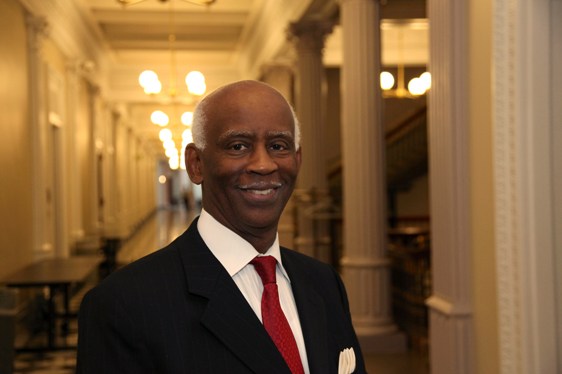 I am fortunate and blessed to serve as the president of Lawson State Community College. The College plays an important role in the diversification of the workforce in Birmingham and surrounding counties in Alabama. As president of the college, I firmly believe that the area must have an educated, skilled and highly trained population to meet the demands of the local economy and the workforce. The college offers a variety of certificate and degree programs designed to meet the needs of the community, the region and the state. These include college transfer, career technical course offerings and training opportunities.
 It is important that the college be represented in the varied conversations held throughout the region as far as workforce development and preparedness are concerned. My staff and I work diligently to ensure representation and make sure that as a community stakeholder, the college brings to the table people, processes and training opportunities equipped to have an impact on the local workforce.
Preparation for the workforce starts from the moment a student begins the matriculation process at the college. Students are immediately immersed into the Freshman Academy, also known as the Freshman Encounter: e3 4 life a program designed to equip, engage and empower (e3) freshmen with skills and knowledge that will contribute to their success at Lawson State and to provide effective engagement strategies to facilitate that success. Students begin early to experience and appreciate the demands of academe and the preparation necessary for success in all areas of life. Faculty who teach in the Academy work closely with the Student Persistence through Assistance and Collaborative Efforts (SPACE) Center to prepare students to be more successful in their chosen areas of study. Academy Faculty and the staff of the SPACE Center utilize technology as the primary tool for the acquisition of knowledge and skills. The services provided by these two units, as well as the coordination, and cooperation among other units such as the Student Support Services Program, writing and mathematics laboratories, and an early warning system administered through student services all work together effectively with first generation students throughout their academic endeavors at the college. As a community college, Lawson State is a gateway to the personal success of students and ultimately to the workforce of the community.
Learn more about EducationRenewing the American Dream – Investing in our Communities’ Well-Being
Posted by on September 26, 2011 at 2:50 PM ESTAs Assistant Secretary for Community Planning and Development (CPD) at HUD, I frame our work by asking – what is it only the Federal government can do? By investing in communities and building their capacity to address neighborhood needs, CPD works every day to help communities promote integrated approaches that provide decent housing, a suitable living environment, and expanded economic opportunities for low and moderate income persons. CPD’s investment in communities is carried out through our partnerships with all levels of government, and increasingly with the private sector, including for-profit and non-profit organizations.
At the same time, we are managing programs that respond to the current economic climate, including stimulus funding, homeless prevention and rapid re-housing, and neighborhood stabilization. The current foreclosure crisis started with bad loans, subprime mortgages and mortgage-backed securities. Now, we are seeing the effects of long-term unemployment on the housing market. Unfortunately, Latino families have been disproportionally affected by this crisis. According to the National Council of La Raza, 17% of Latino homeowners (1.3 million) have already lost or will lose their homes to foreclosure, while at the same time many Latino families have experienced a 50% decline in home equity values (from $99,983 to $49,145).
HUD’s Neighborhood Stabilization Program (NSP) has invested $7 billion to help local governments and non-profit organizations turn tens of thousands of abandoned and foreclosed homes into the affordable housing communities need instead of dragging down property values. Of the $7 billion invested so far, 60% was invested in communities of color. To date, more than 16% of the NSP 1 and NSP 2 households benefitting from acquisition, new housing construction, homeownership assistance, and rehabilitation were Latino households.
Last week, I had the opportunity to visit the West End Flats development underway at the corner of West Colfax Avenue and Zenobia Street in West Denver, one of the city’s most diverse neighborhoods.
Education With Purpose: Teaching Students the Skills Necessary for a Job
Posted by on September 26, 2011 at 2:47 PM ESTEd. Note: Champions of Change is a weekly initiative to highlight Americans who are making an impact in their communities and helping our country rise to meet the many challenges of the 21st century.
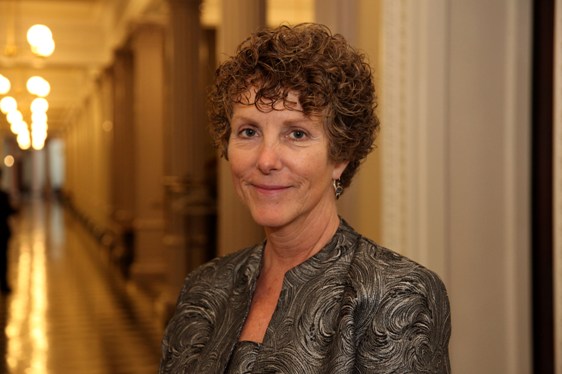 On Wednesday, September 21, I was honored to be included in a Champions of Change Roundtable discussion about two-year colleges and their impact on our nation. It was a great opportunity to talk about the business model Lake Area Technical institute uses to prepare students for today’s workforce.
LATI graduates over 75% of its students. Students attain graduation because they are required to be in an identified program with a graduation plan from the first day of their enrollment. The graduation plan sets expectations and prescribes the courses needed, the course sequence, and attendance requirements. No student is allowed to meander through general courses seeking a path. Instruction is geared to be project-based and hands-on. Program instructors are required to know their students personally and are responsible for student attainment. Instructors are hired based not only upon their work experience but also their ability to connect with students. An instructor’s passion for the occupational area and personality is more important than academic credentials.
Learn more about EducationShare Your Story with the White House Native American Youth Challenge
Posted by on September 26, 2011 at 2:34 PM ESTSince the launch of the White House Native American Youth Challenge in early July, young people across Indian Country have been answering the President’s call to submit their stories of leadership and service in their communities. Native youth have been active and engaged throughout the summer; hundreds attended the National United National Indian Tribal Youth (UNITY) conference in Minnesota, the National Intertribal Youth Summit in New Mexico hosted by several federal agencies, and the Let’s Move in Indian Country Lacrosse event on the South Lawn of the White House, among others. But as the summer has come to an end, so too does the Youth Challenge and the last day to submit applications is this Friday, September 30, 2011. We have already received an outstanding response and we hope even more young people will respond before the deadline.
Renewing the American Dream: Supporting Vibrant Hispanic Communities Across the Nation
Posted by on September 26, 2011 at 12:31 PM ESTSince taking office, President Obama has been focused on helping all individuals reach their goals. For Hispanic and other communities, this means promoting job creation, providing accessible health care, making sure that every American has access to a quality education, and fighting for comprehensive immigration reform while standing up civil rights.
The American Jobs Act that the President recently sent to Congress will provide the short-term assistance needed to move the economy faster to sustainable growth.
The American Jobs Act is a set of common sense proposals that have found widespread support from both Democrats and Republicans in the past.
Common sense actions like extending unemployment benefits to help people support their families while they are looking for work, and reforming the system with training programs to help workers develop the skills our employers need now.
- &lsaquo previous
- …
- 197
- 198
- 199
- 200
- 201
- 202
- 203
- 204
- 205
- …
- next &rsaquo
Twitter