

Latest News
Renewing the American Dream: Healthy Environment for Healthy Communities and Healthy Families
Posted by on September 30, 2011 at 6:44 PM ESTGrowing up in the tightly knit community of El Paso, Texas, I was always sure of a few things.
One was that family was of the utmost importance. It’s the kind of place where several generations might live within a few blocks of each other, and someone is always ready to help, scold, or praise you.
The other sure-thing involved the skyline: No matter where I was in El Paso, I could always look up and see the smokestacks of the old Asarco smelter looming. The facility affected the city in more ways than that constant visual presence. It gave many residents, including me, a lasting lesson on how pollution and industrial contamination can affect a community.
For years, El Paso families had suspected chemicals from the copper smelting facility had been contaminating nearby homes. Several studies have confirmed this is the case—toxic contamination from arsenic, lead, cadmium, and other chemicals has been found within a radius well outside the boundaries of the facility. And families who live in this area have suffered because of it. For example, a study by the Agency for Toxic Substances Disease Registry found children living near the facility were much more likely to have elevated levels of lead in their blood, which can lead to neurological, behavioral, and developmental problems.
Although the smelter closed down in 1999 (after more than 100 years of operation), its legacy of contamination still affects this community.
Since the company declared bankruptcy in 2009, EPA has been working with the state of Texas and local community leaders to determine how best to clean up the toxic pollution so it doesn’t harm more generations of El Paso families. It’s especially meaningful to me to be at EPA while my hometown is in the midst of doing something so significant to improve public health. El Paso has transformed itself from a city dependent on polluting heavy industry to one with a diverse economic foundation in health care, defense, international trade, and education. So the smelter clean-up is not just a big issue for the city of El Paso, it means a lot to EPA as well.
Since becoming the regional administrator for the South Central region of the US, I’ve been a part of many efforts to restore communities that have been affected by toxins and industrial pollution. It’s been one of the most gratifying parts of my career to see communities transforming themselves, including places that are cleaning up from the legacy of toxic industrial pollution, and cities rebuilding themselves after natural disasters.
Seeing first-hand how pollution can harm the soil, water, and air in a family’s backyard is one of my first “environmental memories.” It’s probably one of the things that led me to study chemistry and engineering, and to become dedicated to protecting the environment. So by leading our region’s work with the state and El Paso’s leaders, I get to help resolve an environmental issue that was present in the lives of my families and friends.
Of course, it’s not just in El Paso that EPA is helping keep families safe and healthy. Along the entire border, we’re bringing colonia communities clean, reliable drinking water for the first time, and working with the government of Mexico to reduce air pollution from trucks hauling cargo into the US. I’m proud to be part of an Agency with such a long track record of protecting the health and environment of people along the border.
Al Armendariz is the Environmental Protection Agency's Regional Administrator for Region 6(Dallas: serving Arkansas, Louisiana, New Mexico, Oklahoma, and Texas)
Learn more aboutPreparing Americans for High Skill, High Wage, and High Demand Occupations
Posted by on September 30, 2011 at 4:55 PM ESTEd. Note: Champions of Change is a weekly initiative to highlight Americans who are making an impact in their communities and helping our country rise to meet the many challenges of the 21st century.
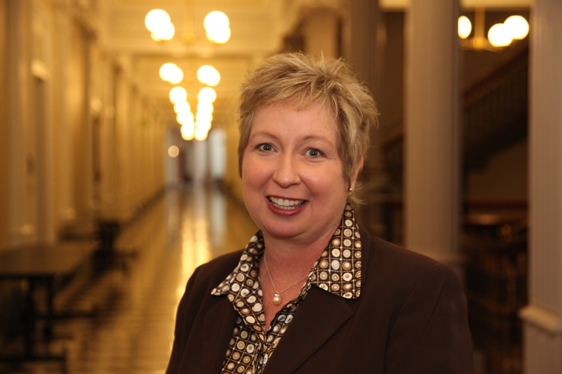
The Tennessee Technology Centers are “Champions of Change” for education. Providing technical education in most states is done through the community colleges. However, in Tennessee, the functions are split between community colleges and technology centers. The 27 Tennessee Technology Centers offer specialized one to two year certifications in high skills, high wage, and high demand occupations. Tennessee’s separate system has been highlighted as one of the most successful educational models in the nation.
Our model prepares Tennesseans for a variety of jobs and enables our students to enter the workplace with prepared skills that employers need. The approach is unique and the results are outstanding with statewide completion rates at 70% and above and placement rates at 80% and above. The Centers have maintained these high rates for years and exceed those of similar institutions.
The model includes four main areas:
Learn more about EducationWhite House Rural Council Feedback Report
Posted by on September 30, 2011 at 4:02 PM ESTSince the establishment of the White House Rural Council in June, President Barack Obama, a number of senior Administration officials and I met with folks throughout the country to better understand the challenges and opportunities facing rural America. By hosting the White House Rural Economic Forum in Peosta, Iowa, as part of the President’s three-day Bus Tour in August, in addition to nearly 200 roundtable discussions with business and agricultural leaders in rural communities, we learned what rural Americans think are the most important issues to ensure that their future is bright and prosperous.
A summary of the places we visited and many of things we learned is encapsulated in the White House Rural Council feedback report (pdf), which is now available.
To be sure that we heard the voices of rural Americans from every corner of the nation, Obama Administrations officials traveled to 46 states and held nearly 200 forums to determine how folks in Washington, D.C. can improve our efforts on creating jobs and spurring economic growth. We heard from local citizens on several key topics ranging from ways to build small business and strengthen the middle class in rural America, to plans for building economic opportunity for rural business through infrastructure investment. From these discussions, we were able to not only identify key themes and issues but also identify ways in which to improve our country.
Learn more about RuralFor the Win: Riding the Green School Bus
Posted by on September 30, 2011 at 3:31 PM ESTFor the Win is a guest blog series featuring the remarkable initiatives that young Americans are advancing to win the future for their communities. Each week we highlight a new young person and learn about their inspiring work through their own words. Submit your story to appear in the For the Win guest blog series.
Jonny Cohen is a junior at Highland Park High School in Highland Park, Il. He is an inventor and experimenter as well as the founder of GreenShields. He is constantly working to help the environment. Jonny is a member of the 2011 PARADE All-America High School Service Team, an award recognizing outstanding young service leaders presented by PARADE Magazine in partnership with generationOn, the global youth service division of Points of Light Institute:
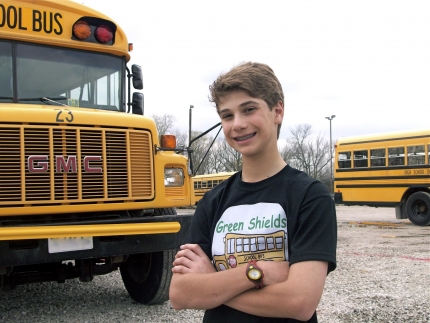
Johnny Cohen (Photo courtesy of Points of Light Institute)
When I walk to school, I notice things. In seventh grade I noticed that school buses parked in front of my junior high were spewing exhaust and something had to be done to make this better. Then it hit me! The shape of the school bus was not aerodynamic. I had taken a Saturday class in aerodynamics at Northwestern University. I thought that maybe a shield angled on the front of the school bus that was clear and plastic could redirect the airflow and this could save gas. I told my older sister, Azza, and she liked the idea. (Side note: there were a lot of other ideas that involved loud noises and homemade rockets that she was not a fan of!)
I went to see Mr. Kunal Pujara, the physics teacher at Highland Park High School and he encouraged me to explore more. I entered a Youth Venture science contest, won a grant and built my own wind tunnel in the garage with a leaf blower to test school bus models. I knew I needed a team, so I asked Azza and her friends to help. I went to a Youth Venture Summit and met with other inspiring teens, which encouraged me to enter the Pepsi Refresh contest, where I won another grant. To receive the Pepsi grant I used Facebook and emailed everyone I knew to get people to vote for my project. I never thought I could win! Online voting seemed impossible and I didn’t want to bother people. But you know what? I pushed myself. I sat in the grocery store on weekends and I made presentations at city hall, all the while asking people in my town to vote for my idea so I could get the funding I needed!
In March of my freshman year I was notified that I had won a $25,000 grant and was interviewed on Good Morning America! The computer drawings I brought with me were made by my friend and fellow student team member, Alex Berkowitz. We worked all weekend on them and I was so excited! I realized that I could finally build and test my idea, but I knew that I needed more smart people to help me. I sent out emails and Northwestern University answered. For the past two summers I have had the privilege to work on this project, which I have since named GreenShields with project advisor, Stacy Benjamin and engineering interns, Tim Healy and Matt Filak. There have been ups and downs but that is exactly what makes solving a problem fun.
The first prototype worked, we saved about 28 percent gas mileage, but it was big, heavy and took time to install. We have been working to make it smaller, lighter and easier to attach. We tested other materials, some worked and some didn’t. We are considering a new scoop design. This is engineering and we need to keep trying until we find an answer.
The most important lesson that I’ve learned is that it’s ok to think up crazy ideas and share them, even when other people might think it’s not possible. As I always say, try to see things not the way they are, but how they could be. Don't be afraid to think or say something different. That crazy idea of yours just might help solve a problem for the environment and the world!
STEM into the Future: A Roundtable Discussion with NASA's Saralyn Mark
Posted by on September 30, 2011 at 12:50 PM ESTThe White House Office of Science and Technology Policy and Council on Women and Girls launched "Women in STEM Speakers Bureau," where top Administration female STEM specialists participate in roundtables with girls in grades 6-12 across the country. This week, NASA's Saralyn Mark met with students from School for Green Careers.
Senior Medical Advisor in the Office of the Chief Health and Medical Officer at NASA Saralyn Mark reflects on meeting female students at a STEM Roundtable at Barnard College and the future role of women in STEM careers:
Learn more about Technology, WomenLeveraging Technology to Deliver to Prepare Rural Students for 21st Century Jobs
Posted by on September 30, 2011 at 12:04 PM ESTEd. Note: Champions of Change is a weekly initiative to highlight Americans who are making an impact in their communities and helping our country rise to meet the many challenges of the 21st century.
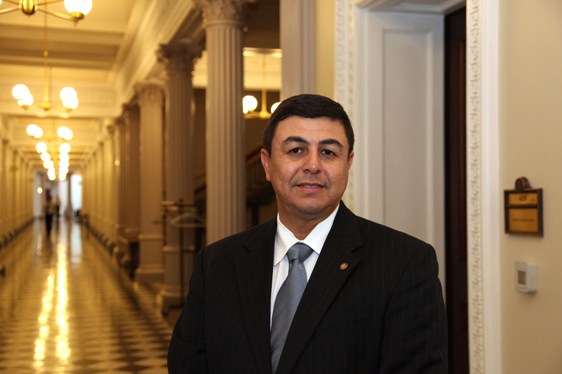
Southwest Texas Junior College has addressed one of the main issues facing rural colleges—distance. We have responded to the healthcare needs of our area hospitals specifically in the area of vocational nurses, registered nurses, and radiologic technicians, by utilizing technology and creative partnerships. We utilize interactive television to broadcast lectures across our vast service area which is larger than 10 states.
Technology has enabled us to provide quality healthcare education to a student population that otherwise would not have had convenient and ready access to this type of instruction. In addition, we have invested in realistic, full-body adult, wireless patient simulators that can reproduce complex diseases that students may not have an opportunity to experience in rural hospitals. SWTJC has partnered with area hospitals to train their employees as preceptors to assist with the supervision of the students during their clinical rotations.
Southwest Texas Junior College has developed 1+1 programs in career and technology fields with area high schools. High school junior and seniors can enroll and complete the first year of a technical program, graduate high school with a diploma along with a one year certificate. After graduation they can enroll in the second year of the technical program as a sophomore and within one year complete their associate of applied science. This partnership has allowed our career technology minded students to enter the workforce at a much quicker pace, with a certificate and or associate’s degree.
Dr. Hector Gonzales is Chief Academic and Financial Officer of Southwest Texas Junior College.
Learn more about EducationRenewing the American Dream: A Healthy Family, A Healthy Community
Posted by on September 30, 2011 at 11:13 AM EST“We do not inherit the Earth from our ancestors: we borrow it from our children." Native American proverb…
My position at the Environmental Protection Agency allows me to observe first-hand environmental hazards and their impact on public health. At the Environmental Protection Agency our mission is to protect human health and the environment. I love the fact that what I do every day plays a small part in protecting children like my one year old daughter Brooke. We must not forget the environment affects every aspect of our life and influences who we are.
I want to do everything I can to ensure that the air we breathe, the water we drink and the food we eat are all clean, healthy and uncompromised. My generation was brought up expecting nothing less and that is what I hope to pass along to Brooke and future generations.
There are a dizzying number of topics for parents to worry over when it comes to protecting their families, and new warnings seem to cross my desk daily, enough to make any parent frantic. We all know that young children are especially susceptible to health problems caused by environmental hazards and sometimes result in a lifetime of health conditions. Naturally, there is a desire to ensure we nurture our children with healthy and safe communities to grow up in. It’s the foundation that we as parents build on and I’m certain that parents of all races, faiths, cultures and income levels would agree. Thus, as a society, we must strive to create an environment that is not only in the best interest of our families, but one that benefits our community.
Healthy families and healthy communities are the main focus this week for Hispanic Heritage Month. Our work under the Clean Air Act and Clean Water Act protects the air we breathe and the water we drink, swim and shower for all communities. Although I’m not directly involved with our regulatory process, every night, when I look at my little girl resting peacefully, I’m reminded of the importance of our work and how it impacts Brooke and generations to come.
Jose Lozano, Director, Operations, Office of the Administrator - Washington, DC
Renewing the American Dream:Making a Difference in Communities at the Department of Justice
Posted by on September 30, 2011 at 9:02 AM ESTAs the Assistant Attorney General for the Environment and Natural Resources Division at the United States Department of Justice, I am pleased to celebrate the immeasurable contributions and achievements of Hispanic Americans and to highlight the work of the Environment Division in contributing to the protection of human health and the environment for the benefit of all Americans.
The theme for this year’s Hispanic Heritage Month, “Renewing the American Dream,” reminds me of the many roads traveled by generations of Hispanics to achieve equality, opportunity, and freedom. My own humble beginnings are a testament to the American tradition—the hope and opportunity that it accords its people.
I was born in Cartagena, Colombia, and I was six years old and spoke no English when I landed with my family at JFK Airport in New York City. I grew up in Washington Heights, an inner city neighborhood in New York City that lies north of Harlem. My father first worked as a dishwasher and my mother worked in a factory. They continued their education, became United States citizens, and had their own careers in public service in transportation and public health, respectively, for the City of New York. They taught me important values: a robust work ethic, a love of learning, perseverance, faith, integrity, and a deep commitment to public service. We came to America with great hope, and our experience has vastly exceeded any of our expectations. I am grateful for all that I have received, and am proud to serve the American people.
- &lsaquo previous
- …
- 195
- 196
- 197
- 198
- 199
- 200
- 201
- 202
- 203
- …
- next &rsaquo
Twitter