

Latest News
Engaging Immigrant Health Professionals
Posted by on June 2, 2011 at 10:45 AM ESTAs an immigrant, I was thrilled to receive the Champions of Change award last week. Along with the honor came the opportunity to join other honorees in a substantial conversation with several Administration officials, where we talked about successful immigrant integration strategies and the role the Administration can play in supporting these on-going, community based efforts.
My area of interest and expertise is the cultural and linguistic diversification of the U.S. health workforce as a means of reducing racial and ethnic disparities in health. To that end, I started ten years ago the Welcome Back Initiative, a program designed to identify, guide, and support immigrant health professionals in their quest for relicensure or recertification in the U.S.
Learn more about Health Care, ImmigrationChampions of Change: Immigrant Integration
Posted by on May 31, 2011 at 3:57 PM ESTEditor’s Note: Champions of Change is a weekly initiative to highlight Americans who are making an impact in their communities and help our country rise to the many challenges of the 21st century.
As the President said in his 2011 State of the Union Address to Congress, "we are the first nation to be founded for the sake of an idea – the idea that each of us deserves the chance to shape our own destiny. That's why centuries of pioneers and immigrants have risk everything to come here...the future is ours to win. But to get there, we cannot stand still.” Earlier this month, we held a roundtable discussion at the White House with Administration officials and a group of impressive community leaders who are helping the current generation of immigrants and refugees successfully integrate and thrive in their new communities.
From San Diego, CA to Utica, NY, these leaders are true Champions of Change. They are answering the President’s call. They are not standing still. They are working every day to connect immigrants with critical services to learn English and assist in the naturalization process. They are also helping these newcomers start businesses and obtain jobs in critical fields like the health care industry, allowing them to use the professional skills, expertise, and experience they brought with them to their new country, which benefits all Americans. And by developing intergenerational programs that bring together elderly immigrants and young people and help students learn about the process of becoming a citizen, these Champions of Change are connecting newcomers to the communities where they are settling, promoting greater understanding, and inspiring pride in America.
Learn more about ImmigrationPresident’s Advisory Commission on Educational Excellence for Hispanics: The Next Step in Improving the Academic Achievement of Latino Students
Posted by on May 26, 2011 at 1:09 PM ESTToday, more than a dozen new members of the President’s Advisory Commission on Educational Excellence for Hispanics were announced at the White House and later sworn-in at an official ceremony with U.S. Supreme Court Justice Sonia Sotomayor at the Smithsonian Institution Castle. These historic events mark the next step in improving the academic achievement of Latino students and the lives of all Hispanics nationwide.
Hispanic success in education and the labor market is important to America’s economy. At more than 54 million strong – including nearly 4 million in Puerto Rico--Hispanics are both the largest and fastest-growing minority group, yet they have the lowest education attainment levels of any group in the country. In addition, Hispanics are the largest minority group in the public education system, with more than 1 in 5 students in our elementary, middle and high schools; however, it this group that has the lowest education attainment levels overall, according to the report recently released by our office.
This two-day inaugural meeting brings together a group of well-respected individuals from the education, philanthropic, business, nonprofit and high-tech sectors; they also represent various Latino subgroups and regions of the U.S. The primary goal of these meetings is to provide a platform for the Commission to think through the many ways in which it can meet the duties under its charter. They will work in tandem with our office to create a strategy that is bold and innovative and that enables this Nation to meet the President’s 2020 Goal of having the most graduates in the world.
Through its work, the Commission will provide advice toPresident Obama and EducationSecretary Arne Duncan. In remarks given during our executive order signing ceremony last October, the President introduced Eduardo Padron, president of Miami-Dade College, as the chair of the Commission. As chair, Padron works with White House Initiative Executive Director Juan Sepúlveda and Deputy Director Jose Rico to convene regular Commission meetings, determine its agenda, and direct its work.
In addition, more than 400 people will be attending the Commissioner’s swearing-in ceremony Thursday evening. The program, co-hosted by the Smithsonian Latino Center with unscripted remarks by Smithsonian Secretary Wayne Clough, Congressional Hispanic Caucus Vice-Chair Rep. Ruben Hinojosa, White House Director of Intergovernmental Affairs Cecilia Munoz and Commissioner Chair Eduardo Padron, will be held at the historic Smithsonian Institution Castle and Enid A. Haupt Gardens. The highlight of the program will be U.S. Supreme Court Justice Sonia Sotomayor’s congratulatory remarks and the swearing-in of the Commissioners.
I hope you can watch the webcast of the meetings at 1 p.m. ET/Noon CT, today, and 9 a.m. ET/8 a.m. CT, tomorrow at www.WhiteHouse.gov/live. You can also watch the swearing-in ceremony at http://www.ustream.tv/channel/education-department. When you do, let us know what you think: What should the Commission do to increase the education attainment levels of Latinos?
To keep up with the activities of the White House Initiative, follow them at Ed.gov or on Facebook or whitehouse.gov/hispanic.
Champions of Change: Investing in Infrastructure for a More Competitive Economy
Posted by on May 25, 2011 at 12:11 PM ESTEditor’s Note: Champions of Change is a weekly initiative to highlight Americans who are making an impact in their communities and help our country rise to the many challenges of the 21st century.
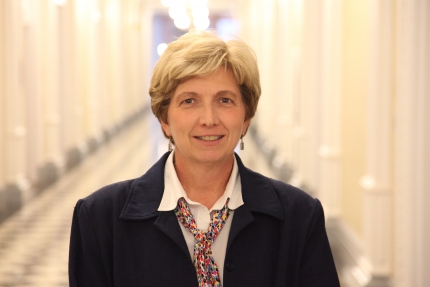 Recently I was honored to join the “Champions of Change” discussion at the White House during National Transportation Week. We were asked to focus on transportation workforce issues, a very timely topic, and I am pleased to have this opportunity to provide further thoughts.
I am proud to be part of the transportation construction industry because we put people to work, improve the nation’s quality of life and enable our economy to be more competitive.
Several participants in the White House meeting mentioned the importance of reauthorizing the federal surface transportation and aviation programs. If we really want to put Americans to work, there is no better way than by passing long-term, well-funded versions of these important measures. The long-term certainty of federal transportation investment will give the industry a much clearer view of our future market opportunities. That will enable us to make additional investments in human capital, as well as equipment and supplies that will put even more Americans to work.
Learn more about EconomyInvesting in Infrastructure to Create Jobs and Stimulate the Economy
Posted by on May 24, 2011 at 10:08 AM ESTI’m truly honored to be selected as a “Champion of Change” by the White House, for my roles as a civil engineer and as the 2011 president of the American Society of Civil Engineers.
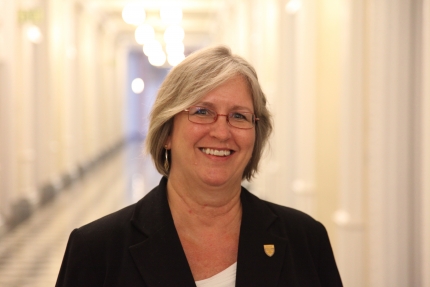
As many of you know, ASCE has published a Report Card for America’s Infrastructure every four years since 1988. Our most recent Report Card, issued in 2009, gave this country’s infrastructure sectors a cumulative grade of “D.”
Our nation’s economy can’t survive without the stable foundation infrastructure provides.
Spotlight on Amazing Community Leaders and the 2011 Presidential Citizens Medal
Posted by on May 23, 2011 at 3:07 PM ESTLast year, President Obama honored several amazing individuals from the African American Community, including Cynthia Church, for their extraordinary service. As a breast cancer survivor, Cynthia founded Sisters on a Mission, a breast cancer support network for African American women in Delaware. Learn more about Cynthia by watching her inspiring story.
To learn more about Citizen Medal recipients from the African American Community, check out the remarkable individuals below:
• Daisy Brooks has committed her life to North Chicago young mothers and their infants through Daisy’s Resource and Development Center.
• Myrtle Faye Rumph has worked tirelessly to reduce gun and gang violence in her community and to change the lives of at-risk youth.
For the 2011 Presidential Citizens Medal we are asking you to look into your community and nominate those everyday heroes who have performed exemplary deeds of service, including those who have demonstrated commitment to work in their own communities or in communities farther from home, who have helped their country or their fellow citizens through one or more extraordinary act, whose service relates to solving a long-term problem, or whose efforts have had a sustained impact on others’ lives and provided inspiration for others to serve. Last year, over 6,000 incredible leaders were nominated for their commitment to bettering the community. The Presidential Citizens Medal offers a chance to thank those extraordinary stewards of service from across the United States, whose work often goes unrecognized.
To find out more about the qualifications for the 2011 Citizens Medal, please review the criteria for this year’s medal.
For more information on the Citizens Medal, as well as how to nominate an outstanding citizen, watch the announcement video.
Learn more about Additional IssuesConfronting Challenges to Educators and Students
Posted by on May 13, 2011 at 4:38 PM ESTTo prepare children for a global world, our district takes a broad approach to learning. While building foundational skills and concepts, we also move beyond that foundation to develop students’ higher order thinking skills. That is, we design learning experiences and pose questions that push students – even our youngest students – to apply, analyze, evaluate, and create with the knowledge they are gaining. This is what will be needed as we move into the future, citizens who can be critical consumers of ideas and information and who can shape skills and understandings in new ways to solve new problems.
What can others do to support this work? Principals, teachers, families, and students can all collaborate to recognize that this is the vision of learning and take responsibility for growing that vision – setting high expectations for children’s learning with engaging tasks and real-world applications of what they are learning. At the federal level, the most critical leverage point rests in designing high-quality assessment systems that will support schools in their pursuit of deep learning, not narrowly focused skills in isolation. Promoting with greater clarity what is meant in policy by “multiple measures” – multiple ways that schools and students can demonstrate evidence of learning and growth beyond traditional standardized tests – will drive instruction and learning to be deeper and richer.
These were just some of the ideas that I shared a few short weeks ago as an invited guest at the White House “Champions of Change: Winning Our Future” educators roundtable discussion. The opportunity to be a part of that discussion was remarkable in that it demonstrated to me the efforts that policy makers in this country are making to listen to teachers in the field and the solutions they are seeking to what they know are challenges to educators and students.
Learn more about EducationChampions of Change: In the Classroom
Posted by on May 11, 2011 at 10:28 AM ESTEditor’s Note: Champions of Change is a weekly initiative to highlight Americans who are making an impact in their communities and help our country rise to the many challenges of the 21st century.
Last month, I had the distinct honor of participating in a round table discussion with fellow teachers as a nominee for a White House “Champions of Change” award. U. S. Department of Education Assistant Secretary for Communications and Outreach, Peter Cunningham, and Special Assistant to the President for Education Policy, Roberto Rodriguez, led our lively conversation. Assistant Secretary Cunningham stressed the Department’s initiative to, “strengthen and honor teachers.” Mr. Rodriguez expressed the Administration’s goals of advancing American education as an economic imperative and providing federal support for achievement at all levels.
As passionate educators, we took advantage of the opportunity to give suggestions and information to senior Administration officials who were eager to hear our ideas. We discussed the desire for more effective communication and partnerships with parents, differentiated professional development opportunities, and improved evaluation and accountability systems. As my colleague, Kristine Woleck put it, “Evaluations should be seen as part of a professional growth system…feedback should be timely and specific.”
Eric Kehn pointed out, the challenge we face as educators, at all levels, is how to balance “vision and support” with accountability in our interactions with each other. This is a good reminder that whether we are Department of Education officials or teachers talking to our students, our goals are to encourage and inspire in addition to measuring performance through tests and grades.
Learn more about Education
- &lsaquo previous
- …
- 222
- 223
- 224
- 225
- 226
- 227
- 228
- 229
- 230
- …
- next &rsaquo
Twitter