

Latest News
The Impact of Invisible Fathers
Posted by on June 24, 2011 at 3:45 PM ESTEd. Note: Champions of Change is a weekly initiative to highlight Americans who are making an impact in their communities and helping our country rise to meet the many challenges of the 21st century.

As part of the service system within the State of Delaware, I am involved with Prevention, Child Maltreatment, Youth Rehabilitative, and Child Mental Health Services under the Department of Children, Youth and their Families and we work closely with the Department of Education, Child Support, Medicaid and Temporary Assistance for Needy Families. With diligence, the State of Delaware and our community partners work as partners with community members, organizations and faith-based services. At the same time, our state services have begun to reassess our approach in working with families.
Often, when you look for a common denominator for families we serve, we see the issue of the disruption in relationship between the father and their children and/or with the custodial parent which is often the mother of the child. We often fail to recognize or are insensitive to different types of challenges and barriers fathers face which supports disengagement.
Learn more about Working FamiliesEmpowering Urban Young Adults
Posted by on June 24, 2011 at 2:30 PM ESTEd. Note: Champions of Change is a weekly initiative to highlight Americans who are making an impact in their communities and helping our country rise to meet the many challenges of the 21st century.
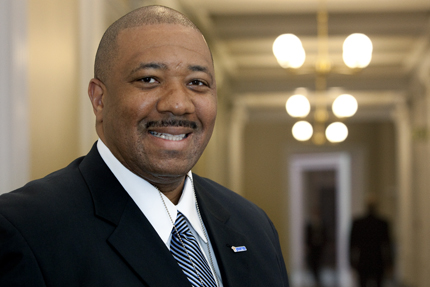
My upbringing was an interesting one, because the father figures in my life have all cared for me through critical stages of development. At the age of fourteen, my life completely changed. My mom became a single mother of six, who worked 10-hour days while attending college. During this time, I found myself taking on large amounts of responsibility, as I was the oldest sibling. In hopes of resolving internal issues of abandonment, I found my biological father and moved in with him at the age of seventeen. The next five years were some of the best and most poignant years of my life. I was not only able to build self confidence, but also was able to foster a new relationship with my dad that allowed me to gain a greater understanding of the man I was trying to become. It is because of these experiences that I have always given the role of Father and Provider the highest priority.
The youth of our communities across the country are faced with increasingly poor attendance at school, marginal academic achievement, low probability of high school graduation, involvement in gang-related activities, low self-esteem, substance abuse, negative involvement with law enforcement and general lack of positive guidance. Statistics from the National Cares Mentoring Movement show that only 18% of Black boys graduate from high school; 57% of Black fourth graders are functionally illiterate; 2.4 million Black children have a parent in prison; and, homicide is the leading cause of death of young Black men with more than 1,000 Black teenagers arrested every day. This is the type of compelling evidence that fuels my passion for serving our youth.
My work with Year Up Atlanta, allows me to provide a level high support and high expectations for the urban young adults aged 18-24. We recognize that both job skills, technical and professional, and higher education are necessary to provide a viable path to economic self-sufficiency. Our mission is to close the Opportunity Divide by providing urban young adults with the skills, experience, and support that will empower them to reach their potential through professional careers and higher education. This will be a crucial element in support of President Obama’s plan to “out-innovate, out-educate and out-build the rest of the world.” In addition to this work, my involvement on the steering committee of Atlanta CARES, an affiliate of the National CARES Mentoring Movement (NCMM), has allowed me to be a part of the solution. NCMM's mission is to create a highly visible and effective national mentoring campaign targeting the Black community.
Learn more about Working FamiliesOur Covenant with America’s Rural Miners
Posted by on June 24, 2011 at 1:20 PM ESTEditor's Note: Cross-posted from the Blog of the U.S. Department of Labor
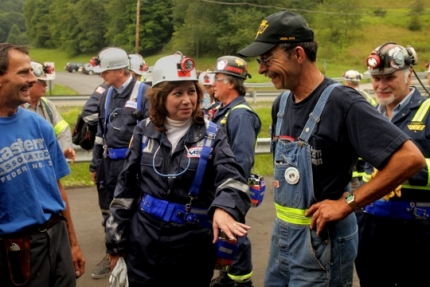
Secretary Solis speaks with local miners during a visit to a West Virginia mine. (Photo by Department of Labor)
From the coal that makes it possible for us to power our computers, to the sand and gravel that serves as the foundation of our nation’s infrastructure, we simply could not function as a country without the natural resources that our miners provide.
Mining and extraction industries have been key drivers of rural economic growth during our recovery, creating 80,000 new jobs in the last year alone. Nationally, this sector employs nearly 730,000 people in communities from Appalachia to the American West. For some raised in rural communities where mining is a way of life, this work is part of their family DNA, a profession “handed down” from one generation to the next. For others, a career in the mines is a ticket to a better life for their families. According to our Bureau of Labor Statistics, continuous mining machine operators have an average base pay of $48,000 a year, while supervisors earn more than $70,000.
As a member of President Obama’s Rural Council, I am committed to helping miners get the training they need to harness our natural resources in a safe and cost-effective way. As rising gas prices continue to place strains on middle class families, it’s critical that we support the workers responsible for producing our domestic energy supply.
This commitment starts with maintaining a well-qualified workforce. During the next decade, some 50,000 new workers will have to be trained to replace the mining industry’s aging labor force. Recognizing this challenge, my department has awarded grants to a variety of rural stakeholders to develop training programs tailored to meet the employment needs of local industry.
The projects are as unique as the rural communities that they serve: Penn State University is using special simulators to teach students how to operate sophisticated machinery when down in the mines. Northern Wyoming Community College partnered with Penn State and devised a mobile laboratory to give students on-site training at local coal mines. The Alaska Department of Labor increased mining apprenticeship opportunities and developed a web portal to help Alaskans find jobs in the mining and energy sectors. The College of Eastern Utah offers mining classes to Hispanics and Native Americans in their unique languages. West Virginia University’s Mine Training and Placement Center provides instruction on everything from ventilation techniques to infection control to accident prevention for mineral miners.
But our investment in skills training is only part of our covenant with miners in rural America. The Obama administration is committed to aggressive enforcement of mine safety laws. Our country has a duty to ensure these workers return home to their families each day in the same condition they went to work.
My department’s Mine Safety & Health Administration has rewritten our regulations to toughen worker safety standards, strengthened our enforcement efforts to identify potential hazards, partnered with mining companies to improve emergency response time and rescue capability, and cracked down on operators that cut corners on safety and put workers at risk.
It has been 14 months since the explosion at West Virginia’s Upper Big Branch mine claimed 29 lives. I will never forget traveling to rural West Virginia to stand vigil with the miners’ families in those tense hours when rescue operations were still ongoing. For me, the lesson of the Upper Big Branch tragedy couldn’t be clearer: hazards are to be abated, mines are to be made safe and mine operators are to be held responsible for safety problems they do not fix. We owe nothing less than this strong commitment to the mining families of rural America.
Connecting Fathers with Their Schools
Posted by on June 24, 2011 at 1:00 PM ESTEd. Note: Champions of Change is a weekly initiative to highlight Americans who are making an impact in their communities and helping our country rise to meet the many challenges of the 21st century.
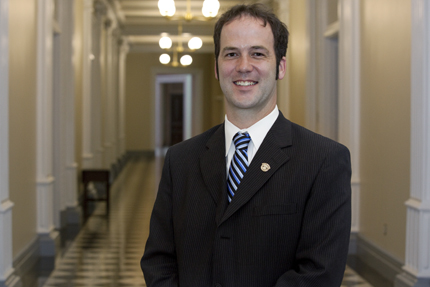
It started with my job as a first year assistant principal at Charlotte Ann Cox Elementary School in Leander Independent School District (LISD) in Cedar Park, Texas. It was here that I was handed the opportunity to work with Watch DOGS by my principal Kim Adcock and community advocate Russell Bundy.
What is Watch DOGS? Watch DOGS is a national father and father-figure program designed to connect men in the community with their schools. The program provides an avenue for these men to be involved as fathers, mentors, and role models, not only to their own children, but to all the children in their communities. This endeavor comes about by utilizing the most powerful force of all – family.
I immediately saw the impact of men on campus through my own personal experience. It was then that I decided to dedicate myself to embracing, improving, and spreading the Watch DOG program throughout our larger community beyond the reach of my campus.
So, I joined up with some colleagues and began to spread the word. During the last 5 years, I became a local spokesman and trainer to help schools adopt this program. When the dust settled, I found that the Watch DOGS program has now become a part of the vernacular of the community in Central Texas. Over 20 schools in LISD now have the program as well as numerous programs in the surrounding school districts.
Learn more about Working FamiliesEquipping Men to Become Better Fathers
Posted by on June 24, 2011 at 10:55 AM ESTEd. Note: Champions of Change is a weekly initiative to highlight Americans who are making an impact in their communities and helping our country rise to meet the many challenges of the 21st century.
 Fatherhood is a precious gift with amazing responsibilities. Dads are always role models, good or bad, like it or not. We cannot escape the impressionable vision of our children and hopeful, loving gaze from our wives. Fortunately, I figured this out before it was too late. My faithful wife helped me realize the kind of impact I had on my children; they saw all my actions when I hoped I was invisible. Fortunately, it is never too late for redemption.
I changed course and committed to be the Father my family deserved. Now, I am focused on rewarding my wife’s loyalty and developing my children into fine young adults. This comes through putting them first and modeling servant leadership. I need to be what I want them to become, and when I fall short, I quickly come and ask for forgiveness.
I started attending All Pro Dad breakfasts with my son, Ryan. All Pro Dads program is a program of Family First that helps equip men to become better fathers. I loved these breakfasts where we shared stories and dreams. I loved the program so much as I started another chapter at my daughter’s school where, within 3 months, we had over 200 people attending. At these meetings, I saw many other Dads having intimate and sometimes tearful, conversations with their children. Building on the success of this program, I asked the All Pro Dad Director, Darrin Gray how I could help them do more and he encouraged me to consider how translate their program into prisons.
Learn more about Working FamiliesRaising Awareness on the Importance of Fatherhood
Posted by on June 24, 2011 at 10:45 AM ESTEd. Note: Champions of Change is a weekly initiative to highlight Americans who are making an impact in their communities and helping our country rise to meet the many challenges of the 21st century.

Twenty-seven years ago, I never imagined what my scared but brave act of fatherhood meant or would lead to. In 1984, I took my daughter to college with me as a teenage father. The beauty of my fatherhood was dictated by the love for my daughter, which became the driving force to be the best father I could be.
I wanted to do more than just raise my daughter. I wanted to be a part of a broader effort,a larger movement that would fight against this growing crisis of fathers who are not there for their kids. I wanted to help raise awareness on the importance of fatherhood by focusing on fathers who are stepping up; the thousands of fathers we see everyday who are engaged in the life of their children.
My biggest joy is traveling and speaking all over the country getting individuals, institutions, organizations and communities asking them to answer the call from our President to action on fatherhood and mentoring.
My current work has me involved on many fronts including serving as International Representative for my fraternity Omega Psi Phi's Fatherhood and Mentoring Initiative. In this role and under the leadership of our President Dr. Andrew Ray, it is my responsibility to lead our fraternity’s over 100,000 members and 600 chapter’s efforts in joining the President’s call the action on fatherhood. I am also Fatherhood Advisor to NBA legend and Fatherhood leader Allan Houston.
Engaging Fathers to Stop Domestic Violence
Posted by on June 24, 2011 at 7:50 AM ESTEd. Note: Champions of Change is a weekly initiative to highlight Americans who are making an impact in their communities and helping our country rise to meet the many challenges of the 21st century.
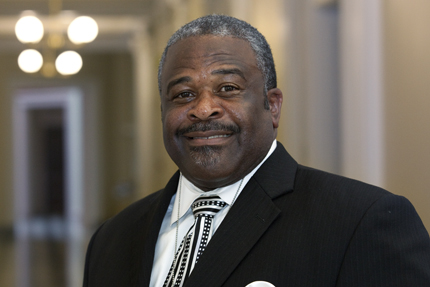
I cannot take the credit for what God has empowered me to do. I also appreciate the White House acknowledging the need to stand up and fight for victims of domestic violence by recognizing change and champions within our nation. I have found that silence is deadly when a community does not speak nor reach out to others who are in need of support. It has become one of my missions to break the generational cycle of domestic violence.
The lyrics of our national anthem, the Star Spangled Banner says, “O’er the land of the free and the home of the brave!” Yet, victims of domestic violence are never free in their home, they are always at war. I remember one Christmas Eve, my mom, brother, sister and I experienced a horrible incident of violence at the hand of my father. It was only by the Grace of God that we were able to see past that day. I am humble and honored to be here to represent fathers and survivors of domestic violence, becoming a voice within the community, reaching out to local cities, state and the nation with a message of hope, compassion and freedom.
Violence is everywhere in my community and that violence has been my personal call to action. In 1995, I was humbled to be asked to be a co-founder of Our House, Inc., domestic violence and sexual assault community project. In 2010, our agency served 2,758 men, women, and children with direct services and 9,407 adults, youth, and children participating in an Our House prevention program. I co-sponsored “A Father’s Conversation” Media Blitz to engage men in the movement to stop domestic violence in our community. This consisted of several television shows and photo showings of fathers who have been exposed to domestic violence. I have spoken to over 12,000 youth on building and maintaining healthy relationships. I have given my testimony to over 100 churches. All in an effort to communicate to as many people as I can that it is our job to enlighten people on the strength within us to help others.
Dr. Roderick Mitchell is the Founder and Pastor of the New Life Church, Inc. of Cleveland, Mississippi, Founder and President of Exodus School of the Bible in Renova, MS, and Bishop and Founder of Miletus Covenant Connection.
Learn more about Working FamiliesTurning Around the American Manufacturing Industry
Posted by on June 23, 2011 at 5:41 PM ESTTomorrow, the President will speak at Carnegie Mellon University in Pittsburgh, Pennsylvania on the importance of American manufacturing to grow the economy and create new jobs.
As the President spoke about earlier this month in Toledo, manufacturing is picking up all across the country. For example, Rhett Crooks is the owner of a precision tooling manufacturer in Vandergift, Pennsylvania that recently turned around and is rehiring. The President explained how manufacturers both large and small like Rhett’s are putting more Americans back to work:
And what's most important, all three American automakers are now adding shifts and creating jobs at the strongest rate since the 1990s. So far the auto industry has added 113,000 jobs over the past two years. In Detroit, Chrysler added a second shift at its Jefferson North plant. GM is adding a third shift at its Hamtramck plant for the first time ever. In Indiana, Chrysler is investing more than $1.3 billion in its Kokomo facilities. And across the country, GM plans to hire back every single one of its laid-off workers by the end of the year -- every single one.
And that makes a difference for everyone who depends on this industry. Companies like a small precision tooling manufacturer in Vandergrift, Pennsylvania, have brought back many of the employees they had laid off two years ago. Manufacturers from Michigan to Massachusetts are looking for new engineers to build advanced batteries for American-made electric cars.
So this industry is back on its feet, repaying its debts, gaining ground. Because of you, we can once again say that the best cars in the world are built right here in the U.S. of A., right here in Ohio, right here in the Midwest. And each day when you clock in, you’re doing more than earning your pay by churning out cars. You’re standing up for this company. You’re sticking up for this way of life. You’re scoring one for the home team and showing the world that American manufacturing and American industry is back.
As a piece to the bigger picture of the auto industry's turnaround, Rhett's company, Carbi-Tech, makes dies and stamps brass-plated parts used in throttle and brake controls for Ford, Chrysler, suppliers in Canada, and Delphi Automotive LLP. Rhett's company felt the effects of the downturn beginning in the second quarter of 2008 and had to lay off 40% off his workforce. However, since the past year, Carbi-Tech is now back to full capacity at 15-20 employees and is in the position to hire more. To continue the positive trend, Rhett recommends industries to stay competitive and believe in the quality of the American worker. Listen to Rhett share his story:
Learn more about Economy
- &lsaquo previous
- …
- 218
- 219
- 220
- 221
- 222
- 223
- 224
- 225
- 226
- …
- next &rsaquo
Twitter