

Latest News
Improving Social and Economic Opportunities in the Mid South
Posted by on June 15, 2011 at 5:04 PM ESTEd. Note: Champions of Change is a weekly initiative to highlight Americans who are making an impact in their communities and helping our country rise to meet the many challenges of the 21st century.
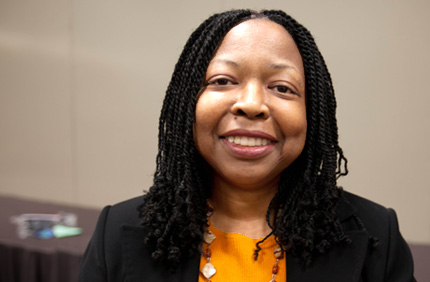
As a recently selected Champion of Change, I had the rare honor and opportunity to discuss challenges and solutions for bettering our communities with practitioners from around the nation as well as White House officials. Interestingly, the spirit of the roundtable discussion reminded me of the core beliefs that were the impetus for creating the Foundation for the Mid South: civic engagement, collaboration, and creating opportunity.
Twenty years ago, the Foundation for the Mid South’s founders believed that in order to move our region up from the bottom quartile of the nation in terms of the economy, health, and education, our region needed an entity to work across state lines to promote collaboration and civic engagement. The intent was to ensure the most effective use of the human and financial resources already in the region as well as to attract and leverage additional resources.
The Foundation has utilized its years of experience working in urban and rural communities to develop a model for comprehensive change. We work directly with communities to create plans for community and regional improvement by building and enhancing the capacity—the skills and knowledge—of local residents and organizations, identifying community assets, and collaborating with public and private sectors.
Engaging Disadvantaged Youth to Rebuild Communities
Posted by on June 14, 2011 at 5:27 PM ESTEd. Note: Champions of Change is a weekly initiative to highlight Americans who are making an impact in their communities and helping our country rise to meet the many challenges of the 21st century.

I was privileged on June 7th to join with White House staff and an extraordinary group of community leaders for a roundtable discussion with selected Champions of Change.
It was inspiring to meet and listen to the achievements and the passion of this group, and wonderful to know that we were just the tiny little tip of the iceberg of people dedicated to improving life in communities across America.
My own work laying the groundwork for the expansion of the YouthBuild program across the United States and now in 14 countries abroad, began in East Harlem in 1978 when I asked young people what they would like to do to improve their communities and they said they would like to rebuild abandoned buildings to create housing for the homeless.
Champions of Change: Making a Difference through Service and Innovation
Posted by on June 13, 2011 at 4:50 PM ESTEd. Note: Champions of Change is a weekly initiative to highlight Americans who are making an impact in their communities and helping our country rise to meet the many challenges of the 21st century.
Watch the video on the week's Champions of Change here.
Last week, we gathered fourteen inspirational citizens to hear about their tireless efforts to renew and strengthen their communities through service and innovation. We met in New Orleans, the host city for the 2011 National Conference on Volunteering and Service, an annual convening of over 4,000 people working to make a difference in the lives of others. President Barack Obama has called New Orleans a “symbol of resilience and community”—and what better place to highlight these Champions of Change than the Crescent City and the living laboratory for social innovation and civic participation that it has become.
Each of this week’s Champions exemplifies our Administration’s firm belief that the best ideas really do come from outside of Washington—from local communities across the country where, everyday, individuals are taking on our most pressing social challenges and developing solutions that work. From a twelve-year old environmental activist to established and highly regarded non-profit leaders, these Champions are making an extraordinary impact in communities, in schools, and in the workplace. They are building homes, creating opportunities for young people, veterans, and immigrants, and helping disaster victims rebuild their lives. Through their actions, they demonstrate that citizen leadership is critical to “winning the future.” They are redefining civic participation in the 21st century.
Our Administration is investing in these community solutions. Many of the Champions of Change are recipients of Social Innovation Fund grants—YouthBuild USA, the Delta Workforce Funding Collaborative, and iMentor—and we are so excited by the work that they are doing on the ground. Others are partnering with national service programs like VISTA and AmeriCorps, and delivering critical services to help communities recover and rebuild from disasters and to support the reintegration of veterans in our society—Equal Justice Works, Alabama State Voluntary Organizations Active in Disaster, and the Washington Commission for National and Community Service.
I would be remiss if I did not mention the St. Bernard Project. This New Orleans non-profit has drawn volunteers from across the country to rebuild hundreds of homes throughout St. Bernard Parish and the Lower Ninth Ward. It’s been quite an extraordinary example of “shared responsibility” and the possibilities that can come from citizens pulling together around a common goal. The President once noted that he saw in the St. Bernard Project “the symbol that this city has become.” And, indeed, the work of each of these Champions has such resonance.
Please visit the Champions of Change website to learn more about these individuals and their work.
We hope these Champions and their causes will inspire and energize you to make a difference in your own communities, and, by doing so, to win the future.Marta Urquilla is the Senior Policy Advisor to the White House Domestic Policy Council’s Office of Social Innovation and Civic Participation.
Learn more about ServiceThe Spark Needed to Compete for Manufacturing Jobs
Posted by on June 10, 2011 at 2:12 PM ESTThe 30-Year Anniversary of the Aids Pandemic: What Has Changed, What Needs To Change
Posted by on June 10, 2011 at 11:46 AM ESTEd. Note: Champions of Change is a weekly initiative to highlight Americans who are making an impact in their communities and helping our country rise to meet the many challenges of the 21st century.
In the 30 years since the world first became aware of AIDS, a lot has changed. As the communities most affected became less privileged, poorer, darker, more feminine, people living with HIV were increasingly dealing with additional layers of stigma. As the response to AIDS became less inclusive of the people most affected, the people most affected had less capacity to participate or advocate and many were faced with higher priorities as they struggled to support themselves, their families, and to understand what their diagnosis would come to mean for them and for their communities.
We have been through difficult times where we saw ideology and moralizing punditry prioritized above the science of prevention and treatment even while we knew that people were needlessly becoming affected. We have seen a global effort to provide HIV treatment access, around the world, begin to diminish in the context of a great recession. At the same time, we finally have evidence of what many of us intuitively believed all along: access to treatment prevents HIV transmission. We see light at the end of the tunnel.
As a woman living with HIV global advocate, who is both a US citizen and a member of an amazing international network of HIV positive women (ICW), I see a global culture beyond the US that offers many valuable lessons. For example, the proportion of those living with HIV who are women has steadily grown since the beginning of the epidemic. In 1985, women accounted for 8% of new HIV diagnoses while in 2009, women accounted for 25% of those newly diagnosed. Women of color have been particularly affected are significantly more likely to be diagnosed with HIV than their white counterparts.
Learn more about , Health CareThirty Years of HIV/AIDS: A New Challenge Is on the Horizon
Posted by on June 10, 2011 at 10:21 AM ESTEd. Note: Champions of Change is a weekly initiative to highlight Americans who are making an impact in their communities and helping our country rise to meet the many challenges of the 21st century.
When I reflect on the 30th anniversary of the HIV epidemic, I am simply amazed. Amazed that I am still alive after living with AIDS for over 20 years and that there is an effective treatment for HIV that is one pill a day. I remember the early days of AIDS, there was no name for it—only fear. Doctors were afraid to touch you. Nurses were afraid to feed you. And your friends that tried to give you encouragement to not feel hopeless, died themselves from the disease. Today HIV/AIDS is a preventable and treatable disease. There is a lot least stigma and fear. The President of the United States speaks openly and affirmatively about ending the HIV/AIDS epidemic. In many jurisdictions, government funded programs provide a safety net of health care and support for people with the disease. So much has changed in 30 years, yet new challenges appear on the horizon.
One of the most serious challenges is the “paradigm shift” in HIV infection among Black men who have sex with men (MSM). Studies have found that the traditional paradigm, the theoretical model of a positive correlation between high HIV risk behavior and high HIV infection, may not be true for Black MSM. Such a paradigm shift would have a profound impact on the effectiveness of prevention efforts targeting Black MSM in the United States.
Learn more about , Health CareEnding the Stigma of HIV/AIDS in the Asian Pacific Islander Community
Posted by on June 10, 2011 at 8:32 AM ESTEd. Note: Champions of Change is a weekly initiative to highlight Americans who are making an impact in their communities and helping our country rise to meet the many challenges of the 21st century.
It is truly an honor to be amongst passionate long-time AIDS activists during the “Champions of Change” roundtable at the White House. In reflecting back on the unparalleled activism that the AIDS movement has sprung, I commemorate and thank pioneers from the community I represent, the Asian Pacific Islander (API) community, including Ignatius Bau, Dean Goishi, Paul Kawata and Sukee Terada Ports; and the countless lives we’ve lost including my fellow Los Angelenos—James Sakakura, Patrick Sullivan and Christine Wu.
Thirty years into the AIDS pandemic, apathy and complacency has seeped in how America views HIV/AIDS. Meanwhile, we continue to see alarming increases in new HIV infections particularly in communities of color and our youth population. And despite advances in AIDS treatment, we must be reminded that being on life-long medication is not necessarily the ideal quality of life and that many in third world countries still have high AIDS mortality rates.
This is why at my agency, the Asian Pacific AIDS Intervention Team, we continue to seek innovative solutions and remain adaptable to resolve the complexities of HIV prevention, treatment, research, training and advocacy.
Winning the Battle Against HIV/AIDS
Posted by on June 9, 2011 at 1:41 PM ESTEd. Note: Champions of Change is a weekly initiative to highlight Americans who are making an impact in their communities and helping our country rise to meet the many challenges of the 21st century.
I am honored that the White House chose to commemorate the 30th Anniversary of the HIV/AIDS pandemic with me and other openly HIV-positive organizers from across the country. We gathered recently with federal officials to reflect on the salient lessons learned and milestones marked in the fight against HIV/AIDS over the past three decades.
Reflecting on this solemn occasion stirs a mix of emotions.
In 30 years, HIV has caused tremendous loss and human suffering in every corner of the inhabited world. But it has also inspired heroic acts of kindness, generosity, and leadership. Looking back, we must laud the significant medical, political, and scientific advances achieved but also sustain a firm understanding of the unfinished work that lies ahead. With record numbers of people living with HIV and increasing numbers of new infections, we must reinvigorate efforts to provide people with and at risk for HIV/AIDS with the health and social services, housing, prevention, and human-rights protections they so desperately need and deserve. HIV knows no borders and neither should our compassion and actions.
Recognizing the rapid maturity of HIV medical, behavioral and social sciences, the U.S. Centers for Disease Control and Prevention now considers HIV a winnable battle. To truly win the future, the U.S. must not relent until we’ve won the fight against HIV/AIDS.
Learn more about , Health Care
- &lsaquo previous
- …
- 220
- 221
- 222
- 223
- 224
- 225
- 226
- 227
- 228
- …
- next &rsaquo
Twitter