
Energy and Environment Latest News
Happy Anniversary, National Ocean Policy
Posted by on July 25, 2011 at 11:16 AM EDTParticularly in matters that reach well beyond our own interests, New York appreciates having a well-drafted national roadmap to follow. As with all good policy, EO 13547 provides the right mix of inspiration and direction, while laying an inclusive foundation that provides room for everyone to participate. Even more importantly, by allowing states and regions the flexibility to determine their own destinies, the National Ocean Policy is fostering a culture of collaboration and shared decision-making. At the state level, we now benefit from having the strength and resources of the federal government in our corner, as we work toward meeting New York's needs. At a broader level, the five-state Mid-Atlantic Regional Council on the Ocean has been given a worthy and supportive federal partner to help resolve some of our region's most pressing ocean challenges. We wish the National Ocean Policy a very happy anniversary, and many more.
George Stafford is Deputy Secretary for the New York Department of State
Learn more about Energy and EnvironmentState and Federal Grid Gurus Working Together to Beat the Heat
Posted by on July 22, 2011 at 5:54 PM EDTIt is critical that America modernize its electric grid if it is to lead the world and create jobs in the clean-energy economy of the future. There are a number of challenges that need to be addressed in order to build the 21st century grid, but right now, at the peak of this week’s intense heat spell, no challenge is more evident than that of the stress that sustained high temperatures can put on the electric grid.
As of this afternoon, the heat index in Washington, DC, was 119 degrees Fahrenheit. When temperatures are this extreme several days in a row, power companies scramble to manage peak demand, often urging consumers to turn off non-essential use of electricity. In fact, some utilities in the Northeast are already reporting limited outages today.
New smart grid technologies can help consumers and utilities better manage extreme heat waves, through better information and through “demand response” technologies that automatically lower air conditioner settings or non-essential lights (while compensating consumers for those reduced services).
Just this week the National Association of Regulatory Utility Commissioners (NARUC) passed a resolution endorsing the continuing modernization of the electric system with smart grid technologies. In the resolution, NARUC put forth 15 “foundational principles” relating to advanced metering and smart grid deployments for state commissions, including:
- Recognizing the potential of smart grid investments to improve reliability, provide a more resilient power system, and reduce electricity costs;
- Using in-home devices, Web-based portals, and other tools and innovations to help consumers understand energy use and make more informed choices;
- Providing consumers with affordable and timely access to their own energy use data, with rules of access that balance privacy with innovation; and
- Having regulators, as a condition of approving smart grid investments, require utilities to deploy smart grid technologies in a manner consistent with reasonable and effective cyber and physical security best practices.
The NARUC continues that organization’s ongoing support for grid modernization with thoughtful policies that reflect the diverse needs of the states while recognizing the common interest in building an electric system to support the American economy of the future. For more than ten years, NARUC has addressed critical issues arising from advanced metering and smart grid deployments, including ratemaking, reliability, cyber security, consumer education, consumer protection, and privacy.
This action by State Commissioners is also consistent with federal Smart Grid policy and builds upon the recent Administration release of President Obama’s “Policy Framework for the 21st Century Grid: Enabling Our Secure Energy Future,” issued on June 13, 2011.
In fact, the Administration worked closely with NARUC leadership and individual state regulators during the development of the Policy Framework, and showcased this collaboration last month. The event featured utility commissioners from across the country and included remarks from NARUC President Tony Clark of North Dakota, who said: “New smart grid technologies could dramatically change how we use and consume electricity. But they also leave numerous unanswered questions that state commissions must consider. This is why a strong Federal-state relationship is essential as we move forward and make the electricity system work best for the consumers we all serve.”
Achieving sustained progress on grid modernization requires a partnership between states and the Federal government, as well as collaboration with the private sector, consumer groups, and other stakeholders, and we welcome this partnership.
Nick Sinai is Senior Advisor to the U.S. Chief Technology Officer
Learn more about Energy and Environment, TechnologyBringing Practical Biomass Energy to Rural Communities
Posted by on July 22, 2011 at 10:28 AM EDTEd. Note: Champions of Change is a weekly initiative to highlight Americans who are making an impact in their communities and helping our country rise to meet the many challenges of the 21st century.

The second generation of bioenergy crops has the potential to produce more energy on poorer soils and with fewer inputs than any crops we use for energy now. But turning this potential into practical, profitable crops may only come when farmers have had a chance to work with them.
Selecting the most promising crops from research conducted at the University of Illinois and drawing on the experience of the farmers we visited in Germany and Austria, we found that the economics and logistics of biomass production and its use on our farm and in our community looked very promising. The holdup is a “chicken or egg” situation. No farmer wants to plant a new crop without a market, and new markets won’t develop without a supply.
In Europe we also learned how even small amounts of biomass can be effectively used to replace oil, coal, and gas to heat homes, farm buildings, schools, and businesses. As supplies of biomass increase, power plants and even cellulosic ethanol plants can be considered; however, using locally produced biomass will, in most instances, prove to be beneficial to producers and end users alike, thus strengthening the community.
Billions of dollars (both private and public) are being spent to learn how to convert biomass to liquid fuels. Yet, unless we provide the incentive to establish biomass crops, we won’t have them when we need them. It would be akin to spending billions to research and build a new fighter jet and then realizing that we have no fuel to fly it.
Learn more about Energy and Environment, RuralLeading By Example Toward the Jobs of the Future
Posted by on July 21, 2011 at 6:07 PM EDT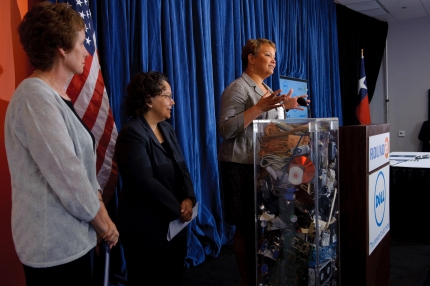
(Left to right): GSA Administrator Martha N. Johnson; White House Council on Environmental Quality Chair Nancy Sutley; EPA Administrator Lisa P. Jackson. (Photo by Eric Vance, US EPA)
Yesterday in Austin, Texas, U.S. Environmental Protection Agency Administrator Lisa P. Jackson, General Services Administrator Martha N. Johnson, and White House Council on Environmental Quality Chair Nancy Sutley joined the CEOs of Dell Inc. and Sprint, and a senior executive from Sony Electronics to release the Obama Administration’s "National Strategy for Electronics Stewardship" – a framework for responsible electronic design, purchasing, management and recycling that will promote the burgeoning electronics recycling market and jobs of the future here at home. The announcement, made at Round2 Recycling Facility, included the first voluntary commitments made by Dell, Sprint and Sony with EPA aimed at promoting environmentally sound management of used electronics. The Administration's strategy also commits the Federal Government to take specific actions that will encourage more environmentally friendly design of electronic products, promote recycling of used or discarded electronics, and advance a domestic market for electronics recycling that will protect public health and create jobs.
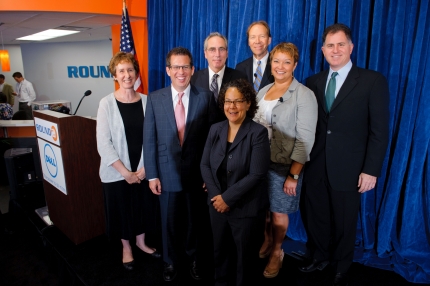
(Left to right): GSA Administrator Martha N. Johnson; Round2 Recycling CEO Randy Weiss; Mark Small, Vice President for Corporate Environment, Safety and Health, Sony Electronics Inc.; White House Council on Environmental Quality Chair Nancy Sutley; Sprint CEO Dan Hesse; EPA Administrator Lisa P. Jackson; Dell Inc. CEO Michael Dell. (Photo by Eric Vance, US EPA)
The response has been quite positive. See some statements of support below from various business leaders, advocacy groups and Members of Congress:
John Shegerian, Co-Founder, Chairman and CEO, Electronic Recyclers International, Inc. (ERI)
"ERI is encouraged to see that the Federal government is leading the way by establishing a policy to utilize only certified recyclers for its electronics processing, increase U.S. jobs, and reduce harm from U.S. exports of e-waste. As an R2 and e-Stewards certified company, ERI supports the safe handling of recycling electronics here in the U.S. and abroad and looks forward to working with the Federal government in promoting scientific and technological developments to improve the electronics recycling process and maximize the recovery of valuable materials from discarded electronics."Willie Cade, CEO, PC Rebuilders & Recyclers, LLC.
"The release yesterday of the 'National Strategy for Electronics Stewardship' by the Obama Administration is a meaningful and positive step forward in solving the e-Waste problem. The strategy clearly shows that the Administration spent considerable time and effort listening, digesting and planning. This will prove to be a very successful jobs creation and sustainability or 'Green' program…This is the first comprehensive sustainability strategy in our nation's history."Walter Alcorn, Consumer Electronics Association (CEA) Vice President of Environmental Affairs and Industry Sustainability
"Electronics recycling is a national problem that deserves a national solution. Today's announcement from EPA, GSA and CEQ echoes the principles our industry laid out this spring with the eCycling Leadership Initiative. We look forward to continuing our dialogue with EPA, GSA and CEQ in the hopes of fortifying a robust public-private partnership that ensures consumers across our nation have ample opportunities to recycle electronics responsibly. A formidable partnership is the best way to develop a national approach to eCycling that replaces the patchwork of costly and confusing state regulations."Robin Wiener, President, The Institute of Scrap Recycling Industries, Inc. (ISRI)
"Our federal government is the largest source of used and end-of-life electronics. It is encouraging to see that the government is taking a strong position on the responsible management of these materials. Even more, we are encouraged by the Obama Administration's flat dismissal of burdensome and overreaching legislation that would ban exports and pull the rug out from under an industry that continues to create jobs and contribute to both the U.S. and global economy. Today's announcement includes practical, effective steps that actually address bad actors instead of shutting down an industry."Don-Michael Bradford, PhD, CE, President and CEO, Pacific Federal Energy Systems
"Your very important written policy framework will enable companies such as ours [which recycles e-waste] to show the investment community that the government is serious about providing a value-added solution to the growing eWaste problem in the US."Dr. Allen Hershkowitz, Solid Waste Project Director, Natural Resources Defense Council
"The export of unprocessed electronic wastes from the United States to the developing world must end because electronic wastes contain many toxic substances. Indeed, exporting of unprocessed electronic wastes is the number one environmental problem plaguing e-waste management in the United States. The Interagency Task Force on Electronics Stewardship report has recognized this as a global problem and the good news is that recycling e-waste domestically creates new jobs and stimulates wider economic development more generally. Consequently, what all municipalities, businesses, and all generators of e waste must take away from today's Task Force report is that used electronic wastes must be recycled domestically for both economic and public health reasons. However, the single largest generator of electronic wastes in the United States is the federal government itself, and it must lead by example and assure that all of its e-waste is recycled domestically as well."Congressmen Mike Thompson (D-CA) and Gene Green (D-TX)
"We are pleased that the Obama Administration is committed to addressing the growing issue of electronics waste, which now represents the fastest growing waste stream in the United States. Furthermore, we applaud the President for working not only with government agencies, but also the private sector to identify potential challenges and solutions to our e-waste problem. Private industry's perspective will be invaluable as we continue to develop workable and responsible e-waste policies."Sen. Tom Carper (D-Del.), Co-Chair of the Senate Recycling Caucus and Chair of the Subcommittee on Federal Financial Management
"As the largest purchaser of consumer goods in our country, the Federal government has an opportunity and a responsibility to ensure that it procures electronics in the safest, smartest way possible. The Obama Administration's announcement today of a 'National Strategy for Electronics Stewardship' leverages the purchasing power of the Federal government to support responsible purchasing, management and recycling of electronics within the Federal government. Through this initiative, the Federal government will work to promote the development of more efficient and sustainable electronic products; direct Federal agencies to buy, use, reuse and recycle their electronics responsibly; support recycling options and systems for American consumers; and, strengthen America's role in the international electronics stewardship arena. As Co-Chair of the Senate Recycling Caucus and as Chair of the Subcommittee on Federal Financial Management, I warmly welcome the Administration's move to bolster electronics recycling and believe it will help not only our environment but also our economy along the way."Sahar Wali is the Director of Communications at the White House Council on Environmental Quality
Learn more about Energy and EnvironmentGreenGov: Getting Results
Posted by on July 21, 2011 at 11:29 AM EDTSince President Obama signed Executive Order 13514 and kicked off the GreenGov Challenge, the Federal community has been working to demonstrate what leadership by example means in projects around the country.
From Sandia National Laboratory's solar powered vehicles to NASA's Sustainability Base, these GreenGov success stories are showing that focusing on beneficial energy and environmental outcomes leads to good economic results – consistent with estimates that meeting President Obama's sustainability goals would save taxpayers up to $11 billion in energy costs over the next decade.
It's no surprise that projects that are focused on reducing energy and water use and eliminating waste would cut costs, too. Leading American companies report similar results, and their best practices – shared at educational events like the GreenGov Symposium – have helped to inspire and inform Federal efforts.
With nearly 500,000 buildings, more than 600,000 vehicles, and $500 billion in annual purchasing power, the Federal Government has a responsibility to operate efficiently and intentionally when it comes to leveraging our market scale to foster a clean energy economy. These initial success stories show how Federal agencies are making good on that promise.
Michelle Moore is the Federal Environmental Executive at the White House Council on Environmental Quality
Learn more about Energy and EnvironmentInvesting in the Jobs of Tomorrow
Posted by on July 20, 2011 at 3:32 PM EDTCross-posted with The GSA Blog
Last week I saw firsthand two groundbreaking clean energy projects – the Midwest’s largest rooftop solar panel array at GSA’s Major General Emmett J. Bean Federal Center in Indianapolis and the country’s largest geothermal project at Ball State University. These two Indiana projects are creating jobs that will form the backbone of our nation’s 21st century economy while providing useful information that will inform decision-making nationwide.
GSA has invested in solar power technology to cut operating costs at federal buildings across the country, but what makes the Bean Center’s solar array special is its sheer size with over 6,000 panels, as well as the building’s solar test lab. The lab will test how four different solar technologies perform under diverse Midwestern weather conditions. The rooftop installation created over 100 high paying green collar jobs, and the data collected at the test lab will be widely shared to foster continued growth in the solar industry.
- &lsaquo previous
- …
- 117
- 118
- 119
- 120
- 121
- 122
- 123
- 124
- 125
- …
- next &rsaquo
Related Videos
-
 May 09, 2014 9:21 AM
Inside the White House: Solar Panels
-
 September 01, 2016 9:25 PM
President Obama Delivers a Statement to the Press
White House Blogs
- The White House Blog
- Middle Class Task Force
- Council of Economic Advisers
- Council on Environmental Quality
- Council on Women and Girls
- Office of Intergovernmental Affairs
- Office of Management and Budget
- Office of Public Engagement
- Office of Science & Tech Policy
- Office of Urban Affairs
- Open Government
- Faith and Neighborhood Partnerships
- Social Innovation and Civic Participation
- US Trade Representative
- Office National Drug Control Policy