

Latest News
When I Speak My Community Is Listening
Posted by on April 5, 2012 at 11:11 AM EST I have come to believe over and over again that what is most important to me must be spoken, made verbal and shared, even at the risk of having it bruised or misunderstood. –Audre Lorde
To share in my personal growth as a first generation, working class, queer, Samoan spoken word poet/community activist, and explain how I found power in my voice the moment I realized I could use it to save myself and my community, I need to be able to speak and write in my own vernacular. My own language. To know that even if I don’t use these words grammatically correct in one reader’s eyes, it doesn’t mean that I’m wrong for speaking this way. Who’s to say that I’m wrong? According to what standards? And who wrote those standards? And who were those standards intended for? And who did they leave behind in thought?
If I can’t deconstruct and reclaim language in the ways necessary to my growth, if I can’t ask questions about why things are the way they are in society, and why is it that historically, people from my community are always suffering from some kind of injustice, then there will be no use for my voice. I know this is my duty because I’ve been mentored to believe that if I’m not telling my own story, then someone is going to tell it for me. My journey as a spoken word poet has enabled me to create the connections between the different dimensions of my identity and my purpose in this struggle for social justice and critical consciousness, all because I was finally able to find my voice and speak -- and teach others to do the same, especially our youth.
Dreaming Big: Pain is Temporary, Quitting is Forever
Posted by on April 5, 2012 at 11:04 AM EST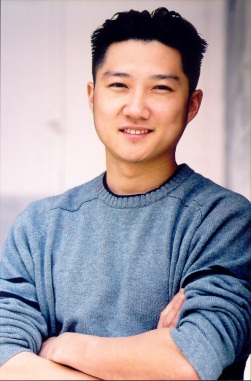
My father came to America with a few hundred dollars and taught us to dream big. He always wanted me to enter the political field, but instead I became a comedian. He passed away two years ago but I know he is proud that I still made it to the White House as a "Champion of Change."
In 2000, I founded a Korean American talent show called Kollaboration and poured my blood, sweat and tears into it. Some people said it wouldn’t last. We are now in our 12th year. Kollaboration draws over 20,000 people annually in 13 cities and counting.
The reason why the show exploded was because we have humble, passionate leaders in each city who volunteer their time out of love to make it happen. One of the most powerful forces in the world is a team that works toward a common goal and doesn't quit until they've succeeded. One of the main reasons why Kollaboration went to another level was a team member that I met in 2004. I met my one of my close friends, Roy Choi, who solidified our organization as 501(c)3 non profit organization and guided the direction of the movement, from Korean American, to Asian Asian American, which was one of the best things that could have happened. Kollaboration's mission is empowerment through entertainment and is now widely recognized as "game changer" in the Asian Pacific Islander movement.
Creating Connections and Inspiring People Begins and Ends with a Story
Posted by on April 5, 2012 at 11:00 AM EST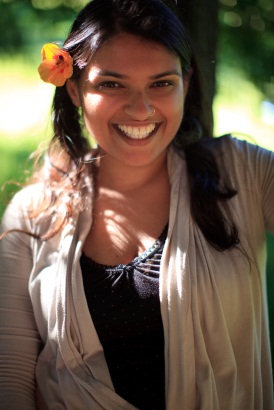
As an artist and illustrator, I am incredibly honored to be a Champion of Change. In a country rich with diverse stories -- my story is one that is linked to the concept of storytelling itself.
I came to the United States when I was four months old. I grew up in a large Indian family in a small town outside of Los Angeles. Being Indian-American has its benefits and challenges. My family stressed the importance of education but faltered when it came to supporting creativity. At an early age I was a reader; I devoured books. I wanted to be a writer but I also wanted to draw. Filling the pages of sketchbooks was a happy pastime. My parents encouraged me to pursue typically secure and safe majors, but I chose literature. At the University of California, Santa Cruz, where I received my degree, I struggled with the desire to make my family proud while remaining true to myself. After years in the non-profit sector, I turned to art. I realized that the combination of art and literature allowed me to create work that tells a story.
My art career was not seen as a path to success and I could see my family's growing concern. The challenge isn't the lack of success stories in the arts nationwide, rather it's the lack of strong, successful, female Asian-Americans in the arts. There was no role model I could name to reassure my family that a person like myself could make a living through art. The problem is two-fold: an absence of Asian female voices in the artist community means it is difficult to believe art is a path to success; in addition, families and communities are reluctant to support what they cannot understand. However, if our community continues to hesitate encouraging aspiring creatives it will not change.
Learn more about , ServiceStriving for Lesbian, Gay, Bisexual and Transgender Visibility in our Asian American Communities
Posted by on April 5, 2012 at 10:56 AM EST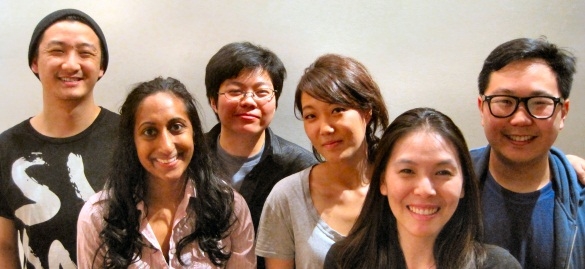
The Asian Pride Project (APP) is honored to be selected as a White House Champion of Change.
APP is a multimedia platform that aims: to foster greater visibility, pride, acceptance, unity and harmony for all lesbian, gay, bisexual, and transgender (LGBT) Asians & Pacific Islander (API) people in our families, cultural communities and beyond -- no matter where we are. We believe in the power of sharing, connecting, and relating to give API families and communities the support they need when struggling with the challenges of our sexual and gender identities in the API cultural context.
This project was borne out of a hope to create opportunities for connection and communication through written stories, letters, essays, poetry, graphics, video clips, photos and art. In 2009, a small group of activists discussed the lack of resources and support for Asian & Pacific Islander (API) family members of lesbian, gay, bisexual and transgender (LGBT) people. While many members were "out" to friends, few were "out" to their families, a common experience of Asian and Asian Americans who identify as lesbian, gay, bisexual or transgender. A combination of societal stigma and the lack of culturally-relevant, language-specific resources for our families to use made the struggle for acceptance even more difficult for families struggling to accept their "out" children.
Recipe in Spotlight - Apple-Matzoh Kugel
Posted by on April 5, 2012 at 8:26 AM ESTEditor's note: This post is part of a series spotlighting different family recipes used by members of the Obama Administration for Passover.
This recipe is from my wife Hildy, who got it from her friend Jane in Connecticut. Dessert is always the hardest part of the Seder meal, and this one is just sweet enough without being overpowering. It's so good, my wife brings it out even when it is not Peseach!
Learn more about Additional IssuesRe-mark-able
Posted by on April 5, 2012 at 8:23 AM ESTFor the Win is a guest blog series featuring the remarkable initiatives that young Americans are advancing to win the future for their communities. Each week we highlight a new young person and learn about their inspiring work through their own words. Submit your story to appear in the For the Win guest blog series.
Evan Ducker attends John A. Coleman Catholic High School in Kingston, N.Y. He created and self-published the children’s book, Buddy Booby's Birthmark, based on his personal experience living with a facial vascular birthmark. Evan is a member of the 2011 PARADE All-America High School Service Team, an award recognizing outstanding young service leaders presented by Parade Magazine in partnership with generationOn, the global youth enterprise of Points of Light.
According to published medical journals, many children with birthmarks develop psychological and self-esteem issues as well as suffer from depression and anxiety (especially in social situations). Additional research showed, children with noticeable birthmarks “suffer a significant degree of social stigmatization and have lowered levels of self-esteem,” causing an “adverse effect on social development.”
I have a facial port wine stain, and I don't think kids’ lives should be adversely affected, just because they’re born with a mark on their skin.
Throughout history, birthmarks (and the people who have them) have been portrayed in literature as hideous, evil, ugly, ashamed, lonely, and other primarily negative connotations. Even the medical community needs more education about birthmarks – as evidenced by a recent statistic from the Minnesota Vascular and Birthmark Center stating “over 60 percent of all vascular birthmarks are misdiagnosed” (vascularbirthmark.com). Some insurance companies are ignorant to the fact that birthmarks are not cosmetic issues. They are medical issues that pose no public threat, but can pose tremendous challenges (both physically and emotionally) for the children who have them – particularly if there's no common understanding or tolerance.
Learn more about ServiceRecipe in Spotlight - Kookoo Sabzi
Posted by on April 4, 2012 at 5:58 PM ESTEditor's note: This post is part of a series spotlighting different family recipes used by members of the Obama Administration for Passover.
This is a recipe from my mother-in-law, Lili Keypour, who was born and raised in Esfahan, Iran. Kookoo is a Persian-style egg dish that is similar to an Italian frittata or a Spanish Tortilla Española (without the potatoes). Iranians make many, many different types with a variety of flavorings. The kookoo sabzi, flavored with a variety of herbs and tinted a deep green, is probably the most popular. It is delicious, filled with vitamins and low in carbs.
Learn more about Additional IssuesRecipe in Spotlight - Apple Matzoh Pudding
Posted by on April 4, 2012 at 5:46 PM ESTEditor's note: This post is part of a series spotlighting different family recipes used by members of the Obama Administration for Passover.
My father's family used to serve my Aunt Glady's special noodle kugel for all the big family get togethers. But this combination of noodles, crushed pineapple, butter and sour cream was a diet disaster. As soon as my mom married my dad, they began hosting the Passover Seder and Glady's kugel was a thing of the past.
Learn more about Additional Issues
- &lsaquo previous
- …
- 143
- 144
- 145
- 146
- 147
- 148
- 149
- 150
- 151
- …
- next &rsaquo
Twitter