Health Care Blog
Final Legislation
Posted by on March 18, 2010 at 4:08 PM ESTThe final health insurance reform legislation that will be voted on by the House this weekend, and debated in the Senate soon after, is now available. As the President said in Ohio, “We have debated this issue now for more than a year. Every proposal has been put on the table. Every argument has been made.” This legislation represents the best ideas to emerge from both sides of the aisle to put American families and small business owners—not the insurance companies—in control of their own health care.
- It makes health insurance affordable for middle class and small businesses—including the largest middle class tax cuts for health care in history – reducing premiums and out-of-pocket costs.
- It gives millions of Americans the same types of private insurance choices that members of Congress will have—through a new competitive health insurance market that keeps costs down.
- It holds insurance companies accountable to keep premiums down and prevent denials of care and coverage, including for pre-existing conditions.
- It improves Medicare benefits with lower prescription drug costs for those in the ‘donut hole,’ better chronic care, free preventive care, and nearly a decade more of solvency for Medicare.
- It reduces the deficit by more than $130 billion over next ten years, and by more than one trillion dollars over the following decade; reining waste, fraud and abuse; overpayments to insurance companies and by paying for quality over quantity of care.
The health insurance reform legislation Congress is about to vote on makes important improvements to the bill passed by the Senate last December---a bill that is built upon the principles the President has been outlining all year. The new provisions improve that legislation by:
- Providing the biggest middle class tax cut for health care in history and making health insurance even more affordable for middle class families.
- Strengthening consumer protections and reining in insurance company abuses
- Further reducing the deficit in the first and second decades. With the new changes, this bill will become the largest deficit reduction effort in more than a decade
- Closing the gap in prescription drug coverage for seniors covered by Medicare, known as the donut hole, and extending the solvency of Medicare
- Expanding health insurance coverage to 32 million Americans, guaranteeing that 95% of Americans will be covered.
Closing out his remarks in Ohio, the President sent a message to Congress to finish the job that ring true today:
The American people want to know if it’s still possible for Washington to look out for these interests, for their future. So what they’re looking for is some courage. They’re waiting for us to act. They’re waiting for us to lead. They don’t want us putting our finger out to the wind. They don’t want us reading polls. They want us to look and see what is the best thing for America, and then do what’s right. (Applause.) And as long as I hold this office, I intend to provide that leadership. And I know these members of Congress are going to provide that leadership. I don’t know about the politics, but I know what’s the right thing to do. And so I’m calling on Congress to pass these reforms -- and I’m going to sign them into law. I want some courage. I want us to do the right thing, Ohio. And with your help, we’re going to make it happen.
Dan Pfeiffer is White House Communications Director
Learn more about Health CareResponsible and Paid For
Posted by on March 18, 2010 at 3:31 PM ESTCross-posted from the OMB blog.
Today’s Congressional Budget Office (CBO) estimate of health insurance reform legislation reaffirms what we have said for the past year: that fiscally responsible health insurance reform is not only possible, but also is an important step toward long-term fiscal sustainability.
The new CBO estimate finds that health insurance reform will reduce the deficit by over $100 billion in this decade and by more than $1 trillion over the following 10 years. If enacted, this would be the most significant deficit-reduction package passed into law in over a decade. And it will begin to transform our health care system into one that delivers higher quality at lower cost, boosting the bottom lines of American businesses, families, and the federal government — all the while providing those with health insurance with new choices and a host of new consumer protections and expanding coverage to 32 million Americans.
By paying for itself and more, this legislation represents an important break from the way Washington has done business recently. In the first decade of this century, large, significant domestic policy initiatives—two tax cuts and a Medicare prescription drug benefit — were passed into law without being paid for, adding trillions to the deficit. That is why the President pushed for, and then signed into law, statutory pay-as-you-go (PAYGO) legislation that holds policymakers to a simple principle: if you propose new tax cuts or entitlement expansions, you must find a way to pay for them.
Some have raised concerns that the health insurance reform legislation may have fallen short of this PAYGO principle. That is simply false. CBO’s analysis shows that the combination of the Senate-passed bill and the reconciliation bill will be deficit-reducing according to statutory PAYGO standards — standards that go beyond simple deficit reduction.
In particular, the overall bill — including the Senate-passed bill and the reconciliation bill combined—generates over $100 billion in deficit reduction over the next decade (and more thereafter). For the purposes of statutory PAYGO, however, certain of the bill’s savings are not counted: namely, the deficit reduction coming from increased Social Security payroll tax revenues and from the CLASS Act, a long-term care program. But even excluding these components the combined bills generate a net reduction in the deficit, and thus are fully compliant with statutory PAYGO.
The CBO score today should leave no doubt that we are operating in a new fiscal era — one where we abide by our commitment to pay for new initiatives and take steps to restore fiscal responsibility by reining in the single biggest driver of our long-term shortfall.
Peter Orszag is Director of the Office of Management and Budget
Learn more about Fiscal Responsibility, Health Care3
Posted by on March 18, 2010 at 8:42 AM EST
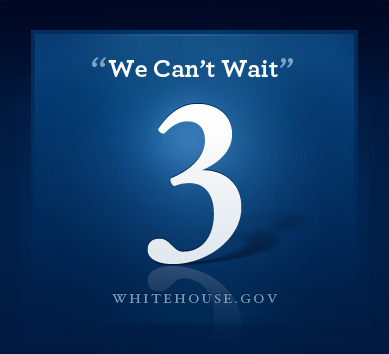
Download: Rectangular (630px by 303px) | Square (389px by 354px)- 3 million -- that’s the decrease in the number of middle-income earners who obtained health insurance from their employers from 2000 to 2008. [Source: Robert Wood Johnson Foundation]
- And 3 times -- is how much faster health care premiums are rising compared to wages. [Source: Kaiser Family Foundation]
It’s no secret -- skyrocketing health care costs are crushing families and businesses, forcing small business owners to choose between health care and hiring and forcing families to make hard spending choices because of rising out-of-pocket health care costs. While our broken health care system is hurting everyone, it’s the middle class that’s being hit the hardest. Yesterday, the non-partisan Robert Wood Johnson Foundation released a report showing that the middle class became uninsured at a faster pace than those with less or more income.
Health insurance reform will change that by giving American families and small businesses more control over their own health care. While in Ohio earlier this week, President Obama detailed just what health insurance reform means for America’s middle class:
For the first time, uninsured individuals, small businesses, they’d have the same kind of choice of private health insurance that members of Congress get for themselves. Understand if this reform becomes law, members of Congress, they’ll be getting their insurance from the same place that the uninsured get theirs, because if it’s good enough for the American people, it’s good enough for the people who send us to Washington.
So basically what would happen is, we’d set up a pool of people; millions of people across the country would all buy into these pools that give them more negotiating power. If you work for a big company, you’ve got a better insurance deal because you’ve got more bargaining power as a whole. We want you to have all the bargaining power that the federal employees have, that big companies have, so you’ll be able to buy in or a small business will be able to buy into this pool. And that will lower rates, it’s estimated, by up to 14 to 20 percent over what you’re currently getting. That’s money out of pocket.
And what my proposal says is if you still can’t afford the insurance in this new marketplace, then we’re going to offer you tax credits to do so. And that will add up to the largest middle-class tax cut for health care in history. That’s what we’re going to do…
Look, I want everybody to understand -- the wealthiest among us can already buy the best insurance there is. The least well among us, the poorest among us, they get their health care through Medicaid. So it’s the middle class, it’s working people that are getting squeezed, and that’s who we have to help, and we can afford to do it.
Today’s number, 3, is the latest in ‘Health Reform by the Numbers,’ our online campaign to raise awareness about why the time is now for health insurance reform.You can follow the campaign on Whitehouse.gov and social networks like Facebook, Twitter, MySpace and LinkedIn.
To help spread the word, share this blog post with your family, friends and online networks using the ‘Share/Bookmark’ feature below.
Previous Numbers:
Learn more about Health CareVoices of Reform
Posted by on March 17, 2010 at 2:30 PM ESTThere’s no issue that touches people more directly than health care, so there’s good reason for people to want as much reassurance as they can get before the country goes ahead with reform. That’s why those who work in our health care system day in and day out have a unique role in weighing in on the merits of any reform effort. In that field, one could hardly find a better voice than Marla J. Weston, PhD, RN, head of the American Nurses Association, who spoke out today loudly and clearly: “If ever there was a time to trust a nurse—that time is now. Please trust me when I tell you that we can’t afford to put off reform for one more administration—one more political season—or even one more day… This legislation will enact very real and much-needed insurance reforms; it will place a new focus on wellness and prevention, improving access to primary care and expanding coverage to over 30 million people.”
It would only make sense that Americans listen to groups dedicated to advocating for the sick and disabled, for our kids and our nation’s seniors, and for the American consumer. And for women, communities of color, and people of faith, it is more than understandable that they would want to hear from groups that have studied the proposals closely to see how it impacts them and their communities. Organizations representing 59,000 Catholic nuns, for example, joined together today to passionately urge Congress to act: “In this Lenten time, we have launched nationwide prayer vigils for health care reform. We are praying for those who currently lack health care. We are praying for the nearly 45,000 who will lose their lives this year if Congress fails to act. We are also praying for you and your fellow Members of Congress as you complete your work in the coming days. For us, this health care reform is a faith mandate for life and dignity of all of our people.”
Small businesses, fighting through a still-tough economy, also rightly want to know what this would mean for them, and the Small Business Majority makes the case on the benefits, adding that “Two-thirds or more of small business owners we polled in 17 states agree that healthcare reform is needed now to get the US economy back on track.”
But those groups are just the tip of the iceberg -- in an unprecedented show of diverse, even sweeping support, a virtual army of organizations came out in support of the President’s health reform proposal this morning as Congress prepares to make its final decisions. The astounding list of 244 organizations provided Families USA, which led the way in coordinating the coalition, is below:
Learn more about Health CareA Premium on Accurate Information
Posted by on March 17, 2010 at 1:35 PM ESTAs our year long debate on health care comes to a close there’s a lot of misinformation flying around. Case in point: a recent headline suggesting that health premiums would increase under the President’s health care plan. The suggestion of this article was that maybe Americans would be better off and end up paying less if we ditch reform just continue to do nothing.
In fact, the opposite is true. Most people would pay less—in many cases a lot less. Let’s look at why:In the absence of reform, health premiums are expected to continue skyrocketing. Those 20, 30 and 40% increases that you’ve heard about lately – they’ll be the rule not the exception.
The real question, then, is whether the President’s plan would lower the cost of premiums from what they would be or increase them. Here, we don’t have to rely on hearsay or news articles – the Congressional Budget Office has offered its official view on the question.
According to the CBO, Americans buying the same coverage they have today in the individual market will see premiums fall by 14 to 20 percent compared to what they would pay without health insurance reform. This results from two important things that reform will do:- First, the President’s Proposal introduces greater competition in the insurance market by establishing state-based exchanges where insurers will need to compete for business. In addition, the proposal streamlines administrative costs by standardized forms and reducing the paperwork burden of providers. CBO assumes that competition and administrative savings in the reformed market will generate significant savings, which will reduce average premiums for a comparable package of benefits by 7 to 10 percent compared to the cost of such benefits without reform in the individual market.
- Second, as a result of insurance market reforms that will be in place in the individual market and because of the individual responsibility requirement for coverage, CBO assumes that millions more people will have access to the individual market. According to the CBO, the impact of bringing these new people – many of whom are younger and healthier – into the market will help reduce premiums by 7 to 10 percent in the individual market.
But wait, maybe you’ve heard opponents saying that CBO actually found that premiums would go up? Again, the facts matter here. CBO assumes that under the President’s Proposal individuals purchasing coverage in the reformed individual market will have access to a wider range of health benefits than they have in today’s individual market. So people may choose to buy better coverage. Some may pay more because they are getting more for their money.
And let’s not forget that the President’s plan includes the largest middle class tax cut for health insurance in our nation’s history. Critics also fail to point out that the majority of people purchasing coverage in the individual market will receive tax credits that on average will cover two-thirds of their premium. Once the impact of these new tax credits are taken into account, many people in the individual market could see their premiums drop by almost 60 percent compared to what they would have paid without health insurance reform.
Dan Pfeiffer is White House Communications Director
Learn more about Health Care9
Posted by on March 17, 2010 at 8:58 AM EST
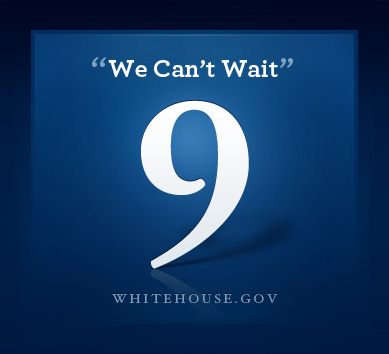
Download: Rectangular (630px by 303px) | Square (389px by 354px)- 9 -- that's number of states and the District of Columbia where there is still no specific law that makes it illegal for insurers to reject applicants who are survivors of domestic violence by citing the history of domestic violence as a pre-existing condition. [Source]
In many ways, America's women are those struggling most under the health care status quo. We're uniquely impacted by gender inequalities ranging from being charged higher premiums just because we're women to insurance companies being allowed in some states to deny coverage because of so-called “pre-existing conditions” like being pregnant. In addition, we're often the ones looked to for handling the health care of others. Most mothers say they're the ones responsible for managing their families' care -- from choosing doctors to taking their kids to appointments to fulfilling family prescriptions. And many women also find themselves caring for a sick or elderly relative.
While women may be dealing with many of the hardships of our broken health care system firsthand -- women also have the most to gain from health insurance reform.
Take a look at the video First Lady Michelle Obama previously recorded to highlight health insurance reform from the unique perspective of women:
Today’s number -- 9 -- is the latest in our ‘Health Reform by the Numbers’ series, an online campaign to raise awareness about how we just can’t wait any longer for health insurance reform. You can follow the campaign on Whitehouse.gov and social networks like Facebook, Twitter, MySpace and LinkedIn.
To help spread the word, share this blog post with your family, friends and online networks using the ‘Share/Bookmark’ feature below.
If you still have questions about what reform means for you and your family, tune in tonight at 5:15pm ET to get answers from HHS Secretary Kathleen Sebelius.
Previous Numbers:
Learn more about Health Care
- &lsaquo previous
- …
- 163
- 164
- 165
- 166
- 167
- 168
- 169
- 170
- 171
- …
- next &rsaquo
From the Press Office
Related Videos
-
 December 13, 2016 5:04 PM
Signing Ceremony for the 21st Century Cures Act
-
 December 10, 2016 5:00 AM
Weekly Address: It’s Time to Get Covered on the Health Insurance Marketplace