#GetCovered

HealthCare.gov is Open for Business

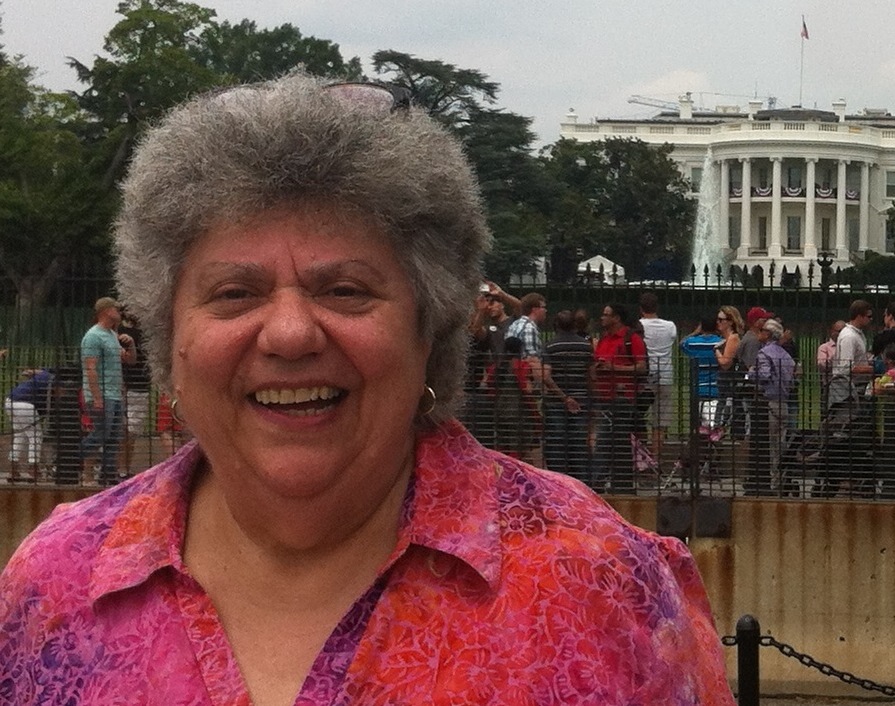
“Without the Affordable Care Act, I simply could not have retired at 62.”

Read more stories at WhiteHouse.gov/Get-Covered.
Donald L., Palm Coast, FL

Health Care Blog

  • 50/50

    625
    Download: Rectangular (630px by 303px) | Square (389px by 354px)

    • If you’re an American under the age of 65, there’s roughly a 50/50 chance that you will find yourself without coverage at some point in the next decade.[Source]

    President Obama first highlighted this staggering figure in a weekly address from this past September and detailed how, in our broken health care system, losing insurance can happen to anyone.  At yesterday’s rally, the President reminded us of just how fragile the status quo really is:

    Part of what makes this issue difficult is most of us do have health insurance, we still do.  And so -- and so we kind of feel like, well, I don’t know, it’s kind of working for me; I’m not worrying too much.  But what we have to understand is that what’s happened to Natoma, there but for the grace of God go any one of us.  Anybody here, if you lost your job right now and after the COBRA ran out …

    So let’s just think about -- think about if you lost your job right now.  How many people here might have had a preexisting condition that would mean it’d be very hard to get health insurance on the individual market?  Think about if you wanted to change jobs.  Think about if you wanted to start your own business but you suddenly had to give up your health insurance on your job.  Think about what happens if a child of yours, heaven forbid, got diagnosed with something that made it hard for them to insure.

    For so many people, it may not be a problem right now but it’s going to be a problem later, at any point.  And even if you’ve got good health insurance, what’s happening to your premiums?  What’s happening to your co-payments?  What’s happening to your deductible?  They’re all going up.  That’s money straight out of your pocket.

    So the bottom line is this:  The status quo on health care is simply unsustainable. We can’t have -- we can’t have a system that works better for the insurance companies than it does for the American people.

    Viewing this video requires Adobe Flash Player 8 or higher. Download the free player.

    Today’s number – 50/50 – is the latest in our ‘Health Reform by the Numbers’ series, an online campaign to raise awareness about how we just can’t wait any longer for health insurance reform. You can follow the campaign on Whitehouse.gov and social networks like Facebook, Twitter, MySpace and LinkedIn.

    To help spread the word, share this blog post with your family, friends and online networks using the ‘Share/Bookmark’ feature below.

    Previous Numbers:

  • "I'm Here Because of Natoma"

    Viewing this video requires Adobe Flash Player 8 or higher. Download the free player.

    This afternoon the President was in Ohio as the year-long battle to finally reform America's health insurance system draws towards a close – and he took the opportunity to remind everybody why he has fought so hard for so long against such powerful interests.  He was introduced by Connie Anderson, the sister of Natoma Canfield – a woman whose awful but all-too-common struggles have served as a brutal symbol of what is wrong with our system for millions of others. 

    It began with a letter – the type of letter millions of Americans have written to their presidents since the founding of this country.  But this letter, which she likely never expected anybody even close to the President to see, ended up in his hands.  It told of her story having battled off cancer sixteen years ago, and having battled with her insurance company ever since -- see the scanned images below or read the text of the letters here.

    Letter from Natoma Canfield to the President

    The President replied to her letter, but that was only the beginning:

    Letter from the President to Natoma Canfield

    When the President and HHS Secretary Sebelius met with insurance company executives recently asking them to justify their alarming rate increases across the country in recent months, he read her letter to them to make clear that this was not about politics, or lobbying, or grandstanding – this was about countless stories of working Americans being crushed under their health care costs, even when they play by the rules and pay their dues to insurance companies for what is supposed to be peace of mind.

    Last week, though, Natoma collapsed.  She was taken to an emergency room, and has since been diagnosed with Leukemia.  Natoma and her family are struggling to determine how they will afford Natoma’s medical treatment now that she no longer has insurance, which she dropped in January 2010 because of rate hikes that simply made insurance unaffordable.

    After being introduced by Natoma’s sister, the President recounted her story – and leaned into the microphone as he told the crowd what he has been trying to do for the past year:

    THE PRESIDENT: So you want to know why I’m here, Ohio?  I’m here because of Natoma.  (Applause.)   I’m here because of the countless others who have been forced to face the most terrifying challenges in their lives with the added burden of medical bills they can’t pay.  I don't think that’s right.  (Applause.)   Neither do you.  That’s why we need health insurance right now.  Health insurance reform right now.  (Applause.)

    AUDIENCE:  Obama!  Obama!  Obama!  Obama!

    THE PRESIDENT:  I’m here because of my own mother’s story.  She died of cancer, and in the last six months of her life, she was on the phone in her hospital room arguing with insurance companies instead of focusing on getting well and spending time with her family.

    I’m here because of the millions who are denied coverage because of preexisting conditions or dropped from coverage when they get sick.  (Applause.)

    I’m here because of the small businesses who are forced to choose between health care and hiring.  (Applause.)

    I’m here because of the seniors unable to afford the prescriptions that they need.  (Applause.)

    I’m here because of the folks seeing their premiums go up 20 and 30 and 40 and 50 and 60 percent in a year.  (Applause.)
     
    Ohio, I am here because that is not the America I believe in and that’s not the America that you believe in.

         AUDIENCE MEMBER:  What’s your plan?

         THE PRESIDENT:  So when you hear people say “start over” --

         AUDIENCE:  No!!

    THE PRESIDENT:  -- I want you to think about Natoma.  When you hear people saying that this isn’t the “right time,” you think about what she’s going through.  When you hear people talk about, well, what does this mean for the Democrats?  What does this mean for the Republicans?  I don’t know how the polls are doing.  When you hear people more worried about the politics of it than what’s right and what’s wrong, I want you to think about Natoma and the millions of people all across this country who are looking for some help, and looking for some relief.  That’s why we need health insurance reform right now.  (Applause.) 

    Connie Anderson Introduces the President in Strongsville, Ohio

    President Barack Obama is introduced by Connie Anderson, at the Walter F. Ehrnfelt Recreation and Senior Center in Strongsville, Ohio. Anderson is the sister of cancer patient Natoma Canfield, who wrote the President saying she gave up her health insurance after the premium rose to where she could no longer afford it March 15, 2010. (Official White House Photo by Pete Souza)

  • 1

    625
    Download: Rectangular (630px by 303px) | Square (389px by 354px)

    • 1 -- in every six dollars in the U.S. economy is spent on health care today. [Source]
    • If we do nothing, in 30 years, 1 out of every three dollars in our economy will be tied up in the health care system. [Source]

    Yesterday, the Robert Wood Johnson Foundation and the Urban Institute, non-partisan research organizations, released a report analyzing the cost of maintaining the status quo on health care. Here’s just a sample of what they believe we could be facing in the years ahead:

    • Families will face dramatically higher health care costs. Individual and family spending on premiums and out-of-pocket health care costs will increase significantly. Spending would jump 34 percent by 2015 and 79 percent by 2020.
    • Premiums will become increasingly expensive for employers and their workers. Premiums for both single and family policies would more than double by 2020, increasing from $4,800 to $10,300 for single policies, and from $12,100 to $25,600 for family policies.
    • Employers will see large increases in premium costs. Employer spending on premiums would increase from $430 billion in 2010 to $851 billion in 2020 -- a 98 percent increase.
    • Many small and medium sized firms would quit offering health care coverage to workers. As premiums nearly double, employees in small firms would see offers of health insurance almost cut in half, dropping from 41 percent of firms offering insurance in 2010 to 23 percent in 2020. Medium-sized firms would also cut offers of health insurance, dropping from 90 percent in 2010 to 75 percent in 2020.

    It’s clear: the cost of doing nothing is too high. The time is now to reform our broken health care system.

    Today’s number, 1, is the latest in ‘Health Reform by the Numbers,’ our online campaign to raise awareness about why the time is now for health insurance reform. You can follow the campaign on Whitehouse.gov and social networks like Facebook, Twitter, MySpace and LinkedIn.

    To help spread the word, share this blog post with your family, friends and online networks using the ‘Share/Bookmark’ feature below.

    Previous Numbers:

  • Exploring the Link between Rising Health Insurance Premiums and Stagnant Wages

    The rapid growth in health care spending in the U.S. in recent years has placed an increasingly heavy financial burden on individuals and families, with a steadily growing share of workers' total compensation going to health care costs. Because firms choose to compensate their workers with either wages or with benefits such as employer-sponsored health insurance (ESI), increasing health care costs tend to “crowd out” increases in wages. Therefore, recent rapid increases in employer-sponsored health insurance premiums have resulted in much lower wage growth for workers.

    Recent data from the Bureau of Labor Statistics' "Employer Costs for Employee Compensation" (ECEC) survey can shed light on this issue. According to the ECEC data, workers' inflation-adjusted average total compensation per hour increased by 1.3 percent per year from 2000 to 2009 (from $26.23 per hour to $29.39 per hour in 2009 dollars)1  However, the annual growth rate of average wages and salaries during this period was much lower. More specifically, if one subtracts out the employee share of health insurance premiums2, workers' average hourly wage and salary compensation increased by just 0.7 percent per year from 2000 to 2009. As shown in the following figure, the corresponding growth rate in ESI premiums (including both the employer and employee share) was much higher at 5.1 percent per year.

    Annual Growth in Components of Worker Compensation

    March 12, 2010.

    As a result of these very different growth rates, the fraction of workers' total compensation going to employer-sponsored health insurance premiums increased from 7.4 percent in 2000 to 10.3 percent in 2009. If the growth rates in both workers' average total compensation and in employer-sponsored health insurance premiums remain at their recent rates, this share will increase to 15.0 percent by 2019 and will continue to increase thereafter. Thus in the absence of reform that slows the growth rate of costs, a steadily increasing share of workers' total compensation will be eaten up by health insurance premiums.

    The increase from 2000 to 2009 in the average share of workers' total compensation going to ESI premiums is even more striking when one considers that a steadily declining share of workers and their dependents are covered by ESI. More specifically, according to the most recent data from the U.S. Census Bureau, the share of non-elderly adults and children covered by ESI fell from 68 percent in 2000 to 62 percent by 2008. This decline was to a large extent driven by a decline in the fraction of firms offering ESI to their workers, which fell from 69 percent in 2000 to 60 percent in 2009.3 Thus if one focused only on those firms that offered ESI during this period, the trends outlined above would be even more striking.

    These trends, along with recent empirical research4 on this issue, make clear that increasing health care costs are reducing the wage growth of American workers below what it otherwise would be. The President's Proposal for health insurance reform would genuinely slow this growth in costs, allowing workers to enjoy more of the benefits of their productivity increases in the form of higher take-home wages.

    Christina Romer is Chair of the Council of Economic Advisers
    Mark Duggan is a Senior Economist at the Council of Economic Advisers who focuses on Health

  • 41

    625
    Download: Rectangular (630px by 303px) | Square (389px by 354px)
     

    • 41 -- that’s the number of leading economists -- including three Nobel Prize winners -- who sent a letter to President Obama and Congress yesterday urging the swift passage of comprehensive health insurance reform to curb skyrocketing health care costs. [Source]
    • 41 --  is also the percentage of adults under the age of 65 who accumulated medical debt, had difficulty paying medical bills, or struggled with both during a recent one year period. [Source]

    Laura Klitzka of Wisconsin is no stranger to the burden of crippling health care costs.  In September, we had a chance to visit with her at her home in Green Bay.  Here’s her story:

    Download Video: mp4 (44MB) | ()

    With comprehensive health insurance reform, we can finally control rising health care costs and bring relief to Laura and her family and the many other American families struggling to keep up with their bills.  According to these leading economists, “the health care reforms passed by the House and Senate – with recent modifications proposed by President Obama – include serious measures that will slow the growth of health care spending.”  If reform fails, they add, “the chances of reducing growth of health care spending in the future will be greatly reduced.”

    Today’s number, 41, is the latest in ‘Health Reform by the Numbers,’ our online campaign to raise awareness about why the time is now for health insurance reform.  You can follow the campaign on Whitehouse.gov and social networks like Facebook, Twitter, MySpace and LinkedIn.

    If you’d like to help spread the word, share this blog post with your family, friends and online networks using the ‘Share/Bookmark’ feature below.

    Previous Numbers:


  • When Health Insurance Companies Attack

    In recent weeks, you’ve probably heard a lot about WellPoint, the big insurance company that reported earning $2.7 billion in one quarter, and then promptly raised rates on some customers in California by up to 39 percent. Those aren’t the only big increases WellPoint has attempted to implement. In 2009, the company sought a 24 percent increase for its customers in Connecticut, and it’s asked to raise rates by 23 percent in Maine this year.

    This pattern appears to be working for WellPoint. Recently, a major Wall Street analysis found that WellPoint would be a “primary beneficiary” if reform fails.

    So it shouldn’t surprise anyone that WellPoint officials are doing everything they can to stop reform. WellPoint is a part of the coalition that has financed millions of dollars television ads against reform. And they are continuing to spread misinformation about what will happen when we make comprehensive reform a reality.

    The latest attack came from WellPoint’s CFO, who addressed a group of investors and wrongly claimed that reform would increase costs and drive up premiums. Nothing could be further from the truth. 

    What WellPoint may not want you to know is that reform will shift power from insurance companies and into the hands of consumers. It will lower your premiums, not increase them, according to the nonpartisan congressional budget office. The CBO has examined reform and determined that customers who buy their health insurance on the individual market would pay 14 to 20 percent less for the same levels of coverage that they received before. If you get insurance through your job, CBO found that your premiums would likely decrease. In fact, the Business Roundtable recently issued a study that found that reform could reduce costs by as much as $3,000 per employee.

    Reform will also create a new marketplace where Americans can purchase affordable, quality health benefits. And Americans buying in the new marketplaces will be eligible for tax credits that can reduce their premiums by up to 60 percent.

    The criticism from WellPoint also ignores the many provisions in reform that will bring down the cost of health care. The health policy experts and economists who have looked at this bill have said we are doing everything possible to reduce health care costs.  Some of the steps we’re taking include:

    • Pilot programs for bundling payments and paying for episodes of care rather than each individual service.
    • Creating accountable care organizations where providers co-ordinate your care;
    • Streamlining administrative costs by reducing paperwork burden and standardizing forms.
    • Bringing more people into the insurance pool and reducing the “hidden tax” that insured individuals pay to cover the cost of caring for the uninsured.

    These are just a few of the provisions in reform that will bring premiums down for consumers. And we know what will happen if these provisions and health reform are not enacted. Premiums will rise, companies like WellPoint will thrive and families will suffer. Health insurance reform will lower your costs and give you more control over your health care:  that is why the insurance companies are spending millions of dollars trying to stop it.

    Dan Pfeiffer is White House Communications Director