Health Care Blog
Word from the White House: Objective Analysis Shows Reform will Help Small Businesses, Lower Premiums for American Families
Posted by on November 4, 2009 at 11:07 AM ESTIt's no secret that institutions of all stripes focus their communications on certain messages day to day. We thought it would all be a little more open and transparent if we went ahead and published what our focus will be for the day, along with any related articles, documents, or reports.
Supporting article: "Massachusetts provides evidence that health-care reform lowers insurance premiums," Washington Post, 11/2/09
Supporting testimony: "Testimony Before the Senate HELP Committee on Health Reform and Small Businesses," Jonathan Gruber, 11/2/09 (pdf)
Supporting report: "The Economic Effects of Health Care Reform on Small Businesses and Their Employees," Council of Economic Advisers, 7/25/09
Talking Points: Objective Analysis Shows Reform will Help Small Businesses, Lower Premiums for American Families
Lowering Premiums For American Individuals and Families
- MIT economist Jonathan Gruber has a new report out showing that reform will lower premiums for Americans purchasing insurance on their own.
- Analyzing the non-partisan information from the CBO, Gruber reports that under the House version of health insurance reform legislation, a typical individual could save anywhere from nearly $500 to more than $3,000 and a typical family could save between $1,260 and more than $9,000.
- Those savings, he notes, come in addition to the more generous benefits consumers would receive by purchasing insurance through the newly created exchange.
- And it’s also in addition to increased protections – like banning insurance companies from discriminating based on pre-existing conditions or dropping or watering down coverage when you get sick and need it most.
- "Not only does the House proposal lower premiums, it does so while also improving coverage," Gruber writes.
Helping Small Businesses
- Yesterday, Gruber also testified before the Senate HELP Committee that small businesses are disproportionately hurt by the health care status quo and that health insurance reform will lower premiums and save jobs in the small business sector.
- “Small business has little to fear, and much to gain, from health reform,” Gruber concluded.
- “Small business has little to fear, and much to gain, from health reform,” Gruber concluded.
- Gruber testified that health insurance reform would break down many of the barriers currently facing small businesses – like unpredictable premiums jumps, fear of starting new businesses for lack of affordable insurance options, and higher costs and limited choices due to administrative expenses and lack of bargaining power.
- He also cited the tax credits that would help small businesses who need it most pay for insurance.
- He also cited the tax credits that would help small businesses who need it most pay for insurance.
- Based on those factors, he unveiled a new analysis showing that health insurance reform will save small businesses 25% – or $65 billion per year – over the next decade.
- The consequences of those savings, he says, would be enormous.
- Workers in small businesses will see an increase in their take-home pay of almost $30 billion/year.
- And that reform would save about 80,000 jobs in the small business sector by 2019.
- Gruber also knocked down the myth that health insurance reform will raise costs for small businesses. "Objective CBO analysis,” he pointed out, “shows that these claims are clearly wrong – reform will lower, not increase, non-group insurance costs."
Learn more about Health CareHonoring the Legacy of Ryan White
Posted by on October 30, 2009 at 4:39 PM ESTToday, President Obama signed the Ryan White HIV/AIDS Treatment Extension Act of 2009. It represents our ongoing commitment to ensuring access to needed HIV/AIDS care and treatment. The White House and the Department of Health and Human Services (HHS) worked very closely with Congress on this bipartisan legislation, and the consensus document developed by the HIV/AIDS advocacy community was an important part of the process. We were so pleased that Jeanne White-Ginder, Ryan White’s mother, was here at the bill signing.
The Ryan White Program is the largest federal program specifically dedicated to providing HIV care and treatment. It funds heavily impacted metropolitan areas, states, and local community-based organizations to provide life-saving medical care, medications, and support services to more than half a million people each year: the uninsured and underinsured, racial and ethnic minorities, people of all ages.
The President also announced today the elimination of the HIV entry ban. Since 1987, HIV-positive travelers and immigrants have been banned from entering or traveling through the United States without a special waiver. In July 2008, Congress removed all legislative barriers to repealing the ban and paved the way for HHS to repeal the ban. A final rule will be published in the Federal Register on Monday, November 2nd and will take effect in early January 2010. That means that people who have HIV and are not U.S. citizens will be able to enter the U.S. starting in January next year. This is a major step in ending the stigma associated with HIV.
While I have been traveling across the country during the past several weeks for our HIV/AIDS Community Discussions, I am hearing from people living with HIV, nurses, case managers, doctors, community-based service providers, and others about how important the program is to ensure access to care and treatment. As we continue our work on developing the National HIV/AIDS Strategy, we have many important lessons from the Ryan White Program for increasing access to treatment, helping retain people in care, and improving health outcomes. Addressing the epidemic in the U.S. is a priority for President Obama, and we are renewing our focus on prevention as well as treatment.
As we prepare to mark the 20th anniversary of the Ryan White Program next August, the legacy of Ryan White continues to endure.
Participants at the event:
- Jeanne White-Ginder, Ryan White's mother
- Senator Tom Harkin, D-IA
- Senator Mike Enzi, R-WY
- Senator Tom Coburn, R-OK, not confirmed
- Representative Henry Waxman, D-CA
- Representative Frank Pallone, D-NJ
- Representative Joe Barton, R-TX
- Speaker Nancy Pelosi, D-CA, not confirmed
- Ernest Hopkins, Policy Chair, Communities Advocating for Emergency AIDS Relief (CAEAR); Federal Affairs Director, San Francisco AIDS Foundation
- Frank Oldham, Jr., President and CEO, National Association of People with AIDS (NAPWA)
- Julie Scofield, Executive Director, National Alliance of State and Territorial AIDS Directors (NASTAD)
More photos from the event:
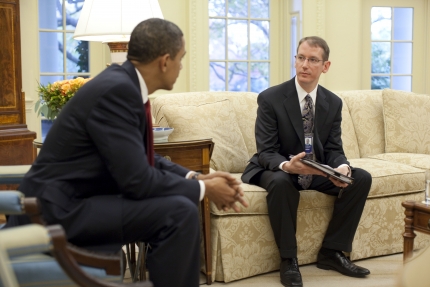
President Barack Obama has an event briefing with Jeffrey Crowley, right, in the Oval Office, prior to the signing of the Ryan White HIV/AIDS Treatment Extension Act of 2009. October 30, 2009. (Official White House Photo by Pete Souza)
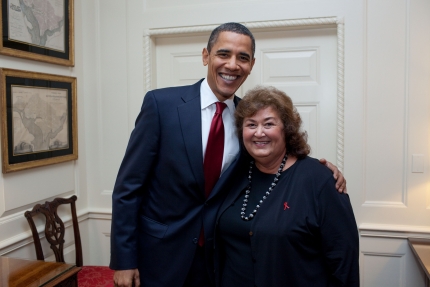
President Barack Obama poses with Jeanne White Ginder, Ryan White's mother. October 30, 2009. (Official White House Photo by Pete Souza)

President Barack Obama, surrounded by Members of Congress and other officials, signs the Ryan White HIV/AIDS Treatment Extension Act of 2009 in the Diplomatic Reception Room of the White House October 30, 2009. (Official White House Photo by Chuck Kennedy)
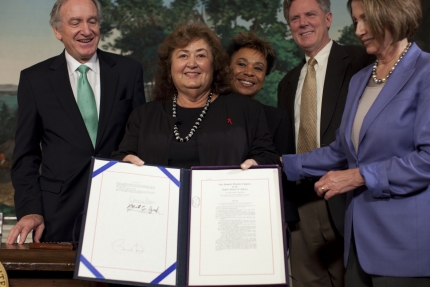
Jeanne White Ginder, Ryan White’s mother, displays the signed reauthorization. October 30, 2009. (Official White House Photo by Chuck Kennedy)
Jeffrey Crowley is the Director of the Office of National AIDS Policy and Senior Advisor on Disability Policy at the White House
Learn more about Health CareWord from the White House: Introduction of the Affordable Health Care for America Act
Posted by on October 30, 2009 at 12:53 PM ESTIt's no secret that institutions of all stripes focus their communications on certain messages day to day. We thought it would all be a little more open and transparent if we went ahead and published what our focus will be for the day, along with any related articles, documents, or reports.
Supporting bill description: "The Affordable Health Care for America Act," Speaker.gov
Talking Points: Introduction of the Affordable Health Care for America Act
- The introduction of the Affordable Health Care for America Act is another critical milestone in the effort to bring about reform that will provide stability and security for Americans with insurance, affordable options for those without insurance, and lower costs for American families, businesses, and the nation as a whole.
- This legislation is the product of unprecedented cooperation and countless hours of hard work by Speaker Pelosi, Chairmen Waxman, Rangel, and Miller, Congressman Dingell, and scores of House members who share the conviction that we can’t wait another year for health insurance reform.
- The House legislation includes critical reforms to the insurance industry, so that Americans will no longer have to worry that they will be denied coverage, or that their coverage will be dropped or watered down when they need it most.
- It also includes a public option that competes with private insurers, which the President has repeatedly said he believes is the best way to ensure choice and competition that are so badly needed in today’s market.
- Finally, it is fully paid for and will reduce the deficit in the long term.
- This is an historic step forward and we are confident that members will continue to work together to deliver meaningful reform for America’s families and businesses.
Learn more about Health CareFlu Prevention Tips on the Fields and Courts
Posted by on October 30, 2009 at 10:33 AM ESTThere are a number of common sense precautions being taught at homes and schools across America to help prevent the spread of the flu, including frequent hand washing, sneezing into the elbow, and getting a vaccination when it becomes available.
If your kids are playing on sports teams this fall, here are a few more tips to help them stay healthy:
- Have coaches remind children to cover sneezes and coughs with their sleeve or a tissue. Dispose of any tissues in a separate bag.
- Coaches (and parents) should make sure players stay home if they have a cough, cold, or flu for 24 hours after their symptoms have cleared.
- Have players wash their hands or use hand sanitizers before starting the game.
- Make sure players bring in their own water bottles and do not share them.
- Instead of post-game handshakes or high-fives, cheer or clap for the opposing team.
For more tips for parents or information about flu, visit Flu.gov.
Katie Jacobs Stanton is Director of Citizen Participation and a Soccer Mom
Learn more about Health Care, Working FamiliesThe GDP, Small Business and Health Insurance Reform
Posted by on October 29, 2009 at 2:58 PM ESTThis afternoon the President took to the South Court of the Eisenhower Executive Office Building to speak about small business. And as important to the identity and history of America as small businesses are in their own right, it is also the case that they are at the heart of the two issues dominating the news today.
The first issue is today’s encouraging news regarding the growth in Gross Domestic Product, as discussed by CEA Chair Christina Romer this morning. As stark a turnaround as this news represents from the past year, it will be in large part small business who convert this growth into actual jobs over the coming months, and indeed it can’t be said enough how much work there is left to do.
The second issue is the one we have heard so much about over the past months: health insurance reform. But now, with the smoke of the partisan attacks and bickering having begun to clear, it is worth thinking again about the very real and very positive impact reform can have on small business – an impact also fleshed out this morning in a new report posted here.
The President’s word on the GDP numbers:
I am gratified that our economy grew in the third quarter of this year. We've come a long way since the first three months of 2009, when our economy shrunk by an alarming 6.4 percent. In fact, the 3.5 percent growth in the third quarter is the largest three-month gain we have seen in two years. This is obviously welcome news and an affirmation that this recession is abating and the steps we've taken have made a difference.
But I also know that we got a long way to go to fully restore our economy and recover from what's been the longest and deepest downturn since the Great Depression. And while this report today represents real progress, the benchmark I use to measure the strength of our economy is not just whether our GDP is growing, but whether we're creating jobs, whether families are having an easier time paying their bills, whether our businesses are hiring and doing well. And that's what I'm here to talk with you about today.
And an excerpt on health insurance reform:
We all know that family premiums have skyrocketed more than 130 percent over the past decade. They have more than doubled. But small businesses have been hit harder than most. A story in the paper just the other day said that many small businesses may see their premiums rise about 15 percent over the coming year -- twice the rate they rose last year. And in part because small businesses pay higher administrative costs than larger ones, your employees pay up to 18 percent more in premiums for the very same health insurance.
In one national survey, nearly three-quarters of small businesses that don't offer benefits cited high premiums as the reason -- and that's not surprising.
The bottom line is that too many Americans like you can't afford to build the kinds of businesses you'd been hoping to build. Too many budding entrepreneurs can't afford to take a gamble on a smart idea because they can't give up the health insurance they get in their current job. Too many of you not only can't afford to provide health insurance to your employees, too many of you are having a tough time just affording health insurance for yourselves. That's bad for our economy, it's bad for our country, and that's what we'll change when health insurance reform becomes law.
Just this morning, the House of Representatives released its version of health reform legislation, and I want to commend Nancy Pelosi and the Democratic Caucus for their leadership in achieving this critical milestone. They forged a strong consensus that represents a historic step forward. This bill includes reforms that will finally help make quality insurance affordable. Importantly, this bill is also fully paid for and will reduce the deficit in the long term.
Now, there is no doubt that this legislation, and the legislation that's being drafted in the Senate, would benefit millions of small businesses. It's being written with the interests of Americans like you and your employees in mind.
And yet, there are those who have a vested interest in the status quo who are claiming otherwise, and they're using misleading figures and disingenuous arguments. So I want to try to explain as clearly as I can exactly what health reform would mean for small business owners like you and the workers you employ.
The first thing I want to make clear is that if you are happy with the insurance plan that you have right now, if the costs you're paying and the benefits you're getting are what you want them to be, then you can keep offering that same plan. Nobody will make you change it.
What we will do is make the coverage that you're currently providing more affordable by offering a tax credit to small businesses that are trying to do the right thing and provide coverage for their employees. Under the House and Senate bills, millions of small businesses would be eligible for a tax credit of up to 50 percent of their premiums. That's in the legislation that's already been proposed.

President Barack Obama remarks on his Administration's plans to help small businesses while speaking to members of the U.S. Chamber of Commerce, National Federation of Independent Business, and small business owners and organizations from across the country at the White House, Oct. 29, 2009. Official White House Photo by Samantha Appleton. October 29, 2009. (Official White House Photo by Samantha Appleton)
Learn more about Health CareStreaming Live on Flu.gov: CDC H1N1 Briefing
Posted by on October 29, 2009 at 11:22 AM ESTAt 2 p.m. EDT today, watch the H1N1 briefing by the Centers for Disease Control and Prevention (CDC) live on Flu.gov. Today’s update will include updated information about vaccine availability and anti-viral medications.
Flu.gov continues to be the one-stop clearinghouse for flu information. Updated information on how to find vaccination clinics in your area will continue to be added to Flu.gov, as it becomes available. Visitors can use an interactive widget to search for fraudulent H1N1 flu products and detailed information is available for:
Watch the live briefing on Flu.gov.
Learn more about Health Care
- &lsaquo previous
- …
- 183
- 184
- 185
- 186
- 187
- 188
- 189
- 190
- 191
- …
- next &rsaquo
From the Press Office
Related Videos
-
 December 13, 2016 5:04 PM
Signing Ceremony for the 21st Century Cures Act
-
 December 10, 2016 5:00 AM
Weekly Address: It’s Time to Get Covered on the Health Insurance Marketplace