Health Care Blog
"A Critical Milestone"
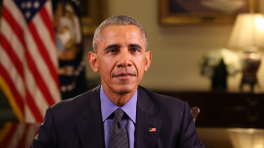
Posted by on October 13, 2009 at 5:19 PM ESTViewing this video requires Adobe Flash Player 8 or higher. Download the free player.download .mp4 (65 MB MB) | read the transcriptAfter many months of debate and deliberation, dozens of hearings, the dissemination and debunking of hundreds of myths and falsehoods, and testimonials from thousands and thousands of ordinary Americans asking for change, reform took yet another step forward. With the emergence of a reform bill from the final committee in Congress with jurisdiction over the the issue, this issue that has seemed utterly intractable for most of a century is now closer to a resolution than it has ever been.The President took a few minutes this afternoon to express his approval:
THE PRESIDENT: Good afternoon. Today we reached a critical milestone in our effort to reform our health care system. After many months of thoughtful deliberation, the fifth and final committee responsible for health care reform has passed a proposal that has both Democratic and Republican support. This effort was made possible by the tireless efforts of Chairman Max Baucus and the other members of the Senate Finance Committee. It's a product of vigorous debate and difficult negotiations.After the consideration of hundreds of amendments, it includes ideas from both Democrats and Republicans, which is why it enjoys the support of people from both parties. And I want to particularly thank Senator Olympia Snowe for both the political courage and the seriousness of purpose that she's demonstrated throughout this process.Now, this bill is not perfect and we have a lot of difficult work ahead of us. There are still significant details and disagreements to be worked out over the next several weeks as the five separate bills from the Senate and the House are merged into one proposal. But I do believe the work of the Senate Finance Committee has brought us significantly closer to achieving the core objectives I laid out early in September.Most importantly, this bill goes a long way towards offering security to those who have insurance, and affordable options for those who don't. It reins in some of the worst practices of the insurance industry, like the denial of coverage due to preexisting conditions. It also sets up an insurance exchange that will make coverage affordable for those who don't currently have it. And as the nonpartisan Congressional Budget Office has certified, it will slow the growth of health care costs in the long term and it will not add a penny to our deficit.The committee's progress over the past several weeks is the culmination of work by all five committees and numerous members of Congress over the better part of this year. We've reached out to stakeholders across the spectrum -- doctors and nurses, businesses and workers, hospitals and even drug companies. And we've considered a wide variety of ideas and proposals in an effort to find common ground.As a result of these efforts, we are now closer than ever before to passing health reform. But we're not there yet. Now is not the time to pat ourselves on the back. Now is not the time to offer ourselves congratulations. Now is the time to dig in and work even harder to get this done. And in this final phase, I hope that we will continue to engage each other with the spirit of civility and seriousness that has brought us this far and that this subject deserves.I commend the Chairman and the committee's members for their achievement and the example that they've set, and I look forward to continue to work with Congress in the weeks ahead. We are going to get this done.Thank you very much, everybody.Learn more about Health CareBending the Curve in More Ways Than One
Posted by on October 13, 2009 at 1:57 PM ESTCross-posted from the OMB blog.Over the past few days, a number of news articles about health reform have suggested that efforts to control the growth of health care costs are in jeopardy. Great strides to control long-term health care costs have been made in both the Senate and the House — fulfilling a key goal of the President's health reform effort.
The two provisions that get the most attention are found in the Senate Finance Committee's mark. The first is an excise tax on insurance companies offering high-premium plans — which would create an incentive for more efficient plans that would help reduce the growth of premiums. The second is a Medicare commission — which would develop and submit proposals to Congress aimed at extending the solvency of Medicare, slowing Medicare cost growth, and improving the quality of care delivered to Medicare beneficiaries.These are both crucial facets of a reform plan, but too often other important delivery system reforms are ignored — which is unfortunately the case for those recent news articles. The result is a failure to recognize how far the entire political system has come in putting us on the verge of passing fiscally responsible health insurance reform.Consider these important reforms found in many of the bills:- Bundled payments. Bundled payments, which pay a fixed amount for an entire episode of care rather than piecemeal for each individual treatment or procedure, would help improve patient care by encouraging better and more coordinated care than under a fee-for-service system. Bills in both the Senate and the House would develop, test, and evaluate bundled payment methods through a national, voluntary pilot program. Once we see what works and what doesn’t, bundled payments can be quickly scaled up across the country.
- Penalties for high readmissions. Too often, patients are discharged from the hospital without the necessary follow-up care — leading to re-hospitalization, risks to one’s health, and higher costs. Under the proposals being considered, Medicare would collect data on readmission rates by hospital and would assess penalties on those hospitals with high, preventable readmission rates.
- Accountable care organizations (ACOs). Under the current system, quality and efficiency are not sufficiently rewarded, and there is little incentive for physicians to collaborate in the coordination of patient care. Legislation in both houses would encourage and reward ACOs, which are groups of providers that are jointly responsible for the quality and cost of health care services for a population of beneficiaries with chronic conditions.
- Quality incentives for physicians. These proposals would expand quality incentives for physicians and provide more timely feedback on physician performance based on their submitted data.
These — and other measures — are why a bipartisan group of experts recently wrote that health reform legislation under discussion "offers many promising ideas to improve the overall performance of the U.S. health care system. In addition to steps that would reduce the number of Americans without insurance coverage, the plan includes ways to slow long-term spending growth while building the high-value health care system our nation urgently needs." The Administration looks forward to working with the Congress as the legislation proceeds to continue to refine and improve these cost-containing steps.Peter Orszag is Director of the Office of Management and Budget
Learn more about Fiscal Responsibility, Health Care- Bundled payments. Bundled payments, which pay a fixed amount for an entire episode of care rather than piecemeal for each individual treatment or procedure, would help improve patient care by encouraging better and more coordinated care than under a fee-for-service system. Bills in both the Senate and the House would develop, test, and evaluate bundled payment methods through a national, voluntary pilot program. Once we see what works and what doesn’t, bundled payments can be quickly scaled up across the country.
Reality Check: AHIP's "Study" Hard to Take Seriously
Posted by on October 12, 2009 at 2:35 PM EST This morning America's Health Insurance Plans (AHIP), the health insurance companies' lobbying operation, released a study it commissioned in an attempt to confuse the debate around health reform. Linda Douglass of the White House Health Reform Office didn't mince words in her reaction:
"It comes on the eve of a vote that will reduce the industry's profits," Douglass told TPMDC. "It is hard to take it seriously. The analysis completely ignores critical policies will lower costs for those who have insurance, expand coverage and provide affordable health insurance options to millions of Americans who are priced out of today's health insurance market or are locked out by unfair insurance company practices."
Here's an extended Reality Check to set the record straight:
AHIP CLAIM: Health reform will cause health care premiums to rise faster than they would under the current system.REALITY: The Congressional Budget Office and other analysts confirm that the current Senate Finance Committee (SFC) health reform proposal will lower health care premiums in the exchange and make health insurance more affordable for families. AHIP’s study reaches its flawed conclusion for at least three reasons:· Selective analysis: the AHIP study picks and chooses which policies to consider, ignoring the full benefits of the SFC proposal. For example the AHIP analysis completely ignores:o Grandfather policy that assures that if you like the plan you have, you can keep it.o Special policies for young adults, who AHIP claims will be hit hard, including premium credits and the choice of a special "young invincibles" plan that has a low premium.o Reinsurance and risk-adjustment policies proven to ensure that no single group bears unexpectedly high costs.· Ignores historic investments in lowering premiums: In addition to cherry-picking policies to analyze, the AHIP study ignores the fact that the SFC reform proposal would provide tax credits to make health insurance affordable and help reduce the current $1,000 hidden tax imposed on families with coverage by those who seek care in emergency rooms.o Eighty-five percent of people obtaining health insurance in the exchange would be eligible for new tax credits to make health insurance affordable. In addition, their out-of-pocket expenses on health would be capped. The AHIP analysis completely ignores the impact of these tax credits and cost-sharing protections.· Does not take into account other policies to bend the cost curve – including ones that the consultant AHIP paid to produce this study has recommended to reduce costs. Pricewaterhouse Coopers itself has published reports confirming that investments like those in the SFC proposal – including in prevention and in reducing waste – will help bend the long-term health cost curve.AHIP CLAIM: Taxes on the highest cost health plans – so called "Cadillac" plans – will raise the cost of employer-based coverage. This is the single largest driver of AHIP’s assumed $4,000 premium increase in the large group market.REALITY: The majority of health economists from all parts of the political spectrum have arrived at precisely the opposite conclusion — a tax on insurers that provide the highest cost health plans will contribute to lowering premiums. Even AHIP’s study acknowledges that insurers are like to lower premiums in response to this tax change.· The AHIP study acknowledges that the impact of this plan will be for insurers to reduce premiums by creating more efficient plans. The report states: "we expect employers to respond to the tax by restructuring their benefits to avoid it." However, the study then assumes away this conclusion in its analysis.· In addition, the AHIP study reaches its conclusion by assuming that the assessment provision will apply to some of the lowest cost "bronze" plans by 2016. This is at odds with the facts. In fact, premium data from the Congressional Budget Office suggest that the Bronze plan premium will be at half the Cadillac tax cap level in 2016.· A bipartisan group of health economists recently found that a tax on insurers offering high cost health pans was one of the "key opportunities for slowing long-term spending growth in the Baucus proposal."
AHIP CLAIM: The failure to enact an individual responsibility requirement will increase costs in the individual market by creating an incentive for people to wait until they are sick to purchase coverage. This is the single largest driver of AHIP’s assumed 49% premium increase in the individual market.REALITY: AHIP incorrectly downplays the responsibility requirement in the SFC proposal, which, in the context of comprehensive reform, will increase coverage by providing an incentive for the uninsured to enter the system.· The Congressional Budget Office estimates that under the amended SFC proposal, by 2014, 15 million people will enter the exchanges, and by 2015, 22 million will enter, enabling adequate risk pooling and minimizing the adverse selection that the AHIP analysis assumes.· The Congressional Budget Office reached this conclusion because "the proposed mandate and subsidies would lead many people who would be uninsured under current law to obtain coverage in the exchanges."AHIP CLAIM: Reductions in Medicare spending will raise costs for families. Part of the premium increases that the AHIP analysis assumes stems from "provider payment cuts" in Medicare and Medicaid, leading to cost-shifting onto private plans.REALITY: Health insurance reform will strengthen Medicare. Once again, the assumptions in the AHIP analysis are not consistent with the facts of the bill that they are analyzing.· The overwhelming majority of savings in Medicare from the SFC reform proposal comes from reducing fraud and abuse, decreasing overpayments to Medicare Advantage plans, and other policies recommended by experts such as the Medicare Payment Advisory Commission. In fact, many of the industries affected recommended these levels of savings as responsible and necessary for health reform.· AHIP also assumes that a public option would exist that would pay lower than private rates. The Finance proposal does not include a public option, and the Senate HELP version would negotiate rates rather than fix them, as suggested in the analysis.AHIP CLAIM: Fees on health insurance providers, pharmaceutical manufactures and device makers will be passed through to individuals and families.REALITY: This claim does not withstand scrutiny for at least three reasons:· First, the idea that every dollar of assessment will be passed on to consumers is not credible – especially given the policy design. The policy assesses a flat amount per year, paid by companies based on their market share, beginning in 2010. The AHIP assumption that they will accumulate the amount of these fees and pass them along in a lump sum to enrollees later simply does not make sense.· Second, these fees are intended to recapture part of the benefits these businesses will get from reform. No one disputes that newly insuring nearly 30 million more Americans will increase their access to needed services – translating into new business for insurers, drug companies and device makers and other providers. This new revenue would far exceed the amount of the new fees – so if you believe that they will pass along the new assessment, they will also pass along their new windfall to consumers.· Third, the fees help improve and expand coverage and thus reduce the $1,000 hidden tax tens of millions of Americans pay for the uncompensated care of the uninsured. Even if you believed that somehow companies would find a way to pass the fees along, they would be more than outweighed by the benefits middle-class families would get from not only hundreds of billions of dollars in health care tax credits but from reducing the hidden tax they currently pay for the uninsured.Learn more about Health CareWeekly Address: New Momentum for Health Reform
Posted by on October 9, 2009 at 11:01 PM ESTThe President goes through the leading conservative and Republican figures who have come out one after another urging passage of health insurance reform. After a summer of intense debate, cooler heads begin to prevail to make progress for the American people.Viewing this video requires Adobe Flash Player 8 or higher. Download the free player.Learn more about Health CareWord from the White House: CBO Score & Bipartisan Momentum
Posted by on October 8, 2009 at 10:31 AM ESTIt's no secret that institutions of all stripes focus their communications on certain messages day to day. We thought it would all be a little more open and transparent if we went ahead and published what our focus will be for the day, along with any related articles, reports or documents.Supporting report: "Preliminary Analysis of the Senate Finance Committee Chairman's Mark As Amended," Congressional Budget Office, 10/8/09
Supporting article: "Dole and Daschle Endorse a Health Care Overhaul," New York Times, October 7, 2009
Talking Points: CBO Score of the Finance Committee Bill· Yesterday’s CBO score of the final Senate Finance Committee bill is another major step forward for health insurance reform.· The analysis confirms what President Obama has been saying for months: We can provide stability and security for Americans with insurance and affordable options for uninsured Americans without adding a dime to our national deficit.· In fact, the CBO reports that the bill would actually reduce the deficit over the next two decades.· At the same time, it would drastically reduce the number of Americans living without coverage and protect Americans from some of the insurance industry’s worst practices – like denying coverage because of a pre-existing condition, or dropping or watering down coverage when you get sick and need it most.· There remains work to be done. Congress still has to incorporate ideas from the various proposals into one final bill.· But there is remarkable consensus among those bills. We are already far closer to health insurance reform than ever before.· And yesterday’s CBO analysis is yet another important step along the way.Talking Points: Bipartisan Momentum for Reform Continues to Swell· The CBO’s encouraging report comes as bipartisan momentum for health insurance reform continues to swell.· Yesterday, Former Senate Majority Leader and Republican Presidential Nominee Bob Dole added his voice to the increasingly bipartisan call for reform.o He said, "Now we’ve got to do something" on health care.o And he blamed "partisanship" for opposition to reform, saying, "Sometimes people fight you just to fight you."· Senator Dole is just the latest in a string of high profile Republicans and Independents to endorse health insurance reform in the past week.o He joins former Bush Administration Health and Human Services Secretary Tommy Thompson; Republican-turned-Independent New York City Mayor Michael Bloomberg; former Senate Majority Leader Bill Frist; and California Governor Arnold Schwarzenegger.· These latest endorsements join a wide array from across the spectrum.o More than 1,000 state legislators from every corner of America have signed onto letters citing the urgent need for health insurance reform.o 22 Governors from states across the nation also signed a letter calling for reform.o Leading groups representing doctors, nurses, consumers, seniors, and even drug and insurance companies have all agreed that the status quo is unsustainable.· This is not a Democratic issue or a Republican issue – it’ a moral issue. The time for bickering is over, now it’s time to act.Learn more about Health CareWord from the White House: Bipartisan Support for Health Insurance Reform Continues to Build
Posted by on October 7, 2009 at 12:38 PM ESTIt's no secret that institutions of all stripes focus their communications on certain messages day to day. We thought it would all be a little more open and transparent if we went ahead and published what our focus will be for the day, along with any related articles, reports or documents.Supporting article: "Schwarzenegger Endorses Obama Health Care Effort," ABC News, 10/6/09Supporting article: "Thompson joins former Democratic leader to push for health reform," Milwaukee Journal Sentinel, 10/5/09Supporting article: "Obama finds support outside party and Washington for healthcare plan," Los Angeles Times, 10/6/07Talking Points: Bipartisan Support for Health Insurance Reform Continues to Build· Bipartisan support for health insurance reform continues to grow around the nation.· Yesterday, Republican California Governor Arnold Schwarzenegger added his voice to the growing chorus in support of reform.o He said he shares the President’s goals of "slowing the growth in costs, enhancing the quality of care delivered, improving the lives of individuals, and helping to ensure a strong economic recovery."o And he called on "colleagues on both sides of the political aisle at the national level to move forward and accomplish these vital goals for the American people."· Earlier this week, former Bush Administration Health and Human Services Secretary Tommy Thompson joined Democratic former House Majority Leader Dick Gephardt in issuing a statement in support of reform. "Failure to reach an agreement on health reform this year is not an acceptable option," they said.o The bipartisan duo pointed out that there is "substantial common ground" between the various bills making their way through Congress and pointed to "broad support for key provisions… that would forbid insurance companies from denying coverage to people with pre-existing conditions, dropping coverage when people become ill, or imposing spending coverage caps on people when they get sick and need coverage."· And New York City Mayor Michael Bloomberg, who originally ran as a Republican and is now an Independent, praised the reform proposals in Congress for "incorporating Republican ideas" and said the bill deserves bipartisan support.o He added that reform has "great potential to reduce costs for families, businesses and government at every level over the long term, while extending coverage to many millions of the uninsured and investing in proven, cost-effective public health strategies."· And last week, former Senate Republican Leader Bill Frist – a surgeon – said even he would vote for health insurance reform. He said that even though he’d probably "take heat" from his party, "that’s leadership."· These latest endorsements join a wide array from across the spectrum.o More than 1,000 state legislators from every corner of America have signed onto letters citing the urgent need for health insurance reform.o 22 Governors from states across the nation also signed a letter calling for reform.o Leading groups representing doctors, nurses, consumers, seniors, and even drug and insurance companies have all agreed that the status quo is unsustainable.· The message is clear: inaction is not an option.· President Obama’s health insurance reform plan will give Americans who have insurance unprecedented security and stability. It will give Americans without insurance quality, affordable options. And it will lower the cost of health care for our families, our businesses, and our government.Learn more about Health Care
- &lsaquo previous
- …
- 187
- 188
- 189
- 190
- 191
- 192
- 193
- 194
- 195
- …
- next &rsaquo
From the Press Office
Related Videos
-
 December 13, 2016 5:04 PM
Signing Ceremony for the 21st Century Cures Act
-
 December 10, 2016 5:00 AM
Weekly Address: It’s Time to Get Covered on the Health Insurance Marketplace