Health Care Blog
Lower Premiums, Stronger Businesses
Posted by on October 29, 2009 at 10:39 AM ESTThe President and his team have discussed this problem with small business owners from across the country and we know they don’t want to stop providing coverage to their employees. Small businesses are like families and small business owners want to give their employees the coverage they deserve. Unfortunately, the high cost of health care is making it impossible for many small businesses to provide health benefits.
Today, HHS Secretary Kathleen Sebelius has released a new report, Lower Premiums, Stronger Businesses: How Health Insurance Reform Will Bring Down Costs for Small Businesses. The report looks at the current status quo and outlines how reform will help solve this problem and bring costs down for small businesses. Specifically, reform will.
- Create an insurance exchange. Health insurance reform will create a health insurance exchange that pools small businesses and their employees with millions of other Americans to increase purchasing power and competition in the insurance market (a luxury only large firms currently enjoy). Increased purchasing power and competition, in turn, make premiums more affordable. The exchange will also reduce administrative costs for small businesses and their employees by enabling them to easily and simply compare the prices, benefits, and quality of health plans.
- Provide a small business tax credit. On top of the potential savings created by the health insurance exchange, an estimated 3.6 million small businesses nationwide could qualify for a tax credit to make coverage for their employees even more affordable. For example, a firm with 9 employees and an average wage of less than $20,000 per employee could receive a credit of 35 percent off its premium costs in 2011 under the amended Senate Finance bill, or a credit of 50 percent off its premium costs under both the Senate Finance and House Tri-Committee bills in 2013.
- End the “hidden tax” on small businesses that provide health insurance. Premiums are high, in part, because of a “hidden insurance tax” of more than $1,000 added onto every family policy that covers the cost of care for those without insurance. Health insurance reform will benefit small businesses that already provide health care by expanding health care coverage to all Americans and removing this hidden tax. These reforms will enable streamlined, efficient coverage for all Americans.
- Prevent arbitrary premium hikes. In the current health insurance system, small businesses can see their premiums skyrocket if just one or two workers fall ill and accumulate high medical costs. Health insurance reform will prevent insurance discrimination based on health status, meaning that small businesses will no longer be unfairly penalized if a worker falls ill.
These are just some of the ways health insurance reform will support small businesses and help ensure all Americans get the secure, stable coverage they need. To learn more, read the full report by visiting www.HealthReform.gov.
Linda Douglass is Communications Director for the Office of Health Reform
Learn more about Health CarePulling Forward the Benefits of Healthcare IT
Posted by on October 29, 2009 at 8:52 AM ESTToday, the Health IT Standards Committee within the Department of Health and Human Services will begin an unprecedented effort to get the public’s view on how our work might "pull forward" the benefits of healthcare information technology (IT). Specifically, we’re interested in uncovering new strategies to accelerate the adoption of health IT standards. This effort began with the passage of the American Recovery and Reinvestment Act of 2009, calling for recommendations on standards to promote safe, secure, healthcare information exchange.
“Standards” are really the guardians of quality, consistency, and interoperability. Without thoughtful, clear and uniform standards, we cannot enable the seamless and secure exchange of electronic health information (or the benefits that accrue to providers and patients from such protected exchanges).
So, while the exploration of technical standards may seem mundane to some, it is foundational to electronic health records (EHRs) and electronic health information exchange more broadly. In other words, it’s worth paying some attention to, and voicing your opinions.
Our process continues with a public hearing today in Washington, DC. Find out how to participate via phone and webcast here. We are convening four panels of experts with on-the-ground experience in interoperability standards - providers, quality stakeholders, health IT vendors, and a group with lessons drawn outside of healthcare. Thanks to HIT Standards Committee member Judy Murphy for her leadership on this effort.
The public hearing draws to a close this afternoon but we will continue the conversation through an Online Forum over the next two weeks. Thanks to Committee Member Cris Ross for his leadership on this effort. Given the breadth of interests, we have arranged a series of Committee Member blog posts to begin the dialogue, starting with HIT Standards Committee Vice-Chair John Halamka's summary of our work to date, which will post on Friday. We will concurrently enable ongoing discussion threads on the following topics:
- Proposed Standards (General Discussion)
- Interoperability
- Vocabularies
- Privacy
- Security
- Quality
- Implementation Case Studies (Your Story - the good, bad and
in-between)
We have also enabled a "voting" feature on submissions to allow you - the public - an opportunity to emphasize points raised in a given post. Our goal is to harness the shared wisdom of our community to inform the work of the HIT Standards Committee in the weeks and months ahead.
The tight schedule of this process is designed to ensure that your ideas inform the HIT Standards Committee at its November 19th meeting. However, your ongoing feedback on our efforts is also encouraged via written submission or public comment at any of the subsequent monthly meetings of the HIT Standards Committee.
The process of accelerating the adoption of health IT standards will not end this week, this month, or this year. This is an ongoing effort, and your participation will continue to be essential to its success.
Aneesh Chopra is U.S. Chief Technology Officer
Learn more about Health Care, TechnologyWord from the White House: Strengthening Medicare through Health Insurance Reform
Posted by on October 28, 2009 at 2:28 PM ESTIt's no secret that institutions of all stripes focus their communications on certain messages day to day. We thought it would all be a little more open and transparent if we went ahead and published what our focus will be for the day, along with any related articles, documents, or reports.
Supporting video: "What's Good About Health Care Reform for Seniors? A new series of videos addresses how health care reform would safeguard Medicare," AARP
Talking Points: Strengthening Medicare through Health Insurance Reform
- President Obama is committed to protecting and strengthening Medicare for America's seniors – anyone who tells you different is trying to scare and deliberately mislead you. Health insurance reform will not cut Medicare benefits. Period.
- Medicare is a sacred trust with America's seniors and the President’s health insurance reform plan will ensure that trust is never broken.
- Not a dime of the Medicare trust fund will be used to pay for reform.
- Instead it eliminates waste to strengthen the financial health of the program.
- It will end wasteful overpayments to insurance companies through Medicare Advantage. There is no evidence these overpayments improve the quality of care for seniors, yet they contribute to higher premiums for all Medicare beneficiaries.
- Eliminating these overpayments adds years to the Medicare trust fund.
- Reform will make care more affordable for seniors.
- It will substantially reduce the cost of prescription drugs for seniors who fall into that gap in coverage known as the Donut Hole. And the President is committed to closing that donut hole altogether.
- It will make preventive services free.
- And it will aggressively attack fraud and abuse that raise Medicare costs for all seniors and taxpayers.
- Reform will also improve care for Seniors.
- It will move Medicare toward a system that rewards high-quality care and invest in innovations in primary care.
- It will result in better coordination of care and an end to the duplicate tests and bureaucracy.
- It will make long-term care services more affordable.
- And it will eliminate the imminent physician payment cut that threatens to constrict doctor choices for seniors.
Learn more about Health Care- President Obama is committed to protecting and strengthening Medicare for America's seniors – anyone who tells you different is trying to scare and deliberately mislead you. Health insurance reform will not cut Medicare benefits. Period.
First Lady Michelle Obama Highlights Breast Cancer Awareness
Posted by on October 26, 2009 at 10:58 AM ESTFriday afternoon in the Jacqueline Kennedy Garden, First Lady Michelle Obama donned pink to honor the millions of women and families affected by breast cancer. Speaking to a crowd of survivors, lawmakers, and doctors, the First Lady highlighted the importance of adequate health coverage for those facing the disease. One in eight women will be diagnosed with breast cancer this year, and these women deserve to battle their disease without the worry of their insurance companies letting them down:
And this is a disease, as we know, that affects not just those diagnosed with it, and not just those who've survived it and those who've lost their lives to it, but it is a disease that also affects those who love and know them -- which these days seems like almost every single person in this country.
That's why it is so critically important that we finally reform our health care system that is causing so much heartache for so many people affected by this disease. Now is the time.
Fortunately, that's exactly what the plans being considered by Congress right now would do.
So just to be clear, under these plans, if you already have insurance that works for you, then you're all set. You can keep your insurance and you can keep your doctors.
The plans put in place some basic rules of the road to protect you from abuses and unfair practices by insurance companies. That would mean no more denying coverage to people like women we heard from today because of so-called preexisting conditions like having survived cancer. (Applause.) Because there's a belief that if you've already fought cancer, you shouldn't have to also fight with insurance companies to get the coverage that you need at a price that you can afford. (Applause.)
These plans mean insurance companies will no longer be allowed to cap the amount of coverage that you can get, and will limit how much insurance companies can charge you for out-of-pocket expenses, because in this country, getting sick shouldn't mean going bankrupt. (Applause.)
And finally, these plans will require insurance companies to cover basic preventative care -- from routine checkups, to mammograms, to pap smears -- at no extra charge to you. And though I want to emphasize that in the end, as we all know, it's our responsibility as women to also talk to our doctors about what screenings that we need and then make the appointments to get those screenings, even when it's inconvenient or maybe a little bit uncomfortable. It's something that we owe not just to ourselves but to the people that love us.

(First Lady Michelle Obama talks with a participant following a Breast Cancer Awareness Month event in the East Garden of the White House, Oct. 23, 2009. Official White House Photo by Samantha Appleton) (Official White House Photo by Samantha Appleton)
Learn more about Health Care, WomenThe Public Option: Rumor Check
Posted by on October 25, 2009 at 7:56 PM ESTA rumor is making the rounds that the White House and Senator Reid are pursuing different strategies on the public option. Those rumors are absolutely false.
In his September 9th address to Congress, President Obama made clear that he supports the public option because it has the potential to play an essential role in holding insurance companies accountable through choice and competition. That continues to be the President's position.
Senator Reid and his leadership team are now working to get the most effective bill possible approved by the Senate. President Obama completely supports their efforts and has full confidence they will succeed and continue the unprecedented progress that is being made in both the House and Senate.
Dan Pfeiffer is Deputy Communications Director
Learn more about Health CarePresident Obama Signs Emergency Declaration for H1N1 Flu
Posted by on October 25, 2009 at 12:48 PM ESTIn an effort to proactively address the ongoing pandemic, the President signed a National Emergency Declaration on H1N1 that allows healthcare systems to quickly implement disaster plans should they become overwhelmed.
As experts expected, H1N1 flu is moving rapidly throughout the country and the majority of states now have widespread influenza activity. This declaration gives authority for the Department of Health and Human Services (HHS) to waive certain regulatory requirements for healthcare facilities in response the ongoing pandemic. Specifically, healthcare facilities will be able to submit waivers to establish alternate care sites, and modified patient triage protocols, patient transfer procedures and other actions that occur when they fully implement disaster operations plans.
Under Section 1135 of the Social Security Act [42 USC §1320b–5] healthcare facilities may petition for HHS approval of waivers in response to particular needs within the geographic and temporal limits of the emergency declarations. Before HHS has the authority to approve such “1135 Waivers” two conditions must be met: first, the Secretary must have declared a Public Health Emergency, and second, the President must have declared a National Emergency either through a Stafford Act Declaration or National Emergencies Act Declaration. 1135 Waivers still require specific requests be submitted to HHS and processed, and some State laws may need to be addressed as well.
The Secretary may tailor authorities granted under Section 1135 waivers to match the specific situational needs, but the requirements that may be waived include those related to Medicare, Medicaid or the Children’s Health Insurance Program (CHIP), the Emergency Medical Treatment and Active Labor Act (EMTALA), and the Health Insurance Portability and Accountability Act (HIPAA).
Past instances where authority to grant Section 1135 waivers was enabled include:- Hurricane Katrina (2005)
- 56th Presidential Inauguration (2009)
- Hurricanes Ike and Gustav (2008)
- North Dakota flooding (2009)
Learn more about this National Emergency Declaration and get information on H1N1 and seasonal flu at Flu.gov.
Learn more about Health Care, Homeland Security
- &lsaquo previous
- …
- 184
- 185
- 186
- 187
- 188
- 189
- 190
- 191
- 192
- …
- next &rsaquo
From the Press Office
Related Videos
-
 December 13, 2016 5:04 PM
Signing Ceremony for the 21st Century Cures Act
-
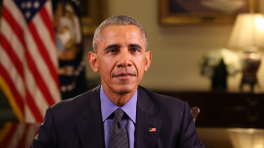 December 10, 2016 5:00 AM
Weekly Address: It’s Time to Get Covered on the Health Insurance Marketplace