Health Care Blog
Shining a Light on our Researchers, Doctors, Nurses, and Caregivers
Posted by on November 8, 2013 at 1:05 PM EST
Dr. Jill Biden gives remarks at a breast cancer awareness month reception with Vice President Joe Biden, in the living room at the Naval Observatory Residence in Washington, D.C., Nov. 5, 2013. (Official White House Photo by David Lienemann)
Earlier this week, Joe and I hosted our 2nd Annual Breast Cancer Awareness Reception. We were joined by survivors, caregivers, families, doctors, researchers, and advocates who have all been touched by breast cancer.
Each year, this reception is one of the most inspiring events that we hold at our home, and this year was no different. As I embraced both old and new friends, I was reminded of the bravery of the survivors and their loved ones. I saw the hope in their eyes, their unwavering spirit, and their determination to continue pushing forward.
This year, we asked all of the survivors to invite someone who was important to them during their course of treatment. Joe and I know that the fight against breast cancer is not only limited to what the patient endures, but also extends to the family members, the caregivers, the doctors, and researchers who work day in and day out to save lives and support those that they love.
Insurance Companies Now Must Cover Mental Health Benefits at Parity with Medical Benefits
Posted by on November 8, 2013 at 12:40 PM ESTToday, as part of the President and Vice President’s continuing efforts to increase access to mental health services, the Administration issued the final rule implementing the Mental Health Parity and Addiction Equity Act of 2008.
Today’s action means that for group and individual market health plans, insurance companies must cover mental health and addiction benefits at parity with medical and surgical benefits. In January, the Department of Health and Human Services also released a letter to State health officials clarifying that Medicaid plans must also comply with parity requirements.
Parity is not just a buzzword. It has a real impact for the millions of people who are experiencing or will experience mental illness or addiction. In fact, parity works to break down two key barriers that too often prevent these individuals – our friends, our family, our neighbors – from seeking help. First, it breaks down the financial barrier by generally prohibiting health plans from placing more restrictive monetary requirements (for example, co-pays) or treatment limitations (for example, covered visits) on mental health and substance abuse benefits than on comparable medical and surgical benefits. Second, parity reduces the stigma associated with mental illness and addiction by reaffirming that illnesses of the brain should not be treated differently than illnesses of the body.
Learn more about Health CareWest Wing Week: 11/08/13 or "Casual, With a Raffish Look"
Posted by on November 7, 2013 at 3:32 PM ESTThis week, the President worked to help consumers learn about and enroll in quality, affordable health insurance plans through the Marketplaces, welcomed Iraq's Prime Minister, hosted the Stanley Cup Champion Chicago Blackhawks, and kicked off the newly re-instated White House Tours with a surprise drop-by.
Learn more about Health CareInvesting in the Health of our Communities
Posted by on November 7, 2013 at 11:45 AM ESTLast week, I had the opportunity to travel back to my home state of Michigan, to Southwest Detroit, where I visited a local Community Health Center and participated in an Affordable Care Act enrollment event put on by State Representative Rashida Tlaib.
The event provided an opportunity for Detroiters to ask question about the benefits of the Affordable Care Act, and for those without insurance, how to get covered.
It was a well-attended event that included Detroiters from all walks of life, many of whom use Community Health Centers as their primary course of care. State Representative Tlaib even shared with me that growing up in Detroit, she came to that very health center for care.
These truly critical hubs provide vital health services to their communities.
That’s why I’m so excited that today we are announcing new grants provided to communities under the Affordable Care Act. These grants will continue to make a big difference in helping community health centers provide access to primary care services for nearly 1.25 million new patients.
These awards will focus on underserved areas and health centers that can provide culturally competent care and primary care.
Learn more about Health Care, Urban PolicyPresident Obama to Dallas Health Care Volunteers: "Nothing Is Going to Stop Us from Getting This Done."
Posted by on November 7, 2013 at 9:48 AM ESTOn Wednesday, the President traveled to Dallas, Texas, where he joined canvassers and navigators who are part of the community's most active group of volunteers working to enroll their neighbors in quality, affordable coverage through the Marketplace.
Learn more about Health CareSan Antonio Mayor Julián Castro: Let's Stop Denying Texans Health Insurance Because of Politics
Posted by on November 6, 2013 at 3:15 PM ESTToday, President Obama is visiting the Lone Star State to thank volunteers in Dallas for helping fellow Texans learn more about their new choices, new benefits, and new protections under the Affordable Care Act. I'm proud to lead that same kind of effort in San Antonio, and I know that mayors across our state are doing everything they can to educate our citizens about the law. That's because we think giving as many people as possible the chance to buy affordable health insurance is more important than trying to score political points.
Usually, we do things bigger in Texas. But right now, when it comes to covering the uninsured, some of our neighboring states are trying to beat us to the draw. In Arkansas, for example, they¹ve cut the total number of uninsured in the state by nearly 14 percent in just over a month.
There's one big reason for that. Under the Affordable Care Act, states can choose whether or not to expand Medicaid to cover more of its citizens, and Arkansas chose "yes." If we made that same choice in Texas, it would cover more than one million of our citizens, and save our taxpayers $1.7 billion over the next decade in unpaid hospital bills.
Conservative Republican governors in Michigan and Ohio looked at similar numbers in their states and decided that expanding Medicaid was a no-brainer. I just wish our governor saw it the same way. Because with a stroke of his pen, he could save more than one million of his fellow Texans from financial ruin if they get sick and save taxpayer dollars in the process. And there's nothing foolish about that.
Learn more about Health Care
- &lsaquo previous
- …
- 45
- 46
- 47
- 48
- 49
- 50
- 51
- 52
- 53
- …
- next &rsaquo
From the Press Office
Related Videos
-
 December 13, 2016 5:04 PM
Signing Ceremony for the 21st Century Cures Act
-
 December 10, 2016 5:00 AM
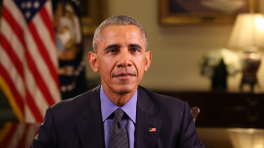
Weekly Address: It’s Time to Get Covered on the Health Insurance Marketplace