Job Creation and the Recovery Act: Getting the Full Picture

Imagine you were trying to measure the size of an iceberg and you only considered the part above the water.   You’d be missing most of the picture, right?

That’s much like what happened in this story on the cost of construction jobs created by the Act.  The article considers only the tip of the iceberg, misses what’s going on underneath, and thus gives a huge over-estimate of the cost of creating these jobs.

Technically, what’s missing here is the multiplier analysis (Keynes would be aghast!).  Think about what it takes to build a road: when a state awards a contract to a road building firm, that firm has to purchase cement and other materials, and those purchases create jobs for producers of raw materials and manufacturers.  They may have to buy or lease heavy construction equipment, supporting upstream jobs at factories.  Hiring an actual crew to build the road is often the last step.

Interestingly, the story notes that money for construction projects isn’t just spent on direct hires--it pays for equipment and supplies too.   What’s missing is that buying that equipment and supplies also creates jobs.  By leaving out all those indirect jobs, the analysis undercounts the number jobs created by the contract and comes up with a cost per job that is way too high. 

That problem is compounded by looking at just three months worth of job creation.  About 75 percent of the recipients that reported said that their projects are less than half complete – pointing to future hiring off of those same dollars yet to come as projects ramp up.

As President Obama has stressed, we need to do much more to help get America get back to work.  But when we’re looking at what we’ve done so far, let’s make sure we’re seeing the full picture.

Jared Bernstein is Chief Economist to Vice President Biden, and Executive Director of the Middle Class Task Force
 

Investing in Clean, Safe Nuclear Energy

February 16, 2010 | 10:41 | Public Domain

President Obama announces more than $8 billion in loan guarantees for two new nuclear reactors as part of the Administration's commitment to providing clean energy and creating new jobs.

Download mp4 (215MB) | mp3 (10MB)

Read the Transcript

Remarks by the President on Energy in Lanham, Maryland

11:05 A.M. EST

THE PRESIDENT:  Thank you, everybody.  Thank you.  Please have a seat.  Have a seat.  Good morning, everybody.  Before I begin let me just acknowledge some of the people who are standing behind me here:  First of all, two people who have been working really hard to make this day happen -- Secretary Steven Chu, my Energy Secretary -- Steven Chu.  (Applause.)  And my White House advisor on everything having to do with energy, Carol Browner.  (Applause.)

I want to acknowledge the outstanding governor of Maryland, Martin O'Malley, as well as his lieutenant governor, Anthony Brown.  (Applause.)  We've got Mark Ayers from the building trades, and Billy Hite from the UA Plumbers and Pipefitters -- give them a big round of applause.  (Applause.)  Gregory Jaczko, who's with the Nuclear Energy Commission, is here.  Where is he? (Applause.)  Ed Hill, president of IBEW International.  (Applause.)  And I want to thank Chuck Graham and everybody here at Local 26 for their great hospitality.  (Applause.)

Thank you for the warm welcome.  Thanks for showing me around.  I was just mentioning that I got a chance to pull the first fire alarm since I was in junior high.  (Laughter.)  And I didn't get in trouble for it. 

This is an extraordinarily impressive facility, where workers are instructed on everything from the installation of sophisticated energy hardware and software to the basics of current and resistance.  We need to look no further than the workers and apprentices who are standing behind me to see the future that's possible when it comes to clean energy. 

It's a future in which skilled laborers are helping us lead in burgeoning industries.  It's a future in which renewable electricity is fueling plug-in hybrid cars and energy-efficient homes and businesses.  It's a future in which we're exporting homegrown energy technology instead of importing foreign oil.  And it's a future in which our economy is powered not by what we borrow and spend but what we invent and what we build.

That's the bright future that lies ahead for America.  And it's one of -- it's a future that my administration is striving to achieve each and every day.  We've already made the largest investment in clean energy in history as part of the Recovery Act -- an investment that is expected to create more than 700,000 jobs across America -– manufacturing advanced batteries for more fuel-efficient vehicles, upgrading the power grid so that it's smarter and it's stronger, doubling our nation's capacity to generate renewable energy.  And after decades in which we have done little to increase the efficiency of cars and trucks, we've raised fuel economy standards to reduce our dependence on foreign oil while helping folks save money at the pump. 

But in order to truly harness our potential in clean energy we're going to have to do more, and that's why we're here.  In the near term, as we transition to cleaner energy sources, we're going to have to make some tough decisions about opening up new offshore areas for oil and gas development.  We'll need to make continued investments in advanced biofuels and clean coal technologies, even as we build greater capacity in renewables like wind and solar.  And we're going to have to build a new generation of safe, clean nuclear power plants in America. 

That's what brings us here.  Through the Department of Energy -– under the leadership of Nobel prize-winning physicist, Steven Chu –- although, just a quick side note:  When he was talking to some of the instructors here, and they were talking about currents and this and that and the other, I indicated to him that he could have saved a lot of money.  Instead of getting a Ph.D., he could have come here and learned some of the same stuff.  (Laughter and applause.)  You know, the instructors here were just keeping up -- they were right there with him. 

But through the Department of Energy and Secretary Chu's leadership, we are announcing roughly $8 billion in loan guarantees to break ground on the first new nuclear plant in our country in three decades -- the first new nuclear power plant in nearly three decades.  (Applause.) 

It's a plant that will create thousands of construction jobs in the next few years, and some 800 permanent jobs -- well-paying permanent jobs -- in the years to come.  And this is only the beginning.  My budget proposes tripling the loan guarantees we provide to help finance safe, clean nuclear facilities -– and we'll continue to provide financing for clean energy projects here in Maryland and across America.

Now, there will be those that welcome this announcement, those who think it's been long overdue.  But there are also going to be those who strongly disagree with this announcement.  The same has been true in other areas of our energy debate, from offshore drilling to putting a price on carbon pollution.  But what I want to emphasize is this:  Even when we have differences, we cannot allow those differences to prevent us from making progress.  On an issue that affects our economy, our security, and the future of our planet, we can’t keep on being mired in the same old stale debates between the left and the right, between environmentalists and entrepreneurs.

See, our competitors are racing to create jobs and command growing energy industries.  And nuclear energy is no exception.  Japan and France have long invested heavily in this industry.  Meanwhile, there are 56 nuclear reactors under construction around the world:  21 in China alone; six in South Korea; five in India.  And the commitment of these countries is not just generating the jobs in those plants; it's generating demand for expertise and new technologies. 

So make no mistake:  Whether it’s nuclear energy, or solar or wind energy, if we fail to invest in the technologies of tomorrow, then we’re going to be importing those technologies instead of exporting them.  We will fall behind.  Jobs will be produced overseas, instead of here in the United States of America.  And that's not a future that I accept.

Now, I know it’s been long assumed that those who champion the environment are opposed to nuclear power.  But the fact is, even though we’ve not broken ground on a new power plant -- new nuclear plant in 30 years, nuclear energy remains our largest source of fuel that produces no carbon emissions.  To meet our growing energy needs and prevent the worst consequences of climate change, we'll need to increase our supply of nuclear power.  It's that simple.  This one plant, for example, will cut carbon pollution by 16 million tons each year when compared to a similar coal plant.  That's like taking 3.5 million cars off the road.

On the other side, there are those who have long advocated for nuclear power -- including many Republicans -- who have to recognize that we're not going to achieve a big boost in nuclear capacity unless we also create a system of incentives to make clean energy profitable.  That's not just my personal conclusion; it's the conclusion of many in the energy industry itself, including CEOs of the nation's largest utility companies.  Energy leaders and experts recognize that as long as producing carbon pollution carries no cost, traditional plants that use fossil fuels will be more cost-effective than plants that use nuclear fuel. 

That's why we need comprehensive energy and climate legislation, and why this legislation has drawn support from across the ideological spectrum.  I raised this just last week with congressional Republican leaders.  I believe there's real common ground here.  And my administration will be working to build on areas of agreement so that we can pass a bipartisan energy and climate bill through the Senate.

Now, none of this is to say that there aren't some serious drawbacks with respect to nuclear energy that have to be addressed.  As the CEOs standing behind me will tell you, nuclear power generates waste, and we need to accelerate our efforts to find ways of storing this waste safely and disposing of it.  That's why we've asked a bipartisan group of leaders and nuclear experts to examine this challenge.  And these plants also have to be held to the highest and strictest safety standards to answer the legitimate concerns of Americans who live near and far from these facilities.  That's going to be an imperative. 

But investing in nuclear energy remains a necessary step.  What I hope is that with this announcement, we're underscoring both our seriousness in meeting the energy challenge and our willingness to look at this challenge not as a partisan issue but as a matter that's far more important than politics -- because the choices we make will affect not just the next generation but many generations to come.

The fact is changing the ways we produce and use energy requires us to think anew; it requires us to act anew; and it demands of us a willingness to extend our hand across some of the old divides, to act in good faith, and to move beyond the broken politics of the past.  That's what we must do; that's what we will do.

Thank you very much, everybody.  Appreciate it.  (Applause.)

END
11:15 A.M. EST

Close Transcript

The White House

Office of the Press Secretary

Administration Officials Visiting Over 35 Communities This Week to Survey Recovery Act Progress, Job Creation at One-Year Mark

President, Vice President and Agency Officials Will Call for Building on Recovery Act Success with Action on Additional Job Creation Measures

WASHINGTON, DC - As the Recovery Act crosses the one-year mark, Administration officials will travel to over 35 communities across the country this week to survey Recovery Act progress to-date and continue the Administration’s push for additional job creation measures to put more people back to work.  Governors, mayors and Members of Congress will participate in the meetings and events, which will be held in more than 25 states and in every region of the country.

On Wednesday, President Obama will mark the anniversary here at the White House with an event involving Americans from across the country who have benefited from the Recovery Act.  Today, the Vice President is spending the day in Saginaw, MI, hearing from local residents how the Recovery Act is helping this hard-hit former auto community reinvent itself to be competitive in the 21st century economy. 

At the events, Administration officials will discuss how the President’s additional job creation proposals will build on early Recovery Act progress to create more jobs and drive more economic growth.  From assistance for small businesses to additional investment in green energy retrofits, many of the President’s proposals are expansions or extensions some of the most popular and effective Recovery Act programs. 

The Recovery Act was signed into law by President Obama on February 17, 2009.  The program is a combination of tax relief, financial assistance and infrastructure projects designed to cushion the impact of the downturn and lay a foundation for economic recovery.  Public and private forecasters estimate the program is already responsible for about 2 million jobs – putting it on-target to support more than 3.5 million jobs by the end of 2010.

A full roster of events can be viewed below.

Tuesday, February 16

Vice President Joe Biden is spending the day in Saginaw, MI, visiting a local community college that is providing advanced technology job training for former auto workers through the Recovery Act, having lunch with local business leaders benefiting from the Recovery Act SBA loan program and touring a solar facility that is expanding its operations thanks to Recovery Act advanced energy manufacturing tax credits.  SBA Administrator Mills is accompanying him on the trip.

Health and Human Services Secretary Kathleen Sebelius is in Atlanta, GA where she will tour a local community medical center that has received funding through the Recovery Act.

Department of Homeland Security Secretary Janet Napolitano is touring Transportation Security Administration (TSA) explosive detection technologies and canine program operations in Virginia and Texas—highlighting $576 million in American Recovery and Reinvestment Act funds devoted to securing the U.S. aviation system and creating jobs in local communities across the country.

DOD Deputy Comptroller Mike McCord and DOD Recovery Act Resources Coordinator Sandra Richardson are visiting Fort Bliss in El Paso, TX. They will tour the warrior transition unit, an ongoing construction project with Recovery Act funding.

Wednesday, February 17

President Obama will mark the one-year anniversary at the White House with an event involving people from across the country benefiting from the Recovery Act.

Interior Secretary Ken Salazar will be in the Seattle, WA area with Governor Gregoire to discuss all Interior Recovery projects in the state of Washington.

Agriculture Secretary Tom Vilsack will be doing media conference calls in several states to discuss the impact the Recovery Act is having on job creation in rural communities.

Labor Secretary Hilda Solis will visit a construction project at the Labor's Community Service Agency in Phoenix, AZ. YouthBuild students are currently working on the construction site at LCSA. They will later receive green construction training (with Recovery Act funding), which will be used to install solar panels at LCSA.

Transportation Secretary Ray LaHood will make a major Recovery Act announcement in Kansas City, MO.  Secretary LaHood will also hold Recovery Act events in Tucson, AZ on Thursday and Los Angeles, CA on Friday.  Additional Recovery Act announcements will be made by Federal Railroad Administrator Joe Szabo in Birmingham, AL and Federal Highway Administrator Victor Mendez in Albuquerque, NMMendez will also break ground on the largest Recovery project to date in Dallas, TX.

Education Secretary Arne Duncan will visit Riverside Elementary School in Alexandria, VA.  Most of the $239,000 Riverside received under the Recovery Act was used for the continuation of extended learning time (formerly called Project Excel) initiatives and the implementation of a series of parent workshops.  Recovery Act funds enabled Riverside to augment all teachers’ contracts to pay for the 2 additional hours of instruction every Monday (in Fairfax County most schools have a half day).  Secretary Duncan will visit a class of kindergarten students and hold a roundtable discussion in the library.

Veterans Affairs Secretary Eric Shinseki will hold an event in Chillicothe, OH at a VA Medical Center that has eight Recovery projects slated for completion. The total combined budget for all eight projects is $8.3 million. Construction contracts totaling $2,208,000 are currently underway for two of the projects.  These two projects include repairing approximately 1,200 linear feet of steam and condensate lines, and renovating the Therapeutic Exercise Gym and adding air conditioning. These two projects employ up to 21 workers. These Recovery projects will help nearly 20,000 Veteran patients in the area served by the Chillicothe VA Medical Center and its five community-based outpatient clinics.

SBA Administrator Karen Mills will travel to an Arkansas small business that was able to grow and create jobs due to the Recovery Act.  Nearly 250 Arkansas small businesses have benefited from the Recovery Act so far.

GSA Administrator Martha Johnson will visit workers at the Denver Federal Center in Lakewood, CO who are building a more efficient utilities infrastructure and 35 acres of solar panels, funded by the Recovery Act. 

GSA’s Senior Sustainability Officer Stephen Leeds will visit the Goodfellow Federal Center in St. Louis, MO, where local small business workers are converting buildings in the former World War II munitions plant into high-performance green buildings, funded by the Recovery Act.

DOD Deputy Comptroller Mike McCord and DOD Recovery Act Resources Coordinator Sandra Richardson will visit Naval Base Point Loma in San Diego, CA to attend the ground breaking ceremony for the Child Development Center.

Thursday, February 18

Commerce Secretary Gary Locke will travel to Pittsburgh, PA and Wheeling, WV to make Recovery Act announcements.

HUD Secretary Shaun Donovan will travel to Cincinnati, OH to visit an affordable housing project that is under construction as a result of $1 million in Recovery Act Tax Credit Assistance Program (TCAP) funding and $249,000 in Treasury Exchange funding.  The project, called Forest Square, will produce 21 affordable apartments for seniors in the Avondale neighborhood of Cincinnati. 

EPA Administrator Lisa Jackson will travel to Columbus, OH to announce more than $249 million in clean water and drinking water projects for the state. With this key Recovery Act infrastructure investment, Ohio will put people to work in cleaning up the region’s water systems. EPA officials will also hold events in ten other communities across the country.

On Thursday and Friday, Agriculture Deputy Secretary Kathleen Merrigan will highlight Recovery Act projects in New Mexico.

HUD Deputy Secretary Ron Sims will visit an elderly public housing complex in Tampa, FL that is receiving energy efficient upgrades, and creating green jobs, as a result of the Recovery Act. 

Friday, February 19

Attorney General Eric Holder will be traveling to North Carolina for the Charlotte-Mecklenburg Police Department Commencement Ceremony where police officers hired through the COPS Hiring Recovery Program will be graduating.

Energy Secretary Steven Chu will tour a wind turbine manufacturing facility in Windsor, CO to underscore the importance clean and renewable energy is playing in putting more and more Americans back to work. The company has announced it plans to reinvest more than $1 billion in its facilities in Colorado thanks to provisions contained in the Recovery Act. Secretary Chu will also co-host with Rep. Betsy Markey a renewable energy forum, highlighting the success the Recovery Act has had in the state and across the country.

Treasury Assistant Secretary for Management and CFO Dan Tangherlini will travel to Maryville, TN to break ground on a school being financed with $20 million in Recovery Act Qualified School Construction Bonds.

Further details on the President’s Wednesday event will be released as they become available.  For more information on Cabinet Member and other senior administration official events, please contact the relevant Federal agency. 
The White House

Office of the Press Secretary

Sebelius, Solis Announce Nearly $1 Billion Recovery Act Investment in Advancing Use of Health IT, Training Workers for Health Jobs of the Future

Grant Awards to Help Make Health IT Available to Over 100,000 Health Providers by 2014, Support Tens of Thousands of Jobs Nationwide

WASHINGTON, DC - Health and Human Services Secretary Kathleen Sebelius and Labor Secretary Hilda Solis today announced a total of nearly $1 billion in Recovery Act awards to help health care providers advance the adoption and meaningful use of health information technology (IT) and train workers for the health care jobs of the future. The awards will help make health IT available to over 100,000 hospitals and primary care physicians by 2014 and train thousands of people for careers in health care and information technology. This Recovery Act investment will help grow the emerging health IT industry which is expected to support tens of thousands of jobs ranging from nurses and pharmacy techs to IT technicians and trainers.

The over $750 million in HHS grant awards Secretary Sebelius announced today are part of a federal initiative to build capacity to enable widespread meaningful use of health IT. This assistance at the state and regional level will facilitate health care providers' efforts to adopt and use electronic health records (EHRs) in a meaningful manner that has the potential to improve the quality and efficiency of health care for all Americans. Of the over $750 million investment, $386 million will go to 40 states and qualified State Designated Entities (SDEs) to facilitate health information exchange (HIE) at the state level, while $375 million will go to an initial 32 non-profit organizations to support the development of regional extension centers (RECs) that will aid health professionals as they work to implement and use health information technology - with additional HIE and REC awards to be announced in the near future. RECs are expected to provide outreach and support services to at least 100,000 primary care providers and hospitals within two years.

"Health information technology can make our health care system more efficient and improve the quality of care we all receive," said Secretary of Health and Human Services Kathleen Sebelius. "These grant awards, the first of their kind, will help develop our electronic infrastructure and give doctors and other health care providers the support they need as they adopt this powerful technology."

The more than $225 million in DOL grant awards Secretary Solis announced will be used to train 15,000 people in job skills needed to access careers in health care, IT and other high growth fields. Through existing partnerships with local employers, the recipients of these grants have already identified roughly 10,000 job openings for skilled workers that likely will become available in the next two years in areas like nursing, pharmacy technology and information technology. The grants will fund 55 separate training programs in 30 states to help train people for secure, well-paid health jobs and meet the growing employment demand for health workers. Employment services will be available via the Department of Labor's local One Stop Career Centers, and training will be offered at community colleges and other local education providers.

“The Recovery Act’s investments are making a positive difference in the lives of America’s working families,” said Secretary of Labor Hilda L. Solis. “The investments announced today will ensure thousands of workers across the nation can receive high-quality training and employment services, which will lead to good jobs in healthcare and other industries offering career-track employment and good pay and benefits.”

The HHS and DOL awards are part of an overall $100 billion investment in science, innovation and technology the Administration is making through the Recovery Act to spur domestic job creation in growing industries and lay a long-term foundation for economic growth. In addition to the 10,000 jobs the DOL grantees expect to fill with freshly trained workers, the health IT extension centers are expected to hire over 3,000 technology workers nationwide in the months ahead. Overall, the Administration investments in health IT and training will help significantly expand an emerging industry expected to support tens of thousands of secure, well-paid jobs nationwide.

A complete listing of the state HIE, REC and job training grant recipients is as follows: State HIE Awards:

State HIE Awardee Award Amount
Alabama Medicaid Agency $ 10,564,789
Arizona Governor's Office of Economic Recovery $ 9,377,000
Arkansas Dept of Finance and Administration $ 7,909,401
California Health and Human Services Agency $ 38,752,536
Colorado Regional Health Information Organization $ 9,175,777
Delaware Health Information Network $ 4,680,284
Government of the District of Columbia $ 5,189,709
Georgia Department of Community Health $ 13,003,003
Office of the Governor (Guam) $ 1,600,000
The Hawaii Health Information Exchange $ 5,602,318
Illinois Department of Health care and Family Services $ 18,837,639
Kansas Health Information Exchange Project $ 9,010,066
Cabinet for Health and Family Services (Kentucky) $ 9,750,000
State of Maine/Governor's Office of Health Policy & Finance $ 6,599,401
Massachusetts Technology Park Corporation $ 10,599,719
Michigan Department of Health $ 14,993,085
Minnesota Department of Health $ 9,622,000
Missouri Depart of Social Services $ 13,765,040
Nevada Department of Health and Human Services $ 6,133,426
New Hampshire Department of Health and Human Services $ 5,457,856
Lovelace Clinic Foundation, New Mexico $ 7,070,441
New York eHealth Collaborative Inc. $ 22,364,782
Commonwealth of the NMI, Department of Public Health $ 800,000
North Carolina Department of State Treasurer $ 12,950,860
Ohio Health Information Partnership LLC $ 14,872,199
Oklahoma Health Care Authority $ 8,883,741
Pacific Ecommerce Development Corporation (American Samoa) $ 600,000
State of Oregon $ 8,579,992
Governor's Office of Health Care Reform Commonwealth of Pennsylvania $ 17,140,446
Oticina del Gobernador La Fortaeza (Puerto Rico) $ 7,770,980
Rhode Island Quality Institute $ 5,280,000
State of Tennessee $ 11,664,580
Utah Department of Health $ 6,296,705
Vermont Department of Human Services $ 5,034,328
Virgin Islands Department of Health $ 1,000,000
Virginia Department of Health $ 11,613,537
Health Care Authority (Washington) $ 11,300,000
West Virginia Department of Health and Human Resources $ 7,819,000
Wisconsin Department of Health and Family Services $ 9,441,000
Office of the Governor (Wyoming) $ 4,873,000
Total Award Amount $ 385,978,640

Regional Extension Center Awards:

RECs Awardee Award Amount
Altarum Institute, Michigan $ 19,619,990
Arkansas Foundation For Medical Care $ 7,400,000
CIMRO of Nebraska $ 6,647,371
Colorado RHIO $ 12,475,000
District of Columbia Primary Care Association $ 5,488,437
Fund for Public Health New York $ 21,754,010
Greater Cincinnati HealthBridge (Ohio-Kentucky) $ 9,738,000
Health Choice Network, Inc.,Florida $ 8,500,000
HealthInsight, Utah-Nevada $ 6,917,783
Iowa IFMC $ 5,508,019
Kansas Foundation for Medical Care Inc. $ 7,000,000
Key Health Alliance (Stratis Health), Minnesota – North Dakota $ 19,000,000
Lovelace Clinic, New Mexico $ 6,175,000
Massachusetts Technology Park Cooperation $ 13,433,107
MetaStar, Inc, Wisconsin $ 9,125,000
Morehouse School of Medicine, Inc., Georgia $ 19,521,542
New York eHealth Collaborative (NYeC) $ 26,534,999
University of North Carolina, Chapel Hill $ 13,569,169
Northern California Regional Extension Center $ 17,286,081
Northern Illinois University $ 7,546,000
Northwestern University $ 7,649,533
OCHIN Inc. (Primary), Oregon $ 13,201,499
Ohio Health Information Partnership $ 28,500,000
Oklahoma Foundation for Medical Quality, Inc. $ 5,331,685
Purdue University $ 12,000,000
Qsource (Tennessee) $ 7,256,155
Qualis Health, Washington - Idaho $ 12,846,482
Rhode Island Quality Institute $ 6,000,000
Southern California Regional Extension Center $ 13,961,339
Vermont Information Technology Leaders, Inc. $ 6,762,080
VHQC and the Center for Innovative Technology, for The Virginia Consortium $ 12,425,000
West Virginia Health Improvement Institute Inc. $ 6,000,000
Total Award Amount $ 375,173,281

Job Training Awards:

Healthcare / High Growth Grant Recipient Award Amount
Calhoun Community College $3,470,830
Mid-South Community College $3,391,053
South Arkansas Community College $3,520,612
Kern Community College District (KCCD) $2,768,572
Los Rios Community College District $4,988,561
Mt. San Antonio Community College District $2,239,714
San Diego State University Research Foundation $4,953,575
San Jose State University Research Foundation $5,000,000
San Bernardino Community College District $4,260,863
Youth Policy Institute $3,623,473
Spanish Speaking Unity Council $3,559,139
Otero Junior College $4,999,350
National Council of La Raza $3,457,516
Providence Health Foundation of Providence Hospital $4,953,999
DeKalb Technical College (DTC) $2,043,859
Governors State University $4,994,686
Indianapolis Private Industry Council, Inc. $4,885,812
Ivy Tech Community College of Indiana $5,000,000
Iowa Workforce Development $3,403,164
Maysville Community and Technical College $2,007,637
Louisiana Technical College, Greater Acadiana Region 4 $4,859,040
Southern University at Shreveport $4,296,308
Maine Department of Labor $4,892,213
The Community College of Baltimore County (CCBC) $4,928,654
Macomb Community College $4,971,642
American Indian Opportunities Industrialization Center $5,000,000
Northland Community and Technical College $4,996,844
MN State Colleges & Universities DBA Pine Technical College $4,230,950
South Central College $4,506,101
The Montgomery Institute $4,519,625
Full Employment Council $4,998,344
Crowder College $3,576,760
Maryville University - St. Louis $4,699,354
University of New Hampshire $2,944,732
Passaic County Community College $4,475,041
Fulton Montgomery Community College (FMCC) $2,865,657
Hudson Valley Community College (HVCC) $3,382,200
University Behavioral Associates, Inc. $5,000,000
Workforce Investment Board of Herkimer, Madison, and Oneida Counties $2,700,096
Goodwill Industries, Inc., Serving E. Neb and SW Iowa $2,007,846
Nevada Cancer Institute $3,262,676
Berea Children’s Home 4,927,843
BioOhio $5,000,000
Cincinnati State Technical and Community College $4,935,132
Columbus State Community College $4,605,303
Enterprise for Employment and Education $2,373,073
Trident Technical College $2,624,532
Florence-Darlington Technical College (FDTC) $4,346,351
The University of South Dakota $5,000,000
Centerstone of Tennessee, Inc. $5,000,000
North Central Texas College $4,150,005
San Jacinto Community College District $4,722,919
The University of Texas Medical Branch at Galveston (UTMB) $4,655,799
Shenandoah Valley Workforce Investment Board, Inc. (SVWIB) $4,951,991
Workforce Training and Education Coordinating Board $5,000,000
Total $226,929,446

Additional information about the state HIE and RECs may be found at http://HealthIT.HHS.gov/statehie and http://healthit.hhs.gov/extensionprogram.

Information about other health IT programs funded through the American Recovery and Reinvestment Act of 2009 can be found here: http://HealthIT.HHS.gov

Information about Healthcare/High Growth Grants, and other DOL training programs is available at http://www.doleta.gov/.

For more information about the Recovery Act, please visit: www.hhs.gov/recovery, www.dol.gov/recovery, and www.recovery.gov.

The White House

Office of the Press Secretary

Statement From the Press Secretary on Release of the Draft Bipartisan Senate Jobs Bill

“The President is gratified to see the Senate moving forward in a bipartisan manner on steps to help put Americans back to work. The draft bill released today by Senators Baucus and Grassley includes several of the President’s top priorities for job creation, including a tax incentive to encourage businesses to hire, a tax cut to make it easier for small businesses to invest and expand, further measures to keep people at work repairing our nation’s roads and bridges, and extended unemployment insurance and health care assistance for Americans who are out of work.

“The American people want to see Washington put aside partisan differences and make progress on jobs. The House has already passed a constructive set of measures and the President is hopeful that the draft language presented today will lead to a bipartisan Senate bill. The President looks forward to working with members from both parties on this bill and on the additional job creation measures he has identified, including incentives for energy efficiency investments and increased access to credit for small businesses."

Creating Jobs Through New Small Business Initiatives

February 05, 2010 | 7:58 | Public Domain

President Obama announces the expansion of two SBA lending programs designed to help small businesses in a difficult credit market and encourage them to create new jobs in a visit to Lanham, MD.

Download mp4 (161MB) | mp3 (7MB)

Read the Transcript

Remarks by the President on Jobs with Small Business Owners

Oasis Mechanical Contractors
Lanham, Maryland

12:42 P.M. EST

THE PRESIDENT: Good afternoon. And I appreciate the warm welcome from Rick Cummings and Dennis Bean and all the folks at Oasis. Thank you so much. These guys are experts in heating and cooling systems -- though, having spent some time in Washington, I actually am already very familiar with hot air I have to say. (Laughter.)

That, by the way, does not apply to the head of the Small Business Administration, Karen Mills, who's here today. And Karen has focused like a laser on helping small businesses not only survive but to thrive amidst the economic storm of the past two years.

We're also joined here by Ruth Gresser, who's the owner and chef at Pizzeria Paradiso. And I'm a little upset with Ruth because she did not bring samples, but Reggie Love has testified that the pizza is outstanding -- she's got restaurants in Washington. And also, Will Polak, who's the owner and operator of the Potomac Riverboat Company in Alexandria, Virginia. There's Will.

These folks know, as every living soul in America does, that these have been a rough couple of years for our economy and for our country -- the deepest downturn since the Great Depression ripped through our economy, costing more than 8 million jobs and rocking businesses, large and small.

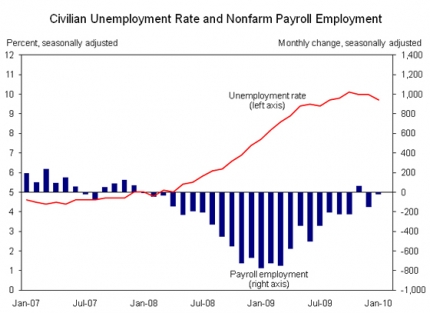
And that's why we took some very tough steps, in some cases some unpopular steps, when I took office to break the back of this recession. And today we received additional news suggesting that we are climbing out of the huge hole that we found ourselves in. Last January, the month I took office, almost 800,000 Americans lost their jobs. Today we learned the job losses for this January were 20,000. The unemployment rate dropped below 10 percent for the first time since the summer. Manufacturing employment grew last month for the first time in three years, led by increased activity in the production of cars and trucks and auto parts.

These numbers, while positive, are a cause for hope but not celebration, because far too many of our neighbors and friends and family are still out of work. We can't be satisfied when another 20,000 have joined their ranks and millions more Americans are under-employed, picking up what work they can.

It is encouraging the job loss in January was a small fraction of what it was a year ago and that the unemployment rate last month went down and not up. Understanding that these numbers will continue to fluctuate for months to come, these are welcome, if modest, signs of progress along the road to recovery.

Now, even as we take additional steps to hasten that recovery, we know that there are limits to what government can do to create jobs. The true engine of job creation will always be businesses. What government can do is fuel that engine by giving entrepreneurs and companies the support to open their doors and to expand and to hire more workers. That's exactly what this administration intends to do and what we've been doing working with the SBA and Karen Mills.

We're starting with small businesses because that's where most of the new jobs do. Over the past 15 years, small businesses have created roughly 65 percent of new jobs in America. These are companies formed around kitchen tables and family meetings; formed when an entrepreneur takes a chance on a dream; formed when a worker decides it's time she became her own boss. And it's worth remembering every once in a while, a small business becomes a big business, and then changes the world.

And that's why, last week, I proposed a new small business tax credit -- $5,000 for every new employee you hire this year. And a couple of these folks here, small business owners who I talked to, said they'd be interested in using that tax credit.

This week I proposed a new small business lending fund that would take $30 billion of the fund originally used to rescue big banks on Wall Street, and use it to provide lending capital to community banks on Main Street. And I know that we've got Capital One Bank here that's been a lender to Oasis and --

AUDIENCE MEMBER: Capital Bank --

THE PRESIDENT: Capital Bank -- excuse me -- and we appreciate the good work that you've done supporting this company.

Under Karen Mills, SBA has increased loan guarantees and reduced fees, steps that have increased SBA lending by 86 percent. And we've called for legislation to increase SBA loan limits to allow us to guarantee loans of up to $5 million compared with $2 million now.

And today I'm taking yet another step to assist small business owners get the capital that they need to grow and to hire. I'm proposing legislation that allows firms to refinance their commercial real estate loans, their mortgages under the SBA.

Right now even companies with great credit histories are facing challenges refinancing at what are historically low rates. Property values have fallen and lending has dropped. As a result, many businesses that would otherwise survive this downturn are at risk of defaulting, which in turn will lead to even lower property values and less lending, not to mention lost jobs.

In addition, I'm also proposing that we increase the limits for SBA loans used for lines of credit and working capital, something that I know could benefit Ruth's business and countless others.

The truth is the economy can be growing like gangbusters for years on end and it's still not easy to run a small business. It's not easy to stay ahead of your competitors; it's not easy to keep your costs down, to do right by your employees, to constantly innovate and adapt in a changing world. Talking to Ruth, she reminds me it's not easy keeping up with health care costs, and so Ruth is very anxious to see health reform passed so that small businesses can pick up the cost for their employees.

And in this deep and lasting recession, a hard job has been that much harder because for much of last year people weren't buying and customers weren't calling and banks were not lending. But even in the face of these obstacles, even in these tough times, all across the country there are people like Rick and Dennis and Ruth and Will who haven't given up. You guys wake up every day and seek a way to safely navigate these troubled waters to fulfill your obligations to your families and to your employees and your customers. And in that determination, that resolve, you embody what's best in America and you keep making America stronger.

Next week, Congress will start debating many of the jobs proposals I've outlined today and in recent days, many of the proposals to benefit small business, many of the proposals to spur hiring. If there are additional ideas from either party, I'm happy to consider them, as well. But what I hope -- what I strongly urge -- is that we work quickly and we work together to get this done. America's small businesses are counting on us.

So thank you very much, everybody. And thank you, guys.

END
12:50 P.M. EST

Close Transcript

The White House

Office of the Press Secretary

Remarks by the President on Jobs with Small Business Owners

Oasis Mechanical Contractors
Lanham, Maryland

12:42 P.M. EST

THE PRESIDENT: Good afternoon. And I appreciate the warm welcome from Rick Cummings and Dennis Bean and all the folks at Oasis. Thank you so much. These guys are experts in heating and cooling systems -- though, having spent some time in Washington, I actually am already very familiar with hot air I have to say. (Laughter.)

That, by the way, does not apply to the head of the Small Business Administration, Karen Mills, who's here today. And Karen has focused like a laser on helping small businesses not only survive but to thrive amidst the economic storm of the past two years.

We're also joined here by Ruth Gresser, who's the owner and chef at Pizzeria Paradiso. And I'm a little upset with Ruth because she did not bring samples, but Reggie Love has testified that the pizza is outstanding -- she's got restaurants in Washington. And also, Will Polak, who's the owner and operator of the Potomac Riverboat Company in Alexandria, Virginia. There's Will.

These folks know, as every living soul in America does, that these have been a rough couple of years for our economy and for our country -- the deepest downturn since the Great Depression ripped through our economy, costing more than 8 million jobs and rocking businesses, large and small.

And that's why we took some very tough steps, in some cases some unpopular steps, when I took office to break the back of this recession. And today we received additional news suggesting that we are climbing out of the huge hole that we found ourselves in. Last January, the month I took office, almost 800,000 Americans lost their jobs. Today we learned the job losses for this January were 20,000. The unemployment rate dropped below 10 percent for the first time since the summer. Manufacturing employment grew last month for the first time in three years, led by increased activity in the production of cars and trucks and auto parts.

These numbers, while positive, are a cause for hope but not celebration, because far too many of our neighbors and friends and family are still out of work. We can't be satisfied when another 20,000 have joined their ranks and millions more Americans are under-employed, picking up what work they can.

It is encouraging the job loss in January was a small fraction of what it was a year ago and that the unemployment rate last month went down and not up. Understanding that these numbers will continue to fluctuate for months to come, these are welcome, if modest, signs of progress along the road to recovery.

Now, even as we take additional steps to hasten that recovery, we know that there are limits to what government can do to create jobs. The true engine of job creation will always be businesses. What government can do is fuel that engine by giving entrepreneurs and companies the support to open their doors and to expand and to hire more workers. That's exactly what this administration intends to do and what we've been doing working with the SBA and Karen Mills.

We're starting with small businesses because that's where most of the new jobs do. Over the past 15 years, small businesses have created roughly 65 percent of new jobs in America. These are companies formed around kitchen tables and family meetings; formed when an entrepreneur takes a chance on a dream; formed when a worker decides it's time she became her own boss. And it's worth remembering every once in a while, a small business becomes a big business, and then changes the world.

And that's why, last week, I proposed a new small business tax credit -- $5,000 for every new employee you hire this year. And a couple of these folks here, small business owners who I talked to, said they'd be interested in using that tax credit.

This week I proposed a new small business lending fund that would take $30 billion of the fund originally used to rescue big banks on Wall Street, and use it to provide lending capital to community banks on Main Street. And I know that we've got Capital One Bank here that's been a lender to Oasis and --

AUDIENCE MEMBER: Capital Bank --

THE PRESIDENT: Capital Bank -- excuse me -- and we appreciate the good work that you've done supporting this company.

Under Karen Mills, SBA has increased loan guarantees and reduced fees, steps that have increased SBA lending by 86 percent. And we've called for legislation to increase SBA loan limits to allow us to guarantee loans of up to $5 million compared with $2 million now.

And today I'm taking yet another step to assist small business owners get the capital that they need to grow and to hire. I'm proposing legislation that allows firms to refinance their commercial real estate loans, their mortgages under the SBA.

Right now even companies with great credit histories are facing challenges refinancing at what are historically low rates. Property values have fallen and lending has dropped. As a result, many businesses that would otherwise survive this downturn are at risk of defaulting, which in turn will lead to even lower property values and less lending, not to mention lost jobs.

In addition, I'm also proposing that we increase the limits for SBA loans used for lines of credit and working capital, something that I know could benefit Ruth's business and countless others.

The truth is the economy can be growing like gangbusters for years on end and it's still not easy to run a small business. It's not easy to stay ahead of your competitors; it's not easy to keep your costs down, to do right by your employees, to constantly innovate and adapt in a changing world. Talking to Ruth, she reminds me it's not easy keeping up with health care costs, and so Ruth is very anxious to see health reform passed so that small businesses can pick up the cost for their employees.

And in this deep and lasting recession, a hard job has been that much harder because for much of last year people weren't buying and customers weren't calling and banks were not lending. But even in the face of these obstacles, even in these tough times, all across the country there are people like Rick and Dennis and Ruth and Will who haven't given up. You guys wake up every day and seek a way to safely navigate these troubled waters to fulfill your obligations to your families and to your employees and your customers. And in that determination, that resolve, you embody what's best in America and you keep making America stronger.

Next week, Congress will start debating many of the jobs proposals I've outlined today and in recent days, many of the proposals to benefit small business, many of the proposals to spur hiring. If there are additional ideas from either party, I'm happy to consider them, as well. But what I hope -- what I strongly urge -- is that we work quickly and we work together to get this done. America's small businesses are counting on us.

So thank you very much, everybody. And thank you, guys.

END
12:50 P.M. EST

The White House

Office of the Press Secretary

Statement by Chair of the Council of Economic Advisers Christina Romer on the Employment Situation in January

The statement below was posted on www.WhiteHouse.gov by the Chair of the Council of Economic Advisers Christina Romer in response to the January employment report. The statement can also be accessed HERE.

On the Employment Situation in January

Posted by Christina Romer on February 05, 2010 at 09:30 AM EST

While unemployment remains a severe problem, today’s employment report contains encouraging signs of gradual labor market healing.  The unemployment rate fell three-tenths of a percentage point and employment rose in a number of industries, though overall employment fell slightly.

The unemployment rate declined from 10.0 percent to 9.7 percent.  This decline occurred despite a modest rise in the labor force.  The broadest measure of the unemployment rate, which includes all persons marginally attached to the labor force and workers working part time for economic reasons, fell almost a full percentage point.  Obviously, the unemployment rate remains unacceptably high, and is even worse for certain demographic groups such as teenagers and black or African American workers.

Overall payroll employment declined 20,000 in December.  This total reflects substantial variation across industries.  Employment in manufacturing rose for the first time since January 2007, led by an increase in employment in motor vehicles and parts.  Employment also rose in retail trade and in temporary help employment.  Employment fell, however, in construction and state and local government.

Even as today’s numbers contain signs of the beginning of recovery, they are also a reminder of how far we still have to go to return the economy to robust health and full employment.  Indeed, with the benchmark revision announced today, we now know that the total job loss over the recession was more than 1 million larger than previously estimated.  That is why at the same time that he released a plan for reining in the budget deficit over the medium and long run, the President has called on Congress to enact responsible, targeted actions to jump-start job creation.  His proposals for a small business jobs and wages tax cut and a new program to encourage small business lending are important steps to help the businesses that are essential to robust job creation.  Today’s numbers showing continued decline in construction and state and local government employment emphasize the importance of two other of the President’s priorities—continued infrastructure investment and additional aid for strapped state and local governments.

There will likely be bumps in the road ahead.  The monthly employment and unemployment numbers are volatile and subject to substantial revision.  Therefore, it is important not to read too much into any one monthly report, positive or negative.  It is essential that we continue our efforts to move in the right direction and replace job losses with robust job gains.

February 2012 Unemployment Numbers


Christina Romer is Chair of the Council of Economic Advisers

Budgeting for a New Era of Responsibility

February 01, 2010 | 10:29 | Public Domain

President Obama announces the Fiscal Year 2011 Budget that makes critical investments in job creation and continued economic recovery, while bringing a new level of responsibility to how tax dollars are spent.

Download mp4 (211MB) | mp3 (10MB)

Read the Transcript

Remarks by the President on the Budget

10:40 A.M. EST

THE PRESIDENT:  Good morning, everybody.  This morning, I sent a budget to Congress for the coming year.  It's a budget that reflects the serious challenges facing the country.  We're at war.  Our economy has lost 7 million jobs over the last two years.  And our government is deeply in debt after what can only be described as a decade of profligacy.

The fact is, 10 years ago, we had a budget surplus of more than $200 billion, with projected surpluses stretching out toward the horizon.  Yet over the course of the past 10 years, the previous administration and previous Congresses created an expensive new drug program, passed massive tax cuts for the wealthy, and funded two wars without paying for any of it -– all of which was compounded by recession and by rising health care costs.  As a result, when I first walked through the door, the deficit stood at $1.3 trillion, with projected deficits of $8 trillion over the next decade.

If we had taken office during ordinary times, we would have started bringing down these deficits immediately.  But one year ago, our country was in crisis:  We were losing nearly 700,000 jobs each month, the economy was in a free fall, and the financial system was near collapse.  Many feared another Great Depression.  So we initiated a rescue, and that rescue was not without significant cost; it added to the deficit as well.

One year later, because of the steps we've taken, we're in a very different place.  But we can't simply move beyond this crisis; we have to address the irresponsibility that led to it.  And that includes the failure to rein in spending, as well a reliance on borrowing –- from Wall Street to Washington to Main Street –- to fuel our growth.  That's what we have to change.  We have to do what families across America are doing:  Save where we can so that we can afford what we need.

Now, I think it's very important to understand:  We won't be able to bring down this deficit overnight, given that the recovery is still taking hold and families across the country still need help.  We will continue, for example, to do what it takes to create jobs.  That's reflected in my budget; it's essential.  The budget includes new tax cuts for people who invest in small businesses, tax credits for small businesses that hire new workers, investments that will create jobs repairing roads and bridges, and tax breaks for retrofitting homes to save energy.

We also continue to lay a new foundation for lasting growth, which is essential as well.  Just as it would be a terrible mistake to borrow against our children's future to pay our way today, it would be equally wrong to neglect their future by failing to invest in areas that will determine our economic success in this new century.

That's why we build on the largest investment in clean energy in history, as well as increase investment in scientific research, so that we are fostering the industries and jobs of the future right here in America.

That's why I've proposed a more than 6 percent increase in funding for the Education Department.  And this funding is tied to reforms that raise student achievement, inspire students to excel in math and science, and turn around failing schools which consign too many young people to a lesser future -- because in the 21st century there is no better anti-poverty program than a world-class education.

And that's why we eliminate a wasteful subsidy to banks that lend to college students, and use that money to revitalize community colleges and make college more affordable.  This will help us reach the goal I've set for America:  By 2020 we will once again have the highest proportion of college graduates in the world.

These are the investments we must make to create jobs and opportunity now and in the future.  And in a departure from the way business had been done in Washington, we actually show how we pay for these investments while putting our country on a more fiscally sustainable path.

I've proposed a freeze in government spending for three years.  This won't apply to the benefits folks get through Social Security, Medicaid, or Medicare.  And it won't apply to our national security –- including benefits for veterans.  But it will apply to all other discretionary government programs.  And we're not simply photocopying last year's budget; freezing spending does not mean we won't cut what doesn't work to pay for what does.

We have gone through every department's spending line by line, item by item, looking for inefficiency, duplication, and programs that have outlived their usefulness.  That's how we freeze discretionary spending.  Last year, we found $17 billion in cuts.  This year, we've already found $20 billion.

Now, some of these cuts are just common sense.  For example, we cut $115 million from a program that pays states to clean up mines that have already been cleaned up.  We're also cutting a Forest Service economic development program that strayed so far from any mission that it funded a music festival.  And we're saving $20 million by stopping the refurbishment of a Department of Energy science center that the Department of Energy does not want to refurbish.

Other cuts, though, are more painful, because the goals of the underlying programs are worthy.  We eliminate one program that provides grants to do environmental clean up of abandoned buildings.  That's a mission I support, but there are other sources of private and public funds to achieve it.  We also eliminated a $120 million program that allows folks to get their Earned Income Tax Credit in advance.  I am a big supporter of the Earned Income Tax Credit.  The problem is 80 percent of people who got this advance didn't comply with one or more of the program's requirements.

So I'm willing to reduce waste in programs I care about, and I'm asking members of Congress to do the same.  I'm asking Republicans and Democrats alike to take a fresh look at programs they've supported in the past to see what's working and what's not, and trim back accordingly.
 
Like any business, we're also looking for ways to get more bang for our buck, by promoting innovation and cutting red tape. For example, we consolidate 38 separate education programs into 11.  And last fall, we launched the "SAVE Awards" to solicit ideas from federal employees about how make government more efficient and more effective.  I'm proud to say that a number of these ideas -- like allowing Social Security appointments to be made online -- made it into our budget.

I also want to note even though the Department of Defense is exempt from the budget freeze, it's not exempt from budget common sense.  It's not exempt from looking for savings.  We save money by eliminating unnecessary defense programs that do nothing to keep us safe.  One example is the $2.5 billion that we're spending to build C-17 transport aircraft.  Four years ago, the Defense Department decided to cease production because it had acquired the number requested -- 180.  Yet every year since, Congress had provided unrequested money for more C-17s that the Pentagon doesn't want or need.  It's waste, pure and simple.

And there are other steps we're taking to rein in deficits.  I've proposed a fee on big banks to pay back taxpayers for the bailout.  We're reforming the way contracts are awarded, to save taxpayers billions of dollars.  And while we extend middle-class tax cuts in this budget, we will not continue costly tax cuts for oil companies, investment fund managers, and those making over $250,000 a year.  We just can't afford it.

Finally, changing spending-as-usual depends on changing politics-as-usual.  And that's why I've proposed a bipartisan fiscal commission:  a panel of Democrats and Republicans who would hammer out concrete deficit reduction proposals over the medium and long term, but would come up with those answers by a certain deadline.  I should point out, by the way, that is an idea that had strong bipartisan support, was originally introduced by Senators Gregg on the Republican side and Conrad on the Democratic side; had a lot of Republican cosponsors to the idea.  I hope that, despite the fact that it got voted down in the Senate, that both the Republican Leader Mitch McConnell and the Republican Leader in the House John Boehner go ahead and fully embrace what has been a bipartisan idea to get our arms around this budget.

That's also why we're restoring pay-as-you-go:  a simple rule that says Congress can't spend a dime without cutting a dime elsewhere.  This rule helped lead to the budget surpluses of the 1990s, and it's one of the most important steps we can take to restore fiscal discipline in Washington.

You can read more about the budget at budget.gov -- very easy to remember -- budget.gov.  But the bottom line is this:  We simply cannot continue to spend as if deficits don't have consequences; as if waste doesn't matter; as if the hard-earned tax dollars of the American people can be treated like Monopoly money; as if we can ignore this challenge for another generation.  We can't.

In order to meet this challenge, I welcome any idea, from Democrats and Republicans.  What I will not welcome -– what I reject -– is the same old grandstanding when the cameras are on, and the same irresponsible budget policies when the cameras are off.  It's time to hold Washington to the same standards families and businesses hold themselves.  It's time to save what we can, spend what we must, and live within our means once again.

Thanks very much.

END
10:51 A.M. EST

Close Transcript

The White House

Office of the Press Secretary

President Obama Announces New Proposal to Create Jobs, Cut Taxes for Small Businesses

In Baltimore, President outlines details of the Small Business Jobs and Wages Tax Cut will

WASHINGTON, DC – At the Chesapeake Machine Company in Baltimore, Maryland, President Obama announced details of the Small Business Jobs and Wages Tax Cut, one of his new proposals to create good jobs and bring relief to small businesses.

The Small Business Jobs and Wages Tax Cut will put more Americans back to work by giving businesses – particularly small business – a tax cut for new hiring.  The new proposal will also provide tax incentives for businesses to expand wages for their employees.  A full fact sheet is available HERE.

President Obama said, “Today, I am proposing what I believe is the best way to promote hiring by small businesses: through a tax credit for companies that add workers and increase salaries this year.  Now is the perfect time for this kind of incentive.  The economy is growing, but job growth is lagging. This is only one part of our larger jobs package, but it will be a key element to spur hiring and give all small businesses that participate significant tax relief.”

Treasury Secretary Geithner said, “America's small businesses are critical engines of job growth.  But to play that role, they need some help.  They need better access to credit from banks and tax relief from the government. This announcement provides such relief, giving small businesses incentives to put Americans back to work and increase the salaries of those currently working."

Small Business Administrator Karen Mills said, “We know that if we give small businesses the tools they need, they will create the jobs America needs. This tax cut is one of those tools, and along with the other tax incentives and plans for increasing small business lending the President has called for, it will help small businesses across this country take that next step to expand and create new jobs in their local communities.”

Small business leaders and leading CEOs join The Congressional Budget Office and independent economists in highlighting how the Small Business Jobs and Wages Tax cut will help put more people back to work and provide real relief for America’s small businesses.

Here are a few of their statements:

Statement of John Arensmeyer, CEO, Small Business Majority
"This economic crisis has hit small businesses particularly hard, leaving them unable to play the vital role they've always played in past recessions: creating the jobs that get the country back on its feet. President Obama's proposed jobs tax credits hit the mark. These tax credits are simple and straightforward, and will support small businesses to generate the jobs Americans so desperately need. And they'll start doing it now."
--

Women Impacting Public Policy Statement on Small Business Jobs and Wages Tax Cut
“Given the difficult economic environment under which small businesses have been operating for the past two years, tax relief is welcomed at any level. As we understand the President’s proposal, small businesses would be given a tax credit of $5000 for new hires and additional tax relief from the Social Security payroll tax for new hires or increased wages of existing workers.

“The most compelling part of the proposal is the ability to realize the tax savings on a quarterly basis. Every dollar that is not paid in tax goes toward making the business more profitable, or in many cases in this economy, keeps the business afloat. Tax incentives such as this are an investment in this country’s workforce and in the small businesses that make this country great. We urge Congress to adopt the President’s proposals as expeditiously as possible.”
--

Statement by Frank Blake, Chairman and CEO of Home Depot
“Small general contractors and pro firms are a significant part of our customer base; they’ve been hit hard in this recession; and this proposal should help.”
--

Statement of Rose Wang, CEO, Binary Group Inc
“We all know small business is the engine of our economic growth. I think this is a proven tool to incentivize entrepreneurs and business owners to continue to invest in their businesses and people.”
--

Statement by Mark G Heesen, President of the National Venture Capital Association
“The venture capital industry is supportive of the proposal put forth today by President Obama today to cut the payroll taxes of small businesses that create net new jobs.  As active participants in the start-up ecosystem, venture capitalists work alongside of company founders and entrepreneurs each day with the shared goal of growing our country’s most promising businesses.  The construct of the credit, which is based on payroll taxes, guarantees that our country’s seed and early stage companies – many which are pre-revenue -- will be in a position to benefit from this program.  With these companies operating in high growth innovative sectors such as IT, life sciences and clean technology, such an initiative is positioned to best support economic growth.”
--

Statement from Matthew Shay, President & CEO of the International Franchise Association
 “The new hire tax credit announced by the President today will be helpful as franchised businesses plan for growth this year.  But we also urge the President and Congress to not back away from efforts to increase access to credit.  Improving capital access for small businesses will lead to long-term, sustainable job creation and help spur economic recovery.”
--

Statement of B. Samuel Ko, Philos Technologies, Inc.
“I am extremely happy to hear that there will be a tax credit for small businesses creating jobs and wages.  I definitely believe that this tax credit will be placed in the right moment where we see the economy seems to be coming back, incentivizing and stimulating small businesses to hire more people faster.
I am certain that this tax credit will certainly stimulate our decision to hire more people very soon.”
--

Statement of Richard Taylor, CEO of ImbuTec (Pittsburgh, PA)
"Demand is growing for the energy efficient lighting systems we manufacture and distribute, but because our industry is evolving rapidly, cash flows often lag behind the investments necessary to meet that demand.  The President’s proposed $5,000 tax credit would provide meaningful short-term assistance to help us hire the workers we need to manufacture, sell and install our American-made, energy efficient technology.”