Remarks by the President and the Vice President at Town Hall Meeting in Tampa, Florida
1:14 P.M. EST
THE VICE PRESIDENT: Thank you all very, very much. Thank you all very much. It's amazing the crowds I draw. (Laughter.) It's great to be with you all today. And I really hope you all got to hear the President's speech last night. (Applause.) Wasn't it good? I think the President laid out with clarity and power what we've done, what we're going to do, and how we're committed to getting it done. (Applause.)
He laid out a clear and ambitious plan -- a plan that flows from our core principles, the principles we ran on, our core mission that we said we were going to attend to when we took office a year ago. And that was very simple: to restore the middle class in America. (Applause.)
Look, because of the President's bold leadership, we weathered the most ferocious economic storm this nation has seen since the Great Depression, keeping us from sliding into a depression, as some leading economists suggested. The President from the outset has understood that it's all about jobs, but there's a lot of business to attend to just to keep us from sliding off the edge.
Well, ladies and gentlemen, the President knows one other thing. In a sense, it's more than about jobs. A job is more than a paycheck. It's about dignity and it's about respect. And too many people have lost it. (Applause.)
Ladies and gentlemen, President Obama understands that the longest walk a mother or father can make is a trip up a short flight of stairs to their child's bedroom to say, "Honey, I'm sorry, you're not going to be able to stay at Stewart Middle School next year, or you can't play on West Tampa's Little League team next year, honey. We're going to have to move because daddy or mommy lost their job, or because the bank said we can't keep our house."
My dad made that walk when I was a kid in our home in Scranton, Pennsylvania. I remember vividly my father walking up the stairs and I sitting on the end of the bed with my sister, Valerie, the only one old enough to understand what he was talking about. He said, "I'm sorry, honey, but I'm going to have to move."
The first thought I had was, God, they're getting divorced -- literally. That's what worried me. He said, "I've got to move, honey. You and Val are going to stay here with Mom and Jimmy and you're going to stay here with Grandpa, because Dad has to move to Delaware. I'll be back. It will take about a year, but I'll come back and forth. But we're going to be okay."
Wasn't until I got older I realized how hard that must have been for my father to make that walk; how hard it must have been for him to go into the kitchen before that walk and say to his father-in-law, "Ambrose, can you do me a favor? Can you keep my family? Can Jean and the kids stay here with you? I'll try to do it as quick as I can. But there's no jobs."
Ladies and gentlemen, too many Floridians have had to make that walk over the last two years. And the President and I understand. We understand. And we're determined to make sure that every hardworking Floridian, every hardworking American, is able to walk into his child's room and say, "Honey, it's going to be okay." (Applause.) That's what this is all about. That's what this is all about.
As you heard last night, that's why we're putting in place the policies that will enable us to reduce the debt we inherited and deal with the spending required to keep us from falling off the cliff this year. And during the process, you heard him say how we are reordering our country's priorities. We're investing in health care, education, energy information, technology, health technology -- (applause) -- electric vehicles and batteries, investments that will help us build a new economy for the 21st century -- investments that will allow us to lead in the 21st century as we did in the 20th.
Ladies and gentlemen, we're determined to restore America to its rightful place at the leading edge of innovation, with bold ideas that will create jobs immediately and serve as the foundation, a new platform -- (applause) -- a new platform to build this economy on that will serve not just our immediate needs but future generations; ideas like wind power, solar energy, a smart grid, broadband -- (applause) -- and high-speed rail. And that's why we're here today. (Applause.)
Having made over 7,900 round trips, literally, on Amtrak, 250 miles a day, I am very familiar with rail. (Laughter.) And today you have no idea how pleased I am to talk about the announcement that we made yesterday awarding -- in total, nationwide -- nearly $8 billion from the Recovery Act, funding to move us in the direction of developing a high-speed rail service in 13 travel corridors covering 31 states all across this country. (Applause.)
Ladies and gentlemen, these investments -- these investments have several goals: first, to improve existing rail lines to make train service faster, more reliable; two, to pull cars off the road, reducing congestion, cutting pollution, and increasing productivity; and three, to begin to develop new corridors for high-speed trains that will go from 169 to 230 miles an hour. (Applause.)
Ladies and gentlemen, like a corridor, right here from Tampa to Orlando -- (applause) -- so you'll be able to get on a train here to Orlando in less than an hour, without battling traffic and congestion, arrive at your destination. Ladies and gentlemen, this single investment is not going to solve all our transportation issues overnight. Instead, with more than $55 billion of proposals from 50 states all across the country, we're providing $8 billion in seed money. And today's awards provide only initial funding for the rail system. Like Tampa and Orlando route, more funding is going to come in the future as progress is made.
We have committed to another $5 billion in funding over the next five years. It's a down payment on a truly national program that's going to reshape the way we travel. It will change the way which we go from place to place, change the ways we work and live, and will connect communities to each other in a way that in the past was impossible. Just like the Interstate Highway structure did back in the mid-'50s, it will have far-reaching consequences.
Let me ask you a question: How can we, the leading nation in the world, be in a position where China, Spain, France -- and name all the other countries who have rail systems that are far superior to ours?
Ladies and gentlemen, it's about time we move. But this time -- but this time, we're not only going to be providing a better way to transport; we're going to be taking cars off of congested highways, reducing carbon emissions, and saving billions of dollars in human productivity lost just sitting in traffic jams, as studies point out.
Most important, we're creating jobs -- good jobs. (Applause.) Construction jobs. Manufacturing jobs. And we're going to be creating them right now. We're going to spur economic development in the future and we're making our communities more livable all in the process.
And ladies and gentlemen, it's now my pleasure to introduce the man who's leading us in this new era of adventure, the President of the United States of America. (Applause.) President Barack Obama. (Applause.)
THE PRESIDENT: Thank you, everybody. Hello, Tampa! (Applause.) Thank you so much. Thank you, everybody. It's great to see you. All right, everybody just make yourselves comfortable. We're going to be here for a little bit. (Applause.) Thank you. Thank you.
We've got -- we've got some special guests that I want to make sure we acknowledge. Florida CFO Alex Sink is in the house. (Applause.) Representative Kathy Castor, your representative. (Applause.) Representative Alan Grayson. (Applause.) Representative Kendrick Meek. (Applause.) Representative Debbie Wasserman-Schultz. (Applause.) Your own mayor, Pam Iorio. (Applause.) The mayor of Orlando, Buddy Dyer. (Applause.) The president of University of Tampa, Ronald Vaughn. (Applause.)
And two very special -- two very special guests, Brian C. Smithey and Roger J. Picard. I want you guys to know who these folks are. They are members of the FEMA Florida Task Force Team 2 Canine Search Specialists. They went down to Haiti and worked 26-hour-long shifts, staying with victims until they were rescued. The Florida Task Force Team saved seven lives. Brian worked at a school where his dog, Powder, found a young adult female buried in the rubble three to four days. So these are the kinds of heroes that make America proud, and I want everybody to give them a big round of applause. Stand up. Stand up. (Applause.) Thank you.
And I haven't spotted him in the crowd yet, but I've got to do this -- even though I know you all are upset that he took all that success to the Colts -- (applause) -- he made his name here in Tampa. (Applause.) And he's not just a great coach, but he's just a model individual and leader, we're very proud to have him in the house, Coach Tony Dungy. (Applause.)
Any of you want some analysis about the upcoming Super Bowl, Coach is free to give -- no, I'm just -- it's good to see you, Coach.
All right. Now, first of all let me say it's good to be back in the Sunshine State. (Applause.) It is especially good to be back in January. (Laughter.) And it's always nice to get out of Washington -- it is -- and spend a little time with the people who sent me to Washington. (Applause.)
Now, last night I spoke with you about where we've been over the past year and where I believe we need to go. And I said what all of you know from your own lives: These are difficult times; these are challenging times for our country.
In the last two years, we've gone through the deepest recession since the Great Depression. Think about that. A big chunk of the people here -- certainly the younger people here -- have never even seen a recession; they don't even -- it doesn't register on their minds. This is by far the toughest thing that the country has gone through economically since the 1930s.
And Tampa, like so many communities across our country, has felt the lash of shuttered businesses and lost jobs and home foreclosures and vanished or dwindling savings. And this storm came at the end of what some call a lost decade -- because what happened between 2000 and now, it was a decade in which paychecks shrank and jobs barely grew, and the costs of everything from health care to college education went up. Irresponsibility from Wall Street to Washington left good, responsible Americans who did everything right still struggling in ways they never imagined.
Joe and I took office in the middle of this raging storm. We ran for office, the highest office, because we had been hearing stories like this day in, day out, for years, even before the financial crisis hit. So we're not going to rest until we rebuild an economy in which hard work and responsibility are rewarded, and businesses are hiring again, and wages are growing again, and the middle class can get its legs underneath it again. (Applause.) We will not rest until we build an economy that's ready for America's future.
Now, to do that, the first thing we had to do was break the back of this recession. And that required some tough, in some cases unpopular but unnecessary -- all which were necessary steps. I mean -- I mentioned this last night -- none of us wanted to have to stabilize the banking sector, particularly since they helped create this mess. (Applause.) But, as I explained last night, if we hadn't, the financial system literally could have melted down and that would have taken our entire economy and millions more families and businesses with it.
But because of the steps we've taken, now the markets have stabilized. The economy is growing again. (Applause.) The worst of the storm has passed. But I think all of you understand the devastation remains. One in 10 Americans still can't find work. That's why creating jobs has to be our number one priority in 2010. (Applause.)
The true engines of job creation here in America are America's businesses. And there are several steps we can take to help them expand and hire new workers. Last night I proposed taking $30 billion of the money that went to Wall Street banks but have now been repaid and use it to help community banks give small businesses the credit they need to stay afloat. (Applause.) That will help. I also proposed a new tax credit for more than 1 million small businesses that hire new workers or raise wages. And while we're at it, I believe that we should eliminate all capital gains taxes on small business investment, and provide a tax incentive for all businesses to invest in new plants and equipment. (Applause.)
As Joe mentioned, we're going to put more Americans to work rebuilding our infrastructure, and building our infrastructure of the future. I mean, it's important to repave our roads; it's important to repair our bridges so that they're safe. But we want to start looking deep into the 21st century -- (applause) -- and we want to say to ourselves, there is no reason why other countries can build high-speed rail lines and we can't. (Applause.) And that's what's about to happen right here in Tampa -- we are going to start building a new high-speed rail line -- (applause) -- right here in Tampa, building for the future, putting people to work. (Applause.)
I'm excited. I'm going to come back down here and ride it. (Laughter and applause.) Joe and I -- you all have a date. When that thing is all set up, we'll come down here and check it out. (Laughter.)
And by the way, this high-speed rail line is being funded by the Recovery Act. (Applause.) And one other thing we can start doing for jobs here in America that I mentioned last night -- I talked about this all through the campaign. We put this proposal in our budget, we keep on getting resistance, but we are going to keep on pushing to end tax breaks for companies that ship our jobs overseas and give those tax breaks to companies that create jobs right here in the United States of America. (Applause.) It's the right thing to do. It's the right thing to do. It's the right thing to do. (Applause.)
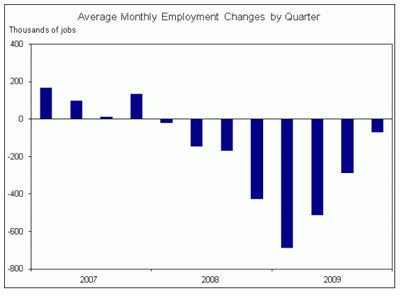
Now, I have to say this: The steps that I just mentioned will help accelerate job growth in an economy that is already beginning to grow, but the steps we take alone won't make up for the 7 million jobs we lost over the last two years. I mean, keep in mind, when we were sworn into office, that December we had lost 650,000 jobs. January, as we were being sworn in, we lost 700,000 jobs; February, 650,000 jobs. So before we could even put in place the Recovery Act, you had already seen millions of jobs lost. That's a deep hole that we're going to have to fill. And the only way to do that is to lay a new foundation for long-term economic growth and finally address the struggles that middle-class families have been grappling with for years.
Now, Florida, that's why Joe and I asked for the chance to serve as your President and Vice President. (Applause.) Look, we didn't seek this office to push our problems off or take the easy road through the next election. We ran to solve problems -- problems that had been nagging at America for decades. We want to solve them for the next generation. We ran to get the tough stuff done. (Applause.) So as I mentioned last night, I make no apology for trying to fix stuff that's hard, because -- (applause) -- I'll be honest with you -- I'll be honest with you, Joe and I are both pretty smart politicians, we've been at this a while. (Laughter.) The easiest way to keep your poll numbers high is to say nothing and to do nothing that offends anybody. (Applause.) That's true. No, no, no, you just wave, smile and -- (laughter.) That's how you do it.
The minute you actually start doing something, somebody is going to disagree with you. (Applause.) But that's what I promised. Some of you remember the campaign. I said I wasn't just going to tell you what you want to hear, I was going to tell you what you need to hear. (Applause.) So none of this is new. There's nothing that we have talked about since we entered the White House that we didn't talk about during the campaign. And so long as we have the privilege of serving you, we will not stop fighting for your future, no matter how many lumps we've got to take to get it done. (Applause.)
I do also have to just mention -- I'm going to mention -- you know I love you in the media, but I will mention this little aspect of our media. Our friends with the pads and the pencils -- last week I went to Ohio and I started saying what I'm saying now, which is, I'm going to fight for your future. And they got all worked up. They got worked up last week. They said, is he trying to change his message; is he trying to get more populist; is this a strategy that he's pursuing to boost this, that and the other; is this something new?
I just had to do a little rewind here of how we ran our grassroots campaign -- (applause) -- because I've got some news. I've got some news of my own here. I've been fighting for working folks my entire adult life. (Applause.) That's why I entered public service -- to fight for folks in Chicago. That's why I ran for the state Senate. That's why I ran for the U.S. Senate. That's why I ran for President -- to fight for people here in Tampa, and people here in Florida, and to fight for people all across the United States of America. (Applause.)
I seem to remember coming to Tampa two weeks before the election -- (applause) -- and you know what I said? This is a quote, people can check -- I'm sure it was reported in the newspapers. I said, "Change never comes without a fight." (Applause.) That was true then. It's true now. Change never comes without a fight, Florida. So I won't stop fighting; I know you won't, either.
We're not going to stop fighting to give our kids a world-class education, to make college more affordable, to make sure that by 2020 we have the highest rate of college attendance of any country in the world. (Applause.) So we proposed that graduates should only pay 10 percent of their income to pay back their student loans. (Applause.) Students like that. (Applause.) And what I've said is we'll forgive student loan debt after 20 years -- but after 10 if you choose a career in public service. Because if you decide you want to be a teacher -- (applause) -- if you decide you want to be a cop, if you're not making huge amounts of money we don't want to discourage you from that because of the cost of college. And by the way, I've been there and Michelle has been there -- it took us 10 full years to pay off Michelle's student loans, 15 to pay mine off. (Laughter.) So I've been there. And our belief, and I think your belief, is in the United States of America nobody should go broke because they chose to go to college. We want everybody to go to college, and we don't want them going broke doing it. (Applause.)
We won't stop fighting to spark innovation and ignite a clean energy economy where America's workers are building solar panels and wind towers and cutting-edge batteries for automobiles -- because the nation that leads the clean energy revolution will be the nation that leads the global economy. (Applause.) And, as I said last night, other countries aren't waiting. They want those jobs. China wants those jobs. Germany wants those jobs. They are going after them hard, making the investments required.
We're not going to stop fighting to give every American a fair shake. The first bill I signed into law was making sure that there was equal pay for equal work for women -- the Lilly Ledbetter Act -- (applause) -- because I think you should be paid the same for doing the same work. That's just fair. (Applause.) And by the way, men, you should have been standing up clapping for that because -- (laughter) -- because most families today are depending on two paychecks, not one, to get by. (Applause.)
We're not going to stop fighting to protect the American consumer. That's why I signed a Credit Card Bill of Rights into law to protect you from surprise charges and retroactive rate hikes and other unfair rules. That's why I'm fighting for a tough consumer financial protection agency to protect you against things like hidden fees that can make an ATM withdrawal cost 30 bucks. (Applause.)
I just want to be clear here, for the benefit of my friends in the back. (Laughter.) We need a strong financial sector. Without it, businesses can't get capital to grow and create jobs. Families can't finance a home loan or education. So we want a healthy financial sector. And there are folks all across the country working in banks who are doing great service to their community. But we also need some rules of the road for Wall Street, so that reckless decisions made by a few don't take our economy over the side. (Applause.) That's common sense. There's nothing radical about that. In fact, the banks should want it because it would create greater stability in the system.
And, yes, we will not stop fighting for a health care system that works for the American people, not just for the insurance industry. (Applause.) We won't stop. We want a system where you can't be denied care if you have a preexisting condition. (Applause.) You can't get thrown off your insurance right at the time when you get seriously ill. We want a system where small businesses can get insurance at a price they can afford. (Applause.)
Nobody pays more than small businesses and individuals who are self-employed in the insurance market, because they've got no leverage. We want to change that by allowing them to be able to set up a pool. We want to make sure that people who don't have coverage can find an affordable choice in a competitive marketplace. (Applause.) We want a system in which seniors don't have these huge gaps in their Medicare prescription drug coverage -- (applause) -- and where Medicare itself is on a sounder financial footing. Those are the things that we're fighting for.
And I'm not going to stop on that, because it's the right thing to do, and by the way, if you are serious about reducing our deficit and debt you cannot accomplish it without reforming our health care system, because that's what's gobbling up more federal dollars than anything else. (Applause.) I don't understand folks who say they don't want to see government spending out of control, and then are fighting reforms that the Congressional Budget Office says would cut a trillion dollars off our deficit over the next two decades. (Applause.) Those aren't my numbers.
Now, we're never going to stop fighting to cut waste and abuse in Washington. We do have to rein in deficits that have been accumulating for too long. Families across the country are tightening their belts and making tough decisions. It's time for the federal government to do the same. And that's why I proposed specific steps last night to bring the deficit down. And I'm grateful that the Senate just passed, as we were flying down here to Florida, a rule called pay-as-you-go, or PAYGO, that was a big reason we had record surpluses in the 1990s instead of the record deficits that were handed to me when I ran -- walked into office.
Look, it's a very simply concept, this PAYGO. It basically just says you got to pay as you go. (Laughter.) It's sort of how you live. At least after you cut up those credit cards. (Laughter.) Basically, you want to start a new program? Start a new program. But you've got to end an old one that pays for it. If you want to cut taxes, great, cut taxes. But you've got to figure out how to fill the revenue that results when you lose that tax revenue. So the idea is just honest accounting. That's what's needed.
Let me say one more word about health care. I just got to -- I'm gnawing on this bone a little bit. (Laughter.) I know that the longer the process worked through on a complicated issue like this, the uglier it looked. You know, there's -- and it doesn't help when you've got the insurance industry spending several hundred million dollars advertising against it, but -- but after a while, people didn't know what to think. And you started asking yourselves, what's in it for me?
And as I said last night, I take my share of the blame for not explaining our approach more clearly. But this problem is not going to go away. The tough stories I read in letters at night, they're not stopping. I'm not going to walk away from these efforts. And I won't walk away from you. (Applause.) And I don't think Congress should walk away, either. We are going to keep working to get this done. And I hope we can get some Republicans to join Democrats in understanding the urgency of the problem. (Applause.)
On every one of these issues my door remains open to good ideas from both parties. I want the Republicans off the sidelines. I want them working with us to solve problems facing working families -- not to score points. I want a partnership. What we can't do, though -- here's what I'm not open to. I don't want gridlock on issue after issue after issue when there's so many urgent problems to solve. (Applause.) And I don't want an attitude, "If Obama loses, then we win." I mean, that can't be a platform. (Applause.) Even if you disagree with me on some specific issues, all of us should be rooting for each other. (Applause.) All of us should be working for America moving forward and solving problems.
So that, you know, "you lose, I win" mentality, that mindset may be good for short-term politics, but it's not a mindset that's equal to these times. (Applause.) It's not worthy of you. What you deserve is for all of us, Democrats and Republicans, to work through our differences, overcome our politics, do what is hard, do what is necessary to advance the American Dream and keep it alive for our time and for all time. (Applause.)
We have come through a tough year, and a tough decade. But a new year is here and a new decade is stretching before us. Opportunities are there for the taking: every business owner working on the innovation of tomorrow; every student reaching for a better future; every ready -- everyone ready to roll up their sleeves and play their part in rebuilding America.
Yes, we can. (Applause.) We don't back down. We don't quit. We are Americans. And today, here with all of you, I have never been more hopeful about our future than I am right now. I am confident that we can make this happen and move this country forward.
Thank you very much, Tampa. I love you guys. Thank you. Thank you. Thank you. (Applause.)
All right, I've got -- everybody relax again. Everybody relax. (Laughter.) I've got time for a few questions. I'm going to take off my jacket here, just because -- (applause.) Joe, are you going to hold my coat?
THE VICE PRESIDENT: You answer all the tough questions. I'll hold the coat. (Laughter.)
THE PRESIDENT: I know there may be some tough questions here, so -- all right, here are the only rules to this. I'm going to try to get in about five, six questions. I will -- so I'm not going to be able to get to everybody. I apologize in advance. To make sure that it's fair, we're going to go girl, boy, girl, boy. (Laughter.) All right? So I'm going to call on a young lady first, and then I'm going to call on a gentleman, and we're just going to keep on going down the line, and we'll get through as many as we can.
All right, everybody is pointing in this -- this young woman in the red here, so we'll start with you. And if you don't mind, introduce yourself. Wait for the microphone. A microphone will be coming up and -- all right.
Q Hello, Mr. President. My name is Layla (phonetic), I'm a student at the University of South Florida. (Applause.)
AUDIENCE: Booo!
THE PRESIDENT: Hey, Layla. Uh-oh. Uh-oh. Come on, we can all get along here. (Laughter.) Tampa, behave yourselves.
Q First of all, I'd like to say that I did work on your campaign. I think it's great what you did for the community because you involved us as the youth to understand the grassroots movement and what impact it can make.
THE PRESIDENT: That's great. Thank you.
Q My question is, last night in your State of the Union address you spoke of America's support for human rights. Then why have we not condemned Israel and Egypt's human rights violations against the occupied Palestinian people and yet we continue to support financially with billions of dollars coming from our tax dollars?
AUDIENCE: Booo!
THE PRESIDENT: Okay, now, everybody has got to be courteous, everybody is answering the question.
Let me just talk about the Middle East generally. Look -- all right, everybody, come on, come on, hold on. Hold on one second, I've got to answer my question first, sir. Okay. I know you got -- what, you got some beads on -- are those New Orleans beads? Okay.
Look, look, look, the Middle East is obviously an issue that has plagued the region for centuries. And it's an issue that elicits a lot of passions, as you heard.
Here's my view. Israel is one of our strongest allies. It has -- (applause.) Let me just play this out. It is a vibrant democracy. It shares links with us in all sorts of ways. It is critical for us and I will never waver from ensuring Israel's security and helping them secure themselves in what is a very hostile region. (Applause.) So I make no apologies for that.
What is also true is that the plight of the Palestinians is something that we have to pay attention to, because it is not good for our security and it is not good for Israel's security if you've got millions of individuals who feel hopeless, who don't have an opportunity to get an education or get a job or what have you.
Now, the history of there is long and I don't have time to go through the grievances of both sides in the issue. What I have said and what we did from the beginning when I came into office is to say we are seeking a two-state solution in which Israel and the Palestinians can live side by side in peace and security. (Applause.) In order to do that both sides are going to have to make compromises. (Applause.)
As a first step, the Palestinians have to unequivocally renounce violence and recognize Israel. (Applause.) And Israel has to acknowledge legitimate grievances and interests of the Palestinians. We know what a solution could look like in the region, but here's the problem that we're confronting right now, is that both in Israel and within the Palestinian Territories, the politics are difficult; they're divided. The Israel government came in based on the support of a lot of folks who don't want to make a lot of concessions. I think Prime Minister Netanyahu is actually making some effort to try to move a little bit further than his coalition wants him to go. On the other hand, President Abbas of the Palestinian Authority, who I think genuinely wants peace, has to deal with Hamas, an organization that has not recognized Israel and has not disavowed violence.
And so we are working to try to strengthen the ability of both parties to sit down across the table and to begin serious negotiations. And I think that it's important when we're talking about this issue to make sure that we don't just knee-jerk, use language that is inflammatory or in some fashion discourages the possibility of negotiation. We've got to recognize that both the Palestinian people and Israelis have legitimate aspirations and they can be best served if the United States is helping them understand each other, as opposed to demonizing each other.
All right. (Applause.) Okay. All right. It's a gentleman's turn. It's a gentleman's turn. This gentleman here -- I'm going to go on the other side of the room. The gentleman in the yellow tie.
Q Bill Segal, Orange County Commissioner. Welcome, Mr. President. What's the decision matrix going to look like for high-speed rail? How are we going to decide who gets what? And when is the announcement going to be made?
THE PRESIDENT: Well, I probably should have Mr. Biden talk about this because he has been working diligently overseeing the Recovery Act. Let me make a general point about high-speed rail as well as the way the infrastructure is being moved through the Recovery Act.
General point number one is that making an investment in infrastructure is a two-fer, because it creates jobs immediately and it lays the foundation for a vibrant economy in the future. So it's one of our best investments. But it's expensive. We've got a couple of trillion dollars' worth of infrastructure repairs just on our old infrastructure, our existing infrastructure -- our roads, our bridges. People remember what happened to the bridge up in Minneapolis that just buckled and collapsed. Well, unfortunately, we've got a lot of aging infrastructure. Some of it is not as visible as bridges, some of it is water systems, pipes underground that essentially were built back in the 1930s -- in some cases even older than that. So we're going to have to make a commitment to our long-term infrastructure.
And one of the things that we're hoping to do is as we make more investments in infrastructure under my administration that we start figuring out ways that we can take some of the politics out of infrastructure -- and what I mean by that is right now a lot of decisions are made about projects based on who's got the most powerful congressman or senator. And what we're hoping to do is at least some of the decision-making based a little bit more on what are the engineering plans that determine this is the best project to go forward.
And one way of doing that is to create what's called an infrastructure bank where at least a certain amount of infrastructure money, particularly for new projects, would be guided by some clear criteria, a lot of transparency, engineers and urban planners and city planners involved in the process so that we can also get some regional planning. Because part of what happens when politics is involved in transportation is that the commissioner over here may not have the same ideas, the mayor over here may not have the same idea as the senator over there -- except they all represent a similar region. And so you get a whole bunch of traffic systems that don't work and aren't efficient and don't serve commuters very well at all. So that's the kind of general direction that we'd like to move to.
The second point I would make is that if we're going to be making investments in infrastructure anyway, we can't just look backwards, we've got to look forward. I mean, how many people here have been on one of these high-speed trains? When you were traveling outside the country, unfortunately, for the most part. I mean, those things are fast, they are smooth. You don't have to take off your shoes. (Laughter.) Right? Check to see if you're wearing the socks with no holes in them.
Why is it we don't have those? Now, part of it is we're a very big country, we're not as densely populated as some countries in Europe and Asia -- and let's face it, we just love our cars. We love our cars. We don't love gas prices, but we love our cars.
Q What about gas prices?
THE PRESIDENT: But -- well, what about gas prices, right? (Laughter.) I'll talk about that in a second, but -- no, you know what? I'll talk about it now.
Even if -- and I mentioned last night we have to increase production on oil, we have to increase production on natural gas, because we're not going to be able to get all our clean energy up and running quickly enough to meet all of our economic growth needs. But even if we are increasing production we've got to get started now decreasing our use and making our economy more efficient. (Applause.)
And so that's why we need to invest in infrastructure like high-speed rail that will allow us to choose the option of taking the train. (Applause.) And if more and more facilities like that are available that's going to be good, as I said, for the economy of the region and it's going to be good for individual lifestyles because people aren't going to be stuck in traffic for two hours. It'll increase productivity. People will get to work on time a lot faster. They'll be less aggravated. Right?
Now, Joe, in terms of the high-speed rail here, do you have something specific to say?
THE VICE PRESIDENT: I'll make it real simple. Think of the Interstate Highway System in the '50s. What you did is you pick the portions where you could begin to build where there was the most likely to have the heaviest traffic, so that people would use it the most, and then just build that out.
What we did is we picked -- the Department of Transportation picked the Orlando-Tampa route, Tampa-Orlando, because you were most ready, your plans were the most advanced -- (applause) -- and the objective is it's not just going to be here, it's all the way -- going to come around all the way heading up going down to Miami as well. (Applause.) That's why we picked California. California, Mr. President, there's over a $2 billion investment because they had plans, they're ready to go.
And I might add, they're both Republican governors -- so we didn't pick this based on politics. I mean this sincerely. (Applause.) So we're picking the places that make the most sense, have the highest density, are ready to go. And there's been $55 billion worth of requests coming from the states. The good news about that, Mr. President, is we're also funding, with some of the money, planning efforts, because some of the plans aren't complete enough.
And lastly, Mr. President, we are making a big difference with a portion of this money -- over a billion dollars of the $8 billion -- on taking railroads, for example, from Richmond to Washington, that go 65 miles an hour. By getting that up to 110 miles an hour you take a whole lot of cars off the highway, it becomes economically reasonable to do it. So we're taking corridors that in fact exist where we can increase the mileage enough that it can make a difference on congestion.
And I'll point out one thing: I-95 -- and you all know I-95 on the other side of the state -- I-95 going all the way up at Marway (phonetic) in the congested areas cost $22 million per lane to build per mile. You can build this railroad for less than $2 million in that. (Applause.) So it makes sense. It's where it works. And we're going to have to build it out. (Applause.)
THE PRESIDENT: Good. Let me just say -- let me just say, by the way, give a compliment to Vice President Biden. He and his team have overseen the Recovery Act. You have not seen scandal break out on a huge endeavor. You know, people complain a lot about how government works and wastes money, et cetera. The truth is, is that if you look at how the recovery dollars have been spent, they have been spent the way they were promised. And there's complete transparency, so you guys can go on the White House Web site and look at every single project that has been awarded a Recovery Act grant, every single one, and scrutinize them. You know who the contractors are, you know who's doing the work, you know when it's supposed to be finished. So you can check out all this stuff and you will be able to monitor how the high-speed rail project here is operating just by going to our Web site.
All right, it's a young lady's turn. All right. Let me -- it's a woman's turn, so -- all right, how about -- she's jumping up and down right here. There we go.
Q Wow.
THE PRESIDENT: All right, but you can't blow your whistle, though. All right. (Laughter.)
Q President Obama, my name is Rashonda Williams (phonetic). I'm from Kissimmee, Florida. I don't know if Ms. Tchen has given you the poem that I wrote you.
THE PRESIDENT: Not yet.
Q Ask Ms. Tchen. She came to the Center for Drug-Free Living over in Orlando.
THE PRESIDENT: Okay.
Q And I wrote a poem for you winning the presidency; I printed it up and put it on a nice background. But my question is -- and I told her to give it to you.
THE PRESIDENT: Okay, I'll be looking for it.
Q So you ask Miss Tina for that. My question is, my brothers are in and out of jail, with the drugs, the selling of the drugs. And a lot of them can't get jobs coming out. So the only thing they know is to go back to what they -- what they're used to, because of their felonies. My brother is 27; he has 33 felonies -- drug felonies, mind you. So what I'm saying is, is there anything that could be put into motion that can get these guys, coming from prison, get in a system where they can get hired and get their self-esteem built back up so that they don't have to go back out to the street to sell drugs? (Applause.) Because if they don't hire them, all they're going to do is continue to sell the drugs. So we need some kind of company that can teach these gentlemen coming out some kind of trade that will keep them from going back out and selling these drugs.
THE PRESIDENT: Okay, well, first of all, I look forward to reading your poem.
Look, we've got a great challenge in particularly our inner-city communities. But, actually, if you go to rural communities in the Midwest right now, they may be selling different drugs but you're seeing some of the same patterns.
Joe and I were campaigning in Iowa, and you'd go into small towns where you wouldn't think there would ever be a problem with the drug trade, and the methamphetamine trade was identical to the crack trade in the big cities -- same patterns of young people getting drawn in.
So a couple of things have to happen to deal with this problem. Number one, the single most important thing we can do is to make sure that our very young children are getting a healthy start in life and that their parents, or parent, or caregiver, have the support that's necessary so that they can stay on a straight path of success in school, because if young people -- if their minds are active and they're doing well in school, they are less likely to fall prey to either using drugs or deciding to deal in drugs. (Applause.)
And that's why I mentioned yesterday -- I mentioned yesterday the single best anti-poverty program around is a world-class education. (Applause.) That's why we're going to invest in early childhood education. That's why we are reforming and pushing states and communities to reform how education works.
And by the way, we've gotten into trouble sometimes not just from conservatives but sometimes from liberals because we're trying to shake up low-performing schools. People say, well, why don't you just give them more money? And my attitude is, you know what? We can give more money to schools -- that's important -- small class sizes, better classrooms, all those things I care deeply about. But that money will not make a dime's bit of difference if we're not also reforming how kids are learning -- (applause) -- making sure that our teachers know their subject matter, and that they know the best ways to teach; making sure that parents are staying on top of kids and instilling a sense of excellence and performance in those youth.
So that -- I want to make that point first, because, frankly, it would be so much easier to work with your brother, if he hadn't gone to jail in the first place, to get a job. Thirty-three felonies is a lot. I mean, that's a long rap sheet, which means that it's very -- I'm just being realistic. If I'm a business owner, and I'm saying to myself, right now the unemployment rate is 10 percent, so there are a whole lot of folks who have never been to jail who are looking for a job -- it's hard for me to say, I'll choose the guy who went to jail instead of the person who never went to jail and has been laid off.
Now, having said that, what is also true -- what you say is exactly right, that if we can't break the cycle, then all we're doing is just churning folks in a revolving door -- through the jail system, back on the streets, back to dealing drugs, back to -- and this is part of my faith, my religious faith, but you don't have to be religious to, I think, believe in the idea of redemption, that people can get a second chance, that people can change. (Applause.)
So one of the things that we've done is, actually Vice President Biden, myself, some Republicans -- Sam Brownback, for example, of Kansas -- have worked together to promote what we call the Second Chance Act, which links ex-offenders with programs that can provide them with skills, that can provide them with opportunities to get some work experience, and then can essentially certify that they are ready for the workplace; and then trying to encourage private sector companies to hire some of these ex-offenders.
The program is not as well funded as I would like. We'd like to see if we can do more with it. It has to be done in a partnership with state and local communities. But I do think it's something that ends up being actually wise for taxpayers because every prisoner is costing us about $16,000, $18,000, $20,000, and every one of us are paying for it. So if we can find programs that work, breaking that cycle, ultimately that can be a good investment for taxpayers all across the country. (Applause.)
All right. All right, it's a man's turn. I'm going to call on that big guy right there with a little hair. (Laughter.) Since the microphone is right next to him.
Q Thank you. My name is Steve Gordon. I'm from Clearwater. And I manufacture -- I own a small company, environmental company. I manufacture the Instant-Off water-saving device that fits on any faucet worldwide. I'm frustrated because I can create 500 jobs; I've gone to the banks, I can't get a loan. And I speak for all businesses in the United States. (Applause.) We are tired of dealing with banks. And I don't understand -- and this is my question for you, is that I know you care, I know you're trying. And I appreciate the pledge of $30 billion to small businesses. But lending it to the banks to lend to us is not the answer. It's just not.
What I suggest, and the question is, why can't you use the SBA just like you lent directly to Wall Street, you lent directly to the automakers, you lent directly to the banks -- why can't the government make small businesses available directly to us? (Applause.)
THE PRESIDENT: Well, this is a good question. Look, first of all, you should be aware that we have increased SBA loans during the course of this year by 70 percent in some cases. So some of the key programs for businesses like yours we have massively increased their lending. And by the way, we've waived some of the fees and red tape that are associated with you getting a loan from the SBA.
Now, it's not enough. Just -- I know you're shaking your head here. I understand it's not enough because you still want a loan. So -- but you need to -- I just want you to know, it's not like we haven't thought of why don't we use the SBA. We have. The challenge that we've got is, is that even SBA loans are generally run not by the SBA; the SBA essentially works with local banks, community banks, neighborhood banks, to process the loan. And essentially the SBA underwrites the loan.
And so the SBA does not have the infrastructure to go all across the country in every region and process loans to small businesses directly because they don't have enough people. Somebody yelled, "Why not?" The SBA doesn't have the staff to do it.
Keep in mind, a small business loan of any sort, or a large business loan of any sort requires some sense of, all right, what's the business plan, what are your projected earnings, et cetera, et cetera. And somebody has got to do that. Now, if the SBA were to suddenly take over that entire function we'd have to stand up a massive bureaucracy -- a huge one. And we'd have to train all those people and it would take too long, and you'd be frustrated -- why is it that this big government agency can't seem to run anything?
So what we've decided to do instead is to take $30 billion that was repaid by the banks and make that available under criteria that will encourage small banks to give those loans to you. And if we do that effectively, we can potentially get that money out the door more quickly.
But I am absolutely sympathetic to what you're saying because I'm hearing it everywhere I go. And I -- that's why I mentioned it last night in my speech. You've got a lot of small business owners who are ready to grow, ready to hire, but they just can't get financing. So we're going to use the SBA as one tool; this $30 billion is going to help. Ultimately, though, the vast majority of small businesses, their loans are going to come from the private sector. And we've got to get the private sector to think differently.
What happened here was that everybody was making loans without thinking of the risk at all. They were just sending out money out the door; that's how a lot of overdevelopment happened here in Florida, it happened in Nevada, it happened in California -- because people were just saying, you know what, we're making money, we're not going to ask a lot of questions. Suddenly the bottom falls out. And the pendulum has shifted too far in the other direction so that even if you've got a good business plan, you've got a good model and you're making profits and a good product, now banks are reluctant to lend at all.
And what we're trying to do is to encourage them to get that happy medium where they're not taking such exorbitant risks that they threaten the entire system, but they're also open to enough risk that America's dynamic free enterprise system is actually able to work.
One role -- one aspect of this is also getting regulators who oversee the banks -- which aren't under my supervision; these are independent bank regulators -- getting them to at least take a closer look at their policies, because a lot of bankers will tell you they want to loan you the money but they're worried about -- they suffered all these losses because of some of the mortgage stuff going belly up. So what they'll tell you is, I've got a bank regulator breathing down my neck making sure that I'm keeping my capital levels high enough. And we're going to have to make some adjustments there. But that's not something the administration can do directly. We can just encourage these independent regulators to take a closer look at it.
I'm confident you're going to succeed, though. And you can give maybe Reggie Love here your business card so we can find out about your terrific business. (Applause.)
All right, I've got time only for -- I've only got time -- I've only got time for two more questions. This young lady right here, she's been standing here a very long time.
Q First, my 15-year-old son, Zach Cartwright (phonetic), wanted me to tell you that he is a big supporter of yours.
THE PRESIDENT: Well, tell Zach thank you so much.
Q Many families are having to withdraw money from their 401(k)s. Once this occurs, in addition to taxes there's a 10 percent penalty assessed. Since the withdrawals are taking place due to hardship, families don't always have the money to pay the 10 percent and the penalties. The interest then accrues until the day full payment is made. The IRS recently made headlines after giving tax breaks to Citigroup. Several months ago people with offshore accounts were given amnesty. My question is, why is the IRS coming after the middle class, creating more stress for us? (Applause.) And what is your plan to help resolve this? And if Congress is unable to deal with the issue directly impacting the middle class, I'm happy to contribute my ideas. (Applause.)
THE PRESIDENT: Well, this is something that actually I personally experienced -- this was several years ago. Michelle and I had some family emergencies -- this was when I was still working in a law firm. I had a small retirement account set up and I ended up having to withdraw it and pay that 10 percent penalty, and it was no fun. But it was what we had to do. And fortunately we were young enough where we could absorb that hit. A lot of families aren't in that position, if they've got a nest egg, to suddenly have to -- it's bad enough having to draw it down, but then also to have to pay taxes on top of it is really tough.
Now, the reason that policy is in place, obviously, is because you're getting that money tax-free, the idea being that you're going to actually use it for retirement. And then if you're spending it early, before retirement, then you can imagine that a lot of people could potentially game the system by using these accounts to avoid taxes. So I just want to show a little sympathy here for those who are trying to enforce the law -- they're not mean-spirited, they're just trying to -- they're working with the system that was set up.
I think you are raising a legitimate point, though. And if I'm not mistaken we actually started looking at this, Joe, in our administration -- was to take a look at are there circumstances -- and the specific thing that we were thinking about was medical emergencies -- where people should not be penalized for it. And I think that issuing blanket amnesties in all circumstances may not be possible. But taking a look at certain narrow categories of emergencies in which these penalties could be waived is something that we have discussed and I think we could explore. All right? (Applause.)
Okay. All right. I got one more -- okay, everybody is pointing at this young man, so I'm going to call on this guy right here. I think that's all his sisters were all pointing at him. They're like, "Oh, call on my brother." (Laughter.)
Q All right, I'm Hector and I'm a student at UT. (Applause.) And my question is, last night you talked about repealing "don't ask, don't tell," and my question is what are you doing now to put in motion so that same-sex couples and homosexuals are treated as equal citizens of the United States, i.e., same-sex marriages and the thousand-plus benefits that heterosexual couples enjoy after marriage? (Applause.)
THE PRESIDENT: Look, as I said last night, my belief is, is that a basic principle in our Constitution is that if you're obeying the law, if you're following the rules, that you should be treated the same, regardless of who you are. (Applause.) I think that principle applies to gay and lesbian couples. So at the federal level, one of the things that we're trying to do is to make sure that partnerships are recognized for purposes of benefits so that hospital visitation, for example, is something that is permitted; that Social Security benefits or pension benefits or others, that same-sex couples are recognized in all those circumstances.
I think that we've got to -- we actually have an opportunity of passing a law that's been introduced in Congress right now, and my hope is this year we can get it done, just for federal employees and federal workers. A lot of companies, on their own, some of the best-run companies have adopted these same practices. I think it's the right thing to do and it makes sense for us to take a leadership role in ensuring that people are treated the same. (Applause.)
Look, if you are -- regardless of your personal opinions, the notion that somebody who's working really hard for 30 years can't take their death benefits and transfer them to the person that they love the most in the world and who has supported them all their lives, that just doesn't seem fair. It doesn't seem right. (Applause.) And I think it's the right thing to do.
Okay, look, guys -- listen, everybody. I've got to take off.
AUDIENCE: No!
THE PRESIDENT: Wait, wait. But I warned you guys I couldn't answer every question. Let me just say in closing -- let me just say this in closing. (Applause.) Let me say this in closing -- hold on a second, hold on a second, hold on, hold on a second.
I want to say this. Look, we've gone through a very difficult year. But I have great optimism that we have begun to dig ourselves out of this hole. In order for us to do it successfully, we're going to have to work together, we're going to have to listen to each other, we're going to have to be respectful of each other.
So I want to end on mentioning something that I talked about last night. You know, our political dialogue in this country has always been noisy and messy because we come from different places, we've got different ideas, different beliefs. I understand all that. But we're all Americans. We all should anticipate that the other person, even if they disagree with us, has the best of intentions. We don't have to call them names. We don't have to demonize them. And that's true whether you are a Democrat or a Republican, whether you are a conservative or a liberal, or an independent -- being respectful and listening to other people's point of views, and understanding that most of these issues are complicated.
Look, let me take the example of health care. Part of the reason why it's so easy to scare people about health care, even if they don't like it the way it is now, is because you've got doctors, you've got nurses, you've got hospitals, you've got insurance systems, you've got Medicaid, you've got Medicare, you've got the VA system -- all these systems constitute several trillion dollars, one-sixth of our economy. Even if you come up with a great plan that lowers premiums and creates greater competition and ensures freedom for you to choose your doctor and is bringing down the deficit -- all the things that I've claimed -- and prevents insurance companies from abusing customers -- even if we do all that, there's going to be somebody out there in a $2 trillion system who's unhappy with something. Right?
So they'll complain, well, you know, I'm a medical device manufacturer and if you reform the system that might force me to change how I sell my products; or there's going to be a doctor who says, well, you know what, right now I get charged this way and if you change how Medicare reimburses, then I might have to change my billing system and that's going to cost me a few thousand dollars and I don't like that.
The reason I'm pointing this out is if we're going to do big things on energy, or health care, or infrastructure, then we're going to have some differences. We've got to work them through. Nothing that human beings do will be perfect. But we shouldn't sort of assume that the other side is either heartless and doesn't care about sick people, or is some socialist communist who's trying to take over the health care system, or -- you know, we start getting into these caricatures of each other. They're so damaging. And, frankly, the political parties and the media haven't been helping. They've been making it worse. (Applause.)
I want to dial some of that back. Let's start thinking of each other as Americans first, figuring out how we can help one another, figuring out how we can move this country forward. I'm confident we'll do great.
Thank you, everybody. God bless you. Thank you. (Applause.)
END
2:36 P.M. EST
Close Transcript