Press Briefing by Press Secretary Jay Carney, 3/19/2014
James S. Brady Press Briefing Room
1:18 P.M. EDT
MR. CARNEY: Good afternoon, ladies and gentlemen. Thanks for being here. Thank you for your patience. Before I take your questions, I have some exciting news at the top. Some of you may have noticed that we have a new White House tweeter, Jen Palmieri, who just announced that tomorrow, in Orlando, the President will kick of a series of regional events we will hold across the country to explore how we can continue to expand opportunity for all Americans by helping women and working families succeed.
These events will take place over the next few months, leading up to our White House Summit on Working Families on June 23rd. That’s our White House Summit on Working Families on June 23rd.
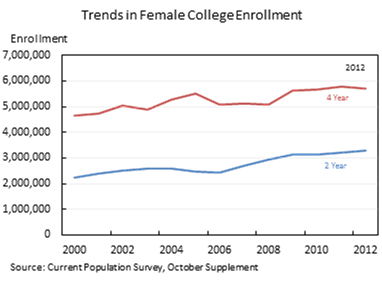
There is another way the President will make 2014 a year of action by bringing together business leaders, economists, labor legislators and other stakeholders to find innovative solutions for building 21st century workplaces that meet the needs and realities for a 21st century workforce. Each of these forums will focus on key issues. And tomorrow, at Valencia College, the President will discuss how we can better equip our students and workers with the skills they need for good jobs and to advance in their careers.
Before I take your questions, I just want to make sure that everybody is following @JPalm44. With that, I go to Darlene.
Q Thanks, Jay. Is there any reaction to the takeover of the Ukrainian naval headquarters today by Crimean self-defense forces?
MR. CARNEY: We strongly condemn Russia’s use of force in Crimea. The Russian military is directly responsible for any casualties that its forces -- whether they be regular, uniformed troops, or irregulars without insignias -- inflict on Ukrainian military members in Crimea. Reports that a Ukrainian military officer was killed yesterday are particularly concerning and belie President Putin’s claim that Russia’s military intervention in Crimea has brought security to that part of Ukraine.
The continued efforts by Russian forces to seize Ukrainian military installations are creating a dangerous situation. We condemn these actions. Russia should immediately begin discussions with the Ukrainian government to ensure the safety of Ukrainian forces in the Crimean region of Ukraine.
Diplomacy remains the only acceptable means of resolving this situation, and we are prepared to impose further costs on Russia for its violation of Ukrainian sovereignty and territorial integrity.
Q When you say that the U.S. is prepared to impose further costs -- asset freezes have already been instituted --what beyond economic sanctions or sanctions in general is the President willing to use, is the U.S. willing to use, to bring about this diplomatic solution that you all talk about wanting?
MR. CARNEY: Well, I think it’s important to note, Darlene, that the sanctions that have been announced already -- the designations that we have made public -- are, if you will, the beginning of actions we can take under the authorities provided by the executive orders. And as I said yesterday, you can expect that more action will be taken under those authorities.
So Russia has incurred costs already; has caused the United States and our European allies and Japan to take action. Because of what Russia has done already -- that will cause costs to be incurred by Russia now and in the future. But there will be additional responses under the authorities provided by the executive orders, and we’re working on those now.
Q Sorry, I guess what I’m trying to get at is what are some of those additional responses.
MR. CARNEY: Well, if you look at the executive orders, they provide a great deal of flexibility and an expansive range of potential designations for sanctions, including Russian government officials, the arms sectors of Russia, and individuals who, while not holding positions within the Russian government, have influence over or provide material support to senior Russian government officials. And then there were the designations -- I mean, there were the categories listed in the first executive order as well.
We are working very closely with our partners in Europe and elsewhere on a response to Russia’s violation of Ukraine’s territorial integrity and its violation of Ukraine’s sovereignty. You have seen action taken by the European Union, as well as Japan. And we are coordinating with our allies and partners on how we will react further to further transgressions by Russia.
It remains a simple fact that the so-called referendum and so-called annexation violate Ukrainian law, violate the Ukrainian constitution, are illegal under the United Nations Charter, and have not been and will not be recognized by the United States and other members of the international community. So we will continue to make clear that this kind of behavior will result in costs to Russia and isolation to Russia.
And Russia will need to assess the impact of those costs and understand that they will grow more severe and compound over time, and also understand that there is a reasonable alternative here available to Russia that allows Russia to ensure that its legitimate interests in Ukraine are accounted for and protected; that Russian ethnics in -- or ethnic Russians, rather, in Ukraine are assured of their rights in that country through international observers and monitors. And we will continue to work with our partners to make clear those options to Moscow.
Q One other question. The statement the NSC put out yesterday announcing the G7 meeting next week in the Netherlands, it says that Obama had invited his counterparts. I just want to make sure that that meeting is actually going to be happening.
MR. CARNEY: Yes. Yes, it will.
Q Jay, with regard to Ukraine, as the crisis has unfolded, events seem to have unfolded more quickly than the United States has anticipated. In spite of efforts of diplomacy, Putin has established facts on the ground very quickly. Has the way this has happened forced a fundamental rethink of the way the United States deals with Russia?
MR. CARNEY: What I would say Mark is that we and our allies and partners have, of course, responded to these developments by making clear to Russia that there is a legal alternative available to them to pursuing their interests in Ukraine. And I don’t think that the fact that Russia has not availed itself of that option yet means that we didn’t or don’t anticipate the kinds of things that Russia has done and may do.
It still is the far preferable alternative to a violation of international law in a sovereign state’s territorial integrity that Russia pursue its interests through legitimate channels. What I can assure you is that these decisions by the Russian leadership and the implementation of those decisions are resulting in and will result in further costs to the Russian economy, and to individuals, and potentially sectors of the Russian economy and enterprises the longer this goes on and the longer that Russia flouts international law.
Q One of the events that seems to have been upsetting to Russia in the run-up to this is the prospect that some of the former Soviet states become closer to NATO. Does the crisis in Ukraine call for a greater commitment by the United States in defense and security in Europe?
MR. CARNEY: Well, that commitment is extremely strong and contains within it an obligation by the United States and all NATO members to our fellow members in the alliance. What you have seen is the United States, and NATO in general, take action in the Baltic nations, in Poland, to reassure those nations and make clear that our commitment remains as firm as ever. And I don’t want to predict where this will lead in terms of Russia’s actions, but I don’t think anyone doubts the strength of that alliance and the commitments that are contained within it.
Q I guess my question is, do these events cause the United States to think that it needs to take greater steps, invest more in that alliance?
MR. CARNEY: I would simply point to you the steps that we have taken. I mean, if you're talking about a broader assessment of European security -- and I think those things are ongoing -- and obviously if Russia takes action that further destabilizes the situation in Ukraine or pursues other courses of action that cause the alliance to reassess or evaluate its posture, I'm sure that will take place. This is a powerful and united alliance, so you can expect that those discussions have taken place and will continue to take place. But there’s a lot of speculation associated with your question so I don't want to get ahead of events on the ground.
Q Just quickly on Malaysia. Could you update us on the role of the FBI in assisting in that investigation? And have they been asked, have they been rebuffed? What are they doing to help find this plane?
MR. CARNEY: The FBI is assisting in the investigation. The NTSB and the FAA are the primary interlocutors with the Malaysian government, but the FBI is also assisting in the investigation. And we are finding that the level of cooperation with the Malaysian government is solid, and we are working closely with the Malaysians as well as our other international partners in this effort to find out what happened to the plane and why it happened. But I have no update on the course of the investigation. It remains the case that we are not in a position yet to draw conclusions about what happened.
Let me move around. NBC.
Q Jay, thank you. How would the President assess the United States’ relationship with Russia right now? Obviously there have been comparisons made to the Cold War, a lot of people saying this is the frostiest it's been since the Cold War. How does he see it?
MR. CARNEY: I don't think there’s any question that relations between Russia and the West are not in a good place right now. What is absolutely the case is that this President since the time he took office has been very clear-eyed about U.S.-Russia relations. He has been focused on making progress where the interests of the United States and Russia coincide, where we can make progress in a way that benefits our national security, and very clear-eyed and blunt and vocal about those areas where we disagree.
Over the last period of time, the intensity of the disagreements has increased, to be sure, with regard to Syria in particular and certainly most especially of late in Ukraine. This is obviously a higher order of disagreement and involves, in this case, Russia’s violation of international law, its military intervention in a sovereign -- into the territory of a sovereign neighbor state. And you have seen a broad international consensus in opposition to what Russia has done.
So we are going to continue to make sure that U.S. national security interests, the national security interests of our allies and partners, are what drive or policy decision-making going forward.
Q And on the question of costs, Vice President Biden obviously had some very strong language today. Is the United States moving any closer to considering a potential military option, or is that still pretty much off the table?
MR. CARNEY: We are still focused on what we believe is the proper way to resolve this situation, which is through de-escalation.
Q So military option is not at the forefront of discussions right now?
MR. CARNEY: It certainly is not at the forefront of discussions. I think that we are focused on, when it comes to costs for Russia for the actions it's undertaken, looking at and implementing the visa bans and sanctions that have already been put in place and others that can be put in place under the authorities allowed by the executive orders he signed. And we are working with our partners and allies to make sure that that effort is coordinated and that we remain united in the actions that we take.
And we have seen strong unity and cooperation with our European partners and Japan in making clear to the Russians that this behavior, these actions are unacceptable. They violate international law. They harken back to an era that the rest of the world or most of the rest of the world has left behind. And that in today’s economy and today’s world, when it comes to the institutions that govern interaction between nations and the intersection of our economies, there is a significant price to be paid for the kind of flagrant violation of the established order and international law that we’re seeing Russia undertake.
Q Could we see President Obama announce next steps by the end of the week?
MR. CARNEY: I’m not going to give you a timeline on our steps, except to say that, as I noted yesterday, you can expect further costs to be imposed upon Russia because of the actions it’s taken in Crimea.
Q And one more just on Malaysia. Given there is so much uncertainty about what happened -- and President Obama obviously before he speaks about this wants to be careful about his language -- but some people have taken to Twitter and said, why haven’t we heard from the President yet if only to reassure Americans who might be feeling jittery?
MR. CARNEY: About the Malaysian plane?
Q About the Malaysian plane.
MR. CARNEY: The President has been updated regularly. We have contributed a significant number of resources and assets to the search for the plane and to the investigation into what happened. And we’re going to continue that effort.
Chris.
Q Thanks, Jay. The President yesterday received a letter from 200 members of Congress brought up to House Democratic Whip Steny Hoyer, calling on him to immediately act by signing a non-discrimination executive order for LGBT workers. You’ve said before this issue is best left to Congress, but this many lawmakers are lobbing it back to the President. Has he misjudged the situation?
MR. CARNEY: Chris, we continue to support ENDA, the Employment Non-Discrimination Act. And I don’t have any update for you on proposed or possible executive orders. The fact is that legislation which has moved in the Senate, if it were to be passed by the full Congress and signed into law, would have the greatest benefit when it comes to ensuring the rights of LGBT individuals. So on the issue that you ask me about regularly of executive order proposed or speculated about, I just don’t have any updates.
Q But what makes you think that legislation should be the only course of action if lawmakers in Congress are saying the President should issue an executive order as they continue to --
MR. CARNEY: Again, Chris, I just don’t have any new information to provide to you about our views on this, which we’ve discussed many times. And there is no question I think in anyone’s mind that the passage of legislation in the form of the Employment Non-Discrimination Act would provide those protections broadly in a way that an EO would not. And, as I’ve said before, opposition to that legislation is contrary to the tide of history, and that those lawmakers who oppose this will find in the not too distant future that they made a grave mistake and that they will regret it.
Q And one last very important question on this. The letter takes note that time is of the essence, because after an executive order is signed, full implementation will require a process that will last many months, if not longer. Do you deny there’s a limited time for the President to exercise this option before time is up at the end of his administration?
MR. CARNEY: Chris, I’m not even sure there’s a question there, but I would point you to my previous answer.
Cheryl.
Q I’m wondering if you have any update on the prospects for exporting natural gas in light of the Ukraine situation.
MR. CARNEY: I have no new information to impart on that. We’ve talked about the evaluations that are made by the Department of Energy, the licenses that it approves. And that process obviously continues. And in the short term, we are obviously taking steps to assist Ukraine with its energy security, its energy efficiency, and more broadly through bilateral assistance and multilateral assistance to provide needed assistance to the Ukrainian government at a difficult time for its economy.
It’s essential, in our view, that the Congress upon return act very quickly to pass legislation that you’ve seen in the Senate that would authorize the provision of loan guarantees in direct bilateral assistance, but also provide the quota reforms, the so-called quota reforms to the IMF that would allow the IMF to provide maximum assistance as part of its package to Ukraine. So we look forward to Congress for taking action on that. That is something that Congress can do concretely to assist Ukraine in this difficult time. And we urge Congress to take action.
I’ve also noted -- and I won’t repeat, unless you want me to -- some facts about surpluses in terms of energy supplies in Europe and the impact that any action Russia might take to limit or cut off gas supplies to Ukraine or Europe on the Russian economy, which would certainly be quite severe because they depend -- Russia does -- on those markets for a great deal of their foreign currency.
Q Israel war planes attacked Syrian military targets. This is the most serious escalation in almost four decades. Do you worry that it might escalate and get out of hand?
MR. CARNEY: Look, we, in matters like this, refer you to the statement released by the Israelis on this issue. I really don’t have anything more for you on it, so I would point you to the Israelis.
Q But you don’t think it will complicate the Syrian situation that’s already tense?
MR. CARNEY: I think that the Syrian situation is a problem unto itself. There’s no question about that.
Q Jay, getting back to the Vice President’s trip, what about this comment from Vladimir Putin yesterday that the Russians almost feel provoked by NATO’s reach into Eastern Europe? Looking back -- and I know this didn’t happen on this administration’s watch -- but was that a mistake for the West and for NATO to move all the way to Russia’s borders -- historically?
MR. CARNEY: No. And I’ll tell you why, having covered it from Moscow and Washington. The opportunity that Russia has had and has pursued sporadically since the emergence of Russia and the other independent states in the wake of the dissolution of the Soviet Union has been to integrate and engage with Europe and with the broader global economy, and to integrate and engage with international institutions that help set the rules by which peaceful nations govern their interactions.
The fact of the matter is those opportunities potentially still exist for Russia. And in the long term, a path of confrontation with the West of trying to assert through military force intervention -- like we’ve seen in Crimea -- hegemony over sovereign states will not result in a stronger Russia, but a more isolated Russia and one that’s less connected, and therefore less able to grow economically.
So the fact of the matter is I think that the West in general, and the United States in particular, has since the dissolution of the Soviet Union pursued policies designed to help Russia and the former Soviet republics, now independent states, integrate with the global economy, integrate with Europe and the rest of the world in a manner that in the long term has benefited a number of those states and could benefit Russia and others.
The option, the alternative is what we’re seeing now. And that -- again, while it obviously creates instability in Ukraine, creates great concern in Europe and here and around the world -- ultimately comes at a high cost to Russia and the Russian people and to the Russian economy, because it leads to international condemnation and approbation [disapprobation] and isolation, and does economic harm to Russia, and doesn’t leave Russia in a better place, ultimately.
So we’re taking steps that we find necessary in response to this action. We’re working with our allies and partners. We will see what kind of calculations the leadership of Russia makes in the coming days and weeks.
Q And I’m sure you heard Republicans say in the last several days that what’s happening in Ukraine right now, what’s happening in Crimea will be a liability for former Secretary Clinton should she choose to run for President.
MR. CARNEY: Well, that’s a pretty superficial way of looking at things. I think that the challenges posed by Russia’s intervention in Ukraine are challenges for the United States, for the Ukraine, for Europe, and for Russia. Our obligation is to be very clear-eyed about what our national security interests, what our obligations are to our allies and partners, and to pursue those. That’s how we’re looking at it. I know there’s a temptation to see everything through the lens of the next election cycle, but that’s pretty flaccid thinking.
Q To what extent does the President believe that he is responsible and his Affordable Care Act is responsible for the situation that his former Senate Democrats find themselves in politically?
MR. CARNEY: Going right to that superficial conversation, I would say that --
Q Some of them would say it’s not superficial at all.
MR. CARNEY: Well, no, I’m not diminishing the fact that, as is the case every election cycle, there are challenging races, and certainly in midterms that can be doubly so for Democrats. But this President believes and what those Democrats who voted to extend affordable, quality health insurance to millions of Americans believe is that it’s the right policy, and that the alternative Republicans have proposed, which is repeal, it means higher premiums; it means insurance companies dictating to you whether or not you get coverage for your condition or whether your sister gets charged double what you get charged, whether you can see your insurance coverage cancelled arbitrarily and capriciously, and whether or not premiums can go up exponentially.
That’s the alternative they’re proposing. And what I think you’ll see as more and more people enroll and as the year progresses is that the arguments for repeal are going to be arguments made to individuals who have insurance coverage, sometimes for the first time, who are being told by Republican candidates that they would prefer that insurance companies deny them coverage; that they would prefer that those with preexisting conditions be denied coverage, and that those with existing conditions find out when they need medical attention that the fine print in their policy carves out coverage for that particular condition. All of those, of course, are forbidden under the Affordable Care Act.
So this is going to be an important debate on policy grounds and on the impact to the lives of millions of Americans across the country. The President feels, and I know that Democrats feel they have the stronger case. And I'm sure that this will be debated in races across the country. Again, Republicans are going to have to explain why the alternative is better, why they would rather have insurance executives dictate to individuals across the country whether they get coverage as opposed to the peace of mind that comes from knowing that you get coverage and that your conditions are covered.
Q Has he heard any of the concerns from some Senate Democrats that his organization, Organizing for America, has not been sufficiently focused on the midterm elections? And has he urged any more of a sharper focus?
MR. CARNEY: I would refer you to that organization. I'm not here as a spokesman for the DNC or for campaigns. I can tell you what the President’s views are on matters of policy, why he believes and shares with Democrats the belief that providing affordable, quality health insurance was and is the right thing, and why the Republican alternative is hardly an alternative at all, because it really is telling the American people that the world was better when they didn’t have insurance or they had insurance that allowed issuers to dictate whether or not their conditions were covered, whether or not their kid with asthma got adequate coverage.
And we're in the real world now, as opposed to the theoretical world, prior to implementation of ACA. And candidates who make that case for repeal are going to have to make it to Americans who have concretely benefited from the Affordable Care Act. And we'll see what happens.
Bill.
Q With just two weeks to go before the end of the month, is the President feeling the pressure to get more young people to sign up? I mean, you’re still at about 25 percent; you need to be around 40.
MR. CARNEY: Well, I'm happy to repeat again that the 40 percent figure is the percentage of young adults within the overall population of uninsured. It is not by any insurance experts’ estimation the percentage you need to have the marketplaces work. I would point you to Massachusetts as the --
Q Well, whatever it is, you don't have it.
MR. CARNEY: Well, how would you know since you're citing a figure that actually doesn’t relate to the conversation? What I can say is that --
Q We know that’s not enough.
MR. CARNEY: Do you? Do you have experts who say it's not enough? I think if you look at what insurance executives have said, they believe that they’re getting the demographic mix that's necessary. We're confident that come April 1st you will see a demographic mix that is equal to the objective, which is to ensure that actuarially the marketplaces function effectively.
And, yes, I think that we have undertaken and continue to undertake an effort to reach Americans everywhere so that they’re getting the information through the channels that they watch or receive. And you’ve seen that effort include the President doing an interview with Zach Galifianakis, and you’ve seen it in efforts undertaken by athletes and other celebrities, and you’ll see it in the kinds of interviews that the President will give and others have engaged in. Because, unfortunately -- it's not enough for me to make the case to you here or for the President to give a speech covered by you -- a lot of folks, millions and millions and millions of Americans, and certainly a huge percentage of young Americans aren’t listening or watching or reading what the people in this room are producing. And you're our -- through the traditional media, this is our filter. So in order to reach them, we have to be creative, and that's what we've done.
Q Yeah, but are you suggesting that he doesn’t need to worry about getting more young people to sign up?
MR. CARNEY: No, no. I said that we're going to be working hard right up to the deadline to ensure that that information is getting to the people who need it and that more Americans are enrolling. And we're comfortable, as you’ve seen, with the pace thus far of enrollees. I think CMS put out information about recent figures in terms of total number of Americans who have signed up, and obviously we've got 11 or 12 or 13 very important days left.
Q If you’re suggesting that perhaps the situation regarding young people is not as dire as some suggest, then --
MR. CARNEY: I would point you to experts who have said --
Q -- why is he appealing to mothers and young people and going on programs -- he’s on “Ellen” I think tomorrow.
MR. CARNEY: Absolutely. Based on the model provided by the closest similar experience in Massachusetts -- that health care reform signed into law by a Republican governor on which this President modeled his plan -- the demographic breakdown at the various stages of enrollment in the open enrollment period is mirrored by what we've seen in our figures. And I don't think anyone would argue that Massachusetts did not get in the end either sufficient numbers or the sufficient demographic breakdown that it needed to function effectively. So we feel confident that we'll do the same.
Roger.
Q Thank you. On Malaysia, is the FBI examining the hard drive of the pilot’s simulator?
MR. CARNEY: You’d have to ask the FBI. I have no idea.
Q Has Malaysia asked for any additional U.S. help beyond what the U.S. has already --
MR. CARNEY: What I can tell you, Roger, is what I said before. We feel that we have a good, collaborative relationship with Malaysian authorities who are obviously taking the lead in this investigation and taking the lead in the search for the missing airplane. Our cooperation includes Department of Defense assets that have been assigned the task of assisting for the search; it includes investigative efforts by the FAA and the NTSB as well as the FBI. But I would refer you to those agencies for more specifics about what they’re doing.
Q And on Russia, is tapping of the SPR to drive down prices and maybe squeeze Russia’s economy, is that an option under consideration?
MR. CARNEY: You know I don't speculate about uses of the SPR. There was a recent routine sale for reasons that we discussed, unrelated to this matter, so I'm not going to get into speculation about that. I can tell you what I said earlier in answer to a question from Cheryl about Ukraine’s energy situation, the supplies that Europe and Ukraine depend on from Russia, but also the costs to Russia of cutting off or limiting those supplies.
Q Can you say if anybody in the government -- whether it’s feasible?
MR. CARNEY: I'm not going to talk speculatively about the SPR.
Ann.
Q Thanks, Jay. Has the President heard back from the other members of the G7? Does it look like they will be able to have that meeting?
MR. CARNEY: I answered that question at the top. There will be a meeting of the G7, yes.
Q Would you describe it as an action meeting? Since these are all leaders that describe -- that talk to each other all the time, what’s the point? Is it to once again make a statement, or is there some kind of action that the G7 could or would take?
MR. CARNEY: We have been coordinating closely with our allies and partners in Europe and elsewhere, and obviously the member nations of the G7 have been very actively engaged in the effort to coordinate a response to Russia’s actions. So that will be the topic of the conversation. And I'm not going to preview a conversation that hasn’t taken place except to say that we have worked collectively together and will continue to do so moving forward as necessary, depending on Russia’s actions.
Q There’s nothing now that you could say that the President is going to table that would actually ask the G7 --
MR. CARNEY: I'm not going to preview the meeting.
Ed.
Q Jay, on the Malaysian plane, when you said the President has been updated regularly, do you mean briefed every day? Can you describe his involvement? We understand the FBI is involved, but does this cross his desk every day?
MR. CARNEY: Absolutely.
Q It does?
MR. CARNEY: I mean, he gets updates on the status of the search and investigation, the contributions that we're making. But again, this is an investigation being led appropriately by the Malaysian government, to which we are providing significant assistance.
Q And on Ukraine, I want to drill down on -- the Ukrainian Prime Minister was here last week. The President pledged his support. Yesterday, the Prime Minister made some allegations that the Ukrainian military officer being killed yesterday was, in his words, a Russian war crime. And he said it had moved from a political conflict to a military conflict. And I wonder, since you at the top used the phrase, “use of force,” about what happened over the last 24 hours, does the White House agree with the Prime Minister? Do you believe we've moved from a political conflict in Ukraine to a military one?
MR. CARNEY: Russia intervened militarily, occupied a region of Ukraine with military forces; held a referendum in violation of Ukrainian law and the Ukrainian constitution in an environment intensified by the presence of heavily armed Russian military personnel. So I don't think there’s been any doubt that there is a military component to this activity that is deeply troubling and elemental to what Russia has done. After all, as we've talked about, there is a means by which the residents of Crimea, the Crimean region of Ukraine, can seek a change in their territorial status, their relationship to the central government in Kyiv. That kind of discussion has to be held consistent with the Ukrainian constitution and in a dialogue with the Ukrainian government and Ukrainian parliament.
But those kinds of discussions are of course possible, and the Ukrainian government has indicated that it is willing to discuss constitutional reform and other issues, but it has to be done not at the point of a gun, not under threat of force, but in accordance with Ukrainian law, with international law, and not over the heads of democratically elected representatives of the Ukrainian people.
Q I ask in part because the ambiguity of some of these forces that have been on the ground are not wearing necessarily Russian uniforms, but folks on the ground have seen vehicles with Russian plates on them.
MR. CARNEY: Yes. I don't think there’s much ambiguity.
Q So this White House believes clearly it's Russian military?
MR. CARNEY: I don't think the efforts to -- if they are such -- to camouflage the identity or the origin of these forces have been very successful, and I think they’ve been kind of half-hearted.
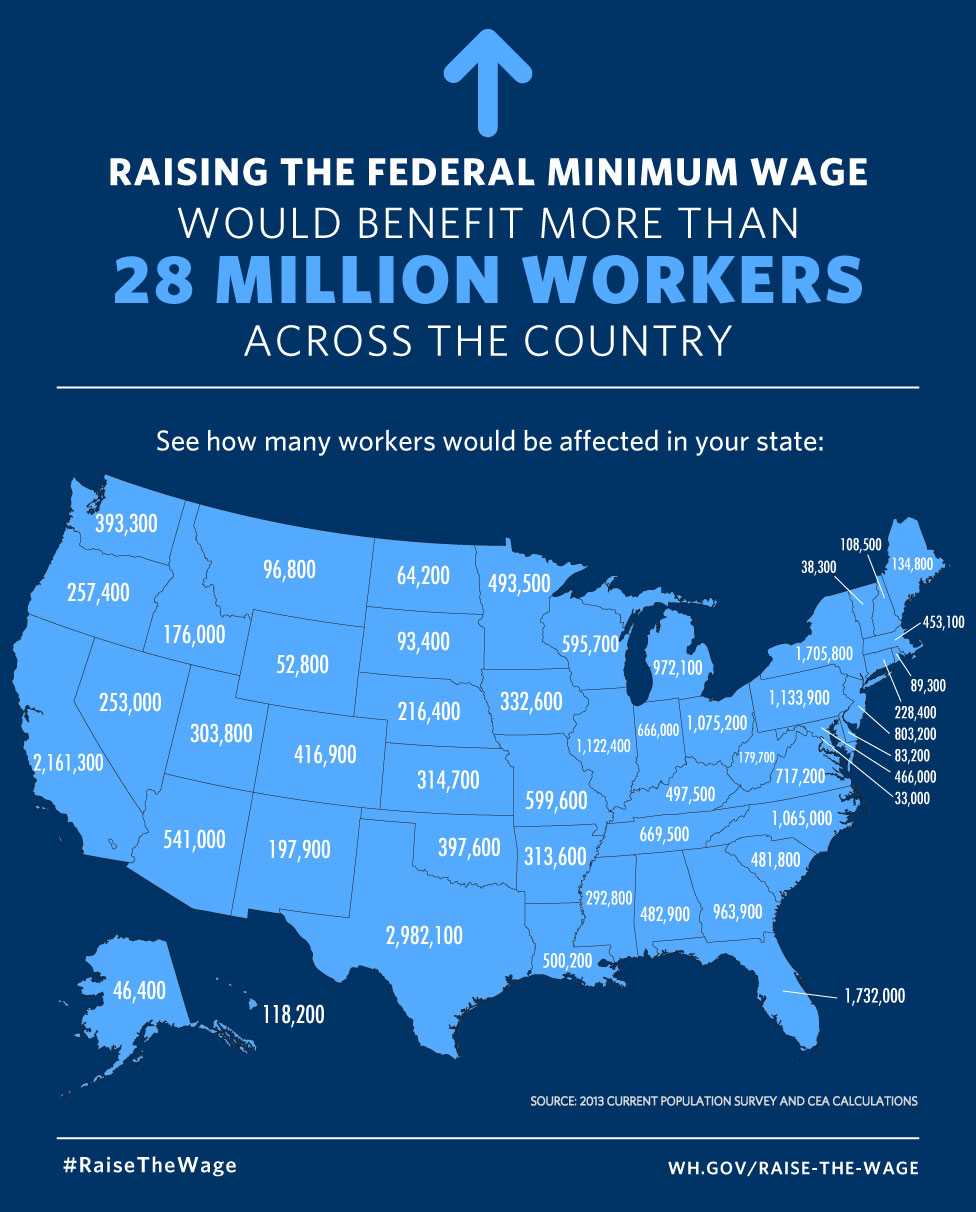
Q Last one. You were asked about health care as an issue. Another issue the President is pushing is minimum wage. Republicans like Eric Cantor today are pushing the study by Express Employment Professionals, and they’re claiming -- this is a group that's looked at how employers will deal with a minimum wage hike. I suspect you might have different views, so I ask you -- the survey found that 38 percent of employers who currently pay the minimum wage say that if you raised it to $10.10 an hour they would end up laying people off to cover costs -- 38 percent of those employers. How do you push the word on that issue?
MR. CARNEY: Well, I'm not sure -- it sounds like a little forum shopping for the survey he wanted and the report he wanted. What I can tell you is that overwhelmingly economists say that the macro impact of raising the minimum wage does not affect job creation in a negative way and that the positive economic benefit of raising the minimum wage spurs further economic growth and hiring because it puts more money in the pockets of those at the lower end of the earning -- lowest end of the earning scale, and folks who make that minimum tend to spend what they have in order to make ends meet.
So if Congressman Cantor wants to take issue with the general proposition that in America you shouldn’t work full-time and still be in poverty, he ought to say so. And he doesn’t need a survey from an organization prepared to say what he wants to say to make that point. Just say you don't think that's a fair proposition; that, sure, it's okay in America to get paid the minimum wage and find out at the end of the week you're still in poverty. And that's a terrible consequence.
What I don't understand from him or others is why a minimum wage that has naturally eroded in terms of its purchasing power because of inflation over the years -- why it was the right level in the past when Presidents have raised it and Congresses have raised it, but that's not the case now; why it's okay now but wasn’t then that Americans work full-time and live in poverty.
Q I'm wondering if you’d agree with an assertion that the NATO Secretary General is going to make in a speech in D.C. today that the situation in Ukraine is “the gravest threat to European security and stability since the end of the Cold War”?
MR. CARNEY: Well, I haven't heard him give the speech. It sounds like he hasn’t yet. So I would say that --
Q It’s in the prepared text.
MR. CARNEY: Well, I certainly wouldn't disagree with the fact that Russia’s actions have created instability and concerns broadly about security in Europe in a way that we haven't seen certainly since the ‘90s. But it doesn’t have to get worse. And what I think you’ve seen in the coordinated response by the international community and the consensus opposition to Russia’s actions is that Russia will not find tolerance for this kind of behavior in violation of international law, and that there are costs and consequences associated with that behavior.
And others have asked in the past -- and you’ve certainly seen it discussed -- how high of a cost is Russia willing to pay? I mean, that’s obviously for Russian leaders to decide. But they’re going to be real. And in this economy and this modern world, the outcome of having to pay those costs and having to suffer from the isolation associated with condemnation of these actions from around the world is significant, and it is most severe and significant for Russia and the Russian people.
So we’re going to continue to pursue with our allies and partners a set of policy responses that support our national security interests and the national security interests of our allies and partners.
Q One other foreign policy issue. I’m wondering if you have a reaction to the latest critical comments about the administration from the Israeli Defense Minister Ya’alon, claiming that the administration is showing weakness on Iran and other issues.
MR. CARNEY: Well, those comments were clearly not constructive. The United States maintains an unshakeable commitment to Israel’s security. President Obama has provided an all-time high level of security assistance to Israel, including critical Iron Dome and missile defense funding, even during times of budgetary uncertainty, to provide Israel with unprecedented capabilities and options that help Israel better deal with regional threats and challenges.
Now, Minister Ya’alon could consult with Prime Minister Netanyahu, who has said that the breadth of our security cooperation, this administration’s security cooperation with Israel is unprecedented. And it’s certainly confusing why Minister Ya’alon would continue this pattern of his, of making comments that don’t accurately represent the scope of our close partnership on a range of security issues and the enduring bonds between the United States and Israel.
Q Do you in any way think he was representing the government itself in those comments, or is he just freelancing?
MR. CARNEY: Well, you should ask him. I would point you to the comments of other very prominent Israeli leaders, including the Prime Minister, about the demonstrated commitment of this administration and this country to Israel’s security.
Alexis.
Q Jay, just to follow up on what Peter was asking, just to close that loop -- did the President speak with Prime Minister Netanyahu in the last day or two?
MR. CARNEY: I don’t believe so, but I don’t have any foreign leader conversations to read out.
Q And would that also include the President’s interest in talking to the leaders that he’ll see next week, related to Ukraine and Russia? You can't say whether he had any more calls --
MR. CARNEY: He spoke with Chancellor Merkel yesterday; I think we read that out. And we’ve been reading out calls pretty consistently. But not every conversation is read out, so I don’t have any to read out today.
Q And one follow-up. On the President’s discussions with local anchors today, can you describe -- because of the range of cities and localities -- what the President, how he chose -- how you all chose those particular stations? Because not all those audiences are Obama fans.
MR. CARNEY: Well, I think that -- I guess you’ve made my point for me. That’s not what these kinds of efforts to reach people where they live and through the channels that they receive their information is about. We have in today’s interviews continued our “Live from the White House” efforts, and this is an event consistent with ones we’ve done in the past.
The President will participate in the latest installment of “Live from the White House” by conducting a round of interviews with local television anchors from New England, St. Louis, Minneapolis, Dallas, Phoenix and San Diego to make the case for raising the minimum wage and giving hardworking Americans the raise they deserve. While in Washington, the local anchors will spend the day with behind-the-scenes access to the White House and the President’s top advisors. These interviews are embargoed until 5:00 p.m. Eastern Daylight Time and they will take place in the Diplomatic Room in the Residence.
The President will obviously be discussing with these regional television anchors his views about why it’s so necessary to raise the minimum wage so that American families across the country are not living in poverty even though they’re working full-time or their breadwinners are working full-time. Other questions may be asked, and if they are he’ll answer them.
I had the anchors who were visiting us today in my office earlier, and I said one of the things that -- and I mean no disrespect by saying this -- but when I was a member of the national media I did not understand as clearly as I do now how impactful and important a source of news, local television news and certainly local newspapers are. And, again, this is part of our effort -- consistent, across the board since President Obama has been in office -- to make sure we’re communicating with Americans across the country and reaching them where they live, if you will. And that obviously includes, as he frequently does, talking to the national media. But it includes talking to local and regional media, too.
Last one, Victoria.
Q Have U.S. business groups or members of the business community been in touch with the administration about sanctions, maybe to express concerns or to talk about it?
MR. CARNEY: I don’t have -- I think it’s fair to assume, or I can say for a fact that whenever, under any circumstance, we consider imposing sanctions, that evaluations are made about what the impact of the imposition of sanctions would be on the U.S. economy, the economy of our allies and partners, the economies of our allies and partners, and on U.S. businesses. So I think when those assessments are made, those kinds of considerations are taken into account. But I don’t have any specific conversations to read out because that process takes place naturally.
Q What is the assessment of what the impact will be on U.S.-Russian business?
MR. CARNEY: Well, I think that question presupposes actions that we have not yet taken, so I will be in a better position to answer that if and when further sanctions are imposed.
Q Jay, did you see this report that Ukraine’s military is taking steps to withdraw its forces from Crimea? The Associated Press and AFP have both reported this in the last half hour. Is there a reaction from the administration?
MR. CARNEY: Well, I would simply point you to what I said earlier, that any harm done to Ukrainian military personnel by Russian military personnel is the responsibility of Russian military personnel, and it’s essential that Ukrainian military personnel are not harmed. But I haven’t seen those reports.
Q Jay, on immigration, I understand the President was going to see the movie of César Chávez.
MR. CARNEY: Yes.
Q Do you think this is going to help to make the point about the need for immigration reform?
MR. CARNEY: Well, I think the place that César Chávez has in our history and the importance of new generations of Americans understanding the place that he holds is important.
Separate and apart from any conversation about policy, we’re engaged in an effort across the board to make sure that the benefits of comprehensive immigration reform are understood -- the security benefits, the economic benefits that comprehensive immigration reform provides -- and that folks understand that there isn’t an alternative to comprehensive immigration reform, and that there’s a bipartisan consensus across the country that includes business and labor, law enforcement and faith communities, Democrats and Republicans behind the need to get this done.
The Senate has done it in bipartisan fashion with a big vote. The House can do it. I am absolutely confident, and I wish I had the opportunity to put my money, metaphorically, on the table to back this up, that if legislation similar to the Senate bill were put on the floor of the House today it would pass with Democrats and Republicans voting for it.
Q Is the President aware that César Chávez opposed guest workers, which the President’s bill would double? César Chávez said reducing guest workers drove up wages.
MR. CARNEY: I appreciate the history lesson, Neil, but I think I was talking to this gentleman here. The fact of the matter is -- and maybe Neil can explain this -- why -- that if Speaker Boehner would simply put a bill on the floor it would get Republican support as well as Democratic support. And then you would see a situation where in Congress the American people could see that both parties supported this vital initiative that would enhance security, ensure that businesses across the country were playing by the same rules, and would be a direct benefit to the bottom line, if you will, to economic growth and job creation. So we look forward to that day arriving.
Thanks, everybody.
END
2:10 P.M. EDT