The White House

Office of the Press Secretary

President Obama Nominates Three to Serve on the US District Court Bench

WASHINGTON - Today, President Obama nominated Judge Timothy S. Hillman, Judge Robin S. Rosenbaum and Robert J. Shelby to serve on the United States District Court bench.

“Throughout their careers, these nominees have displayed unwavering commitment to justice and integrity,” said President Obama.  “Their records of service to the public and the legal profession are distinguished and impressive and I am confident that they will serve the American people well from the United States District Court bench.  I am honored to nominate them today.”

Judge Timothy S. Hillman: Nominee for the United States District Court for the District of Massachusetts
Judge Timothy S. Hillman has been a United States Magistrate Judge for the District of Massachusetts since 2006.  Previously, Judge Hillman served as a Justice on the Massachusetts Superior Court from 1998 to 2006 and a Justice on the Massachusetts District Court from 1991 to 1998.  Prior to his service on the Massachusetts courts, Judge Hillman was in private practice for over a decade and served as City Solicitor to the cities of Fitchburg and Gardner and Town Counsel to the towns of Athol, Lunenburg, and Petersham, all in Massachusetts.  He received his J.D. in 1973 from Suffolk University Law School and his B.A. in 1970 from Coe College in Cedar Rapids, Iowa. 

Judge Robin S. Rosenbaum:  Nominee for the United States District Court for the Southern District of Florida
Judge Robin S. Rosenbaum is a United States Magistrate Judge for the Southern District of Florida, a position she has held since 2007.  From 1998 until her appointment to the bench, Judge Rosenbaum was an Assistant United States Attorney in the same district, where she served as Chief of the Economic Crimes Section in the Fort Lauderdale office beginning in 2002.   Before joining the United States Attorney’s Office, Judge Rosenbaum clerked for Judge Stanley Marcus on the United States Court of Appeals for the Eleventh Circuit in 1998, worked as a litigation associate at Holland & Knight from 1996 to 1997, and served as staff counsel at the Office of the Independent Counsel in Washington, D.C. from 1995 to 1996.  She began her legal career as a trial attorney at the Federal Programs Branch of the United States Department of Justice from 1991 to 1995.  Judge Rosenbaum received her J.D. magna cum laude in 1991 from the University of Miami School of Law and her B.A. in 1988 from Cornell University.

Robert J. Shelby:  Nominee for the United States District Court for the District of Utah
Robert J. Shelby is currently a shareholder at the Salt Lake City law firm of Snow, Christensen & Martineau, where his practice focuses on complex commercial litigation and catastrophic personal injury cases on behalf of both plaintiffs and defendants in state, federal, and administrative courts throughout the country.  Shelby was an associate at Snow, Christensen & Martineau from 2000 to 2005 and returned to the firm earlier this year as a shareholder.  In the intervening years, Shelby was a partner at another Salt Lake City firm, Burbridge Mitchell & Gross.  He began his legal career as a law clerk to the Honorable J. Thomas Greene in the United States District Court for the District of Utah.  Shelby received his J.D. in 1998 from the University of Virginia School of Law and his B.A. in 1994 from Utah State University.    

The White House

Office of the Press Secretary

Presidential Proclamation -- Critical Infrastructure Protection Month, 2011

BY THE PRESIDENT OF THE UNITED STATES OF AMERICA

A PROCLAMATION

From irrigation to the Internet, our Nation's critical infrastructure supports an incredible array of services and industries that are essential to our continued success and prosperity.  Critical infrastructure includes all systems and assets, both physical and virtual, that make vital contributions to our security, economic stability, public health, or safety.  This month, we affirm the fundamental importance of our critical infrastructure and recommit to preparing for, responding to, and recovering from hazardous events and emergencies efficiently and effectively.

My Administration is resolute in our dedication to a safe, secure future for our Nation.  Natural disasters, pandemic diseases, and acts of terrorism can pose serious risks to our critical infrastructure, and it is imperative we are prepared in the event of an emergency.  To reduce risks and improve our national preparedness, we are fortifying our partnerships with State, local, territorial, and tribal governments to close gaps in our protection programs and promote collaboration at all levels of government.  We are also engaging a wide variety of private stakeholders, including critical infrastructure owners and operators, to expand and reinforce critical infrastructure protection.  And, with the If You See Something, Say Something campaign, we are empowering individuals and communities across America to help improve public safety.  All of us have a role to play in strengthening our national security, and together, we are taking steps to foster a culture of resilience.

As we navigate new and uncertain challenges in the digital age, we must also address the growing threat cyber attacks present to our transportation networks, electricity grid, financial systems, and other assets and infrastructure.  Cybersecurity remains a priority for my Administration, and we are committed to protecting our critical infrastructure by taking decisive action against cyber threats.  To ensure the safety of our most vital operations, we are working to give public and private organizations the ability to obtain cybersecurity assistance quickly and effectively.  These efforts will bolster our ability to withstand any attack, whether virtual or physical.

During Critical Infrastructure Protection Month, we reflect on our responsibility to protect the vital systems and assets that sustain our country and our people.  Strengthening our national security and resilience is a task for all of us, and by promoting awareness and partnering with one another, we can make essential progress toward safe, secure, and prosperous horizons for every American.

NOW, THEREFORE, I, BARACK OBAMA, President of the United States of America, by virtue of the authority vested in me by the Constitution and the laws of the United States, do hereby proclaim December 2011 as Critical Infrastructure Protection Month.  I call upon the people of the United States to recognize the importance of protecting our Nation's critical resources and to observe this month with appropriate events and training to enhance our national security and resilience.

IN WITNESS WHEREOF, I have hereunto set my hand this thirtieth day of November, in the year of our Lord two thousand eleven, and of the Independence of the United States of America the two hundred and thirty-sixth.

BARACK OBAMA

President Obama at Scranton High

20111130 POTUS in Scranton

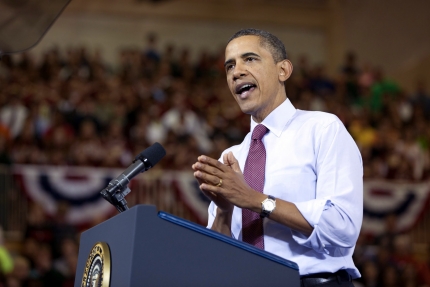
President Barack Obama delivers remarks about the American Jobs Act at Scranton High School in Scranton, Pa., Nov. 30, 2011. (Official White House Photo by Pete Souza)

If Congress doesn't extend the payroll tax cut, 6.7 million people in Pennsylvania will see their taxes go up.

That's the message that President Obama took to Scranton this afternoon. He told a crowd assembled in the town's high school auditorium that if Congress fails to extend the tax cut through 2012, it would deliver a "massive blow" to the nation's economy:

[If] Congress doesn’t act to extend this tax cut -- then most of you, the typical middle-class family, is going to see your taxes go up by $1,000 at the worst possible time. A young lady just said she can’t afford that. It would be tough for you.

The Senate is set to vote on extending these tax cuts as early as this week, and the President told people in Scranton to send their lawmakers a message:

[To] everybody who is here, everybody who is watching, send your Senate a message -- send your senators a message. Tell them, "Don't be a Grinch." ... Don’t vote to raise taxes on working Americans during the holidays.  Make sure to renew unemployment insurance during the holidays.  Stop saying "no" to steps that would make our economy stronger. Put our country before party. Put money back into the pockets of working Americans. Do your job. Pass this bill.

Read the full remarks here.

Related Topics: Economy, Taxes, Pennsylvania

The White House

Office of the Press Secretary

Presidential Proclamation -- National Impaired Driving Prevention Month, 2011

BY THE PRESIDENT OF THE UNITED STATES OF AMERICA

A PROCLAMATION

Though we have made progress in the fight to reduce drunk driving, our Nation continues to suffer an unacceptable loss of life from traffic accidents that involve drugs, alcohol, and distracted driving.  To bring an end to these heartbreaking outcomes, we must take action by promoting rigorous enforcement measures and effective substance abuse prevention programs.  During National Impaired Driving Prevention Month, we recommit to preventing tragedy before it strikes by ensuring our family members and friends stay safe, sober, and drug-free on the road.

As we strive to reduce the damage drug use inflicts upon our communities, we must address the serious and growing threat drunk, drugged, and distracted driving poses to all Americans.  Alcohol and drugs, both illicit and prescribed, can impair judgment, reaction time, motor skills, and memory, eroding a person's ability to drive safely and responsibly.  Distracted driving, including the use of electronic equipment behind the wheel, can also put lives at risk.  To confront these issues, my Administration is working to decrease the incidence of drugged driving by 10 percent over the next 5 years as part of our 2011 National Drug Control Strategy.  We are collaborating with State and local governments to bolster enforcement efforts, implement more effective legislation, and support successful, evidence-based prevention programs.  These ongoing initiatives are supplemented by our Drive Sober or Get Pulled Over campaign, which aims to deter impaired driving during the holiday season.

While enforcement and legislation are critical elements of our strategy, we know that the parents, educators, and community leaders who work with young people every day are our Nation's best advocates for responsible decisionmaking.  Research suggests that younger drivers are particularly susceptible to the hazards of drugged driving.  To help our families and communities build awareness about impaired driving, my Administration released a toolkit that includes information about drugged driving, discussion guides, and tip sheets for preventing driving under the influence of alcohol and drugs.  These materials are available with a variety of other resources at:  www.TheAntiDrug.com.

All of us have the power to effect change and work to end drunk, drugged, and distracted driving in America.  In our homes and communities, we can engage our youth and discuss the consequences of drug and alcohol abuse.  In our clinics and hospitals, health care providers can redouble their efforts to recognize patients with substance abuse problems and offer medical intervention.  And in governing bodies across our country, State and local officials can explore new legal actions that will hold drugged drivers accountable and encourage them to seek treatment.  As we come together with our loved ones this holiday season, let us renew our commitment to drive safely, act responsibly, and live drug-free.

NOW, THEREFORE, I, BARACK OBAMA, President of the United States of America, by virtue of the authority vested in me by the Constitution and the laws of the United States, do hereby proclaim December 2011 as National Impaired Driving Prevention Month.  I urge all Americans to make responsible decisions and take appropriate measures to prevent impaired driving.

IN WITNESS WHEREOF, I have hereunto set my hand this thirtieth day of November, in the year of our Lord two thousand eleven, and of the Independence of the United States of America the two hundred and thirty-sixth.

BARACK OBAMA

The White House

Office of the Press Secretary

Remarks by the President on the American Jobs Act

Scranton High School
Scranton, Pennsylvania

2:37 P.M. EST

THE PRESIDENT:  Hello, Scranton!  Thank you.  (Applause.)  It is good to be back in Scranton.  Go, Knights!  (Applause.)  It is good to be here.  Thank you, Principal Schaeffer, for letting us hold this little assembly here at the high school.  (Laughter.)  The principal was bragging about both the basketball team and the football team.  I understand they’re -- (applause) -- right up there?  All right. 

Thank you, Donna, for the wonderful invitation.  We had a chance to visit in the Festas’ living room, and just a wonderful family, and their kids are doing great.  So I’m really, really proud to be with all of you.

AUDIENCE MEMBER:  Can you come to my house?  (Laughter.) 

THE PRESIDENT:  What did she say?  You want -- next time, your house.  (Laughter.)  All right?  (Applause.)

Now, I will say, Donna put out some really good cookies.  So -- (laughter) -- I’m just saying.  (Laughter.)  All right.

Now, I also want to bring greetings from somebody you guys know pretty well -– a guy named Joe Biden.  (Applause.)  Joe is in Iraq as we speak, and he’s visiting with our brave men and women in uniform, thanking them for their service.  (Applause.)  And part of the reason he’s going now is because, pretty soon, we’ll all get a chance to say thank you.  This holiday season is going to be a season of homecomings, because by the end of December, all of our troops are going to be out of Iraq.  They’re going to be back home.  (Applause.)

Now, I mention Joe, first of all, because he loves Scranton.  (Applause.)  He was born here in Scranton.  He spent his early years here in Scranton.  This town helped make him who he is.  This is a town where he and so many of you grew up with a faith in an America where hard work matters.  Where responsibility matters.  Where if you stay true to those things, you can get ahead.  Where no matter who you are, no matter what you look like -– whether you own a factory or you work on the factory floor –- America is a place where you can make it if you try.  (Applause.)

That’s why Joe and I ran for this office.  You are why we spent so much time in this state a few years ago.  Because even then, those ideas -– the idea that’s at the very heart of the American Dream –- felt like it was slipping away for a lot of people.  It was wonderful visiting with Patrick and Donna, and we were talking about the fact that Patrick has been -- Patrick Festa has been teaching in the school system for 25 years now; Donna has been a graphic artist.  But they’re still worried about if the washer/dryer goes out, or if they have to do a car repair.  Things are tight.  And they’re pretty lucky that they’ve got a good job, steady jobs.  For a lot of folks, it’s a lot tougher. 

And we’ve gone through a difficult decade for middle-class Americans.  More good jobs in manufacturing left our shores over the last decade.  More of our prosperity was built on risky financial deals and homes that a lot of folks couldn’t afford.  And a lot of you watched your incomes fall or your wages flatline.  Meanwhile, the costs of everything from college to health care were all going up.  And then, after all that, the financial crisis hit because of the irresponsibility of some on Wall Street.  (Applause.)  And that made things a whole lot tougher. 

Today, we all know folks who’ve spent months looking for work.  We all know families making deep sacrifices just to get by.  We all know young people who have gone to college, they’ve taken on a bunch of debt.  Now they’re finding that the opportunity that they worked so hard to find is getting harder and harder to come by.  So there’s a sense of deep frustration among people who’ve done the right thing, but don’t see that hard work and that responsibility pay off.  And that’s not the way things are supposed to be, not here in America.

But here today with all of you, I’m thinking about something that is probably Joe’s favorite expression.  And some of you know Joe’s story.  He went through some tough times when he was a kid.  And his father used to tell him, Champ, when you get knocked down, you get up.  You get up.   
And Scranton, we’ve taken some punches these last few years.  But there’s one thing I know about people here in Scranton, people in Pennsylvania, and people all across America:  We are tougher than the times.  We are America.  We get back up.  We fight back.  We move forward.  (Applause.)  We don’t give up.  We get back up.  (Applause.)

And even though our economic problems weren’t caused overnight and so they’re not going to be solved overnight -- even though it’s going to take a few more years to meet all the  challenges that were decades in the making -- we’re fighting to make things right again.  We’re fighting to make sure that if you are working hard and you are carrying out your responsibilities and you’re looking out for your family, that you can live a good, solid, middle-class life.  That is what America is all about.  And we are going to be fighting for that every day, every week, every month and every year that we’re in office.  (Applause.) 

We want an America where hard work is valued and responsibility is rewarded.  We’re fighting to rebuild an economy that restores security for the middle class and renews opportunity for folks that are trying to get into the middle class.  We’re fighting to build an economy that’s not based on outsourcing and tax loopholes and risky financial schemes, but one that’s built to last -- one where we invest in things like education and small businesses -- (applause) -- an economy that’s built on manufacturing and building things again and selling them all around the world.  (Applause.) 

And we’re going to keep fighting to make our economy stronger and put our friends and neighbors back to work, to give our young people opportunities greater than the opportunities that we had.  (Applause.)  That’s what we’ve been doing for the last three years. 

But two months ago, I sent a particular piece of legislation to Congress called the American Jobs Act.  (Applause.)  This is a jobs bill that will put more Americans to work, put more money back in the pockets of working families. It’s contains ideas that historically have been supported by Democrats and Republicans.  It’s paid for by asking our wealthiest citizens to pay their fair share.  (Applause.)  And independent economists said that it would create up to 2 million jobs, and grow the economy by as much as 2 percent.  And that’s what we need right now. 

Now, here’s the problem -- there is a problem.  Folks in Washington don’t seem to be getting the message.  When this jobs bill came to a vote, Republicans in the Senate got together and they blocked it.  They refused to even debate it.  Even though polls showed that two-thirds of Americans of all political stripes supported the ideas in this bill, not one single Republican stepped up to say, this is the right thing to do. 

AUDIENCE:  Booo!

THE PRESIDENT:  Not one.  But here’s the good news, Scranton.  Just like you don’t quit, I don’t quit.  (Applause.)  I don’t quit.  So I said, look, I’m going to do everything that I can do without Congress to get things done.  (Applause.)

So let’s just take a look over the past several weeks.  We said, we can’t wait.  We just went ahead and started taking some steps on our own to give working Americans a leg up in a tough economy.  For homeowners, I announced a new policy that will help families refinance their mortgages and save thousands of dollars.  (Applause.)  For all the young people out here -- (applause) -- we reformed our student loan process to make it easier for more students to pay off their debts earlier.  (Applause.)  For our veterans out here -- and I see some veterans in the crowd -- (applause) -- we ordered several new initiatives to help our returning heroes find new jobs and get trained for those jobs.  (Applause.)  Because you shouldn’t have to fight for a job when you come home after fighting for America -- you shouldn’t have to do that.  (Applause.)

And in fact, last week I was able to sign into law two new tax breaks for businesses that hire veterans, because nobody out here who is a veteran should -- we have to make sure that they are getting the help that they need.

AUDIENCE MEMBER:  Thank you, Mr. President!

THE PRESIDENT:  And by the way, I think we’re starting to get, maybe, to the Republicans a little bit, because they actually voted for this veterans bill.  I was glad to see that.  (Applause.)  I was glad that Democrats and Republicans got together with this bipartisan legislation. 

Now, there’s a lot more to do, though, if we’re going to get every American back to work who wants to work, and to rebuild an economy that works for every American, which is why we’re going to give Congress another chance to do the right thing with the American Job Act.  We’re going to give them another chance to help working families like yours.  (Applause.)

Last year, both parties came together to cut payroll taxes for the typical household by $1,000.  Now, that’s been showing up in your paychecks each week.  You may not be aware of it, because times are tight.  But you actually got a tax cut of $1,000 this year.  Now, I know you hear a lot of folks on cable TV claiming that I’m this big tax-and-spend liberal.  Next time you hear that, you just remind the people who are saying it that since I’ve taken office, I’ve cut your taxes.  (Applause.)

Your taxes today -- the average middle-class family, your taxes today are lower than when I took office, just remember that.  (Applause.)  We have cut taxes for small businesses not once, not twice, but 17 times.  The average family’s tax burden is among the lowest it’s been in the last 60 years.

So the problem is not that we’ve been raising taxes.  We’ve actually been trying to give families a break during these tough times.  But here’s the thing:  That payroll tax cut that we passed in December of last year, it’s set to expire at the end of this year, one month from now.  If that happens -- if Congress doesn’t act to extend this tax cut -- then most of you, the typical middle-class family, is going to see your taxes go up by $1,000 at the worst possible time.  A young lady just said she can’t afford that.  It would be tough for you.  It would also be a massive blow for the economy, because we’re not fully out of the recession yet.  Don’t take my word for it; this is what every independent economist says.  We can’t let this tax cut lapse right now. 

And that’s why my jobs bill -- part of the American Jobs Act was to extend this tax cut for another year.  In fact, it does one better.  It says, let’s expand that tax cut.  Instead of a $1,000 tax cut next year, the typical working family under my plan would get a tax cut of $1,500.  (Applause.)  Instead of it coming out of your paycheck, it would be going into your pocket.  Now, that’s money that you can spend on a small business right here in Scranton.  If you’re a small business owner, my jobs bill will cut your payroll taxes in half.  So if you’ve got 50 employees making $50,000 each, you’d get a tax cut of nearly $80,000.  That’s money that you can then use to hire some more workers and get this economy moving again.  That’s a good thing.  (Applause.)

Now, this really should not be controversial.  A lot of Republicans have agreed with this tax cut in the past.  The Republican leader in the Senate said it would -- I’m quoting here -- it would “put a lot of money back in the hands of business and in the hands of individuals.”  That’s what he said.  Another Republican leader said it would help small business owners create jobs and help their employees spend more money, creating even more jobs.  One Republican even called it a “conservative approach to help put our economy back on track.”  So what’s the problem?

The bad news is some of those same Republicans voted “no” on my jobs bill and those tax cuts.  I don’t know whether it’s just because I proposed it.  I don’t know.  They said “no” to cutting taxes for small business owners and working families.  One of them said just two years ago that this kind of tax cut would boost job creation, and now that I’m proposing it, he said we should let it expire.  I mean, what happened? 

Republicans say they’re the party of tax cuts.  That’s what they say.  A lot of them have sworn an oath to never raise taxes on anybody as long as they live.  That doesn’t square with their vote against these tax cuts.  I mean, how is it that they can break their oath when it comes to raising your taxes, but not break their oath when it comes to raising taxes for wealthy people?  That doesn’t make any sense.  (Applause.)  I mean, I hope that they don’t want to just score political points.  I hope that they want to help the economy.

This cannot be about who wins and loses in Washington.  This is about delivering a win for the American people.  That’s what this is about.  (Applause.)  You know, $1,500 -- that’s not a Band-Aid for middle-class families, that’s a big deal.  How many people here could use an extra $1,500?  (Applause.)  Yes, I thought so. 

So I’ll tell you what, Scranton.  They may have voted “no” on these tax cuts once.  But I’m already filled with the Christmas spirit.  There’s kind of some chill in the air.  I saw some Christmas decorations at the Festas.  So I’m in a Christmas spirit.  I want to give them another chance.  I want to give them a chance to redeem themselves.  We’re going to give them another chance. 

So as early as Friday, this Friday, in a couple of days, we’re going to give them a chance to take a simple vote on these tax cuts.  If they vote “no,” then the typical family’s taxes will go up by $1,000 next year.  If they vote “yes,” then the typical family will have an extra $1,500 in their pocket.  (Applause.)  So let’s just be clear:  If they vote “no,” your taxes go up; vote “yes,” you get a tax cut.  Which way do you think Congress should vote?  They should vote “yes,” it’s pretty simple. 

Now, if you want to see what this vote will mean for your bottom line, we have this spiffy new tax calculator on our Internet site, WhiteHouse.gov.  So you can go on there and you can punch in your numbers and figure out what it would mean to your family.  But this is real money that would go into the economy at a time it needs it. 

Now, I really do think your voices are already getting
through, because some of the folks in Congress are starting to say, well, maybe we’re open to this thing.  Maybe we’ll be open to these tax cuts.  And that’s good news.  But I want to make sure that we do this responsibly.  So what I’ve said is, to pay for this tax cut, we need to ask wealthy Americans to pay their fair share.  (Applause.)

We’re asking -- what we’ve said is let’s ask the folks who’ve seen their incomes rise fastest, who’ve gotten bigger tax breaks under Bush, let’s ask them to help out a little bit, because they made it better through the recession than most of us.  Let’s ask them to contribute a little bit more to get the economy going again. 

And I just want to point out I’ve done pretty well over these last few years.  So I’ve said, let me pay a little bit more.  I promise you, I can afford it.  (Laughter.)  I really can.  We’re asking people like me to sacrifice just a little bit so that you guys have a little bit of a leg up.

And by the way, let me say this:  When you talk to most folks who are making a million dollars a year, they are willing to do more if they’re asked.  Warren Buffett is a good example.  They’re willing to do more if they’re asked.  (Applause.)

Now, I mean, I don’t want to exaggerate.  It’s not like they’re volunteering.  (Laughter.)  But if they’re asked, if they feel like it’s going to help middle-class families, help grow the economy, help to reduce the deficit, they’re willing to help.  I can’t tell you how many well-to-do folks I meet who say, look, America gave me a chance to succeed.  Somewhere along the line, somebody gave me a good education.  Somewhere along the line, somebody gave me a college scholarship.  Somewhere along the line, somebody built the information and transportation networks that have helped my business grow.  Somewhere along the line, somebody gave me a shot.  And so now it’s my turn to do the next generation that same good thing.  I’ve got to give something back to them as well.  (Applause.) 

Because, Scranton, this is something everybody in this audience understands.  When you think about the history of Scranton and the immigrants who came here and worked hard, each successive generation doing a little bit better -- you guys know that what America is about is that we’re all in this together; that each of us has to do our own individual part, but we also have to be looking out for one another.

And that’s the very simple choice that’s facing Congress right now:  Are you going to cut taxes for the middle class and those who are trying to get into the middle class?  Or are you going to protect massive tax breaks for millionaires and billionaires, many of whom don’t even want those tax breaks?  Are you going to ask a few hundred thousand people who have done very, very well to do their fair share?  Or are you going to raise taxes for hundreds of millions of people across the country -- 160 million Americans?  Are you willing to fight as hard for middle-class families as you do for those who are most fortunate?  What’s it going to be? 

That’s the choice in front of Congress.  And I hope members of Congress think hard about this, because their actions lately don’t reflect who we are as a people.  What does it say about our priorities when we’d rather protect a few really well-to-do people than fight for the jobs of teachers and firefighters?  (Applause.)  What does it say when we -- about our values when we’d rather fight for corporate tax breaks than put construction workers back on the job rebuilding our roads and our bridges and our schools?  (Applause.)  What does it say about us if we’re willing to cut taxes for the people who don’t need them, and raise them on folks who do need a tax break?

We are better than that.  America is better than that.  We celebrate individual achievement, we expect everybody to work hard, but we don’t believe in every person for themselves; we believe that out of many, we come together as one.  (Applause.)  We’re a people who reach for our own success, but we also reach back for the people -- to bring somebody up.  Reach back to help others earn their own success as well.  (Applause.)  And we believe that if the folks at the bottom and the folks in the middle succeed, then American succeeds, and the folks at the top succeed as well.  (Applause.)

The decisions we make today are going to determine whether or not our kids grow up in a country where those values still thrive.  And Scranton, I don’t know about you, but I want our kids to grow up -- I want Malia and Sasha and all your kids, I want them to come into a country that is built on those big, generous values -- (applause) -- an America that reflects the values that we inherited from our parents and our grandparents.

So if you agree with me, I need you to tell Congress where your priorities lie.  Members of Congress, they work for you.  Scranton, you’ve got a great senator in Senator Casey.  I love Senator Casey.  (Applause.) 

So I want you to know, Casey is already on the program.  (Applause.)  But to everybody who is here, everybody who is watching, send your Senate a message -- send your senators a message.  Tell them, “Don’t be a Grinch.”  (Laughter.)  “Don’t be a Grinch.”  Don’t vote to raise taxes on working Americans during the holidays.  Make sure to renew unemployment insurance during the holidays.  (Applause.)  Stop saying “no” to steps that would make our economy stronger.  Put our country before party.  Put money back into the pockets of working Americans.  Do your job.  Pass this bill.  (Applause.)

Scranton, the American people are with us on this.  It is time for folks to stop running around spending all their time talking about what’s wrong with America.  Spend some time, roll up your sleeves, and help us rebuild America.  That’s what we need to do.  (Applause.)

There is nothing wrong with this country that we can’t fix.  We’re Americans, and our story has never been about things coming easy to us.  That’s not what Scranton has been about.  That’s not what Pennsylvania, that’s not what America is about.  It’s been about rising to the moment, and meeting the moment when things are hard.  It’s about doing what’s right. 

So let’s do what’s right.  Let’s prove that the best days of America are still ahead of us. 

God bless you, and God bless the United States of America.  (Applause.) 

END
3:03 P.M. EST

The White House

Office of the Press Secretary

Remarks by the President on the American Jobs Act

Scranton High School
Scranton, Pennsylvania

2:37 P.M. EST

THE PRESIDENT:  Hello, Scranton!  Thank you.  (Applause.)  It is good to be back in Scranton.  Go, Knights!  (Applause.)  It is good to be here.  Thank you, Principal Schaeffer, for letting us hold this little assembly here at the high school.  (Laughter.)  The principal was bragging about both the basketball team and the football team.  I understand they’re -- (applause) -- right up there?  All right. 

Thank you, Donna, for the wonderful invitation.  We had a chance to visit in the Festas’ living room, and just a wonderful family, and their kids are doing great.  So I’m really, really proud to be with all of you.

AUDIENCE MEMBER:  Can you come to my house?  (Laughter.) 

THE PRESIDENT:  What did she say?  You want -- next time, your house.  (Laughter.)  All right?  (Applause.)

Now, I will say, Donna put out some really good cookies.  So -- (laughter) -- I’m just saying.  (Laughter.)  All right.

Now, I also want to bring greetings from somebody you guys know pretty well -– a guy named Joe Biden.  (Applause.)  Joe is in Iraq as we speak, and he’s visiting with our brave men and women in uniform, thanking them for their service.  (Applause.)  And part of the reason he’s going now is because, pretty soon, we’ll all get a chance to say thank you.  This holiday season is going to be a season of homecomings, because by the end of December, all of our troops are going to be out of Iraq.  They’re going to be back home.  (Applause.)

Now, I mention Joe, first of all, because he loves Scranton.  (Applause.)  He was born here in Scranton.  He spent his early years here in Scranton.  This town helped make him who he is.  This is a town where he and so many of you grew up with a faith in an America where hard work matters.  Where responsibility matters.  Where if you stay true to those things, you can get ahead.  Where no matter who you are, no matter what you look like -– whether you own a factory or you work on the factory floor –- America is a place where you can make it if you try.  (Applause.)

That’s why Joe and I ran for this office.  You are why we spent so much time in this state a few years ago.  Because even then, those ideas -– the idea that’s at the very heart of the American Dream –- felt like it was slipping away for a lot of people.  It was wonderful visiting with Patrick and Donna, and we were talking about the fact that Patrick has been -- Patrick Festa has been teaching in the school system for 25 years now; Donna has been a graphic artist.  But they’re still worried about if the washer/dryer goes out, or if they have to do a car repair.  Things are tight.  And they’re pretty lucky that they’ve got a good job, steady jobs.  For a lot of folks, it’s a lot tougher. 

And we’ve gone through a difficult decade for middle-class Americans.  More good jobs in manufacturing left our shores over the last decade.  More of our prosperity was built on risky financial deals and homes that a lot of folks couldn’t afford.  And a lot of you watched your incomes fall or your wages flatline.  Meanwhile, the costs of everything from college to health care were all going up.  And then, after all that, the financial crisis hit because of the irresponsibility of some on Wall Street.  (Applause.)  And that made things a whole lot tougher. 

Today, we all know folks who’ve spent months looking for work.  We all know families making deep sacrifices just to get by.  We all know young people who have gone to college, they’ve taken on a bunch of debt.  Now they’re finding that the opportunity that they worked so hard to find is getting harder and harder to come by.  So there’s a sense of deep frustration among people who’ve done the right thing, but don’t see that hard work and that responsibility pay off.  And that’s not the way things are supposed to be, not here in America.

But here today with all of you, I’m thinking about something that is probably Joe’s favorite expression.  And some of you know Joe’s story.  He went through some tough times when he was a kid.  And his father used to tell him, Champ, when you get knocked down, you get up.  You get up.   
And Scranton, we’ve taken some punches these last few years.  But there’s one thing I know about people here in Scranton, people in Pennsylvania, and people all across America:  We are tougher than the times.  We are America.  We get back up.  We fight back.  We move forward.  (Applause.)  We don’t give up.  We get back up.  (Applause.)
 
And even though our economic problems weren’t caused overnight and so they’re not going to be solved overnight -- even though it’s going to take a few more years to meet all the  challenges that were decades in the making -- we’re fighting to make things right again.  We’re fighting to make sure that if you are working hard and you are carrying out your responsibilities and you’re looking out for your family, that you can live a good, solid, middle-class life.  That is what America is all about.  And we are going to be fighting for that every day, every week, every month and every year that we’re in office.  (Applause.) 

We want an America where hard work is valued and responsibility is rewarded.  We’re fighting to rebuild an economy that restores security for the middle class and renews opportunity for folks that are trying to get into the middle class.  We’re fighting to build an economy that’s not based on outsourcing and tax loopholes and risky financial schemes, but one that’s built to last -- one where we invest in things like education and small businesses -- (applause) -- an economy that’s built on manufacturing and building things again and selling them all around the world.  (Applause.) 

And we’re going to keep fighting to make our economy stronger and put our friends and neighbors back to work, to give our young people opportunities greater than the opportunities that we had.  (Applause.)  That’s what we’ve been doing for the last three years. 

But two months ago, I sent a particular piece of legislation to Congress called the American Jobs Act.  (Applause.)  This is a jobs bill that will put more Americans to work, put more money back in the pockets of working families. It’s contains ideas that historically have been supported by Democrats and Republicans.  It’s paid for by asking our wealthiest citizens to pay their fair share.  (Applause.)  And independent economists said that it would create up to 2 million jobs, and grow the economy by as much as 2 percent.  And that’s what we need right now. 

Now, here’s the problem -- there is a problem.  Folks in Washington don’t seem to be getting the message.  When this jobs bill came to a vote, Republicans in the Senate got together and they blocked it.  They refused to even debate it.  Even though polls showed that two-thirds of Americans of all political stripes supported the ideas in this bill, not one single Republican stepped up to say, this is the right thing to do. 

AUDIENCE:  Booo!

THE PRESIDENT:  Not one.  But here’s the good news, Scranton.  Just like you don’t quit, I don’t quit.  (Applause.)  I don’t quit.  So I said, look, I’m going to do everything that I can do without Congress to get things done.  (Applause.)

So let’s just take a look over the past several weeks.  We said, we can’t wait.  We just went ahead and started taking some steps on our own to give working Americans a leg up in a tough economy.  For homeowners, I announced a new policy that will help families refinance their mortgages and save thousands of dollars.  (Applause.)  For all the young people out here -- (applause) -- we reformed our student loan process to make it easier for more students to pay off their debts earlier.  (Applause.)  For our veterans out here -- and I see some veterans in the crowd -- (applause) -- we ordered several new initiatives to help our returning heroes find new jobs and get trained for those jobs.  (Applause.)  Because you shouldn’t have to fight for a job when you come home after fighting for America -- you shouldn’t have to do that.  (Applause.)

And in fact, last week I was able to sign into law two new tax breaks for businesses that hire veterans, because nobody out here who is a veteran should -- we have to make sure that they are getting the help that they need.

AUDIENCE MEMBER:  Thank you, Mr. President!

THE PRESIDENT:  And by the way, I think we’re starting to get, maybe, to the Republicans a little bit, because they actually voted for this veterans bill.  I was glad to see that.  (Applause.)  I was glad that Democrats and Republicans got together with this bipartisan legislation. 

Now, there’s a lot more to do, though, if we’re going to get every American back to work who wants to work, and to rebuild an economy that works for every American, which is why we’re going to give Congress another chance to do the right thing with the American Job Act.  We’re going to give them another chance to help working families like yours.  (Applause.)

Last year, both parties came together to cut payroll taxes for the typical household by $1,000.  Now, that’s been showing up in your paychecks each week.  You may not be aware of it, because times are tight.  But you actually got a tax cut of $1,000 this year.  Now, I know you hear a lot of folks on cable TV claiming that I’m this big tax-and-spend liberal.  Next time you hear that, you just remind the people who are saying it that since I’ve taken office, I’ve cut your taxes.  (Applause.)

Your taxes today -- the average middle-class family, your taxes today are lower than when I took office, just remember that.  (Applause.)  We have cut taxes for small businesses not once, not twice, but 17 times.  The average family’s tax burden is among the lowest it’s been in the last 60 years.

So the problem is not that we’ve been raising taxes.  We’ve actually been trying to give families a break during these tough times.  But here’s the thing:  That payroll tax cut that we passed in December of last year, it’s set to expire at the end of this year, one month from now.  If that happens -- if Congress doesn’t act to extend this tax cut -- then most of you, the typical middle-class family, is going to see your taxes go up by $1,000 at the worst possible time.  A young lady just said she can’t afford that.  It would be tough for you.  It would also be a massive blow for the economy, because we’re not fully out of the recession yet.  Don’t take my word for it; this is what every independent economist says.  We can’t let this tax cut lapse right now. 

And that’s why my jobs bill -- part of the American Jobs Act was to extend this tax cut for another year.  In fact, it does one better.  It says, let’s expand that tax cut.  Instead of a $1,000 tax cut next year, the typical working family under my plan would get a tax cut of $1,500.  (Applause.)  Instead of it coming out of your paycheck, it would be going into your pocket.  Now, that’s money that you can spend on a small business right here in Scranton.  If you’re a small business owner, my jobs bill will cut your payroll taxes in half.  So if you’ve got 50 employees making $50,000 each, you’d get a tax cut of nearly $80,000.  That’s money that you can then use to hire some more workers and get this economy moving again.  That’s a good thing.  (Applause.)

Now, this really should not be controversial.  A lot of Republicans have agreed with this tax cut in the past.  The Republican leader in the Senate said it would -- I’m quoting here -- it would “put a lot of money back in the hands of business and in the hands of individuals.”  That’s what he said.  Another Republican leader said it would help small business owners create jobs and help their employees spend more money, creating even more jobs.  One Republican even called it a “conservative approach to help put our economy back on track.”  So what’s the problem?

The bad news is some of those same Republicans voted “no” on my jobs bill and those tax cuts.  I don’t know whether it’s just because I proposed it.  I don’t know.  They said “no” to cutting taxes for small business owners and working families.  One of them said just two years ago that this kind of tax cut would boost job creation, and now that I’m proposing it, he said we should let it expire.  I mean, what happened? 

Republicans say they’re the party of tax cuts.  That’s what they say.  A lot of them have sworn an oath to never raise taxes on anybody as long as they live.  That doesn’t square with their vote against these tax cuts.  I mean, how is it that they can break their oath when it comes to raising your taxes, but not break their oath when it comes to raising taxes for wealthy people?  That doesn’t make any sense.  (Applause.)  I mean, I hope that they don’t want to just score political points.  I hope that they want to help the economy.

This cannot be about who wins and loses in Washington.  This is about delivering a win for the American people.  That’s what this is about.  (Applause.)  You know, $1,500 -- that’s not a Band-Aid for middle-class families, that’s a big deal.  How many people here could use an extra $1,500?  (Applause.)  Yes, I thought so. 

So I’ll tell you what, Scranton.  They may have voted “no” on these tax cuts once.  But I’m already filled with the Christmas spirit.  There’s kind of some chill in the air.  I saw some Christmas decorations at the Festas.  So I’m in a Christmas spirit.  I want to give them another chance.  I want to give them a chance to redeem themselves.  We’re going to give them another chance. 

So as early as Friday, this Friday, in a couple of days, we’re going to give them a chance to take a simple vote on these tax cuts.  If they vote “no,” then the typical family’s taxes will go up by $1,000 next year.  If they vote “yes,” then the typical family will have an extra $1,500 in their pocket.  (Applause.)  So let’s just be clear:  If they vote “no,” your taxes go up; vote “yes,” you get a tax cut.  Which way do you think Congress should vote?  They should vote “yes,” it’s pretty simple. 
 
Now, if you want to see what this vote will mean for your bottom line, we have this spiffy new tax calculator on our Internet site, WhiteHouse.gov.  So you can go on there and you can punch in your numbers and figure out what it would mean to your family.  But this is real money that would go into the economy at a time it needs it. 

Now, I really do think your voices are already getting
through, because some of the folks in Congress are starting to say, well, maybe we’re open to this thing.  Maybe we’ll be open to these tax cuts.  And that’s good news.  But I want to make sure that we do this responsibly.  So what I’ve said is, to pay for this tax cut, we need to ask wealthy Americans to pay their fair share.  (Applause.)

We’re asking -- what we’ve said is let’s ask the folks who’ve seen their incomes rise fastest, who’ve gotten bigger tax breaks under Bush, let’s ask them to help out a little bit, because they made it better through the recession than most of us.  Let’s ask them to contribute a little bit more to get the economy going again. 

And I just want to point out I’ve done pretty well over these last few years.  So I’ve said, let me pay a little bit more.  I promise you, I can afford it.  (Laughter.)  I really can.  We’re asking people like me to sacrifice just a little bit so that you guys have a little bit of a leg up.
 
And by the way, let me say this:  When you talk to most folks who are making a million dollars a year, they are willing to do more if they’re asked.  Warren Buffett is a good example.  They’re willing to do more if they’re asked.  (Applause.)

Now, I mean, I don’t want to exaggerate.  It’s not like they’re volunteering.  (Laughter.)  But if they’re asked, if they feel like it’s going to help middle-class families, help grow the economy, help to reduce the deficit, they’re willing to help.  I can’t tell you how many well-to-do folks I meet who say, look, America gave me a chance to succeed.  Somewhere along the line, somebody gave me a good education.  Somewhere along the line, somebody gave me a college scholarship.  Somewhere along the line, somebody built the information and transportation networks that have helped my business grow.  Somewhere along the line, somebody gave me a shot.  And so now it’s my turn to do the next generation that same good thing.  I’ve got to give something back to them as well.  (Applause.) 

Because, Scranton, this is something everybody in this audience understands.  When you think about the history of Scranton and the immigrants who came here and worked hard, each successive generation doing a little bit better -- you guys know that what America is about is that we’re all in this together; that each of us has to do our own individual part, but we also have to be looking out for one another.

And that’s the very simple choice that’s facing Congress right now:  Are you going to cut taxes for the middle class and those who are trying to get into the middle class?  Or are you going to protect massive tax breaks for millionaires and billionaires, many of whom don’t even want those tax breaks?  Are you going to ask a few hundred thousand people who have done very, very well to do their fair share?  Or are you going to raise taxes for hundreds of millions of people across the country -- 160 million Americans?  Are you willing to fight as hard for middle-class families as you do for those who are most fortunate?  What’s it going to be? 

That’s the choice in front of Congress.  And I hope members of Congress think hard about this, because their actions lately don’t reflect who we are as a people.  What does it say about our priorities when we’d rather protect a few really well-to-do people than fight for the jobs of teachers and firefighters?  (Applause.)  What does it say when we -- about our values when we’d rather fight for corporate tax breaks than put construction workers back on the job rebuilding our roads and our bridges and our schools?  (Applause.)  What does it say about us if we’re willing to cut taxes for the people who don’t need them, and raise them on folks who do need a tax break?

We are better than that.  America is better than that.  We celebrate individual achievement, we expect everybody to work hard, but we don’t believe in every person for themselves; we believe that out of many, we come together as one.  (Applause.)  We’re a people who reach for our own success, but we also reach back for the people -- to bring somebody up.  Reach back to help others earn their own success as well.  (Applause.)  And we believe that if the folks at the bottom and the folks in the middle succeed, then American succeeds, and the folks at the top succeed as well.  (Applause.)

The decisions we make today are going to determine whether or not our kids grow up in a country where those values still thrive.  And Scranton, I don’t know about you, but I want our kids to grow up -- I want Malia and Sasha and all your kids, I want them to come into a country that is built on those big, generous values -- (applause) -- an America that reflects the values that we inherited from our parents and our grandparents.

So if you agree with me, I need you to tell Congress where your priorities lie.  Members of Congress, they work for you.  Scranton, you’ve got a great senator in Senator Casey.  I love Senator Casey.  (Applause.) 

So I want you to know, Casey is already on the program.  (Applause.)  But to everybody who is here, everybody who is watching, send your Senate a message -- send your senators a message.  Tell them, “Don’t be a Grinch.”  (Laughter.)  “Don’t be a Grinch.”  Don’t vote to raise taxes on working Americans during the holidays.  Make sure to renew unemployment insurance during the holidays.  (Applause.)  Stop saying “no” to steps that would make our economy stronger.  Put our country before party.  Put money back into the pockets of working Americans.  Do your job.  Pass this bill.  (Applause.)

Scranton, the American people are with us on this.  It is time for folks to stop running around spending all their time talking about what’s wrong with America.  Spend some time, roll up your sleeves, and help us rebuild America.  That’s what we need to do.  (Applause.)

There is nothing wrong with this country that we can’t fix.  We’re Americans, and our story has never been about things coming easy to us.  That’s not what Scranton has been about.  That’s not what Pennsylvania, that’s not what America is about.  It’s been about rising to the moment, and meeting the moment when things are hard.  It’s about doing what’s right. 

So let’s do what’s right.  Let’s prove that the best days of America are still ahead of us. 

God bless you, and God bless the United States of America.  (Applause.) 

END
3:03 P.M. EST
The White House

Office of the Press Secretary

Press Gaggle by Principal Deputy Press Secretary Josh Earnest en route Scranton, Pennsylvania

Aboard Air Force One
En Route Scranton, Pennsylvania

1:14 P.M. EST

MR. EARNEST:  Good afternoon.  We’re en route to Scranton, Pennsylvania, the birthplace of the Honorable Vice President Joe Biden.  We’re looking forward to the trip.  A couple quick announcements and then I’ll take your questions.

The first is, this morning, at the Partnership for a Healthier America conference, the First Lady is addressing business leaders, advocates and experts who are working to eliminate childhood obesity.  The First Lady will discuss how much progress “Let’s Move” has made in terms of increasing access to healthier food and call on these leaders to make similar strides in the field of physical activity.

The First Lady will call on all Americans to help redefine play as the activity it once was rather than the more sedentary activity it often becomes.

The second thing I want to flag, an announcement that will be made by HHS Secretary Kathleen Sebelius in Cleveland later today.  She’s going to announce some new steps to encourage doctors and hospitals to implement new health care information technology.  By implementing these changes we can reduce costs for small businesses and for families, we can improve health care outcomes, and we can create jobs at the same time.

As a general principle, there is bipartisan support for investments in health care IT -- notably physician and Republican Congressman Phil Gingrey from Georgia has talked about the important benefits of this. 

And then thirdly, just a little bit about the trip.  The President is traveling to Scranton today to urge Republicans in Congress to join Democrats to ensure that taxes don’t go up on 160 million Americans, including 6.8 [million] hardworking Pennsylvanians.  By extending and expanding the payroll tax cut, we would save Pennsylvanians $7.8 billion next year.  In fact, the President will meet with a family in Scranton today who would benefit from the extension and expansion of the payroll tax cut.  We’ll have a little bit more on them later this afternoon.

As you know, the President included an extension and expansion of the payroll tax cut in the American Jobs Act.  Republicans voted against the American Jobs Act, citing their opposition to increasing taxes on millionaires and billionaires.

And even as we parsed out specific pieces of the American Jobs Act, Republicans continued to oppose those measures, citing their opposition to increasing taxes on millionaires and billionaires.

So there’s obviously a proposal on the Senate floor to help communities fund new police officers and firefighters.  Republicans opposed it and said they didn’t want to increase taxes on millionaires and billionaires.

There’s a proposal on the floor to make important investments in our roads, railways and runways.  Republicans voted against it, citing their opposition to raising taxes on millionaires and billionaires.

And now there’s some talk as the Senate considers extending and expanding the payroll tax for working Americans that Republicans will not go along with it, citing their opposition to increasing taxes on millionaires and billionaires.

So the question for today is we’ve obviously seen Republicans demonstrate a pretty aggressive defense of the tax cuts that are enjoyed by millionaires and billionaires.  The question is if they are going to join Democrats in aggressively fighting to protect the tax cuts of 160 million working Americans.  You’ll hear more from the President about that today.

So with that, I’ll answer any questions you may have.

Q    Josh, big action by the world central banks today.  I wondered what role the President played in prodding that kind of activity.  Did he have discussions with the Fed chairman and what’s the reaction on the part of the White House to these steps?

MR. EARNEST:  I don’t have any specific conversations or actions to read out to you.  In terms of a reaction from the administration, I’d point to you -- point you to a statement from Secretary Geithner who said that we welcome and support these actions.  But I would refer you to the Treasury Department for that statement.

Q    So you don’t have anything on any role that the President took directly to encourage these banks to shore up liquidity in the system?

MR. EARNEST:  I do not.  I do not.

Q    As I’m sure you know, Mitch McConnell and Senate Republicans came out last night and said they are going to support the payroll tax cut extension, they just want to find a different way to pay for it.  Does that undercut the President’s message or just what you just said?  I mean, I know you’re making the distinction that they don’t support paying for them with a tax on millionaires.  But they are supporting, it seems to be, supporting an extension of the payroll tax cut. 

MR. EARNEST:  Well, we’ll see.  They’ll have an opportunity to support it either Thursday or Friday in the Senate.  If they want to -- and that’s certainly something that we hope they will do and we would encourage them to do.

The President, as you know, supports the plan that’s been put together by Senate Democrats to pay for this particular extension of the payroll tax cut.  The President put forward his own ideas back in September about some of the loopholes that we can close to pay for the extension of the payroll tax cut. 

So we’ve talked a lot about what these pay-fors should look like.  If Senator McConnell and the congressional Republicans want to offer up their own ideas about how to do that, we’ll certainly pick up the phone and have a conversation with them about it.  But the President has been very clear about what he believes is a fair way for us to pay for this.

I would also note that it’s a relatively new phenomenon in Washington, D.C., for Republicans to be fretting publicly about how to pay for tax cuts.  But if they have a separate proposal, that’s something that we’ll take a look at.
Q    Would the administration accept an extension for just employees and not employers?  Does it have to be the whole thing?  And also, I mean, does it need to be paid for?  Does the administration believe that it has to be paid for?

MR. EARNEST:  I think Jay talked about this at length in the briefing yesterday.  I’m not going to negotiate the contours of a payroll tax cut extension agreement from 30,000 feet.  But I can tell you we’ve been very clear about what we believe is the responsible way forward here. 

We believe that we should not just extend but also expand the payroll tax cut for working families.  This is an average tax cut of over $1,500 next year for the average working family.  We believe that that payroll -- that those payroll tax cuts should also benefit small business owners.  It should also provide an incentive to small businesses to hire new workers. 

We believe that this isn’t just a really good thing for the economy, as Dr. Krueger talked about yesterday in the briefing room, but it also provides much needed relief for working families who are working harder than ever to put food on the table and to put gifts under the Christmas tree this year.  So we’ve been very clear about what we stand for and what we believe that Congress should do.

If Republicans have some different ideas, we’re willing to talk to them about it.  But we’ve been very clear about what we believe is the proper course of action both in terms of benefitting the broader economy, but also in terms of offering some assistance to -- much needed assistance to working families this year.

Q    So it’s all or nothing?  I mean, it would have to include the employer and the employee tax --

MR. EARNEST:  I’m not going to negotiate the agreement from 30,000 feet aboard Air Force One.  We’re willing to have conversations with Republicans.  We always have.

But I can tell you that we’ve been very clear about what we think the proper course of action is, what would be in the best interest of the broader economy, and what would be in the best interest of working families.  That ultimately is the test that the President will apply as we try to work this out.  But we have laid out very clearly what we believe should be the way forward. 
Q    Josh, to belabor the point, though, as you just said and as Pfeiffer just tweeted, is a payroll tax cut which benefits middle- and working-class families the first tax cut that the GOP has ever insisted be paid for?  Is there a suggestion implied in that question, though, that it doesn’t have to be paid for?

MR. EARNEST:  I think it is more a factual question, which is we’ve seen Republicans aggressively defend the tax cuts that are enjoyed by millionaires and billionaires.  They’ve pulled out all the stops.  They have opposed measures on the floor of the United States Congress that independent analysts say would do a lot of good to boost our economy, to create jobs.  And they have opposed those measures, because they don’t want to raise taxes on millionaires and billionaires.

Now, when it comes to middle-class families, they seem to be applying a somewhat different standard.  So we’re willing to talk to them about that standard.  But at the end of the day, we have laid out very clearly -- the President has laid out very clearly months ago what he believes is the proper way forward in terms of helping our economy, helping middle-class families, and doing it in a fiscally responsible way.

Q    Josh, on Iran, yesterday the President during the Oval pool spray hinted at definitive action in that situation.  And I was wondering if Britain closing down its embassy today in Iran would at least define definitive action?  And would the U.S. also encourage some other European partners to close down their embassies in Tehran as well?

MR. EARNEST:  I think the President was clear when he spoke yesterday about the need to see some clear steps from the Iranian regime that they’re going to live up to their international obligation to ensure the welfare and safety of diplomats. 

We’re obviously relieved that the British diplomats seem to have safely exited Iran.  We have seen the reports that the British government has asked all of the Iranian diplomats to leave London.  We support our British allies in that request and in the steps that they’ve taken.  But we are looking for some clarity from the Iranian regime that they’re going to live up to their international obligations to protect the welfare and safety of diplomats, that they will condemn the mob action that occurred at the embassy, and that those who perpetrated that act will be held accountable.

And I think the President spoke very clearly about that because he feels very strongly about this.

Q    Josh, if I could ask you about Scranton.  It’s an area with a lot of conservative, white, working-class voters.  He lost them in the Democratic primary to Hillary Clinton, still lost them during -- by a wider margin than John Kerry did four years earlier in Pennsylvania.

Is his visit there an effort to start appealing directly to those voters?  Does he think he can actually do better than he did four years ago with these white working-class voters in Pennsylvania?

MR. EARNEST:  Well, as you know, the President has traveled to many communities across the country to make the case for the American Jobs Act, and the extension and expansion of the payroll tax cut to benefit middle-class families all across the country.  Certainly, a community like Scranton seems like an appropriate place for us to have that debate. 

So the President will make the case very clearly that the policies that he’s advocating, in the context of the American Jobs Act and in the context of this debate that will be taking place on the floor of the United States Senate, about whether we should protect the payroll tax cut that workers are currently benefiting from, that going to a community like Scranton that’s populated by hardworking, blue-collar Americans. 

I mean you may recall the President himself has talked at length about -- one of the reasons that he got into the public service and ran for President in the first place is because of his view that, for many Americans, the American Dream seemed to be slipping further and further out of reach.  This is even before the recent financial crisis that we’ve been digging out of.

So these are the -- that concern, and those values and those priorities, are what animates all of the policy decisions that he’s making in the Oval Office.  So it seems appropriate to come to a community like Scranton to have this debate, and for the President to reinforce his commitment to ensure that we are spending as much time defending the tax cuts enjoyed by working Americans as Republicans do defending the tax cuts enjoyed by millionaires and billionaires.

Q    So you have work to do with them, given how there’s been a lot written lately about how he just didn’t quite do as well as other Democrats have done previously?

MR. EARNEST:  The work that the President is focused on is the important work that needs to be done to strengthen our economy and create jobs.  That’s what the President is focused on.  Certainly, that means putting in place the kinds of policies that will benefit our broader economy, that will offer some important assistance to middle-class families.  And that’s one of the reasons that he’s coming to talk about the payroll tax cut.

Q    Josh, Republicans in the Senate today said they were going to introduce a bill to speed up the decision on the Keystone pipeline, and said that they felt the decision to delay that final decision was politically driven, that it could create thousands of jobs, and that politics got in the way of that.  Do you have any response?

MR. EARNEST:  The President was -- let me start by saying this:  This is a decision that was announced several weeks ago by the State Department.  They spent quite a bit of time reviewing this proposal. 

The President, a month or so ago, laid out pretty clearly in a television interview the kinds of priorities that he believed it was important to consider in that ruling, in that decision, not the least of which was the impact that the construction of the pipeline could have on the public health and safety of communities along the route of the pipeline.  As a result of that stated -- of those stated priorities, the State Department reached a conclusion that they needed some more time to review the proposed route of the pipeline. 

So I recognize that there are people in Washington, D.C., who want to apply a political label to every single thing that the President or other members of this administration do, but at the end of the day this is a decision that falls cleanly in line with the priorities that the President laid out for the need to balance some competing priorities, in terms of the impact that this could have on job creation.  And that’s how that decision will ultimately be made. 

Q    Couldn’t they be made sooner, like within a few months rather than a year?  Does it require all that much time?

MR. EARNEST:  In terms of what’s required to conduct the study I’d refer you to the State Department, because they’re the ones that are conducting the study.  But given the important priorities that they are trying to balance, I think it’s important for them to take the time that they need to ensure that they reach the right decision.

Q    Coming into Scranton today, it’s now -- Lou Barletta, a Republican congressman, won in 2010.  Is it looked at as a more up-for-grabs state now than it even was in 2008?  Is it turning more kind of into a bellwether from the swing state, now that they’ve got a conservative governor, a conservative congressman in the district?

MR. EARNEST:  Well, having worked on the President’s campaign in 2008 I can tell you that Pennsylvania was an important battleground state at that point.  That’s why the President and the Vice President also spent a lot of time campaigning in the Commonwealth of Pennsylvania.  They did that during the primary, as Carrie pointed out, and they did it during the general election.

In terms of 2012, you’d have to ask the campaign sort of where it falls in the list of priorities.  I can tell you that the reason that we’re coming to Scranton -- that the President is coming to Scranton today is to talk to -- is to make the point that working families all across the country stand to benefit significantly from the payroll tax extension that the President is advocating, and that failure to extend that tax cut would lead to a $1,000 tax increase for the average working family in this country.  And that’s something that the President is vehemently opposed to.

Q    Josh, recognizing that Presidents must raise money to run for reelection, the President is going to New York today; several fundraisers.  Will he be making the bookend argument to his payroll tax cut, argument to them that they are the ones that he’s counting on to pay additional taxes, to pay for the payroll tax cut?

MR. EARNEST:  I haven’t seen the President’s remarks for those events, but I can tell you that his views on this topic are very well known to people all across the country and to the people who will be attending that event and supporting the President’s reelection campaign.

Q    Josh, super committee Republicans met yesterday.  It’s talked that in that meeting they discussed ways to work around the sequestration again, especially in relation to defense.

Is the President still committed to vetoing any solution -- be it popular -- with Congress that may come out of those discussions?

MR. EARNEST:  Unequivocally, yes.

All right?  Well, why don’t we buckle our safety belts, and we’ll see you on the ground in Scranton. 

Q    Thank you.

MR. EARNEST:  Thanks, guys.

END
1:32 P.M. EST

The White House

Office of the Vice President

Remarks by Vice President Biden at the Opening of a Meeting of the U.S.-Iraq Higher Coordinating Committee

Governmental Palace
Baghdad, Iraq  

10:30 A.M. (Local)
 
VICE PRESIDENT BIDEN:  Mr. Prime Minister, thank you very much for your gracious welcome.  We have -- presumptuous of me to say, but we have become good friends and acquaintances over the years.  This is my eighth trip just since being elected Vice President and close to 20 since early on.
 
As some of your colleagues know, and I’ve had the great pleasure of knowing some of your colleagues for even longer, I am one, along with the President and my whole country, that recognizes the incredible depth and strength of an ancient culture that -- with great natural resources, the most important of those resources are your people -- your people.  And your people have suffered for the past decades, first under the tyranny of Saddam Hussein, and then victimization -- being victimized by terror.  And I have the overwhelming -- have an overwhelming amount of respect for not only the sacrifice your people have been required to make but the resolve with which they have met each of the challenges that has faced them.
 
Few nations have gone through what you have gone through, and few nations in recent history have made the progress you’ve made.  But it’s because -- again, because of the incredible natural resource which rests in the people of Iraq.
 
Now -- it may sound somewhat presumptuous for me to say this, but now Iraq is poised to join the community of nations who are great contributors to the world, contributors in terms of culture, resources -- contributors in terms of the notion of the emerging non-distinction East or West, about the rule of law, the right of people to determine their own destiny.
 
And you are, as you said, Mr. Prime Minister, a great example of a nation who has worked their way through their travail and are expressing their peoples’ wills.
 
And with regard to the relationship between Iraq and the United States, we realize we are one of many relationships you will have.  We feel a particular kinship to you because our people, our military in particular, has made sacrifices as well along the way.  But this is a relationship going forward -- as you said, moving from one agreement -- the SOFA, which was a military agreement to a strategic framework agreement, which is a much broader agreement; agreements that are made between nations that are built on respect -- respect for their sovereignty, respect and -- for the will of the people of each of our countries. So it’s an honor to co-host this meeting with you today, Mr. Prime Minister, the U.S.-Iraq Higher Coordinating Committee established by the strategic framework agreement.
 
And I say on behalf of President Obama that we want to thank everyone here -- everyone here for the hard work that has gone into planning this important meeting.  This is not the first meeting of the strategic framework committee of the Higher Coordinating Committee but maybe it is the most symbolic of the meetings representing the shift from one that was based upon a

SOFA to one that's based upon a relationship between nations who are sovereign nations respecting each other’s interest and deciding to cooperate with one another in the interest of one another.
 
You’ve met my delegation, but I’d like particularly to point out that we have Assistant Secretary of State Jeff Feltman who is here, who is very knowledgeable of the area, the region and is someone who is greatly respected by the President; as well as Deputy Secretary of Energy Dan Poneman, who is here as well.
 
And we -- all the Americans -- look forward to the presentations of our Iraqi counterparts and I hope view the presentation we have today as to how we envision proceeding with this new strategic framework agreement.
 
Iraq and the United States are two nations bound together by many things, but particularly bound together by the more than eight years of shared sacrifice and struggle.  As I indicated our strong partnership was forged in the fires of combat, has succeeded in bringing Iraq back from the brink of an all-consuming violence and has paved the way for a more peaceful and more prosperous future for the people of Iraq.
 
As I indicated, this is my eighth trip to Baghdad since being elected Vice President.  When I was here on September 1, 2010, to mark the beginning of what we refer to as Operation New Dawn, I shared a basic message with the people of Iraq and all of you on that day that I will reference again.  And I want to make it very clear:  The United States keeps its promises.  Let me say it again:  The United States of America keeps its promises. 
 
As I say more colloquially in the neighborhood I’m from, a promise made is a promise kept.  And we are keeping our promise.  We kept our promise to withdraw our troops from Iraq’s cities in 2009.  We kept our promise to end our combat mission in the summer of 2010, and now we are keeping our promise we made back in 2008 to remove our troops from Iraq by the end of this year. And they will be removed.
 
As President Obama and Prime Minister Maliki agreed when they spoke in October, drawing down our forces is not only in the best interest of Iraq, but it’s in the best interest of the United States of America, as well, and the best interest of the relationship.  In one month our troops will have left Iraq, but our close strategic partnership, as you just referenced, Mr. Prime Minister, will God willing continue.  It will continue not only in Iraq -- with Iraq but with this region.  It will continue and it will deepen in the years to come, God willing.
 
Our troops as I said are leaving Iraq, and we are embarking on a new path together, a new phase of this relationship -- a relationship again I emphasize between two sovereign nations.  The relationship will be guided by our strategic framework agreement which outlines partnerships across a range of strategic issues, including energy, trade, the rule of law, diplomacy, agriculture, education and many others.  That partnership which you have been emphasizing from the beginning -- that partnership includes a robust security relationship based on what you decide -- what you decide -- you think that relationship should be.
 
We will continue our discussions with your government over the substance of our security arrangements including areas of training, intelligence and counterterrorism.  This Higher Coordinating Committee will be the centerpiece of all these efforts.  We’ll build on what is already a broad partnership between our two nations.
 
To name just a few recent highlights of what we’ve been doing together recently I think it’s worth pointing out for both our peoples.  On the trade front, the United States has recently showcased 85 American businesses, universities and tourist organizations at the Baghdad International Trade Fair.  Over 200 off-the-floor sales were made at that fair, helping both nations’ economies; an increasing number of Iraqis studying at United States universities -- 45 percent more this year than last.  This enriches and strengthens not only the students who come to the United States, but the students in the United States with whom they will come in contact.  They will learn as much from the young Iraqis heading our way as the Iraqis will learn about us.
 
This enriches and strengthens our institutions, as well.  It helps to create an educated workforce in Iraq and creates a lasting bond between individual Americans and individual Iraqis.
 
We recently launched a robust program to provide advisory and technical assistance to civilian police services to support your efforts of rule of law while enriching your -- and enhancing your internal security, a decision that you made.
 
I look forward to hearing about these and many other issues from those in this room who are going on in each of these areas and further building these relationships.  Again, I want to thank you all for having us here today.  Thank you for your hospitality and to you, Mr. Prime Minister, for hosting this meeting.
 
From the perspective of me and the Vice President -- and the President -- as Vice President and the President, this is marking a new beginning of a relationship that will not only benefit the United States and Iraq, I believe will benefit the region and in turn benefit the world. 
 
So thank you very much again, Mr. Prime Minister, for your hospitality. 
 
END
10:42 A.M. (Local)

The White House

Office of the Press Secretary

Statement by NSC Spokesman Tommy Vietor on Turkish Sanctions Against Syria

We commend the Turkish government for its announcement of economic sanctions and other measures against the Syrian regime.  The leadership shown by Turkey in response to the brutality and violation of the fundamental rights of the Syrian people will isolate the Assad regime and send a strong message to Assad and his circle that their actions are unacceptable and will not be tolerated.  The measures announced by the Turkish government today will undoubtedly increase the pressure on the Syrian regime, and we continue to call on other governments to join the chorus of condemnation and pressure against the Assad regime so that the peaceful and democratic aspirations of the Syrian people can be realized. President Obama has coordinated closely with Prime Minister Erdogan throughout the crisis in Syria and will continue to do so going forward.

The White House

Office of the Press Secretary

Joint Statement by The United States of America and The Republic of Iraq Higher Coordinating Committee

The United States of America and the Republic of Iraq are committed to forging a strong partnership based on mutual interests that will continue to grow for years to come.  Our two nations are entering a new phase in our relationship.  We have a historic opportunity to strengthen our ties beyond security and build a multi-faceted relationship through trade, education, culture, law enforcement, environment, energy, and other important areas.

Three years ago, our nations signed the Strategic Framework Agreement (SFA), affirming both sides’ desire to establish long-term bonds of cooperation and friendship.  The SFA is a lasting agreement, and one that serves as the foundation on which we are building a durable and mutually beneficial relationship.  Today, we gather again in Baghdad to reaffirm our commitment to this important partnership and to the principles of cooperation, sovereignty, and mutual respect articulated in the SFA. 

Vice President Joe Biden and Prime Minister Nuri al-Maliki convened the SFA’s Higher Coordinating Committee on November 30.  Together, they affirmed the significant accomplishments under the SFA thus far and charted a course for further joint efforts. 

Cultural and Education Cooperation

The Republic of Iraq seeks the cooperation of the United States in its efforts to build a stronger higher education system, expanding English language programs, and preserving Iraq’s rich cultural heritage, especially through assistance in conserving archeological sites such as the Babylon historical site, which the United States has helped preserve, and through support to the Iraqi Institute for Conservation of Antiquities and Heritage. 

Energy Cooperation

The United States is committed to supporting the Republic of Iraq in its efforts to develop the energy sector. Together, we are exploring ways to help boost Iraq’s oil production, including through better protection for critical infrastructure. The U.S. also supports Iraq through training in operations and maintenance, the provision of spare parts, and the development of the Government of Iraq’s Electricity Master Plan, which will guide Iraq’s electricity sector development over the next 30 years. 

Law Enforcement and Judicial Cooperation

The United States and the Iraq believe that an independent judicial system is an essential component of a stable, democratic Iraq.  The United States has provided assistance and professional support to develop and professionalize the Iraqi corrections system through judicial training programs for Iraqis through the Judicial Development Institute.  Under the Police Development Program, the United States will continue providing advisory and technical assistance to the Iraqi police, including an exchange program that will bring groups of Iraqi police to the United States for leadership development over the next three years.   

Political and Diplomatic Cooperation

The United States will continue to cooperate closely with Iraq in international fora in pursuit of shared interests.  The United States also reaffirms its support for efforts aimed at resolving all remaining Chapter VII issues.  In December 2010, the U.S. chaired a special session of the United Nations Security Council to bring closure to several Chapter VII issues dating to the time of the former regime in Iraq. 

Services, Technology, Environment, and Transportation Cooperation

The United States is committed to supporting the Iraqi government’s plans to improve services, develop its system of roads and bridges, and bring its airports up to international standards.  We will improve agriculture and irrigation, support trade, and generate export opportunities through exchange programs between U.S. and Iraqi businessmen.  The United States is providing Iraq the expertise it needs to design and implement an advanced banking system that will meet Iraq’s current and future needs.  The United States pledges to support Iraq in developing its health care services, improving public health, and health awareness campaigns.

Trade and Finance Cooperation

The United States and Iraq will continue their efforts to reinforce their financial and trade cooperation and to strengthen ties between our nations’ business communities.  For the first time since 1988, the U.S. participated in the recent Baghdad International Trade Fair, showcasing 85 American businesses and organizations and building on the success of the Business and Investment Conference held in Washington, D.C. in 2009.  The United States is supporting the Government of Iraq’s efforts in the financial sector by providing the technical expertise needed to develop private banks and microfinance institutions.  In this context, the United States is developing new lending products for small and medium enterprises, in addition to the roughly $50 million set aside for such loans.  Our governments are looking forward to the next meeting and recommendations of the U.S.-Iraq Business Dialogue, a forum of Iraqi and U.S. companies that promises to strengthen commercial ties between our countries. 

Security and Defense Cooperation

The United States and Iraq recognize the importance of working closely together in the area of security and defense to strengthen our two countries’ security and stability.  Through the Strategic Framework Agreement, we have committed ourselves to continuing and strengthening our cooperation, guided by our common interests and shared goals.  At the dawn of a new chapter in our relationship, the United States and Iraq stand shoulder to shoulder in increasing our efforts to build a better future for our two nations