Students on the Jobs Act: "Common Sense Solutions to Get Americans Back to Work"

As President Obama said in his address to a joint session of Congress, he is sending over the American Jobs Act to be passed right away. The bill is a set of ideas supported by both Democrats and Republicans to put Americans back to work.

During the President's address to Congress, the White House invited students and young adults to watch the speech and have senior administration officials answer their questions on the President's new jobs proposal.

Watch the video of what some of them had to say once the event was over.

Senior staff and policy experts will continue to answer questions about the American Jobs Act in the coming days. Use the hashtag #WHChat on Twitter to get answers live during scheduled Office Hours. And tune in for a special Open for Questions with Interactive One today starting at 4 p.m. EDT at WhiteHouse.gov/live.

 Find out more about the American Jobs Act

Related Topics: Economy

The White House

Office of the Press Secretary

Presidential Memorandum regarding Special Agent Samuel Hicks Families of Fallen Heroes Act

MEMORANDUM FOR THE ADMINISTRATOR OF GENERAL SERVICES

SUBJECT: Delegation Under Section 2(a) of the Special Agent Samuel Hicks Families of Fallen Heroes Act

By the authority vested in me as President by the Constitution and the laws of the United States of America, including section 301 of title 3, United States Code, I hereby delegate to you the function conferred upon the President by section 2(a) of the Special Agent Samuel Hicks Families of Fallen Heroes Act (Public Law 111-178) to prescribe the applicable regulations.

You are authorized and directed to publish this memorandum in the Federal Register.

BARACK OBAMA

The White House

Office of the Press Secretary

Remarks by the President on the American Jobs Act

Rose Garden

*Please see below for a correction (marked with an asterisk) to a typo in the transcript.

10:58 A.M. EDT

THE PRESIDENT: Please, everybody, have a seat, on this beautiful morning. It's wonderful to see all of you here.

On Thursday, I told Congress that I’ll be sending them a bill called the American Jobs Act. Well, here it is. (Applause.) This is a bill that will put people back to work all across the country. This is the bill that will help our economy in a moment of national crisis. This is a bill that is based on ideas from both Democrats and Republicans. And this is the bill that Congress needs to pass. No games. No politics. No delays. I’m sending this bill to Congress today, and they ought to pass it immediately. (Applause.)

Standing with me this morning are men and women who will be helped by the American Jobs Act. I’m standing with teachers. All across America, teachers are being laid off in droves -- which is unfair to our kids, it undermines our future, and it is exactly what we shouldn’t be doing if we want our kids to be college-ready and then prepared for the jobs of the 21st century. We've got to get our teachers back to work. (Applause.) Let's pass this bill and put them in the classroom where they belong. (Applause.)

I’m standing here with veterans. We’ve got hundreds of thousands of brave, skilled Americans who fought for this country. The last thing they should have to do is to fight for a job when they come home. So let’s pass this bill and put the men and women who served this nation back to work. (Applause.)

We're standing here with cops and firefighters whose jobs are threatened because states and communities are cutting back. This bill will keep cops on the beat, and firefighters on call. So let’s pass this bill so that these men and women can continue protecting our neighborhoods like they do every single day. (Applause.)

I’m standing with construction workers. We've got roads that need work all over the country. Our highways are backed up with traffic. Our airports are clogged. And there are millions of unemployed construction workers who could rebuild them. So let’s pass this bill so road crews and diggers and pavers and workers -- they can all head back to the jobsite. There's plenty of work to do. This job -- this jobs bill will help them do it. Let’s put them back to work. Let's pass this bill rebuilding America. (Applause.)

And there are schools throughout the country that desperately need renovating. (Applause.) We cannot -- got an "Amen" over there. (Laughter and applause.) We can't expect our kids to do their best in places that are literally falling apart. This is America. Every kid deserves a great school -- and we can give it to them. Pass this bill and we put construction crews back to work across the country repairing and modernizing at least 35,000 schools.

I’m standing here with small business owners. They know that while corporate profits have come roaring back, a lot of small businesses haven’t. They're still struggling -- getting the capital they need, getting the support they need in order to grow. So this bill cuts taxes for small businesses that hire new employees and for small businesses that raise salaries for current employees. It cuts your payroll tax in half. And all businesses can write off investments they make this year and next year. (Applause.) Instead of just talking about America’s job creators, let’s actually do something for America’s job creators. We can do that by passing this bill. (Applause.)

Now, there are a lot of other ways that this jobs bill, the American Jobs Act, will help this economy. It’s got a $4,000 tax credit for companies that hire anybody who spent more than six months looking for a job. We’ve got to do more for folks who've been hitting the pavement every single day looking for work, but haven’t found employment yet. That’s why we need to extend unemployment insurance and connect people to temporary work to help upgrade their skills.

This bill will help hundreds of thousands of disadvantaged young people find summer jobs next year -- jobs that will help set the direction for their entire lives. And the American Jobs Act would prevent taxes from going up for middle-class families. If Congress does not act, just about every family in America will pay more taxes next year. And that would be a self-inflicted wound that our economy just can’t afford right now. So let’s pass this bill and give the typical working family a $1,500 tax cut instead. (Applause.)

And the American Jobs Act is not going to add to the debt -- it’s fully paid for. I want to repeat that. It is fully paid for. (Laughter.) It’s not going to add a dime to the deficit. Next week, I’m laying out my plan not only to pay for this jobs bill but also to bring down the deficit further. It’s a plan that lives by the same rules that families do: We’ve got to cut out things that we can’t afford to do in order to afford the things that we really need. It’s a plan that says everybody -- including the wealthiest Americans and biggest corporations -- have to pay their fair share. (Applause.)

The bottom line is, when it comes to strengthening the economy and balancing our books, we’ve got to decide what our priorities are. Do we keep tax loopholes for oil companies -- or do we put teachers back to work? Should we keep tax breaks for millionaires and billionaires -- or should we invest in education and technology and infrastructure, all the things that are going to help us out-innovate and out-educate and out-build other countries in the future?

We know what’s right. We know what will help businesses start right here and stay here and hire here. We know that if we take the steps outlined in this jobs plan, that there's no reason why we can’t be selling more goods all around the world that are stamped with those three words: “Made in America.” That’s what we need to do to create jobs right now. (Applause.)

I have to repeat something I said in my speech on Thursday. There are some in Washington who’d rather settle our differences through politics and the elections than try to resolve them now. In fact, Joe and I, as we were walking out here, we were looking at one of the Washington newspapers and it was quoting a Republican aide saying, “I don't know why* we’d want to cooperate with Obama right now. It’s not good for our politics.” That was very explicit.

THE VICE PRESIDENT: It was.

THE PRESIDENT: I mean, that’s the attitude in this town -- "yeah, we’ve been through these things before, but I don't know why we’d be for them right now." The fact of the matter is the next election is 14 months away. And the American people don’t have the luxury of waiting 14 months for Congress to take action. (Applause.) Folks are living week to week, paycheck to paycheck. They need action. And the notion that there are folks who would say, we’re not going to try to do what’s right for the American people because we don't think it’s convenient for our politics -- we’ve been seeing that too much around here. And that’s exactly what folks are tired of.

And that’s okay, when things are going well, you play politics. It’s not okay at a time of great urgency and need all across the country. These aren’t games we’re playing out here. Folks are out of work. Businesses are having trouble staying open. You’ve got a world economy that is full of uncertainty right now -- in Europe, in the Middle East. Some events may be beyond our control, but this is something we can control. Whether we not -- whether or not we pass this bill, whether or not we get this done, that’s something that we can control. That’s in our hands.

You hear a lot of folks talking about uncertainty in the economy. This is a bit of uncertainty that we could avoid by going ahead and taking action to make sure that we’re helping the American people.

So if you agree with me, if you want Congress to take action, then I’m going to need everybody here and everybody watching -- you’ve got to make sure that your voices are heard. Help make the case. There's no reason not to pass this bill. Its ideas are bipartisan. Its ideas are common sense. It will make a difference. That’s not just my opinion; independent economists and validators have said this could add a significant amount to our Gross Domestic Product, and could put people back to work all across the country. (Applause.) So the only thing that’s stopping it is politics. (Applause.) And we can’t afford these same political games. Not now.

So I want you to pick up the phone. I want you to send an email. Use one of those airplane skywriters. (Laughter.) Dust off the fax machine. (Laughter.) Or you can just, like, write a letter. (Laughter.) So long as you get the message to Congress: Send me the American Jobs Act so I can sign it into law. Let’s get something done. Let’s put this country back to work.

Thank you very much, everybody. God bless you. (Applause.)

END
11:10 A.M. EDT

The President's Plan for the Economy and Education

Ed. Note: The following is cross-listed with the Department of Education blog.

In his speech to Congress, President Obama laid out two job programs critical to ensuring every child has the opportunity for a world-class education.

He proposed to invest $30 billion to put hundreds of thousands of construction workers, engineers, boiler repairmen, and electrical workers back to work rebuilding and modernizing our aging public schools and community colleges. And he proposed an additional $30 billion to keep hundreds of thousands of educators facing potential layoffs and furloughs in classrooms where they belong—instead of on unemployment lines.

In the global economy, the nation that out-educates America will out-compete America. But the hard truth is that a number of nations are now out-educating the U.S.—and the antiquated conditions of many public schools are limiting children’s access to the 21st century tools and skills needed to compete in a knowledge economy.

The average public school building in the United States is over 40 years old. Many school buildings are even more antiquated. Today, the digital age has penetrated every nook of American life—with the exception of many of our public schools.

Most classrooms have changed little from a century ago. In fact, 43 states report that a third or more of their schools fail to meet the functional requirements necessary to effectively teach laboratory science—even though hands-on science education is vital for the jobs of the future. That’s no way to provide a world-class education.

Cash-strapped school districts meanwhile face an enormous $270 billion backlog of deferred maintenance and repairs. Tragically, children in the nation’s poorest school districts often attend schools with crumbling ceilings, overcrowded classrooms, and facilities that lack basic wiring infrastructure for computers, projectors, and other modern-day technology.

Related Topics: Economy, Education

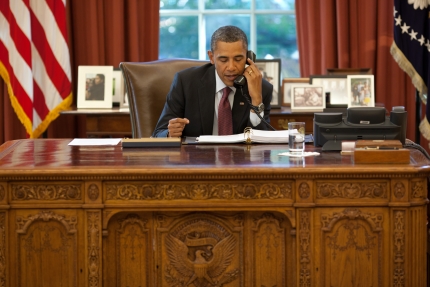
President Obama Speaks to State, Local, Tribal Officials on American Jobs Act

President Obama on a call about the American Jobs Act

President Barack Obama has a conference call with local, state and tribal officials in the Oval Office, Sept. 9, 2011 (Official White House Photo by Pete Souza)

On Friday, after traveling to the University of Richmond to discuss the American Jobs Act, President Obama hosted a conference call for over 1,100 state, local and tribal officials to explain how the plan would put people back to work in communities across the country.   

The President thanked the officials on the call for their ongoing support, as well as their input and ideas that helped shape the American Jobs Act through listening sessions, calls and meetings over the past month.  The President then laid out his policy ideas to help create more jobs immediately, including proposals to:

  • Provide $50 billion in immediate investments for highways, transit, rail and aviation;
  • Provide $10 billion to create a National Infrastructure Bank;
  • Invest $35 billion to prevent layoffs of up to 280,000 teachers while also keeping tens of thousands of police officers and firefighters on the job;
  • Modernize at least 35,000 public schools with $25 billion in infrastructure investments and $5 billion to improve community colleges; and
  • Put construction workers back on the job with $15 billion to rehabilitate and refurbish hundreds of thousands of vacant homes in communities across America.

The White House

Office of the Press Secretary

Remarks by the President at "A Concert for Hope"

Kennedy Center Washington, D.C.

 
8:12 P.M. EDT
 
THE PRESIDENT:  The Bible tells us -- “weeping may endure for a night, but joy cometh in the morning.”
 
Ten years ago, America confronted one of our darkest nights.  Mighty towers crumbled.  Black smoke billowed up from the Pentagon.  Airplane wreckage smoldered on a Pennsylvania field.  Friends and neighbors, sisters and brothers, mothers and fathers, sons and daughters –- they were taken from us with a heartbreaking swiftness and cruelty.  And on September 12, 2001, we awoke to a world in which evil was closer at hand, and uncertainty clouded our future.
 
In the decade since, much has changed for Americans.  We’ve known war and recession, passionate debates and political divides.  We can never get back the lives that were lost on that day or the Americans who made the ultimate sacrifice in the wars that followed.
 
And yet today, it is worth remembering what has not changed.  Our character as a nation has not changed.  Our faith -– in God and in each other –- that has not changed.  Our belief in America, born of a timeless ideal that men and women should govern themselves; that all people are created equal, and deserve the same freedom to determine their own destiny –- that belief, through tests and trials, has only been strengthened.
 
These past 10 years have shown that America does not give in to fear.  The rescue workers who rushed to the scene, the firefighters who charged up the stairs, the passengers who stormed the cockpit -- these patriots defined the very nature of courage.  Over the years we’ve also seen a more quiet form of heroism -- in the ladder company that lost so many men and still suits up and saves lives every day, the businesses that have been rebuilt from nothing, the burn victim who has bounced back, the families who press on.

Last spring, I received a letter from a woman named Suzanne Swaine.  She had lost her husband and brother in the Twin Towers, and said that she had been robbed of, “so many would-be proud moments where a father watches their child graduate, or tend a goal in a lacrosse game, or succeed academically.”  But her daughters are in college, the other doing well in high school.  “It has been 10 years of raising these girls on my own,” Suzanne wrote.  “I could not be prouder of their strength and resilience.”  That spirit typifies our American family.  And the hopeful future for those girls is the ultimate rebuke to the hateful killers who took the life of their father.
 
These past 10 years have shown America’s resolve to defend its citizens, and our way of life.  Diplomats serve in far off posts, and intelligence professionals work tirelessly without recognition.  Two million Americans have gone to war since 9/11. They have demonstrated that those who do us harm cannot hide from the reach of justice, anywhere in the world.  America has been defended not by conscripts, but by citizens who choose to serve -– young people who signed up straight out of high school, guardsmen and reservists, workers and business-people, immigrants and fourth-generation soldiers.  They are men and women who left behind lives of comfort for two, three, four, five tours of duty.  Too many will never come home.  Those that do carry dark memories from distant places and the legacy of fallen friends. 
 
The sacrifices of these men and women, and of our military families, reminds us that the wages of war are great; that while service to our nation is full of glory, war itself is never glorious.  Our troops have been to lands unknown to many Americans a decade ago -– to Kandahar and Kabul; to Mosul and Basra.  But our strength is not measured in our ability to stay in these places; it comes from our commitment to leave those lands to free people and sovereign states, and our desire to move from a decade of war to a future of peace.
 
These 10 years have shown that we hold fast to our freedoms.  Yes, we’re more vigilant against those who threaten us, and there are inconveniences that come with our common defense.  Debates –- about war and peace, about security and civil liberties –- have often been fierce these last 10 years.  But it is precisely the rigor of these debates, and our ability to resolve them in a way that honors our values and our democracy, that is the measure of our strength.  Meanwhile, our open markets still provide innovators the chance to create and succeed, our citizens are still free to speak their minds, and our souls are enriched in churches and temples, our synagogues and our mosques.
 
These past 10 years underscores the bonds between all Americans.  We have not succumbed to suspicion, nor have we succumbed to mistrust.  After 9/11, to his great credit, President Bush made clear what we reaffirm today:  The United States will never wage war against Islam or any other religion.  Immigrants come here from all parts of the globe.  And in the biggest cities and the smallest towns, in schools and workplaces, you still see people of every conceivable race and religion and ethnicity -– all of them pledging allegiance to the flag, all of them reaching for the same American dream –- e pluribus unum, out of many, we are one.
 
These past 10 years tell a story of our resilience.  The Pentagon is repaired, and filled with patriots working in common purpose.  Shanksville is the scene of friendships forged between residents of that town, and families who lost loved ones there.  New York -- New York remains the most vibrant of capitals of arts and industry and fashion and commerce.  Where the World Trade Center once stood, the sun glistens off a new tower that reaches towards the sky. 
 
Our people still work in skyscrapers.  Our stadiums are still filled with fans, and our parks full of children playing ball.  Our airports hum with travel, and our buses and subways take millions where they need to go.  And families sit down to Sunday dinner, and students prepare for school.  This land pulses with the optimism of those who set out for distant shores, and the courage of those who died for human freedom.
 
Decades from now, Americans will visit the memorials to those who were lost on 9/11.  They’ll run their fingers over the places where the names of those we loved are carved into marble and stone, and they may wonder at the lives that they led.  And standing before the white headstones in Arlington, and in peaceful cemeteries and small-town squares in every corner of the country, they will pay respects to those lost in Iraq and Afghanistan.  They’ll see the names of the fallen on bridges and statues, at gardens and schools.
 
And they will know that nothing can break the will of a truly United States of America.  They will remember that we’ve overcome slavery and Civil War; we’ve overcome bread lines and fascism and recession and riots, and communism and, yes, terrorism.  They will be reminded that we are not perfect, but our democracy is durable, and that democracy –- reflecting, as it does, the imperfections of man -– also give us the opportunity to perfect our union.  That is what we honor on days of national commemoration –- those aspects of the American experience that are enduring, and the determination to move forward as one people.
 
More than monuments, that will be the legacy of 9/11 –- a legacy of firefighters who walked into fire and soldiers who signed up to serve; of workers who raised new towers, and citizens who faced down their private fears.  Most of all, of children who realized the dreams of their parents.  It will be said that we kept the faith; that we took a painful blow, and we emerged stronger than before.
 
“Weeping may endure for a night, but joy cometh in the morning.”
 
With a just God as our guide, let us honor those who have been lost, let us rededicate ourselves to the ideals that define our nation, and let us look to the future with hearts full of hope.
 
May God bless the memory of those we lost, and may God bless the United States of America.


President Obama at Kennedy Center: America Does Not Give In to Fear

Watch the President's speech at "A Concert for Hope" here.

On Sunday night, after a day spent remembering those who lost their lives on September 11, 2001, President Obama and First Lady Michelle Obama attended "A Concert for Hope" at the Kennedy Center in Washington, DC. with Vice President Biden and Dr. Biden. At the event, the President spoke about how that terrible day changed us, as individuals and as a nation. But the President also talked about what has not changed in these past ten years:

Our character as a nation has not changed. Our faith -– in God and in each other –- that has not changed. Our belief in America, born of a timeless ideal that men and women should govern themselves; that all people are created equal, and deserve the same freedom to determine their own destiny –- that belief, through tests and trials, has only been strengthened.
 
These past 10 years have shown that America does not give in to fear. The rescue workers who rushed to the scene, the firefighters who charged up the stairs, the passengers who stormed the cockpit -- these patriots defined the very nature of courage. Over the years we’ve also seen a more quiet form of heroism -- in the ladder company that lost so many men and still suits up and saves lives every day, the businesses that have been rebuilt from nothing, the burn victim who has bounced back, the families who press on.

President Obama gives remarks at "A Concert for Hope"

September 11, 2011 | 11:34 | Public Domain

President Barack Obama commemorates the tenth anniversary of 9/11 at "A Concert for Hope" from the Kennedy Center in Washington, D.C.

Download mp4 (110MB) | mp3 (11MB)

President Obama's Message to 9/11 Families

Watch the President's message to 9/11 families here.

President Obama has a message for those who lost loved ones on that terrible day, ten years ago: "We can never replace all that you have lost.  But what we can do, what we will do, is honor the memory of your loved ones by being the best country we can be, and by standing with you and your families, now and forever."

The President and Mrs Obama commemorated today's sad anniversary by attending memorial services at the three sites where the planes went down, and once again met with many of the families. The First Family have been touched by the grief that still lingers:

Despite heartache that never goes away, you’ve done what your loved ones would have wanted.  You’ve learned to live and laugh and love again.  Your courage, your resilience has been an inspiration to my family, and an inspiration to the American people.  Through you, we’ve been reminded that, as a people, we don’t simply endure, we can emerge stronger than before.        

In quiet moments of remembrance, some of you have shared with Michelle and me the beauty of their lives, the anguish of your loss and the pain of these past ten years.  And I realize that there are no words than can ever fill the hole in your hearts.  

But today I want to say again—your loved ones live on in you and in the life of our nation, which will never forget them.  In their name, we’ll never waver in our efforts to prevent another attack on our shores and to spare other families the heartbreak you have known.  In their name, we’ll continue to deliver justice to those who took the people you loved most in the world.  And in their name, we will come together, in spirit of national service, to honor your loved ones, as one American family.


President Obama Attends 9/11 Memorial Service at the Pentagon

September 11, 2011 | 1:34 | Public Domain

The President and First Lady joined family members and presented a wreath at a Pentagon memorial service in Arlington, Virginia.

Download mp4 (15MB) | mp3 (2MB)