Press Briefing by Press Secretary Jay Carney, 8/8/2013
James S. Brady Press Briefing Room
1:00 P.M. EDT
MR. CARNEY: Before I take your questions, let me inform you that tomorrow President Obama will sign the bipartisan bill to cut student loan interest rates. As you know, this is a bill that passed with wide majority support on both sides of the aisle and will save millions of students an average of $1,500 on loans they take out this year.
Even with this important bill signed into law, much work remains to ensure college stays within reach for middle-class families and those striving to get into the middle class.
As the President said in his speech at Knox College, in the coming months he will lay out an aggressive strategy to build on the historic college affordability steps this administration has already taken. And I mention this just for housekeeping purposes, that the signing will have pooled press coverage.
With that, Julie Pace.
Q Thank you. Officials in the Philippines said today that they’re going to start negotiations with the U.S. shortly for an increased American military presence there, and they say that that is in part to counter Chinese aggression in the South China Sea. Is the U.S. seeking a larger military presence in the Philippines?
MR. CARNEY: I have nothing to report to you on that. I can tell you that we are very focused on, and have been since President Obama took office, on the need to rebalance our foreign policy and to in particular focus on the Asia Pacific region. And you’ve seen that in a variety of ways that we’ve engaged in the region, and that includes with some of the steps we’ve taken within the security realm.
But I don’t have any announcements to make about potential agreements we might have. You’ve seen some of the actions we’ve taken, and it’s because the United States has historically had an important role to play in the Pacific, the Asia Pacific region, and that role has to continue. Some of the fastest-growing economies in the world are there, and we need to be fully engaged throughout the region both economically and when it comes to security matters.
Q This isn’t actually about an agreement, this is about starting negotiations. Can you not even say if negotiations are starting?
MR. CARNEY: I cannot confirm that, no.
Q Okay. And then one loose end on Russia, after the announcement yesterday. With regards to Snowden, is the U.S. position now that you are still seeking Russia’s help in bringing Mr. Snowden back to the U.S. even though he’s now been granted asylum? Or are you kind of in a point now where you’re going to let him stay there for the year and try to negotiate something for after that asylum is up?
MR. CARNEY: Well, it certainly remains our position that Mr. Snowden should be returned to the United States where he faces felony charges and where he will be afforded all the rights and protections of defendants in this country.
It still remains our position that there is a longstanding level of cooperation with Russia on law enforcement matters which would have made it possible for Russia to take that step and obviously to take that step in the future.
Our position on this has been clear for a long time, and it has been stated both publicly and privately in conversations with our Russian counterparts. So it remains our position --
Q Well, whether it’s your position or not, are you still actively working with them to try to bring him back right now?
MR. CARNEY: Look, we have a lot of fish to fry, if you will, with the Russians. We have a lot of issues to engage with the Russians over. And there is a two-plus-two ministerial meeting tomorrow here in Washington and there will be a host of topics. So this is not the focus of our engagement with Russia, but it is not something that we're dropping by any means. And it remains our position that there is ample legal justification to return Mr. Snowden to the United States. He’s not a dissident. He’s not a whistleblower. He is wanted on charges for the unauthorized public release of classified information.
Q And then finally, it’s been a few days now since George W. Bush had his heart procedure. Has the President spoken to the former President or members of the Bush family since then?
MR. CARNEY: The President did speak with former President Bush yesterday to wish him well, and is glad to hear that the procedure went well and that former President Bush is recovering.
Q Jay, just back on Russia for a second. The President is facing some criticism for the way the Snowden affair played out, the confrontation resulting in the cancelled summit. Given Russia’s importance as a player on issues like Syria and North Korea -- people point to, for example, the 2010 exchange of Russians that went sort of quietly without a hitch. Given Russia’s importance, is the President rethinking the way this happened? Does he regret the way this ended up?
MR. CARNEY: The President is disappointed, as he said and I said, by the decision the Russians made not to return Mr. Snowden to the United States, by the decision they made to grant him temporary asylum. We have said from the beginning, going back to 2009, that it is in the United States’ interest to pursue an engagement with Russia that is very clear-eyed, that allows for basically parallel conversations about the issues where we can make progress and cooperate, and the issues where we disagree. And that has been the case from the beginning.
Now, when it comes to the decision to cancel the summit, as I think has been well reported, there were a variety of challenges that led to the assessment that this was not the right time to have a summit. Obviously, Mr. Snowden was a factor, but he was far from the only factor. And as you know -- you’ve been covering these things for a long time -- summits of leaders tend to be designed around making progress on significant issues that -- progress that has been achieved in the run-up to a summit of that nature, and we had not seen that progress sufficiently on a range of issues to merit a summit.
Q Different topic altogether. So next week he goes on holiday. Can you give us a sense of what he plans to do? Is he going to do anything on the work side with regards to budget or fiscal issues or international issues, or is it purely a vacation?
MR. CARNEY: He’s going to make a Fed chairman decision and we’ll let you know. (Laughter.) Joke. The President very much looks forward to being able to spend a few days with his family, and it also remains the case that wherever he is, he’s President of the United States and will be dedicating a portion of his day to being briefed and working on all the issues that are on the table in front of him.
So I don’t have anything specific to tell you about, but he will be, of course, regularly updated on the current threat that we’ve discussed. He’ll be regularly updated on issues going on around the world and the country, but with any luck, he’ll also have some time to relax with his family.
Q Jay, going back to the summit with President Putin, why not go to Russia, why not go to Moscow and have the President sit down with President Putin face to face and tell him, air these differences face to face, rather than cancel this summit? President Reagan sat down with the Soviets when the stakes were much higher. Why not do that here?
MR. CARNEY: I’m going to resist the temptation to give you a little history about some of those issues that I happen to be familiar with when it comes to previous summits in the Soviet era. But obviously there was a different relationship and there wasn’t -- there were many different issues on the table.
What is absolutely the case is that President Obama met with President Putin at the G8. President Obama has spoken with President Putin. And counterparts at different levels of government in this administration have spoken with -- or rather their counterparts in the Russian government about this issue and many others. And as I was just saying in answer to Mark’s question, we did not see, on a range of fronts, the kind of sufficient progress on some of the major issues that we’re engaging with the Russians on to merit a summit.
Mr. Snowden was a factor, but not the only factor. And when you have summits like these, you want the kind of progress prior to them to be sufficient enough to merit a meeting of the leaders. And we’re going to continue to engage with the Russians, and I think that’s evidenced by the high-level meeting that’s being held tomorrow. And we have a host of business with the Russians, and it’s an important relationship. But it just wasn’t the right time for a summit.
Q And on the issue of the embassy closings, there have been some critics out there who have now described this as an overreaction, and there was a New York Times article that seemed to indicate that there were people within al Qaeda that were sort of celebrating the fact that the United States closed all these embassies around the world. Obviously, there’s a “damned if you do, damned if you don’t” factor there. Are you feeling that inside the White House?
MR. CARNEY: No. In fact, the decisions made were made out of an abundance of caution in reaction to a very real stream of information about a potential threat. And when it comes to protecting Americans serving in our embassies and facilities around the world, it’s very important to take the necessary precautions when there is this kind of credible threat information.
So it’s absolutely the right decision to make, and we continue to assess the information that we have and continue to view the threat as we have all week, and that’s why we’ve made these decisions, and absolutely believe that it’s the right thing to do in the interest of the safety and security of Americans serving abroad.
Q And there’s some other reporting out there, Jay, that I just wanted to ask you about on the issue of domestic surveillance. And I’m just -- there’s an article in The New York Times, not to keep asking you about articles in The New York Times -- (laughter) -- I’m sure Michael doesn’t mind -- that indicates that perhaps some of this surveillance of emails coming from the United States might be wider than originally, I guess, acknowledged by U.S. officials. And I’m just curious, can you describe how widespread this surveillance is of emails being sent from people inside the United States?
MR. CARNEY: Well, I think the article eventually explained we have made clear that under FAA 702, the NSA may not intentionally target a U.S. person. In carrying out its mission, NSA collects only what it is explicitly authorized to collect. And while NSA analysts examine only a very small percentage of the world’s traffic, if communications of U.S. persons are incidentally collected the agency must follow minimization procedures that are approved by the U.S. Attorney General and designed to protect the privacy of U.S. persons. Specifically, these procedures require NSA to minimize the acquisition processing, retention and dissemination of information of or concerning U.S. persons.
The purpose of the program is to investigate and potentially prevent terrorist threats emanating from foreign sources. And the protections in place regarding the inadvertent collection of information of U.S. citizens ensure that there's a minimized -- a process of minimization that protects the privacy of American citizens.
Q And I’m sorry, just to boil this down into plain language that people can understand -- forgive me for following up -- if Joe Schmo from Kokomo wants to know if when he sends an email overseas is it being read, what would you say?
MR. CARNEY: It's not being read. The information that is targeted has to do with terrorist threats or potential terrorist threats emanating from foreign persons in foreign areas. And there are procedures in place -- as I just described and I'm sure ODNI and others, NSA, can explain to you in greater detail -- that ensure that inadvertently collected information is minimized and dealt with appropriately.
Jon.
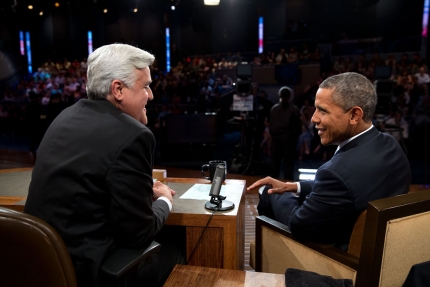
Q Jay, I want to ask you about the so-called homosexual "propaganda" law in Russia. Of course, the President was asked by Jay Leno about this, and he said, "I have no patience for countries that try to treat gays or lesbians or transgender persons in ways that intimidate them or are harmful to them." So my question is, does the President condemn this Russian law?
MR. CARNEY: The President absolutely opposes and has made clear in other countries laws that discriminate against individuals, whether for race, religion, ethnicity, gender, or sexual orientation.
Q Jay, with due respect, I'm asking specifically this law. Does the President condemn this law?
MR. CARNEY: Yes. Sure, yes.
Q And are you concerned that American delegations going over to the Olympics could face prosecution under this law for so-called promoting homosexuality?
MR. CARNEY: What I think the President made clear the other night is that it is in Russia's interest to ensure that the Olympics are a success. And that's certainly true of other host countries when they have the privilege of hosting an Olympics. And he would expect them to take the necessary measures to ensure their success.
Q And has this issue been raised directly with the Russians, both in terms of condemning this law and for ensuring that American citizens traveling to the Olympics, including the athletes, won't be detained?
MR. CARNEY: You would have to direct that question to the State Department. I don't know the answer to that.
Q You don't know if the administration has brought this issue up with the Russians?
MR. CARNEY: I would ask you to address that question to the State Department. I don't personally know whether those conversations have been held. It's our clear position that we oppose laws like that in any country, and that includes Russia.
Q And what do you say to those who say that there should be a boycott of the Olympics over this issue?
MR. CARNEY: I would refer you to the President's remarks, which clearly stated his views and our position, and our expectation that it's in Russia's interest to ensure that the Olympics are a success.
Q This is a basic human rights issue. It’s a pretty clear --
MR. CARNEY: Yes, Jon, I think I’ve answered the question. The President answered it on television. The Olympics are not for a while. I think that our view is clear. And we certainly expect the host of any Olympics to ensure that they are a success, and that includes ensuring that delegations and athletes are all treated appropriately and with respect.
Q And there’s a movement to -- for those who say it shouldn’t be boycotted, but the position should be made clear that American athletes, athletes everywhere should wear symbols expressing displeasure and condemnation of this law, and that that's something the American delegation should do. What does the White House say about that?
MR. CARNEY: I haven’t heard that. I can tell you what our views are, what the President’s views are, which he himself expressed, and what our expectations are.
Major.
Q Jay, evaluating the state of the reset with Russia, is it impossible to have a reset with Putin leading Russia? Is he the irritant here?
MR. CARNEY: I think it’s important --
Q Has he made it more difficult since Medvedev stepped down to achieve the kind of progress that the administration is seeking?
MR. CARNEY: I’d say two things. One, we engage with nations and make progress or run into obstacles based on policy, not individuals. I would note that, as Russia hands would be sure to point out, that Vladimir Putin was Prime Minister and widely viewed, I think accurately, as having a significant influence over the course of affairs while President Medvedev was President. And we were able to make the kind of progress that we made in our relations with Russia at that time.
It’s also important to note that despite the challenges that we have encountered in our relationship with Russia in recent times, that we still do have cooperation with the Russians on a number of important issues. And we will continue to engage with the Russians, as we are tomorrow, to try to make progress on those and other areas.
But there is no question that we have run into some obstacles on some important issues, and for that reason, as well as the issues of Mr. Snowden, we decided it was not the right to have a bilateral summit.
Q In conversations with some who are experts on Russia and some in this building, there is a sense that the reset was really a Medvedev sort of phenomenon. And though Putin was clearly influencing some of the decisions, much more was achieved at that period of time, and the reset is sort of for that period of time almost only, kind of encased in sort of a policy amber, if you will.
MR. CARNEY: Well, that's pretty good for --
Q Not bad for a Thursday --
MR. CARNEY: I like that. (Laughter.) I like that. I like that, yes.
There’s no question that some of the progress we made in our relationship with Russia on issues that were in the interest of our national security and in our broader interest came when President Medvedev was in office. However, it is important to note, even as we face the challenges we face and have the disagreements we have with the Russians, that we continue to have cooperation and agreement on a number of important issues, including those issues that we reached agreement with Russia on during President Medvedev’s time as President.
I'm not minimizing the challenges we face or the disagreements we have with Russia, but I think that it’s important not to imagine that everything was harmonious in our relationship with Russia a few years ago and is now lacking harmony of any kind at this time. There’s no question that we have a number of disagreements with Russia. We certainly had some under President Medvedev, including over missile defense --
Q It worse now.
MR. CARNEY: Well, no question. No question.
Q So, Egypt -- Bill Burns has left. Senator McCain and Senator Graham have left. The Egyptian government has announced that it is essentially -- this transitional government -- through negotiating about the protests, and it appears that there are some signals that a confrontation is coming. The administration and the State Department put out a very lengthy statement yesterday with the EU almost pleading with this transitional government. I mean, there was almost a plaintiff quality to the letter: Don't go down this road. How nervous is this administration about what’s coming next in Egypt? And is there a sense of powerlessness now that Burns and these senators that were at least working in some tandem with the administration are out of the country?
MR. CARNEY: Secretary Kerry was there, as you noted, and had a number of important meetings and expressed our strongly held view -- expressed also in the joint statement with EU High Representative Ashton -- that more violence would be a troubling sign and we remain concerned and troubled that the government and opposition leaders have yet to find a way to break what is a dangerous stalemate and to agree to implement tangible confidence-building measures.
It is essential, in our view -- and that's why we have been working intensively over the past week on this issue -- to urge the Egyptian government and opposition parties to begin a process of genuine reconciliation to move ahead inclusively to consider amendments to the Constitution, and to prepare as quickly as possible for parliamentary and presidential elections.
In addition to working with the EU, we have cooperated closely in this effort to urge the Egyptians to take this course of action with the UAE and with Qatar.
I think that we have made broadly clear to the Egyptian authorities as well as the opposition that reconciliation is the path they need to follow for the sake of the Egyptian people and for the sake of Egypt’s transition away from authoritarianism and to democracy. And we will continue to work with the transitional government, with the opposition parties to urge that course of action on them, because it’s very much in Egypt’s interest. And it is the stated objective of the transitional authorities to move to elections, to move to a return to a democratically elected civilian government.
And our focus has been on urging those authorities and urging the opposition to participate in a process of reconciliation to allow for full representation of all views in that process. And we will continue that effort both from here and when we have high officials visiting Egypt.
Q Right, but it’s hard to get more concerted without having the President go there, to have Burns there for several days, these two senators, and then as soon as they leave get this announcement that reconciliation talks, if not over, are not going to be engaged in to the level that you were pleading with the Egyptian transitional government. How disappointed or frustrated are you about this turn of events?
MR. CARNEY: Look, there has not been a return to violence but we are very concerned about that possibility, and we made that clear and we continue to make that clear. And we continue to urge all parties to pursue reconciliation over stalemate and confrontation, especially violent confrontation.
We urge the authorities to allow for peaceful demonstrations, and we urge the authorities to allow for an inclusive process where all voices and factions are heard and represented within Egypt for the sake of Egypt’s future.
Q Thanks, Jay. I want to follow on NSA and Joe Schmo’s concerns that were mentioned by Jim. The President on Leno -- is the issue more that the President said, “We can track a phone number or an email address that we know is connected to some sort of terrorism threat”? Those are his words. And then the Times is reporting today that, in their words, the NSA is “searching the contents of vast amounts of Americans’ email and text communications,” and presumably not all of those people are connected to terror, as the President said.
MR. CARNEY: Well, no, you’re wrong. What I made clear in answer to Jim is that this program is focused entirely on foreign terrorist threats, and information that is tracked is related solely to that. I would refer you to the intelligence community for more details. We’ve made clear of that in what we’ve said about the program, 702, Section 702. Representatives of Congress who have been fully briefed on this program have made that clear in their public presentations and will continue to do that.
What I think is absolutely the case -- and I think you’re blending a couple of things here -- is the metadata collection represented by 215 is not content, it is telephone numbers and call times. It is -- any further action requires procedures in place, again, that have judicial and congressional oversight.
And separately, the programs that are looking at or seeking to find more information about foreign terrorist threats fall under 702 and are as I described and as members of Congress and the intelligence community have described.
Q Two other quick topics. The Fort Hood trial -- a victim of that attack who was shot in the chest has an op-ed in The Washington Post today. He’s saying he and others are being denied government benefits because the administration classified this as a noncombat, workplace violence incident, instead of a terrorist attack. Why did the administration not call it a terror attack?
MR. CARNEY: I’ll have to take the question. I think that's a question for the Department of Defense, but I will take the question.
Q Last one on -- I’ve got two on Benghazi. One, Peter King, a Republican, a couple of days ago -- you know he’s a Republican -- was saying the administration should not be criticized for not doing enough to protect consulates and embassies in the run-up to Benghazi and now be criticized for having an abundance of caution. He said you deserve credit for that.
There was an analyst quoted today in The New York Times, though, that was saying he believes that you’re in a defensive crouch since Benghazi, and that the administration is too eager to close these embassies. This was --- how do you answer that?
MR. CARNEY: I would simply say what I said earlier, which is that we have information that is specific enough and credible enough to lead us to take the action we’ve taken in order to, out of an abundance of caution, ensure the security of our personnel in a variety of countries serving abroad. And we are convinced that that is the right step to take, and we’ll evaluate procedures and steps moving forward as we get more information.
Q Last one. Last week, CNN reported that dozens of people who were working for the CIA around Benghazi on the night of the attack, and they're claiming that some of these CIA operatives now feel like they're being intimidated, that they're getting polygraph tests, sometimes on a monthly basis, which is much more frequent than CIA officials apparently normally get, because the government is trying to figure out whether or not they're talking to the media, they're talking to Congress about what happened that night.
Can you assure the American people that's not happening? And can you shed any light on what the CIA was doing? I realize there may be classified information there. But, in general, is there anything you can say about what the CIA was doing there?
MR. CARNEY: I don't have any information on CIA individuals or operations around the world. I would refer you to the CIA on that. I would also refer you to the very clear statement in response to that, put out by the CIA, which says:
“The CIA has worked closely with its oversight committees to provide them with an extraordinary amount of information related to the attack on U.S. facilities in Benghazi. Furthermore, CIA leadership has informed officers who may want to speak with the oversight committees on this matter that it will support and facilitate such contact.
CIA employees are always free to speak to Congress if they want to, and there is an established process to facilitate such communication on a confidential basis. The CIA enabled all officers involved in Benghazi the opportunity to meet with Congress. We are not aware of any CIA employee who has experienced retaliation, including any non-routine security procedures, or who has been prevented from sharing a concern with Congress about that Benghazi incident.”
I think that's a fairly detailed response to --
Q And have you done anything -- you’re just relaying on what they're saying. Has the White House checked with the CIA to make sure that that's the case? Or that's just their statement?
MR. CARNEY: Again, I would refer you to the statement the CIA made on the record as a response to that report.
Q Jay, as of yesterday, the President hadn’t spoken to President Putin about his decision. Has that changed? Has he reached out to Putin? Or does he have any plans to do so?
MR. CARNEY: I don't have any calls to read out or preview.
Q And just following up on what Major was asking, given this latest deterioration, does the President view the reset as officially over?
MR. CARNEY: I think I tried to answer this. I’ll try again. When the President came into office, he saw a situation where our relations with Russia were at a point where we were not achieving cooperation on issues where we thought it was possible to achieve cooperation, and thus pursued a policy that sought, in a very clear-eyed way, engagement with Russia on a whole host of issues, recognizing that we would disagree on some of those issues, like missile defense. That process led to successes in cooperation that have directly benefitted the United States, directly benefitted U.S. national security, and were well worth the effort. Some of that cooperation continues to this day.
We have also made clear that we have had longstanding disagreements with Russia on a number of issues and we have seen increased obstacles in some of the efforts we’ve engaged with the Russians on when it comes to trying to make further progress on some of these issues, separate and apart from the Snowden disagreement. And for that reason we decided to cancel the summit.
But let’s be clear, it is still an important relationship. We will still engage with the Russians on the issues that matter between us, including the disagreements as well as the areas of potential cooperation. That’s why the Secretaries of Defense and State are meeting with their counterparts tomorrow, and we will continue that process moving forward, always being very blunt and clear about our disagreements on Syria, on missile defense, and other areas.
Q I guess given the fact that the reset was such a large priority for President Obama, what role does he plan? You point out obviously the meetings tomorrow, which we’ve been talking about, but what role does he play in getting this back --
MR. CARNEY: He’s President of the United States and he oversees our foreign policy and engages with countries around the world, and his team engages with countries around the world. And his Secretaries of State and Defense will be engaging with and meeting with their Russian counterparts.
Q Okay. I want to ask you one about immigration. Yesterday, Chuck Schumer said he was okay with a piecemeal approach to immigration. He said, “We would much prefer a big comprehensive bill, but any way that the House can get there is okay by us.” Does the President share that?
MR. CARNEY: Well, I think he’s referring to the House process, not to an outcome. Let’s be clear, the outcome has to be comprehensive immigration reform. That is the path forward that the President has made clear is necessary. It’s the path that a bipartisan, large majority in the Senate has made clear is necessary. I mean, how we get from here to there in the House is an open question.
Q Does the President see that as the most realistic path to getting to this point?
MR. CARNEY: The legislative analysis, we’ll leave to congressional reporters and others. But the fact of the matter is, it is our hope and expectation that a comprehensive immigration reform bill will emerge from Congress that the President can sign, that meets his principles of significantly enhanced border security measures, of provisions in place to streamline and improve our legal immigration system, provisions in place that make sure that all of our businesses are playing by the same set of rules, and provisions in place that ensure that there is a pathway to citizenship that means going to the back of the line, paying fines and paying taxes, but has a clear pathway to citizenship for the 11 million undocumented immigrants in this country.
That is what the Senate bill represents. That is what is right for the country. That is what is enormously right for our economy, for our businesses, for the middle class. And I think as we see around the country, there is broad support for this -- Democrats, Republicans, labor, big business and small business, faith communities, law enforcement communities. And we know it’s the right thing to do, and we believe that it is something that will happen because there’s overwhelming support to do it.
Yes, and then Jon.
Q Jay, what exactly are the expectations for this meeting tomorrow, the Kerry/Hagel meeting with counterparts?
MR. CARNEY: Again, as I’ve been saying, we have a number of issues that we engage with the Russians on -- security issues, economic issues -- and we will continue to discuss those issues with the Russian government going forward.
Q Do you expect some progress, or is this just a reality check?
MR. CARNEY: No, look, this is an important meeting among high-level officials of both governments. I will leave it to the State Department and the Defense Department to read out those meetings and to preview them. But I think the point I’ve been trying to make is that on a whole range of security issues, a whole range of issues that are regional or global, we do and should engage with the Russians and will continue to do that.
Q At times, when counterparts of high-ranking Cabinet members have been in town, the President has also seen them briefly. Is there any chance that might happen tomorrow?
MR. CARNEY: I don’t have any scheduling updates or hints to provide.
Jon-Christopher.
Q May I follow up just a bit on that? I was wondering if the President had passed a message on to the secretaries to these counterparts on a personal level to President Putin.
MR. CARNEY: The President speaks with his Secretaries of Defense and State all the time. I’m sure they’ve talked about this issue and this relationship, as they have so many of the other issues that are subject to the conversations he has with his national security team. I don’t have anything specific to read out.
Q May I just add another quick question? In 1980, President Jimmy Carter boycotted the Olympics, brought 64 other nations along with him, including China and Japan, West Germany and Canada. What would be the tipping point for the President to go down this road? Is there any one thing that would --
MR. CARNEY: First of all, I think that that’s a conversation we’re not having. The President was very clear about his views on the issues of gay rights, LGBT rights, and concerns that have been raised internationally about laws in Russia, and his expectation that, as host of the Olympics, Russia will conduct them in a way that shines a favorable light on them as well as ensures the absolutely necessary and proper treatment of delegations and athletes.
To speculate about something like that is I don’t think in anybody’s interest.
Roger.
Q Thanks. The President is going on holiday, as was mentioned last week. Can you talk a little bit about how the costs of such a holiday are broken up between the President personally and the rest of the taxpayers? I know, for example, he --
MR. CARNEY: In keeping with longstanding tradition, using the same formulas that have been in place, I’m sure, for administration after administration after administration. I don’t have anything more specific for you on it, but I’m sure that has been the case for years, whether it was President Bush, President Clinton, President Bush, President Reagan. Obviously, when you're President of the United States, you carry a little baggage when you travel. And that's true whether it's on a summit, international meeting, a domestic trip, or for a vacation.
Q And one other thing just quickly. He has no plans to meet with Putin in St. Petersburg, is that correct?
MR. CARNEY: Well, Russia is hosting the G20 and is one of the participants in the G20, so I'm sure they will --
Q But no bilat?
MR. CARNEY: No plans for a bilat.
Q We're told that at the White House tonight Secretary Kerry is meeting with Jewish groups. Why is that meeting happening at the White House instead of State? And does the President plan to stop by?
MR. CARNEY: I don't have any changes to announce to the President's schedule. I think it's a great place to have a meeting. So beyond that, I don't have any more information.
Q There's not a specific White House interest or plan for White House engagement in that meeting?
MR. CARNEY: Not that I'm aware of. I think that the Secretary of State and other members of the administration engage with groups all the time. And sometimes those meetings are held here, sometimes they're held at different agencies.
April. And then Dave.
Q Jay, I'm going to go back to issues of security, especially with these increased threats. Embassies around the world are being looked at. What's happening here back home? Is there a concern back home, particularly for rail, as we've seen issues in the Tube in London and in Spain? What's happening back here? What are the concerns for back here?
MR. CARNEY: Well, I appreciate the question. And as we've said, the information we have suggests that the potential threat emanates from and may occur in the Arabian Peninsula. However, we can't rule anything out. And for that reason we take necessary precautions when it comes to our domestic homeland security. And DHS would have more details, but as I've said in the past, there are measures taken when appropriate -- both seen and unseen -- by TSA and other agencies to ensure or enhance the security procedures in place when it is viewed that there is need to do so. And I think they might have more information for you.
So while the threat that we've been discussing emanates from and may occur in the Arabian Peninsula or the broader region of North Africa or the Middle East, we certainly can't rule anything out. That's why we put out the -- the State Department put out the global warning and why we've taken a number of security precautions.
Q Jay, to follow up, in prior administrations since 9/11, many would say it's not a matter of if, it’s just a matter of when. Is that kind of the same mentality here that something is imminent at some point in time?
MR. CARNEY: I think it is absolutely the case that there is a constant stream of potential threats out there to the United States because there are people around the world who want to do harm to the U.S. and harm to American citizens. Assessments are made by our national security team based on the information available to them about the level of potential threats and the precautions that need to be taken in response to those.
But we have to maintain our vigilance as a nation because, as I said, those threats exist. And while, as we've talked about earlier this week, al Qaeda core and its leadership in Afghanistan and Pakistan has been decimated and is not nearly what it was 10 years ago, al Qaeda in general and its affiliate organizations -- as we've been talking about for years now -- continue to represent threats. And AQAP in particular is viewed by the national security team as the most operational of the al Qaeda affiliates and the one that poses the greatest potential threat to the United States.
David.
Q It is that time of the year again, presidential vacations. And that means the other party is saying the incumbent party is taking too much time off. The Republicans are saying President Obama spends too much, is too extravagant on his vacations, that he is spending too much time while other problems are going on. What do you say to that kind of criticism?
MR. CARNEY: I would just check what they said six years ago.
Alexis.
Q Jay, two questions. Can I follow up on what April is asking? So are you saying that we are at a heightened level of alert domestically? Can you just say that's the case?
MR. CARNEY: For the specific gradations, I would refer you to the Department of Homeland Security. What I am saying, as we've said all week, is that the threat, while emanating from and potentially occurring in the Arabian Peninsula, is of the nature that we can't rule anything out, and therefore, we've taken precautions beyond the Arabian Peninsula, both with our diplomatic facilities and through other measures.
So I would refer you to DHS and TSA about different procedures that may be in place when it comes to the TSA or other agencies.
Q Are you doing that because you want them to be the appropriate sources of the information and you feel reluctant to do that, or would --
MR. CARNEY: I just don't have specifics on the measures they've taken.
Q Following up on that and broadening it out, there are so many Americans who are confused about whether this broad global threat is something that the administration could know when to turn off in effect, know when to stand down from a threat that would seem to be ongoing and long-lasting. So can you just explain again -- if the intelligence was somewhat non-specific but actionable, what would -- then the administration would put Americans back in?
MR. CARNEY: I think it will be an assessment of the information we have based on the variety of means that we have available to us to assess these kinds of things. What the current threat represents is very real and, therefore, we took the very deliberate action that we took as an administration to ensure that out of an abundance of caution, some facilities were temporarily closed and some individuals are removed from Yemen, for example.
This was not the ongoing generalized reality that we have groups and individuals out there in the world who want to do harm to the United States. This was more specific than that.
Q And so this will continue until there is that level of intelligence so that you can ensure or to make --
MR. CARNEY: I think there will be an assessment. And when there is an assessment that this current threat is not what it was, then we’ll probably change our posture. But I certainly don't have a timeline to predict to you.
Q One question on immigration. There are advocates of immigration reform who believe fervently that the President has the executive power, as he did with DREAMers, to take legalization to the next level using his own executive authority. Separate and apart from the President’s ambition to have legislation, does he believe he has that executive authority to take it one step above the DREAMers?
MR. CARNEY: I think the President made clear when the action was taken by DHS with regards to prosecutorial discretion that this was not a solution and it was far short of what was needed when it came to legislation. And it is absolutely the case that we have to enforce the law, and we do.
We can make decisions, as were made by DHS when it came to making sure our resources were targeted appropriately, but those are limited actions and they do not solve the problem. And we need to address this in a comprehensive way. And doing it that way ensures that everyone who has a particular interest in border security on the one hand, or making sure our businesses all play by the same rules on the other, or that there is a credible, if difficult, path to citizenship, but a clear path to citizenship on the other hand -- that all of these -- and then, of course, those who, rightly, see the necessity of reforming our legal immigration system so that we can ensure, for example, that some of the best and brightest from around the world who study here and want to start businesses here can do that -- that all of these elements come together.
And that's what helps build the impact on our economy -- the positive impact -- and it’s also what helps build the consensus around this enterprise. That's why the President supports it.
Q Thanks, Jay.
MR. CARNEY: Bill and then Ann, and then I’ll -- did you have anything?
Q No.
MR. CARNEY: Okay. Bill; Ann.
Q Ann or me.
MR. CARNEY: I couldn’t possibly call on you. (Laughter.)
Q I’m going to come back to the summit for just a second. Everything seemed to be on track toward a summit until the Snowden release -- report. So are you telling us today that even without Edward Snowden, there would still be no summit?
MR. CARNEY: I’m saying that Mr. Snowden was a factor, but that there were and have been for some time now a number of issues that had caused us to assess the utility of holding a summit at this time. Obviously to guess at what the outcome of that assessment would have been absent the Mr. Snowden factor is hard to do. And I'm not denying that Mr. Snowden was a factor -- we've made that clear in everything we've said about it.
But we've also made clear, because we think it’s important, that we have not achieved the kind of progress on some of the issues where we have been trying to engage the Russians to enough of a degree that having a summit made sense.
Ann.
Q Thank you, Jay. Is the reason the President is going to Sweden because as just as the United States is trying to deport Edward Snowden, a leaker, back to the United States, Sweden is also trying to extradite a leaks figure, Julian Assange, after --
MR. CARNEY: No. (Laughter.) Sweden is a close friend and partner to the United States and plays a key leadership role on the international stage, including in opening new trade and investment opportunities through the U.S.-EU Transatlantic Trade and Investment Partnership, advancing clean technologies and promoting environmental sustainability.
And the fact is, as I think I said on the plane or one of my briefings this week, this has been under -- well, it must have been yesterday since we only announced it yesterday -- we have been considering a trip for some time. When we were able to -- or decided to cancel the summit in Moscow, it made sense to couple the visit to Sweden with the G20 summit.
Q When the President met at the G20 last year with President Putin, the administration briefers came out and said that they were pleased with the trajectory of relations between the countries. Is it President Putin who has changed the equation here?
MR. CARNEY: I think I addressed that in part. I would say that a year ago is not now, and that over the course of time we have encountered obstacles on a number of issues and have been unable to reach the kind of progress with the Russians on some of these issues that we had hoped.
We'll continue to engage with them on all of these issues, including those that we have agreement currently and are seeking more engagement and those where we have disagreement. But the fact is, as I've noted, we assessed that we were not reaching the kinds of -- making the kind of progress that we wanted in anticipation of a summit to make the summit useful, and therefore, we decided to cancel.
Thanks, all.
END
1:49 P.M. EDT