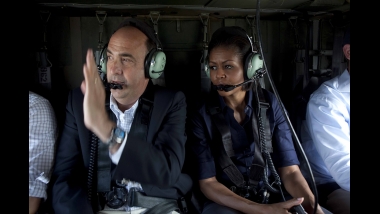
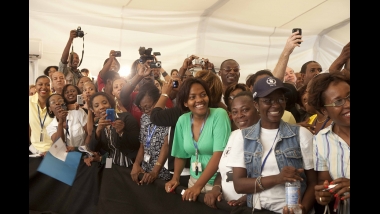
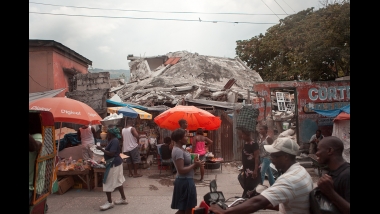
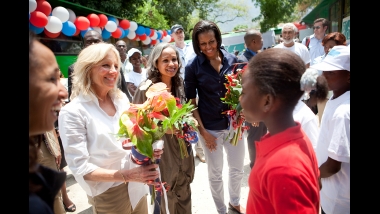
First Lady Michelle Obama in Haiti

April 18, 2010 | 3:05 | Public Domain

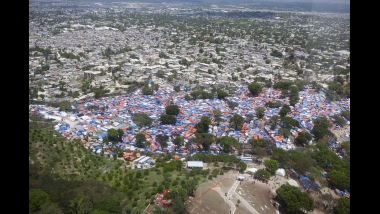
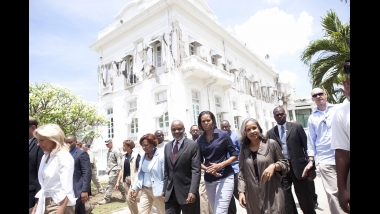
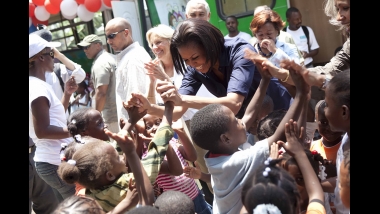
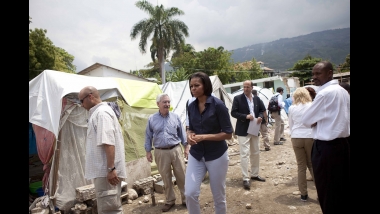
Exclusive footage of First Lady Michelle Obama and Dr. Jill Biden on their surprise visit to Haiti on April 13, 2010. While they encounter glimpses of hope and resilience, the footage also reminds us that Haiti still needs the world's attention and aid as it continues down its long road of recovery. Please consider donating at www.clintonbushhaitifund.org.

Download mp4 (72MB)

Your West Wing Week - "The Interpreter's Lounge"

April 16, 2010 | 5:48 | Public Domain

Welcome to the third episode of the West Wing Week, your guide to all things 1600 Pennsylvania Ave. This installment takes you step-by-step with the President as he returns from the Czech Republic, hosts the largest international summit ever held in Washington DC, and lays out a new vision for manned space exploration at the Kennedy Space Center. We even caught up with the First Lady as she made her first official solo international trip. Thanks so much for keeping up with your West Wing Week

Download mp4 (162MB)

The White House

Office of the First Lady

Remarks by the First Lady at California Endowment "Building Healthier Communities" event

New Roots Community Farm, San Diego, California

2:43 P.M. PDT

MRS. OBAMA:  Thank you, everyone.  Thank you so much.  It is -- (applause) -- thank you, guys.  (Applause.)  All right, you all are crazy.  (Laughter.) 
 
I am just delighted to be here.  I can’t tell you -- as much as I love living in Washington, there is nothing that I love better than getting out of Washington -- (laughter) -- particularly when it means coming to such a beautiful community with such energy and passion.  So I am happy to be here. 
 
I want to start by thanking Rosa for her wonderful introduction, for her terrific leadership in community service.  We are so very proud of you.  Let’s give her a big hand.  (Applause.)  Thank you, Rosa.
 
And I just want to also acknowledge a few people, as well.  I’m honored to be joined by the Lieutenant Governor -- it’s so good to see you, thank you for your work -- as well as the State Controller.  Wonderful to see you.  Thank you so much for taking the time to be here. 
 
I know that the mayor had to leave, but I want to thank he and his wife for being here.  I know that the one thing I heard over there, when I was touring the plots -- more land!  (Applause.)  More land.  (Applause.)  But he’s done a terrific job, and I just want to thank all the city officials here for making this visit wonderful.  To all of the elected officials who are here, thank you for your work, your leadership, your energy.
 
I want to thank Bob Montgomery and Amy Lint from the New Roots Community Farm.  Yay!  (Applause.)  They’re doing a fabulous job, and proud of their work, and full of the kind of energy that you need to get this thing going. 
 
And I want to again acknowledge the 14 community leaders who are here, the Building Healthy Community partners who are representing all segments of this state.  Don’t let Dr. Ross use that picture as any kind of leverage.  (Laughter.)  You get the picture and hassle him when you need to, right?  (Laughter.)  I know they will.
 
We are just proud of the work that you’re doing.  And I know that everyone could not be here, but I know that you’ll send back my excitement, my gratitude, and just assure them that we’re supporting the work that they’re doing.  It is a model for the nation, for the world.  So thank you.  Thank you so much.  (Applause.) 
 
And finally, I want to thank my dear friend, Dr. Bob Ross and -- (applause) -- yes, yes -- (applause) -- as well as all the folks from the California Endowment who have joined us today.  Thank you so much.  Thank you.  We’ve been plotting this for a little bit, right?  (Laughter.)  He’s been such a wonderful partner.
 
For more than 30 years, as a pediatrician, a professor, a public health administrator, and an advocate, Dr. Ross has worked tirelessly to give all of our kids the kind of healthy start that they deserve.  He has been a tremendous asset not just to the state of California but to this nation.
 
And no matter how he’s served, Dr. Ross has always had a knack for bringing people together -- that’s been his MO --- hospitals, non-profits, businesses, elected officials, you name it –- bringing people together constantly to tackle some of the toughest public health challenges that we face here in our country.
 
So I think it’s fitting that we’re all here today and that he’s leading the charge to take on yet another challenge.  And it is one, as you know, that I care about deeply not just because I’m the First Lady, but I am a mother of beautiful children.  (Applause.)  When I look at children, I see my kids.  And I know that we have to work now to start to curb the epidemic of childhood obesity in this nation.
 
We all know that this phenomenon is relatively recent.  It is not something that has been a challenge for us all this time.  This is a new issue, because as I said time and time again, back when we were growing up, we naturally led reasonably healthy lives.  It’s just the way we had to function.  It kept us healthier than we could imagine.
 
Most of us lived in communities and went to schools in our communities, so we walked to school.  So if nothing else, you were getting exercise just walking to and from school.  Everyone had recess and gym.  It was not an option; it was mandatory.  No one liked it.  Some of us did it, but you had to do it.  And that also gave us a sense of movement that we’d lost.  And at home, we had some pretty simple rules, particularly at dinner.  You ate what was put before you, period.  No choices, no options, no discussion.  And if you didn't, you just went to bed hungry.  (Laughter.)  We all know that.  My mother pretends like she didn’t apply those rules, but she did.  (Laughter.) 
 
And many kids today aren’t so fortunate.  For many kids, those walks to school have been replaced by car or bus rides because it’s either not safe or they’re going to schools that are far away.  School budget cuts mean the so-called “extras” like P.E. and recess are often the first things that go, meaning that our kids are doing a lot less running around during the day, and they’re living and existing in a more sedentary life.  And the truth is, is that parents are busy and struggling and working hard, many of them working multiple jobs.  That is just the truth.  People are working harder than ever.  And oftentimes the cost of fresh fruits and vegetables, they keep going up, so many families can’t afford to purchase the foods that they know that they need.
 
And it is unfair to look to families and tell them to do something better for their children that they can’t afford or don’t have access to.  So today, many parents really feel like the deck is stacked against them.  They want to do the best for their kids.  All of us do -- parents, grandparents, all of us. 
 
But it just seems like the odds are against us.  They know their children’s health is their responsibility, but sometimes they feel like the whole issue is just out of their control.  They’re trying to do the right thing, but they’re bombarded by contradictory information at every turn –- and they don’t really know who or what to believe.  Labels are tough to work through.  And sometimes what we prepared when we were young have a different impact physically on our children today.
 
So that’s why, two months ago, we launched the “Let’s Move!” campaign.  (Applause.)  And we launched it with the help of so many partners.  As you know, this is a nationwide campaign with one single but very ambitious goal, and that's to solve the problem of childhood obesity in a generation so that children born today grow up at a healthy weight with a different set of habits and a different set of beliefs about how to live their lives.
 
As part of this initiative, we’ve issued a call to action to get things going all throughout the nations -- nation.
 
And we’re working with so many different groups.  We’re working with pediatricians, and food manufacturers, with the FDA to give parents the information they need to make healthy decisions for their kids.  And we’ve created a Web site, letsmove.gov, to help provide those helpful tips, step-by-step strategies that parents need to get on the right track to eat well and to stay fit. 
We’re working to get healthier food into our schools.  This is an important initiative.  Most of our kids these days are getting a lot of their calories at school, and by strengthening legislation that supports our federal school meal programs, we can go a long way to changing the eating habits of our children.  (Applause.) 
And we’re also working with several major food suppliers to get them to do their part -- to decrease sugar, fat and salt not just in school meals but in all the foods that we eat, and to increase fruits, vegetables and whole grains.  And we’re getting them to think about how they market to our kids, as well.
One important goal in this initiative is we’re working to eliminate “food deserts.”  And you all know what “food deserts” are -- communities that don’t have access to any fresh produce or grocery stores.  There are so many of them that exist throughout this country.  Millions of children are living in “food deserts.”  And our goal is to completely eliminate those by bringing grocery stores and farmers markets into underserved areas so that our families have access to the kind of healthy food, the affordable food, that they’re going to need.  And there are many examples in communities around this country, showing how they’re bringing these resources back into communities.
And finally we cannot forget the whole key to “Let’s Move,” and that's moving.  (Laughter.)  We have to get our kids moving again.  And we’re revamping the President’s physical fitness challenge.  That's coming up.  We’re going to be working with professional athletes from dozens of sports leagues to inspire kids to stay physically fit and active.  So if you see me hula hooping and jumping around like I’m crazy, I am.  (Laughter.)  But it’s a lot of fun, and, you know, it just shows that parents taking the lead, doing simple things with their kids, jumping around, dancing, sweating, turning on music, can make a big difference in their lives.
But we’ve also known from the very beginning that the solution to our childhood obesity crisis isn’t going to just come from Washington.  I have talked to a lot of experts about this issue, and not a single one of them has said that the answer is to have federal government telling people what to do.  That never works. 
Instead, as I’ve traveled across this country, one thing that has become very clear is that we already have many of the solutions to childhood obesity right at our fingertips.  There are so many communities in this country that are doing some innovative things.  And our goal is to find those folks in those communities who are already running some of the most innovative and creative and effective programs out there, and to do our job to highlight those successes and to share those successes so that they become models for the rest of the country and perhaps even the rest of the world. 
And that's why just last week we hosted a summit at the White House for members of our childhood obesity task force so that they could gather with experts around the country and get some new ideas from all across the country.  We heard from doctors about the role of prenatal care in determining a child’s health.  We can’t underestimate that as an important factor. 
We heard from teachers about the need for schools and suppliers to think about how the food that’s -- that are served are, again, marketed to kids.  That's the key:  How are we talking to our children and our parents about healthy eating?
And we also heard from community advocates about the creative ways that our cities and towns are transforming urban environments into oases for growing fresh fruits and vegetables, just like we’re doing here.
That’s why a new foundation, The Partnership for a Healthier America, was created –- to help support these kind of efforts.  This foundation is really key to this movement.  It’s going to serve as an independent, non-partisan player that’s going to mobilize and continue to coordinate businesses, foundations, state and local governments, community leaders, the media and others to help with the key goals that come out of the task force for “Let’s Move!”
And it’s no surprise that the California Endowment signed right on board to be a beginning player in this foundation.  (Applause.)  The Partnership is designed to do just what the Endowment has been doing for years, so it makes sense that they’ve been such an important partner.  The goal is to address problems at their root and help folks around the country turn good ideas into something bigger.  That's what the California Endowment is trying to do.  That's the mission of this partnership.
And today, I’m pleased that the California Endowment is once again leading the way with their new plan to create healthier, more active communities all across this state with this fabulous new “Building Healthy Communities” initiative that’s based on a simple idea –- that healthy children come from a place; a place that is a healthy community. 
If a family lives in a neighborhood with a grocery store nearby, it is simple -- they’re more likely to put fresh fruits and vegetables on the table because they’ll have access to it.  If there’s safe, inviting parks down the street, parents are going to be more likely to let their kids play.  They’re going to be more likely to go to that park with them and enjoy being outdoors.  And if our environment is clean and pollution-free, children are less likely to get sick, being outside, and they’re more likely to spend time outside.  These are not complicated principles.
But this isn’t just about good ideas and good intentions.  It’s about serious investments that make a lasting difference for our kids.  And that is why the California Endowment is investing $1 billion -– that’s billion with a “b” –- (applause) -- pretty amazing -- in these 14 California communities across this state to support people and programs that will help our kids lead active, healthy lives right from the beginning.  So you all have a lot of money.  And that's good.  (Laughter.)  That's really, really good.  It’s never enough; it isn’t.  And that's the point.  Money alone won’t do it.  But money is an important first start.
The investments that will be made will go to folks like Dennis and Michelle Mineni.  Did I pronounce that right?  Are they here?  They’re not here.  But they run the Merced Flea and Farmers Market.  They’ve run it for more than 10 years.  And Dennis and Michelle, I understand, are working with the state to ensure that their customers can use food stamps to buy fresh produce at much lower prices than at supermarkets or convenience stores.  (Applause.)  That's something that we’ve heard throughout this campaign.  We have to make sure that everyone has access to farmers markets.  This initiative that Michelle and Dennis are promoting is an example of the right thing to do that's already happening.
The Endowment is also investing in people like the students from Chula Vista who realized that the park that they played in growing up was now too dangerous for other kids to use.  So what did they do?  They worked with local leaders to fix up that park.  And now it’s cleaner and busier than ever before, and now they’re ready to move on to the next park.  That's what our young people are doing.  (Applause.) 
The Endowment is also investing in people like the teachers from Willard Intermediary School in Santa Ana who turned the school’s old wood shop into a fitness center and are now working to combine gym class and science classes, which is something that we can do -- exercise and learning, go figure, they go hand in hand -- teaching students about heart rate and exercise science through personalized fitness programs.
And the Endowment is also investing in people like the farmers here today.  The stories of these farmers are amazing.  A group of refugees from around the world who founded the New Roots Community Farm right here in City Heights, it is just a phenomenal initiative.  (Applause.)  And what it shows is that although these farmers come from different corners of the globe, they all recognized a common problem right here in America as they have immigrated:  that for many refugees like themselves, tight budgets and the lack of supermarkets often meant that folks were skipping fresh fruits and vegetables in their diets and settling for fast food.  That’s -- that has been the natural trend -- transition.  And that's what’s happened to many of us.  And as a result, many recent immigrants were suffering from high cholesterol and high blood pressure, diseases that they were not dealing with before, migrating here.
So the folks here today got to work.  They saw this problem, they understood the connection, and they got to work.  And after organizing and speaking out and raising money, they broke ground on the garden.  And along with other farmers from places like Somalia, and Uganda, and Kenya, and Cambodia, and Vietnam, Mexico and Guatemala, and many, many more places, they have come together.  (Applause.) 
And at first, they weren’t sure whether people from so many different backgrounds and cultures would get along farming -– especially since the garden only had two hoses, I understand, when it started, to share and the farmers often didn’t speak the same language.
But day by day, and little by little, neighbors started sharing their vegetables.  They started exchanging recipes.  They started losing weight.  And they started recognizing the hopes and dreams they all held in common, just through a plot of land and some vegetables -- these hopes to make a home for themselves here in this country; and to keep their families healthy at the same time; and to give their kids a better life.  Simple values.  Simple shared values.  And together, what they proved is that food is truly the universal language of this planet.
And that’s what “Let’s Move!” and the Building Healthy Communities initiative is really all about.  It’s about giving people the tools that they need to make healthy choices for themselves and for their families.  It’s about realizing that the best ideas don’t come from Sacramento or Washington, DC, but they come from communities large and small all across this country.  And it’s about recognizing the simple truth that giving our children a healthy future starts one person, one family, one community at a time.
You truly are doing extraordinary work.  It is a privilege for me to be able to come here with all the press to highlight what is going on in this simple plot of land.  This is what we need to be doing in communities all across the country.  And the truth is the world is watching these efforts.  We’re not alone in these struggles.  This is happening.  These changes in diets and health are happening in communities across the globe.  And through your effort and your leadership, your coordination, your vision, your determination, we’re beginning, step by step, to find the solutions that are going to make sure that all of these kids behind us have the kind of future that we want for them.
So thank you.  We’re so proud of you.  And it is an honor for me to be here.  Thank you so much.  And thank you to the Endowment.  (Applause.)

END
3:03 P.M. PDT

Resumen en video de la visita de la Primera Dama Michelle Obama en Ciudad de México: No. 3

April 15, 2010 | 01:10 | Public Domain

El tercero resumen por Daniel Restrepo de las actividades en la Ciudad de Mexico de la Primera Dama Michelle Obama.

Download mp4 (20MB) | mp3 (1MB)

Actualización de la Primera Dama Michelle Obama en la Ciudad de México: No. 3

El tercero resumen por Daniel Restrepo de las actividades en la Ciudad de Mexico de la Primera Dama Michelle Obama.

Viewing this video requires Adobe Flash Player 8 or higher. Download the free player.

The First Lady’s First Solo International Visit Comes to a Close

Today the First Lady completed her first solo international official visit, which marked the kick-off of her international platform of youth engagement. Over the past three days, the First Lady has reaffirmed America’s close relationship with Mexico and the enduring bonds between the American and Mexican people.

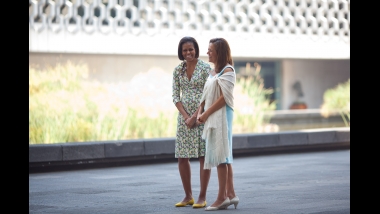
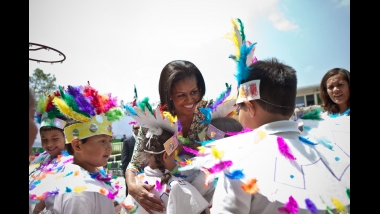
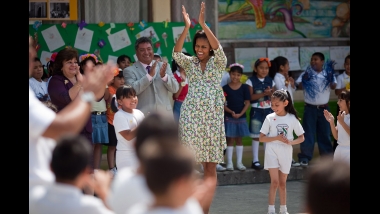
The First Lady’s time in Mexico was spent primarily focused on engaging with Mexico’s children and youth. On a visit to Los Pinos, Mrs. Obama and the First Lady of Mexico Margarita Zavala discussed a series of issues important to young people in both the United States and Mexico – issues including drug addiction and treatment, early intervention programs and the importance of the humane treatment of migrant children. At a Mexico City primary and secondary school, The First Lady joined students in the schoolyard for singing, dancing and other activities.

First Lady Michelle Obama in Mexico

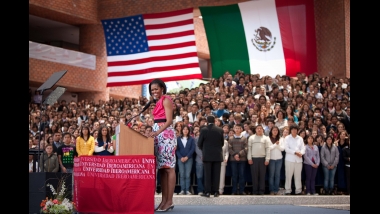
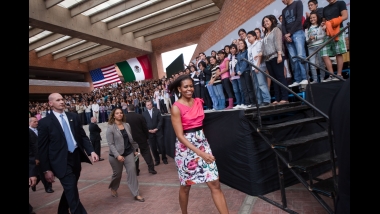
Members of the audience listen as First Lady Michelle Obama delivers a speech at Universidad Iberoamericana in Mexico City, Mexico April 14, 2010. (Official White House Photo by Lawrence Jackson)

 
Related Topics: Arkansas

The White House

Office of the First Lady

Declaraciones de la Primera Dama Ante Foro Juvenil

Universidad Iberoamericana, Ciudad de México, México

2:19 P.M. (Local)

SRA. OBAMA: Gracias. Gracias. (Aplausos.) Buenas tardes y muchas gracias. Gracias a usted, Jaime, por su muy amable presentación. Es a la vez un placer y un honor estar en este hermoso país, en esta gran universidad, ante tantos jóvenes sobresalientes de todo México.

Para comenzar, doy las gracias a la señora Margarita Zavala, su Primera Dama, por la gran amabilidad que ha tenido conmigo y con mi familia. Ella es inteligente. Ella es fuerte. Ella es apasionada. Y ella es mi amiga. Lo hemos pasado muy bien juntas, tanto acá en México como durante sus visitas a los Estados Unidos, y anticipo darle la bienvenida a Washington, a ella y a su esposo, el presidente Calderón, en la oportunidad de la cena de estado que tendrá lugar el mes que viene. Y le dije que se prepare para divertirse. (Risas.)

También quiero reconocer la presencia del Embajador de los Estados Unidos en México, el Embajador Pascual. Y quiero agradecerle al Rector de esta institución, el Dr. José Morales Orozco, por su liderazgo y por recibirme hoy. Por último, también doy las gracias al pueblo entero de México por el calor increíble y la hospitalidad con que me ha recibido durante esta visita. Desde el momento de mi llegada, me he sentido entre amigos --(risas) -- lo que es natural dada la amistad estrecha y duradera que une a nuestras dos naciones.

En México residen más ciudadanos de los Estados Unidos que en cualquier otra parte del mundo, y son decenas de millones los estadounidenses que tienen sus raíces en este país.

Durante muchas generaciones, México y los Estados Unidos han estado ligados no sólo por la frontera común sino también por los valores y las aspiraciones que compartimos: la dedicación a la familia y a la fe; la disposición al trabajo intenso y al sacrificio por los hijos; el compromiso con la democracia, que está arraigado en las luchas por la independencia que han definido a nuestras naciones.

Por lo tanto, cuando llegó el momento de decidir mi primer viaje internacional sola en calidad de Primera Dama, la selección no tenía duda: México, por supuesto. (Aplausos.)

Y hay una razón por la que quería venir a la Ibero para hablar con todos ustedes. Es la misma razón por la cual, cuando mi esposo viaja al exterior y habla de los desafíos a los que nos enfrentamos, del extremismo a las armas nucleares, de la pobreza y el hambre al cambio climático y las pandemias, no sólo habla con los presidentes y primeros ministros. No sólo visita palacios y parlamentos. Va también a las escuelas y universidades, donde se reúne con gente como todos ustedes.

Esto no es un accidente.  Hoy día presenciamos lo que se está llegando a conocer como la expansión de la juventud, el crecimiento explosivo de la población joven de muchas naciones de todo el mundo. Acá en México, casi la mitad de la población tiene menos de 25 años de edad.  En el Cercano Oriente, esa proporción es del sesenta por ciento. Y sólo la población joven que está entre los 15 y los 24 forma el veinte por ciento de los habitantes del mundo, por lo que constituye el mayor grupo de la historia que se encuentra en la transición a la edad adulta.

Estamos ante el hecho de que la responsabilidad de confrontar los desafíos característicos de nuestro tiempo pronto recaerá sobre todos ustedes. Muy pronto, el mundo esperará de su generación que haga los descubrimientos y establezca las industrias que impulsarán nuestra prosperidad y asegurarán nuestro bienestar durante decenios.

Esperaremos de su generación que aproveche la energía limpia para propulsar nuestras economías y conservar el planeta para sus hijos y sus nietos.

Esperaremos de su generación que encuentre el valor y la paciencia para resolver los conflictos y cerrar las separaciones que afligen a nuestro mundo.

Y estoy aquí hoy porque creo que todos ustedes, y sus iguales de todo el mundo, están mejor preparados que nunca para superar esos desafíos. Más que cualquier otra generación, todos ustedes son capaces de acceder a la información y de relacionarse entre sí de maneras que mi generación no habría podido imaginar. Con oprimir un botón, pueden intercambiar pensamientos sobre cualquier materia con prácticamente cualquiera en casi cualquier parte del mundo. Tienen una capacidad sin precedentes para organizarse y movilizarse para retar conceptos anticuados, cerrar viejas brechas, y hallar soluciones nuevas a las mayores dificultades.

Y es debido a esa inmensa promesa que me propongo dedicar mi trabajo internacional como primera dama a tratar con los jóvenes como ustedes en todo el mundo.

Mi esposo y yo sabemos que para superar los obstáculos que confrontamos dependerá de si podemos aprovechar las dotes que Dios les ha dado; de eso dependerá de que nos beneficiemos de la industria, de la energía, de las perspectivas de los jóvenes de todas las procedencias y de todas las naciones. Sabemos que la ambición y la habilidad se hallan en todo rincón del planeta.  La cuestión es ésta: ¿Cómo conseguir que esté también la oportunidad?

Bueno, mi esposo y el presidente Calderón se esfuerzan muchísimo en reconstruir nuestros sistemas educativos y en revivir nuestras economías y en generar oportunidades para las juventudes de nuestras dos naciones. Pero los dirigentes y los gobiernos no pueden desempeñar ellos solos esa responsabilidad. Los ciudadanos corrientes deben compartirla también, y eso incluye también a los propios jóvenes.

No basta con cambiar las leyes y las políticas.  Es cuestión de cambiar nuestra opinión acerca de quién puede tener éxito y quién no. Hay que oponerse a las ideas y los supuestos equivocados y anticuados de que los jóvenes de ciertas procedencias no merecen que se los eduque, que las niñas no son tan capaces como los niños, que ciertos jóvenes merecen menos las oportunidades por su religión o discapacidad o raza o clase socioeconómica. Porque hemos visto una y otra vez que ese potencial se encuentra en los lugares más imprevistos.

Mi esposo y yo somos pruebas vivientes de lo que acabo de decir. Los dos venimos de antecedentes modestos.  Nuestras familias no eran ricas.  Mis padres nunca asistieron a la universidad. Mi esposo nunca llegó a conocer de verdad a su padre, y lo crió su madre, sola y con dificultades económicas.

Como muchos niños como nosotros, confrontamos numerosas dificultades: la rémora de las pocas expectativas, las dudas constantes acerca de si podíamos salir adelante, e incluso de si los merecíamos. Ya ven, cuando éramos jóvenes, nadie pudiera haber predicho que un día llegaríamos a ser el Presidente y la Primera Dama de los Estados Unidos de América.

Pero tuvimos suerte y aun más importante, fuimos bendecidos. Nuestras familias creían en nosotros, y nuestros maestros nos obligaban a superarnos, y las universidades vieron nuestras posibilidades y nos dieron oportunidades. Y trabajamos todo lo que pudimos. Aprendimos todo lo que pudimos. Y en consecuencia, estuvimos preparados y posicionados para ir en pos de nuestros sueños.

Y lo que nos sucedió no ha sido una excepción aislada. Eso es lo que les ha sucedido a incontables jóvenes de México, de los Estados Unidos y de todo el mundo que se han esforzado de veras y han superado grandes barreras. A lo largo de la historia ha habido jóvenes cuyo éxito no se ha debido a la herencia o a la genealogía o a los resultados de pruebas escolares, sino a los obstáculos que los pusieron a prueba y los motivaron, y porque alguien en alguna parte creía en ellos y los ayudó a creer en sí mismos.

Cuando quedó huérfano muy joven y buscó trabajo de sirviente, nadie hubiera imaginado que un día Benito Juárez se convertiría en uno de los más grandes presidentes de México. Pero gracias a un fraile franciscano que le ayudó a ingresar a un seminario y comenzar su educación, logró desarrollar todo su potencial.

Uno de los más grandes presidentes de mi país, Abraham Lincoln, nació en una cabaña en el bosque, hecha de troncos de árbol y que consistía en una sola pieza.  Pero tuvo la suerte de tener un maestro que le enseñó a escribir y a argüir.

Y está el ejemplo de Juana de Arco, hija de un campesino; trató de convencer a todo el que la escuchaba que ella salvaría de la derrota al ejército de Francia.  Y cuando hubo un príncipe que creyó en ella, hizo exactamente lo que había dicho que haría.

Ya ven, tantas veces en la historia del mundo han sido el héroe inesperado, la perspectiva insólita, el viaje improbable los que nos han mostrado el camino del progreso. Así es que cuando descartamos a cualquiera de nuestros jóvenes, cuando no aprovechamos su capacidad, debemos pensar en lo que tal vez estemos perdiendo. Piensen en los inventos y las curas que nunca se descubren, en las grandes obras artísticas y literarias que nunca aparecen, en los grandes actos de valor y gobierno que nunca iluminan este mundo.

Mas no se trata de descubrir a esos pocos seres extraordinarios que cambiarán el curso de la historia. Se trata también de derribar las barreras en todo el mundo para que todos nuestros jóvenes consigan aprender y trabajar y convertirse en elementos productivos de nuestras sociedades. Se trata asimismo de juntar las perspectivas y experiencias de los jóvenes de todas las procedencias, en busca de las ideas nuevas que harán más productivos nuestros negocios, más vivas nuestras culturas, y más abiertos y libres nuestros gobiernos.

Pero para lograr esto, para crear oportunidades para más jóvenes, se trata de que todos ustedes que ya tienen su sitio a la mesa hagan su parte para que puedan sentarse los que todavía no pueden hacerlo. Es cuestión de que los jóvenes de todo el mundo se esfuercen para dar a los otros la oportunidad de que no se malgaste su talento y de que se escuche lo que tienen que decir.

Comprendo que en estos tiempos económicamente difíciles en México, en los Estados Unidos y en todo el mundo, muchas personas están luchando y nada está garantizado. Y hasta jóvenes como ustedes que tienen el privilegio de asistir a una universidad como esta tal vez estén inquietos acerca de sus futuros.

Algunos de ustedes quizás estén inquietos por no saber si podrán ejercer una profesión propia. Y puede tentarles la idea de fijarse sólo en sus propios éxitos, recibir el diploma, encontrar el mejor empleo que puedan y nunca volver a mirar hacia atrás.
Pero antes de eso, espero que piensen por un momento en la misión declarada de esta universidad, que consiste en preparar a los estudiantes a “que se comprometan en el servicio a los demás; y desarrollar y difundir el conocimiento para el logro de una sociedad libre, justa, solidaria y productiva”.
Espero que piensen en esas palabras de la Biblia: “A quien se le ha dado mucho, se le exigirá mucho”. Y espero que piensen en los que han hecho historia atendiendo a esas palabras.

Imagínense que Mahatma Ghandi hubiera vivido cómodamente de su profesión de abogado en lugar de encabezar la lucha por los derechos de sus compatriotas y por la independencia de su nación, la labor que ya había comenzado antes de cumplir los treinta. Imagínense que Nelson Mandela hubiera preferido una vida descansada como hijo del jefe de una tribu en lugar de afiliarse al Congreso Nacional Africano a la edad de 24 años y tener que soportar decenios de encarcelamiento para acabar con el apartheid. Imagínense que la Madre Teresa no hubiera hecho caso de su vocación y no se hubiera aventurado a salir por las calles de Calcuta para atender a los desesperados.

Bueno, no quiero decir con esos ejemplos que tienen que hacer voto de pobreza o encabezar un movimiento. Pero lo que sí les pido es que hagan algo, bien en su carrera o como voluntarios, para asegurarse de que otros jóvenes disfruten de las oportunidades que merecen. Eso es lo que muchos como ustedes hacen en todo el mundo y acá mismo en México.

Alberto Salvador, de Guanajuato, nació sordo y al principio le negaron la enseñanza elemental por esa discapacidad. Pero terminó la secundaria con notas sobresalientes, obtuvo un grado en los Estados Unidos, y volvió a México para servir de tutor de niños sordos y en breve comenzará un empleo como maestro.

Y la historia de Mariana Vázquez del Mercado, que está concluyendo los estudios de derecho en la Universidad Panamericana, ha pasado horas de voluntaria en un servicio jurídico gratuito y dirigiendo una asociación que construye viviendas para familias necesitadas. De su trabajo dice que, y esto es textualmente lo que dijo: “El objetivo es demostrar que a pesar de ser jóvenes somos lo suficientemente responsables y conscientes”.

Alberto Irezábal, que se graduó el año pasado de la Ibero, utilizó su proyecto de servicio para ayudar a una comunidad indígena de Chiapas a producir y vender mejor el café que cultivan en sus tierras. De su labor dice, y esto también es textualmente lo que dijo: “Creo que tenemos la responsabilidad de sacar adelante nuestros proyectos, no sólo por nosotros, sino por nuestro país”.

Todos estos jóvenes se esfuerzan por derribar obstáculos y abrir puertas.  Cada uno de ellos da a otros la oportunidad de triunfar. Pero debe estar claro que en este momento no hablo solamente a los estudiantes universitarios. También me dirijo a los jóvenes de México, de los Estados Unidos, y de todo el mundo que sienten que no hay lugar para ellos en universidades como ésta.

Y he conocido a muchos jóvenes en tantos sitios que tienen tanto que ofrecer pero que, por su lugar de nacimiento o por la familia en que nacieron o por las circunstancias de su vida, comienzan a dudar de sí mismos. Empiezan a sentir que no pertenecen o que no están preparados o que no están a la altura y que por lo tanto, no deberían ni intentarlo.

Si bien tuve la suerte de tener tantas oportunidades en mi propia vida, ciertamente comprendo esos sentimientos. Cuando asistí a la universidad por primera vez, dudaba muchísimo de mí misma. Estaba convencida de que los demás eran mucho más inteligentes que yo, y que yo no encajaba en aquel ambiente. Pero pronto me di cuenta de que era tan capaz como los otros estudiantes y que podía contribuir tanto como ellos. Para que eso ocurriera, sólo necesitaba tener un poco de confianza en mi capacidad.

Ahora, es verdad, es la verdad, que algunos de ustedes tendrán que trabajar con mucha más intensidad para llegar a donde quieran. Podrán encontrar más obstáculos, más reveses. Pero quiero que sepan que pertenecen a un lugar como éste tanto como cualquiera de los otros. Tienen tanto que ofrecer como los demás. Solo tienen que creer en sí mismos. Si se niegan a darse por vencidos, no hay nada, nada, que no puedan alcanzar.

Y espero que todos ustedes, todos aquí, cuando se encuentren en dificultades, cuando comiencen a desanimarse -- y les garantizo que sucederá -- espero que piensen en los jóvenes como ustedes en todo el mundo que se han esforzado duramente en los laboratorios y las bibliotecas, en las fábricas y los campos, que han marchado y luchado y sangrado para hacer de este mundo nuestro un mundo mejor.

Espero que piensen en los jóvenes de hace dos siglos que arriesgaron cuanto poseían por la independencia de México. Espero que piensen en los jóvenes de los Estados Unidos que lucharon para asegurar que los ciudadanos, sin importar el género ni el color de la piel, tuvieran el trato igual de la ley. Ustedes y yo estamos aquí gracias a ellos.

Y por último, espero que piensen en jóvenes como Sonia Kim, a quien conocí ayer cuando visitaba Haití. Sonia trabaja en la embajada de los Estados Unidos en Puerto Príncipe.  Y como tanta otra gente que está en Haití ha trabajado casi sin descanso en las labores de socorro que el terremoto ha ocasionado.

Les leeré ahora un correo electrónico que me envió. Este correo electrónico inspiró mi viaje aquí. Ha inspirado mi viaje aquí. Dice así: “Estamos exhaustos, traumatizados, desconsolados.  Pero hemos preferido quedarnos y trabajar. Hemos preferido quedarnos porque amamos Haití y a su gente. Hemos preferido quedarnos porque creemos que nuestro deber es ayudar al pueblo aquí cuando más lo necesita. Hemos preferido quedarnos porque creemos en nuestra misión. Hemos preferido quedarnos porque todavía tenemos la esperanza de que se recupere y renueve, y que el Haití que se reconstruya sea mejor que el de antes”.

Confío en que cada uno de ustedes y de los jóvenes de todo el mundo haga suya esa labor: la de ayudar a los necesitados, la de levantar unas naciones más fuertes y un mundo mejor. Porque si hemos de confrontar los desafíos de nuestro tiempo, si hemos de hacer que nuestro mundo sea más seguro, más sano, más próspero y más libre, nos hará falta la pasión, la osadía y la creatividad de todos y cada uno de ustedes.

Necesitaremos que cada uno trabaje tan intensamente como pueda, hagan todo lo que puedan, impulsados por esa creencia que siempre ha sido el compendio del espíritu de nuestra juventud: tres palabras simples: Sí, se puede.  Sí, se puede.  Sí se puede. Gracias y que Dios les bendiga. (Aplausos.)

                                          END                        2:39 P.M. (Local)

###
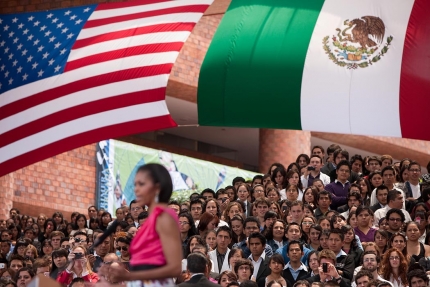
 

The First Lady's Trip to Mexico in Photos

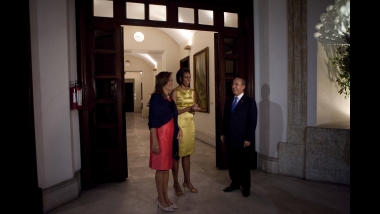
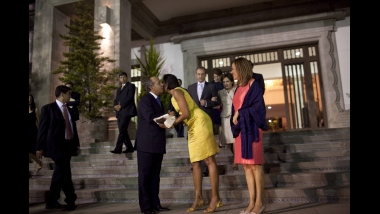
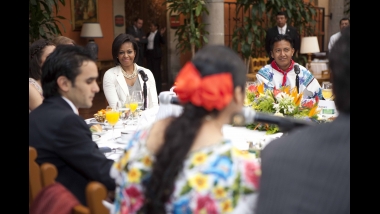
First Lady Michelle Obama spent time in Mexico City on her first solo international official visit. See photos from the trip that established Mrs. Obama's international platform to support the President's global engagement efforts with an emphasis on engaging with young people around the world.

play

View the full size gallery here.

"An Incredibly Moving Trip to Haiti"

Yesterday, I was honored to join the First Lady on an incredibly moving trip to Haiti.

Like many of you – I have watched news reports and have read numerous accounts of the crisis in Haiti since the earthquake in January. Witnessing the impact of the devastation on the people of Haiti as well as the relief efforts of Haitians, Americans, and dozens of other countries and organizations was powerful for both me and Michelle.

There is clearly much work to be done in Haiti, but after seeing the situation first-hand, I left with a sense of tremendous hope. The will of the Haitian people and the strong commitment of partners from around the world will help Haiti build back better.

As a teacher, I was particularly gratified to visit an organization called Children's Place, which is supported by Mrs. Preval. The First Lady and I met teachers and students who are using empty school buses as classrooms in an innovative effort to ensure that their education continues, even amidst terrible destruction. We also visited College St. Pierre, a secondary school where many students were killed when the building was destroyed three months ago. There we saw Haitians and dozens of volunteers working to rebuild a school that will once again educate Haiti's future leaders.

It was an incredible honor to meet the many individuals who have been at the core of the relief and recovery work, and to relay President Obama’s message that Haiti will have a steady and reliable partner in the United States of America throughout these efforts.

I hope this visit helps to remind everyone that we can all still play a role in helping Haiti restore its future – please visit the Haiti Earthquake Relief page on WhiteHouse.gov for ways that you can help from wherever you are.

Thanks for reading, and for taking action.

play

Actualización de la Primera Dama Michelle Obama en la Ciudad de México: No. 2

El segundo resumen por Daniel Restrepo de las actividades en la Ciudad de Mexico de la Primera Dama Michelle Obama.

Download Video: mp4 (19MB) | mp3 (1MB)