Weekly Wrap Up: America's Energy Future

Your quick look at the week that was on WhiteHouse.gov.

Read the Transcript  |  Download Video: mp4 (586MB) | mp3 (56MB)

America's Secure Energy Future: President Obama continued his focus on building a clean energy economy with events throughout the week. He toured a shipping facility in Maryland with Energy Secretary Chu and Transportation Secretary LaHood to highlight his Green Fleet Initiative, then traveled to Philadelphia for a town hall at Gamesa Technology, a wind turbine manufacturer. Back at the White House, Secretary of the Interior Ken Salazar sat down with students to discuss development of clean, American-made energy sources. The Department of Energy blogged about Philadelphia's efforts to install energy efficient lighting.

Advise the Advisor: Secretary Steven Chu and Energy Policy

March 31, 2011 | 1:38 | Public Domain

Creating a Blueprint for Secure Energy Future for America is an important step towards increasing our energy production at home while decreasing our dependency on oil produced overseas. Secretary of Energy Steven Chu and the Administration are asking for your feedback on how we can meet President Obama’s goal of reducing our imports of oil by one-third over in a little over a decade in this installment of the Advise the Advisor series.

Download mp4 (18.4MB)

Weekly Wrap Up: Healthy Anniversary!

Your quick look at the week that was on WhiteHouse.gov

Protecting Civilians in Libya: As U.S. forces participate in a U.N. coalition to establish a no-fly zone over Libya, President Obama spoke on the humanitarian importance of our mission in North Africa. He also answered questions from the media during press conferences in Chile and El Salvador.

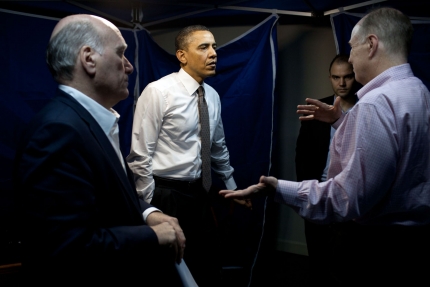
President Obama Confers With Tom Donilon, Bill Daley, and Ben Rhodes

President Barack Obama confers with National Security Advisor Tom Donilon, right, Chief of Staff Bill Daley, left, and Ben Rhodes, Deputy National Security Advisor for Strategic Communications, following a conference call on Libya with his national security team, in San Salvador, El Salvador, March 23, 2011. (Official White House Photo by Pete Souza)

The Affordable Care Act Turns One: On March 23, 2010, President Obama signed the Patient Protection and Affordable Care Act. In the 12 months since, millions of Americans have benefited from improvements to the American health care system. WhiteHouse.gov had a whole week of coverage:

President Obama's Nowruz Message

March 20, 2011 | 4:16 | Public Domain

President Obama sends an important message to those celebrating the holiday of Nowruz.

Download mp4 (38.5MB)

The White House

Office of the Press Secretary

Readout of President Obama’s Meeting with Secretary Gates and General Petraeus

The President, Secretary of Defense Robert Gates, and General David Petraeus met today to discuss our ongoing efforts in Afghanistan, including the effectiveness of the military surge, the growth of the Afghan National Security Forces, and President Karzai’s expected March 21 announcement on beginning transition to Afghan security lead. They also discussed the plan to begin the reduction of U.S. forces this July, and the path to completing the transition to full Afghan responsibility for security by the end of 2014.

A photo of the meeting can be found HERE.

The Earthquake in Japan and Tsunami Preparedness

This morning the President wasted no time in offering his condolences and America's assistance to the people of Japan, issuing the following statement:

Michelle and I send our deepest condolences to the people of Japan, particularly those who have lost loved ones in the earthquake and tsunamis. The United States stands ready to help the Japanese people in this time of great trial. The friendship and alliance between our two nations is unshakeable, and only strengthens our resolve to stand with the people of Japan as they overcome this tragedy. We will continue to closely monitor tsunamis around Japan and the Pacific going forward and we are asking all our citizens in the affected region to listen to their state and local officials as I have instructed FEMA to be ready to assist Hawaii and the rest of the US states and territories that could be affected.

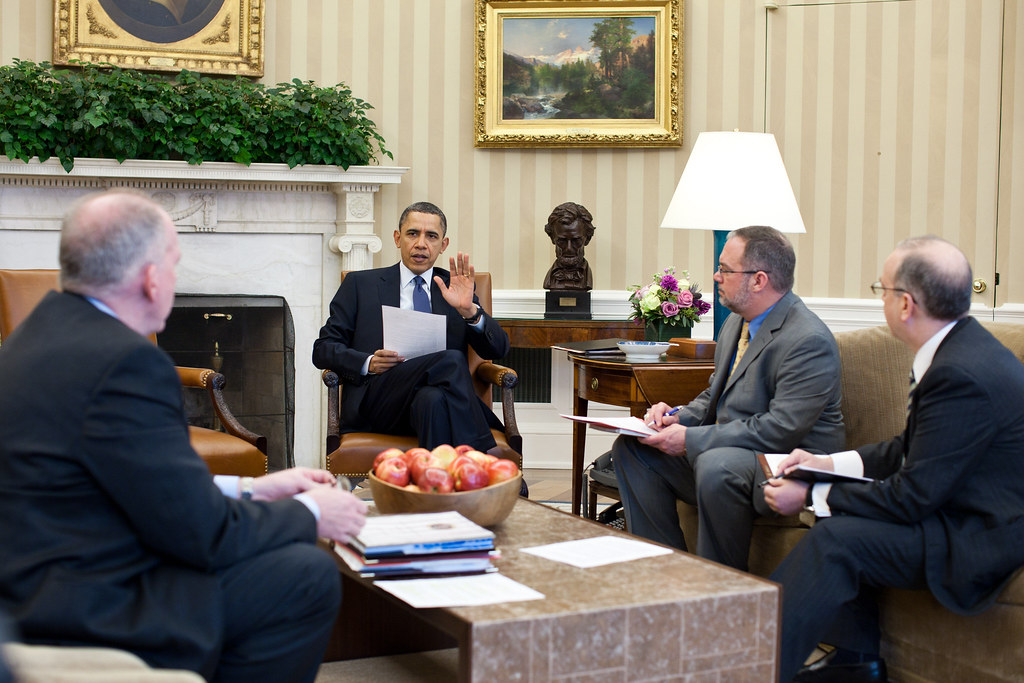
President Barack Obama receives a briefing on the earthquake in Japan and the tsunami warnings across the Pacific in the Oval Office, March 11, 2011. Briefing the President, from left, are: Assistant to the President for Homeland Security John Brennan; National Security Staff Senior Director for Resilience Richard Reed; and National Security Staff Director Asian Affairs Daniel Russel. (Official White House Photo by Pete Souza)

[View Full Size]

In addition, the White House just released the following outline of the President's briefings:

President Obama Receives Briefing on the Earthquake in Japan and the Tsunami Preparedness and Response Actions in the United States

WASHINGTON—President Obama received a briefing this morning at 9:30 a.m. in the Oval Office on the earthquake in Japan and the tsunami warnings across the Pacific from a number of senior US government officials including Homeland Security Secretary Janet Napolitano and Federal Emergency Management Agency Administrator Craig Fugate via phone, and in the Oval Office with Chief of Staff Bill Daley, Assistant to the President for Homeland Security John Brennan, National Security Advisory Tom Donilon, Deputy National Security Advisor Denis McDonough, Senior Advisor David Plouffe, Deputy Chief of Staff Alyssa Mastromonaco, National Security Staff Senior Director for Resilience Richard Reed and National Security Staff Director Asian Affairs Daniel Russel.

The senior officials provided the President with an update on the evolving situation stemming from the earthquake and subsequent tsunami that struck Japan early this morning including the actions being taken to assist U.S. states and territories that could be affected by the tsunami, as the President directed earlier this morning – as well as the work being done to be prepared to assist the people of Japan.

The US government continues to monitor the situation closely throughout the Pacific region. To support potentially impacted areas in the United States, the federal government remains in close contact and coordination with state and local officials, and stands ready to support them. The government’s message to the public is simple: listen to the instructions of state and local officials. We urge everyone in the regions who could be impacted to listen to a NOAA Weather Radio and their local news to monitor for updates and directions provided by their local officials.

UPDATE: The President again spoke again on the situation during the opening of his press conference:

Good morning, everybody. Before I begin, I want to say a few words about the terrible earthquake and tsunami that struck Japan earlier today.
 
First and foremost, our thoughts and our prayers are with the people of Japan. This is a potentially catastrophic disaster and the images of destruction and flooding coming out of Japan are simply heartbreaking. Japan is, of course, one of our strongest and closest allies, and this morning I spoke with Prime Minister Kan. On behalf of the American people, I conveyed our deepest condolences, especially to the victims and their families, and I offered our Japanese friends whatever assistance is needed.
 
We currently have an aircraft carrier in Japan, and another is on its way. We also have a ship en route to the Marianas Islands to assist as needed. The Defense Department is working to account for all our military personnel in Japan. U.S. Embassy personnel in Tokyo have moved to an offsite location. And the State Department is working to account for and assist any and all American citizens who are in the country.
 
Tsunami warnings have been issued across the Pacific, and we’ve already seen initial waves from the tsunami come ashore on Guam and other U.S. territories, in Alaska and Hawaii, as well as on -- along the West Coast. Here in the United States, there hasn’t been any major damage so far. But we're taking this very seriously, and we are monitoring the situation very closely. FEMA is fully activated and is coordinating with state and local officials to support these regions as necessary. And let me just stress that if people are told to evacuate, do as you are told.
 
Today’s events remind us of just how fragile life can be. Our hearts go out to our friends in Japan and across the region and we’re going to stand with them as they recover and rebuild from this tragedy.

The White House

Office of the Press Secretary

President Obama Receives Briefing on the Earthquake in Japan and the Tsunami Preparedness and Response Actions in the United States

WASHINGTON—President Obama received a briefing this morning at 9:30 a.m. in the Oval Office on the earthquake in Japan and the tsunami warnings across the Pacific from a number of senior US government officials including Homeland Security Secretary Janet Napolitano and Federal Emergency Management Agency Administrator Craig Fugate via phone, and in the Oval Office with Chief of Staff Bill Daley, Assistant to the President for Homeland Security John Brennan, National Security Advisory Tom Donilon, Deputy National Security Advisor Denis McDonough, Senior Advisor David Plouffe, Deputy Chief of Staff Alyssa Mastromonaco, National Security Staff Senior Director for Resilience Richard Reed and National Security Staff Director Asian Affairs Daniel Russel.

The senior officials provided the President with an update on the evolving situation stemming from the earthquake and subsequent tsunami that struck Japan early this morning including the actions being taken to assist U.S. states and territories that could be affected by the tsunami, as the President directed earlier this morning – as well as the work being done to be prepared to assist the people of Japan.

The US government continues to monitor the situation closely throughout the Pacific region. To support potentially impacted areas in the United States, the federal government remains in close contact and coordination with state and local officials, and stands ready to support them. The government’s message to the public is simple: listen to the instructions of state and local officials. We urge everyone in the regions who could be impacted to listen to a NOAA Weather Radio and their local news to monitor for updates and directions provided by their local officials.

Click HERE for a photo of the briefing.

The White House

Office of the Press Secretary

Presidential Memorandum--The Designation of Officers of the Office of the Director of National Intelligence to Act as Director of National Intelligence

MEMORANDUM FOR THE DIRECTOR OF NATIONAL INTELLIGENCE

SUBJECT: Designation of Officers of the Office of the Director of National Intelligence to Act as Director of National Intelligence

By the authority vested in me as President by the Constitution and the laws of the United States of America, including the Federal Vacancies Reform Act of 1998, 5 U.S.C. 3345 et seq., it is hereby ordered that:

Section 1.  Subject to the provisions of sections 3 and 4 of this memorandum, the officers of the Office of the Director of National Intelligence named in section 2, in the order listed, shall act as and perform the functions and duties of the Director of National Intelligence (DNI), during any period in which the DNI and the Principal Deputy Director of National Intelligence have died, resigned, or otherwise become unable to perform the functions and duties of the DNI, until such time as the DNI or the Principal Deputy Director of National Intelligence is able to perform the functions and duties of the DNI.

Sec. 2.  Order of Succession.

(a) Deputy Director of National Intelligence for Intelligence Integration;

(b) Director of the National Counterterrorism Center; and

(c) National Counterintelligence Executive.

Sec. 3.  National Security Act of 1947.  This memorandum shall not supersede the authority of the Principal Deputy Director of National Intelligence to act for, and exercise the powers of, the DNI during the absence or disability of the DNI or during a vacancy in the position of the DNI (National Security Act of 1947, as amended, 50 U.S.C. 403-3a).

Sec. 4.  Exceptions.  (a)  No individual who is serving in an office listed in section 2 of this memorandum in an acting capacity shall act as the DNI pursuant to this memorandum.

(b)  No individual listed in section 1 of this memorandum shall act as the DNI unless that individual is otherwise eligible to so serve under the Federal Vacancies Reform Act of 1998.

(c)  Notwithstanding the provisions of this memorandum, the President retains discretion, to the extent permitted by law, to depart from this memorandum in designating an acting DNI.
 
(d)  In the event that the Director of the National Counterterrorism Center acts as and performs the functions and duties of the DNI pursuant to section 1 of this memorandum, that individual shall not simultaneously serve as Director of the National Counterterrorism Center during that time, in accordance with 50 U.S.C. 404o(b)(2).

Sec. 5.  Revocation.  The Presidential Memorandum of October 3, 2008 (Designation of Officers of the Office of the Director of National Intelligence to Act as Director of National Intelligence), is hereby revoked.

Sec. 6.  This memorandum is not intended to, and does not, create any right or benefit, substantive or procedural, enforceable at law or in equity by any party against the United States, its departments, agencies, or entities, its officers, employees, or agents, or any other person.

Sec. 7.  You are authorized and directed to publish this memorandum in the Federal Register.

BARACK OBAMA

The White House

Office of the Press Secretary

President Obama Signs Massachusetts Disaster Declaration

The President today declared a major disaster exists in the Commonwealth of Massachusetts and ordered Federal aid to supplement Commonwealth and local recovery efforts in the area struck by a severe winter storm and snowstorm during the period of January 11-12, 2011.

Federal funding is available to Commonwealth and eligible local governments and certain private nonprofit organizations on a cost-sharing basis for emergency work resulting from the severe winter storm and snowstorm in the counties of Berkshire, Essex, Hampshire, Middlesex, Norfolk, and Suffolk.

In addition, assistance is available to the Commonwealth and eligible local governments on a cost-sharing basis for emergency protective measures, including snow assistance, for a continuous 48-hour period during or proximate to the incident period in the counties of Essex, Hampshire, Middlesex, Norfolk, and Suffolk.  This assistance will be provided for a period of 72 hours for Berkshire County.

Federal funding is also available on a cost-sharing basis for hazard mitigation measures for all counties in the Commonwealth.

W. Craig Fugate, Administrator, Federal Emergency Management Agency (FEMA), Department of Homeland Security, named James N. Russo as the Federal Coordinating Officer for Federal recovery operations in the affected area. 

FEMA said additional designations may be made at a later date if requested by the Commonwealth and warranted by the results of further damage assessments.

FOR FURTHER INFORMATION CONTACT:  FEMA (202) 646-3272.

The White House

Office of the Press Secretary

Executive Order 13567--Periodic Review of Individuals Detained at Guantánamo Bay Naval Station Pursuant to the Authorization for Use of Military Force

EXECUTIVE ORDER

PERIODIC REVIEW OF INDIVIDUALS DETAINED AT GUANTÁNAMO BAY NAVAL STATION PURSUANT TO THE AUTHORIZATION FOR USE OF MILITARY FORCE

By the authority vested in me as President by the Constitution and the laws of the United States of America, including the Authorization for Use of Military Force of September 2001 (AUMF), Public Law 107-40, and in order to ensure that military detention of individuals now held at the U.S. Naval Station, Guantánamo Bay, Cuba (Guantánamo), who were subject to the interagency review under section 4 of Executive Order 13492 of January 22, 2009, continues to be carefully evaluated and justified, consistent with the national security and foreign policy interests of the United States and the interests of justice, I hereby order as follows:

Section 1. Scope and Purpose. (a) The periodic review described in section 3 of this order applies only to those detainees held at Guantánamo on the date of this order, whom the interagency review established by Executive Order 13492 has (i) designated for continued law of war detention; or (ii) referred for prosecution, except for those detainees against whom charges are pending or a judgment of conviction has been entered.

(b) This order is intended solely to establish, as a discretionary matter, a process to review on a periodic basis the executive branch's continued, discretionary exercise of existing detention authority in individual cases. It does not create any additional or separate source of detention authority, and it does not affect the scope of detention authority under existing law. Detainees at Guantánamo have the constitutional privilege of the writ of habeas corpus, and nothing in this order is intended to affect the jurisdiction of Federal courts to determine the legality of their detention.

(c) In the event detainees covered by this order are transferred from Guantánamo to another U.S. detention facility where they remain in law of war detention, this order shall continue to apply to them.

Sec. 2. Standard for Continued Detention. Continued law of war detention is warranted for a detainee subject to the periodic review in section 3 of this order if it is necessary to protect against a significant threat to the security of the United States.

Sec. 3. Periodic Review. The Secretary of Defense shall coordinate a process of periodic review of continued law of war detention for each detainee described in section 1(a) of this order. In consultation with the Attorney General, the Secretary of Defense shall issue implementing guidelines governing the process, consistent with the following requirements:

(a) Initial Review. For each detainee, an initial review shall commence as soon as possible but no later than 1 year from the date of this order. The initial review will consist of a hearing before a Periodic Review Board (PRB). The review and hearing shall follow a process that includes the following requirements:

(1) Each detainee shall be provided, in writing and in a language the detainee understands, with advance notice of the PRB review and an unclassified summary of the factors and information the PRB will consider in evaluating whether the detainee meets the standard set forth in section 2 of this order. The written summary shall be sufficiently comprehensive to provide adequate notice to the detainee of the reasons for continued detention.

(2) The detainee shall be assisted in proceedings before the PRB by a Government-provided personal representative (representative) who possesses the security clearances necessary for access to the information described in subsection (a)(4) of this section. The representative shall advocate on behalf of the detainee before the PRB and shall be responsible for challenging the Government's information and introducing information on behalf of the detainee. In addition to the representative, the detainee may be assisted in proceedings before the PRB by private counsel, at no expense to the Government.

(3) The detainee shall be permitted to (i) present to the PRB a written or oral statement; (ii) introduce relevant information, including written declarations; (iii) answer any questions posed by the PRB; and (iv) call witnesses who are reasonably available and willing to provide information that is relevant and material to the standard set forth in section 2 of this order.

(4) The Secretary of Defense, in coordination with other relevant Government agencies, shall compile and provide to the PRB all information in the detainee disposition recommendations produced by the Task Force established under Executive Order 13492 that is relevant to the determination whether the standard in section 2 of this order has been met and on which the Government seeks to rely for that determination. In addition, the Secretary of Defense, in coordination with other relevant Government agencies, shall compile any additional information relevant to that determination, and on which the Government seeks to rely for that determination, that has become available since the conclusion of the Executive Order 13492 review. All mitigating information relevant to that determination must be provided to the PRB.

(5) The information provided in subsection (a)(4) of this section shall be provided to the detainee's representative. In exceptional circumstances where it is necessary to protect national security, including intelligence sources and methods, the PRB may determine that the representative must receive a sufficient substitute or summary, rather than the underlying information. If the detainee is represented by private counsel, the information provided in subsection (a)(4) of this section shall be provided to such counsel unless the Government determines that the need to protect national security, including intelligence sources and methods, or law enforcement or privilege concerns, requires the Government to provide counsel with a sufficient substitute or summary of the information. A sufficient substitute or summary must provide a meaningful opportunity to assist the detainee during the review process.

(6) The PRB shall conduct a hearing to consider the information described in subsection (a)(4) of this section, and other relevant information provided by the detainee or the detainee's representative or counsel, to determine whether the standard in section 2 of this order is met. The PRB shall consider the reliability of any information provided to it in making its determination.

(7) The PRB shall make a prompt determination, by consensus and in writing, as to whether the detainee's continued detention is warranted under the standard in section 2 of this order. If the PRB determines that the standard is not met, the PRB shall also recommend any conditions that relate to the detainee's transfer. The PRB shall provide a written summary of any final determination in unclassified form to the detainee, in a language the detainee understands, within 30 days of the determination when practicable.

(8) The Secretary of Defense shall establish a secretariat to administer the PRB review and hearing process. The Director of National Intelligence shall assist in preparing the unclassified notice and the substitutes or summaries described above. Other executive departments and agencies shall assist in the process of providing the PRB with information required for the review processes detailed in this order.

(b) Subsequent Full Review. The continued detention of each detainee shall be subject to subsequent full reviews and hearings by the PRB on a triennial basis. Each subsequent review shall employ the procedures set forth in section 3(a) of this order.

(c) File Reviews. The continued detention of each detainee shall also be subject to a file review every 6 months in the intervening years between full reviews. This file review will be conducted by the PRB and shall consist of a review of any relevant new information related to the detainee compiled by the Secretary of Defense, in coordination with other relevant agencies, since the last review and, as appropriate, information considered during any prior PRB review. The detainee shall be permitted to make a written submission in connection with each file review. If, during the file review, a significant question is raised as to whether the detainee's continued detention is warranted under the standard in section 2 of this order, the PRB will promptly convene a full review pursuant to the standards in section 3(a) of this order.

(d) Review of PRB Determinations. The Review Committee (Committee), as defined in section 9(d) of this order, shall conduct a review if (i) a member of the Committee seeks review of a PRB determination within 30 days of that determination; or (ii) consensus within the PRB cannot be reached.

Sec. 4. Effect of Determination to Transfer. (a) If a final determination is made that a detainee does not meet the standard in section 2 of this order, the Secretaries of State and Defense shall be responsible for ensuring that vigorous efforts are undertaken to identify a suitable transfer location for any such detainee, outside of the United States, consistent with the national security and foreign policy interests of the United States and the commitment set forth in section 2242(a) of the Foreign Affairs Reform and Restructuring Act of 1998 (Public Law 105-277).

(b) The Secretary of State, in consultation with the Secretary of Defense, shall be responsible for obtaining appropriate security and humane treatment assurances regarding any detainee to be transferred to another country, and for determining, after consultation with members of the Committee, that it is appropriate to proceed with the transfer.

(c) The Secretary of State shall evaluate humane treatment assurances in all cases, consistent with the recommendations of the Special Task Force on Interrogation and Transfer Policies established by Executive Order 13491 of January 22, 2009.

Sec. 5. Annual Committee Review. (a) The Committee shall conduct an annual review of sufficiency and efficacy of transfer efforts, including:

(1) the status of transfer efforts for any detainee who has been subject to the periodic review under section 3 of this order, whose continued detention has been determined not to be warranted, and who has not been transferred more than 6 months after the date of such determination;

(2) the status of transfer efforts for any detainee whose petition for a writ of habeas corpus has been granted by a U.S. Federal court with no pending appeal and who has not been transferred;

(3) the status of transfer efforts for any detainee who has been designated for transfer or conditional detention by the Executive Order 13492 review and who has not been transferred; and

(4) the security and other conditions in the countries to which detainees might be transferred, including a review of any suspension of transfers to a particular country, in order to determine whether further steps to facilitate transfers are appropriate or to provide a recommendation to the President regarding whether continuation of any such suspension is warranted.

(b) After completion of the initial reviews under section 3(a) of this order, and at least once every 4 years thereafter, the Committee shall review whether a continued law of war detention policy remains consistent with the interests of the United States, including national security interests.

Sec. 6. Continuing Obligation of the Departments of Justice and Defense to Assess Feasibility of Prosecution. As to each detainee whom the interagency review established by Executive Order 13492 has designated for continued law of war detention, the Attorney General and the Secretary of Defense shall continue to assess whether prosecution of the detainee is feasible and in the national security interests of the United States, and shall refer detainees for prosecution, as appropriate.

Sec. 7. Obligation of Other Departments and Agencies to Assist the Secretary of Defense. All departments, agencies, entities, and officers of the United States, to the maximum extent permitted by law, shall provide the Secretary of Defense such assistance as may be requested to implement this order.

Sec. 8. Legality of Detention. The process established under this order does not address the legality of any detainee's law of war detention. If, at any time during the periodic review process established in this order, material information calls into question the legality of detention, the matter will be referred immediately to the Secretary of Defense and the Attorney General for appropriate action.

Sec. 9. Definitions. (a) "Law of War Detention" means: detention authorized by the Congress under the AUMF, as informed by the laws of war.

(b) "Periodic Review Board" means: a board composed of senior officials tasked with fulfilling the functions described in section 3 of this order, one appointed by each of the following departments and offices: the Departments of State, Defense, Justice, and Homeland Security, as well as the Offices of the Director of National Intelligence and the Chairman of the Joint Chiefs of Staff.

(c) "Conditional Detention" means: the status of those detainees designated by the Executive Order 13492 review as eligible for transfer if one of the following conditions is satisfied: (1) the security situation improves in Yemen; (2) an appropriate rehabilitation program becomes available; or (3) an appropriate third-country resettlement option becomes available.

(d) "Review Committee" means: a committee composed of the Secretary of State, the Secretary of Defense, the Attorney General, the Secretary of Homeland Security, the Director of National Intelligence, and the Chairman of the Joint Chiefs of Staff.

Sec. 10. General Provisions. (a) Nothing in this order shall prejudice the authority of the Secretary of Defense or any other official to determine the disposition of any detainee not covered by this order.

(b) This order shall be implemented subject to the availability of necessary appropriations and consistent with applicable law including: the Convention Against Torture; Common Article 3 of the Geneva Conventions; the Detainee Treatment Act of 2005; and other laws relating to the transfer, treatment, and interrogation of individuals detained in an armed conflict.

(c) This order is not intended to, and does not, create any right or benefit, substantive or procedural, enforceable at law or in equity by any party against the United States, its departments, agencies, or entities, its officers, employees, or agents, or any other person.

(d) Nothing in this order, and no determination made under this order, shall be construed as grounds for release of detainees covered by this order into the United States.

BARACK OBAMA

THE WHITE HOUSE,
March 7, 2011.