West Wing Week 11/24/11 or "Your Best You"

November 23, 2011 | 6:03 | Public Domain

The President wrapped up an 8 day tour in the Asia Pacific region, signed legislation to help our veterans find jobs, urged Congress to cut payroll taxes, and pardoned two turkeys. That's November 18th to November 24th or "Your Best You."

Download mp4 (190.3MB)

Cutting $20 Billion in Improper Payments in Two Years

As many of you know, each year the federal government wastes billions of American taxpayers’ dollars in improper payments to individuals, organizations, and contractors.  These are payments made by the government to the wrong person, in the wrong amount, or for the wrong reason. Unfortunately, these “improper payments” have been happening in the Federal government for far too long, and it is just plain wrong. At a time when our most critical social and economic assistance programs face increasingly tight budgets, we cannot afford, nor will we tolerate, such errors. Sending payments to convicted felons or dead people can’t be tolerated as business as usual.

As part of the Administration’s Campaign to Cut Waste, we’ve worked hard to bring down the rate of improper payments, recapture misallocated funds, and meet the President’s goal of reducing improper payments by $50 billion by the end of 2012. Today, federal agencies are completing their year-end financial statements, and I’m pleased to report that we have made significant progress on these fronts.

Today, we can announce that the Administration is on track to meet or exceed these goals. In FY 2011, Federal agencies cut wasteful improper payments by nearly $18 billion dollars and recaptured $1.2 billion in erroneous payments. When combined with results from last year, we have prevented over $20 billion in error and recaptured over $1.9 billion, putting us on pace to meet the President’s goal.

The Campaign to Cut Waste is Saving Billions

$17.6

Nearly two years ago, President Obama signed an executive order to begin an aggressive campaign against government waste -- and directed federal agencies to prevent $50 billion in improper payments by the end of 2012.

In 2011 alone, this campaign netted $17.6 billion in savings by cutting payment errors for programs like Medicare, Medicaid, Pell Grants, and food stamps.

When the President issued the order, his goal was to see the error rate drop from 5.42 percent to 4.2 percent. Today, we're able to project that, by 2012, the rate will drop all the way to 3.8 percent.

President Obama has asked Congress for aggressive new tools to help the federal government save even more money -- as much as $160 billion over the next decade. But because we can't wait for lawmakers to build on this progress, the Obama administration is moving forward with additional steps to find savings.

The Department of Health and Human Services will soon launch four new pilot programs to reduce the error rate further and cut Medicare and Medicaid waste and fraud. And Jack Lew, the Director of the Office of Management and Budget, just directed federal agencies to step up their oversight of contractors and grant recipients in order to eliminate waste and fraud.

For more information on the work to reduce payment errors, visit paymentaccuracy.gov.


The White House

Office of the Press Secretary

Executive Order 13589 -- Promoting Efficient Spending

EXECUTIVE ORDER

PROMOTING EFFICIENT SPENDING

By the authority vested in me as President by the Constitution and the laws of the United States of America, and in order to further promote efficient spending in the Federal Government, it is hereby ordered as follows:

Section 1.  Policy.  My Administration is committed to cutting waste in Federal Government spending and identifying opportunities to promote efficient and effective spending.  The Federal Government performs critical functions that support the basic protections that Americans have counted on for decades.  As they serve taxpayers, executive departments and agencies (agencies) also must act in a fiscally responsible manner, including by minimizing their costs, in order to perform these mission critical functions in the most efficient, cost effective way.  As such, I have pursued an aggressive agenda for reducing administrative costs since taking office and, most recently, within my Fiscal Year 2012 Budget.  Building on this effort, I direct agency heads to take even more aggressive steps to ensure the Government is a good steward of taxpayer money.

Sec. 2.  Agency Reduction Targets.  Each agency shall establish a plan for reducing the combined costs associated with the activities covered by sections 3 through 7 of this order, as well as activities included in the Administrative Efficiency Initiative in the Fiscal Year 2012 Budget, by not less than 20 percent below Fiscal Year 2010 levels, in Fiscal Year 2013.  Agency plans for meeting this target shall be submitted to the Office of Management and Budget (OMB) within 45 days of the date of this order.  The OMB shall monitor implementation of these plans consistent with Executive Order 13576 of June 13, 2011 (Delivering an Efficient, Effective, and Accountable Government).

Sec. 3.  Travel.  (a)  Agency travel is important to the effective functioning of Government and certain activities can be performed only by traveling to a different location.  However, to ensure efficient travel spending, agencies are encouraged to devise strategic alternatives to Government travel, including local or technological alternatives, such as teleconferencing and video conferencing.  Agencies should make all appropriate efforts to conduct business and host or sponsor conferences in space controlled by the Federal Government, wherever practicable and cost effective.  Lastly, each agency should review its policies associated with domestic civilian permanent change of duty station travel (relocations), including eligibility rules, to identify ways to reduce costs and ensure appropriate controls are in place.

(b)  Each agency, agency component, and office of inspector general should designate a senior level official to be responsible for developing and implementing policies and controls to ensure efficient spending on travel and conference related activities, consistent with subsection (a) of this section.

Sec. 4.  Employee Information Technology Devices.  Agencies should assess current device inventories and usage, and establish controls, to ensure that they are not paying for unused or underutilized information technology (IT) equipment, installed software, or services.  Each agency should take steps to limit the number of IT devices (e.g., mobile phones, smartphones, desktop and laptop computers, and tablet personal computers) issued to employees, consistent with the Telework Enhancement Act of 2010 (Public Law 111 292), operational requirements (including continuity of operations), and initiatives designed to create efficiency through the effective implementation of technology.  To promote further efficiencies in IT, agencies should consider the implementation of appropriate agency-wide IT solutions that consolidate activities such as desktop services, email, and collaboration tools.

Sec. 5.  Printing.  Agencies are encouraged to limit the publication and printing of hard copy documents and to presume that information should be provided in an electronic form, whenever practicable, permitted by law, and consistent with applicable records retention requirements.  Agencies should consider using acquisition vehicles developed by the OMB's Federal Strategic Sourcing Initiative to acquire printing and copying devices and services.

Sec. 6.  Executive Fleet Efficiencies.  The President's Memorandum of May 24, 2011 (Federal Fleet Performance) directed agencies to improve the performance of the Federal fleet of motor vehicles by increasing the use of vehicle technologies, optimizing fleet size, and improving agency fleet management.  Building upon this effort, agencies should limit executive transportation.

Sec. 7.  Extraneous Promotional Items.  Agencies should limit the purchase of promotional items (e.g., plaques, clothing, and commemorative items), in particular where they are not cost-effective.

Sec. 8.  General Provisions.  (a)  Nothing in this order shall be construed to impair or otherwise affect:

(i)    authority granted by law to a department or agency, or the head thereof;

(ii)   functions of the Director of OMB related to budgetary, administrative, or legislative proposals; or

(iii)  the authority of inspectors general under the Inspector General Act of 1978, as amended.

(b)  This order shall be implemented consistent with applicable law and subject to the availability of appropriations.

(c)  Independent agencies are requested to adhere to this order.

(d)  This order is not intended to, and does not, create any right or benefit, substantive or procedural, enforceable at law or in equity by any party against the United States, its departments, agencies, or entities, its officers, employees, or agents, or any other person.

BARACK OBAMA

THE WHITE HOUSE,
November 9, 2011.

The SAVE Final Four and A New EO to Cut Waste

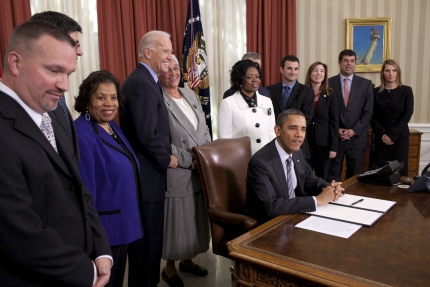
20111109 POTUS Signing

President Barack Obama talks with the media before signing an Executive Order as part of the “We Can’t Wait” campaign, to cut waste and promote efficient spending across the federal government, in the Oval Office, Nov. 9, 2011. (Official White House Photo by Pete Souza)


Since day one, this Administration has been committed to rooting out waste and misspent tax dollars in every agency across the Federal government. From getting unneeded federal properties off our books, to cracking down on improper payments, to reducing the number of federal data centers, we have made great strides in delivering a government that is more efficient and effective for the American people. In addition, this past June, the President and Vice President launched the Campaign to Cut Waste, a redoubling of our efforts to end what doesn’t work and do more for less.

Today, the Administration announced additional steps we’re taking to build on these efforts. This morning, President Obama signed an Executive Order that will cut waste and promote more efficient spending across the federal government. The Order sets bold goals for agencies to reduce spending on travel; limit the number of information technology devices (e.g. cell phones, smartphones, tablets, laptops) that can be issued to individual employees; stop unnecessarily printing documents that can be posted online; shrink the executive fleet of the federal government; and stop using taxpayer dollars to buy swag -- the unnecessary plaques, clothing, and other promotional items that agencies purchase. Overall spending in the areas covered by the Executive Order will be reduced by 20 percent, saving billions.

The White House

Office of the Press Secretary

We Can't Wait: President Obama to Sign Executive Order to Cut Waste and Promote Efficient Spending; White House to Announce 2011 SAVE Award Finalists

WASHINGTON, DC – This morning, President Obama will sign an Executive Order that will cut waste and promote more efficient spending across the federal government.  With this Order, the President is directing agencies to reduce spending on travel; limit the number of information technology devices (e.g. cell phones, smartphones, tablets, laptops) that can be issued to individual employees; stop unnecessarily printing documents that can be posted online; shrink the executive fleet of the federal government; and stop using taxpayer dollars to buy swag -- the plaques, clothing, and other unnecessary promotional items that agencies purchase. Overall spending in the areas covered by the Executive Order will be reduced by 20 percent, saving billions.

This Executive Order builds on the progress that has already been made through the Campaign to Cut Waste.  At President Obama’s direction this Administration has taken up an unprecedented effort to downsize the Federal real estate footprint, and is on track to save $3.5 billion in Federal real estate costs by the end of Fiscal Year 2012. The Administration has cracked down on waste in contracting, cutting contracting spending for the first time in more than a dozen years and slashing spending on “no bid contracts” by $5 billion.

The Executive Order will set bold but achievable goals that are informed by the results of the work of the Campaign to Cut Waste, launched by President Obama and Vice President Biden earlier this year. In September, the Vice President convened the first Cabinet Campaign to Cut Waste meeting and asked the Cabinet to identify wasteful and inefficient spending on travel, executive fleet, publications, office equipment, and other areas. Several of the spending reductions identified by agencies in response to the Vice President’s request are highlighted below. The President’s directive today builds on that work.

In addition to today’s Executive Order signing, the White House will announce this year’s SAVE (Securing Americans Value and Efficiency) Award finalists. The SAVE Award was launched in 2009 to seek ideas from frontline federal employees to make government more effective and efficient and to ensure that taxpayer dollars are spent wisely. This year, the Office of Management and Budget (OMB) received nearly 20,000 ideas from across the country. To honor these finalists, OMB Director Jack Lew, OMB Deputy Director of Heather Higginbottom, and Federal Chief Performance Officer  and OMB’s Deputy Director for Management Jeff Zients will host a video teleconference with the SAVE Award finalists which will be live-streamed at www.WhiteHouse.gov/Save-Award at 11 AM. With the announcement of the four finalists, voting will now begin to select the SAVE Award winner. Anyone can vote for his or her favorite idea on www.WhiteHouse.gov/Save-Award. The winner of this year’s SAVE Award will come to the White House to present their idea to the President.

The four finalists are: Matthew Ritsko, a NASA employee from Maryland, who suggested the creation of a tool “lending library” to avoid duplicative purchases of expensive tools; Eileen Hearty, a Housing and Urban Development (HUD) employee from Colorado, who suggested that it’s unnecessary to travel to inspect superior-rated properties each and every year; Kevin Korzenieski, a Treasury employee in D.C. who suggested that we stop purchasing U.S. Code books for all new attorneys given the availability of the information online; and Faith Stanfield, a Social Security Administration (SSA) employee from Ohio, who suggested SSA stop printing and mailing OASIS magazine – which currently is distributed to nearly 90,000 SSA employees -- and simply make it available online.

“From the day I took office, I’ve said we’re going to comb the federal budget, line by line, to eliminate as much wasteful spending as possible.  That’s what the Campaign to Cut Waste is all about. We can’t wait for Congress to act – we can’t wait for them to get our fiscal house in order and make the investments necessary to keep America great. That’s why today, I’m signing an Executive Order that will build on our efforts to cut waste and promote more efficient spending across the government – we’re cutting what we don’t need so that we can invest in what we do need,” said President Obama.

“In September, I asked all Cabinet secretaries to report on wasteful and inefficient spending at their agencies.  Certain spending – like purchasing promotional water bottles, paying for unused cell phones, and booking unnecessary travel – is unacceptable.  Today’s executive order will stop wasteful spending and make sure we use taxpayer dollars efficiently and responsibly,” said Vice President Biden.

Within 45 days, agencies will develop plans to reduce combined costs in the following areas to 20 percent below Fiscal Year 2010 levels by Fiscal Year 2013.

1) Reduce Spending on Travel and Conferences: The Executive Order directs agencies to decrease travel and conference-related spending.  Increasingly, travel will be limited to circumstances where the activity can only be performed away from the employee’s primary office (e.g., a diplomatic mission or enforcement inspection).  Employees will continue attending local meetings and conferences in person but expand their use of teleconferencing or videoconferencing technology to participate in meetings or conferences that would normally require travel.  If agencies are hosting or sponsoring conferences, they will use conference space controlled by the federal government wherever possible. Each agency will designate a senior-level official to be responsible for reducing travel costs. Examples of steps currently being taken are:

  • The IRS plans to utilize teleconferencing and webinars when possible, as an alternative to travelling to conferences and training sessions.  This and other efforts will result in 27% less spending on travel in Fiscal Year 2012.
  • The Department of Energy is reducing travel costs by reducing the number of conferences, utilizing video teleconferencing, and issuing non-refundable airline tickets when travel does not require changes.  This initiative will save $15.7 million in Fiscal Year 2012.
  • NASA is reducing travel costs by approximately $17 million in Fiscal Year 2012 by reducing the number of attendees at meetings and conferences, encouraging rental car sharing, and reducing foreign travel.

2) Cut Duplicative and Unnecessary Employee Information Technology Devices: Some federal employees are issued more devices (e.g. cell phones, smartphones, laptops, tablet personal computers) than they need to fulfill their duties.   In other cases, IT devices are purchased but go unused.  The Executive Order directs each agency to limit the number of devices issued to employees and establish new policies to ensure they are not paying for IT equipment that isn’t being used. Examples of steps currently being taken are:

  • The Department of Homeland Security previously spent millions of dollars each year by paying for unused cell phones and air cards. The agency now conducts annual audits of use and has saved $10.5 million to date.
  • The Department of Commerce saved $1.8 million to date and will save a total of  $3 million this year by disconnecting 2,648 wireless lines showing no usage for the past three months – including those assigned to retirees and former staff -- as well as by optimizing rate plans.

3) End Unnecessary Printing and Put It Online: In the digital age, it is frequently unnecessary to spend money on printed documents in addition to making information available online for the public. The Executive Order directs agencies to provide written information electronically and limit the production of hard copy documents.  Examples of steps currently being taken are:

  • The Department of the Treasury plans to reduce spending on printing by increasing the number of paperless transactions it conducts with the public.  In total, Treasury expects this initiative will reduce printing costs by up to 24 percent in Fiscal Year 2012.  Treasury’s initiative to increase the number of paperless transactions it conducts with the public is expected to save more than $500 million and 12 million pounds of paper over its first five years alone. 
  • Last year, Trudy Givens won the President’s SAVE Award for her suggestion that we stop printing and shipping excess Federal Registers to Federal Government Offices, which costs millions of dollars per year, when the content is available online. As a result, the Obama Administration cut the number of copies that Federal agencies receive by 85 percent within the past year, and continues to cut back even more.

4) Limit Motor Vehicles: The Federal Government spends $9 million per year on vehicles just to shepherd itself around Washington DC.  The Executive Order limits executive transportation across the federal government and directs agencies to improve the performance of the Federal fleet. Examples of steps currently being taken are:

  • The Department of Commerce is reducing the number of fleet drivers to one for all senior departmental officials, including the Secretary.  Reductions in drivers and vehicles are expected to generate $100,000 in annual savings.

5) Stop Swag – or Government Promotional Handouts: The Executive Order directs agencies to stop wasting taxpayer money on non-essential items used for promotional purposes, such as clothing, mugs, and non-work related gadgets.

  • For instance, several months ago the Department of the Treasury issued a directive to all of its bureaus to avoid purchasing any goods that could be considered frivolous or unnecessary, and to ensure that all purchases have a clear nexus with the Department’s mission and operations.

Excess Property Gets New Life, Creates Jobs

 Brooklyn Navy Supply Warehouse

Approximately 400 construction workers are at work transforming this former Navy supply warehouse in Brooklyn, NY into a state of the art industrial center that will provide 1,300 permanent jobs.

Recently, the U.S. General Services Administration joined with New York City officials for the groundbreaking of a project that will transform a former Navy supply warehouse in Brooklyn, built in 1918, into a small business incubator. Once completed, no longer will the nine-story structure represent a vacant excess federal building.  It will soon be a hub of activity as approximately 400 construction workers prepare the structure for manufacturing businesses that are anticipated to provide 1,300 permanent jobs in the planned state of the art industrial center.

Last summer, GSA completed the successful sale of this former federal building to the New York City Economic Development Corporation, which had selected a private developer to redevelop the 1.1 million square foot warehouse. The federal government received $10 million through GSA’s negotiated sale to the New York City Economic Development Corporation.

As part of the White House Campaign to Cut Waste, the Obama Administration is moving aggressively on disposal of excess properties such as this one to save taxpayer dollars and make more efficient use of the government’s real estate assets.  President Obama has directed federal agencies in a Presidential Memorandum to focus on improving the management of the government’s real estate and getting unneeded properties off our books. Agencies have risen to the challenge and identified opportunities that exceed the President’s goal to realize $3 billion in savings from the government’s properties by September 30, 2012.

With a portfolio including 350 million square feet of public buildings, 200,000 federal vehicles, and a flow of goods and services throughout government totaling $95 billion, GSA is uniquely suited to ensure federal tax dollars are not wasted on properties that are excess to the Federal government’s needs.  Since 2002, GSA’s Real Property Utilization and Disposal office, working with all federal landholding agencies, has disposed of over 3,355 unneeded federal properties resulting in over $5.6 billion in proceeds. With our position as the leading federal asset manger, we will continue to work with agencies to aggressively identify and dispose of underutilized buildings to make our government more sustainable and efficient.

The sale of the Brooklyn warehouse to the New York City Economic Development Corporation will deliver jobs to the region while relieving the federal government of a property that has outlived its utility.

To find out more about the federal government’s excess property list visit the White House Excess Property Map or GSA’s Real Property Utilization and Disposal site.

Bob Zarnetske and Denise Pease are Regional Administrators for the the U.S. General Services Administration

The White House

Office of the Press Secretary

White House to Eliminate $3.5 Billion in Wasteful Federal Real Estate Costs

Multi-Million dollar Georgetown Property Deemed Excess Today, Updated Map and Dashboard Unveiled

WASHINGTON, DC - Today, the White House Campaign to Cut Waste announced important progress in the effort to rid the government of excess property. Last year, President Obama issued a Presidential Memorandum titled “Disposing of Unneeded Federal Real Estate” directing agencies to identify and dispose of $3 billion in excess real estate. Today, the Campaign to Cut Waste announced that the Administration is on track to exceed this goal – progress that will save the government $3.5 billion through sales, consolidations, cancelled projects, and other efforts to reduce maintenance and utility costs by the end of fiscal year 2012. As part of these efforts, the Campaign today officially labeled a multi-million dollar Georgetown property as excess, initiating the process to get it off the government’s books.

“It’s simply unacceptable to have American taxpayers foot the bill for federal buildings that no one is using,” said Vice President Biden. “That’s why we’ve worked hard to successfully identify and dispose of over a thousand of these properties over the past year. No amount of waste is ever acceptable and we’re delivering on the President’s directive to save billions in real estate costs.”

The Campaign also released an updated interactive map today that shows the locations of over 12,000 properties the Administration has identified as excess. Among other features, the map tracks the Administration’s progress in moving 1,500 additional properties to the “excess” list – a first step required to sell or dispose of unneeded properties.

Ranging from abandoned sheds in rural locations to urban and suburban office buildings, these properties include the multi-million dollar heating facility in Georgetown. It has been more than ten years since the West Heating Plant, located on two acres of prime real estate near the Georgetown waterfront, has played a role in the boiler and pipe network that heats many of the capital’s government buildings.  Even so it cost taxpayers $3.5 million in operating and maintenance costs over the past decade.

“Due to red tape and years of concern over local politics, properties like this sat on our books for too long, costing taxpayers millions in maintenance costs and preventing the opportunity to benefit from sale proceeds,” said Jeff Zients, Federal Chief Performance Officer and the Deputy Director for Management at the Office of Management and Budget.

The interactive map also identifies 1,400 properties that the Obama Administration has already disposed of, including a 1 million square foot Brooklyn warehouse that sold for $10 million and a Bethesda, MD office building that sold for over $12 million.

To provide a more detailed breakdown of the Federal government’s plans to get excess properties off our books, the Campaign also released a new dashboard today at Performance.gov. The dashboard illustrates how each agency is contributing to $3.5 billion in real estate savings by the end of 2012.

For Sale: Cutting Waste By Getting Rid of Excess Real Estate

Excess Properties Map

Over the years the federal government accumulated tens of thousands of properties that are no longer needed, wasting hundreds of millions of taxpayer dollars annually on upkeep. Last June, President Obama directed Federal agencies to end this waste and improve the management of the government’s real estate by getting unneeded properties off our books – setting an initial goal of netting $3 billion in savings by the end of 2012. Since then, agencies across the government have been hard at work scrutinizing their real estate holdings and identifying properties that have outlived their utility.

Today, I’m pleased to report that these efforts are paying off. Agencies have already identified real estate savings opportunities that exceed the President’s goal, and that put the federal government on pace to shed $3.5 billion in real estate costs by the end of 2012. To help track the Administration’s progress with these efforts – and to give the American people an unprecedented window into the government’s management of federal real estate – today we’re launching two new online tools.

The first is an updated White House Excess Property map that uses new data to pinpoint the location and status of federal properties that agencies have targeted for closure or consolidation. Ranging from small sheds in rural locations to sprawling warehouses and office complexes in urban and suburban areas, the map shows some 12,000 properties scattered all across the country. We’re also rolling out a new dashboard on Performance.gov that allows the American people to track the Administration’s progress in meeting the President’s $3 billion goal. The dashboard now shows that agencies plan to surpass the President’s goal by the end of 2012 and have already achieved $1.5 billion in savings through a combination of sales, consolidations, canceled projects, and reduced maintenance and utility costs. And in the coming years, we’ll continue to target more and more unneeded properties that squander billions of dollars and make the government less efficient. 

One such property is the U.S. General Service Administration’s (GSA) West Heating Plant, a two-acre property in the Georgetown section of Washington, DC. It’s been 10 years since this facility last played a role in the boiler and pipe network that heats many of the capital’s government buildings. In the decade since it was last in use it has racked up $3.5 million in maintenance costs. The plant was retained as a back-up for emergencies, but GSA has determined the facility is no longer needed and ready for closure so we are labeling it “excess” today. Getting this property off the books is a win-win for the American people. It will eliminate maintenance costs, ensure that this property will be put to a more productive use, and could earn the government tens of millions in revenue from potential sales proceeds. This is exactly the type of waste and inefficiency the President and Vice President pledged to root out when they launched the Campaign to Cut Waste.

Closing these types of facilities represents important progress, but more work needs to be done in the long-term to get excess properties off our books. For too long, the sale of excess federal real estate has been slowed by a process fraught with delays and hurdles. 

That’s why in his budget last year, the President put forward a proposal called the Civilian Property Realignment Act – legislation that would cut through red tape and politics to accelerate the disposal of unnecessary government properties well beyond 2012. We look forward to continuing to work with Congress to ensure passage of this legislation to end wasteful Federal spending on properties that we simply do not need and return billions of dollars to American taxpayers. 

Stopping the waste of taxpayer dollars is a priority for this Administration. Particularly in these tough budgetary times, we have a responsibility to deliver the American people an efficient, effective government that makes smart use of its resources. By aggressively targeting unneeded federal real estate, that’s exactly what we are doing. 

Business and Civic Leaders Support John Bryson for Commerce Secretary

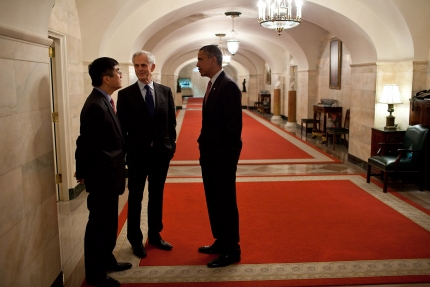
President Obama Talks with Secretary Locke and John Bryson

President Barack Obama talks with Commerce Secretary Gary Locke and John Bryson in the Ground Floor Corridor of the Residence at the White House, May 31, 2011. The President nominated Bryson to replace Secretary Locke, who was nominated to serve as Ambassador to China. (Official White House Photo by Pete Souza)

At a time when the nation is focused on jobs, we need a Commerce Secretary who knows American business - a leader who has led a company through crisis, created jobs and has a firsthand understanding of the challenges facing US companies.  And that's exactly the experience that President Obama's nominee John Bryson has. 

Bryson spent nearly two decades as the CEO of the California-based energy company Edison International and has served on the boards of some of America's top companies, including Disney and Boeing, and now, widely-respected business and civic leaders are pressing lawmakers to confirm this imminently qualified nominee. 

Individuals ranging from the COO of Facebook to the former Treasury Secretary John Snow to Mayors across the country support the nomination of John Bryson. 

Check out what some of these folks have to say about John Bryson:

Business Roundtable:  "John Bryson is a proven, well-respected executive who will bring his private sector experience to the Commerce Department’s broad portfolio."  “[The] Business Roundtable applauds President Obama’s nomination of John Bryson, a seasoned business leader, to be the next Secretary of Commerce. We fully support the President’s choice and urge swift Senate confirmation. John Bryson is a proven, well-respected executive who will bring his private sector experience to the Commerce Department’s broad portfolio that includes technology, trade, intellectual property and exports, which will be crucial to expanding the economy and creating jobs. We look forward to working with Bryson,” said Business Roundtable President John Engler. 

National Association of Manufacturers: Bryson Has “a strong business background…which gives him the advantage of having exposure to the difficult issues manufacturers face in today’s global marketplace.”  National Association of Manufacturers President and CEO Jay Timmons said, “Mr. Bryson has a strong business background and serves on the board of many manufacturing companies, which gives him the advantage of having exposure to the difficult issues manufacturers face in today’s global marketplace.” 

Facebook: "John knows what it takes to promote job growth." Facebook COO Sheryl Sandberg said: “I applaud the President’s decision to nominate John as the next Commerce Secretary. With decades of experience in the public and private sectors, John knows what it takes to promote job growth, advance American goods and services and, most importantly, expand the markets for America’s next generation of entrepreneurs.”