Denise Pease's Story: A 21st Century Government

Editor's Note: This post is part of the Celebrating Black History Month series, which highlights the contributions of African Americans whose work moves us closer to achieving the President's goal of winning the future.

I am honored to serve as Regional Administrator for the U.S. General Services Administration Northeast and Caribbean Region.  I firmly believe that I stand on the shoulders of my ancestors, who laid the foundation for me to succeed.  From an early age, my late parents encouraged me to understand and build from the past.  My father served in the Armed Forces during World War II as a Tuskegee Airman in the Army Air Corps. After the war, he became an electrical engineer and eventually forged a career as a professor of electrical technology and the first African-American Assistant Dean at Suffolk Community College.  My mother began her career as a milliner and was one of the first African-American graduates from New York’s Fashion Institute of Technology, eventually becoming an elementary school teacher.

Growing up, my father took me to meetings of the Association for the Study of African-American Life and History in the home of Rosetta “Mother” Gaston.  In fact, the founder of the Association and “Father of Black History”, Dr. Carter G. Woodson, was one of my father’s mentors. At the meetings, my father, Congressman Edolphus Towns, former Congressman Major Owens, and other civic leaders engaged in lively conversations about building the necessary tools to build for the future by learning from the challenges and successes of the past.

Turning the Tide on Contract Spending

“Buying less” and “buying smarter” are simple ideas to understand, but history tells us that these basic principles of fiscal responsibility are not as easy to implement as one might think.  Since 1997, and in 18 of the past 20 years, total spending by the federal government on contracts has increased – and at a near break-neck pace of 12 percent per year between 2000 and 2008.  During this eight-year period, annual procurement budgets grew from $200 billion a year to more than $500 billion a year. 

This Administration is doing what has been so elusive in the past:  cutting wasteful spending on contracts and getting better value for the taxpayer dollar.  For the first time in 13 years, we have reduced spending on contracting and agencies have stopped the costly upward spiral in contract growth.  In FY 2010, agencies spent nearly $80 billion less than they would have spent had contract spending continued to grow at the same rate it had under the prior Administration. 

A new sense of fiscal responsibility is taking hold.  Agencies are thinking more carefully about what they buy and how they buy it. They are ending contracts they cannot afford or no longer need.  They are taking greater advantage of buying strategies that are more appropriate for the world’s largest purchaser – pooling their buying power to negotiate better prices and deeper discounts.  And, after years of inattention, they are rebuilding the capacity and capability of the acquisition workforce to achieve and sustain better acquisition outcomes and improved government performance. 

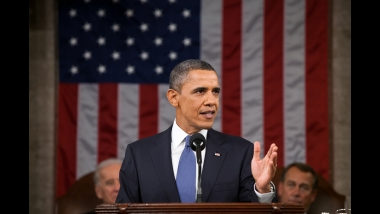
In his State of the Union address, President Obama said that, “we can’t win the future with the government of the past.” Instead, he said we must reform the way we do business in Washington and give the American people a government that’s not only more affordable, but also more effective and more efficient. This principle has been the cornerstone of our work on contracting and across the Accountable Government Initiative. From reforming and cutting costly IT systems, implementing unprecedented transparency and reporting efforts, buying in bulk, establishing a government-wide Do Not Pay list, or moving toward electronic government payments, we’re making real progress in changing the way government does business.

Here is more information about how we are saving money, cutting waste, and getting better results from our acquisitions. We are turning the tide, but there is still more to be done. OMB’s Office of Federal Procurement Policy will continue to work closely with agencies to build on their accomplishments to date and explore new opportunities for saving so that every taxpayer dollar is spent wisely.

Jack Lew is the Director of the Office of Management and Budget.

West Wing Week: "Enter the Hub"

Welcome to the West Wing Week, your guide to everything that's happening at 1600 Pennsylvania Avenue. This week, President Obama focused on the innovation part of his plan for winning the future by out-innovating, out-educating, and out-building the rest of the world, with events at Penn State and around Washington, D.C.

Learn more about the events featured in this West Wing Week:

Friday, January 28, 2011

Monday, January 31, 2011

Tuesday, February 1, 2011

Wednesday, February 2, 2011

Thursday, February 3, 2011

Arun Chaudhary is the official White House videographer.

West Wing Week: "Enter the Hub"

February 04, 2011 | 5:27 | Public Domain

Welcome to the West Wing Week, your guide to everything that's happening at 1600 Pennsylvania Avenue. This week, President Obama focused on the innovation part of his plan for winning the future by out-innovating, out-educating, and out-building the rest of the world, with events at Penn State and around Washington, D.C.

Download mp4 (137.6MB)

Jeff Zients Will Lead Reorganization of Federal Government

As the President said in the State of the Union address, winning the future will take doing what we can do now to prepare America to compete in the global economy for decades to come. That means out-educating, out-innovating, and out-building our competition; restoring fiscal responsibility to remove the burden of deficits and debt; and reforming our government so that it is more effective, efficient, and open to the American people. As the President put it, “We cannot win the future with a government of the past.”

The fact is that we live and do business in the information age, but the last major reorganization of the government happened in the middle of the last century. Over the past few decades, there has not been a business or large organization that has not rethought, retooled, and revamped how they did their job to respond to a growing, more competitive global economy and an ever-changing technology landscape. Yet too often, it seems that the federal government is stuck in the age of black-and-white television while we are competing in the age of the iPad.

For millions of Americans, this can lead to frustrating encounters trying to get the services you need and a waste of taxpayer dollars. For many businesses, it means that they may not have all the assistance they need to compete around the world. For instance, we have more than a dozen different agencies involved in exports. They all work well with each other, but this is certainly not the optimal organization or allocation of resources if you were designing a system from scratch.

The President believes that we need to reform our government to make it better organized and better equipped to support American competitiveness. We want to ensure that we're aligning all of the resources we have into negotiating the best agreements, enforcing our trade rights, supporting our exporters and promoting their products.

That is why the President has asked Jeffrey Zients, our nation’s first Chief Performance Officer (CPO), to lead our reorganization effort. Our first focus will be looking at trade and exports to see how we can better reform these functions to give American companies a leg up in the global economy.

For the past two years as CPO and Deputy Director for Management of OMB, Jeff has led our Accountable Government Initiative (AGI), the President’s initiative to make government more efficient and effective, open and responsive. On his watch, we have cut government waste, bringing down the amount of improper payments on our way of reducing them by $50 billion by 2012; started to get rid of unused federal buildings and property; overhauled how IT is purchased and used, saving billions; and deployed the latest technologies to make it easier for people to get the information and services they need from their government.

Jeff’s years of private sector experience means that he brings a unique perspective to his job as CPO and to this new assignment. Having been a CEO, management consultant, and entrepreneur, Jeff has a deep understanding of business strategy, process reengineering and operational management. In fact, Jeff spent the majority of his career leading two companies that help corporations around the world improve their performance by adopting best management practices.  

The President has also asked Lisa Brown to take on a new position and work with Jeff on this endeavor.  Lisa is currently Assistant to the President and Staff Secretary and previously served as Co-Chair of the Agency Review Working Group for the Obama-Biden Transition Project.  In these capacities and from her prior government service, she has developed a keen understanding of how the executive branch works.  She also brings management and legal acumen, having run a national non-profit organization and been a partner at a DC law firm.

Jeff and Lisa will draw on the resources of OMB to launch and run this effort, and they will be reaching out to the business community, experts, those who run these programs, members of Congress, and a wide range of stakeholders and citizens to get their input about how government can be reformed to best work for them.  I know that we all look forward to working with Jeff and Lisa on this important effort and to helping to create a better organized and more effective federal government.

Dan Pfeiffer is the White House's Communications Director

Welcoming our 2010 SAVE Award Winner

On Tuesday night, President Obama spoke about giving the American people a government that’s not only more affordable, but also more effective and more efficient. Federal employees are important partners in that effort. From inspecting the food heading to our tables and making sure Social Security checks go out on time to treating wounded troops and helping returning Veterans pursue higher education, Federal employees are working day in and day out to serve the American people. The President believes these frontline workers are essential to any effort to improve government.

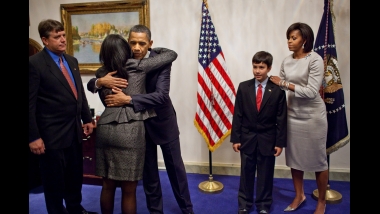
That’s why he launched the first ever SAVE Award in 2009 to gather ideas from employees across the country about how to cut waste and make government work smarter for the American people. Today, the President met with the employee who the public voted this year’s winner: Trudy Givens of Portage, Wisconsin.

Trudy is a 19-year employee of the Bureau of Prisons, currently serving as a Business Administrator at the Federal Correctional Institution in Oxford, Wisconsin. Over the course of her career, Trudy noticed that several copies of the Federal Register — the federal government’s official daily publication for rules, proposed rules, and notices from Federal agencies and organizations, as well as executive orders and other presidential documents– were delivered to her workplace several times per week, but employees rarely referenced the documents. The Federal Register was made available online years ago, and most members of the interested public reference that online version now. Trudy thought that in keeping with the President’s spirit of cutting out waste and going green, the government should cease the printing and mailing of thousands of Federal Registers to employees who don’t need them.

Even ideas that sound small can add up. Printing just one page of the Federal Register costs a little more than a penny, but when you amplify that across the whole of government, suddenly your talking millions of dollars. We expect to save the vast majority of those dollars – at current costs that could be up to $4 million dollars per year-- by limiting print distribution to those who need it.

And Trudy’s not alone. Employees across the government are contributing ideas to make their agency work more effectively and efficiently. Through the SAVE competition, we are starting to see a cultural shift where employees are really becoming engaged in rooting out waste. Several agencies including the Departments of Housing and Urban Development, Interior, and Defense have launched their own internal competitions or online engagement tools to encourage employees to submit their ideas to save money and make government work more efficiently and effectively all year round.

It is incumbent upon all of us in public service to be conscientious stewards of your taxpayer dollars. But it is particularly important to do so when the fiscal times are tough. Congratulations, Trudy, for winning this year’s award, and thank you for your contribution to making the government more effective and efficient.

What You Missed: The State of the Union and the Economy

Yesterday, Austan Goolsbee, Chair of the Council on Economic Advisers, sat down with MSNMoney, Mint.com and Examiner.com to answer questions from their readers about the economy and the President's State of the Union Address.  Check out the full video or use the links below to jump to your favorite questions.

Download Video: mp4 (381MB) | mp3 (37MB)

West Wing Week: "To Build Stuff and Invent Stuff"

Welcome to the West Wing Week, your guide to everything that's happening at 1600 Pennsylvania Avenue. This week, the President delivered his State of the Union Address, focused on jobs and the economy, and he took those ideas on the road traveling to Upstate New York and Wisconsin.

Learn more about the events featured in this week's video:

January 21, 2011:

January 24, 2011:

January 25, 2011:

January 26, 2011:

January 27, 2011


Arun Chaudhary is the official White House videographer

West Wing Week: "To Build Stuff and Invent Stuff"

January 26, 2011 | 5:47 | Public Domain

Welcome to the West Wing Week, your guide to everything that's happening at 1600 Pennsylvania Avenue. This week, the President delivered his State of the Union address, focused on jobs and the economy, and he took those ideas on the road traveling to Upstate New York and Wisconsin.

Download mp4 (140.2MB)

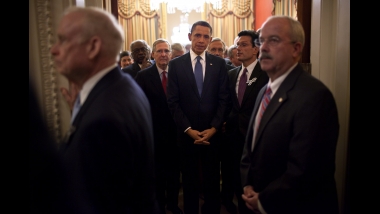
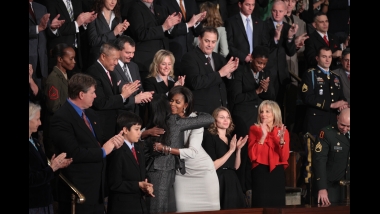
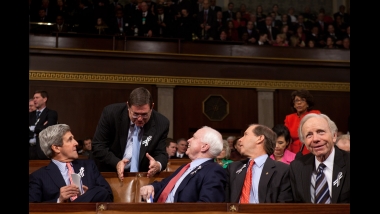
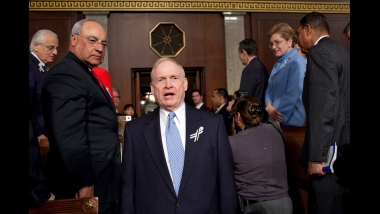
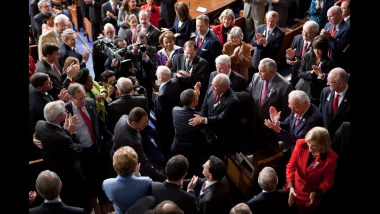
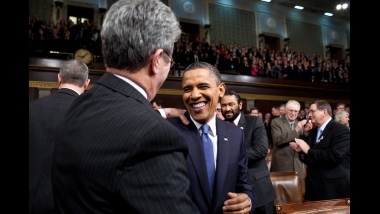
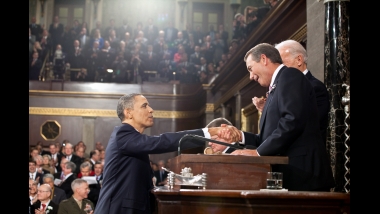
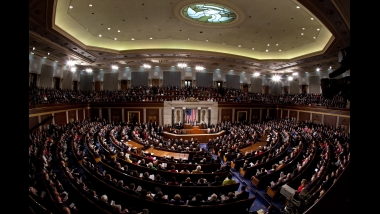
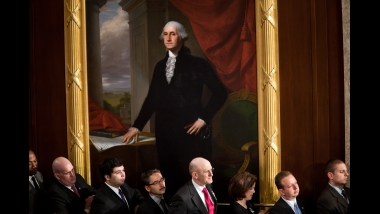
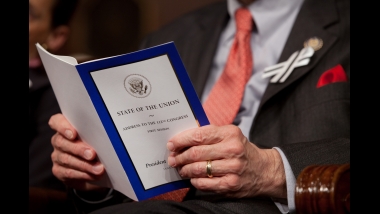
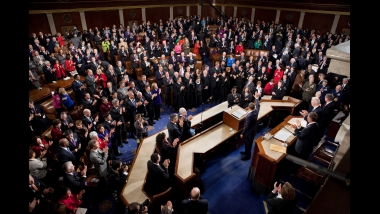
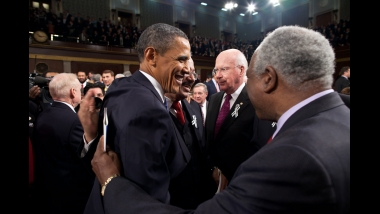
Photo Gallery: President Obama’s 2011 State of the Union Address

See President Obama’s State of the Union Address in photos, thanks to the White House Photo Office:

play