The White House

Office of the Press Secretary

Presidente Obama da instrucciones a su gobierno para que tome medidas enérgicas contra quienes cometen fraude tributario y obtienen contratos gubernamentales

WASHINGTON, DC – Hoy, el Presidente Obama dará instrucciones a la Oficina de Administración y Presupuesto (Office of Management and Budget), así como al Departamento del Tesoro y otras agencias federales, para que tomen medidas a fin de impedir que los contratistas morosos en el pago de impuestos reciban nuevos contratos del gobierno. También dará instrucciones al Servicio de Rentas Internas (IRS por sus siglas en inglés) para que realice un análisis de la exactitud general de las afirmaciones de las empresas sobre morosidad con el pago de impuestos a fin de asegurarse de que cuando una compañía diga que está pagando impuestos, esté diciendo la verdad. Acompañarán al Presidente hoy el Vicepresidente Biden, la senadora Claire McCaskill, el congresista Ed Towns, el congresista Brad Ellsworth, el comisionado del IRS Douglas Shulman y Jeffrey Zients, funcionario principal de desempeño de Estados Unidos.

Además, el Presidente está haciendo un llamado al Congreso para que le dé al gobierno las herramientas necesarias a fin de asegurar que el dinero de los contribuyentes no se use para aumentar los beneficios de las empresas que se rehúsan a pagar impuestos.

“Esta directiva requerirá que todos nosotros en Washington seamos custodios más responsables del dinero de ustedes, los contribuyentes. En todo el país, hay gente que cumple con sus obligaciones todos los días. Hacen su trabajo. Mantienen a sus familias. Pagan los impuestos que deben, porque es una responsabilidad fundamental de la ciudadanía”, declaró el Presidente Barack Obama. “Las medidas que estoy disponiendo hoy y las medidas que estoy instando al Congreso que tome simplemente tienen sentido común. No van a eliminar de un golpe todo el despilfarro o los abusos en la contratación con el gobierno. De ahora en adelante, también tendremos que hacer más para hacer que los contratistas asuman mayor responsabilidad de no sólo pagar impuestos, sino que cumplan también con otras leyes”.

Cuando el Presidente Obama era parte del Senado, patrocinó legislación para darles a los funcionarios federales de contratación las herramientas que necesitan a fin de recuperar dichos fondos o impedir que los infractores de las leyes tributarias reciban contratos federales. La Administración insta al Congreso a que apruebe propuestas legislativas para permitir que el IRS tome medidas contra las empresas que cometen fraude tributario. También se insta al Congreso a que permita el intercambio de información entre el IRS y funcionarios de contratación en agencias a fin de que se aseguren de que los infractores no exploten brechas jurídicas para continuar obteniendo contratos federales.

La directiva de hoy se suma a las medidas que el Presidente ya ha tomado contra el despilfarro en el gobierno: mejorar lo que surte efecto y eliminar lo que no:

• En diciembre, la Administración dio a conocer información actualizada sobre los esfuerzos del Presidente para reducir los contratos de alto riesgo otorgados sin licitación, y gracias a estas reformas en la contratación, las agencias federales ahorrarán $19,000 millones este año y $40,000 millones para fines del 2011.

• En noviembre, el Presidente describió medidas para eliminar los pagos despilfarradores e indebidos que, según estimados ascenderían a aproximadamente $100,000 millones en el 2009.

• En mayo, la Administración dio a conocer los resultados de un análisis del presupuesto, partida por partida, e identificó más de 120 programas despilfarradores, duplicados o anticuados. El Congreso aprobó más de 60 por ciento de los recortes propuestos por el Presidente, lo cual es significativamente más alto que los resultados de gobiernos recientes.

El memorando que el Presidente firmará en el evento de hoy está disponible AQUI.

###
 

The First Cuts Are the Deepest

Cross-posted from the OMB Blog.

In May, we released our Terminations, Reductions, and Savings volume. It put forward more than 120 cuts and reductions, totaling $17 billion, to programs that were duplicative, ineffective, or outdated. At the time, cynics said that we’d never be able to eliminate these programs – some of which had been around for decades. And it’s true that every one of the programs has a supporter, and there have been – and will continue to be – vocal and powerful interests that oppose almost any budget cut.

But with the 2010 appropriations process now over, the Washington Times ran the numbers and came away impressed with what the Administration was able to accomplish: "President Obama notched substantial successes in spending cuts last year, winning 60 percent of his proposed cuts and managing to get Congress to ax several programs that bedeviled President George W. Bush for years."

Citing data from the Committee for a Responsible Federal Budget, the newspaper noted that the 60 percent success rate was better than the prior administration’s best year (40 percent in Fiscal Year 2006), and well ahead of the under 15 percent success rate in 2007 and 2008.

I'm proud of what we were able to accomplish in conjunction with the Congress, but it's just a start in what we need to do to streamline programs that work, end those that don’t, and make government more efficient and effective. That’s why this fall we ran the SAVE Award contest, receiving more than 38,000 ideas from frontline workers on how to save money. We undertook contracting reforms that will save $19 billion this year, and $40 billion by next year. We’ve put forward an ambitious effort to reduce the $100 billion in improper payments – money that the government pays out by mistake – each year. And we initiated a rigorous process of evaluating program effectiveness – including funding whole new studies – so that we can find out what works and what doesn’t, and make budget decisions accordingly.

In a few weeks, we will release the President’s Fiscal Year 2011 Budget. There will be more proposals for terminations, and we will hear the complaints from the special interests. But programs that are unnecessary, duplicative, or ineffective should not continue, and we look forward to building on the successes from last year in ending programs that don’t make sense.

Peter Orszag is Director of the Office of Management and Budget

Related Topics: Fiscal Responsibility

The White House

Office of the Press Secretary

President Obama Proposes Financial Crisis Responsibility Fee to Recoup Every Last Penny for American Taxpayers

WASHINGTON, DC- President Barack Obama will join his economic team today to propose a Financial Crisis Responsibility Fee to be imposed on the debt of the largest financial firms until the American people are fully compensated for the extraordinary assistance they provided to Wall Street.

“My commitment is to recover every single dime the American people are owed.  And my determination to achieve this goal is only heightened when I see reports of massive profits and obscene bonuses at the very firms who owe their continued existence to the American people – who have not been made whole, and who continue to face real hardship in this recession,”  said President Barack Obama. “That’s why I’m proposing a Financial Crisis Responsibility Fee to be imposed on major financial firms until the American people are fully compensated for the extraordinary assistance they provided to Wall Street.”

The fee will be in place at least 10 years, but even longer if needed to pay back every penny of TARP. This will not be a cost borne by community banks or small firms; only the largest firms with more than $50 billion in assets will be affected. In fact, 60% of the revenue will come from the 10 largest financial firms.

Fact Sheet on the Financial Crisis Responsibility Feehttp://obamawhitehouse.archives.gov/sites/default/files/financial_responsibility_fee_fact_sheet.pdf

The fee the President is proposing would:

  • Require the Financial Sector to Pay Back For the Extraordinary Benefits Received:  Many of the largest financial firms contributed to the financial crisis through the risks they took, and all of the largest firms benefitted enormously from the extraordinary actions taken to stabilize the financial system. It is our responsibility to ensure that the taxpayer dollars that supported these actions are reimbursed by the financial sector so that the deficit is not increased.
  • Responsibility Fee Would Remain in Place for 10 Years or Longer if Necessary to Fully Pay Back TARP:  The fee – which would go into effect on June 30, 2010 – would last at least 10 years.   If the costs have not been recouped after 10 years, the fee would remain in place until they are paid back in full. In addition, the Treasury Department would be asked to report after five years on the effectiveness of the fee as well as its progress in repaying projected TARP losses.
  • Raise Up to $117 Billion to Repay Projected Cost of TARP: As a result of prudent management and the stabilization of the financial system, the expected cost of the TARP program has dropped dramatically. While the Administration projected a cost of $341 billion as recently as August, it now estimates, under very conservative assumptions, that the cost will be $117 billion—reflecting the $224 billion reduction in the expected cost to the deficit. The proposed fee is expected to raise $117 billion over about 12 years, and $90 billion over the next 10 years.
  • President Obama is Fulfilling His Commitment to Provide a Plan for Taxpayer Repayment Three Years Earlier Than Required: The EESA statute that created the TARP requires that by 2013 the President put forward a plan “that recoups from the financial industry an amount equal to the shortfall in order to ensure that the Troubled Asset Relief Program does not add to the deficit or national debt.” The President has no intention of waiting that long. Instead, the President is fulfilling three years early his commitment to put forward a proposal that would – at a minimum – ensure that taxpayers are fully repaid for the support they provided.
  • Apply to the Largest and Most Highly Levered Firms: The fee the President is proposing would be levied on the debts of financial firms with more than $50 billion in consolidated assets, providing a deterrent against excessive leverage for the largest financial firms. By levying a fee on the liabilities of the largest firms – excluding FDIC-assessed deposits and insurance policy reserves, as appropriate – the Financial Crisis Responsibility Fee will place its heaviest burden on the largest firms that have taken on the most debt.  Over sixty percent of revenues will most likely be paid by the 10 largest financial institutions.

Modernizing Government

This afternoon, I will participate in the White House Forum on Modernizing Government. More than 50 of the nation’s leading CEOS are attending today’s forum, bringing their ideas for how the government can use technology to save money and improve performance. 

Chief Performance Officer Jeff Zients, a key member of our OMB team, has been focused on making government more effective and efficient by closing the technology gap between the public and private sectors. Zients has been working together with Chief Information Officer Vivek Kundra on getting a better return on the government’s technology spending. This is not just about cool gadgets and launching new websites— information technology has the power to transform how government works, and revolutionize the ease, convenience, and effectiveness by which it serves the American people. 

Twenty years ago, people who came to work in the federal government had better technology at work than at home. Today, that’s no longer the case. The American people deserve better service from their government, and better return for their tax dollars. This forum is part of our efforts to modernize government and bring us into the 21st century.

Tomorrow, the White House will seek ideas from the public about how government can improve its use of technology at www.whitehouse.gov. I encourage everyone to contribute their ideas on how to make government perform better and help us deliver on the President’s commitment to change how business is done in Washington.

Peter Orszag is Director of the Office of Management and Budget

Nancy Fichtner's SAVE Award Story

Download Video: mp4 (38MB)

My invitation to the White House became the adventure of my life.  I felt like a character out of the Mrs. Pollifax books.

With DC airports shutting down and December 21st being declared a snow day for Federal employees we had our challenges, but everyone pulled together and come Monday morning my children and I had an opportunity to meet President Obama and Secretary Shinseki.

First we arrived at the VA to meet with Secretary Shinseki. What a joy it was to meet him.  We took our pictures with him, and he sat down and talked to us.  He talked to my son about the military (my son Alex had his ROTC uniform on) and my daughter sang Amazing Grace for him.  He was moved.  So on to the White House, and meeting the President.

What a moment in time! I came into where the President was and he came and shook my hand.  I was not nervous, just amazed that this was really happening.  He just started talking to me about my family, the VA, my children and elk hunting.  I had to tell him about Kasey Ann skinning and gutting her own elk and how on her last hunt she wore flip flops.  He laughed.  He was so very easy to talk to.  He was genuine, such a nice and kind person. 

We then went into a room filled with TV cameras and reporters.  What an experience!  The President talked about health care, the VA, my idea, and wanted to know where my children were in the room.  He talked about my children being avid hunters. Afterwards, we then went into another room where the President met my children.  He was very appreciative that Alex, my son, is going into the military.  I told him Kasey Ann would sing for him.  So he turned his ear to her and she sang Amazing Grace.  What a great, once-in-a-lifetime opportunity for her. He teased her about hunting in her flip flops! They laughed and enjoyed the fun of it. The day was over before we knew it.

This trip was a Christmas present beyond all.  I still think it was a lot for a little idea, but it really will save a lot of money and I am so glad to be a part of it.  I can’t wait to see my idea come full circle.  Thank you to all the people that made this experience a reality for me and my family. Lasting memory:  Kasey Ann is still talking about his handshake.  She said he really knew how to shake your hand and hold onto it like he truly was interested in you and what you had to say.

Nancy Fichtner is a Fiscal Program Support Clerk at the Grand Junction, Colorado Veterans Affairs Medical Center.  She was the winner of the first annual SAVE Award.


Saving Your Tax Dollars, Bottom-Up

Read the Transcript  |  Download Video: mp4 (204MB) | mp3 (9MB)

The President made clear early on that part of the way he intended to change the way Washington does business is by looking in every nook and cranny of government both for waste and abuse, and for ideas on how to root it out. Speaking in the Diplomatic room today, he had a chance to highlight both.   He was joined by Nancy Fichtner, the Veterans Affairs employee who won the SAVE Award contest for the most popular cost-saving idea from a federal employee. In addition to commending her after meeting with her in the Oval Office, he also announced progress on his order earlier this year for departments and agencies to identify billions in saving through contracting waste and abuse:

I am pleased to be joined this morning by my Secretary of Veterans Affairs, Ric Shinseki; my budget director, Peter Orszag; and our special guest, last but not least, the winner of the first annual SAVE Award -- and that's Nancy Fichtner of Loma, Colorado. 

Having met with Nancy a few minutes ago, I can tell you Nancy means business.  She is a single working mom; she's a clerk with the VA; she's an artist; she's an outdoorswoman; and she is an avid hunter.  In fact, somewhere in the western United States, there is an elk that is breathing a sigh of relief because Nancy is here instead of where she would have been:  hunting with her kids.  (Laughter.)  And I believe her children are here -- where's Nancy's kids?  There they are right there.  It's great to see you guys.  Nancy's daughter -- she skins and guts her elk, so don't mess with her either.  (Laughter.)

We're all here for a simple reason.  At a time when we face not only a fiscal crisis, but also a host of difficult challenges as a nation, business as usual in Washington just won't cut it.  We need a government that's more efficient, that's more effective, and far more fiscally responsible.

When my administration walked through the door, the country faced a growing economic downturn as well as a deepening fiscal hole.  Washington had passed massive tax cuts for the wealthy and an expensive new entitlement program without paying for any of it.  Health care costs continued to rise, year after year.  And little effort was made to cut wasteful spending.  As a result, over the previous eight years, the national debt doubled -- doubled.  In January, the deficit stood at $1.3 trillion.  And we had to make the difficult decision to add to the deficit in the short term to prevent the potential collapse of our economy. 

But as I've said, in the long run, we can't continue to spend as if deficits don't have consequences; as if waste doesn't matter; as if the hard-earned tax dollars of the American people can be treated like Monopoly money.  That's what we've seen time and time again.  Washington has been more concerned about the next election than the next generation.  It's put off hard choices in spending bill after spending bill, budget after bloated budget.

Government contracting is a perfect example.  Between 2002 and 2008, the amount spent on government contracts more than doubled.  The amount spent on no-bid, non-competitive contracts jumped by 129 percent.  This is an inexcusable waste of money.  And that's why, back in March, I ordered federal departments and agencies to come up with plans to save up to $40 billion a year in contracting by 2011.  And over the past six months, agencies have been making cuts by looking for better deals, by ending contracts and doing work in house, and by opening up no-bid contracts to competitive bidding.  Because of these efforts, I'm proud to announce today that we are on track to meet our goals.  Twenty-four departments have identified more than $19 billion in savings for this year alone. 

Learn more from the White House fact sheet, the Save Award page, or the OMB contracting reform report (pdf).

SAVE Award Winner in the Oval Office

President Barack Obama talks with Nancy Fichtner, winner of the SAVE (Securing Americans Value and Efficiency) Award, in the Oval Office. Fichtner is a Fiscal Program Support Clerk at the Department of Veterans Affairs December 21, 2009. (Official White House Photo by Pete Souza)

The White House

Office of the Press Secretary

Remarks by the President on the SAVE Award and Making Government More Efficient and Effective

Diplomatic Reception Room

11:21 A.M. EST

THE PRESIDENT:  Hello, everybody.  Good morning.  Before I begin, I want to say a brief word about the historic vote which took place early this morning.  The United States Senate knocked down a filibuster aimed at blocking a final vote on health care reform, and scored a big victory for the American people.  By standing up to the special interests -- who've prevented reform for decades and who are furiously lobbying against it now -- the Senate has moved us closer to reform that makes a tremendous difference for families, for seniors, for businesses, and for the country as a whole.

For those who have insurance, reform will mean greater security and stability.  No longer will people with preexisting conditions be excluded from coverage.  No longer will people who are seriously ill be dropped from coverage.  And no longer will families be allowed to go broke because they’re forced to pay exorbitant out-of-pocket expenses. 

Many people recall the enormous fights around the Patient's Bill of Rights that never got done.  Well, you know what, the Patient's Bill of Rights is embedded in this health care bill and -- to make sure that all Americans who have insurance right now are getting a fair deal from their insurance companies.

Small businesses and those who don’t get insurance through their employer will finally be able to get insurance at a price that they can afford with tax credits to help.  And Medicare will be stronger and its solvency extended by nearly a decade.  Seniors will get more assistance with prescription drug costs than they're getting right now.  And finally, these reforms will help the inexorable and unsustainable rise in health care costs that are overwhelming families, businesses, and the federal budget. 

The Congressional Budget Office now reports that this bill will reduce our deficit by $132 billion over the first decade, and by as much as $1.3 trillion in the decade after that.  So I just want to be clear, for all those who are continually carping about how this is somehow a big spending government bill, this cuts our deficit by $132 billion the first 10 years, and by over a trillion in the second.  That argument that opponents are making against this bill does not hold water. 

Now, embracing this kind of responsibility in Washington is what also brings us here today.  I am pleased to be joined this morning by my Secretary of Veterans Affairs, Ric Shinseki; my budget director, Peter Orszag; and our special guest, last but not least, the winner of the first annual SAVE Award -- and that's Nancy Fichtner of Loma, Colorado. 

Having met with Nancy a few minutes ago, I can tell you Nancy means business.  She is a single working mom; she's a clerk with the VA; she's an artist; she's an outdoorswoman; and she is an avid hunter.  In fact, somewhere in the western United States, there is an elk that is breathing a sigh of relief because Nancy is here instead of where she would have been:  hunting with her kids.  (Laughter.)  And I believe her children are here -- where's Nancy's kids?  There they are right there.  It's great to see you guys.  Nancy's daughter -- she skins and guts her elk, so don't mess with her either.  (Laughter.)

We're all here for a simple reason.  At a time when we face not only a fiscal crisis, but also a host of difficult challenges as a nation, business as usual in Washington just won't cut it.  We need a government that's more efficient, that's more effective, and far more fiscally responsible.

When my administration walked through the door, the country faced a growing economic downturn as well as a deepening fiscal hole.  Washington had passed massive tax cuts for the wealthy and an expensive new entitlement program without paying for any of it.  Health care costs continued to rise, year after year.  And little effort was made to cut wasteful spending.  As a result, over the previous eight years, the national debt doubled -- doubled.  In January, the deficit stood at $1.3 trillion.  And we had to make the difficult decision to add to the deficit in the short term to prevent the potential collapse of our economy. 

But as I've said, in the long run, we can't continue to spend as if deficits don't have consequences; as if waste doesn't matter; as if the hard-earned tax dollars of the American people can be treated like Monopoly money.  That's what we've seen time and time again.  Washington has been more concerned about the next election than the next generation.  It's put off hard choices in spending bill after spending bill, budget after bloated budget.

Government contracting is a perfect example.  Between 2002 and 2008, the amount spent on government contracts more than doubled.  The amount spent on no-bid, non-competitive contracts jumped by 129 percent.  This is an inexcusable waste of money.  And that's why, back in March, I ordered federal departments and agencies to come up with plans to save up to $40 billion a year in contracting by 2011.  And over the past six months, agencies have been making cuts by looking for better deals, by ending contracts and doing work in house, and by opening up no-bid contracts to competitive bidding.  Because of these efforts, I'm proud to announce today that we are on track to meet our goals.  Twenty-four departments have identified more than $19 billion in savings for this year alone. 

And this is only the latest example.  At my very first Cabinet meeting, I directed every secretary to join us in scouring the budget, line by line, to find ways to make government more efficient and less wasteful.  Together, we identified more than 100 programs to scale back or end completely, as well as other ways to cut costs, finding $17 billion in savings so far. 

We're also going after roughly $100 billion wasted on improper payments to contractors, organizations, and individuals. To put this in perspective, these mistakes, and in some cases abuses, cost taxpayers more each year than the budgets for the Education and Homeland Security Departments combined. 

We have done what some said was impossible:  preventing wasteful spending on outdated weapons systems that even the Pentagon said it doesn't need.  And I’ve insisted from the beginning that health care reform will not add one dime to our deficit.  And as I just noted, not only is it not adding to our deficit, it's actually reducing it.  

Finally, I’ve issued a challenge to every man and woman who works for the federal government:  If you see a way that government could do its job better, or do the same job for less money, I want to know about it.  That’s why we started the SAVE Award, to draw on those who know government best to improve how government works.  We asked federal employees to submit reform proposals based on their experiences.  And in a testament to the seriousness with which these folks are taking their jobs, we received more than 38,000 proposals in just three weeks. 

From these submissions, four finalists were selected and put to an online vote.  Nancy is here because she won.  Her idea stems from her experience at the VA Medical Center where she works.  She noticed that whenever patients left the hospital, leftover medications like eye drops or inhalers were just thrown away.  And often, veterans would have to go right back to the pharmacy to refill what was discarded.  So the VA is paying twice -- it’s waste, plain and simple.  And thanks to Nancy -- and to Secretary Shinseki and the folks at Veterans Affairs -- we’re putting a stop to it.  The change is already underway.

Of course, Nancy’s proposal was just one of many great ideas that came to us.  We’ve already begun to implement a host of suggestions made through the SAVE contest.  And while promoting electronic paystubs or scheduling Social Security appointments online or re-purposing unused government supplies may not be the most glamorous reforms in history, when taken together, these small changes can add up; they add up to a transformation of how government works. 

And that’s why we’re going to turn the SAVE Award into an annual event.  That’s why we’re holding a forum at the White House next month to seek more ideas from the private sector, specifically about how we can better use technology to reform our government for the 21st century. 

After years of irresponsibility, we are once again taking responsibility for every dollar we spend, the same way families do.  It’s true that what I’ve described today will not be enough to get us out of our fiscal mess by itself.  We face a deficit that will take some tough decisions in the next year’s budget and in years to come to get under control.  But these changes will save the American people billions of dollars.  And they’ll help to put in place a government that’s more efficient and effective, that wastes less money on no-bid contracts, that’s cutting bureaucracy and harnessing technology, that’s more fiscally responsible, and that better serve the American taxpayer.  That’s the government we need.  That’s the government I intend to implement.  That's the kind of government that the American people deserve.  And that’s the kind of government that people like Nancy are helping to build each and every day. 

So, Nancy, congratulations.  We're proud of you.  Thank you so much.  Thank you.  We're very proud of your mom.  (Laughter.) That's great.

Thank you, everybody.

END
11:31 A.M. EST

The White House

Office of the Press Secretary

President Obama Announces Agencies to Save $19 Billion in Contracting Reforms

Diplomatic Reception Room

Meets with SAVE Award winner; Announces WH Forum on Modernizing Government

WASHINGTON – As part of his effort to cut waste and improve government performance, President Barack Obama will announce today that federal agencies are on track to save $19 billion through improvements to their contracting and acquisition practices. In addition, the President will announce that the White House will convene private sector leaders next month to solicit their ideas about how government can better use technology to deliver more effective and efficient services to American taxpayers.

"We are here today for a simple reason: at a time when we face not only a fiscal crisis, but also a host of difficult challenges as a nation, business as usual in Washington just won’t do,” said President Obama. “After years of irresponsibility, we are once again taking responsibility for every dollar we spend, the same way families do."

Earlier this year, the Administration instructed federal agencies to save $40 billion a year through strengthened contracting practices and management oversight. The work started with 3.5 percent in savings FY 2010 and a further 3.5 percent reduction in FY 2011. Agencies are on track to meet the FY 2010 target, having identified more than $19 billion in savings, in line with the 3.5 percent first-year target.

Also today, the President announced that on January 14, 2010, the White House will host the White House Forum on Modernizing Government. The forum will focus on the significant gap existing between private sector and federal government use of technology to drive productivity and improve service quality.

The President will deliver these remarks after meeting with Nancy Fichtner -- a Fiscal Program Support Clerk at the Department of Veterans Affairs (VA)  -- and the winner of the first-ever SAVE (Securing Americans Value and Efficiency) Award, a contest among federal employees for their ideas on how the government can save money and improve performance.

In just three weeks, OMB received more than 38,000 ideas on how to make government more efficient and effective.  OMB staff assessed the ideas, passing back hundreds of the most promising ones to agencies to include in their budget plans. OMB then winnowed the best ideas to a “final four.”  The American people were able to rate the “final four” via online voting which concluded December 10.  Fichtner, from Loma, Colorado, was voted the winner. Today, she will meet with President Obama, VA Secretary Eric Shinseki, and Office of Management and Budget (OMB) Director Peter Orszag, to discuss her proposal. Fichtner, a daughter and granddaughter of veterans, has worked at the Colorado Veterans Administration Medical Center in Grand Junction, Colorado for almost six years.

Fichtner’s SAVE Award idea is for veterans leaving VA hospitals to be able to take the medication they have been using there home with them instead of it being thrown away upon discharge. As is the case in most hospitals all across the country, medicine that is used in the hospital is not given to patients to be brought home; instead, it is discarded.

The VA has already begun implementing Fichtner’s idea, and other agencies also are working on SAVE Award entries that were forwarded to them. In addition, OMB Director Orszag will issue guidance today to all federal agency and department heads following up on several government-wide reforms suggested by SAVE Award winners, such as moving more workers to electronic paystubs and saving money on energy costs.

A copy of the contracting reform report can be found here.

Julie Fosbender's SAVE Award Story

Julie FosbenderVisitors who camp in National Forest Campgrounds are required to pay a fee to cover the costs of the services (toilets, trash removal, etc) they receive while camping.  If a Forest Ranger isn’t present to collect these fees in person, campers are directed to deposit their fee into a fee tube.
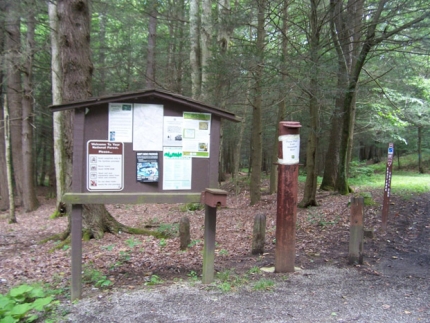
When a Forest Ranger visits the campground, s/he unlocks the fee tube and collects the envelopes with registration info and fees.  Then s/he visits with all of the campers to make sure that everyone has paid his/her fee.

While there is no question in my mind about the importance of proper handling and accounting of the money collected, I have complained for years about the process the Forest Service uses to deal with this money.  In a nut shell, we have to turn the cash into a money order, complete paperwork, and then mail everything (certified) to a bank in California every week no matter how much money is collected.  It boggles my mind to think about how much money the Forest Service must spend to collect money.  Salary time, money order fees, postage – it all adds up.

Monongahela National Forest campground

SAVE Award finalist Julie Fosbender suggested a more streamlined way for the Monongahela National Forest in West Virginia to collect fees rather than the old-fashioned fee tubes like the one pictured here to the right of the bulletin board at the Island Campground. December 18, 2009. (by Julie Fosbender)

So, when the email came around announcing the SAVE Award and encouraging us to submit ideas, I typed up my idea of depositing these collections into local banks and then allowing our national financial center to transfer the money via internet banking.  I submitted the idea and then, to be quite honest, forgot about the contest as I carried on with everything we do.

A few weeks later, I had a voice mail message from the “White House - Office of Management and Budget” asking me to call them.  Since these are the folks who typically audit the Forest Service, I immediately thought about what I’d done lately that could have caused OMB to want to talk with me.  Then I listened to the voice mail a few more times trying to recognize the voice so that I’d know who was pranking me.  When I called OMB back, I was surprised to learn that my SAVE Award idea was being seriously considered.  I mean it sounded like a good idea to me, but for it to out compete all of the rest of the great ideas out there?  About two weeks later, I was even more surprised to learn that my idea made it to the final four.  Amazing.

As word got out about the “Final Four,” I started to receive emails from Forest Service employees all around the nation thanking me for submitting this idea because they are just as frustrated with our collections process as I am.  Those emails (from folks I don’t even know) and good wishes from present and former Forest Service co-workers and friends (as far back as college) really made this time special for me.

While I'm bummed that my idea didn't win (so I'm not going to meet with President Obama), I am totally psyched that there are already serious discussions higher up in my agency about how this process can be streamlined.

Julie Fosbender is the North Zone Recreation Manager on the Monongahela National Forest in West Virginia

Huston Prescott's SAVE Award Story

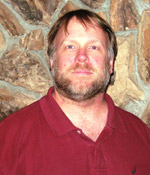
HUD's Huston PrescottBack in September when I submitted an idea for the SAVE Award program, I never thought that I would be selected as one of four finalists. I honestly didn’t expect it to be forwarded for someone to actually read. Imagine my surprise when I received a phone call in early December telling me I was in the “final four” out of more than 38,000 entries!

It didn’t stop there. Over the course of the next few days there were newspaper and radio interviews as well as the on-line voting competition to pick a winner. It was a whirlwind of activity that, to say the least, I was very much unprepared to handle.

My colleagues at work were stunned once I had shared the news and at first thought that I was joking. Once they got past the fact my idea was in the final four, they went out and voted. I hope they voted for me, but I told them to vote for the idea they liked best.

My family and friends were pretty excited for me once I had explained the contest to them. My wife says that I am her “favorite celebrity”.

I received many congratulatory emails and phone calls from people across the nation that I had never met both within the Federal Government and the public. I had a voicemail message from a young lady in Atlanta who had read the article in USA Today and voted for me. She manages a large senior citizen complex and hoped my idea would win.

Watching a video online that the President made announcing the four final ideas was surreal. Several top members of the HUD staff contacted me to say congratulations even Secretary Donovan took time out to call and express his thanks for my idea.

All in all it was an overwhelming but exciting event to be involved in. I think that everyone that worked on the project submitting ideas or reviewing them and organizing everything should be very proud of themselves. As we begin to see some of the ideas implemented in the next few months or years, I can look back and smile as I know that I had a part in it.

It was fun to be “famous” for a little while, but to be honest I am glad the voting is over.

Thanks to everyone who voted for me!

Huston Prescott works for the Department of Housing and Urban Development in Anchorage, AK

Related Topics: Fiscal Responsibility, Alaska