
Office of Science and Technology Policy Blog
Calling All Problem Solvers: Help Make Birth Safe
Posted by on March 9, 2011 at 6:02 PM ESTThe birth of a child is a momentous event anywhere in the world. In many countries, though, the occasion is not just one of joy, but one of fear—fear for the life of the mother and the newborn baby. The time between when a woman begins labor and 48 hours after the birth of a baby is a high-risk period during which millions of newborn babies and new mothers die each year.
That’s why today the U.S. Agency for International Development (USAID) is leveraging the collective resources of our partners—the Bill & Melinda Gates Foundation, Grand Challenges Canada, the Government of Norway, and The World Bank—to launch Saving Lives at Birth: A Grand Challenge for Development. This grant-based program will seek groundbreaking prevention and treatment approaches for pregnant mothers and newborns around the time of delivery in rural, low-resource settings.
This extraordinary partnership underscores the fact that saving lives at birth is one of the most critical challenges facing people in developing countries. Finding new technologies, such as low-cost infant resuscitation devices or incubators, and new approaches to improve birth outcomes for mothers and newborns would not only alleviate suffering, but would also have a significant impact on public health and economic productivity.
It would also accelerate progress toward achieving the Millennium Development Goals 4 and 5, which call for a two-thirds reduction in under-five mortality, a three-quarters reduction in maternal mortality, and universal access to reproductive health services.
Saving Lives at Birth is the first in a series of Grand Challenges for Development that will be announced by USAID in the coming years to mobilize focused attention and resources around the most pressing obstacles to achieving our development goals. These Grand Challenges for Development are definable, quantifiable goals that address some of the largest solvable problems poor countries currently face. USAID will partner with other funders and encourage others to invest in finding innovative solutions to these Challenges that are sustainable, scalable, easily adopted, and that build on and utilize 21st-century infrastructure and technology.
These Challenges also reflect President Obama’s commitment to game-changing innovation as a powerful and cost-effective instrument for achieving development goals. The President’s Policy Directive on Global Development focuses on sustainable development outcomes by placing a premium on broad-based economic growth, democratic governance, sustainable systems, and the creation and application of game-changing innovation to transform longstanding development challenges into solvable problems.
We believe that these Grand Challenges can address key priorities, catalyze innovations that drive economic growth, spur the formation of multidisciplinary teams of researcher and multi-sector collaborators, bring new expertise to bear on important problems, strengthen the ‘social contract’ between science and society, and inspire students and non-development experts to get involved in problem-solving for development.
USAID and its partners cannot solve the Grand Challenges for Development alone. We hope that the effort to meet these challenges will be taken up by non-governmental organizations, the private sector, governments, and individuals around the world. We know there are millions of people and organizations around the world who want to help but don’t know how to start. This is a place to start.
For more information on the Challenge and application process, visit www.savinglivesatbirth.net.
Raj Shah is Administrator of USAID
Tom Kalil is Deputy Director for Policy in the White House Office of Science and Technology Policy
[Ed. Note: Video of the launch of Saving Lives at Birth: A Grand Challenge for Development, can be seen here: http://www.savinglivesatbirth.net/news]
Learn more aboutStartup America Travels to South by Southwest
Posted by on March 9, 2011 at 3:54 PM ESTThis weekend, as an important component of the President’s strategy to out-innovate our economic competitors, the Administration’s Startup America initiative will travel to Austin, Texas. In Texas, I will be joining my colleagues at South by Southwest (SXSW) to engage directly with entrepreneurs—prospective and established—and to help celebrate, inspire, and accelerate high-growth entrepreneurship throughout the Nation.
To complement our efforts, Steve Case, co-founder of AOL and Chairman of the Case Foundation, and Carl Schramm, President and CEO of the Kauffman Foundation, have organized a public response to the President’s call to action, engaging entrepreneurs, venture capitalists, angel investors, foundation leaders, and others to increase the prevalence and success of high growth startups via the Startup America Partnership. The Partnership’s newly hired CEO, Scott Case, will join us at SXSW.
Rather than lecture from the podium, we are reserving the bulk of our time for each of our two sessions (Saturday, March 12, 11 a.m. and 12:30 p.m.) to respond to your questions and ideas. To that end, we’ve added two options for feedback:
- Share your ideas on what barriers we should reduce or express your opinion on other ideas already posted.
- Ask questions for my colleagues on the panel to answer via Twitter—hashtag #suasxsw for the festival or follow #startupamerica for updates.
We started our conversation last week in the heart of North Carolina’s Research Triangle Park. Over 150 entrepreneurs, investors, and others challenged Administration officials on ideas like extending student loan deferments for startups and a new immigration category called “startup visa”.
Joining me at SXSW will be:
- Ronnie Chatterji (Council of Economic Advisors)
- Sean Greene (U.S. Small Business Administration)
- David Kappos (United States Patent and Trademark Office)
- Todd Park (Health and Human Services)
- Scott Case (Startup America Partnership)
Thank you in advance for your participation. We look forward to hearing from you and taking swift action to support our Nation’s entrepreneurial economic engine.
Aneesh Chopra is U.S. Chief Technology Officer
Learn more about Innovations, Startup AmericaTransforming Teaching and Learning
Posted by on March 8, 2011 at 4:09 PM ESTToday, President Obama unveiled his plan to increase America’s investment in research and innovation that has the potential to transform teaching and learning. In a speech on education reform at a Boston school, he stressed the shared responsibility of government, businesses, philanthropists, educators and local communities to prepare students to compete in a 21st century economy.
A new element of the President’s education strategy is the creation of an initiative within the Department of Education that will do for educational technology what the Defense Advanced Research Projects Agency (DARPA) has done for the military. DARPA, created in 1957, invests in high-risk, high-return research that has led to breakthroughs such as the Internet, GPS, robotics, speech technology, stealth aircraft, and night vision. Similarly, the new ARPA for Education, or ARPA-ED, will invest in game-changing approaches to teaching and learning with a goal of improving student performance. Imagine, for example, educational software that is as effective as personal tutor and as compelling as the best video game and that improves the more students use it.
There were a number of factors that motivated the White House and the Department of Education to propose ARPA-ED:
- Exciting ideas and promising early results from DARPA programs such as Educational Dominance and ENGAGE.
- A strong recommendation from the President’s Council of Advisors on Science and Technology (pdf) to create an ARPA-ED.
Although the President’s FY2012 budget includes $90 million to launch ARPA-ED, realizing the potential of advances in learning science and technology will require leadership from government, the private sector, the education sector, and philanthropy. For example:
- Consortia of school districts can pool their purchasing power to accelerate investment in learning technologies that dramatically improve student performance.
- Investors who are pursuing social as well as financial returns can back promising educational technology start-ups.
- Internet companies that have developed tools for analytics and rapid, low-cost experimentation can help develop courses that improve the more students use them, increasing the current stagnant level of productivity in the educational sector.
- Game developers can help apply the principles of game design to next-generation learning environments, so they are highly engaging, get progressively more challenging for students, and support continuous assessment and social learning.
- Philanthropists can help make investments that no one firm or organization may support on their own, but which have the potential to accelerate progress in the field as a whole.
OSTP is very excited about today’s announcement, and we look forward to working with the Department of Education, the Congress, and the private sector to make the President’s vision a reality.
Tom Kalil is Deputy Director for Policy in the White House Office of Science and Technology Policy
New Science, Technology, Engineering, and Math Education Committee Launched
Posted by on March 4, 2011 at 5:41 PM ESTOn Friday, March 4th, OSTP hosted the first meeting of the National Science and Technology Council’s new Committee on Science, Technology, Engineering, and Mathematics (STEM) Education. Co-Chaired by Associate Director for Science Carl Wieman and National Science Foundation Director Subra Suresh, the Committee—which is comprised of representatives from 11 Federal agencies—discussed how to lay the strategic groundwork for ensuring that the Nation’s STEM education investments are producing highly effective teachers and motivated students along with ongoing, measurable improvements in capabilities throughout the educational system.
Nancy-Ann DeParle, White House Deputy Chief of Staff, talked about how important STEM Education is to the President, and how improvements in this arena can have a transformative effect on the Nation. Tony Miller, Department of Education Deputy Secretary, emphasized that getting STEM Ed right means not only getting more students interested and enthusiastic about science and engineering but also boosting retention rates in STEM programs by keeping those interest levels high, year after year.
The group discussed how best to create a detailed inventory of STEM Ed programs and a 5-year Strategic Plan for STEM Ed, as called for by Congress in the America COMPETES Act. Members also discussed how assessments can be used to ensure the quality and cost effectiveness of programs, especially in this time of tough budget choices.
President Obama has noted that winning the future depends on being able to out-innovate, out-build and—yes—out-educate our competitors, and that the development of a tech-savvy workforce starts in the classroom. The STEM Ed Committee looks forward to supporting these important Administration goals.
Learn more about EducationPassing the Torch of Discovery
Posted by on March 2, 2011 at 5:00 PM ESTMy 12-year-old daughter and I had the pleasure of attending the space shuttle launch while on vacation in Florida last week. For me, it was a bookend to a long interest in space travel that began with the Apollo launches I watched on TV when I was in grade school in Oklahoma, continued with a visit to the Kennedy Space Center as a high school student in Texas, and included watching the first space shuttles land when I was a college student in California. Those long ago activities inspired me to become interested in science and ultimately pursue a degree in engineering. And last week I could see the same process having its affect on my daughter, Tina-Marie, as she watched the spectacular liftoff of one of America’s last space shuttles and as she learned about U.S. plans to transition to a new generation of space vehicles.
Tina-Marie’s excitement level is clear in the journal entries she wrote for school, including this one about her visit to the orbiter processing facility: “I was able to see the bottom of a shuttle! The bottom of a shuttle is sustained by a special tile to protect it from the heat of reentry. These tiles are all different, so they have to make hundreds of unique tiles! I was also lucky enough to see the engines, they were just humongous! They make the shuttle go faster than a rifle bullet! This was something I have always wanted to see and now I have!”
The launch itself was the highlight, of course. Again, Tina-Marie’s excitement is palpable in her write-up: “When I was waiting outside the countdown started, my heart was beating quickly till it finally came to zero. Suddenly a huge puff of smoke came out from the right then left… there was no sound as the shuttle lifted off. About 15 seconds later a huge wave of sound came…. you could hear every little thing the shuttle did, every little crackle it made. When the booster rockets separated from the fuel tank, it was successful. It all had been over and only in minutes, amazing.”
Watching my daughter thrill to the launch—and counting the number of exclamation points in her school journal entries!—makes it obvious that this was a trip my daughter will remember for the rest of her life. Perhaps, as my own childhood experiences did, it will even inspire her to become part of the next generation of scientists and engineers. Knowing first-hand what a rewarding experience that can be, and appreciating as well how important science and engineering are to the economic and technological future of our Nation, nothing could make me prouder.
Deborah Stine is Executive Director of the President's Council of Advisors on Science and Technology
Learn more about EducationWireless Broadband—A New Infrastructure Axis
Posted by on February 28, 2011 at 4:37 PM EST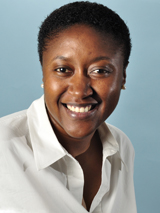 I had the pleasure of representing Intel at Northern Michigan University where President Obama announced his Wireless Innovation and Infrastructure Initiative on February 10. Needless to say this was a thrilling personal experience, and I am anxiously awaiting the official picture of me meeting the President of the United States! This was also a thrilling professional experience as this initiative shows that the President and his team truly get the necessity of ubiquitous wireless broadband if the U.S. is to be able to compete and lead the world moving forward. The President’s analogy of what railroads, national highways, and phones did for our country is right on. The new transportation and communication axis is wireless broadband!
This is how the world becomes one small virtual community for education, for commerce, for news, for connecting people and movements. Let’s consider for a second the example of Getz’s—as a result of connecting to the Internet, the Getz family’s “Main Street” clothing business saw a dramatic increase in revenue, and now two thirds of their revenue comes from on line sales. NMU provides us with another example—because NMU opened its wireless broadband network to the community, kids who live 30 miles away from school, in a beautiful but snowy area with 200 inches of snow every year, do not miss out on their education when they cannot physically make it to school.
The funny thing for me is that the NMU deployment for us at Intel was nothing more than an opportunity to turn a university that provides a laptop to every student into a connected university using WiMax and WiFi. NMU has provided a valuable test bed and we continue to learn a lot from it. It is amazing what happened after the university opened the network to the community. America can learn from this example, real time, real life.
This brings me to the most important point, which is the availability of our nation’s finite spectrum resource to make this happen. In his NMU remarks, the President said: “By selling private companies the rights to these airwaves, we won't just encourage private investment and expand wireless access; we're actually going to bring in revenues that lower our deficits.” The President’s incentive auctions proposal to free up more spectrum for mobile broadband is paramount. This is absolutely needed to make sure every American is connected to the world with unlimited opportunities. Intel supports the President’s call for nearly doubling the amount of spectrum available for wireless broadband, and we were glad to see that his FY12 budget calls for voluntary incentive auctions as a critical means to more efficient spectrum management.
In conclusion, representing Intel at the NMU event was a thrill! Wireless broadband innovation is essential to increasing US jobs, productivity, and global competitiveness. Meeting consumers’ and businesses’ exploding demand for wireless broadband services is necessary for America to win and lead going forward. This is how we will be first!
Aicha Evans is the General Manager of the Mobile Wireless Group at the Intel Corporation
Learn more about Technology
- &lsaquo previous
- …
- 122
- 123
- 124
- 125
- 126
- 127
- 128
- 129
- 130
- …
- next &rsaquo


White House Blogs
- The White House Blog
- Middle Class Task Force
- Council of Economic Advisers
- Council on Environmental Quality
- Council on Women and Girls
- Office of Intergovernmental Affairs
- Office of Management and Budget
- Office of Public Engagement
- Office of Science & Tech Policy
- Office of Urban Affairs
- Open Government
- Faith and Neighborhood Partnerships
- Social Innovation and Civic Participation
- US Trade Representative
- Office National Drug Control Policy
categories
- AIDS Policy
- Alaska
- Blueprint for an America Built to Last
- Budget
- Civil Rights
- Defense
- Disabilities
- Economy
- Education
- Energy and Environment
- Equal Pay
- Ethics
- Faith Based
- Fiscal Responsibility
- Foreign Policy
- Grab Bag
- Health Care
- Homeland Security
- Immigration
- Innovation Fellows
- Inside the White House
- Middle Class Security
- Open Government
- Poverty
- Rural
- Seniors and Social Security
- Service
- Social Innovation
- State of the Union
- Taxes
- Technology
- Urban Policy
- Veterans
- Violence Prevention
- White House Internships
- Women
- Working Families
- Additional Issues