Energy and Environment Latest News
Live Chat on the America’s Great Outdoors Initiative with Secretary Salazar
Posted by on June 9, 2011 at 10:47 AM EDTFor generations, America's great outdoors have ignited our imaginations, bolstered our economy, and fueled our national spirit of adventure and independence. That is why during the month of June, we celebrate Great Outdoors Month and rededicate ourselves to experiencing and protecting our nation’s unique landscapes and treasured sites.
President Obama’s America’s Great Outdoors (AGO) Initiative has launched a national dialogue about conservation in America. The AGO Initiative is based on the tenet that lasting conservation solutions should start with the American people – that nobody know which places are most important to American communities better than the people who live, work and recreate in them. The Department of the Interior and other government agencies are hard at work talking with communities and implementing the recommendations of the AGO report. And now we’d like to update you on the progress we’ve made over the last few months.
Please join us on Friday June 10th at 2:00 pm, EDT, as Secretary Ken Salazar answers your questions about what the Department is doing implement the AGO initiative and discuss how all American’s can enjoy the great outdoors.
Submit your questions in advance by sending them to newmedia@ios.doi.gov. Or ask them during the chat at www.doi.gov/live.
We look forward to speaking with you on Friday June 10th at 2:00 pm, EDT.
Learn more about Energy and EnvironmentOcean Stewardship Built By You, For You
Posted by on June 8, 2011 at 7:04 PM EDT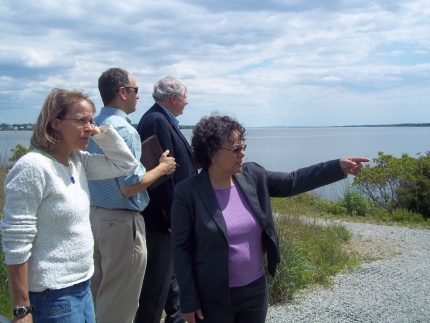
Chair Sutley looks out into the Narragansett Bay in Providence, Rhode Island
Our nation's coastal areas provide a wealth of natural and economic resources, and generate tens of millions of jobs and trillions of dollars for our economy each year. More than half of our country's population calls the coastal fringe that borders our nation home. However, competing uses and demands on the ocean threaten the health of our oceans, coasts, and Great Lakes. President Obama established the National Ocean Council to develop and implement a new, comprehensive ocean stewardship policy built with input from the American people.
June marks National Oceans Month, and the National Ocean Council is holding a series of events all month to hear from the communities that depend on our oceans and coasts about the actions they would like to see put in place to implement this policy.
This week, Senator Reed invited me to Providence, Rhode Island, where I heard a wide range of perspectives on the importance of collaborative ocean planning efforts to build a successful policy that addresses the diversity of coastal regions and uses of the ocean. I heard about ways in which Federal actions and resources under the new National Ocean Policy can help Rhode Island continue building on local efforts and success. It was clear that the diverse collection of participants, state and tribal authorities, users, stakeholders, and partners, including Senator Whitehouse, who participated in the State process, had pride in their recently completed State ocean plan. Sen. Whitehouse has taken the lessons from what the State of Rhode Island has done and is working in the Senate to protect our oceans.
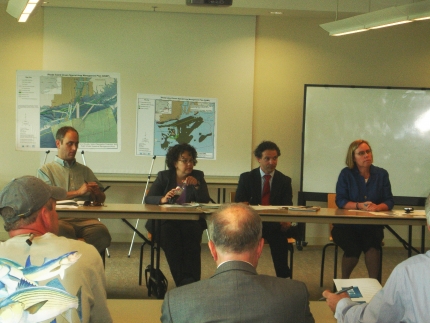
Chair Sutley speaks with local communities on the nation's first comprehensive ocean policy
The feedback and discussions we will gather throughout the month will ensure that this Administration is implementing a robust, smart and scientific ocean policy that will address the most critical issues facing our nation’s waters. As we work to better harmonize and sustain the uses and health of our oceans, coasts, and the Great Lakes, we want to hear from you to put into action a plan built with you for you.
Nancy Sutley is Chair of the White House Council on Environmental Quality
Learn more about Energy and EnvironmentInvesting in Our Communities and Creating Jobs
Posted by on June 6, 2011 at 11:37 AM EDTEd. Note: Check out this slideshow of former abandoned waste sites that have been revitalized with EPA investments.
Every American wants their air and water to be clean and the land where they live, work, play and learn to be free of pollution. But President Obama knows that these cleaner, healthier communities are also better places to buy a home or start a business – boosting local economies and creating jobs often in areas where they’re needed most. That’s why this Administration is investing in clean, green, sustainable communities that will help us win the future.
Since EPA’s brownfields program began less than a decade ago, it has spurred almost 70,000 American jobs. To build on this record of success, I’m in Lansing, Michigan today where I’m announcing $76 million in clean-up grants that will be used for projects throughout the nation.
With the help of local workers, we’ll turn tainted factories, deserted gas stations, closed smelters and some of the more than 450,000 other abandoned or contaminated sites throughout America into vibrant residential and retail districts filled with opportunities for American workers.
Learn more about Energy and EnvironmentUnleashing Rooftop Solar Energy through More Efficient Government
Posted by on June 2, 2011 at 4:04 PM EDTEd. Note: Cross posted from the Energy Blog.
Across the country, the race is on to drive down the cost of solar energy. And a new challenge through the U.S. Department of Energy’s SunShot Initiative could help slash the costs even faster.
We are challenging cities and counties to compete nationwide to cut the red tape that can push up the price tags on solar energy projects.
One of the highest hurdles for would-be investors in residential and small commercial solar energy installations is navigating the differing and expensive administrative processes required to get their solar panels from the drawing board to the rooftop.

Solar panels on the roof of the Department of Energy Forrestal Building. Photo provided by the Department of Energy.
Learn more about Energy and EnvironmentJune 1: Official Start of the Hurricane Season
Posted by on June 1, 2011 at 3:00 PM EDTThis has been cross posted from the U.S. Department of Homeland Security FEMA Blog
It’s June 1, which means it is the official start of Hurricane season. With hurricane season officially here, we wanted to share a video from Administrator Fugate:
Watch FEMA Administrator Fugate's full remarks here.
You can do your part by making sure you and your loved ones are prepared by having an emergency plan and kit. Talk with your friends and neighbors and encourage them to do the same. And you can also take steps to get prepared for a hurricane at your workplace, so talk with your human resources manager about steps you can take.
Last week was Hurricane Awareness Week and we wrote a series of blog posts to illustrate the importance of being informed about the many hazards of severe tropical weather. Here there are again if you didn’t have a chance to read them:
- Day 1: What we're doing to prepare
- Day 2: Storm surge
- Day 3: Wind danger
- Day 4: Inland flooding
- Day 5: The team effort
- Day 6: Make a plan
- Day 7: Tips To Stay Safe
Visit www.ready.gov/hurricanes to get prepared and embed our widget on your website to help us get the word out:
This widget is no longer available.
Learn more about Energy and EnvironmentGetting SMART About Energy Efficiency
Posted by on May 27, 2011 at 3:51 PM EDTAs the second largest producer of hydropower in the United States, the Department of the Interior’s Bureau of Reclamation has a key role to play in President Obama’s blueprint for a secure energy future. Reclamation’s staff of engineers, biologists, hydrologists and other professionals are working tirelessly to conserve water and improve energy efficiencies at our projects across 17 Western states.
Recently, Reclamation announced $24 million in WaterSMART Water and Energy Efficiency Grants for 54 projects. This federal funding, when combined with other non-federal resources, will total more than $76 million in projects that are expected to save more than 15 million kilowatt-hours of electricity per year, enough for more than 1,300 households.
Learn more about Energy and Environment
- &lsaquo previous
- …
- 123
- 124
- 125
- 126
- 127
- 128
- 129
- 130
- 131
- …
- next &rsaquo
Related Videos
-
 May 09, 2014 9:21 AM
Inside the White House: Solar Panels
-
 September 01, 2016 9:25 PM
President Obama Delivers a Statement to the Press
White House Blogs
- The White House Blog
- Middle Class Task Force
- Council of Economic Advisers
- Council on Environmental Quality
- Council on Women and Girls
- Office of Intergovernmental Affairs
- Office of Management and Budget
- Office of Public Engagement
- Office of Science & Tech Policy
- Office of Urban Affairs
- Open Government
- Faith and Neighborhood Partnerships
- Social Innovation and Civic Participation
- US Trade Representative
- Office National Drug Control Policy