Energy and Environment Latest News
Winning the Future for the Next Generation of African American Leaders
Posted by on May 27, 2011 at 2:21 PM EDT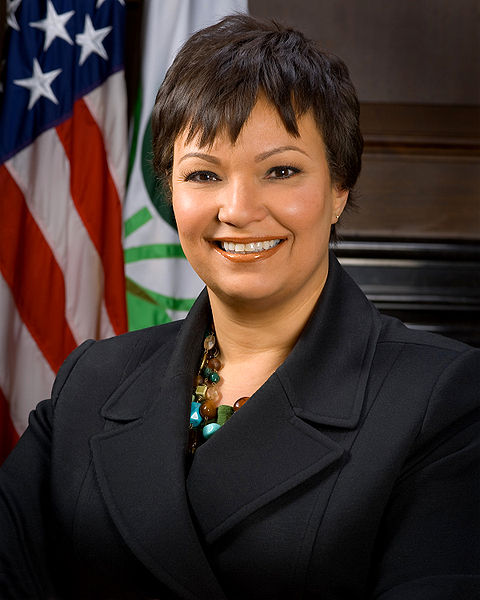 I recently had the privilege of speaking to this year's graduates at Florida A&M University, and was proud to join the class of 2011 in receiving my first honorary doctorate. This was a profound personal experience for me and one that I was very proud to share with so many incredible graduates and their families. It was a reminder of how opportunities have grown and expanded to reach so many new people – even in just the span of my lifetime.
I grew up in a neighborhood of New Orleans called Pontchartrain Park where some of the very first post-war black homeowners in the area raised their families during the era of Jim Crow. After serving in the Navy during World War II, my Dad worked as a Postal Delivery Man. It was one of the better jobs an African American veteran in the South could get at the time. He and so many of our neighbors in Pontchartrain Park worked hard not just to support their families but to open the way for new opportunities for the next generation.
I was fortunate enough to be part of that next generation. I started school not long after segregation ended, and though my parents never graduated from college, they always held the expectation that I would. And they worked hard so that I could. I was able to go to college at Tulane, where I started off studying to become a doctor. I wanted to help people when they got sick and work to protect and promote health. After taking a few chemical engineering classes, I realized that if I worked in environmental protection, I could help prevent people from getting sick in the first place. I started at the U.S. Environmental Protection Agency (EPA) after getting my masters in chemical engineering from Princeton and have worked in environmental protection ever since.
As the first African-American to lead the EPA, serving under the first African-American President, I’ve had the opportunity to help change the face of environmentalism. Expanding the conversation on environmentalism is an important priority in my work – which is why I was so proud to be at FAMU and see how many new voices are now a part of this conversation. FAMU is on the cutting-edge of environmental research and stewardship and recently was named one of Princeton Review’s Green Colleges for 2011.
Seeing the progress being made there reminded me of the dream my parents had worked so hard to achieve. It's the same thing I want to achieve for my own two teenage boys – the opening of new opportunities for their generation. Looking out at the FAMU graduates that day, I have great confidence that the next generation of African American leaders will blaze a bright path for all of those to come.
Learn more about Education, Energy and EnvironmentShare Your Ideas with the National Ocean Council at a Listening Session Near You
Posted by on May 26, 2011 at 3:06 PM EDTExperts from the National Ocean Council’s 27 Federal agencies and offices have been busy drafting strategic action plans to achieve nine national priority objectives that address some of the most pressing challenges facing our ocean, coasts, and Great Lakes. Having already received your initial comments before we got started, we’d now like to hear from you again—this time with your thoughts on the strategic action plan outlines we’ve developed. That’s why we’re hosting a dozen Regional Listening Sessions at this still-early stage of the drafting process. The strategic action plan outlines will be released in early June for a 30-day public comment period during which you will have the chance to chime in at one of the 12 Regional Listening Sessions or via the Web through a public comment portal.
Here are the dates and locations for the listening sessions:
- DATE, LOCATION, VENUE
-
June 9, 6:00pm-8:30pm
Washington, DC, Women’s Memorial at Arlington National Cemetery -
June 9, 4:00pm-9:00pm
Barrow, AK, North Slope Borough Offices -
June 10, 4:00pm-9:00pm
Anchorage, AK, Wilda Marston Theatre, Z. J. Loussac Library -
June 13, 1:00pm-5:00pm
Chicago, IL, U.S. EPA Regional Headquarters -
June 15, 5:00pm-9:00pm
Jacksonville, FL, University of North Florida -
June 16, 1:00pm-4:00pm
Honolulu, HI, The Neal Blaisdell Center -
June 27, 11:30am-3:00pm
Exeter, NH, Exeter High School -
June 27, 5:00pm-8:30pm
Galveston, TX, Galveston Convention Center -
June 27, 8:30am-4:30pm
Ocean Shores, WA, Quinault Beach Resort and Casino -
June 30, 1:00pm-5:00pm
San Francisco Bay Area, CA, Hilton Union Square -
June 30, 10:00am-5:00pm
West Long Branch, NJ, Monmouth University -
July 1, 9:00am-1:00pm
Portland, OR, Portland State University
Identifying the critical actions our national stewardship requires will take cooperation across all levels of government and stakeholder communities. Stay tuned for more information on how to comment on these outlines, and we hope to see you at one of the listening sessions!
Andy Lipsky is an Ocean Policy Advisor at the National Ocean Council
Learn more about Energy and EnvironmentConnecting Students to America’s Energy Challenge
Posted by on May 25, 2011 at 5:18 PM EDTThe Obama Administration believes it is critical to tap the ingenuity and creativity of America’s students if we are to find solutions to the grand challenges of today. Yesterday, Secretary of Energy Steven Chu and Secretary of Education Arne Duncan helped launch a new initiative based on this theme that will help address the Nation’s energy challenge while arming American families with beneficial information.
Along with Dr. Francis Eberle, Executive Director of the National Science Teachers Association (NSTA), Secretaries Chu and Duncan launched America’s Home Energy Education Challenge, a new initiative to help teach students and families about energy use at home, the overarching benefits of being energy efficient, and the potential synergy of saving money while saving energy. The competition will encourage educators to use school spirit and competition as ways to unleash the creativity of students and equip them with the information to make smart energy choices.
“Energy efficiency is all about helping families save money by saving energy,” Secretary Chu said yesterday. “America’s Home Energy Education Challenge leverages the passion and curiosity of students to encourage families across the country to reduce energy waste in their homes while inspiring the next generation of America’s energy leaders.”
One of the reasons I’m excited about America’s Home Energy Education Challenge is because it will encourage students and parents to access their own energy usage data online to measure their progress in this exciting competition. But this challenge shouldn’t be limited to students and their parents. It is just one example of how energy information can empower all consumers to better manage energy use and save money, all while helping to reduce the Nation’s overall power bill.
All consumers—residential and commercial—deserve timely access to their own energy data in machine readable formats. With proper privacy protections, we can empower consumers, enable better decisions, and spur innovation. In light of that, I issued today an energy-data challenge in my remarks at Connectivity Week to the electric power industry. Here is the challenge:
How can we securely provide customers electronic access to their energy information, thereby supporting the continuing development of innovative new products and services in the energy sector?
Engaging Americans of all sorts as well as American institutions—be they students, parents, or businesses—will help ensure the United States answers this call to action as it has many times before. To learn more, check out the newly-revamped SmartGrid.gov and stay tuned for a White House summit on grid modernization in the next month.
Aneesh Chopra is U.S. Chief Technology Officer
Learn more about Energy and EnvironmentSaving You Money at the Pump and Protecting the Air We Breathe
Posted by on May 25, 2011 at 3:32 PM EDT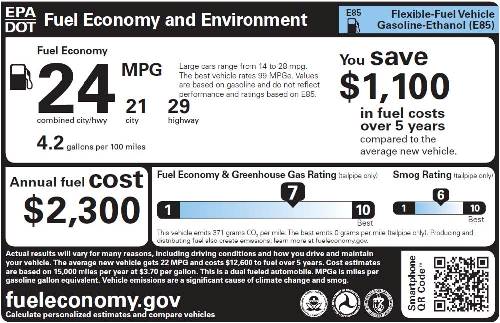
To strengthen our economy, save drivers money at the gas pump and reduce harmful pollution in the air we breathe, President Obama has made cleaner, innovative and more fuel efficient vehicles a priority for this administration. Today, we’re taking another step to help put more fuel efficient cars on our streets and highways.
To match a new generation of vehicles rolling off the lines in American auto plants, we’re releasing a new generation of fuel economy labels to help consumers decide which vehicle is right for them and their families. These new labels represent the most significant redesign of fuel economy labels in 35 years – and one of the most powerful tools car buyers have ever had to find a vehicle that will meet their needs and save them money.
The new fuel economy labels will still provide the familiar, and important, information about city and highway mileage for new vehicles. But they will also cover new categories to help car buyers who are comparing a wide variety of different vehicles on the market.
Learn more about Energy and EnvironmentNext Generation Fuel Economy Labels Arm Consumers with Information They Can Use
Posted by on May 25, 2011 at 9:48 AM EDTEd. Note: Cross posted from the Department of Transportation's Fast Lane blog. Secretary LaHood and EPA Administrator Lisa Jackson will hold a press conference today at 10:30 a.m. EDT on this to discuss the new fuel economy labels. You can watch the press conference live here.
This Administration has taken unprecedented steps to protect consumers at the gas pump. In March, the President announced a plan to reduce our oil imports by a third by 2025--leveraging domestic resources while reducing the oil we consume. Since the beginning, this Administration has been making investments and taking smart steps that are already helping us move towards this important goal. You can see it in our investment in alternative fuels and our support of electric vehicles--creating jobs while decreasing costs for consumers.
Most importantly, you can see it in the historic, national fuel economy standards for passenger cars and trucks achieved last year under President Obama’s leadership.
Today, I'm excited to join Environmental Protection Agency Administrator Lisa Jackson in introducing new fuel economy labels that will empower car buyers with better information about what they will spend or save on fuel costs when looking to purchase a new vehicle. This is one part of President Obama's plan to provide Americans with relief from high gas prices and break our dependence on foreign oil.
These labels offer consumers more information in a more usable format. When shopping for a new vehicle, you'll be able to see your expected savings over a five-year period, a fuel economy comparison to other vehicles in the same class, and easy-to-understand guidance about each car or truck’s environmental impact. The bottom line is that these labels will help people make informed decisions when they're buying a car, so that they can save money at the gas pump.
The new labels also feature a QR code that allows car buyers to comparison shop on the go. Shoppers can scan the QR code with their smartphones to store that vehicle's information, compare it to other vehicles, and access www.fueleconomy.gov for even more information.
Because of President Obama's efforts and automakers' innovations, Americans today have many more options for fuel-efficient vehicles than ever before. And the new labels will help us make sense of those options and take advantage of the new, more energy efficient fleet to save money and reduce tailpipe emissions.
Perhaps the most terrific thing about these labels is that--despite their sophistication--they are easy to understand. We're talking about a new generation of labels for a new generation of cars.
We know that transportation is one of the biggest costs in any family's budget. When we provide more useful information about how a family's budget will be affected by a new car or truck purchase, we're empowering Americans to make better decisions and save more money.
And with the labels we're introducing today, shoppers will be armed with the most powerful informational tools yet to make the best decision for their families, their wallets, and the air we breathe.
Learn more about Energy and EnvironmentDriving our Nation Toward America's Clean Energy Future
Posted by on May 24, 2011 at 7:40 PM EDT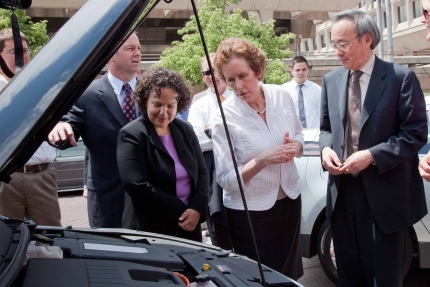
Chair Sutley, Administrator Johnson and Secretary Chu view a new Chevrolet VOLT electric vehicle (Photo Credit GSA)
Today, U.S. Department of Energy Secretary Steven Chu, U.S. General Services Administrator Martha Johnson and White House Council on Environmental Quality Chair Nancy Sutley came together to announce another major step in leading by example and reducing our dependence on oil by boosting clean energy technologies in our Federal fleet. President Obama today issued a Presidential Memorandum that will implement new Federal fleet management practices to further the Administration's goals to cut oil imports by one-third by 2025 and to put one million advanced vehicles on the road by 2015. In tandem, building on the doubling of the Federal hybrid fleet last year, GSA launched a historic Electric Vehicle Pilot program that will put the President’s plan into action and place alternative fueled vehicles into cities across the country.
Check out the video below to watch Secretary Chu, Administrator Johnson, and Chair Sutley announce the President's Memorandum and launch the government's first Electric Vehicle Pilot program:
The response has already been overwhelmingly positive. See some statements of support below from various business leaders, advocacy groups and Members of Congress:Brian Wynne, President, the Electric Drive Transportation Association
"The Electric Drive Transportation Association (EDTA) applauds the vital work being done in bringing electric drive vehicles to federal fleets. Their commitment will help accelerate private sector investment in the advanced technologies that will fuel our sustainable transportation future."Greg Martin, Director of Policy and Washington Communications, General Motors
"Electric vehicles represent a leap forward toward a more clean and secure America. The technology that powers electric vehicles is essential to building our Nation's long term, global competitive strength and lessening our dependence on foreign energy sources. The federal fleet provides a good proving ground for these advanced vehicles and can help spur greater market interest. In this regard, the GSA Pilot program is leading the way."Joe Mendelson, Director of Policy, Climate & Energy Program, National Wildlife Federation
"Jump starting the electrification of our federal fleet is a great deal for taxpayers and the environment. It leads the way toward a future that avoids high prices at the gas pump, reduces carbon pollution, and invests in made-in-America technology."Lizabeth Ardisana, Director of Sales, Service and Distribution, THINK
"Government involvement is critical to support and sustain the growing U.S. EV industry and direct government purchases of electric vehicles is the next logical step in supporting the policy to reduce America’s reliance on imported petroleum by one-third," said Lizabeth Ardisana, THINK Director of Sales, Service and Distribution. "Additionally, the loans and grants that manufacturers and local governments have received to support the commercialization of EV technology and related infrastructure have laid the groundwork to create a wealth of new job opportunities in the U.S."Senator Tom Carper, U.S. Senator for Delaware
"The price at the gas pump is putting a big dent in the pocketbooks of millions of families and businesses across our nation. The impact of high gas prices on the federal government's fuel bill is no different. The hundreds of thousands of vehicles in the federal government's fleet cost taxpayers millions in fuel costs every year, at a time when the federal government is trying to get the most out of every dollar we spend. High fuel costs present yet another significant challenge for the federal government as we work to curb federal spending, but as Albert Einstein once said 'in adversity lies opportunity,' and this challenge certainly provides an opportunity for the federal government to rethink how we fuel our vehicle fleet."President Obama's memorandum and the General Services Administration's announcement on new government-wide fleet management practices is a welcome step in the right direction to cut those significant vehicle fuel costs and help strengthen the American economy. It also comes on the heels of the release of a recent Government Accountability Office report that detailed how federal agencies are struggling with some of the vehicle mandates that have been placed on them. Moving to alternative fuel vehicles will help us reach the President's goal of a 30 percent reduction in petroleum use by 2015. This action underscores the Obama Administration's willingness to lead the way in increasing energy efficiency, and it will also allow us to leverage the enormous buying power of the federal government to make these vehicles more affordable for every American family and business. I am also encouraged that as part of this effort, the President is asking agencies to figure out their optimal fleet size and composition. Given the enormous budget deficits we face, we need to take a harder look at every dollar we spend to determine that it is both essential and as cost-effective an expenditure as possible. My subcommittee plans on following up with agencies about their work to determine their fleet's size and cost in the coming months."
Mindy Lubber, President, Ceres
"Today's announcement to clean up the federal fleet and invest in our advanced vehicle industry isn't just smart government and environmental policy, it's good economic policy," said Mindy Lubber, President of the nationwide business and investor coalition Ceres. "America needs to lead in clean transportation. Government action like this shows that we can in fact achieve our clean energy goals, even as it primes the pump for key American industries to grab a competitive edge."Roy Durham, Corp. /Govt. Fleet Director, RP Automotive
"RP Automotive is honored to be working with the GSA in their role to provide alternative fuel vehicles to the federal fleet in an effort to reduce both petroleum usage and harmful greenhouse gasses. We are proud to be a part of our government's plans to utilize zero and near-zero emission vehicles that will have measurable and positive effects for all of us."Leaders of the Sustainable Energy & Environment Coalition, U.S. House of Representatives
The Sustainable Energy & Environment Coalition is co-chaired by Reps. Jay Inslee (D-WA) and Steve Israel (D-NY).
"The Sustainable Energy & Environment Coalition commends the Obama Administration and all participating federal agencies for their efforts to deploy electric and alternative fuel vehicles. As the operator of the nation’s largest vehicle fleet, the federal government's purchasing power can drive the widespread adoption of these vehicles, which will reduce America’s oil addiction and fuel costs, and decrease greenhouse gas and other air pollution, all the while growing American jobs and our economy by increasing domestic production of the vehicles of the twenty-first century."Just as importantly, the Electric Vehicle Pilot Program and related efforts will save Americans money in two different ways: By reducing the federal government’s fuel costs – a direct saving for taxpayers that promises to grow with the success of this program; and by reducing America’s oil demand, which is one of the chief drivers of climbing gasoline prices. SEEC commends the Obama Administration for its continued work to break the oil addiction that is so costly to Americans and jeopardizes our national security."
Sahar Wali is the Director of Communications at the White House Council on Environmental Quality
Learn more about Energy and Environment
- &lsaquo previous
- …
- 124
- 125
- 126
- 127
- 128
- 129
- 130
- 131
- 132
- …
- next &rsaquo
Related Videos
-
 May 09, 2014 9:21 AM
Inside the White House: Solar Panels
-
 September 01, 2016 9:25 PM
President Obama Delivers a Statement to the Press
White House Blogs
- The White House Blog
- Middle Class Task Force
- Council of Economic Advisers
- Council on Environmental Quality
- Council on Women and Girls
- Office of Intergovernmental Affairs
- Office of Management and Budget
- Office of Public Engagement
- Office of Science & Tech Policy
- Office of Urban Affairs
- Open Government
- Faith and Neighborhood Partnerships
- Social Innovation and Civic Participation
- US Trade Representative
- Office National Drug Control Policy