Energy and Environment Latest News
Greening The Department of Veteran Affairs: A Year in Review
Posted by on January 26, 2011 at 4:23 PM ESTWe are making great strides toward operating more energy efficient facilities, using more renewable energy, “greening” our vehicle fleets, and achieving other milestones on the path to creating a sustainable agency. In 2010, we developed and implemented dozens of projects, which will translate to improved care of our Veterans and their families, cost-savings, better operational efficiency, and a healthier environment for all.
Learn more about Civil Rights, Energy and EnvironmentUSDA Accomplishments in Renewable Energy and Energy Efficiency
Posted by on January 25, 2011 at 4:28 PM ESTAt President Obama’s direction, the U.S Department of Agriculture (USDA) is working hard to unleash the power of America’s innovators and entrepreneurs to build a green energy economy. By producing renewable energy – especially biofuels – America’s farmers, ranchers and rural communities have incredible potential to help ensure our nation’s energy security, environmental security, and economic security. Here are just some of the ways USDA is involved in helping create green energy jobs for the 21st century:
Learn more about Energy and EnvironmentDiscover and Deliver: The Big Picture on Energy
Posted by on January 24, 2011 at 5:41 PM ESTEd. Note: Recently the Department of Energy (DOE) launched a new version of Energy.gov to better showcase the information and services DOE provides online. Be sure to check it out at Energy.gov.
Sometimes when one gets so focused on the daily tasks at hand, it’s easy to lose sight of the big picture around us. But when you take a step back, it is an impressive canvass. Thanks to the hard work of everyone at the Department of Energy over the past year, we’ve made remarkable progress in laying the foundation for a new energy future, advancing groundbreaking science, and reducing the nuclear dangers facing the world. In the process, we’ve begun to change the way the Department does business so we accomplish our work more efficiently and more effectively.
Learn more about Energy and EnvironmentMoving the Navy and Marine Corps Off Fossil Fuels
Posted by on January 24, 2011 at 4:26 PM EST
Secretary Ray Mabus at the Green Hornet flight on Earth Day in 2010.
In October 2009, as Secretary of the Navy, I established five ambitious goals to reduce fossil fuel consumption in the Navy and Marine Corps and increase the use of alternative energy to at least 50% of our energy requirements no later than 2020. These goals support the President’s objective to create a new energy future and a clean energy economy for the United States, and the reasons for doing so are clear and compelling:
- Reducing our reliance on foreign sources of energy makes the country more secure. Competition over fossil fuel resources has been one of the leading sources of conflict for thousands of years. Today, little has changed – whether it is oil, natural gas, or electricity – disruptions in the flow of energy can cause major economic havoc and negatively affect both our national security and international stability.
- Reducing our reliance on fossil fuels makes our people safer. Getting fossil fuels to our troops on the front lines is one of the most dangerous things we do. In fact, we import more gasoline into Afghanistan than any other product. Moving fuel to our Forward Operating Bases (FOBs) means convoys, which means protecting our convoys with Marines and Sailors, taking them away from doing what we sent them to Afghanistan to do and making them vulnerable to IEDs and ambush. If we can reduce the number of convoys by making our systems more efficient, or generating power from solar energy at the FOBs, we make our troops safer.
- Increasing energy efficiency makes our ships, aircraft, and vehicles more tactically capable. A better engine on a plane means it can go farther, and stay airborne longer. Better engines on ships results in less time spent refueling in vulnerable locations in port or at sea – a lesson we learned all too clearly with the USS COLE.
- Increasing alternative energy use by the Navy and Marine Corps helps create an alternative energy market. The Navy uses a third of the fossil fuels consumed by the Federal Government, which in turn uses about two percent of fossil fuels in America. The Navy and Marine Corps’ plan helps spur private investment and ultimately moves the country toward a clean energy economy.
- Reducing the energy footprint of the Navy and Marine Corps significantly reduces our carbon footprint.
Learn more about Energy and EnvironmentOpen for Comments: National Ocean Policy Strategic Action Plans
Posted by on January 24, 2011 at 4:22 PM ESTAs part of President Obama’s commitment to move toward the first comprehensive national policy for our oceans, the National Ocean Council (NOC) is responsible for developing strategic action plans to achieve nine priority objectives that address some of the most pressing challenges facing the ocean, our coasts, and the Great Lakes.
Engaging with the public is a key component for us in the development of these strategic actions plans. That’s why today we are launching a public comment period to get your feedback and input on the development of these plans. The health and productivity of our waters is critically important to our economy and for American families. This is your opportunity to help ensure we make the most of these precious resources by sharing your comments and ideas during the development of the plans that will implement a National Policy for the Stewardship of the Ocean, Our Coasts, and the Great Lakes. Comments will be accepted through April 29, 2011.
Read about the nine priority objectives on pages 28-40 of the Final Recommendations of the Interagency Ocean Policy Task Force.
As you make your comments it is important to take into account:
- The strategic action plans are built to address key issues identified in the Final Recommendations of, which were adopted in the President’s Executive Order 13547;
- The importance of integrating local, regional, and national efforts; and
- The opportunities, obstacles, and metrics of progress relevant to each of the priority objectives.
The National Ocean Council plans to release the draft strategic action plans in the summer of 2011, at which time the Council will provide an additional opportunity for public comments.
For more information, read the Federal Register Notice announcing this opportunity for public comment.
To submit your comments, please visit the public comment website.
Shere Abbott is Associate Director for Environment at the Office of Science and Technology Policy
Mike Boots is Associate Director for Land and Water Ecosystems at the Council on Environmental Quality
Learn more about Energy and EnvironmentDepartment of Transportation Investments in American Innovation
Posted by on January 21, 2011 at 2:50 PM ESTEd. Note: Cross-posted from the Fastlane Blog.
The transportation sector accounts for two-thirds of of US oil use and contributes about one-third of our greenhouse gas emissions. In other words, transportation professionals have a special obligation to take action.
The good news is that transportation's pressure on these twin problems creates an obvious opportunity for our sector to help work toward solutions. And, with President Obama's leadership on energy independence and climate change, the Department of Transportation has been doing precisely that.
Here are a few of DOT's efforts toward greater sustainability and a cleaner environment that you may have heard about last year:
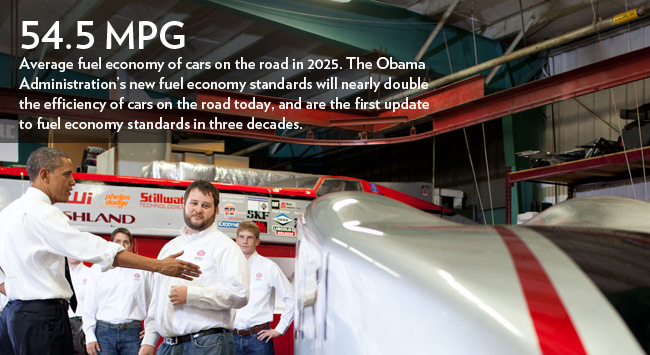
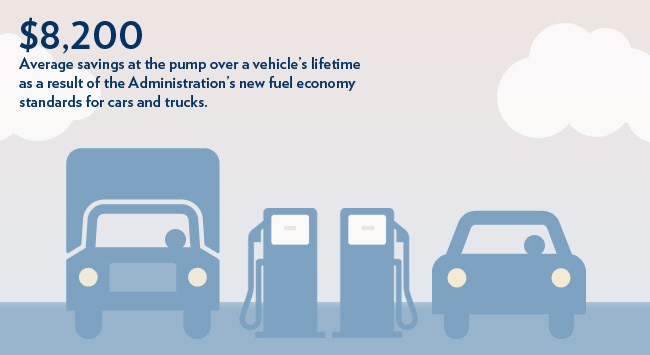
- Raising fuel-economy standards for passenger cars and light trucks to 35.5 mpg by 2016
- Treating biking and walking as valid and valued elements of our transportation network
- Beginning to build a high speed passenger rail system
Learn more about Innovations, Energy and Environment
- &lsaquo previous
- …
- 144
- 145
- 146
- 147
- 148
- 149
- 150
- 151
- 152
- …
- next &rsaquo
Related Videos
-
 May 09, 2014 8:21 AM
Inside the White House: Solar Panels
-
 September 01, 2016 8:25 PM
President Obama Delivers a Statement to the Press
White House Blogs
- The White House Blog
- Middle Class Task Force
- Council of Economic Advisers
- Council on Environmental Quality
- Council on Women and Girls
- Office of Intergovernmental Affairs
- Office of Management and Budget
- Office of Public Engagement
- Office of Science & Tech Policy
- Office of Urban Affairs
- Open Government
- Faith and Neighborhood Partnerships
- Social Innovation and Civic Participation
- US Trade Representative
- Office National Drug Control Policy