Energy and Environment Latest News
Leading by Example: The Federal Government's Sustainable Future
Posted by on January 20, 2011 at 12:30 PM EST2010 was a historic year for the General Services Administration (GSA). With a portfolio including 350 million square feet of public buildings, 200,000 federal vehicles, and a flow of goods and services throughout government totaling $95 billion, GSA has the capacity to impact every corner of government in every region of the country. In 2010, President Obama set a bold agenda for GSA to change the way the government does business by:
- Creating jobs and supporting American businesses by leading the Federal government to a sustainable future;
- Identifying sustainable products ranging from vehicles to cleaning products that will reduce the Federal government’s environmental footprint and save millions of taxpayer dollars; and,
- Laying the framework for an emerging clean energy economy.
GSA delivered. Here’s a look back at 2010 and a look forward to 2011:
Learn more about Energy and EnvironmentA Commitment to Responsibility – HUD’s Work to Build a Clean Energy Economy and a Stronger Environment
Posted by on January 19, 2011 at 1:15 PM ESTTwo years ago, newly inaugurated President Barack Obama stood before the nation and promised a “new era of responsibility.” Part of that responsibility requires a commitment to the health of our families and children by protecting the environment in which they live, laying a new foundation for growth by building the clean energy economy of the 21st century, and fighting the threat that climate change presents to our planet. As Secretary of the Department of Housing and Urban Development, I’m proud of the work HUD has done to live up to the standard the President set, and to share with you some of our major accomplishments in advancing clean energy and a stronger environment in the Obama Administration.
Learn more about Energy and EnvironmentStanding Up Renewable Energy on America’s Lands and Oceans
Posted by on January 18, 2011 at 4:25 PM ESTBy helping stand up responsible large-scale renewable energy projects on America’s public lands and oceans, the Department of the Interior is playing a leading role in fulfilling President Obama’s vision for a new energy future.
As America’s principal public lands management agency with stewardship responsibility over 20 percent of the nation’s land mass and 1.75 billion acres of the Outer Continental Shelf, Interior manages areas with extensive renewable energy potential.
In 2010, we began to unleash the potential of these resources in unprecedented ways, approving historic renewable energy projects, as well as developing strategic plans for a strong future.
Learn more about Energy and EnvironmentMaking Our Homes Safe and Healthy
Posted by on January 15, 2011 at 11:00 AM ESTEd. Note: Cross-posted from the HUD Blog
When my wife and I were expecting our first daughter, there was so much preparation to do before she arrived - as any parent could tell you. The list felt like it was a mile long - diapers, clothes, formula, a car seat and stroller. I could go on and on. But one of the most important things on the list was ensuring that our home was ready for our daughter, and that she had a safe and healthy place to grow up in.
We were of course aware of lead-based paint and the harmful effects it can have on young children. Because even though lead-based paint was banned in 1978, we knew that many homes still face significant lead-based paint hazards. That was the case in our older neighborhood.
That experience reaffirmed for me our shared belief as Americans that every family should be able to live in a safe, healthy home. And thanks to the wonderful work of our dedicated team at HUD and our grantees in cities and counties around the country, we’ve already reduced the number of children with lead poisoning by 75 percent over the last decade. Stated differently, the percentage of children that test positive for lead poisoning has been reduced from over 8% to less than 1%.
Learn more about Energy and EnvironmentWorking Together to Protect the Everglades
Posted by on January 7, 2011 at 4:33 PM ESTI am in Florida today to announce an exciting initiative to conserve working lands and wildlife habitat in the Everglades headwaters.
The Everglades rural working ranch landscapes are an important piece of our nation’s history and economy, and this initiative would work to ensure that they remain vital for our future.
The partnerships being formed would protect and improve water quality north of Lake Okeechobee and restore wetlands which are so vital to the entire Florida economy. The proposed conservation area and refuge would also protect important habitat for 88 federal and state listed species, including the Florida panther, Florida black bear, whooping crane, and Everglade snail kite.
Learn more about Energy and EnvironmentA New Year, A Fresh Set of Actions for a Healthy America
Posted by on January 7, 2011 at 2:49 PM ESTPresident Obama rang in the New Year with important action to protect environmental and public health, and rebuild our economy on a stronger foundation. On Tuesday, the President returned to his desk and signed a number of bills passed into law by Congress, five of which help ensure Americans can enjoy clean air, safe drinking water, and healthy wildlife.
These bills will curb lead levels in water pipes, a major source of harmful lead exposure for children, and help address diesel engine pollution that is linked to serious health conditions like asthma and heart and lung disease. They also hold the Federal Government accountable for the water pollution it contributes to American communities; encourage volunteer opportunities in National Wildlife Refuges; and help conserve vulnerable shark populations. These measures are just the beginning of what we can accomplish in 2011. We look forward to a year of continued progress toward a healthy and prosperous future for our country.
The President signed the following environmental bills into law on Tuesday:
- H.R. 81, the "Shark Conservation Act of 2010 and International Fisheries Agreement Clarification Act," which generally prohibits the removal of shark fins at sea and amends certain laws related to international fisheries;
- H.R. 4973, the "National Wildlife Refuge Volunteer Improvement Act of 2010," which reauthorizes and amends authorities relating to volunteer programs and community partnerships for national wildlife refuges;
- H.R. 5809, the "Diesel Emissions Reduction Act of 2010," which modifies and reauthorizes through FY 2016 the Environmental Protection Agency's Diesel Emissions Reduction Program;
- S. 3481, which clarifies the Federal Government's responsibility to pay reasonable service charges to a State or local government to address stormwater pollution from Federal properties; and
- S. 3874, the "Reduction of Lead in Drinking Water Act," which modifies the Safe Drinking Water Act definition of "lead free" with regard to pipes, pipe fittings, plumbing fittings, and fixtures
Nancy Sutley is Chair of the White House Council on Environmental Quality
Learn more about Civil Rights, Energy and Environment
- &lsaquo previous
- …
- 145
- 146
- 147
- 148
- 149
- 150
- 151
- 152
- 153
- …
- next &rsaquo
Related Videos
-
 May 09, 2014 8:21 AM
Inside the White House: Solar Panels
-
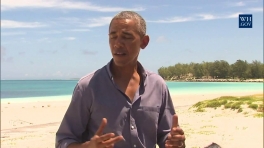 September 01, 2016 8:25 PM
President Obama Delivers a Statement to the Press
White House Blogs
- The White House Blog
- Middle Class Task Force
- Council of Economic Advisers
- Council on Environmental Quality
- Council on Women and Girls
- Office of Intergovernmental Affairs
- Office of Management and Budget
- Office of Public Engagement
- Office of Science & Tech Policy
- Office of Urban Affairs
- Open Government
- Faith and Neighborhood Partnerships
- Social Innovation and Civic Participation
- US Trade Representative
- Office National Drug Control Policy