Health Care Blog
Active and Audacious Public Health Work
Posted by on September 9, 2013 at 1:40 PM EST
Ira Combs is being honored as a Champion of Change for helping Americans live healthier lives, reduce disease and contribute to lowering health care costs by focusing communities on public health and prevention.
It seems that everywhere I go, when I tell people that I work in Omaha, Nebraska, their initial reaction is: “I didn’t know there were any black people in Nebraska.” This response is indicative of why it feels so good to be selected as a Public Health Champion for Change: we need people who believe in active and audacious community and public health work wherever it is needed.
I have been a community nurse for more than two decades and currently serve as Community Liaison Nurse Coordinator at the University of Nebraska Medical Center.
I also am the founding director of North Omaha Area Health (NOAH), an agency that addresses the needs of the underserved in North Omaha. With a handful of dedicated community volunteers and grassroots programs, we have worked hard to meet the public health needs of our community.
My work has an emphasis on inspiring young African-Americans to become involved in public health. This includes the creation of a youth mentoring program called “CPR-N-Da-Hood,” which teaches young people CPR, then allows them to teach others through a peer education component I also created Youth Expressions of Health (YEOH), a program that has reached hundreds of young people in the past 12 years. 10 years ago, we also started a Youth Summer Internship Employment Program that has assisted more than 45 minority and underserved young people prepare for and start college with a focus on entering a health care field.
I am also the founding publisher and editor of the NOAH health newsletter, started 15 years ago, which provides health information and educational services to the underserved in Omaha. NOAH sponsors and maintains websites and social media networks that provide information about healthy living and health screening clinics. We also created a local show revolving around a character called Dr. Jesse and his friend, Prevention Man -- both aimed at teaching healthy practices and tips to children and teens.
The quote from the Bible, “For everyone to whom much is given, from them much will be required” is how I live my life and apply my skill set, helping those who need help the most. In that same vein I tell youth and families alike, when you have information, a skill, a talent it’s incumbent upon you to share it with the community because many times, unless we help those in our community the help may never come.
Ira Combs, serves as Community Liaison Nurse Coordinator at the University of Nebraska Medical Center and is the founding director of North Omaha Area Health (NOAH), an agency that addresses the needs of the underserved in Omaha, Nebraska.
Learn more about Health CareHelping My Community Be Healthy
Posted by on September 9, 2013 at 1:34 PM EST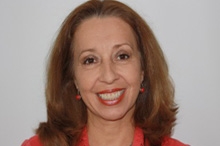
Myriam Escobar is being honored as a Champion of Change for helping Americans live healthier lives, reduce disease and contribute to lowering health care costs by focusing communities on public health and prevention.
I am a Community Outreach Worker at Moffitt Cancer Center, the only National Cancer Institute-designated cancer center based in Florida.
I enjoy being in the community and hearing firsthand the dreams, hopes and needs of the people I work with. I enjoy sharing with others -- and learning from them -- the simple things in life. When helping someone, it is not necessary to make large gestures. It’s the small details, like a friendly hand in the right moment that can change someone’s life forever. We just need to be aware by taking advantage of the resources and tools that life offers us, and to utilize them at the appropriate moment. For this reason, I love my job. Every day is an opportunity to help someone.
I was born in Colombia and immigrated to this grand country with my husband and son where we learned that dreams can become a reality with effort, dedication, and hard work. I can say that we are the perfect example of what makes this a great country; the multicultural contributions each one of us brings to this country adds to its success.
In 2008 a very painful event occurred in our family. My sister-in-law lost her battle against breast cancer at only 50 years old, leaving two teenage sons. That was a pivotal moment in my life. For reasons that only the Creator can explain, almost one month later I started working at Moffitt Cancer Center driving the mobile mammography bus that visited community clinics. Two years later, our Program Manager bestowed upon me and my co-worker a program we call, Yo me cuido, I Take Care of Myself to address the needs of the Latino community.
At that moment, I understood that this was the precise tool to change many lives, everyday women, the majority of them immigrants, with many dreams to accomplish. My job consists of motivating women who attend our workshop to get their mammograms, demonstrate the importance of breast self-exam awareness and follow them to make sure they have their yearly mammograms. We visit women in their churches, work sites, neighborhoods, support groups, apartment complexes, beauty salons, schools, and libraries. Where there is a group of women, our program is there.
Yo me cuido teaches Hispanic women how to take care of their health through early detection screenings and healthy lifestyles, focusing on the prevention of breast cancer.
We emphasize the importance that they have within our society, showing them how important it is that their healthy behaviors will be seen by their children and their entire families.
I think it is important that community work transcends boundaries and working with women is the perfect opportunity. I am convinced that as women we can change the world from the heart of our own homes.
Myriam Escobar is a Community Outreach Worker at Moffitt Cancer Center, a National Cancer Institute-designated cancer center, where she runs a program in the Tampa Bay area in Florida, called Yo me cuido (I take care of myself). The program teaches Hispanic women to take care of themselves through early detection and by living a healthy lifestyle with an emphasis on breast cancer prevention.
.
Learn more about Health CareSupporting the Health of the Public We Serve
Posted by on September 9, 2013 at 1:23 PM EST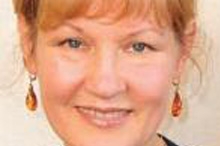
Natalie Pawlenko is being honored as a Champion of Change for helping Americans live healthier lives, reduce disease and contribute to lowering health care costs by focusing communities on public health and prevention.
Sometime in my early teens, I had an epiphany: all our actions – even those we think to be most private - contribute to the life around us. And that we have a choice to either contribute positively to an upward spiral of human life, or to its antithesis. I chose the former.
The past thirty years of my life have been an ongoing search for ways in which to continuously contribute to the community. As a child of immigrants fleeing from WW II in Ukraine, there was frequently a sense of appreciation for the privilege of having been born in the United States, and a desire to “give back”. However, not until the Chernobyl nuclear disaster of 1986 did I focus on the health of the public, here and elsewhere in the world.
Public health is our invisible first line of defense. It is everywhere: from childhood immunizations, to clean drinking water, to food inspections and clean air. It is complex, like newborn screening and disease outbreak monitoring. It is also as simple as you and me washing our hands frequently and sneezing into our shirt-sleeves. It is pervasive, and as history has shown, it can be profoundly transformative.
After working in Canada for many years and witnessing the critical role played by public health in the containment of the SARS outbreak there, I returned to New Jersey and joined the New Jersey Department of Health, Office of Local Public Health. I have an abiding interest in public health informatics and have spearheaded the reform of the public health reporting system in New Jersey.
And over the course of the past nine years, I have gotten to know the many men and women, public health professionals whose daily work in their local communities keep our state healthy and safe. Their commitment inspires me greatly and in my various roles here at the State Health Department, I have endeavored to support them in doing their vital work more effectively and efficiently and with less unnecessary burden.
Whether it is championing quality improvement training or performance evaluation audits, process management or leadership coaching, accreditation preparation or informatics reform, my team and I continuously focus on being ‘ruthlessly practical’. And in the fast paced environment that is the East Coast, we ground our work in collaboration, mutual respect and an awareness that everything we do contributes to the health of the public we serve.
With funding from the Affordable Care Act’s Prevention and Public Health Fund, the state of New Jersey has reduced the lag time between testing and reporting influenza results to the Centers for Disease Control and Prevention from 2-to-3 weeks down to 2-to-3 days. With more timely information, local health departments are better prepared to address emerging health issues and prevent future issues.
Natalie Pawlenko is the Director of the Office of Local Public Health for the New Jersey Department of Health where she is leading a statewide effort to streamline and coordinate public health data collection and analysis to improve public health prevention and response.
Learn more about Health CarePublic Health in Action
Posted by on September 9, 2013 at 12:44 PM EST
Marion Kainer is being honored as a Champion of Change for helping Americans live healthier lives, reduce disease and contribute to lowering health care costs by focusing communities on public health and prevention.
I am an infectious diseases physician and epidemiologist and work as director of the Healthcare Associated Infections (HAI) and Antimicrobial Resistance Program at the Tennessee Department of Health. I have an awesome team and I love my job: making health care safer in Tennessee and nationwide.
Earlier in my career in Australia, a terrible outbreak of methicillin-resistant Staphylococcus aureus (MRSA) infections among surgical patients changed my career forever. Never again did I want to feel as powerless in an outbreak as I did during that experience. I was no longer satisfied with attempting to treat infections; I wanted to prevent them.
Last year, a fungal meningitis outbreak across the country devastated patients, their loved ones, and healthcare providers. Tennessee was right at the center and dealing with it required every tool in my toolbox as a clinician and epidemiologist.
More than 13,500 patients were injected with contaminated steroid injections from a compounding pharmacy. Nearly 750 patients developed meningitis and/or infections around the spine and 63 people have died. Many still struggle with complications. As horrendous as this outbreak has been, it could have been far worse without investments from the Affordable Care Act’s Prevention and Public Health Fund. The Affordable Care Act is helping public health departments prevent and fight infectious diseases by investing in tools like enhanced public health workforce training and improved information technology.
The six members of my HAI team, funded through the Affordable Care Act’s Prevention and Public Health Fund Epidemiology and Laboratory Capacity grants, not only quickly determined the cause of the outbreak, they also identified patients not yet ill but at the highest risk of getting sick. Lives were saved not only by halting the contaminated injections, but also by tracking down every affected patient and getting effective treatment to the sick without delay.
In Tennessee, 153 persons developed infections; 15 have died. Had we not acted as quickly as we did, and the use of contaminated medication gone unchecked by public health, we estimate that 368 additional Tennesseans would have been injected. An additional 99 would have developed serious infections and up to 69 more people may have died. Our success came from a massive team effort that required close collaboration among clinicians, clinics, hospitals, local and state health departments and federal agencies, as well as vital funding from the Prevention and Public Health Fund. This collaboration must continue in order to prevent such a tragedy from occurring again.
Dr. Kainer is an infectious diseases physician and epidemiologist. She is the director of the healthcare associated infections and antimicrobial resistance program at the Tennessee Department of Health and helped identify the source of the 2012 fungal infection outbreak.
Learn more about Health CareValuing Health and Community
Posted by on September 9, 2013 at 12:38 PM EST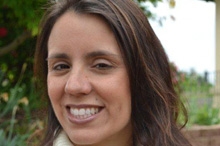
Andrea Hays is being honored as a Champion of Change for helping Americans live healthier lives, reduce disease and contribute to lowering health care costs by focusing communities on public health and prevention.
As a child, I looked forward to visiting my grandparents every weekend because I could walk everywhere with Grandma – to the Church, playground, grocery store, post office and even the library.
As I work on obesity prevention efforts in Evansville, Indiana, I’m reminded of those days where walking was easy and accessible. Those of us focused on the area of active living often cite the positive health impact of having more walkable and bikeable communities. Yet, we know it adds up to benefits beyond increasing physical activity among our residents. Communities that embrace this notion of physical activity also place a high value on, well, community.
That is, having more people out on the street, interacting and getting to know one another creates a sense of togetherness and inspires innovation in other areas. The increase of nature play spaces, outdoor classrooms, community gardens, and farmers markets has motivated a new way of thinking in our community – one that embraces all of our residents.
These efforts are aligned with a growing evidence base that shows if we create a more supportive community environment that promotes healthy living where we live, learn, work, worship, and play, people will begin to thrive and our neighborhoods will come alive. Most important, people will see improved health outcomes and a higher quality of life.
It is easy to forget that the three leading causes of preventable death in the United States are tobacco use, poor nutrition, and physical inactivity. While these causes are lifestyle related, it is important to note that access and opportunity play a huge role in our residents’ ability to lead a healthy lifestyle.
The Healthy Communities Partnership of Southwest Indiana (HCP) is a collaborative process catalyzed by the Welborn Baptist Foundation over five years ago. We also have recently received funding from the Affordable Care Act’s Prevention and Public Health Fund’s Community Transformation Grant.
Created by the Affordable Care Act, the Community Transformation Grant Program focuses on key public health and prevention goals, including tobacco-free living, active living and healthy eating, and clinical and community preventive services. With Affordable Care Act funding, the Healthy Communities Partnership of Southwest Indiana aims to improve the health of Southwest Indiana residents.
We are working to impact our region’s health through targeted strategies across the lifespan. These efforts start as early as newborns through the Baby Friendly initiative in two hospitals to utilizing a coaching model that helps low-income and medically underserved older adult patients monitor their chronic conditions at home. In addition to our settings based work, we are helping to increase access to healthy foods across our seven county area.
We can continue to accomplish health improvements through cross-sectoral partnerships that create opportunities to support tobacco-free living, healthy weight, and preventing chronic disease across the lifespan.
Andrea Hays is the Director of the move∙ment Initiative and the Upgrade campaign at the Welborn Baptist Foundation in Evansville, Indiana. These programs promote changes in the community that make healthy living easier for all residents.
Learn more about Health CarePrioritizing Patient Safety
Posted by on September 9, 2013 at 12:22 PM EST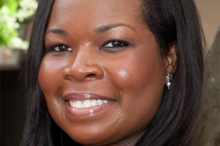
Erica Washington is being honored as a Champion of Change for helping Americans live healthier lives, reduce disease and contribute to lowering health care costs by focusing communities on public health and prevention.
To some consumers, “shared responsibility” in the treatment process may connote only the actions of physicians with their patients; however, “shared responsibility” in the realm of Healthcare Associated Infections (HAI) is much more. It’s the responsibility of all professionals in any healthcare setting – whether doctors, nurses, or administrative leadership – to take an active role in ensuring that preventable conditions do not impede patient care. Patient safety has thus increased by having all persons in healthcare delivery take an active role in infection prevention.
As the HAI Coordinator for Louisiana, working in the Louisiana Office of Public Health, I have been able to synthesize Epidemiology with infection control in our state’s acute care, long-term acute care, and inpatient rehabilitation facilities. These prevention measures include using CDC’s National Healthcare Safety Network (NHSN) as a surveillance tool to readily identify HAI as well as produce statistics for the purposes of prevention. With invaluable investments from the Affordable Care Act’s Prevention and Public Health Fund, Louisiana is able to celebrate low rates of infections such as central line-associated bloodstream infections (CLABSI) and catheter-associated urinary tract infections (CAUTI) and we will continue to work toward a zero infection goal. Funding from the Affordable Care Act’s Prevention and Public Health Fund is helping public health and health care leaders implement strategies to prevent healthcare-associated infections and improve the health and well-being of all Americans.
The success of the Louisiana HAI program is achieved by creating a symbiotic relationship between key stakeholders in patient safety such at the Louisiana Hospital Association, eQHealth Solutions (the state Medicare quality improvement organization), and our Consumer’s Right to Know Coalition. Additionally, our state has created prevention collaborative cohorts that focus on reducing infections by facilitating evidence-based prevention information exchanges between facilities and enhancing infection prevention education.
I am also fortunate to have the support of Association for Infection Prevention and Epidemiology (APIC) in Louisiana’s efforts to push toward zero infections. APIC has brought world-renowned leaders in HAI such as Dr. William Jarvis and Dr. Richard Wenzel to Louisiana to educate our infection preventionists and present evidence-based findings that may be incorporated into our patients’ scope of treatment.
Patients play a role in HAI prevention as well. Through working with other states to share and exchange information on the prevention of HAI, I was especially pleased to see consumer involvement in HAI awareness. By recognizing their role as stakeholders and advocates for safety, consumers have become more attentive to care provider actions, such as hand washing, environmental needs, and speaking up during their care plans if they notice actions that could lead to infections.
On any level of healthcare, whether delivery or administration, patient safety and infection control should be at the forefront of every action so that preventable conditions do not impede patient care. By working with stakeholders and consumers, we will achieve our zero infection goal.
Erica Washington is the Healthcare-Associated Infections (HAI) Coordinator for the State of Louisiana and implemented the first state-based National Healthcare Safety Network Data Use Agreement with the Centers for Disease Control and Prevention, which will improve the Louisiana’s ability to track and prevent healthcare-associated infections.
Learn more about Health Care
- &lsaquo previous
- …
- 53
- 54
- 55
- 56
- 57
- 58
- 59
- 60
- 61
- …
- next &rsaquo
From the Press Office
Related Videos
-
 December 13, 2016 5:04 PM
Signing Ceremony for the 21st Century Cures Act
-
 December 10, 2016 5:00 AM
Weekly Address: It’s Time to Get Covered on the Health Insurance Marketplace