Health Care Blog
Historic Consumer Protections Take Effect, On Time
Posted by on August 13, 2013 at 4:10 PM ESTLandmark consumer protections, including limits on out-of pocket costs in health insurance plans, are taking effect next year, on time. Here are the facts:
Under the Affordable Care Act, for the first time, new historic consumer protections will stop the worst insurance company abuses, by making it illegal for companies to discriminate based on pre-existing health conditions, ending lifetime and annual dollar limits on what an insurance company will cover, and capping out-of pocket spending to protect Americans and their families.
Learn more about Health CarePresident Obama Holds a Press Conference
Posted by on August 9, 2013 at 6:07 PM ESTPresident Obama took questions from the White House Press Corps today in the East Room of the White House, addressing a range of topics including the National Security Agency's role and reforms to intelligence gathering programs.
Collaborating to Deliver Healthcare, Education, and Outreach to the Mississippi Delta
Posted by on August 9, 2013 at 10:55 AM EST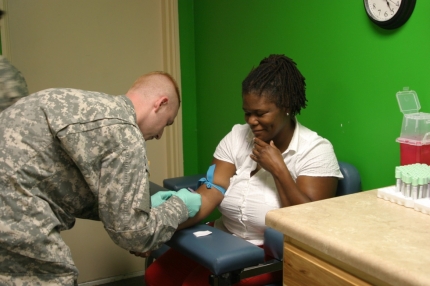
Sergeant Alexander Benton, of the 7214th MSU Troop Medical Clinic Detachment out of Garden Grove, CA, draws blood from a patient for lab tests in Blytheville, AR. (Photo credit by Sgt. David Thomas, 7229 MSU JBLM out of Washington)
For the fifth year in a row, the Delta Regional Authority (DRA), a White House Rural Council member, is partnering with the Department of Defense (DOD) to provide rural health care via the Innovative Readiness Training (IRT) program. Working in the Mississippi Delta Region, where today 20 percent of the population is uninsured, this summer’s missions are taking on a new role by educating communities about the new and affordable coverage options that the Affordable Care Act is making available beginning in 2014.
Since 2009, IRT has brought military medical personnel in-training to underserved communities of the Delta region to provide free medical care to residents. DRA plays the vital role of guiding communities through the application, planning, and implementation processes. During the past four years, military reserve forces have provided general medical care, optical care, dental care, veterinary services, nutritional education, mental health care, and other support services to 24,000 Delta residents at ten sites across three states. And this summer, DRA and DOD are projected to reach an additional 20,000 patients in eleven communities across six states of the Delta – their most extensive outreach in the region to date.
Take the Hope of Martin medical mission in Martin, TN, where troops from the Navy Reserves, Air Force Reserves, and Air National Guard provided free health care services valued at more than $700,000 to more than 3,250 residents of western Tennessee. Along with immediate care, DRA has partnered with another White House Rural Council member, the Health Resources and Services Administration (HRSA) within the Department of Health and Human Services, to help DRA as it educates and connect patients to new health insurance options that will help them access affordable coverage long after the IRT mission is complete.
Another example is the Delta Medical Mission, which saw 5,771 patients and provided 10,000 resource cards at five sites over the month of July. And just this week, Army reservists were deployed to four communities in Arkansas, Kentucky, Missouri, and Tennessee for the Four State Medical mission as well as to Ferriday, Louisiana, for the Louisiana Medical program. In just three days, this mission has seen 1,400 patients.
Every patient served can mean a life changed. In Martin, TN, residents began lining up for services as early as 2 a.m. One man, so nervous to see a dentist that he was allowed to keep his dog in his lap, had tooth extractions that were years overdue. Another man was found in a hallway later in the day crying because, as he explained, with his new glasses – made on-site – “it was the first time he had been able to see the world.”
The success of IRT is a testament to interagency collaboration facilitated by the work of the White House Rural Council and reaffirming President Obama’s commitment to rural America.
Dr. Mary Wakefield is the Administrator of the Health Resources and Services Administration within the Department of Health and Human Services. Chris Masingill is the Federal Co-Chairman for the Delta Regional Authority. Doug McKalip is the Senior Policy Advisor for Rural Affairs, White House Domestic Policy Council.
The Affordable Care Act: Speaking to Women’s Unique Health Needs
Posted by on August 9, 2013 at 9:45 AM ESTEd. note: This is cross-posted from hhs.gov. See the original post here.
More than three years ago, the most important women’s health legislation in my lifetime was passed into law — the Affordable Care Act. This law lowers the costs of health care for women, increases access to quality health care, and pays attention to the distinct health needs of women and families. As women, we often make health care decisions for ourselves and for our families, so it is important that we know how the health care law benefits us.
Women have often been charged more than men for the exact same health coverage. We have paid higher premiums and out-of-pocket costs. We also tend to make less than men and have a harder time paying for health care costs. As a result, women have not always had access to the health care they needed or the freedom to make the best health care choices for themselves and their families.

But that’s all changing. The new health care law already requires most health plans and insurance policies to cover recommended preventive services at no additional cost. This means that, each year, a woman can have a well-woman visit with her doctor at no cost to her. It also means we can get free screenings for breast and cervical cancer; FDA-approved contraception; breastfeeding support and equipment; screening and counseling for domestic violence; smoking cessation medications and services; and more. Furthermore, more low-income women will be eligible for Medicaid in 2014 even if they do not have children.
Learn more about Health Care, WomenA Mom’s Trusted Voice on Health Insurance
Posted by on August 8, 2013 at 1:37 PM ESTEd. note: This is cross-posted from hhs.gov. See the original post here.
As a mother and grandmother, I know how a mom’s voice is critical to maintaining the health of her family—and that’s true even after her kids have grown up into young adults. And as a trusted voice in the lives of their children, moms can play a vital role in getting the word out about the exciting new options for affordable, quality health coverage becoming available this fall for their children and other families in their communities.
Starting October 1, people who either do not have insurance or who buy their own but are looking for new options will be able to sign up for the Health Insurance Marketplace at HealthCare.gov. There, they will be able to compare easy-to-understand plans and choose the one that best suits their needs and budget for coverage that will start January 1st, 2014. Many families, including young adults, will also be eligible for tax credits that can help lower the cost of their premiums.
All of the plans must cover a set of essential benefits, such as maternity and newborn care, doctor visits, emergency care, prescription drugs, and mental health services. Insurers will be barred from discriminating against anyone because of their gender or a pre-existing condition, like breast cancer, asthma, or diabetes. That also means it will be illegal to deny women coverage or charge them more simply because of their sex—being a woman will finally no longer be a pre-existing condition.
But just because people have the opportunity to get new coverage doesn’t mean they know about it. And for too many Americans, quality, affordable health insurance has been out of reach for so long that they don’t believe it’s a possibility for them.
HEY! Do you Have Health Insurance?
Posted by on August 7, 2013 at 5:19 PM ESTThis summer, here at the White House Initiative on Asian Americans and Pacific Islanders, we’ve had the pleasure of working with ten talented interns.

White House Initiative on AAPIs summer 2013 interns and HEY! Ambassadors.
As a staff member specializing in health policy, I was especially excited to hear that many of the interns were passionate about health and health care access for our community. Interns shared stories about the value of health in their families, and the difficulties some of their loved ones faced when attempting to access care. I heard about the importance of neighborhood community health centers, which tend to provide the cultural and linguistic sensitivity needed to effectively care for our communities.
These stories especially caught my attention because enrollment in the new Health Insurance Marketplace is beginning soon on October 1, 2013. It’s now more important than ever for Asian Americans and Pacific Islanders (AAPIs) to understand how to access health care and how the Affordable Care Act impacts the AAPI community. With so many students in the office, it became evident how critical it is for AAPI youth to be informed as well. Many youth do not feel that health insurance is important, yet are unaware of the potential high costs of medical care. Additionally, many AAPI youth are bilingual and are key to ensuring their family members, who may have limited English proficiency, understand how to access health care.
Seeing this need for youth to get involved and using their experience working with student groups, the interns developed Health Engaged Youth (HEY!). Teaming up with the White House Initiative on American Indian and Alaska Native Education, the White House Initiative on Educational Excellence for Hispanics, the White House Initiative on Educational Excellence for African Americans, and the White House Initiative on Historically Black College and Universities, HEY! engages youth about the opportunities to get enrolled and covered through the Health Insurance Marketplace. HEY! also empowers youth to serve as HEY! Ambassadors and spread the word about health insurance coverage to their peers, family, and community. Through these passionate young leaders, we can work together to ensure our community has access to affordable health care.
To find out more about HEY! and the Health Insurance Marketplace, we invite youth leaders to participate in the HEY! kick-off webinar on August 8th and visit the WHIAAPI website.
Kate Moraras, serves as Senior Advisor in the White House Initiative on Asian Americans and Pacific Islanders.
Learn more about Health Care
- &lsaquo previous
- …
- 57
- 58
- 59
- 60
- 61
- 62
- 63
- 64
- 65
- …
- next &rsaquo
From the Press Office
Related Videos
-
 December 13, 2016 5:04 PM
Signing Ceremony for the 21st Century Cures Act
-
 December 10, 2016 5:00 AM
Weekly Address: It’s Time to Get Covered on the Health Insurance Marketplace