Health Care Blog
Accountable Care Community: Shared Accountability for the Health of a Community
Posted by on September 9, 2013 at 12:14 PM EST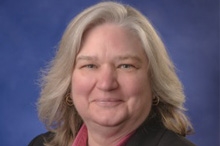 Janine Janosky, PhD. is being honored as a Champion of Change for helping Americans live healthier lives, reduce disease and contribute to lowering health care costs by focusing communities on public health and prevention.
I am Vice President at the Austen BioInnovation Institute in Akron (ABIA) and head the Center for Community Health Improvement. I lead a multi-institution collaboration known as the Accountable Care Community (ACC). It expands the concept of an Accountable Care Organization (ACO). This ACC initiative positively impacts the health of the local community and serves as a national model for collaborative, integrated, multi-institutional approach that emphasizes shared responsibility for the health of the entire community.
Our Accountable Care Community initiative is supported through a Community Transformation Grant from the Affordable Care Act’s Prevention and Public Health Fund. The Community Transformation Grant program, created by the health care law, supports innovative community-level efforts to collaborate to prevent chronic diseases such as cancer, diabetes, and heart disease.
Through the ACC, we have been successful in improving the health of those in our community by promoting healthier lifestyles through disease prevention and health promotion, reducing chronic disease, increasing access, and improving health equity. The ACC impacts population health by lessening the burden of disease, thus reducing health costs, and improving lives. One of the first ACC public health efforts was to zero in on diabetes since approximately 11 percent of adults in Akron have diabetes. In just 18 months we are already seeing positive result from the programs: More than half of participants lost weight, decreased body mass index (BMI), and reduced waist size; the average cost per month of care for individuals with diabetes was reduced by more than 10 percent per month, saving the program $3,185 per person annually; and we saw a drop in diabetes-related Emergency Department visits.
The multi-institutional partners within the ACC are diverse and include Akron Children's Hospital, Akron General Health System, Summa Health System, The University of Akron, Northeast Ohio Medical University, Summit County Public Health, Community Legal Aid, Akron Metropolitan Housing Association, Akron Public Library, Cuyahoga Valley National Park, United Way, Akron Urban League, and over 60 other community organizations, institutions, and agencies. The ACC framework improves population health through community and practice-based interventions for primary, secondary, and tertiary prevention and care management for chronic diseases including diabetes, hypertension, and others.
The ACC serves as a national model by providing and managing health and patient care across different institutions, expanding the efficiency of budgets and resource needs and uses while creating methods to monitor and evaluate health and performance indicators. The ACC is aligned with the integration of public health and healthcare, namely the movement toward population health.
Janine Janosky, Ph.D., serves as Vice President and Senior Fellow for the Center for Community Health Improvement at the Austen BioInnovation Institute in Akron, Ohio. The Austen BioInnovation Institute in Akron (ABIA) is leading a community-based integrated health and wellness initiative.
Learn more about Health CareNew Data: Most of the Increase in Employment is in Full-Time Positions Since the Affordable Care Act Became Law
Posted by on September 6, 2013 at 2:40 PM ESTEd. Note: This post was updated February 10, 2014 to reflect the most recent data.
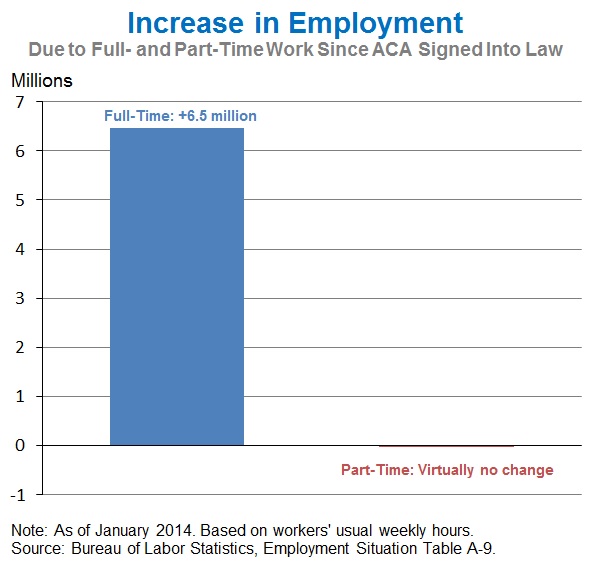
Data from the Bureau of Labor Statistics show that of the overall increase in employment since the Affordable Care Act became law, more than 9 out of 10 positions have been full-time.
The Affordable Care Act continues to improve the functioning of labor markets in a range of ways including helping to slow the growth of premiums, creating affordable new options for small businesses, reducing the “job lock” that can keep workers from taking the best job for them, and generally improving health outcomes and reducing absenteeism. We are already seeing tangible changes in affordability, including employer premium growth at less than one-third the rate of the late 1990s and early 2000s.
Businesses owners who are looking to take advantage of tax credits, and other benefits under the law aimed at making coverage more affordable are encouraged to visit Business.USA.gov/healthcare for more information.
Moreover, to date there is no economy-wide evidence that the employer responsibility requirement, which is scheduled to go into effect in 2015, has increased part-time employment. In fact, a range of labor market data shows that our patterns of part-time employment are typical given our current economic recovery. This finding was reinforced by a recent Congressional Budget Office (CBO) report, which concluded that there is “no compelling evidence that part-time employment has increased as a result of the ACA.” Five charts make five key points in this area:
1. Since the Affordable Care Act became law, the economy has created 6.5 million full-time jobs, while the number of part-time jobs has been essentially unchanged. Over the 46 months since the Affordable Care Act was signed into law, the number of employed people has increased by 6.4 million, reflecting a 6.5 million increase in the number of people with full-time jobs and a negligible decline in the number of people with part-time jobs. The net increase in employment over this period is therefore due entirely to an increase in full-time work.
What You Need to Know about the Health Care Law – Open Enrollment Begins October 1
Posted by on September 6, 2013 at 10:07 AM ESTFall isn’t just the time when kids go back to school; it also means enrollment under the Affordable Care Act is just around the corner. Starting on October 1, people without health care insurance -- including 10.2 million Latinos -- will be able to shop through the new health care marketplace to compares prices and plans and get covered. No one plans to get sick or hurt, but most people need medical care at some point. Health insurance covers these costs and protects you from very high expenses.
With open enrollment less than a month away, this is a great opportunity to review some of the key components of the Affordable Care Act and the health care marketplace that are important to know before October 1.
How does the health care law affect me?
- If you already have health insurance, you now have access to expanded preventative services like checkups, cancer screenings, mammograms and contraception at NO additional cost.
- Young adults, including nearly one million young Latinos, can now remain on their parents’ health insurance plan until the age of 26.
- Many seniors will save hundreds of dollars each year on their prescription drugs.
- Health insurance companies will no longer be able to deny you coverage or charge you more because of a pre-existing health conditions, including pregnancy or disability.
- Beginning 2014, most people are required to have health coverage. If they don’t, they may have to pay a fee.
- If you need help finding a plan, several kinds of help will be available to give you personalized assistance with the process.
What is the new Health Insurance Marketplace?
The Marketplace, also known as the insurance “exchange,” is a new, simple way to find health coverage that fits your budget and meets your needs. With one application, you can see all your options and enroll. You can comparison shop in an online marketplace, just like you would for cell phone plans or plane tickets. This tool will help you save money on your monthly premium for private health insurance and you will be able to find out if you qualify to reduce out-of-pocket costs. You can learn more about the new health insurance marketplace through live chat online or calling toll-free 24/7 at 1-800-318-2596.
Learn more about Health CareBuilding Coalitions to Promote a Healthier Seattle AAPI Community
Posted by on September 5, 2013 at 4:47 PM EST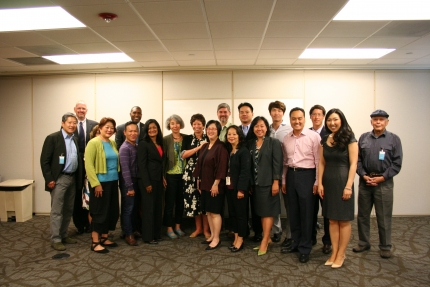
Senior Advisor Valerie Jarrett meets with AAPI community leaders at the International Community Health Services Clinic in Seattle, WA September 4, 2013. (by ICHS)
As a Member of President Obama’s Advisory Commission on Asian Americans and Pacific Islanders (AAPIs), I have the privilege to work on connecting the country’s AAPI communities with their Federal government. Yesterday, I was honored to facilitate a roundtable conversation with Valerie Jarrett, Senior Advisor to the President, and a small group of AAPI health, business, and civic leaders from around the Seattle area.
The roundtable was hosted at the International Community Health Services (ICHS) International District medical and dental clinic. We began with a tour of the facility hosted by Teresita Batayola, CEO of ICHS, and senior members of her staff. The ICHS team highlighted for Ms. Jarrett the wonderful work being done from their facility to provide access to high quality and culturally sensitive health care, to address the challenges facing many in Seattle’s AAPI community.
Following the tour, there was a vibrant discussion on the need for culturally sensitive outreach services under the Affordable Care Act, the importance of disaggregating data for AAPI communities to address health disparities, ways to promote more venture capital investments in AAPI entrepreneurship, and the critical need for a balanced approach to comprehensive immigration reform that embraces family unification as well as the needs in high-tech or high-demand industries.
As Ms. Jarrett noted at the close of the roundtable, all of these issues – from health care to community development to small business – are fundamentally interconnected, and our success depends on us all working together. With the continued support and collaboration of partners throughout the Northwest, of President Obama and his team across the federal government, and with the implementation of the Affordable Care Act, I am optimistic about the future and the health of our AAPI community.
Hyeok Kim is a member of the President’s Advisory Commission on Asian Americans and Pacific Islanders, and the Executive Director of InterIm Community Development Association, a Seattle-based nonprofit.
Learn more about Health CareLearning about the Health Insurance Marketplace in Korean
Posted by on September 3, 2013 at 5:05 PM EST
Jennifer Yoo, HHS’ Anne Avery, and FDA’s Hyun Son host a Google Hangout in Korean on the Health Insurance Marketplace September 27, 2013. (by Maria Pastrana Lujan)
Jennifer Yoo, HHS’ Anne Avery, and FDA’s Hyun Son host a Google Hangout in Korean on the Health Insurance Marketplace on August 27, 2013 (Photo courtesy Maria Pastrana Lujan)
On August 27, 2013, the White House Initiative on Asian Americans and Pacific Islanders held a Google Hangout in Korean to discuss the Health Insurance Marketplace. Viewers tuned in from around the country, and Korean American community groups gathered in California, Georgia, Illinois, Texas, New York, Virginia, and Washington to participate in the discussion.
The Department of Health and Human Services’ Anne Avery and Hyun Son responded to a broad array of questions about the Health Insurance Marketplace, which will be open on October 1, including eligibility requirements, enrollment start dates, authorized navigators, and resources for in-language assistance.
Nearly 1 in 5 Asian Americans and Pacific Islanders (AAPIs) do not have health insurance. Two million AAPIs are projected to become insured thanks to the Affordable Care Act. For Asian Americans and Pacific Islanders, the law’s benefits will help reduce disparities in both health care and health outcomes through expanded insurance coverage and better access to high-quality health care services.
The turnout at the Korean-language Google Hangout and the enthusiasm of the participants shows the importance of engaging with the AAPI limited English proficient community on the Affordable Care Act in the languages they speak. WHIAAPI plans to hold further Google Hangouts on the Health Insurance Marketplace in Chinese and Vietnamese in the near future.
Maria Pastrana Lujan is an Advisor on Community Engagement at the White House Initiative on Asian Americans and Pacific Islanders.
.
Learn more about Health CareFormer President Bill Clinton Explains the Affordable Care Act
Posted by on September 3, 2013 at 4:53 PM ESTOn Wednesday, September 4, former President Bill Clinton will speak about the benefits of the Affordable Care Act from Little Rock, Arkansas.
Update: This event has concluded. Watch the full speech below.
Learn more about Health Care
- &lsaquo previous
- …
- 54
- 55
- 56
- 57
- 58
- 59
- 60
- 61
- 62
- …
- next &rsaquo
From the Press Office
Related Videos
-
 December 13, 2016 5:04 PM
Signing Ceremony for the 21st Century Cures Act
-
 December 10, 2016 5:00 AM
Weekly Address: It’s Time to Get Covered on the Health Insurance Marketplace