Health Care Blog
Today: Learn About the Health Insurance Marketplace in Korean
Posted by on August 27, 2013 at 9:13 AM ESTOur Korean in-language Hangout will take place today, Tuesday, August 27, 2013 from 3:00 - 4:00 PM (EST). We hope you will join the conversation – in Korean! Our goal is to bring greater awareness of health care to the AAPI population, so that all people achieve their full potential for health. Join our Google hangout here.
Maria Pastrana Lujan is an Outreach Advisor at the White House Initiative on Asian Americans and Pacific Islanders.
오늘: 한국어로 안내되는 새의료보험 가입및 중요한 정보에 대해 알아보세요 (Korean Translation)
한국어로 진행되는 행아웃은 오늘 2013년 8월 27일 화요일 동부표준시로 오후 3시~4시에 열릴 예정입니다. 한국어로 진행되는 본 행사에 많은 분들이 참석하시기를 기대하겠습니다! 이행사의 목표는 아-태 인들에게 의료보헙에 대한 경각심을 보다 더 일깨우는 데 있습니다. 그렇게 되면 모든 사람들이 최대한 건강을 누릴 수 있을 것입니다. 구글 행아웃에 같이 참여해주시고 트위터에 질문해주세요. 감사합니다.
Maria Pastrana Lujan은 아시아 태평양계 미국인을 위한 백악관 행정명령의 (WHIAAPI) 아웃리치 담당 고문 입니다.
Learn more about Health CareOur 'Fierce Urgency of Now'
Posted by on August 26, 2013 at 4:00 PM ESTEd. note: This is part of a series of blog posts written by Administration officials in recognition of the 50th anniversary of the historic March on Washington. Read more here.
When Dr. Martin Luther King, Jr. spoke at the March on Washington, he described a “fierce urgency of now.” He reminded a divided nation that we need one another, and that we are stronger when we march forward, together. “We cannot walk alone,” he said. “And as we walk, we must make the pledge that we shall march ahead. We cannot turn back.”
A half century later, Dr. King’s words have renewed meaning.
For every little boy or girl in America whose health lies in the balance, there is an urgency of now.
For every one of our neighbors who lives day-after-day in fear because they do not have insurance, there is an urgency of now.
For every mom or dad who has faced bankruptcy because of a mounting medical bill, there is an urgency of now.
Without the opportunity to live a healthy life, there is no opportunity to live the American dream or participate fully in our communities. Without the freedom which comes from having access to quality health care, there is no freedom to reach our full potential in the workforce or watch our kids or grandkids grow up. Without the security of health insurance, there is no economic security for middle-class families, and so many other families working their way into the middle class.
The time for division and debate has passed. Now is the time to march forward.
Learn more about Civil Rights, Health CareThe Affordable Care Act and American Indians and Alaska Natives
Posted by on August 22, 2013 at 4:09 PM ESTEd. note: This is cross-posted from the HHS Blog.
I get questions all the time from American Indians and Alaska Natives (including my own relatives!) wondering why they should care about the Affordable Care Act since they already are eligible for the Indian Health Service (IHS). My response is that while the IHS is here to stay and will be available as their healthcare system, the Affordable Care Act brings new options for health coverage. It is another way that the federal government meets its responsibility to provide health care for American Indians and Alaska Natives.
The purpose of the Affordable Care Act is to increase access to quality health coverage for all Americans, including our First Americans. The benefits of the health care law for American Indians and Alaska Natives are significant whether they have insurance now, want to purchase affordable insurance through the Health Insurance Marketplace or take advantage of the States expanding Medicaid starting in 2014. Indian elders will benefit from a stronger Medicare with more affordable prescriptions and free preventive services no matter what provider they see. And of course, we're thrilled that the Indian Health Care Improvement Act (IHCIA), our authorizing legislation, was made permanent by the Affordable Care Act.
These new benefits mean potentially more services for individuals and the communities we serve. So we are encouraging every American Indian and Alaska Native to enroll in the Marketplaces starting October 1, 2013 to see what benefits are available to them.
To learn more about how the law is benefiting our community visit: http://www.hhs.gov/healthcare/facts/factsheets/2011/03/americanindianhealth03212011a.html
To learn more about the Health Insurance Marketplace visit HealthCare.gov.
Dr. Yvette Roubideaux is the Acting Director of the Indian Health Service.
Learn more about Health CareThe Affordable Care Act and Expanding Mental Health Coverage
Posted by on August 21, 2013 at 3:00 PM EST
President Barack Obama delivers remarks during the National Conference on Mental Health in the East Room of the White House, June 3, 2013. Standing with the President, from left, are: Health and Human Services Secretary Kathleen Sebelius, Education Secretary Arne Duncan, and Veterans Affairs Secretary Eric Shinseki. (Official White House Photo by Pete Souza)
Last June, the President hosted the National Conference on Mental Health to talk about how we can raise awareness of mental health issues and make it easier for Americans of all ages to reach out and get help. The President’s Fiscal Year 2014 Budget proposal includes a strong focus on mental health by investing in helping teachers and other adults recognize the signs of mental illness in students and referring them to help if needed; supporting innovative state-based programs to improve mental health outcomes for young people ages 16-to-25; and helping to train 5,000 additional mental health professionals with an emphasis on serving students and young adults.

Dr. Howard Koh, Assistant Secretary for Health for the U.S. Department of Health and Human Services; Christen Linke-Young, Director of Coverage Policy in the U.S. Department of Health and Human Services’ Office of Health Reform; Pamela Hyde, Administrator of the Substance Abuse and Mental Health Services Administration in the U.S. Department of Health and Human Services; and Stephanie Valencia, Special Assistant to the President and Principal Deputy Director of the White House Office of Public Engagement discuss the Affordable Care Act and mental health at the White House, August 21, 2013.
But we know that it’s not enough. If we’re going to help more Americans seek treatment, we also need to make sure they have coverage when they do. That is why implementation of the Affordable Care Act is a major focus of our mental health agenda. Today, health care providers, mental health advocates, and individuals who have personally experienced mental illness came to the White House to talk about the intersection of two important Presidential priorities: the Affordable Care Act and mental health. The gathering focused on the mental health benefits in the health care law and what we all can do to help Americans get the affordable health care coverage – including mental health care coverage – they need.
The Affordable Care Act is already helping to make health care more accessible and affordable for American families. Thanks to the Affordable Care Act:
- 71 million privately insured people have gained improved coverage for preventive services
- 105 million Americans have had lifetime limits removed from their insurance
- 3.1 million young adults have gained insurance through their parents’ plans, and
- Over 6.6 million people with Medicare have saved over $7 billion in prescription drug discounts.
Learn more about Health CareCoordinating Outreach to the AAPI Community: New York Regional AAPI Forum
Posted by on August 21, 2013 at 1:53 PM EST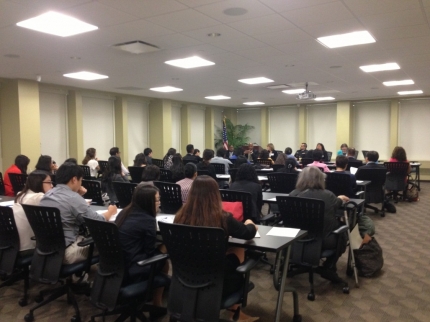
New York Regional Interagency Workgroup AAPI Forum. August 15, 2013. (by Everett Lo, Social Security Administration, New York Regional Public Affairs Office)
The Regional Interagency Workgroup (RIWG) of the White House Initiative on Asian Americans and Pacific Islanders strives to share information and resources with AAPI communities in each region across the nation. Over 75 individuals from 17 agencies currently participate in the RIWG, and the New York RIWG is one of the largest ones, with 24 federal agencies participating.
On Thursday, August 15, 2013, the New York RIWG hosted an AAPI forum. The event drew over 150 participants from New York and New Jersey representing AAPI advocacy groups, community based organizations, employers, elected officials, and local state agencies. Participants interacted with regional senior officials to learn about available federal resources, and they joined workshops to discuss issues of importance in their communities: workers’ rights, small businesses, health and social services and housing. Feedback from participants and presenters was overwhelmingly positive, with one participant stating “Yesterday’s initiative contributed to the importance of the work that our organizations do for our residents as we face new and exciting challenges in the future. As I sat through three of the workshops, I saw that you successfully captured the essence and highlighted all the programs that Asian Americans and Pacific Islanders and so many more of our residents need to have a better quality of life”.
Forums like this help us understand each community’s distinct needs so that we can better serve you, and we encourage you to participate in an upcoming forum in your region. Sign up to receive the Initiative’s weekly highlights for more information on upcoming events in your area.
Dr. Michelle S. Davis, Regional Health Administrator, U.S. Department of Health and Human Services, Office of the Assistant Secretary for Health and Regional Interagency Working Group Member
Learn more about Health CareWhat the Affordable Care Act Means to Communities of Color
Posted by on August 21, 2013 at 12:50 PM ESTEd. note: This is crossposted from hhs.gov/healthcare. See the original post here.
Recently, I traveled to Oakland, California, to participate in a town hall about how the Affordable Care Act is improving health and strengthening communities - especially communities of color that have long faced disparities in health and health care.
As the event was coming to a close, a woman in the audience stood up and asked if she could read a letter from her daughter. Her daughter hadn't been able to attend the event, she told us, but wanted to share her story with everyone.
She had started college a few years later than most, at the age of 22. During her freshman year, she was diagnosed with rheumatoid arthritis - a devastating discovery. But there was one source of relief: thanks to the health care law's provision enabling young people to stay on their parents' health insurance until the age of 26, she was able to stay on her parents' health plan, access the treatment that she needed, and continue her studies. And even though she has since turned 26, the opening of the new Health Insurance Marketplace - and the law's ban on discrimination due to pre-existing conditions - will provide her with new opportunities to secure affordable coverage.
Learn more about Health Care, Urban Policy
- &lsaquo previous
- …
- 55
- 56
- 57
- 58
- 59
- 60
- 61
- 62
- 63
- …
- next &rsaquo
From the Press Office
Related Videos
-
 December 13, 2016 5:04 PM
Signing Ceremony for the 21st Century Cures Act
-
 December 10, 2016 5:00 AM
Weekly Address: It’s Time to Get Covered on the Health Insurance Marketplace