White House Council on Environmental Quality Issues Guidance to Help Federal Agencies Ensure the Integrity of Environmental Reviews

EXECUTIVE OFFICE OF THE PRESIDENT
COUNCIL ON ENVIRONMENTAL QUALITY
WASHINGTON, D.C. 20503


FOR IMMEDIATE RELEASE:                                                                             

November 23, 2010   


White House Council on Environmental Quality Issues Guidance to Help Federal Agencies Ensure the Integrity of Environmental Reviews

WASHINGTON – In an effort to help Federal Agencies ensure the integrity of their environmental reviews, the Council on Environmental Quality (CEQ) today released final guidance on “Establishing, Applying and Revising Categorical Exclusions under the National Environmental Policy Act [NEPA].”    The guidance recommends best practices for appropriate use of categorical exclusions and was developed as part of CEQ’s effort to modernize and reinvigorate Federal agency implementation of NEPA.  It was designed to ensure that agencies establish and use categorical exclusions appropriately and transparently.  It also calls on agencies to review their existing categorical exclusions periodically to avoid the use of outdated NEPA procedures. 

"Many Federal actions do not have significant effects on the environment, but we want to avoid the use of NEPA procedures that have become outdated with the passage of time, evolving technologies and changed circumstances," said Nancy Sutley, Chair of the White House Council on Environmental Quality.  "This guidance clarifies the rules for categorical exclusions, recommends best practices and helps to ensure that there is a concise public record when agencies apply them."

NEPA requires Federal agencies to analyze their proposed actions to determine if they could have significant environmental effects.  Over time, through study and experience, agencies may identify activities – such as routine facility maintenance – that do not need to undergo detailed environmental analysis in an environmental assessment (EA) or an environmental impact statement (EIS) because the activities do not individually or cumulatively have a significant effect on the human environment.  Agencies can define categories of such activities, called categorical exclusions, in their NEPA implementing procedures, as a way to reduce unnecessary paperwork and delay. 

Categorical exclusions are an essential tool in facilitating NEPA, allowing Federal agencies to focus their environmental reviews and resources on actions that could have significant impacts. Categorical exclusions have become the most frequently employed method of complying with NEPA.  The extensive and expanding use of categorical exclusions underscores the need for clarifying guidance.  Categorical exclusions are appropriate in many circumstances but should not be relied on if they thwart the purposes of NEPA, compromising the quality and transparency of agency decisionmaking or the opportunity for meaningful public participation. 

A draft version of the guidance was released on February 18, 2010, for public comment.  CEQ received and reviewed a broad range of comments from private citizens, corporations, environmental organizations, and state agencies before finalizing the guidance.   CEQ’s guidance clarifies requirements of NEPA, and the CEQ regulations implementing NEPA, regarding categorical exclusions.  Specifically, it suggests that Agencies should:

  • utilize information technology to inform the public about new or revised categorical exclusions and their justifications;
  • remain alert to new conditions and information that would cause an agency to reconsider a categorical exclusion;
  • consider further public documentation and disclosure in applying established categorical exclusions, particularly where they may implicate extraordinary circumstances; and
  • in general, review their existing categorical exclusions at least every seven years to avoid the use of outdated NEPA procedures. 

Background on NEPA

Enacted in 1970, NEPA is a cornerstone of our Nation’s efforts to protect the environment and a fundamental tool to harmonize our economic and environmental aspirations.  It recognizes that many Federal activities affect the environment and mandates that Federal agencies consider the environmental impacts of their proposed actions before acting.  NEPA emphasizes public involvement in government actions affecting the environment by requiring that the benefits and the risks associated with proposed actions be assessed and publicly disclosed.

###
Focused on Building a Strong and Sustainable Clean Energy Economy

Over the past few days, I have had the opportunity to participate in events focused on building a strong and sustainable clean energy economy for America.  First, at the Applied Solutions Annual Conference in Boulder, Colorado, I spoke with local officials from around the country about our shared goal of creating healthy and prosperous American communities by growing the clean energy economy.  It was great to engage with local leaders on ways we can work together to protect the environmental and economic health of our country.

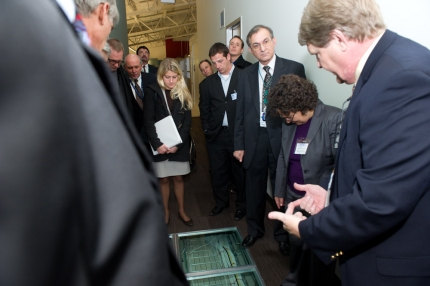
Later, I joined Colorado Senator Mark Udall on a tour of the National Renewable Energy Lab (NREL) in Golden, Colorado.  While we were at NREL, we had an interesting roundtable discussion focused on how we can build a smart grid that works well for American businesses and residents by allowing them to make informed energy choices and save money on their electricity bills.

Nancy at NREL

Chair Sutley tours the National Renewable Energy Lab in Golden, CO. (Photo by Dennis Schroeder, NREL Public Affairs Office)

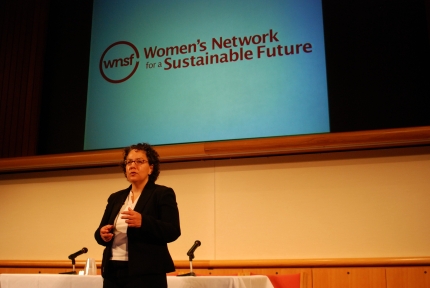
Next, in San Jose, California, I joined women business leaders at the Women's Network for a Sustainable Future to discuss how to integrate sustainability into operations both in government and in the private sector.  It was a fruitful discussion and a good opportunity to engage with leading businesswomen on an issue critical to building a clean energy economy.

Nancy at WNSF

Chair Sutley speaks at the Women's Network for a Sustainable Future Conference. (Photo by Cynthia Cheak.) November 12, 2010. (by Cynthia R. Cheak)

Finally, I participated in the third Governors' Global Climate Summit, hosted by California Governor Schwarzenegger at the University of California, Davis.  This year's Summit examined how leaders from across the government, academic, business and nonprofit sectors can collaborate to build a strong and sustainable economy in the face of global issues such as climate change. 

Overall, it was a successful trip and a wonderful opportunity to engage with and hear the ideas of sustainability and clean energy leaders out west.

Nancy Sutley is Chair of the White House Council on Environmental Quality

White House Council on Environmental Quality Chair in San Jose Today to Speak at the Women's Network for a Sustainable Future West Coast Summit

EXECUTIVE OFFICE OF THE PRESIDENT
COUNCIL ON ENVIRONMENTAL QUALITY
WASHINGTON, D.C. 20503


FOR IMMEDIATE RELEASE:                                                                             

November 12, 2010                                                                                                                      


White House Council on Environmental Quality Chair in San Jose Today to Speak at the Women's Network for a Sustainable Future West Coast Summit 

WASHINGTON – White House Council on Environmental Quality (CEQ) Chair Nancy Sutley will be in San Jose, California today, November 12, 2010, to deliver a keynote speech at the Women's Network for a Sustainable Future West Coast Summit.  She will focus on the historic clean energy investments in the Recovery Act and the Obama Administration's efforts to build a clean energy economy that creates American jobs, reduces our dependence on foreign oil and enhances our competitive position in the global economy.  


WHO:              Nancy Sutley, Chair, White House Council on Environmental Quality

WHAT:            Keynote at the Women's Network for a Sustainable Future, West Coast
                        Businesswomen's Sustainability Leadership Summit

WHEN:           Friday, November 12, 2010 at 12:45 PM (PST)

WHERE:         IBM Research Almaden
                         650 Harry Road
                         San Jose, California 95210

###

White House Council on Environmental Quality Chair in Davis, CA, Monday to Attend Governors' Global Climate Summit

EXECUTIVE OFFICE OF THE PRESIDENT
COUNCIL ON ENVIRONMENTAL QUALITY
WASHINGTON, D.C. 20503


FOR IMMEDIATE RELEASE:                                                                             

November 12, 2010                                                                                                                      


White House Council on Environmental Quality Chair in Davis, CA, Monday to Attend Governors' Global Climate Summit


WASHINGTON – White House Council on Environmental Quality (CEQ) Chair Nancy Sutley will deliver remarks in Davis, California, at the third annual Governors' Global Climate Summit on Monday, November 15, 2010.  She will participate in a panel on Rising to the Climate Challenge, where she will focus on the Obama Administration's work to build a clean energy economy that creates American jobs, reduces our greenhouse gas emissions, and enhances our competitive position in the global economy.


WHO:              Nancy Sutley, Chair, White House Council on Environmental Quality

WHAT:            Remarks at the Governors' Global Climate Summit 3

WHEN:           Monday, November 15, 2010 at 10:30 AM (PST)

WHERE:        The Mondavi Center
                        University of California Davis
                        9399 Old Davis Road
                        Davis, CA 95616

###

2010 Shanghai World Expo: Better City, Better Life

I was fortunate enough to represent the United States at the 2010 Shanghai World Expo Closing Ceremonies earlier this month.  In the great tradition of World Expos, the Shanghai Expo showcased the diverse international community and advancements in a global effort to support sustainable development.  This year’s expo focused on the theme Better City, Better Life.  I, along with more than 73 million visitors over the past six months, was impressed with each nation’s distinct pavilion.  Our own USA pavilion was no exception, as over 7 million people have packed its 6,000 square meters of carbon-neutral space.

At the Expo 2010 Summit Forum, international leaders gathered to discuss the importance of urban innovation and sustainable urban development.  I spoke at the themed forum on Green Development and Ecological City, and highlighted the Obama Administration's work to support clean energy, promote sustainable communities, and prepare the Nation to adapt to climate change. 

Brazil Pavilion

White House Council on Environmental Quality Chair Nancy Sutley tours the USA pavilion

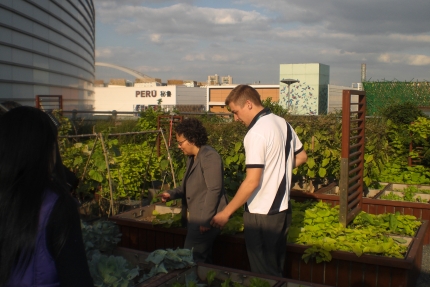
During the trip, I was able to visit Shanghai’s Chongming Island, which is home to Dongtan Eco City.  Dongtan is working to become an environmentally and economically sustainable city, with the goal of attaining an ecological footprint of less than 60% than that of typical developments. 

It was interesting to engage in discussions on sustainability at both the Shanghai Expo and on Chongming Island.  I was happy to represent the U.S.'s work on environmental and clean energy issues.

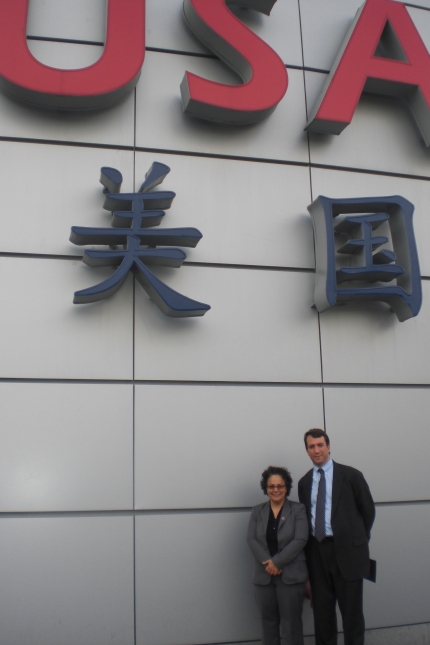
Nancy and Jon at USA Pavilion

White House Council on Environmental Quality Chair Nancy Sutley and CEQ Chief of Staff Jon Carson at the USA Pavilion

Nancy Sutley is Chair of the White House Council on Environmental Quality

Obama Administration Cabinet Secretaries and Senior Officials Convene for First Meeting of the National Ocean Council

EXECUTIVE OFFICE OF THE PRESIDENT
COUNCIL ON ENVIRONMENTAL QUALITY
WASHINGTON, D.C. 20503


FOR IMMEDIATE RELEASE:                                                                             

November 9, 2010                                                                                                                      


Obama Administration Cabinet Secretaries and Senior Officials
Convene for First Meeting of the National Ocean Council


WASHINGTON – The White House Council on Environmental Quality (CEQ) and the Office of Science and Technology Policy (OSTP) today convened the first Principals meeting of the National Ocean Council in the Roosevelt Room of the White House.  The meeting, attended by 25 Cabinet Secretaries and Senior Officials from across the Federal Government, focused on key steps to implement the National Policy for the Stewardship of the Ocean, our Coasts, and Great Lakes. Groundwork for the meeting was laid at an inaugural Deputy Committee meeting held in September that, as with today’s meeting, was led by the Council co-chairs, OSTP Director John P. Holdren and CEQ Chair Nancy Sutley.


President Obama signed Executive Order 13547 on July 19, 2010, establishing our Nation’s first comprehensive, integrated National Policy for the Stewardship of the Ocean, our Coasts, and Great Lakes.  The Executive Order created the Cabinet-level National Ocean Council to coordinate across the Federal Government to implement the National Policy. The Principals meeting of the National Ocean Council was a critical starting point to begin to address the ambitious set of actions the National Policy lays out over the next 12 months. 


During the meeting, the Council:

  • Reviewed the role of the National Ocean Council and the work ahead;
  • Approved the National Ocean Council charter;
  • Approved operational items for establishing a Governance Coordinating Committee to formally engage with state, tribal, and local authorities;
  • Approved the charter for the U.S. Extended Continental Shelf (ECS) Task Force for it to continue to coordinate the collection of information to establish the full extent of the continental shelf of the United States in accordance with international law; and
  • Established Interagency Working Groups to address topics including information management and communications and public and stakeholder engagement.

For more information, please visit: http://obamawhitehouse.archives.gov/oceans.

###

Council on Environmental Quality Submits Report to Congress on Environmental Analysis of Recovery Act Activities and Projects

EXECUTIVE OFFICE OF THE PRESIDENT
COUNCIL ON ENVIRONMENTAL QUALITY
WASHINGTON, D.C. 20503


FOR IMMEDIATE RELEASE:                                                                             

November 5, 2010                                                                                                                      


Council on Environmental Quality Submits Report to Congress on Environmental Analysis of Recovery Act Activities and Projects


WASHINGTON, DC – The White House Council on Environmental Quality (CEQ) today submitted its seventh report to Congress regarding the status and progress of projects and activities receiving funds under the American Recovery and Reinvestment Act of 2009 and how they have complied thus far with National Environmental Policy Act (NEPA) requirements. 


The report is an overview of the 15 Executive Branch departments and nine Agencies required to report on their current NEPA status under the Recovery Act.  As of September 30th, the departments and agencies reported more than 250,000 Recovery Act funded projects or activities.  The completed reviews support implementing more than $293 billion in Recovery Act projects and activities.


"More than 98 percent of the environmental reviews have been completed for projects and activities funded under the Recovery Act," said Nancy Sutley, Chair of the White House Council on Environmental Quality.  "The Departments and Agencies have once again shown that environmental impacts can be assessed and taken into account without delaying projects designed to stimulate our Nation’s economy."


The Departments and Agencies reported completing nearly 6,400 environmental assessments for the Recovery Act projects and activities.  Those environmental assessments provide the basis for findings of no significant impact.  More than 820 of the projects or activities were the subject of completed environmental impact statements, which is the most intensive NEPA review and is applied to projects or activities that may have significant effects on the human environment.  Finally, approximately 179,500 of the projects or activities fit into categories of activities that did not have significant individual or cumulative effects on the human environment.  Departments and Agencies completed categorical exclusions for these projects. 


The full report is available here.  Further information regarding the status of agency obligations is available on the Recovery Act website at www.recovery.gov.

###

Chair Sutley to Participate in the First Gulf Coast Ecosystem Restoration Task Force Meeting in Pensacola Monday

EXECUTIVE OFFICE OF THE PRESIDENT
COUNCIL ON ENVIRONMENTAL QUALITY
WASHINGTON, D.C. 20503


FOR IMMEDIATE RELEASE:                                                                             

November 5, 2010                                                                                                                      


Chair Sutley to Participate in the First Gulf Coast Ecosystem Restoration Task Force Meeting in Pensacola Monday


WASHINGTON, DC White House Council on Environmental Quality (CEQ) Chair Nancy Sutley will participate in the first Gulf Coast Ecosystem Restoration Task Force public meeting in Pensacola, Florida, on November 8, 2010.  The meeting, convened by EPA Administrator Lisa P. Jackson will be open to the public and include other Federal Agency officials, Gulf Coast state and local representatives. 

WHO:        Nancy Sutley, Chair, White House Council on Environmental Quality
                   Lisa P. Jackson, Administrator, U.S. Environmental Protection Agency
                   Representatives from:
                           U.S. Department of Agriculture
                           U.S. Department of Defense
                           U.S. Department of the Interior
                           U.S. Department of Justice
                           U.S. Department of Transportation
                           Domestic Policy Council
                           National Oceanic and Atmospheric Administration
                           Office of Management and Budget
                           Office of Science and Technology Policy
                           U.S. Army Corps of Engineers
                  State and local leaders

WHAT:     Gulf Coast Ecosystem Restoration Task Force Meeting

WHEN:     Monday, November 8, 2010 at 11:30 AM (CDT)

WHERE:   Pensacola Civic Center
                  201 E. Gregory Street
                  Pensacola, FL

###

A Discussion on Clean Energy in Missoula

Last weekend I traveled to beautiful Missoula, Montana, to engage in a lively panel conversation about America’s energy future at the 20th Annual Conference for the Society of Environmental Journalists (SEJ). The conference, hosted by the University of Montana, drew journalists from across the country who focus on essential issues affecting our environment, and who were eager to discuss efforts underway to grow the clean energy economy.

Promoting a sustainable, clean energy economy that creates jobs is a priority for this Administration.  We have shown our commitment through a $90 billion Recovery Act investment in renewable energy, and setting new fuel-economy and greenhouse gas emissions standards for vehicles, among other critical measures.  We’re also leading by example by setting ambitious sustainability goals for Federal Agencies for energy efficiency, reducing greenhouse gas pollution, conserving water, and promoting sustainable communities.

Open conversations like the one we had at SEJ are crucial as we confront today’s environmental and economic challenges.  Engaging people with a range of views and backgrounds helps us to achieve a shared vision of a healthy and prosperous future for the U.S.  I left Missoula optimistic about America’s potential to seize the opportunity of clean energy. 

Nancy Sutley is Chair of the White House Council on Environmental Quality

Iowa Conservation Partnerships

On Monday, I joined USDA Deputy Under Secretary for Natural Resources and Environment Ann Mills and USDA Legislative Director Tina May in Iowa to meet with the Iowa Soybean Association (ISA) and learn about their partnership-based efforts to support natural resource conservation. ISA is working with its members on a number of programs to enhance water quality. During our visit, we had the chance to see an on-farm water quality monitoring station and learn how farmers are reducing nitrate loading in the Boone River watershed. We also met with a farmer who has implemented strip-till practices and installed a bioreactor on his land, both of which help bolster watershed water quality. The trip certainly helped to further my understanding of on-farm energy use and the opportunities available in this arena. The visit to Iowa was educational, and I look forward to learning more about the energy and environmental initiatives of ISA and other agriculture organizations. It was a terrific experience!

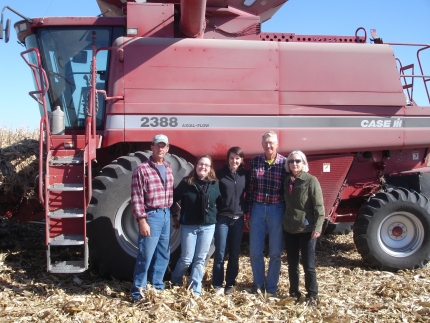
ISA

CEQ Associate Director for Legislative Affairs Jess Maher, USDA Legislative Director Tina May, and USDA Deputy Under Secretary for Natural Resources and Environment Ann Mills meet with Iowa farmers

Jess Maher is the Associate Director for Legislative Affairs at the White House Council on Environmental Quality