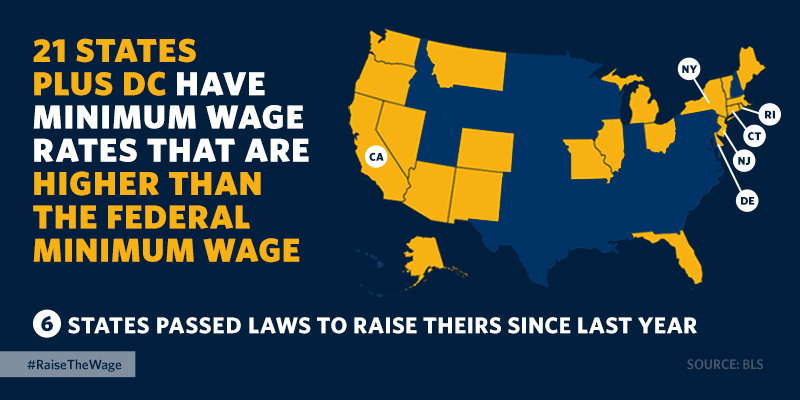
President Obama Delivers Remarks with President Peña Nieto and Prime Minister Harper

February 19, 2014 | 18:02 | Public Domain

President Obama delivers remarks to North American business, civil society and education leaders with President Nieto of Mexico and Prime Minster Harper of Canada.

Download mp4 (668MB) | mp3 (17MB)

Read the Transcript

Remarks by President Obama, President Peña Nieto, and Prime Minister Harper to North American Business, Civil Society and Education Leaders

Salon del Pueblo
Palacio de Gobierno
Toluca, Mexico

5:03 P.M. CST

PRESIDENT PEÑA NIETO:  (As interpreted.)  Your Excellency, Barack Obama, President of the United States of America; Your Excellency, Stephen Harper, Prime Minister of Canada; ladies and gentlemen, distinguished guests:  We are here gathered with representatives from the public, the private, and the social sectors.  All of you have walked along with us in the construction road to a more competitive North America.  And by this, we will have a higher level of development for our peoples.

Members of the media, Mexico welcomes you with open arms to celebrate the North America Leaders Summit, Toluca 2014.  Besides being Toluca, my hometown, this is the place where I was entrusted by the citizens to serve as the governor of this state, the state of Mexico.  The state of Mexico is a clear symbol of the productive integration of North America due to its geographic location and its connectivity.  Here we have seen the settlement of advanced automobile facilities and very important logistic hubs.  Both are a true example of value chains, global value chains that make North America excel. 

That is why, from Toluca, the three leaders of North America confirm today our commitment to position our region as one of the most dynamic and competitive of the whole world.

I celebrate the fact that we have gathered here with prominent representatives from the academia, from the private sector, and from the civil society from North America.  Your contribution has been vital to bring Canada, the U.S. and Mexico closer.  With a clear vision in mind, all of you pushed from the onset the great idea that gathers us today -- an integrated North America with goals and shared efforts.

(Drop in audio feed.)

Once, the Free Trade Agreement area was the largest free trade area with an unprecedented push of trade exchanges, regional investment, and the creation of millions of jobs.  With the same innovative spirit, two decades after, we are bound to go beyond and enhance all together the progress that each one of our countries has made, because individually all our countries have moved forward as well. 

Therefore, the principal topics of this seventh summit are very clear:  First, inclusive and shared prosperity.  Number two, new opportunity areas.  Number three, citizen security.  And fourth, regional and global topics.  It is upon these four topics today we will work together to boost the economic growth of our countries and a generation of quality jobs, and by this, increase the wellbeing of our societies.

Ladies and gentlemen, Canada, the United States and Mexico share strengths that make us move forward.  We are a community of more than 450 million inhabitants where talent and creativity of our peoples excel.  Trade exchanges from the three countries are over $1 trillion; in Spanish we use billions, in English we use trillions.  We have the support and thrive of our entrepreneurs and the capabilities of technological innovation coming from our universities and large companies. 

We have principles, we have institutions that make us be solid democracies.  We have natural resources, endless natural resources and new opportunities so we can take advantage of them sustainably.

All of these are factors that lay a solid groundwork for North America’s region, and this is how we will make it a more attractive and competitive region in the world for the upcoming years.  I would like to invite you, respectfully, so that each one of us from the area where you have the responsibility to act, let’s make North America a more competitive and a more prosperous region for the sake of the inhabitants of our countries. 

Thank you very much.  (Applause.)

PRESIDENT OBAMA:  Good afternoon.  Buenas tardes.  Bonjour.  I want to thank Enrique for his extraordinary hospitality and for bringing us here to his beautiful home city.  I want to thank the people of Toluca and of Mexico for your great hospitality. 

We’re all here on business, which means I’m not here as long as I’d like.  I have not, for example, sampled some of Toluca’s legendary chorizo.  (Laughter.)  And hopefully the next time I stop by, I’m going to be able to have some of that. 

All of us -- Stephen, Enrique and I -- are focused on how we can deepen what are already incredible ties between our three nations.  And I appreciate that all of you are here today, because governments cannot do it alone.  The strength of the relationship between Canada, Mexico and the United States is not just a matter of government policy; it’s not just a matter of legislation.  There is an incredible richness to the relationship that comes from our people, from our businesses, from our commercial ties, from the students who are traveling back and forth, from the cultures that are shared between us. 

And that strength is in some ways unique throughout the world.  If you think about North America, to have three borders this long in which we share a common set of values, a common set of principles, a commitment to democracy, a commitment to free markets, a commitment to trade where we are allies and interact peacefully, that is a precious gift.  And it’s one that I think all three of us are committed to building and nurturing for future generations.

And for me this is very personal.  Some of my closest advisors and allies and political friends are the children of Mexican immigrants who have made an extraordinary life and contribution in the United States.  My brother-in-law is Canadian, so you know I have to like Canadians -- (laughter) -- although I will note that I think we are going to have both the men’s hockey teams and the women’s hockey teams battling it out.  (Laughter.)  So for a very brief period of time, I may not feel as warm towards Canadians as I normally do -- at least until those matches are over.

But each of you experiences these connections in very concrete ways.  Enrique already spoke about the volume of trade that takes place, and the interactions between our businesses, and the subsidiaries of companies in each country that are operating in the other.  And so much of the cross-border trade that exists is part of an integrated supply chain that allows us, all three of us as countries, to successfully sell our products and services all around the world. 

And so we have every incentive to make this work.  And so a lot of our conversation has focused on how do we reduce any continuing trade frictions; how do we make sure that our borders are more efficient; how do we make sure that the educational exchanges between our young people are expanded so that our young people understand their opportunities will be brighter and expanded if in fact they’ve had the opportunity to study in Canada or to study in Mexico, if they know Spanish, if they know French. 

And we use these forums to make concrete progress.  Our staffs work incredibly hard to make them successful.  But, frankly, until our leaders come around, until the three of us meet, sometimes it doesn’t all get done.  And this becomes a forcing mechanism for us to move forward on commercial progress, joint security progress, progress on educational and scientific exchanges. 

But -- and this is the last point I want to emphasize -- there are always going to be parochial interests in each of our countries, so that’s appropriate and that will express itself politically, and we have to be responsive to our own constituencies.  If, in fact, we’re going to continue to build and strengthen the ties between our three countries, then you can’t just leave it to politicians alone.  All of you are going to have to speak out and speak up on the importance of this relationship. 

We want to make sure that we’re your partners and allies in this process, but when people understand what this means in terms of job creation in the United States, job creation in Canada, job creation in Mexico, how this relationship enhances our security, how it improves our capacity to heat our homes and grow our food and make sure that young people have opportunities in the future -- when they hear that from you, it’s that much more persuasive.

And so I would encourage all of you to continue to make your voices heard.  You’ll have certainly a partner in me, and I’m sure that you’ll have a partner in Stephen and Enrique as well. 

I thank you for participating here today.  And once again, Enrique, thank you for the extraordinary hospitality in this beautiful state and this beautiful city.  Muchas gracias.  (Applause.)    

PRIME MINISTER HARPER:  Bon après-midi.  Buenas tardes.  Good afternoon, everybody -- wonderful day and we’re delighted to be here in Toluca.  And it’s easy to see why you’re so proud of your hometown.  It’s a wonderful spot here.

And, Barack, it’s always great to see you.  And I like my brothers-in-law, too.  (Laughter.)  And I’ll probably like them no matter who wins the hockey game.  (Laughter.)  Anyway.

I want to also thank all of you being here, in particular, obviously, the delegation that has accompanied me from Canada.

(As interpreted.)  Today we have this opportunity to make this North American market more competitive.  You are entrepreneurs, you are job creators, employment creators all over this continent. 

(In English.)  -- with so many business people here, as well as academics and others, to discuss how to make North America, which is these three economies combined, which is nearly one-quarter of the world’s economy more prosperous and more competitive. 

And it’s particularly fitting that it would be you as civil society and business leaders who would lead such a discussion, for although it was NAFTA and the Canada-U.S. Free Trade Agreement before it that opened up the opportunities, this is a trade alliance that, in fact, consists of very little top-down infrastructure.  It has been businesses, people on the ground, social interactions, academic interactions which have advanced relations, particularly economic relations that go well beyond trade. 

Today, Canadian, American and Mexican companies do much more than sell things to each other.  You increasingly make things together through integrated supply chains.  Now, for example, we talk about the fact, in Canada obviously, that the Canadian-American trade relationship is the largest in the world -- certainly, the U.S. is our largest export market.  But Canadian exports to the United States contain an average of 25 percent American content.  Likewise, Mexican exports to the United States include an average of 40 percent U.S. content. 

(As interpreted.)  So this is why we want to tighten our relationships and increase the competitiveness in the region.  And we call on the entrepreneurs -- of course, the Canadian and U.S. companies are grabbing occasions and opportunities in Mexico -- throughout the continent to create employment seedbeds.

(In English.)  Jobs include organizations as diverse as TransCanada, the Canadian Cattlemen’s Association and Beef Canada, the Canola Council, Linamar, Scotiabank and many others that I know are represented with us here today.  And they have tremendous growth prospects in fields such as energy, in education, agri-food, information and communications technologies, banking and financial services, and many, many others, particularly when one looks at not just the rapid transformation in this country over the past 20 years, but the very aggressive reforms that are being undertaken by President Peña Nieto’s administration.

(As interpreted.)  And having said this, the world, the entire world is not what it used to be in 1994.

(In English.)  Different realities from 20 years ago are realities we must adapt to today.  They include obviously the ongoing uncertainty, market uncertainty that remains from the global recession and also from a global economy that is much more competitive from many other regions.

(As interpreted.)  We must work together to be able to break barriers and for the benefit of our populations.

(In English.)  And so, as Canadians, Mexicans and Americans, we need to look for ways to work together and to look forward. 

Thank you for being here.  (Applause.)

                        END                5:21 P.M. CST

Close Transcript

President Obama Travels to Mexico for the North American Leaders’ Summit

President Barack Obama delivers remarks alongside of President Enrique Peña Nieto and Prime Minister Stephen Harper during the North American Business, Civil Society and Education leaders during the North American Leaders Summit in Toluca, Mexico.

President Barack Obama delivers remarks alongside President Enrique Peña Nieto and Prime Minister Stephen Harper to North American business, civil society, and education leaders during the North American Leaders' Summit in Toluca, Mexico, Feb. 19, 2014. (Official White House Photo by Amanda Lucidon)

Today, the President traveled to Toluca, Mexico for this year’s North American Leaders’ Summit, along with Mexican President Enrique Peña Nieto and Canadian Prime Minister Stephen Harper.

Shortly after arriving in Toluca, President Obama held a bilateral meeting with President Peña Nieto. Before their meeting, President Obama gave some initial remarks on the summit:

[T]he North American Leaders’ Summit gives us an opportunity to build on the enormous progress that we’ve already made in making sure that North America is the most competitive region in the world and that we are able not only to continue to integrate our economies effectively to create jobs both in the United States, Mexico and Canada, but that we’re able to project American and Mexican and Canadian goods and services around the world toward the benefit of our people.

And the cooperation ranges from how do we make our borders more efficient to moving forward on the Trans-Pacific Partnership that offers the opportunity to open up new markets in the fastest, most populous region of the world, the Asia Pacific region.

We'll also have the opportunity to discuss how we can work together more closely on scientific and educational exchanges. We're particularly interested in making sure that young people in Mexico and the United States and Canada are able to study and travel in each country, and we're trying to expand those kinds of exchanges.

So this is a wonderful opportunity for us to build on the work that we’ve already done over the last year.

Related Topics: Foreign Policy

The White House

Office of the Press Secretary

Remarks by President Obama, President Peña Nieto, and Prime Minister Harper to North American Business, Civil Society and Education Leaders

Salon del Pueblo
Palacio de Gobierno
Toluca, Mexico

5:03 P.M. CST

PRESIDENT PEÑA NIETO:  (As interpreted.)  Your Excellency, Barack Obama, President of the United States of America; Your Excellency, Stephen Harper, Prime Minister of Canada; ladies and gentlemen, distinguished guests:  We are here gathered with representatives from the public, the private, and the social sectors.  All of you have walked along with us in the construction road to a more competitive North America.  And by this, we will have a higher level of development for our peoples.

Members of the media, Mexico welcomes you with open arms to celebrate the North America Leaders Summit, Toluca 2014.  Besides being Toluca, my hometown, this is the place where I was entrusted by the citizens to serve as the governor of this state, the state of Mexico.  The state of Mexico is a clear symbol of the productive integration of North America due to its geographic location and its connectivity.  Here we have seen the settlement of advanced automobile facilities and very important logistic hubs.  Both are a true example of value chains, global value chains that make North America excel. 

That is why, from Toluca, the three leaders of North America confirm today our commitment to position our region as one of the most dynamic and competitive of the whole world.

I celebrate the fact that we have gathered here with prominent representatives from the academia, from the private sector, and from the civil society from North America.  Your contribution has been vital to bring Canada, the U.S. and Mexico closer.  With a clear vision in mind, all of you pushed from the onset the great idea that gathers us today -- an integrated North America with goals and shared efforts.

(Drop in audio feed.)

Once, the Free Trade Agreement area was the largest free trade area with an unprecedented push of trade exchanges, regional investment, and the creation of millions of jobs.  With the same innovative spirit, two decades after, we are bound to go beyond and enhance all together the progress that each one of our countries has made, because individually all our countries have moved forward as well. 

Therefore, the principal topics of this seventh summit are very clear:  First, inclusive and shared prosperity.  Number two, new opportunity areas.  Number three, citizen security.  And fourth, regional and global topics.  It is upon these four topics today we will work together to boost the economic growth of our countries and a generation of quality jobs, and by this, increase the wellbeing of our societies.

Ladies and gentlemen, Canada, the United States and Mexico share strengths that make us move forward.  We are a community of more than 450 million inhabitants where talent and creativity of our peoples excel.  Trade exchanges from the three countries are over $1 trillion; in Spanish we use billions, in English we use trillions.  We have the support and thrive of our entrepreneurs and the capabilities of technological innovation coming from our universities and large companies. 

We have principles, we have institutions that make us be solid democracies.  We have natural resources, endless natural resources and new opportunities so we can take advantage of them sustainably.

All of these are factors that lay a solid groundwork for North America’s region, and this is how we will make it a more attractive and competitive region in the world for the upcoming years.  I would like to invite you, respectfully, so that each one of us from the area where you have the responsibility to act, let’s make North America a more competitive and a more prosperous region for the sake of the inhabitants of our countries. 

Thank you very much.  (Applause.)

PRESIDENT OBAMA:  Good afternoon.  Buenas tardes.  Bonjour.  I want to thank Enrique for his extraordinary hospitality and for bringing us here to his beautiful home city.  I want to thank the people of Toluca and of Mexico for your great hospitality. 

We’re all here on business, which means I’m not here as long as I’d like.  I have not, for example, sampled some of Toluca’s legendary chorizo.  (Laughter.)  And hopefully the next time I stop by, I’m going to be able to have some of that. 

All of us -- Stephen, Enrique and I -- are focused on how we can deepen what are already incredible ties between our three nations.  And I appreciate that all of you are here today, because governments cannot do it alone.  The strength of the relationship between Canada, Mexico and the United States is not just a matter of government policy; it’s not just a matter of legislation.  There is an incredible richness to the relationship that comes from our people, from our businesses, from our commercial ties, from the students who are traveling back and forth, from the cultures that are shared between us. 

And that strength is in some ways unique throughout the world.  If you think about North America, to have three borders this long in which we share a common set of values, a common set of principles, a commitment to democracy, a commitment to free markets, a commitment to trade where we are allies and interact peacefully, that is a precious gift.  And it’s one that I think all three of us are committed to building and nurturing for future generations.

And for me this is very personal.  Some of my closest advisors and allies and political friends are the children of Mexican immigrants who have made an extraordinary life and contribution in the United States.  My brother-in-law is Canadian, so you know I have to like Canadians -- (laughter) -- although I will note that I think we are going to have both the men’s hockey teams and the women’s hockey teams battling it out.  (Laughter.)  So for a very brief period of time, I may not feel as warm towards Canadians as I normally do -- at least until those matches are over.

But each of you experiences these connections in very concrete ways.  Enrique already spoke about the volume of trade that takes place, and the interactions between our businesses, and the subsidiaries of companies in each country that are operating in the other.  And so much of the cross-border trade that exists is part of an integrated supply chain that allows us, all three of us as countries, to successfully sell our products and services all around the world. 

And so we have every incentive to make this work.  And so a lot of our conversation has focused on how do we reduce any continuing trade frictions; how do we make sure that our borders are more efficient; how do we make sure that the educational exchanges between our young people are expanded so that our young people understand their opportunities will be brighter and expanded if in fact they’ve had the opportunity to study in Canada or to study in Mexico, if they know Spanish, if they know French. 

And we use these forums to make concrete progress.  Our staffs work incredibly hard to make them successful.  But, frankly, until our leaders come around, until the three of us meet, sometimes it doesn’t all get done.  And this becomes a forcing mechanism for us to move forward on commercial progress, joint security progress, progress on educational and scientific exchanges. 

But -- and this is the last point I want to emphasize -- there are always going to be parochial interests in each of our countries, so that’s appropriate and that will express itself politically, and we have to be responsive to our own constituencies.  If, in fact, we’re going to continue to build and strengthen the ties between our three countries, then you can’t just leave it to politicians alone.  All of you are going to have to speak out and speak up on the importance of this relationship. 

We want to make sure that we’re your partners and allies in this process, but when people understand what this means in terms of job creation in the United States, job creation in Canada, job creation in Mexico, how this relationship enhances our security, how it improves our capacity to heat our homes and grow our food and make sure that young people have opportunities in the future -- when they hear that from you, it’s that much more persuasive.

And so I would encourage all of you to continue to make your voices heard.  You’ll have certainly a partner in me, and I’m sure that you’ll have a partner in Stephen and Enrique as well. 

I thank you for participating here today.  And once again, Enrique, thank you for the extraordinary hospitality in this beautiful state and this beautiful city.  Muchas gracias.  (Applause.)    

PRIME MINISTER HARPER:  Bon après-midi.  Buenas tardes.  Good afternoon, everybody -- wonderful day and we’re delighted to be here in Toluca.  And it’s easy to see why you’re so proud of your hometown.  It’s a wonderful spot here.

And, Barack, it’s always great to see you.  And I like my brothers-in-law, too.  (Laughter.)  And I’ll probably like them no matter who wins the hockey game.  (Laughter.)  Anyway.

I want to also thank all of you being here, in particular, obviously, the delegation that has accompanied me from Canada.

(As interpreted.)  Today we have this opportunity to make this North American market more competitive.  You are entrepreneurs, you are job creators, employment creators all over this continent. 

(In English.)  -- with so many business people here, as well as academics and others, to discuss how to make North America, which is these three economies combined, which is nearly one-quarter of the world’s economy more prosperous and more competitive. 

And it’s particularly fitting that it would be you as civil society and business leaders who would lead such a discussion, for although it was NAFTA and the Canada-U.S. Free Trade Agreement before it that opened up the opportunities, this is a trade alliance that, in fact, consists of very little top-down infrastructure.  It has been businesses, people on the ground, social interactions, academic interactions which have advanced relations, particularly economic relations that go well beyond trade. 

Today, Canadian, American and Mexican companies do much more than sell things to each other.  You increasingly make things together through integrated supply chains.  Now, for example, we talk about the fact, in Canada obviously, that the Canadian-American trade relationship is the largest in the world -- certainly, the U.S. is our largest export market.  But Canadian exports to the United States contain an average of 25 percent American content.  Likewise, Mexican exports to the United States include an average of 40 percent U.S. content. 

(As interpreted.)  So this is why we want to tighten our relationships and increase the competitiveness in the region.  And we call on the entrepreneurs -- of course, the Canadian and U.S. companies are grabbing occasions and opportunities in Mexico -- throughout the continent to create employment seedbeds.

(In English.)  Jobs include organizations as diverse as TransCanada, the Canadian Cattlemen’s Association and Beef Canada, the Canola Council, Linamar, Scotiabank and many others that I know are represented with us here today.  And they have tremendous growth prospects in fields such as energy, in education, agri-food, information and communications technologies, banking and financial services, and many, many others, particularly when one looks at not just the rapid transformation in this country over the past 20 years, but the very aggressive reforms that are being undertaken by President Peña Nieto’s administration.

(As interpreted.)  And having said this, the world, the entire world is not what it used to be in 1994.

(In English.)  Different realities from 20 years ago are realities we must adapt to today.  They include obviously the ongoing uncertainty, market uncertainty that remains from the global recession and also from a global economy that is much more competitive from many other regions.

(As interpreted.)  We must work together to be able to break barriers and for the benefit of our populations.

(In English.)  And so, as Canadians, Mexicans and Americans, we need to look for ways to work together and to look forward. 

Thank you for being here.  (Applause.)

                        END                5:21 P.M. CST
The White House

Office of the Press Secretary

Joint Statement by North American Leaders - 21st Century North America: Building the Most Competitive and Dynamic Region in the World

Following is the text of a Joint Statement by North American Leaders:

21st Century North America: Building the Most Competitive and Dynamic Region in the World

We, the Leaders of North America, met today in Toluca, Mexico, to recognize the strength of our relationship and open a new chapter in our partnership. We are determined to promote inclusive broad-based economic growth for the wellbeing of our citizens, so that 21st century North America sets new global standards for trade, education, sustainable growth, and innovation. Our region is among the most competitive and dynamic in the world. We have a shared vision for its future, and a strong political, legal, and institutional framework to build upon.

Our countries are established democracies and share values and aspirations. Countless contacts among our societies bring us together. We generate close to 30 percent of global goods and services. Our trade is at least 265 percent larger than twenty years ago, when the North American Free Trade Agreement came into force, and is now worth more than one trillion dollars per year, while investment within the region has been multiplied by six. Our three economies benefit from each other’s stability and complementarities, and a shared commitment to creating good jobs and opportunities for all of our citizens. Private investment is increasingly directed towards North America, in recognition of the competitive advantage of our integrated production and supply chains, and our highly skilled workforce.

Shared and inclusive prosperity

Our engagement as a region with the rest of the world has a direct impact on the competitiveness of our economies and the prosperity of our societies. We will continue to work closely on matters related to international trade, so that our integrated supply chains are deepened and strengthened. We will jointly promote trade and investment in those sectors in which the integration of our production chains serves as a distinct global advantage, and work together to highlight those advantages.

Our governments are committed to developing a North American Competitiveness work plan, focused on investment, innovation and increased private sector engagement. We seek to set new standards for global trade through the prompt conclusion of a high standard, ambitious, and comprehensive Trans-Pacific Partnership, as we promote further trade liberalization in the Asia-Pacific region.

We will develop a North American Transportation Plan, beginning with a regional freight plan and building on existing initiatives. We will also streamline procedures and harmonize customs data requirements for traders and visitors. We will facilitate the movement of people through the establishment in 2014 of a North American Trusted Traveler Program, starting with the mutual recognition of the NEXUS, Global Entry, SENTRI and Viajero Confiable programs.

Our governments will leverage the existing bilateral border mechanisms to enhance the secure movement of goods across North America, and promote trilateral exchanges on logistics corridors and regional development. Our governments will designate observers to attend meetings of the border management executive committees already in place. This approach will also be followed within the existing bilateral processes on regulatory cooperation. We will continue to protect and enforce intellectual property rights.

New areas of opportunity

The future success and competitiveness of our region depends on our ability to foster innovation, provide our citizens access to high quality educational opportunities and to technology, and promote a workforce with the skills necessary for success in the 21st century global economy. To help guide these efforts, our governments will engage stakeholders and academics to better assess and plan for the needs of North America’s future workforce. We will promote joint research in national laboratories and universities, building connections between North American businesses, particularly entrepreneurs, and technology accelerators. We will first focus on entrepreneurship and innovation exchanges, and actions to advance the economic empowerment of women. Authorities responsible for these efforts will meet in an informal working group to seek greater coordination and collaboration among them.

Academic exchange and educational mobility have long contributed to the mutual understanding of our societies and of the promise of North America. We commit to increase the number of student exchanges from within the region in our respective higher education systems, in line with the United States’ 100,000 Strong in the Americas Initiative, Mexico’s Proyecta 100,000, and Canada’s International Education Strategy. We will explore opportunities for further cooperation in this area.

Energy is a trilateral priority. Developing and securing affordable, clean and reliable energy supplies can drive economic growth and support sustainable development, as we shift towards a low carbon energy future. To build on recent progress in this area, our Energy Ministers will meet later in 2014 to discuss opportunities to promote common strategies on energy efficiency, infrastructure, innovation, renewable energy, unconventional energy sources, energy trade, and responsible resource development, including the development of relevant technical studies.

Our countries will continue to work together to address climate change in pursuit of an ambitious and inclusive global agreement within the U.N. Framework Convention on Climate Change, while also collaborating through complementary mechanisms like the Major Economies Forum, the Climate and Clean Air Coalition, and the Energy and Climate Partnership of the Americas. In addition, we will intensify our efforts to promote an amendment to the Montreal Protocol to phase-down production and consumption of climate-damaging hydrofluorocarbons (HFCs).

We will continue to collaborate in the protection of our region’s biodiversity and to address other environmental challenges, such as wildlife trafficking and ecosystems at risk. Our governments will establish a working group to ensure the conservation of the Monarch butterfly, a species that symbolizes our association.

Citizen security and global issues

We reaffirm our commitment to the principles of shared responsibility, mutual trust, and respect, in support of our domestic priorities, as we face together the challenges posed by transnational organized crime and other threats to the security of our citizens. As increasingly integrated neighbors, we recognize the need to collaborate effectively to counter global threats, such as international terrorism, and to protect our shared critical infrastructure.

The effective exchange of information and coordination among law-enforcement authorities will remain essential. We will continue to coordinate and pursue new areas of cooperation to counter drug trafficking, arms trafficking and other illicit trade, consistent with our laws and constitutions. To more effectively counter money laundering and illicit financial flows while ensuring the efficient interconnection of our systems, our authorities will enhance their dialogue on financial sector regulation and supervision. Our governments share a commitment to combating human trafficking in all its forms and will work toward improving services for the victims of this crime.

To strengthen regional security, we will continue to cooperate with our partners in Central America and the Caribbean, and with other countries in the hemisphere to promote development, economic growth and citizen security. We will provide capacity building support, and seek closer collaboration on financial inclusion and social safety nets, among other areas. We will broaden the scope of our efforts by including actions on disaster risk prevention and insurance, wildfire management, and access to affordable and clean energy, and will promote sustainable social development.

North America’s response to the H1N1 pandemic in 2009 remains an example of timely and effective cooperation. We will build upon the North American Plan for Animal and Pandemic Influenza (NAPAPI) to strengthen our preparedness and response to future public health events.

North America will continue to develop collective solutions to global challenges. Our three countries will increase our already robust cooperation across the United Nations and other multilateral bodies. We will engage in the definition of the post-2015 development agenda with an inclusive approach that addresses inequalities and seeks to ensure that global objectives are pursued according to national standards of accountability. We support the Open Government Partnership, and we are committed to transparency and open government across the world. We will also continue to promote democracy, human rights and the respect of international law throughout the world and in the Americas, consistent with the values enumerated in the Inter American Democratic Charter.

Delivering on our agenda

The success of this vision will hinge on its follow up. Our governments will carry out periodic consultations on the implementation of our agreements, reporting to leaders on the progress of our efforts before each upcoming North American Leaders’ Summit. Our countries will also develop a new outreach mechanism in 2014, through which experts and stakeholders will be able to share their perspectives on our agenda and propose new lines of action.

The collaboration between our governments, civil societies, academics, entrepreneurs, and other actors, has a direct and positive impact in the lives and wellbeing of our peoples. The future of North America is even more brilliant than its past and together we can make it the most competitive and dynamic region in the world.

President Obama and President Peña Nieto welcome Prime Minister Harper’s offer for Canada to host the next North American Leaders’ Summit in 2015.

Toluca, Mexico, February 19, 2014

The White House

Office of the Press Secretary

FACT SHEET: Key Deliverables for the 2014 North American Leaders Summit

Today President Obama met in Toluca, Mexico, with President Peña Nieto of Mexico and Prime Minister Stephen Harper of Canada for the North American Leaders Summit.  They discussed their vision for a prosperous and secure future for the citizens of all three countries and their shared commitment to work together to realize that vision.   They announced concrete initiatives by the three countries aimed at enhancing our competitiveness in the global economy, expanding opportunities for our citizens, and promoting peace, security, and development through multilateral action.  Some of these initiatives include:

INCLUSIVE AND SHARED PROSPERITY

  • Creating a North American Trusted Traveler Program, allowing vetted individuals to travel more easily between our three countries.
  • Harmonizing trade data, consistent with international standards, to make it easier for companies to do business in our three countries.
  • Joint Investment and Tourism Cooperation including exchanging best practices. 
  • Creating a North American Transportation Plan, starting with freight planning.
  • Exchanging information on our strong bilateral border initiatives.
  • Strengthening trilateral regulatory cooperation in order to ease burdens on business.

INNOVATION/EDUCATION

  • Creating a Trilateral Research, Development and Innovation Council, encouraging opportunities for North American leadership and a trilateral network of entrepreneurs, as well as economic development efforts in highly integrated regions, like the Pacific Northwest Economic Region and the CaliBaja mega region.
  • Increasing educational exchanges and promoting skills for a 21st century workforce.
  • Promoting trilateral cooperation on women’s empowerment and entrepreneurship.

ENERGY/CLIMATE CHANGE

  • Holding a North American Energy Ministers Meeting in 2014 in order to define areas for strong trilateral cooperation on energy.
  • Supporting efforts to reinvigorate the Commission for Environmental Cooperation.
  • Continue trilateral work under the Montreal Protocol to phase down HFC production and consumption.
  • Continuing trilateral coordination in the Climate and Clean Air Coalition.
  • Declaring North American adherence to high standards in fuel quality, emissions standards, and fuel efficiency for heavy-duty vehicles.

CITIZEN SECURITY

  • Trilateral Coordination on emergency management communications.
  • Broadening the North American Plan for Animal and Pandemic Influenza to include other health security threats; leverage this collaboration as a model to strengthen global health security.
  • Increasing trilateral cooperation to combat importation of counterfeit products.
  • Fighting trafficking in persons, including through a trilateral technical-level exchange.

REGIONAL, GLOBAL AND STAKEHOLDER OUTREACH

  • Providing North American support for a Disaster Risk Insurance Initiative for Central America to enhance the ability of the region to respond swiftly to natural disasters.
  • Increasing North American cooperation on energy in Central America and the Caribbean.
  • Creating an outreach mechanism to increase stakeholder input, including from civil society.

President Obama's Bilateral Meeting with President Peña Nieto of Mexico

February 19, 2014 | 10:33 | Public Domain

President Obama speaks to the press before a bilateral meeting with President Peña Nieto of Mexico.

Download mp4 (391MB) | mp3 (10MB)

Here's What You Said $10.10 Would Mean for You

Last week, we asked what raising the minimum wage meant to you.

The stories you shared are a strong argument for exactly how important it is we get this done. Raising the minimum wage helps Americans young and old. It helps provide relief for those who are just scraping by, and it helps those saving for a rainy day. And it's also the right thing to do -- but don't take our word for it.

Read these stories from folks like you -- then forward them on, and submit your own.

The White House

Office of the Press Secretary

Statement by the President

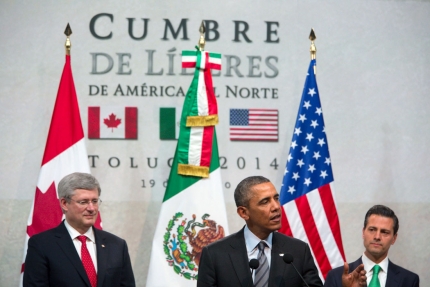
In my State of the Union Address, I asked more businesses to do what they can to raise their employees’ wages.  Today, I applaud Gap, Inc. for announcing that they intend to raise wages for their employees beginning this year – a decision that will benefit about 65,000 workers in the U.S.  As a chief executive, I’ve required federal contractors to pay their employees a wage of at least $10.10 an hour, and more states are taking steps to raise their minimum wage as well.  But only action from Congress can make a difference nationwide.  Right now, there is a bill in front of both the House and the Senate that would boost America’s minimum wage to $10.10 an hour, and lift wages for more than 16 million workers – all without requiring a single dollar in new taxes or spending.  It’s time to pass that bill and give America a raise. 

###

The White House

Office of the Press Secretary

Readout of President Obama’s Call with Prime Minister Erdogan

President Obama spoke by phone today with Prime Minister Erdogan of Turkey on a range of bilateral and regional issues.  The President affirmed the value he places on a strong, mutually respectful bilateral relationship with the Republic of Turkey and expressed his view that Turkey can demonstrate leadership in the world through positive engagement.  The President and Prime Minister agreed on the importance of close cooperation between our two countries to address the growing terrorist presence in Syria and on the shared interest in continuing efforts to advance a political solution to the Syria conflict.  The President and Prime Minister discussed the importance of encouraging Baghdad and Erbil to find common ground on energy issues and supporting the agreement they achieve.  The President thanked the Prime Minister for his constructive role in the effort on Cyprus to renew negotiations for a settlement.  The Prime Minister noted the launch ceremony for the Boeing 737 Peace Eagle on Friday. The President and Prime Minister spoke about the importance of quickly concluding the normalization agreement with Israel.  The leaders also discussed the need for strong, sustainable, and balanced growth in the global economy, and the President noted the importance of sound policies rooted in the rule of law to reassure the financial markets, nurture a predictable investment environment, strengthen bilateral ties, and benefit the future of Turkey.

The White House

Office of the Press Secretary

Remarks by President Obama before Restricted Bilateral Meeting

Governor’s Office
Palacio De Gobierno Del Estado De Mexico
Toluca, Mexico 

1:00 P.M. CST

PRESIDENT OBAMA:  Well, let me thank President Peña Nieto for his wonderful hospitality in hosting us here today.  And it's a special treat to be able to visit his home town of Toluca.
 
This is my fifth visit to Mexico, and I think it underscores the incredible importance of the relationship between the United States and Mexico, not only on commercial issues and security issues, but because of the intimate person-to-person relations that exist between our two countries.
 
I want to congratulate President Peña Nieto on the outstanding efforts that he’s made during the course of this year on a whole range of reforms that promise to make Mexico more competitive and increase opportunity for the people of Mexico.  And I'm also very interested in hearing President Peña Nieto’s strategies as he embarks on dealing with some of the reforms in the criminal justice system and around security issues, which I know are very pressing on his mind and where we have some excellent cooperation between the United States and Mexico.
 
More broadly, the North American Leaders Summit gives us an opportunity to build on the enormous progress that we've already made in making sure that North America is the most competitive region in the world and that we are able not only to continue to integrate our economies effectively to create jobs both in the United States, Mexico and Canada, but that we're able to project American and Mexican and Canadian goods and services around the world toward the benefit of our people.
 
And the cooperation ranges from how do we make our borders more efficient to moving forward on the Trans-Pacific Partnership that offers the opportunity to open up new markets in the fastest, most populous region of the world, the Asia Pacific region.
 
We'll also have the opportunity to discuss how we can work together more closely on scientific and educational exchanges.  We're particularly interested in making sure that young people in Mexico and the United States and Canada are able to study and travel in each country, and we're trying to expand those kinds of exchanges.
 
So this is a wonderful opportunity for us to build on the work that we've already done over the last year.
 
With the President’s indulgence, let me say one last thing, and that is about the situation in Ukraine, which obviously has captured the attention of the entire world. 
 
The United States condemns in strongest terms the violence that's taking place there.  And we have been deeply engaged with our European partners as well as both the Ukrainian government and the opposition to try to assure that that violence ends.
 
But we hold the Ukrainian government primarily responsible for making sure that it is dealing with peaceful protesters in an appropriate way; that the Ukrainian people are able to assemble and speak freely about their interests without fear of repression. 
 
And I want to be very clear that as we work through these next several days in Ukraine that we are going to be watching very carefully and we expect the Ukrainian government to show restraint, to not resort to violence in dealing with peaceful protesters.  We've said that we also expect peaceful protesters to remain peaceful.  And we'll be monitoring very carefully the situation, recognizing, along with our European partners and the international community, there will be consequences if people step over the line.  And that includes making sure that the Ukrainian military does not step into what should be a set of issues that can be resolved by civilians.
 
So the United States will continue to engage with all sides in the dispute in Ukraine, and ultimately our interest is to make sure that the Ukrainian people can express their own desires.  And we believe that a large majority of Ukrainians are interested in an integration with Europe, and the commerce and cultural exchanges that are possible for them to expand opportunity and prosperity.
 
But regardless of how the Ukrainian people determine their own future, it is important that it is the people themselves that make those decisions.  And that’s what the United States will continue to strive to achieve.
 
And I do think there is still the possibility of a peaceful transition within Ukraine, but it’s going to require the government, in particular, to actively seek that peaceful transition, and it requires the opposition and those on the streets to recognize that violence is not going to be the path by which this issue will be resolved.
 
Thank you very much.

END  
1:10 P.M. CST