The White House

Office of the First Lady

Remarks by the First Lady at Fashion Education Workshop

East Room

12:49 P.M. EDT
 
MRS. OBAMA:  Well, hello everyone.  How are you doing? 
 
AUDIENCE:  Great.
 
MRS. OBAMA:  Okay.  All right, we’re just going to break this up one moment and just say, is this not cool?  (Laughter.)  I mean, come on.  You’re in the White House.  There are some of the most impressive people in fashion here to teach you all, and to reach out and to mentor you.  And there’s food.  (Laughter.)  What more could you ask for.
 
Well, welcome to the White House.  And let me start by thanking Anna for that very kind introduction and for her tremendous passion and leadership in making this day a reality.  We started cooking this up a little while ago, and it’s just been a thrill to be able to bring this vision to reality.  So, Anna, thank you so much.
 
I also want to thank everyone from the -- Parsons The New School for Design for helping us today, the Fashion Institute of Technology, the Pratt Institute of Technology, along with all of the incredible designers and entrepreneurs, the fashion journalists who have taken time out of their very busy days to be here with all of you.  Let’s give them all a round of applause.  (Applause.) 
 
And there are two groups that I want to give special recognition to.  First, all of the students and faculty from Parsons who created the incredible décor that you see here on the tables in the East Room.  Well done.  (Applause.)  Thank you, guys.  Thank you so much.   
 
And second, I want to recognize the two winners of our design competition for this event.  The dress that I am wearing today and the dress that you see here were designed by two students who are with us today.  Chelsea Chen -- Chelsea, stand up, please.  Chelsea designed this dress.  (Applause.)  Great job!  (Laughter.)  And Natalya Koval, please stand up.  Natalya designed this dress.  (Applause.)  Well done.  Oh, did it switch around?  Natalya designed this dress, Chelsea designed that dress.  Well done!  (Laughter.)  Good job!  They’re both students at FIT.  And Natalya and Chelsea, thank you.  Thank you for your creativity, thank you for your passion.  We’re very proud of you.  I hope you had fun doing this.  And I want to thank the designer mentors who helped them bring their ideas to life -- Phillip Lim and Lela Rose.  Phillip and Lela, thank you both for working with Natalya and Chelsea today.
 
In these dresses that you see and this room, we see the incredible promise that lies within our next generation.  And that’s really what today is all about -– it’s about all of you young people who are here in this room with us, and all the young people who couldn’t be in this room, and your dreams.  We really do focus on how you’re going to get where you’re going to go.  And that’s what this is all about.
 
I know that many of you are hoping to one day pursue a career in fashion, and that’s why we invited you here today -- because we want you to really understand what it’s going to take to be successful.  And we want you to see firsthand that a solid education and the willingness to work hard is really at the core of what it’s going to take to achieve your goals:  education and hard work.  It’s that simple.
 
Today’s workshop is one in a series of events that we have done over the past six years for young people across the country.  We have been doing this since the day we entered the White House for young people.  We want them to be in this house and experience the things that they’re passionate about.  And this workshop is one of many -- whether it’s music or dance or poetry, our mission is always the same:  to inspire you guys to dream bigger, to reach higher, and then, most importantly, to pull somebody else up with you along the way.
 
Because your sitting in these seats makes you really special, but it doesn’t make you unique.  Because you know for every kid that is sitting in this chair, you know probably 10 others who could be sitting in this chair.  So that’s where the giveback comes in, because you’ve got to be thinking, “I was lucky and blessed to be here, so what am I going to do to share these gifts with somebody else?”
 
Now, when it comes to the fashion industry, so often people think it’s all about catwalks and red carpets and “who wore it best,” and whether some famous person wore the right belt with the right shoes –- like I’d know what that’s like.  (Laughter.)  But the truth is that the clothes you see in the magazine covers are really just the finished product in what is a very long very complicated and very difficult process, as I’ve come to learn working with many designers.
 
What most people don’t realize is that there are so many different aspects to this industry.  Whether it’s business marketing or technology and manufacturing, even agriculture that produces the wool and the cotton that ultimately becomes our clothes, it’s a big, complicated industry.  The industry is also a huge contributor to this economy.  Last year alone, Americans spent more than $350 billion on clothing and footwear, and about 1.4 million American workers are employed annually by retailers and others in the fashion industry -- so a lot of jobs, a lot of income that is generated by many of the people who are sitting in this room. 
 
But for so many of you –- whether you’re already in the industry or aspiring to be there some day -– I know that in the end, fashion is really about passion and creativity.  Just like music or dance or poetry, it’s what drives you.  It’s what gets you out of bed each morning.  It’s what you write about in essays in school and what you read about in the news.  It occupies every ounce of your daily lives.  I know this because with creative people, that’s what their passion does -- it makes everything else worthwhile. 
 
Fashion is about so much more than just a pretty pair of pumps or the perfect hemline.  For so many people across the country, it is a calling, it is a career, and it’s a way they feed their families.  So that’s why we thought it was important to bring the industry to the White House, and to share it with all of you who are coming up in the next generation. 
 
Today, in your breakout sessions, you all have had a chance to see all the different aspects of the industry -- and there are many, many more aspects, we just didn’t have the time.  But you learned the business sense that you need to strike out on your own.  There’s a very entrepreneurial aspect to this industry.  You learned the writing and verbal skills that you need to communicate your inspiration with others -- because the bottom line is that if you can’t share your thoughts and ideas, no one will hear them.  There’s no mindreading in fashion design; you have to be able to articulate what you want.  So you have to be a reader, a writer, a thinker, a communicator. 
 
You learned the highly specialized construction skills that you all can only learn through hours and years of education and practice and technical training.  This doesn’t just come out of just talent, sheer creativity.  You have to practice it.  You have to learn it.  You have to study it.  And those are the kind of concrete skills that you all will need to succeed.  And it’s important for you all to know that there’s a concreteness to this work.  And it’s easy to lose sight of that, because it’s easy for us to look at the accomplished people in this room and think, well, it must have been easy being Jason Wu -- Jason’s like, not so much -- (laughter) -- that the style and the creativity have just flowed from these people since the day they were born.
 
It’s easy to think that it’s easy.  But these folks will tell you that that’s never really the case.  What they have learned over the course of their illustrious careers is that the path to success is rarely ever easy or obvious.  Instead, they know that in order to exceed, they know that you have to be prepared, that you’ve got to hone your skills in college or design school.  You’ve got to be willing to take some risks, and you also have to be prepared to fail -- a lot.
 
All of these things are essential for the journey.  And that’s true for fashion, but it’s true for everything else.  Risks, failure, is a part of being great.  So embrace that, don’t fear it.  And the most important thing you’ve got to do is work and work and work and work and work and work.  That’s it.  It’s hard work -- sorry -- (laughter) -- years and even decades before you can achieve your goals.
 
Just take Sara Blakely, for example.  After she graduated from college, Sara worked at Disney World, buckling in people into their seats for the rides -- dag, Sara.  (Laughter.)  Sara did that for a while, and then she went on to sell fax machines for an office supply company.  And then she got this idea, and she took a risk -- she devoted her entire savings, $5,000, to start her own company. 
 
She spent two years planning and researching her new business ideas in the nights while she was still selling fax machines.  She pitched her idea to factories and mills, asking them to help her make the product a reality, and of course, she was turned down again and again and again.  But finally, a manager at a factory liked her idea, and today, 14 years later, Sara’s idea, Spanx, is a multibillion-dollar company with products selling in more than 50 countries.  (Applause.)  And we all wear them with pride.  (Laughter.)
 
And then there’s my friend Maria Cornejo, who grew up in Chile knitting and sewing clothes for her dolls.  When she was 11, her family fled to England as political refugees.  And Maria didn’t speak a word of English, and she says she always felt like an outsider.  But then she realized that she could make a career out of fashion. 
 
So she went to design school, and she studied fashion and textiles, and she started her own business.  And today, Maria’s got a company based in New York.  She won a National Design Award for fashion.  She is one of my favorite designers.  She’s earned fans all around the world.  And she is probably one of the sweetest, most gracious people that I’ve met over the course of these years.
 
So to all of you guys in this room, I want those stories -- the stories of Sara and Maria, and I’m sure there are many, many others as you talk to people at your tables -- I want those stories to show you that there’s no magic to being successful in fashion or in anything else.  What is required is a willingness to work long nights, to suffer through rejection and failure, to rise above all of that -- all the doubts and the fears and the anxieties -– whether you come from the city, the suburbs, no matter who you are, where you come from, all those feelings are natural.  It’s a natural part of life. 
 
Maybe you do feel like an outsider.  Maybe you’ve been told that your ideas aren’t any good.  Or maybe your family doesn’t have much money.  Maybe you’re the first one in your family to go to college, and you’re wondering whether you’re even going to make it.  Whoever you are, wherever you come from, I want you -- again, know that those worries and doubts are natural.  It’s okay.  Every single person in this room -- including me -- everyone who has been successful at anything has doubted themselves, and has had someone else doubt them. 
 
But what successful people don’t do is let their doubts and fears shut them down.  That’s what you cannot do.  They brush off the doubters, they brush off the haters.  They reach out for help, which is key.  They use those emotions to inspire them to work even harder to create their own futures.
 
So today, I want you all of you to know that you belong here.  You belong right here in the White House -- yes, yes.  (Laughter.)  So, look, you belong right here next to Jason Wu and Anna Wintour and Narciso -- and I could go on.  You belong here.  This is your home, so own it, okay?  Because if you can sit at these tables and spend this day here and meet with all these great people, then you can do anything -- but you have to know that, and you have to tell yourselves that every single day.  Remember this moment, and remember that the First Lady of the United States told you that you can do anything you want to.

And we’re counting on you.  We are proud of you.  Your President is proud of you.  He knows this is going on, he’s just a little busy.  (Laughter.)  So I want you to take advantage of this day.  I want you to network with each other.  I want you to continue working hard, and know that failure is a part of the growth that you will need to be great.
 
So we are so pleased to have you here.  And if you feel like this day was special, it’s because we think you all are special, and you all are worthy of the efforts that we’ve put in to making this day special for you.  So thank you, guys.  Thank you so much.  (Applause.) 
END
1:05 P.M. EDT

The White House

Office of the First Lady

Remarks by the First Lady at Grassroots Campaign Event With Governor Pat Quinn -- Chicago, Illinois

UIC Pavilion
Chicago, Illinois

5:07 P.M. CDT

MRS. OBAMA:  Oh, my goodness!  I’m home!  (Applause.)  Oh, my goodness.  It is so good to be home.  (Applause.)  Let me start by thanking --

AUDIENCE MEMBER:  I love you!

MRS. OBAMA:  I love you all.  I miss you all so much.  (Applause.)  We miss you guys.  But we’ve got a job to do here today, right?  We’ve got a Governor to reelect.  And I want to start by thanking my friend Pat Quinn for that very kind introduction.  I am so proud to be here to support his reelection to Governor of the great state of Illinois.  Let’s get it done!  (Applause.) 

I also want to recognize our terrific Senator, Senator Dick Durbin, as well.  Dick has been such a great friend and a partner to me.  He’s been a powerful leader for our state and for our country out in Washington, and I am so glad that he’s here to join us.

I want to remind you all to get out and vote for Dick Durbin and the other outstanding leaders we have here today -– just to name a few, Representatives Danny Davis, Bill Foster, Luis Gutierrez, Robin Kelly, Jan Schakowsky -- (applause) -- all of them representing our state so wonderfully in Washington, as well as Lieutenant Governor Sheila Simon, our Secretary of State Jesse White, our Attorney General Lisa Madigan, our candidate for Treasurer, Senator Mike Frerichs, and of course, Cook County President Toni Preckwinkle.  Let’s give them all a round of applause.  (Applause.)

All right, you all.  There is a reason that I’m here today for Governor Quinn, and there’s a reason why I’m going to be casting my vote for Governor Quinn, and that is because I know Pat Quinn and I have seen how he is out there every day making the tough decisions to lift up our families and to move this state forward. 

And let me just tell you, this is personal for me because this city, this state -- this is my home.  And like all of you, I care deeply about what happens here.  I care deeply about who is the leadership here in this state.  And over the past four years, I’ve seen Pat Quinn fighting off radical budget cuts to our schools.  I’ve seen him investing in early childhood education, in college scholarships for our kids to make sure they get to fulfill their God-given potential. 

I’ve watched Pat work tirelessly with me, hand in hand, for our veterans and military families, helping them buy homes, find jobs and get the education they’ve earned.  I’ve seen Pat creating thousands of new jobs here in this state.  His push for the minimum wage is essential.  And the man even suspended his own paycheck to help fix our pension crisis here in Illinois.  (Applause.) 

That is what -- just some of what Pat Quinn has done for us as Governor.  And that’s really what matters in this election -– not what a candidate says, but what he actually does.  And let me tell you something -- Lord knows I’ve been through enough campaigns and elections in this state to know just a little bit about what I’m talking about.  (Laughter.) 

Because I have seen candidates come and go.  I have seen people who have spent a lot of money and make a lot of promises.  But at the end of the day, we have got to ask ourselves, what do these folks really stand for?  What do they really stand for?  What are their values?  What do they believe in?  What are they going to do for us?  Well, I know what Pat Quinn stands for.  I know, that’s why I’m here.

Pat believes like we do that when you get to the top, you don’t pull up the ladder after you -- you reach back and you help other folks get the same opportunities you had to succeed.  (Applause.)  Pat Quinn believes that everyone should play by the same rules -– no gaming the system, no special breaks for some folks at the expense of others.  Pat thinks that everyone who’s willing to work for it should be able to build a good life for themselves and an even better life for their families.  And finally, Pat believes in putting our children first.  Just like us, he wakes up every morning thinking about their health, their happiness, their futures, our kids. 

So let’s be very clear:  If we want a Governor who shares our values and is going to fight for our families, then we need to work day and night to reelect Pat Quinn as Governor of Illinois.  (Applause.)  We have to do that.  And I am confident that we can get this done.  I am confident, because I’ve seen what you all can do.  I’ve seen it.

A lot of you here today in this city, in this state, you have been with me and Barack from the very beginning -- from the very beginning.  (Applause.)  You all remember those days back when we were on the South Side working to get Barack to Springfield as State Senator?  You all were back with us when we traveled throughout the state to get Barack to represent us in Washington as a U.S. Senator.  You all were there with us when we were out in Iowa and New Hampshire, remember?  We were talking about hope and change, we were getting fired up and ready to go.  You were there.  You were there.  You did the work.

And then you were with us when Barack first took office, and he got a good look at the mess he’d been handed and wondered what on Earth he had gotten himself into.  Remember how bad things were back when Barack took office?  Let me take you back for a moment, because sometimes we forget. 

Back when Barack first took office, we were, in this country, in full-blown crisis mode.  Our economy was literally on the brink of collapse.  Wall Street banks were folding -- folding.  You all hear me?  They were folding.  Businesses were losing 800,000 jobs a month -- every month.  Folks on TV were panicking about whether we were headed for another Great Depression –- you remember that?  And that wasn’t just talk, that was a real possibility.  This is what Barack Obama walked into on day one as President of the United States.  I could go on.  Things were bad. 

Now, I want you to think about how things look today, less than six years later.  And I’m going to give you facts; I’m talking as a citizen, not as a wife. 

By almost every economic measure, we are better off today than when Barack took office.  That is a fact.  (Applause.)  Why do I say that?  Our businesses have created more than 10 million new jobs since 2010 -- 10 million, including the 236,000 jobs last month alone.  Now, this is the longest uninterrupted run of private sector job growth in our nation’s history.  Do you hear me?  In the history of this nation.  (Applause.)  The unemployment rate has dropped from a peak of 10 percent back in 2009 to 5.9 percent today.  And right now, there are more job openings than at any time since 2001.

Last year, the number of children living in poverty decreased by 1.4 million -– the largest drop since 1966.  (Applause.)  And today, our high school graduation rate is at a record high.  More of our young people are graduating from college than ever before.  And because of the Affordable Care Act, health care costs are growing at the slowest rate in nearly 50 years, and millions more Americans finally have health insurance.  (Applause.) 

Now, I want you to also think about how different our country looks to children growing up today.  Think about how our kids take for granted that a black person or a woman can be President of the United States.  (Applause.)  They take for granted that their President will end hurtful policies like “don’t ask, don’t tell,” and speak out for equality.  (Applause.)

So while we still have a lot of work to do, we have truly made so much of that change we were talking about.  But what I want you to remember is that Barack didn’t do that all by himself just sitting in the Oval Office.  He did it with the help of outstanding leaders across this country -– leaders like Pat Quinn, who understand what’s really going on in our lives.  Leaders who will stand with Barack to create more jobs and build better schools.  Leaders who will make sure that women get equal pay, and that we can make our own decisions about our bodies and our health care.  (Applause.)  That’s how he did it. 

In short, Pat Quinn has Barack’s back.  And now it’s time for us to have Pat’s back.  (Applause.)  Now it’s our turn.  Because make no mistake about it, Barack’s last campaign wasn’t in 2012.  Barack’s last campaign is this year, 2014, because that election in 2012, that wasn’t the change we sought -- it was only the chance to make that change.  And if we want to finish what we started together, then we need to reelect Pat Quinn as Governor.  We need to do that today.  (Applause.)   

Now we know this won’t be easy.  We know this won’t be easy, but we know a little bit about not easy, don’t we?  We know that there is too much money in politics, and special interests have way too much influence.  But what I want you to understand is that they had plenty of money and influence back in 2008 and 2012, and we still won those elections -- we still won.  (Applause.) 

You want to know why we won?  Because we showed up and we voted.  (Applause.)  It’s as plain as that.  Because at the end of the day, the folks running those special interest groups, the folks who poured millions of dollars into those elections, well they each just have one vote -- and so do each of us.  And ultimately, the only thing that counts are those votes.  That’s what decides elections in the United States of America.  That is still true.  And that is why Barack Obama is President right now. 

He is President today because a whole bunch of folks who never voted before showed up to vote in 2008 and 2012.  And a lot of people were shocked when Barack won -- they were shocked -- because they were counting on folks like us to stay home.  They were counting on it.  But we proved them wrong.  We proved them wrong, because Barack won because record numbers of women and minorities and young people showed up to vote.

But see then, this is what happens -- then the midterms came along, and too many of our people just tuned out.  And that’s what folks on the other side are counting on this year, because when we stay home, they win.  So they’re assuming that we won’t care.  They’re hoping that we won’t be organized.  They’re praying that we’re not energized.  And only we can prove them wrong.  Only we can do it.

And make no mistake about it -- this race is going to be tight.  We know that races like this can be won or lost by just a few thousand or even a few hundred votes. 

And I want you to think about what happened in Governor Quinn’s race back in 2010.  The outcome of that race was decided by about 32,000 votes.  Now, that might sound like a lot, but when you break that number down, that’s just about three votes per precinct -- do you hear me?  That’s three votes per precinct.  That was the margin of difference. 

Now, I know that every single one of you all knows three people who didn’t vote in the midterms.  And I know you know three people that you can connect with.  I mean, just think about those numbers.  That is the power of the right to vote.  And if we do that, Pat Quinn wins this election.  (Applause.) 

So let’s be real clear -- that’s why I’m talking -- we can go emotion, but they’re just facts about how to win.  We have to be clear:  This election is on us.  These are our voters.  This is us.  And we can’t wait around for anyone else to do this for us.  It’s on us to get this done.  It’s on us to get people energized, to get them organized, to get them out to vote. 

So that’s why this rally is so important.  That’s why I’m here.  That’s where all of you come in.  Because every day between now and the November the 4th, we need you out there doing the hard work, knocking on those doors, making those calls.  It’s the person-to-person contact.  These are our voters.  We need you to tell folks to vote early.  That’s what Barack and I are going to be doing even from Washington.

And I want you all to know -- remember, you can vote early by mail, or you can vote early in person all across this state starting on October the 20th.  The early vote got it done for Barack, and we can do it for Pat Quinn.  (Applause.) 

So I want you all to go to QuinnForIllinois.com.  I’m being real specific -- QuinnForIllinois.com -- and you can find out all the information you need about how to vote, and you can also sign up to volunteer.  And once you have the information you need for everyone you know, you need to get them to vote early.  Think about those three people in your life who don’t think their vote matters; who don’t think it’s worth getting up early, or to fill out the form -- those folks in your church, or your neighbors, or your classmates who think somehow this doesn’t matter.  And I want you to get those folks to the polls on November the 4th.  Bring as many people as you can -- family members, neighborhood folks, church folks.  Don’t leave anyone behind.   

In this arena alone, if we do that, we could change the course of this election.  (Applause.)  We can change the course of this election with the folks in this room.  So start today reaching out, because we’ve got less than a month until Election Day.  And we all need to be as passionate and as hungry for this election as we were back in 2008 and 2010 [2012.]  In fact, we need to be even more passionate and even more hungry, because races like this Governor’s race here in Illinois will be even harder and even closer than those presidential elections, but they’re just as important.

Because the stakes this year simply could not be higher.  See, because if we don’t elect leaders like Pat Quinn and Dick Durbin and the other outstanding folks here today who will put people first instead of fighting for special interests, then we know exactly what will happen:  We will see more folks interfering in women’s private decisions about our health care.  We’ll see more opposition to immigration reform and raising the minimum wage for hard-working folks.

So I want to be clear:  If you think people who work 40 or 50 hours a week shouldn’t have to live in poverty in the wealthiest nation on the planet; if you don’t want women’s bosses making decisions about their birth control; if you think women should get equal pay for equal work; if you want our kids to have quality preschool, have the chance to go to college to get the education they need to fulfill their God-given potential, then we need you to step up.  We need everyone you know to step up and vote for Pat Quinn.  (Applause.) 

That’s what’s at stake in this election -- the kind of country that we want to leave for our kids and our grandkids.  Because we have to remember those kids are counting on us to stand up for them.  They’re kids like all the kids we know.  I met young people at Harper High School in Englewood -- I met a great group of kids.

Many of you know the odds these kids and so many of our kids are facing -– neighborhoods torn apart by poverty and hopelessness, by guns and gangs; parents who are addicted to drugs or alcohol, or who’ve lost their jobs.  When I was at Harper, there were about 25 kids in the classroom I spoke to that day, and when asked whether they knew someone who’d been shot, every single one of them raised their hands -- every last one of those kids raised their hand. 

But let me tell you some other facts about these kids.  See, one of them was the valedictorian.  One was the salutatorian.  One was a football star.  A couple of them were leaders in the ROTC.  See, against all the odds, those kids still had big dreams for their futures.  (Applause.)  They still found a way to lift their sights to college, to careers, to want families of their own.

And here’s what you all know -- as I travel around the country, I meet so many kids just like those kids at Harper.  Kids who wake up early and take the long route to school to avoid the gangs.  Kids who juggle afterschool jobs to support their families, stay up late to get their homework done.  Kids whose parents don’t speak a word of English, but who are fighting every day to realize their dream of a better life. 

See, these kids, they have every reason to give up, but they are so hungry to succeed.  They are desperate to lift themselves up.  And that’s why we’re here -- because those kids, they never give up -- they never give up.  And neither can we -- neither can we.

So between now and November, we need to be energized for them.  We need to be inspired for them.  We need to pour everything we have into this election so that they can have the opportunities they need to build the futures they deserve.  And I know we can do this, because we’ve done it before.  You all have done it before.  You amaze me.  You all amaze me. 

If we keep stepping up and bringing others along with us, then I know -- I know in my heart that we can keep making that change we believe in.  I know we can elect Pat Quinn as Governor of Illinois.  I know that we can elect Dick Durbin and all our other terrific leaders here today.  And I know that together, we can build a future worthy of all our children.  So let’s just get this done.

Thank you all.  God bless.  (Applause.) 

END  
5:30 P.M. CDT

The First Lady Teams Up with Redbook to Support Female Veterans

The First Lady teams up with Redbook to help female veterans get jobs

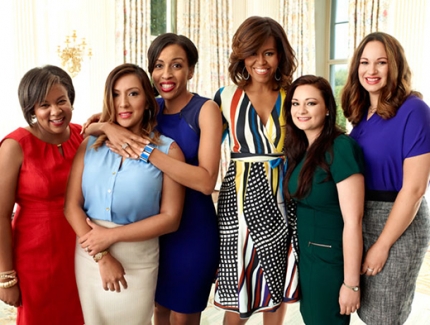
Earlier today, Redbook unveiled their November issue, which features First Lady Michelle Obama and is dedicated to helping female veterans get jobs. The issue highlights five female veterans who visited the White House to speak with the First Lady about the Joining Forces initiative and their experiences transitioning into civilian life.

The November issue also highlights how all Americans can help support women veterans, and provides resources for women veterans seeking employment.

Learn more about the November issue and join the conversation on Twitter by using the hashtag #HireWomenVets.

The White House

Office of the First Lady

Remarks by First Lady Michelle Obama at Michaud for Governor Rally

University of Maine
Bangor, Maine

4:40 P.M. EDT

MRS. OBAMA: Hey, Maine! (Applause.) Oh my goodness, thank you guys! Thanks so much. Wow, you guys are really fired up and I love it! (Applause.)

I am so thrilled to be back in Maine -- I just wish I could stay longer. (Laughter and applause.) But let me start by thanking our friend, the next governor of Maine, Mike Michaud. (Applause.)

I don’t know about you, but -- I don’t know why you’re here but I’m here for Mike. I’m here for Mike. (Laughter and applause.) And just listening to him backstage, he is a decent man. He is an honest man. He is a hard-working man. And I am very proud to be here in support of him. Mike understands what families here in Maine are going through -- he knows. And as you all know, the entire time he was serving in your state legislature, he was working on the mill floor at the Great Northern Paper Company. He worked there for more than 29 years. So when it comes to creating jobs and making sure folks get a decent paycheck for their work, Mike understands what’s at stake in people’s lives. And Mike doesn’t get caught up in partisanship or politics. He was unanimously elected president of the Maine Senate by 17 Democrats, 17 Republicans and one independent. (Applause.) And he worked hard to bring those folks together to do great things for this state like raise the minimum wage, and cut taxes for small businesses, and so much more.

And Mike brought that same spirit to Congress -- working across the aisle to improve benefits for our veterans, and promote clean energy, and make sure our military uniforms are 100 percent made here in the U.S., including right here in Maine. (Applause.)

So whether it’s strengthening the economy, or expanding access to health care, or ensuring that women get equal pay for equal work, Mike will wake up, as he said, every day ready to fight for hard-working families. And so, once again, I’m so proud to be here on his behalf and I think you all for being here to support him as well.

AUDIENCE MEMBER: We love you! (Laughter.)

MRS. OBAMA: I love you, too. (Laughter and applause.)

I also want to recognize Senator Emily Cain. (Applause.) Yes, Emily. (Applause.) And Emily’s mom. (Laughter.) Emily has led the charge in your state legislature for economic development and better schools and more affordable health care, and I know that she will be an outstanding Congresswoman for the people of the 2nd district, so be sure to vote for Emily along with Mike on November the 4th. (Applause.) Yay, Emily! (Applause.)

And I also want to give a big hello to Cecile Richards who has been such a strong, passionate advocate for women and families across this country -- and I’m thrilled -- it was a pleasure, I know for all of you, to hear from her today. (Applause.)

And thanks also -- I’ve got a lot of people to thank here in Maine. You guys have made my visit so special, I want to thank the president of this university, Susan Hunter, for her outstanding leadership and for hosting us here today. (Applause.)

But most of all, I want to thank you guys, I really do. (Applause.) Yes, I see so many wonderful faces -- folks who have been with us from the beginning, folks who are new to this whole endeavor. I remember some of you were with us back when we were out in Iowa and New Hampshire, talking about hope and change and getting all fired up and ready to go -- remember that? Yes! (Applause.)

And then you all were with us when Barack first took office. (Applause.) And he had a moment to step back and take a good look at the mess he had been handed. (Laughter.) And wondered what on Earth he’d gotten himself into. (Laughter.)

But let’s go back for a moment, because I want you to remember how bad things were back then -- because it’s easy to forget, particularly for the young people because you all were young, you weren’t paying attention. (Laughter.) But when Barack first stepped into office, this country was in full-blown crisis mode. Our economy was literally on the brink of collapse. If you can imagine, Wall Street banks were folding. Businesses were losing 800,000 jobs a month. Folks on TV on the news were panicking about whether we were headed for another Great Depression –- and that wasn’t just talk, that was a real possibility. And there was more -- that was just domestically. But that’s just some of what Barack walked into on day one as President.

Now, I want to bring you to today. And I want you to look at where we are less than six years later. By almost every economic measure, we are better off today than when Barack took office. And here is why. (Applause.) Our businesses have created more than 10 million new jobs since 2010. (Applause.) And that’s including the 236,000 jobs created just last month. This is the longest uninterrupted run of private-sector job growth in our nation’s history. You understand that? In the history of this nation. (Applause.)

The unemployment rate has dropped from a peak of 10 percent back in 2009 to 5.9 percent today. (Applause.) And right now -- and this is important for our young people -- right now, more job openings are available than at any time since 2001. (Applause.)

Last year, the number of children living in poverty decreased by 1.4 million –- that is the largest drop since 1966. (Applause.) And today, our high school graduation rate is at a record high. More of our young people are graduating from college than ever before. And as you know, because of the Affordable Care Act, health care costs are growing at the slowest rate in nearly 50 years, and millions more Americans finally have health insurance. (Applause.)

And just think about how different our country looks to children growing up today. Think about how our kids take for granted that a black person or a woman can be President of the United States. (Applause.) They take for granted that their President will end hurtful policies like don’t ask, don’t tell and will speak out for equality for all Americans. (Applause.)

This is the kind of change that can happen when we elect leaders who share our values and who listen to our voices. And that’s what this election is all about. It’s about whether we’re going to elect leaders who will fight for our families and for the kind of world we want to leave for our kids and grandkids.

That’s the kind of leadership people here in Maine deserve. And that’s why we need to elect Mike Michaud as governor of this state. Mike -- we need him. (Applause.) And that’s why I’m here.

See, Mike, he understands that there is nothing we wouldn’t do for our children -- nothing. We always put our kids’ interests first. We wake up every morning and go to bed every night thinking and worrying about their health, their happiness, their futures. Yes, young people, you drive us nuts. (Laughter.)

So we deserve leaders like Mike who believe that no matter how our kids start out in life, if they’re willing to work for it, they should have every opportunity to fulfill their boundless promise and they should have every opportunity to get a good education, build a decent life for themselves and a better life for their own kids. That’s the American Dream we all believe in. And that’s what this election here in Maine is all about.

Now, it’s true that there is too much money in politics. And, yes, it’s true that -- (applause) -- it’s true that special interests have too much influence. But here is what I want you to remember: They had plenty of money and influence back in 2008 and 2012, and we still won those elections. (Applause.)

I want you to understand the power that all of you have. You want to know why we won? Because we showed up and we voted. And at the end of the day, the folks running those special interest groups, the folks who poured millions of dollars into those elections –- they each have just one vote, just like we do.

And ultimately, the only thing that counts are those votes. That’s what decides elections in the United States of , and that’s why Barack Obama is President right now. (Applause.) He is President because a whole bunch of folks who never voted before showed up to vote in 2008 and 2012. And a lot of people were shocked when Barack won because they were counting on folks like us to stay home -- but we proved them wrong. Barack won because record numbers of women and minorities and young people showed up to vote.

But, see, then when the midterms came along, too many of our people just tuned out -- and that’s what folks are counting on, on the other side this year. Because when we stay home, they win. So they’re assuming that we won’t care. They’re hoping that we won’t be organized. And only we can prove them wrong. (Applause.)

And as Mike said, this race is going to be tight. We know that races like this can be won or lost by just a few thousand -- even just a few hundred votes.

I want you to just think about what happened in the governor’s race here in Maine back in 2010. The outcome of that election -- yes, you guys are like, ooh. (Laughter.) But the outcome of that election was decided by about 9,800 votes. And while that might sound like a lot, when you break down that number, that’s about eight votes per precinct. Do you understand that? That’s eight votes.

Now I know that every single one of you knows eight people who can get to the polls, right? (Laughter.) You know eight people who didn’t vote in those elections. (Applause.) You know eight people who are thinking in their minds that their vote doesn’t count. You know those folks. You know them. They say, why should I vote, what does it matter. Well, it made the difference in last year’s election for governor -- 2010. So let’s be clear: This is on us. We can’t wait around for anyone else to do this for us. It’s on us to get people energized. It’s on us to get folks out to vote on November the 4th.

And that’s where you all come in. We need all of you out there every day -- do you hear me? Every day. Not every other -- every day between now and November 4th we need you knocking on doors and making calls and getting everyone you know out to vote for Mike because it will be that ground game that makes the difference. It’s that kind of hard work for anybody who worked on our campaign -- you know how valuable that kind of day-to-day work is. Don’t ever underestimate it. And it may seem tedious, and it may be a little bit frightening knocking on a stranger’s door, but it’s that kind of interaction with your neighbors that makes all the difference.

And you can sign up to volunteer right here and right now -- just find one of the organizers with the clipboard. They’re all here. And I want every single one of you to sign up for at least one shift for the final four days of the election -- that’s essential. It’s those last four days, that last big push.

And then, on Election Day, when you head to the polls to vote for Mike, I want you all to bring eight people with you. (Laughter.) Okay? Bring your eight people with you. Bring folks from your family, your neighborhood, your church, your school, your classmates, your dormmates. Don’t leave anyone behind.

And start reaching out to those folks today just to tell them to mark November 4th on their calendars. This race will be so close. And on election night, as the results are coming in, I want you to be able to look back and know that you did everything you could to elect Mike as the next governor of Maine, because the stakes this year simply could not be higher.

And if we don’t show up at the polls this November, if we don’t elect leaders like Mike who will put people first instead of just fighting for special interests, then we know exactly what will happen. We will see more folks interfering in women’s private decisions about our health care. We’ll see more opposition to raising the minimum wage and ensuring access to health care for hard-working folks. (Applause.)

So I want to be very clear: If you think people who work 40 or 50 hours a week shouldn’t have to live in poverty in the wealthiest nation on Earth, if you think women should get equal pay for equal work, if you want your kids to have quality preschool and the college education they need to fulfill every last bit of their God-given potential, then you need to step up and get everyone you know out to vote this November. That’s what’s at stake in these elections -- the kind of country we want to leave for our kids and grandkids. That’s what’s at stake. (Applause.)

And here is what I want you to remember: Those kids, our kids, are counting on us to stand up for them this November. And there are so many of these kids all over the country who I meet every day who are counting on us. Kids like a young man named Lawrence Lawson who I met earlier this year.

This kid lost his father -- he died when he was just eight years old. And at the age of nine, Lawrence suffered a major seizure and had to learn to read, and walk and speak again. When he was twelve, his mom passed away, and Lawrence was passed from his aunt in Atlanta to his sister in Baltimore. But no matter where he was, Lawrence did his best in school. He joined the marching band, interned at John’s Hopkins hospital, and he graduated as the valedictorian of his high school class. (Applause.)

And I share this story -- there are so many like them -- because as I travel across the country, I meet so many kids just like Lawrence. Kids who wake up early and take the long route to school to avoid the gangs. Kids who juggle afterschool jobs to support their families and then stay up late to get their homework done. Kids whose parents don’t speak a word of English, but who are fighting every day to realize their dream of a better life. (Applause.)

These kids have every reason to give up. They have every reason to give up, but they don’t because they are so hungry to succeed. They are so desperate to lift themselves up. And that’s why we’re here today -- because those kids never give up, and neither can we. (Applause.)

So between now and November, we need to be energized for them. We need to be inspired for them. We need to pour everything we have into this election so that they can have the opportunities they deserve to build a better life.

And here is what I know: As First Lady of the United States, I have learned that if we do that, if we take all our energy and passion and caring and good intention, and we pour it into this election, and we bring others along with us, then I know that we can keep on making that change we believe in. I know that we can elect Mike Michaud as governor of Maine. And I know that, together, we can build a future worthy of all our children.

Thank you all so much. Good luck. We are with you every step of the way. Don’t get tired. We love you. Thank you. (Applause.)

END 
P.M. EDT

The White House

Office of the First Lady

Remarks by First Lady Michelle Obama at Martha Coakley for Governor Rally

Strand Theater
Boston, Massachusetts  

2:14 P.M. EDT

MRS. OBAMA:  Thank you so much.  Oh my goodness!  Yes, we will!  We’ve got to get this done!  Oh my goodness, I’m in Massachusetts!  (Applause.)  And I am thrilled to be here today.  You guys, rest yourselves, because I want you ready to work.  (Laughter.)  My goodness, let me start by thanking our friend, the next governor of Massachusetts, Martha Coakley!  Yes!  (Applause.) 

Now, I think we can all agree that no one in this race will fight harder for families here in this state than Martha Coakley.  Martha has been a tireless advocate for survivors of violence and abuse.  She has stood up time and again to protect contraceptive coverage because she believes that women should make their own health care decisions.  (Applause.)  She led the fight to raise the minimum wage, and in this campaign, she’s leading the charge for earned sick time for working families.  (Applause.)

Martha understands how important this issue is, especially for working mothers, and she believes that no one should ever have to choose between keeping their job and caring for a sick child -- not in America.  So if you all want a governor who will stand up to powerful interests, if you want a governor who is truly on your side, then you need to elect Martha Coakley on November the 4th.  You need to get that done.  (Applause.)

And when you elect Martha as governor, she will have an extraordinary partner in Steve Kerrigan, our next Lieutenant Governor –- and we are so thrilled that he is here today.  (Applause.)  I’m so proud of you, Steve.

I’d also like to take a moment to recognize a few other of your terrific leaders here.  We’ve got Governor Patrick.  (Applause.)  Yes, indeed.  Senator Markey was here, he had to leave, and of course, Mayor Walsh is here as well.  (Applause.)  And I want to thank them all for their tremendous leadership and their service, and for being here with me today.  Thank you, guys.  

I also want to recognize Seth Moulton.  (Applause.)  And let me tell you about Seth, because I know you know this:  Seth is a veteran who has served this country with distinction.  He’s got a background in business and he knows how to create jobs here in this state.  And I know that he is going to be an outstanding congressman for the people of the 6th district, so let’s vote for Seth along with Martha and Steve on November 4th.  (Applause.)

And finally, I want to thank all of you, really, for being here today, for being involved, for caring enough about your communities to be here.  And I see so many folks here -- I see a lot of new friends but I see some old folks who have been with us from the very beginning, back when we were talking about hope and change out in Iowa and New Hampshire.  Ya’ll were there, many of you were there, and we were getting all fired up and ready to go.  (Applause.)  You remember that?  (Applause.)  

And so many of you were with us when Barack first took office.  (Applause.)  Yes, indeed.  And that’s when he got a good look at the mess he’d been handed, and wondered what on Earth he had gotten himself into.  (Laughter.) 

Now, let’s just go back for a moment, because I don’t know about you but do you remember how bad things were back then?  We were in full-blown crisis mode.  Our economy was literally on the brink of collapse -- Wall Street banks were folding; businesses were losing 800,000 jobs a month -- 800,000 jobs a month; folks on TV -- all the pundits were panicking about whether we were headed for another Great Depression.  And that wasn’t just talk, that was actually a real possibility.  

This is just some of what Barack walked into on day one as President of the United States.  So let’s just get that out of our mind, because that’s my man.  (Laughter and applause.)  Yes, indeed.  (Applause.)  And it just happens to be our 22nd anniversary today.  (Applause.)  And this is how important these elections are to us because I might not even see him today.

AUDIENCE:  Aww --

MRS. OBAMA:  Because I’m on the road and he is on the road, because these elections are so important.  And it’s important for everyone in this country, all over this country, to understand where we’ve come from because now, less than six years later, with my husband in office, by almost every economic measure, we are better off today than when Barack took office.  (Applause.) 

And here are the facts:  Our businesses have created more than 10 million new jobs since 2010 -- including 236,000 jobs last month alone.  This is the longest uninterrupted run of private-sector job growth in our nation’s history.  Do you hear me?  In our nation’s history.  (Applause.)  The unemployment rate has dropped from a peak of 10 percent back in 2009 to 5.9 percent today.  (Applause.)  And right now, there are more job openings than at any time since 2001.  Do you hear me? 

Last year, the number of children living in poverty decreased by 1.4 million –- the largest drop since 1966.  (Applause.)  And today, our high school graduation rate is at a record high.  More of our young people are graduating from college than ever before.  And because of the Affordable Care Act, health care costs are growing at the slowest rate in nearly 50 years, and millions more Americans finally have health insurance.  (Applause.)

And then I want you to just think about how different our country looks to children growing up today.  Think about how our kids take for granted that a black person or a woman can be President of the United States.  (Applause.)  They take for granted that their President will end hurtful policies like don’t ask, don’t tell and speak up for equality for all Americans.  (Applause.)

So today, Massachusetts, when folks ask me whether I still believe everything we said about hope and change back in 2008, I tell them that I believe it more strongly than ever before, because I have seen it with my own eyes. 

I’ve seen veterans finding jobs as our nation proudly supports their transition to civilian life.  I’ve seen children getting better nutrition and growing up healthier.  I’ve seen young people from the most underserved areas reaching higher, and going to college, and then reaching back to serve their communities. I’ve seen all this.  So, yes, we still have a lot of work to do, but we have truly made so much of that change we were talking about. 

But this is what I want you all to understand, particularly in this election:  Barack didn’t do all of that just sitting alone in the Oval Office.  No, no, he did it with the help of outstanding leaders in states all across this country –- leaders like Governor Patrick who are creating good jobs and investing in our schools.  (Applause.)  Leaders who are raising the minimum wage, and fighting for equal pay and earned sick leave, and supporting women’s rights to make our own decisions about our health care.  (Applause.)

And that is the kind of leader Martha Coakley will be, and that’s why we need to elect her as the next Governor of Massachusetts.  (Applause.)  Martha -- she gets it.  She understands that there is nothing we wouldn’t do for our kids -- nothing.  We always put our kids’ interests first.  We wake up every morning and we go to bed every night thinking and worrying about their health, their happiness, their futures. 

And we deserve leaders like Martha who will do the same.  We deserve leaders who believe like we do that no matter how our kids start out in life, if they’re willing to work for it, they should have every opportunity to fulfill their boundless promise.  They should have every opportunity to get a good education, to build a decent life for themselves and an even better life for their kids and grandkids.  That is the American Dream we all believe in -- I don’t care where you’re from.  And that’s what this election here in Massachusetts is all about.  That’s what we’re fighting for. 

Now, it’s true that there is too much money in politics.  And it’s true that special interests have too much influence.  But let  me tell you something:  They had plenty of money and plenty of influence back in 2008 and 2012, and we still won those elections.  We still won.  (Applause.)  And you want to know why?  You want to know why we won because we showed up and we voted.  We showed up.  (Applause.)  At the end of the day, it’s important for us to understand the folks running those special interest groups, the folks who poured millions of dollars into those elections –- they each have just one vote, and so do each of us. 

And ultimately, the only thing that counts are those votes -- that’s what decides elections here in the United States of America.  And that’s why Barack Obama is President right now.  He is President because a whole bunch of folks who never voted before showed up to vote in 2008 and 2012.  (Applause.)  And you’ll remember this -- a lot of folks were shocked when Barack won.  They were shocked.  (Applause.)  Because they were counting on folks like us to stay home.  But we proved them wrong -- we proved them wrong.  (Applause.)  Barack won because of record numbers of women and minorities and young people showed up to vote.  (Applause.)  That’s why he won.  That’s the power of what we can do. 

But here’s the thing.  Then when the midterms come along, too many of our people just tuned out –- and that’s what folks on the other side are counting on this year, because when we stay home, they win.  When we stay home, they win.  So they’re assuming that we won’t care.  They’re hoping that we won’t be organized and energized.  And only we can prove them wrong.  Only we can prove them wrong.

And make no mistake about it, this race is going to be tight.  We know that races like this can be won or lost by just a few thousand or even just a few hundred votes -- you hear me?  And just think back to what happened in the governor’s race here in Massachusetts back in 2010.  The outcome of that election was decided by about 74,000 votes.  Now that might sound like a lot, but when you break that number down, that’s about 34 votes per precinct.  Do you hear that -- that’s 34 people per precinct. 

So together, all of you here today could swing a whole bunch of precincts for Martha Coakley if you put your minds to it.  (Applause.)  Just here in this room.  So let’s be clear:  This one is on us.  It’s on us.  We cannot wait around for anyone else to do this.  It is on us to get people energized.  It is on us to get our folks organized and out to vote on November the 4th.

So that’s where all you come in, and I know the thousands of other people who are not in this theater but you are out here.  We need you out there every day.  Do you hear me?  This is just a few weeks now, this is a few weeks out of your life to be out there every day -- just like you did for Barack -- between now and November, knocking on doors, making calls.  It’s the grassroots work, people.  Knocking on doors, making calls, getting everyone you know out to vote for Martha Coakley.  Remember, 34 votes per precinct.  Think like that.  You know 34 people who didn’t vote in the last midterms?  Mm-hm.  (Laughter.)  Mm-hm.  (Laughter.)  I don’t even live here and I know 34 people who didn’t vote.  (Laughter and applause.)

So you can start by going to the website -- MarthaCoakley.com -- MarthaCoakley.com -- easy.  All right, older folks, if you don’t know how to do that, just find a young person because they’ve got those -- they’ve got the stuff.  (Laughter.)  They always have their face in the stuff.  Just go to the website and you can sign up to volunteer right on the front page.  Or you can just find one of the folks here with the clipboards.  Clipboards, where are our clipboard people, they’re here, they’re out and about, and you can sign up right now to help get out the vote between now and November the 4th.

And then, on Election Day, when you head to the polls to vote for Martha, bring everyone you know with you because you know you’ve got to bring them.  You know that.  Bring folks from your family, your neighborhood, your church –- wake them up, get them out of the house, don’t leave anyone behind.  That’s how we did it for Barack.  And that starts with reaching out to those folks today –- tell them to mark November 4th on their calendars.  Tell them that we’ve got just a month until Election Day, and we need everyone to be as passionate and as hungry for this election as we were back in 2008 and 2012. 

In fact, we need to be more passionate and more hungry, because races like this governor’s race here in Massachusetts will be even harder, and even closer, than those presidential elections -- and they’re just as important.  And the stakes, as Martha said, in this year’s election simply could not be higher.  Because if we don’t show up at the polls this November, if we don’t elect leaders like Martha who will put people first instead of fighting for special interests, then we know exactly what will happen.

We will see more folks interfering in women’s private decisions about our health care.  We’ll see more folks denying that climate change even exists.  We’ll see more opposition to immigration reform and raising the minimum wage for hard-working folks. 

So I want to be very clear:  If you think people who work 40 or 50 hours a week shouldn’t have to live in poverty in the wealthiest nation on earth, if you don’t want women’s bosses making decisions about their birth control, and if you think women should get equal pay for equal work, if you want your kids to have quality preschool and the college education they need to fulfill every last bit of their God-given potential then you need to step up and get everyone you know out to vote this November.  That is what is at stake in this election -- the kind of country we want to leave for our kids and grandkids.  (Applause.)

And here’s the thing, Massachusetts:  Those kids, they are counting on us to stand up for them.  Our kids are counting on us.  And you know these kids.  There are millions of them all over this country who are counting on us.  They’re kids like Lawrence Lawson.  I met this young man this year.  Now Lawrence’s father died when he was just eight.  At the age of nine, Lawrence suffered a major seizure and had to learn to read, and walk and speak again.  And when this young boy was twelve, his mother passed away, and he was passed from his aunt in Atlanta to his sister in Baltimore.  But no matter where he was, Lawrence did his best in school.  He joined the marching band, interned at John’s Hopkins hospital, and he graduated as the valedictorian of his high school class.  (Applause.)

And then the reason why I get so emotional every time I tell stories like that is that I travel across this country, and I meet so many kids just like Lawrence.  Kids who wake up early and take the long route to school to avoid the gangs.  Kids who juggle afterschool jobs to support their families and stay up late to get their homework done.  Kids whose parents don’t speak a word of English, but who are fighting every day to realize their dream of a better life.  (Applause.)

These kids have every reason to give up, but they don’t, because they are so hungry to succeed.  They are so desperate to lift themselves up.  And if you didn’t have a good enough reason to get on it on this election, then just think of those kids -- because that’s why we’re here today.  Because those kids never give up, and neither can we.

So between now and November, we need to be energized for them.  We need to be inspired for them.  We need to pour everything we have into this election so that they can have the opportunities they need to build the futures they deserve.

And here’s the beauty of it:  I’ve seen it.  If we do that, if we all work together, if we all keep stepping up and bringing others along with us, and we just vote, then I know that we can keep on making that change we believe in.  I know we can elect Martha Coakley as governor of Massachusetts.  And I know that together, we can build a future worthy of all our children.

Thank you all so much, God bless.  Let’s get it done.  (Applause.)

END 
2:35 P.M. EDT

First Lady Michelle Obama Hosts the National Design Awards Luncheon

September 30, 2014 | 18:49 | Public Domain

On September 30, 2014, First Lady Michelle Obama hosted the Cooper Hewitt National Design Awards Luncheon at the White House.

Download mp4 (692MB) | mp3 (18MB)

The White House

Office of the First Lady

Remarks by the First Lady at Annual Cooper Hewitt Luncheon

East Room

1:08 P.M. EDT

MRS. OBAMA:  Well, good afternoon everyone, and welcome to the White House.  Yay!  (Applause.)  See, I always have to loosen you guys up.  You’re in the White House, you’re a little stiff.  (Laughter.)  But let me just take a moment to notice these nice chairs -- pretty nice.  This is a new addition to the luncheon, those of you who have been here.  (Laughter.)  This is -- round of applause.  (Applause.) 

Well, it is truly a pleasure to be here with all of you today as we celebrate the 15th anniversary of the National Design Awards.  And I have been fortunate enough to be here for -- this is my 6th year that we’ve had the pleasure of hosting this event here in the East Room.  And every year, I truly look forward to learning more about the honorees.  I mean, I get to read everything, but then, every now and then, I get to sit down and talk to you guys and actually learn a little bit about how you do what you do.

And what I discover is that these men and women are some of the most daring and creative minds in the world.  From a designer at Google who’s using data and crowd-sourcing to create art that will take your breath away, to the former Hollywood set designers who are now creating some of the most unique buildings and interiors that you’ll ever see -- and they like each other, I think.  (Laughter.)  And then there’s this fashion designer whose parents tried to convince him to be a lawyer, or a doctor, or a dentist, or something like that.  And I’m sure that I speak for all women -- (laughter) -- when I say that I’m grateful that Narciso chose another path.  (Laughter and applause.)  Well done.

And it’s that idea of a path -- a life’s journey -- that I’d like to spend just a moment reflecting on.  Because every year at this event, I love asking our honorees how they ended up in these cool careers in the first place.  And more often than not, they tell me some crazy, quirky, interesting story about a string of coincidences that led them here today -– a chance meeting that turned into a partnership or business; a passion that no one ever dreamed they could actually make a living from; a mentor, a teacher, a family member who sort of led them into the career.

And as we reflect on the obstacles, and all the zig-zags and false starts that the folks we honor in this room have faced, I also want us to ask ourselves a few questions:  What can we do to help smooth the path for those who come after?  How do we make sure that our young people know about these careers?  I think about that all the time.  Who knows that you can do the stuff you do?  They don’t teach it in school, and we don’t want to leave it to luck or coincidence or chance to allow the next generation to make their dreams come true. 

And more importantly, what are we doing to prepare the next generation for the opportunities that we do create for them?  How are we reaching our young people where they are in a way that really moves them and inspires them to commit to their education and fulfill their boundless promise?  Because in this age, as you know -- and I’ve got teenagers -- (laughter) -- when our kids are always buried in some screen or device, what I’ve learned is that we can’t just lecture them anymore.  They tune us out.  (Laughter.)  It happens every night at dinner, it’s so sad.  We’ve got to really engage them and find ways for them to interact with us in new ways and with the world around them.

And that’s why I am so excited about the new Cooper Hewitt Smithsonian Design Museum, which will reopen in December, because you all are embracing the technology of the next generation in some really exciting ways.  I haven’t got a chance to see it; I’m going to come visit when it’s open, but I understand that you’re giving everyone who enters this new museum an interactive pen they can use to download information from ultra-high-definition exhibition tables -- which means that essentially a visitor can record their visit, and then share and view it online long after they leave the museum, which is really kind of cool.  You’re also creating something called an “immersion room,” where a visitor can choose from hundreds of different wallpapers and patterns, or they can create something of their own and then instantly project them onto the walls around them.

And then of course there’s all the wonderful work that you’re doing outside of the museum that I am so proud of.  You’re sponsoring Teen Design Fairs and allowing kids to meet with experts, where they get feedback and they learn from some of the best in the world.  And you’re supporting budding designers with your DesignPrep Scholars program that’s in D.C. and New York.  And as usual, I got a chance to meet that group before I came into the room, and I want us to just take a moment -- I want all those young scholars to please stand so that we can acknowledge you.  (Applause.)  Yay for you guys.  You can sit down now.  (Laughter.)  

We’re very proud of you guys, and I’ve heard some really exciting things about the workshops earlier today and hopefully you all learned something too.  But here’s what I want you to think about -- your mind, your creativity got you into the White House.  Remember that.  (Laughter.)  So you can do anything, all right?  This is pretty cool, right?  We’re very proud of you, and we’re proud of everything that Cooper Hewitt is doing.  Because the truth is, you all get it.  You really do.  You know that it’s not enough to simply celebrate the best design in America today, you know that we’ve got to really cultivate the best designers of tomorrow as well.

And it is an honor that during this special anniversary that we’re here at the White House that I’m able to thank you all once again for everything you do to make this world a better, more fun and interesting place, and what you’re doing to pass on that passion and imagination and commitment to our next generation.  It is truly a treat and an honor for me.  So thank you all, and congratulations.  (Applause.) 

And now, it is my pleasure to introduce someone else who knows a thing or two about reaching out to our young people.  Under his leadership, the Smithsonian has used technology and educational programming to open up the museums, exhibitions and artifacts to more people than ever before -- and my daughters are among those young people.  And while we are sad to see his time as Secretary of the Smithsonian end in just a few months, we’re pleased to have him here for this event one last time. 

Ladies and gentlemen, please welcome my dear friend, Dr. Wayne Clough.  (Applause.)

END
1:18 P.M. EDT

The White House

Office of the First Lady

Remarks by the First Lady at a Voter Mobilization Rally -- Milwaukee, Wisconsin

Wisconsin Center
Milwaukee, Wisconsin

4:41 P.M. CDT

MRS. OBAMA:  Wow!  (Applause.)  I’m so excited to be in Milwaukee today!  (Applause.)  

Let me start -- let me begin --

AUDIENCE MEMBER:  I love you, Michelle!  (Applause.)

MRS. OBAMA:  I love you.  And I love our dear friend, the next governor of Wisconsin, Mary Burke.  (Applause.)  I love her.  This is the first time I’ve met Mary, although she is all the buzz -- she is.  But let me tell you, from our interaction, I love her.  (Applause.)  She is smart.  She’s in this for the right reasons.  She cares about people.  She doesn’t care about politics.  She has been such a passionate champion for our kids and families here in Wisconsin.  

Back when she was a top executive of a global company, she volunteered as a mentor for two little boys -- I love this story -- and that experience inspired her to pursue a career in public service -- much like me and the President.  (Applause.)  She then went on to lead the Board of Directors of the Boys and Girls Clubs of Madison, raising millions of dollars to help thousands of underserved kids in the state. 

She became Wisconsin’s Secretary of Commerce, supporting small businesses across the state.  She founded, as she said, an education program to close the achievement gap -– a program that sent more than 90 percent of the young people on to higher education, many of them the first in their families to go to college.  (Applause.)   

So why wouldn’t I be here for Mary Burke?  (Applause.)  Why wouldn’t I come here for this amazing woman?  Make no mistake about it:  Mary knows how to create jobs, how to give our young people the skills they need to fill those jobs.  And she knows that a strong middle class is the key to a strong economy here in Wisconsin.  (Applause.) 

And that’s where her heart is -- Mary’s heart is with hardworking families and with kids who are hungry to fulfill their boundless potential.  And as Governor, that’s who she’s going to be fighting for every single day.  So I am proud, so honored to be here for Mary today.  And I am so proud to support her as the next governor of the great state of Wisconsin.  (Applause.) 

Now, I also want to recognize your outstanding Congresswoman, Congresswoman Gwen Moore.  (Applause.)  There she is!  And she’s got her cute little granddaughter here who eats here vegetables, which I love.  (Laughter.)  I’m glad they could both be here. 

But most of all, I want to thank all of you -- gosh, you guys are so fired up!  I love it!  (Applause.)  And I know as I look over this room, I many old friends here today –- people who have been with us right from the very beginning.  (Applause.)  I love that you are here for Mary Burke -- I love that!  (Applause.)  You were here back when we were out in Iowa and New Hampshire talking about hope and change and getting all fired up and ready to go.  You remember that?  (Applause.)  And then you all were with us when Barack first took office.  (Applause.)  Yes, well he took office and took a good look at the mess he’d been handed, and wondered what on Earth he had gotten himself into.

Let me just take you back for a moment, because I want you to remember how bad things were back then.  Remember -- because sometimes we forget.  We were in full-blown crisis mode.  Our economy was literally on the brink of collapse.  Wall Street banks were folding.  Businesses were losing 800,000 jobs a month.  Folks on TV were panicking about whether we were headed for another Great Depression –- and that wasn’t just talk, that was a real possibility.  I could go on, but this is what Barack Obama walked into on day one as President.

So now, let’s move forward.  Now, let’s think about how things look today, less than six years later.  Listen to me:  Our businesses have created 10 million new jobs since 2010, which is the longest uninterrupted run of private sector job growth in our nation’s history.  (Applause.)  Last year, the number of children living in poverty decreased by 1.4 million –- the largest drop since 1966.  And right now, our high school graduation rate is at a record high, and more of our young people are graduating from college than ever before.  (Applause.) 

Manufacturing is growing.  Construction and homeownership are rebounding.  And today, because of the Affordable Care Act -- (applause) -- because of the Affordable Care Act, health care costs are growing at the slowest rate in history, and we’ve seen a 26 percent drop in the uninsured rate as millions more Americans finally have health insurance.  (Applause.) 

And I want you to just think about how different our country looks to children growing up today.  Think about how our kids take for granted that a black person or a woman can be President of the United States of America.  (Applause.)  Our kids take for granted that their President will end hurtful policies like “don’t ask, don’t tell” and speak out for equality.  (Applause.)

So, Wisconsin, today, when folks ask me whether I still believe everything we said about hope and change back in 2008, I tell them that I believe it more strongly than ever before -- because I’ve seen it with my own eyes.  (Applause.)  I’ve seen our veterans finding jobs as our nation proudly supports their transition to civilian life.  I’ve seen children getting better nutrition and growing up healthier.  I’ve seen young people from the most underserved areas reaching higher and going to college, and reaching back to their communities to bring others along.  So, yes, while we still have plenty of work to do, we have truly made so much of that change we were talking about. 

But here’s what I want you to remember --

AUDIENCE MEMBER:  I love you, Michelle!  (Applause.) 

MRS. OBAMA:  I love you all.  That’s why we are going to keep working.  We are going to get Mary into office.  We are going to work!  (Applause.)  We are going to work. 

See, because Barack didn’t do all of that just sitting alone in the Oval Office.  He did it with the help of outstanding leaders in states across this country -– leaders who are working hard to create good jobs and invest in our schools, who believe in education; leaders who support women and families by raising the minimum wage; leaders who are fighting for equal pay; leaders who are supporting women’s rights to make our own decisions about our health care.  (Applause.)  That’s the kind of leadership people here in Wisconsin deserve.  And that’s why we need to support Mary Burke for Governor.  (Applause.) 

You see, I know Mary understands that there is nothing we wouldn’t do for our children -- nothing.  We always put our kids’ interests first.  We wake up every morning, go to bed every night thinking and worrying about their health, their happiness, their futures.  And we deserve leaders like Mary who will do the same. 

We deserve leaders who believe like we do that no matter how our kids start out in life, if they’re willing to work for it, they should have every opportunity to fulfill their boundless promise.  (Applause.)  They should have every opportunity to get a good education, and build a decent life for themselves and an even better life for their own kids.  That’s the American Dream we all believe in, and that’s what this election here in Wisconsin is all about.  That’s what’s at stake.

And make no mistake about it, as Mary said, this race is going to be tight.  We know that races like this can be won or lost by just a few thousand or even just a few hundred votes.  And just think back to what happened in the governor’s race back in 2010.  The outcome of that election was decided by about 62,000 votes.  And while that might sound like a lot, when you break it down, that’s about 10 votes per ward -- that’s right, just 10 votes per ward.

Now, I know that every single one of you in this room knows 10 people that you can get to the polls, right?  That’s how I want you to think about this.  It is that close.  So when people act like their vote doesn’t count, every vote counts.  Let’s be clear:  This election is on us.  (Applause.)  We can’t wait around for anyone else to do this.  It’s on us to get people energized and organized and out to vote on November the 4th.  That’s on us.

Now, it’s true that there is too much money in politics.  And it is true that special interests have too much influence.  But here’s what I want you to remember:  They had plenty of money and influence back in 2008 and 2012 and we still won those elections.  (Applause.)  And you want to know why we won?  There’s a reason why we won -- we won because we showed up and we voted.  (Applause.)  And at the end of the day, the folks running those special interest groups, the folks who poured millions of dollars into those election, they each have just one vote -- and so do each of us.  That’s how it works in America.

And ultimately, the only thing that counts are those votes.  That’s what decides elections in this country.  And that’s why Barack Obama is President right now.  (Applause.)  He is our President because a whole bunch of folks who never voted before showed up to vote in 2008 and 2012.  (Applause.)   

And I don’t know if you remember, but a lot of people were shocked when Barack won because they were counting on folks like us to stay home.  But we proved them wrong.  (Applause.)  Barack won because record numbers of women and minorities and young people showed up to vote.  That’s why we won.  (Applause.) 

But here’s what happens -- but then when the midterms come along, too many of our people just tuned out.  And that’s what folks on the other side are counting on this year, because when we stay home, they win.  So they’re assuming that we won’t care.  They’re assuming that we won’t be organized and energized.  And only we can prove them wrong.

And that’s where all of you come in.  Look at this room -- just think about the power that is in this room.  And I know you could multiply this across the state, this energy.  We need you out there every day between now and November 4th.  We need you knocking on doors -- this is the work that gets it done -- knocking on doors, making calls -- don’t underestimate that -- getting everyone you know out to vote for Mary Burke. 

And I’m going to be real prescriptive here.  I want you to start, for those of you who haven’t been involved, just to go the website BurkeForWisconsin.com.  All right, young people, get those things out that you have -- whatever you do.  (Laughter.)  Help the older folks in your lives if they don’t know how to do it -- BurkeForWisconsin.com –- and then click on “take action.”  That’s where you can sign up to volunteer and find the campaign office closest to you.  Or you can just find one of the folks here today with clipboards.  Where are our clipboard people?  Raise your hands, hold them up!  Find your clipboard -- there are people here right now to help you get signed up and get out there and vote.

And then on Election Day, when you head to the polls to vote for Mary, bring everyone you know along with you -- no, really.  Bring folks from your family, from your neighborhood, from your church –- don’t leave anyone behind.  And start reaching out to those folks today.  Tell them to mark November 4th on their calendars.  Tell them that they’ve got just a little over a month until Election Day.  And we all need to be as passionate and as hungry for this election as we were back in 2008 and 2012.  (Applause.)

In fact, we need to be more passionate and more hungry, because races like this governor’s race here in Wisconsin will be even harder and even closer than those presidential elections.  But they are just as important.  And the stakes this year simply could not be higher.  

Because if we don’t show up at the polls this November, if we don’t elect leaders like Mary Burke who will put people first instead of just fighting for special interests, then we know exactly what will happen.  We can’t pretend like we don’t know.  We will see more folks interfering in women’s private decisions about our health care.  We will see more folks denying that climate change even exists.  We will see more votes against immigration reform and raising the minimum wage for hard-working folks. 

So I don’t want you to be surprised.  I want to be very clear:  If you think people who work 40 or 50 hours a week shouldn’t have to live in poverty in the wealthiest nation on earth; if you don’t want women’s bosses making decisions about their birth control; if you think women should get equal pay for equal work; if you want your kids to have quality preschool and the college education they need to fill their potential -- then you need to step up.  You need to get everyone you know out to vote this November.

That’s what’s at stake in this election –- the kind of country we want to leave for our kids and grandkids.  See, because those kids are counting on us to stand up for them this November.  I know these kids; you know these kids.  They’re kids like a young man I met, Lawrence Lawson.  I could tell so many stories -- I’m going to share this one.

Lawrence is a young man whose father died when he was just eight years old.  At the age of nine, Lawrence suffered a major seizure and had to learn to read and walk and speak again.  When he was 12, his mother died, and Lawrence was passed from his aunt in Atlanta to his sister in Baltimore.

But why I tell this story is that this young man, no matter where he was or what he was going through, Lawrence did his best in school.  He joined the marching band.  He interned at Johns Hopkins hospital.  And he graduated as the valedictorian of his high school class. 

And I tell this story because as I travel across this country, I meet so many kids just like Lawrence -- kids who wake up early and take the long route to school to avoid the gangs; kids who juggle afterschool jobs to support their families, stay up late to get their homework done; kids whose parents don’t speak a word of English, but who are fighting every day to realize their dream of a better life.  (Applause.)

These kids have every reason to give up.  They have every reason to give up, but they are so hungry to succeed.  They are so desperate to lift themselves up.  And that’s why we’re here today -– because those kids never give up, and neither can we.  We cannot give up on them.

So between now and November, we need to be energized for our kids.  We need to be inspired for them.  We need to pour everything we have into this election so that they can have the opportunities they need to build the future they deserve.

And if we do that -- if we all keep stepping up and bringing others along with us -- then I know that we can keep on making that change we believe in.  I know we can elect Mary Burke as governor of Wisconsin.  And I know that together, we can build a better future for all our kids.

Thank you so much.  God bless.  (Applause.)

END
5:03 P.M. CDT

The First Lady: We've Made "Tremendous Progress" in Educating the World’s Young Women, but There's More Work to Do

First Lady Michelle Obama delivers the special keynote address at the United Nations' Global Education First Initiative's high-level event at the U.N. Headquarters

First Lady Michelle Obama delivers the special keynote address at the United Nations' Global Education First Initiative's high-level event at the U.N. Headquarters in New York, N.Y., Sept. 24, 2014. (Official White House Photo by Chuck Kennedy)

Every young woman on our planet should have the opportunity to learn, grow, and thrive. That was the message delivered earlier today by First Lady Michelle Obama at the U.N. Global Education First Initiative in New York City. The initiative brings together heads of state and government, leading international advocates, and U.N. principals to focus on the importance of a quality education as a way to build a more equitable, prosperous, and sustainable world.

The First Lady noted that we’ve made significant progress in achieving the goal of educating all young women, particularly in primary education. As of 2012, every developing region in the world has achieved, or was close to achieving, gender parity in primary education.

But despite this accomplishment, the First Lady said that we shouldn’t be satisfied:

Related Topics: Education, Women, New York, New York

The White House

Office of the First Lady

Remarks by the First Lady at United Nations Global Education First Initiative

United Nations
New York, New York

3:37 P.M. EDT

MRS. OBAMA:  Good afternoon.  It is truly a pleasure and an honor to join you today for the third annual Global Education First Initiative event.

Let me start by thanking Chernor for that just touching, very powerful, beautiful introduction.  Let’s give him a round of applause.  That was amazing.  (Applause.)  I do not feel worthy.  But I’m very proud of you and all of the other youth advocates for the tremendous work that you all are doing.  You make me proud.

I also want to recognize Deputy Secretary General Jan Eliasson; UNESCO Director General Irina Bokova; U.N. Special Envoy for Global Education Gordon Brown; and, of course, the GEFI Champion Countries and Partners.

But most of all, I want to thank all of you for your visionary work on global education, particularly on the issue I want to discuss today –- an issue which is the focus of my international work as First Lady of the United States -– and that is providing quality education for girls around the world.

Now, we have made tremendous progress on this issue, particularly on primary education.  Thanks to leaders like all of you, as of 2012, every developing region in the world had achieved, or was close to achieving, gender parity in primary education.  And this is a stunning accomplishment, and we should all be proud of how far we’ve come. 

But we shouldn’t be satisfied.  Because while the benefits of primary education are real and meaningful, we know that if we truly want to transform girls’ lives, if we truly want to give them the tools to shape their own destinies, then primary education often just isn’t enough. 

We know that if we want girls to marry later, raise healthier children, earn good wages, then we need to send them to school through adolescence.  But we also know that adolescence marks the critical moment when a girl starts to develop from a child into a woman; when she is first subjected to the norms and prejudices that her society holds around gender.  And that is precisely when the issue of quality education truly starts to get hard. 

At that point in a girl’s life, it is no longer enough to simply talk about building schools and buying supplies, because when it comes to educating adolescent girls the real challenge isn’t just about resources, it’s about attitudes and beliefs.  It’s about whether fathers and mothers think their daughters are as worthy of an education as their sons.  It’s about whether communities value young women for their minds, or only for the reproductive and labor capacities of their bodies.  It’s also about whether all of us are willing to confront the complex, sensitive issues that keep so many adolescent girls out of school –- issues like early and forced marriage, and genital cutting; issues like domestic violence and human trafficking.

In other words, we cannot talk about quality education for adolescent girls or hope to make meaningful and lasting progress on this issue unless we’re willing to have a much bigger and bolder conversation about how women are viewed and treated in the world today. 

Now, as Chernor said, this conversation is deeply personal for me as a woman.  I know that I stand before you today because of the people in my life, particularly the men -– men like my father, grandfathers, uncles who valued me, who invested in me from the day I was born; men who pushed me to succeed in school, insisted that I have the same opportunities as my brother, urging me to find a husband who would treat me as an equal.

The issue of secondary education for girls is also personal to me as a mother.  And I know that’s true for many of you here today as well.  So many of us are parents and grandparents, and who among us would accept our daughters and granddaughters getting only a primary education?  Who among us would accept our precious girls being married off to grown men at the age of 12, becoming pregnant at 13, being unable to support themselves financially, confined to a life of dependence, fear and abuse?

None of us in this room would ever dream of accepting that kind of life for our daughters or granddaughters.  So why would we accept this for any girl in our country, or any girl on this planet? 

To answer this question, all of us -– men and women here in this room and around the world –- we must do some serious self-reflection.  We must look inside ourselves and ask, do we truly value women as equals, or do we see them as merely second-class citizens?  We must look around at our societies and ask, are we clinging to laws and traditions that serve only to oppress and exclude, or are we working to become more equal, more free? 

These are the very questions we are asking ourselves every day here in the United States.  Because while we’ve made tremendous progress in areas like college graduation rates and workforce participation, women here are still woefully underrepresented in our government and in the senior ranks of our corporations. 

We still struggle with violence against women and harmful cultural norms that tell women how they are expected to look and act.  And we still have plenty of work to do here in America to provide a quality education and opportunity for girls and boys, especially those from disadvantaged backgrounds.  But as we consider all the challenges we face in our countries and in countries across the globe, we must also reflect on the tremendous progress we’ve made.

Just think about where we were just 15 years ago on this issue.  Back then, if I had told you that in a little over a decade, we would see nearly 56 million more girls going to school, you would have told me I was dreaming.  But that is precisely what has happened because of people like all of you.  It’s happened because of your fierce devotion to those girls’ promise and your relentless efforts to transform their lives.

And if we truly believe that every girl in every corner of the globe is worthy of an education as our own daughters and granddaughters are, then we need to deepen our commitment to these efforts.  We need to make even more commitments and investments like the ones we’re announcing this week –- programs to provide scholarships and hygiene facilities in schools; public awareness campaigns to change attitudes about our girls; efforts to collect data on how girls learn, and so much more.

We also need to fight even harder to ensure that quality education for every child and the empowerment of women and girls are dedicated goals on our Post-2015 Development Agenda -- yes, absolutely.  (Applause.)  Keeping our girls safe on their way to school, teaching them relevant skills once they’re there, and ensuring they graduate from secondary school -- all of these things must be a part of our agenda.  Addressing gender-based violence in all of its forms –- from domestic violence, to genital cutting, to early and forced marriages –- all of that needs to be on the agenda too. 

Because girls around the world deserve so much better.  They do.  They are so eager to learn.  And so many of them are sacrificing so much just for the chance to get an education.  I’m thinking about girls like Malala.  I’m thinking about those brave girls in Nigeria.  I’m thinking about all the girls who will never make the headlines who walk hours to school each day, who study late into the night because they are so hungry to fill every last bit of their God-given potential.   

If we can show just a tiny fraction of their courage and their commitment, then I know we can give all of our girls an education worthy of their promise.  And let me just say this -- in the years and decades ahead, I am so very eager to engage even more deeply with leaders in this room, across the United States and around the world on this issue until every young woman on our planet has the opportunity to learn and grow and thrive. 

Thank you very much.  God bless.  (Applause.)

END
3:48 P.M. EDT