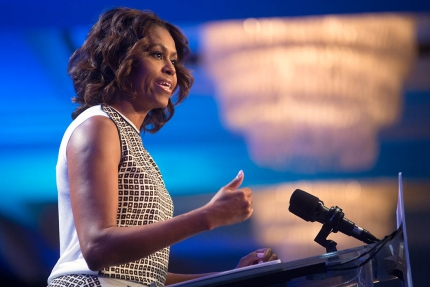
Investing in Our Future at the U.S. Africa Leaders Summit

On August 6, 2014, the Office of First Lady Michelle Obama, the George W. Bush Institute, and the U.S. Department of State will host Investing in Our Future at the U.S. - Africa Leaders Summit

The day-long symposium will bring together First Lady Michelle Obama, Mrs. Laura Bush, African first spouses from nearly 30 countries, leaders from non-governmental and non-profit organizations, private sector partners, and other leading experts.

The symposium will highlight the important role first spouses play and will focus on the impact of investments in education, health, and economic development through public-private partnerships. This collaboration builds on the Bush Institute’s 2013 African First Ladies Summit, Investing in Women: Strengthening Africa, held in Tanzania. 

Coinciding with President Obama’s U.S. - Africa Leaders Summit, the symposium will feature the following panels and U.S. speakers: 

  • Welcome remarks by First Lady Michelle Obama;
  • A conversation between Mrs. Obama and Mrs. Laura Bush moderated by Cokie Roberts;
  • Remarks by President George W. Bush announcing the expansion of the Pink Ribbon Red Ribbon® initiative and the important role of national leadership, including that of a first spouse, in galvanizing a country to fight against women’s cancers; 
  • Remarks by Dr. Jill Biden introducing a presentation and panel discussion focusing on the transformative benefits of investing in girls’ education;
  • A second panel discussion highlighting how key stakeholders - including the private, public, and non-profit sectors in technology, agriculture, and health – are improving the lives of women through entrepreneurship to advance Africa’s development.

The pooled press portions of the program will be livestreamed at: http://obamawhitehouse.archives.gov/us-africa-leaders-summit and http://www.bushcenter.org/live.

In addition, throughout the day, organizations will announce commitments to new initiatives and partnerships dedicated to empowering and benefitting women in Africa.

Anthony Hamilton and the Soul Children of Chicago will provide musical performances.

The day-long symposium will conclude with a marketplace and networking reception to showcase a select group of organizations and companies supporting women and girls in Africa. 

Additional program participants include: Ambassador Cathy Russell, U.S. Department of State; Shelly Esque, Intel Foundation; Ann Cotton, Camfed International; Dr. Sara Ruto, Uwezo; Reeta Roy, The MasterCard Foundation; Madame Aicha Bah Diallo, Foundation for African Women Educationalists (FAWE); Isha Sesay, CNN International; Noa Gimelli, ExxonMobil; Neha Misra, Solar Sister; Kay Kuenker, DowAgroSciences; Damaris Achieng Odeny, International Crops Research Institute for the Semi-Arid Tropics (ICRISAT); Deb Elam, GE Foundation; Bernard Olayo, M.D., Center for Public Health and Development; and Maggie Sans, Walmart Foundation

#  #  #

About the Bush Institute:

The mission of the Bush Institute at the George W. Bush Presidential Center is advancing freedom by expanding opportunities for individuals at home and across the globe. The Bush Institute is a non-partisan public policy institute committed to serious, independent research aimed at generating practical solutions to important public policy issues in the areas of education reform, human freedom, economic growth, and global health. Built on principles that guided President and Mrs. Bush in public life, the Bush Institute seeks to improve America’s public schools; foster the spread of democracy; save lives through global health programs; and promote free markets and economic growth. The Women’s Initiative works to improve access to education, health care, and economic opportunity for women and children around the world, and the Military Service Initiative honors our servicemen and servicewomen and helps them transition to civilian life.

About the First Ladies Initiative:

The First Ladies Initiative is a program of the Bush Institute’s Women’s Initiative, which helps prepare First Ladies’ senior advisors and staff with training sessions on effective governance, strategic planning, and communication, and also fosters public-private partnerships by connecting First Ladies with funding partners, corporations, and NGOs. These efforts help First Ladies effectively use their unique platforms to promote issues and programs that improve the lives of women and children in their countries, with an initial focus on Africa.

About Pink Ribbon Red Ribbon:

Pink Ribbon Red Ribbon® is the leading public-private partnership aimed at catalyzing the global community to reduce deaths from cervical and breast cancer in sub-Saharan Africa and Latin America by raising awareness of these diseases and increasing access to quality services to detect and treat them. Its activities integrate prevention—including increased access to vaccination against the human papillomavirus (HPV)—screenings, and treatment into existing healthcare programs. Organizing members of the partnership include the George W. Bush Institute, the U.S. President’s Emergency Plan for AIDS Relief (PEPFAR), Susan G. Komen®, and the Joint United Nations Programme on HIV/AIDS (UNAIDS). Corporate and foundation members include Becton, Dickinson and Company; the Bill & Melinda Gates Foundation; the Bristol-Myers Squibb Foundation; the Caris Foundation; GlaxoSmithKline; IBM; Merck; and QIAGEN.

About the Young African Leaders Initiative:

The Mandela Washington Fellowship is the flagship exchange program of the President’s Young African Leaders Initiative (YALI) and embodies President Obama’s commitment to invest in the future of Africa. The first class of Mandela Washington Fellows arrived in June 2014 for six weeks of intensive executive leadership training, networking, and skills building, followed by a Presidential Summit in Washington, DC.  Regional Leadership Centers in Africa, seed funding, mentoring, and a vast array of virtual resources will provide sustained support to the Fellows upon their return to the continent.  The YALI Network provides online and on the ground platforms, programs, and resources for tens of thousands of young African entrepreneurs, activists, and public officials.  Through YALI, young African leaders gain the skills, connections, and investments they need to accelerate their initiatives and contribute more robustly to strengthening democratic institutions, spurring economic growth, and enhancing peace and security in Africa.

The First Lady: Veteran Homelessness Is a “Stain on the Soul of This Nation”

The First Lady addresses the 2014 National Conference on Ending Homelessness

First Lady Michelle Obama, in support of the Joining Forces initiative, addresses the 2014 National Conference on Ending Homelessness, in Washington, D.C., July 31, 2014. (Official White House Photo by Chuck Kennedy)

They risked their lives for our country, yet each night tens of thousands of veterans are sleeping in shelters, in their car, or on the street. Across the country, there are more than 58,000 homeless veterans, a staggering number that First Lady Michelle Obama called “a stain on the soul of this nation,” during a speech yesterday at the National Alliance to End Homelessness Annual Conference in Washington, D.C.

"But as Americans, the idea that anyone who has worn our country’s uniform spends their nights sleeping on the ground should horrify us." 

And so it is truly our duty to right this wrong and put an end to veteran homelessness, once and for all. 

But that moral and patriotic duty is only part of the reason why ending veteran homelessness is so critical. As we all know, ending homelessness for our veterans can also be a crucial first step -- a proof point -- to show that we can end homelessness for everyone in this country, too.

Related Topics: Veterans

The White House

Office of the First Lady

Remarks by the First Lady at the National Alliance to End Homelessness Annual Conference

The Renaissance Hotel
Washington, D.C.

12:56 P.M. EDT

MRS. OBAMA:  Thank you, everyone.  (Applause.)  Good afternoon.  Thank you so much.  Well, please, rest yourselves.  (Laughter.)  Good afternoon. 

Let us start by thanking Leon for sharing his story and for everything he’s done for our country.  (Applause.)  We are so proud of men and women like Leon who are everywhere in this country.

I also want to thank everyone from Friendship Place for lifting up so many veterans like Leon here in D.C.  I also want to recognize Nan Roman and everyone here at the National Alliance to End Homelessness for hosting us here at your annual conference. 

But most of all, I want to thank all of you -– the leaders who are fighting every day to end homelessness in communities across this country.  The work you are doing is so critically important.  You are helping folks meet one of their most basic human needs.  You’re making sure our communities reflect our shared values of compassion, empathy, and service.  And you’re doing the hard work to show that here in America, we take care of our own.  (Applause.)

So given your extraordinary contributions, it is disappointing that you often don’t get the support, respect, and appreciation you need to get the job done.  (Applause.)  Whether you’re running a shelter, or raising money for a community organization, or managing a citywide anti-homelessness campaign, you all are working long hours to keep it all together.  You’re fighting each year for every single penny in your budgets.  But inevitably the cuts come and it’s up to you to figure out how to salvage what’s left of your programs. 

And day after day, as you fight for more resources, you encounter too many folks who don’t take you seriously because they don’t believe that we’ll ever truly be able to solve this problem; or even worse, because they feel like our homeless brothers and sisters have brought these problems on themselves. 

Yet, when so many others accept homelessness as a fact of life, you refuse to give up.  When they scoff at your idealism, you show them the data and evidence that prove that we can solve this problem.  And when they still throw up their hands and walk away from this challenge, you roll up your sleeves and get back to work.

So today, before I say anything else, I just want to say thank you.  Thank you.  (Applause.)

Thank you for taking that gay teenager whose parents kicked him out of the house.  Thank you for connecting that low-income family with resources that keep them from being evicted.  And thank you for showing veterans like Leon that the country they served still has their backs. 

And that’s actually -- yes, thank you.  (Applause.)  I don't know if you hear that enough.  But it’s veterans like Leon that's actually what I’d like to focus on my discussion with you today on.  I’d like to talk about how we’re serving our veterans in this country, particularly when it comes to the issue of homelessness.
 
As you know, as First Lady, I’ve been blown away by the stories of courage and selflessness that define our veterans and their families.  I have met wounded warriors who have lost legs to an IED, and then fight through recovery to run marathons.  I’ve met veterans who have run into sniper fire and explosions to save their friends.  Every single time they’re asked, these men and women answer the call and give this country everything they’ve got.

And so when I hear that these folks don’t even have a place to go when it rains, like all of you, I am outraged.  And the fact that right now, our country has more than 58,000 homeless veterans, well, that’s a stain on the soul of this nation. 

Now, I always try to be very clear that the vast majority of our veterans are tremendously resilient and never experience homelessness.  They transition back in good health and good spirits and go on to build successful careers and strong families.  But as Americans, the idea that anyone who has worn our country’s uniform spends their nights sleeping on the ground should horrify us.  And so it is truly our duty to right this wrong and put an end to veteran homelessness, once and for all. 

But that moral and patriotic duty is only part of the reason why ending veteran homelessness is so critical.  As we all know, ending homelessness for our veterans can also be a crucial first step -- a proof point -- to show that we can end homelessness for everyone in this country, too.  (Applause.)   

Because time and time again, we’ve seen how broader social change can be triggered by our military.  In the 1940s, we started the school lunch program, because too many of our young people were too malnourished to serve in the military when they were drafted.  During the fight to end segregation, folks were arguing that if our troops could bleed together on the battlefield, well then certainly they could sit next to each other at the movies or a lunch counter.  (Applause.)  And today on mental health issues, we’re seeing that we can combat stigma and stimulate groundbreaking research by sharing the stories of our brave veterans.

And that kind of progress is possible when it comes to homelessness as well.  In fact, in Phoenix and Salt Lake City, they’ve already effectively ended chronic homelessness among their veterans.  (Applause.)  In New Orleans, they’re on track to end all veteran homelessness within the next six months.  (Applause.)  And as a nation, we’ve reduced veteran homelessness by 24 percent over the last three years under this administration.  (Applause.) 

So today, thanks to federal action, local leadership and the hard work of folks like you, we are on the verge of making a major breakthrough on veteran homelessness and a breakthrough that could change the entire conversation about homelessness in this country.  So today, it’s more important than ever that we redouble our efforts, that we embrace the most effective strategies to end homelessness among our veterans once and for all. 

And that’s what my husband has been doing since the day he took office.  When he became President, my husband vowed to put an end to veteran homelessness.  And over the past five years, he’s cut through red tape, directed record funding to veteran programs.  And together, we’ve made tremendous progress on this issue.

For example, many of you are familiar with the HUD-VASH voucher program.  Since 2008, we have housed more than 73,000 veterans using these vouchers.  (Applause.)  And that’s more than 40 times as many veterans as were housed since the program first began in the ‘90s.  And through the Supportive Services for Veteran Families program, last year alone we helped prevent more than 60,000 veterans and their family members from falling into homelessness.  And next year, we expect that number to grow to 100,000.  (Applause.) 

So we are seeing that with enough resources and the right strategies -- strategies like housing first, rapid rehousing -- we can make huge amounts of progress in a very short period of time.  And leaders all across the country are seeing that too.  That’s why just last month, I was proud to host an event at the White House where a collection of 85 mayors, governors and county officials signed on to the mayors challenge to end homelessness among veterans by the end of 2015.  And that’s a huge deal.  It’s a huge deal.  (Applause.)   

And today, I’m equally proud to announce that in the eight weeks since that event, 97 more city, state, and county leaders have signed on to that challenge.  That’s a total of 182 communities –- more than double our original number.  (Applause.) We even got Los Angeles on board, and they’ve got -- (laughter) -- and that’s important because they’ve got more than 6,000 homeless veterans in their city –- far more than any city in this country. 

But Mayor Garcetti in Los Angeles and leaders across the country are signing on to this pledge because they’ve seen the data and they know that they can create enough housing for every veteran.  And if a veteran does fall into homelessness, they’ll have systems in place to get those vets back into stable housing as quickly as possible.  That’s what it’s going to take to end veteran homelessness.  And that’s what these 182 communities are committing to do by the end of 2015.

But of course, I know, and these leaders know, and my husband knows that we will never be able to reach that goal without all of you.  Yes.  (Laughter and applause.)  We’re counting on you, because you all are the ones who know your communities inside and out.  You know your veterans by name.  You know their stories by heart.  You know the donors, the congregations, the community groups that you need to get engaged.  And perhaps most of all, you know the best ways to implement data-driven, cost-effective solutions that really work on the ground.

For example, after Hurricane Katrina, Volunteers of America of Greater New Orleans realized that their focus on sobriety programming wasn’t as effective as it could be.  So they shifted their focus to getting veterans into permanent housing as quickly as possible.  And in the last three years, they’ve already helped more than 400 veterans across the state of Louisiana.

AUDIENCE MEMBER:  Yes!

MRS. OBAMA:  Yes, indeed!  (Applause.)  Indeed.  Nothing like a little competition.  (Laughter.)  I like that. 

Now, down in Phoenix, United Methodist Outreach Ministries realized that providing short-term rental assistance for veterans was far more effective than placing them in temporary shelters.  And over the past five years, using this strategy, they’ve helped about 300 veterans get back on their feet.  (Applause.)   

Those are just some examples of what it’s going to take to solve this problem –- community organizations reaching out person by person, family by family, until we reach all of our veterans and get them into housing.  And I want you to know that this administration is going to be with you every step of the way as you implement those best practices.  And our Joining Forces initiative is working hard to rally businesses, foundations to step up to support our homeless vets. 

And we’re also calling on all Americans to find new ways that they can help folks like you on the ground, whether that’s as volunteers or donors or anything else.  Because in the end, as you all know so well, this issue isn’t just about data and budget proposals or long-term plans.  In the end, ending veteran homelessness is about people -- it’s about connecting people to each other and to the resources they need.

And over the past few months, I’ve had a number of veterans who experienced homelessness that I’ve met, men and women who served this country bravely, but struggled when they came home.  One young woman named Jenn couldn’t shake memories from her time in Afghanistan and ended up living out of her car, abusing drugs, and unable to hold a job.  An Iraq veteran named Jim was dealing with post-traumatic stress.  He’d lose control of his emotions and soon enough, he had to move out of his house and he had nowhere to go. 

And then there’s a man named Doran who served in Korea during the Vietnam War.  Now, Doran was in and out of homelessness for 30 years –- 30 years –- and he said that it got so bad that folks were throwing change at his feet in the street. But here’s the thing –- each of those veterans also had the strength to ask for help from their community, and organizations in their community responded by getting them into housing and then getting them the counseling and other resources that they needed. 

So today, those three veterans are back on their feet, giving back to the communities and the organizations that helped them.  Doran is a case manager helping other homeless veterans.  (Applause.)  Jim manages a 48-bed veterans housing facility.  And the young woman, Jenn, Jenn is a nurse who spends her free time now volunteering for organizations that she credited with saving her life.  (Applause.)  That’s the power of all of you in this room. 

You all did that.  That’s your work.  You all don’t just see statistics.  You don’t just see folks sleeping on park benches.  You see the potential that lies in every single one of our homeless brothers and sisters.  And you work day after day, night after night, to help them bring that potential to life.

Thanks to your work over the years, we’ve made such tremendous progress for our veterans and so many others.  And now, we can see the finish line.  And if we achieve our goal, if we end homelessness for our veterans, then we’ll show everyone in this country that we can also do it for all those families shuttling from motel to motel, for all those LGBT teens and for every single person experiencing homelessness throughout our country. 

That has been this organization’s goal since it formed more than a quarter century ago.  And today, we are so close to this major milestone for our veterans.  All we have to do is finish the job. 

So for you all, here’s an assignment.  (Laughter.)  If your mayor isn’t signed up yet for the mayors challenge, then light up their phone until they get on board.  And if you have any questions on whether or not we can get this done, I want you to just look to the success stories of many of the organizations and communities represented in this room today.  Together, you all are showing that if we work hard enough and smart enough, we can end homelessness for our veterans once and for all.  And if we do that, we show that eventually we can finish the job for everyone else, too. 

So let me end as I began -- by saying thank you.  Thank you for everything you’ve done.  Thank you for everything you’ll do in the months and years ahead to help us reach this goal.  I appreciate you as your First Lady.  I am grateful to all of you, which is why I’m here.  And I will continue to be here with Joining Forces.

So I hope you all have a rip-roaring time at the rest of your conference.  (Laughter.)  You guys, keep up the great work.  God bless.  And I’ll come down and shake a few hands. 

Thank you.  (Applause.) 

END
1:14 P.M. EDT

The White House

Office of the First Lady

Op-ed by First Lady Michelle Obama on McClatchy: Let’s end veteran homelessness once and for all

The following op-ed by First Lady Michelle Obama appeared last night across McClatchy platforms.

http://www.mcclatchydc.com/2014/07/30/234885/lets-end-veteran-homelessness.html

Let’s end veteran homelessness once and for all

At the beginning of June, 85 mayors, governors and county officials from across the country – and across the political spectrum – signed on to the Mayors Challenge to End Veterans Homelessness. Today, we’re announcing that in the two months since then, 97 more state and local leaders have signed on – meaning that a total of 182 local leaders have pledged to end homelessness among the veterans in their communities by the end of 2015.

I know that might sound like a pipe dream. After all, veteran homelessness is a problem we’ve faced for decades – in fact, almost 90 percent of all homeless veterans served prior to 9/11. And as a country, we’ve never been able to rally the resources and the public will to get all of our veterans off the streets and into stable housing.

So why do all these state and local leaders believe that things are any different today? The answer to that question is simple: because today – thanks to federal, state and local leadership and the determined, daily work of advocates on the ground – we’re finally seeing that ending veteran homelessness is not just something we should strive to achieve – it’s something we actually can.

For example, in recent months, Phoenix and Salt Lake City effectively ended chronic homelessness among their veterans. New Orleans is on track to end all veteran homelessness within the next six months. Last year, New York City helped more than 2,000 veterans get into safe and stable housing. St. Paul and Minneapolis have cut veteran homelessness in half over the last five years, and between the two cities there are just 18 veterans left on the streets.

Any number of veterans left out in the cold is too many, but those numbers show us that even in some of our largest metropolitan areas, ending veteran homelessness is eminently achievable.

My husband has believed this from the moment he took office. That’s why he not only vowed to end veteran homelessness, he coupled that pledge with record funding and innovative strategies to get it done. We know that through solutions like “housing first” – an evidence-based strategy to get our veterans into permanent housing before tackling issues like mental health, substance abuse or employment – we can not only do right by our veterans but also save taxpayer money. Quite simply, it’s cheaper to pay someone’s rent than to pay for hospital bills, law enforcement and so many other services if they’re living on the street.

By employing that strategy, even in the midst of a historic recession, we’ve seen tremendous progress. Since 2008, we’ve housed more than 73,000 veterans through the HUD-VASH program, which provides housing vouchers to help homeless veterans pay for permanent, stable housing. And last year alone, under a program called Supportive Services for Veteran Families, we kept more than 60,000 veterans and their family members from falling into homelessness. Next year, we expect that number to grow to over 100,000.

But we know that this problem can’t be solved by Washington alone. It takes local leaders to implement community-wide plans. It takes advocates and service providers who know our veterans by name and can connect them with the services and support that they need. And it takes folks from all across the country making their voices heard and dedicating their time and energy to help these veterans find a place to call home.

So if your mayor hasn’t signed on to the mayors challenge, light up their phone lines and ask them why not. If you’ve got a free minute, contact a local organization in your neighborhood and ask when you can volunteer or where you can donate.

Our veterans have given so much to this country – time and again, with their service and sacrifice, they’ve shown us who they are. Now it’s up to the rest of us to show who we are. It’s up to us to show these veterans we’ve got their backs and end veteran homelessness once and for all.

Michelle Obama is First Lady of the U.S.

The White House

Office of the First Lady

Remarks by the First Lady Before a Roundtable with Young African Leaders

The Omni Shoreham Hotel
Washington, D.C.

11:41 A.M. EDT

MRS. OBAMA:  I don’t want to do too much talking because I just talked in there.  You heard my thoughts.  But I’m really interested in hearing from you. 

As I’ve said -- as you’ve heard, as Tina has shared with you -- we are really focusing on education broadly in the United States, and girls’ education internationally.  And this isn’t just something that I care about now in my role as First Lady.  This is an issue that we’re going to have to continue to work on until I take my last breath. 

And so that means that you all are going to be carrying a lot of this stuff that we begin over the finish line.  And it’s so important to hear your voices and understand directly from you how these issues impact your life, how do you think somebody in my position can utilize my platform and my resources, again, not just in my role as First Lady, but as the years go forward. 

So I really want to hear from you.  And as you heard in my speech, I want us to speak as honestly and as openly as possible. Because I think that’s the only way we’re going to begin to chip away at some of these barriers and to really get a better, clear understanding of what the challenges really are if we’re going to solve this problem.

So with that, I’m going to stop talking.  And I understand that a few of you have some specific presentations, but I also want to know that -- as the press clears out, which they will -- that we can also -- because I know you haven’t had an opportunity to talk to us one-on-one; you talked to the President -- but if there are any questions that you have, I’d be happy, happy to take some time to talk to you, as well.

But let me just say I’m so proud of you all.  I really am.  And we’re really going to need your insight and your focus and your expertise.  So be bold, and be brave, and don’t be shy. 

END
11:45 A.M. EDT

The White House

Office of the First Lady

Remarks by the First Lady at the Summit of the Mandela Washington Fellowship for Young African Leaders

The Omni Shoreham Hotel
Washington, D.C.

11:01 A.M. EDT

MRS. OBAMA:  Oh, my goodness.  Look at you all!  (Applause.)  Oh, please sit, sit.  Rest.  (Laughter.)  How has everything been?  Exciting?  So you’ve talked to a lot of important people -- my husband, he was here.  (Applause.)  That’s good.  And a few other people?  You’ve been traveling around the country doing great things.  It is such a pleasure, and such an honor and a joy to join you here today for this wonderful summit. 

Let me start by thanking John for that beautiful introduction, but more importantly, for his outstanding leadership for young people -- in particular, young girls -- in Uganda.  And I want to take a moment to thank all of you for being part of the Mandela Washington Fellowship for Young African Leaders.  Yes.  (Applause.)  We have been so excited about your presence here in this country.  We have been so excited.

Now, I’ve had the opportunity to read through your bios, and I have to tell you that I am truly in awe of what you all have achieved.  Many of you are barely half my age, yet you already have founded businesses and NGOs, you’ve served as leaders in your government, you’ve earned countless degrees, you know dozens of languages.  So you all truly represent the talent, the energy and the diversity that is Africa’s lifeblood, and it is an honor to host you here in the United States.  (Applause.)  We’re so proud. 

Now, from what I’ve heard, you all have been making good use of this time here.  You’ve been learning new skills, questioning old assumptions, and having some frank conversations with experts and with each other about the challenges and opportunities in your countries.  And I want to use our time together today to continue that dialogue.  Today, I want us to talk -– and I mean really talk.  I want to speak as openly and honestly as possible about the issues we care about and what it means to be a leader not just in Africa but in the world today. 

Now, one of the issues that I care deeply about is, as John alluded to, girls’ education.  And across the globe, the statistic on this issue are heartbreaking.  Right now, 62 million girls worldwide are not in school, including nearly 30 million girls in Sub-Saharan Africa.  And as we saw in Pakistan, where Malala Yousafzai was shot in the head by Taliban gunmen, and in Nigeria where more than 200 girls were kidnapped from their school dormitory by Boko Haram terrorists, even when girls do attend school, they often do so at great risk.

And as my husband said earlier this week, we know that when girls aren’t educated, that doesn’t just limit their prospects, leaving them more vulnerable to poverty, violence and disease, it limits the prospects of their families and their countries as well. 

Now, in recent years, there’s been a lot of talk about how to address this issue, and how we need more schools and teachers, more money for toilets and uniforms, transportation, school fees.  And of course, all of these issues are critically important, and I could give a perfectly fine speech today about increasing investments in girls’ education around the world. 

But I said I wanted to be honest.  And if I do that, we all know that the problem here isn’t only about resources, it’s also about attitudes and beliefs.  It’s about whether fathers and mothers think their daughters are as worthy of an education as their sons.  It’s about whether societies cling to outdated laws and traditions that oppress and exclude women, or whether they view women as full citizens entitled to fundamental rights. 

So the truth is, I don’t think it’s really productive to talk about issues like girls’ education unless we’re willing to have a much bigger, bolder conversation about how women are viewed and treated in the world today.  (Applause.)  And we need to be having this conversation on every continent and in every country on this planet.  And that’s what I want to do today with all of you, because so many of you are already leading the charge for progress in Africa.

Now, as an African American woman, this conversation is deeply personal to me.  The roots of my family tree are in Africa.  As you know, my husband’s father was born and raised in Kenya -- (applause) -- and members of our extended family still live there.  I have had the pleasure of traveling to Africa a number of times over the years, including four trips as First Lady, and I have brought my mother and my daughters along with me whenever I can.  So believe me, the blood of Africa runs through my veins, and I care deeply about Africa’s future.  (Applause.) 

Now, the status of women in Africa is also personal to me as a woman.  See, what I want you all to understand is that I am who I am today because of the people in my family -– particularly the men in my family -– who valued me and invested in me from the day I was born.  I had a father, a brother, uncles, grandfathers who encouraged me and challenged me, protected me, and told me that I was smart and strong and beautiful.  (Applause.)  

And as I grew up, the men who raised me set a high bar for the type of men I’d allow into my life -- (applause) -- which is why I went on to marry a man who had the good sense to fall in love with a woman who was his equal -- (applause) -- and to treat me as such; a man who supports and reveres me, and who supports and reveres our daughters, as well.  (Applause.)   

And throughout my life -- understand this -- every opportunity I’ve had, every achievement I’m proud of has stemmed from this solid foundation of love and respect.  So given these experiences, it saddens and confuses me to see that too often, women in some parts of Africa are still denied the rights and opportunities they deserve to realize their potential. 

Now, let’s be very clear:  In many countries in Africa, women have made tremendous strides.  More girls are attending school.  More women are starting businesses.  Maternal mortality has plummeted.  And more women are serving in parliaments than ever before.  In fact, in some countries, more than 30 percent of legislators are women.  In Rwanda, it’s over 50 percent -- which, by the way, is more than double the percentage of women in the U.S. Congress.  Yes.  (Applause.)   

Now, these achievements represent remarkable progress.  But at the same time, when girls in some places are still being married off as children, sometimes before they even reach puberty; when female genital mutilation still continues in some countries; when human trafficking, rape and domestic abuse are still too common, and perpetrators are often facing no consequences for their crimes -- then we still have some serious work to do in Africa and across the globe. 

And while I have great respect for cultural differences, I think we can all agree that practices like genital cutting, forced child marriage, domestic violence are not legitimate cultural practices, they are serious human rights violations and have no place in any country on this Earth.  (Applause.)  These practices have no place in our shared future, because we all know that our future lies in our people -– in their talent, their ambition, their drive.  And no country can ever truly flourish if it stifles the potential of its women and deprives itself of the contributions of half of its citizens. 

And I know this firsthand from the history of my own country.  A century ago, women in America weren’t allowed to vote.  Decades ago, it was perfectly legal for employers to refuse to hire women.  Domestic violence was viewed not as a crime, but as a private family matter between a man and his wife. 

But in each generation, people of conscience stood up and rejected these unjust practices.  They chained themselves to the White House gates, waged hunger strikes in prison to win the right to vote.  They took their bosses to court.  They spoke out about rape and fought to prosecute rapists, despite the stigma and shame.  They left their abusive husbands, even when that meant winding up on the streets with their children.  (Applause.) 

And today in America, we see the results of those hard-fought battles:  60 percent of college students today are women.  Women are now more than half the workforce.  And in recent decades, women’s employment has added nearly $2 trillion to the U.S. economy -– yes, trillion.  (Applause.)   

Now, are we anywhere near full economic, political, and domestic equality in the United States?  Absolutely not.  We still struggle every day with serious issues like violence against women, unequal pay.  Women are still woefully underrepresented in our government and in the senior ranks of our corporations. 

But slowly, generation after generation, we’ve been moving in the right direction because of brave individuals who were willing to risk their jobs, their reputations, and even their lives to achieve equality.  And it wasn’t just brave women who made these sacrifices.  It was also brave men, too -- (applause) -- men who hired women, men who passed laws to empower women, men who prosecuted other men who abused women. 

So to all the men, my brothers here today, I have a simple message:  We need you to shake things up.  (Applause.)  Too often, women are fighting these battles alone, but men like you, progressive men who are already ahead of the curve on women’s issues, you all are critically important to solving this problem. 

And that starts by doing a little introspection.  And I say this not just to the 250 of you who are in the room today, but to men around the world.  Men in every country need to look into their hearts and souls and ask themselves whether they truly view and treat women as their equals.  (Applause.)  And then when you all encounter men in your lives who answer no to that question, then you need to take them to task.  You need to tell them that any man who uses his strength to oppress women is a coward, and he is holding back the progress of his family and his country.  (Applause.)   

Tell them that a truly strong, powerful man isn’t threatened by a strong, powerful woman.  (Applause.)  Instead, he is challenged by her, he is inspired by her, he is pleased to relate to her as an equal.  And I want you to keep modeling that behavior yourselves by promoting women in your companies, passing laws to empower women in your countries, and holding the same ambitious dreams for your daughters as you do for your sons.

And to the women here, my sisters --

AUDIENCE MEMBER:  We love you!

MRS. OBAMA:  And I love you.  I do.  (Applause.)  Which is why I want us as women to understand that oppression is not a one-way street. 

See, too often, without even realizing it, we as women internalize the oppression we face in our societies by believing harmful messages about how we should look and act, particularly as women of color –- messages that tell us that we’re ugly or irrelevant, that we don’t deserve full control over our bodies, that we should keep our mouths shut and just do as we’re told.  And then, too often, we turn around and impose those same beliefs on other women and girls in our lives, including our own daughters.

For example, in countries across the globe, there are women who still support and carry out the practice of genital cutting.  There are women who are still insisting on marrying off their young daughters or keeping them home from school to help with the housework. 

And then there are the more subtle harms that we afflict -- inflict on each other -- the harm of spurning our sisters who don’t conform to traditions because we’re jealous or suspicious of their courage and their freedom; the harm of turning a blind eye when a woman in our community is being abused because we don’t want to cause conflict with our neighbors by speaking up.

And I imagine that for some of you here today, getting your degree might have meant disobeying or disappointing your families.  Maybe while you’ve been acing your studies and thriving in your career, you have a grandmother who has been wringing her hands because you’re not yet married.  (Laughter and applause.)  But, my sisters, you all are here today because you have found a way to overcome these challenges, and you have blossomed into powerful, accomplished women.  And we need you all to help others do the same.

All of us, men and women on every continent, we all need to identify these problems in ourselves and in our communities, and then commit to solving them.  And I say this to you not just as lawyers and activists and business leaders, but as current and future parents.  Because as a mother myself, I can tell you that this is where change truly happens.  With the behavior we model, with our actions and inactions, every day, we as parents shape the values of the next generation. 

For example, my parents never had the chance to attend university, but they had the courage and foresight to push me to get the best education I could.  And they weren’t threatened by the prospect of me having more opportunities than they had -- just the opposite.  They were thrilled. 

And that’s what should drive us all:  The hope of raising the next generation to be stronger, smarter and bolder than our generation.  (Applause.)  And that is exactly the kind of work that so many of you are already doing in your families and your communities, which is why I’m so proud of you.

I could name all of you, but there are a few of you that I will remark on.  Mahamadou Camara from Mali.  (Applause.)  He is working to educate women about micro-credit and accounting so that they can run their own businesses and build better lives for their children.  In Liberia, Patrice Juah.  (Applause.)  She founded Miss Education Awareness Pageant to inspire girls to pursue higher education and have opportunities their parents never dreamed of.  And in Burundi, Fikiri Nzoyisenga.  (Applause.)  He created a youth coalition to fight violence against women because he doesn’t want anything to hold them back from pursuing their dreams.

This is where Africa’s future lies –- with those women-run businesses, with those girls attending university, and with leaders like you who are making those dreams possible.  And the question today is how all of you and young people like you will steer Africa’s course to embrace that future.  Because ultimately, that’s what leadership is really about.  It’s not just about holding degrees or holding elected office.  And it’s not about preserving our own power or continuing traditions that oppress and exclude. 

Leadership is about creating new traditions that honor the dignity and humanity of every individual.  Leadership is about empowering all of our people –- men, women, boys and girls –- to fulfill every last bit of their God-given potential.   And when we commit to that kind of leadership across the globe, that is when we truly start making progress on girls’ education.  Because that’s when families in small villages around the world will demand equal opportunities for their daughters.  They won’t wait.  That’s when countries will willingly and generously invest in sending their girls to school, because they’ll know how important it is. 

And we all know the ripple effects we can have when we give our girls a chance to learn.  We all know that girls who are educated earn higher wages.  They’re more likely to stand up to discrimination and abuse.  They have healthier children who are more likely to attend school themselves. 

So no matter where you all work, no matter what issue you focus on -- whether it’s health or microfinance, human rights or clean energy -- women’s equality must be a central part of your work.  It must.  (Applause.)  Because make no mistake about it, the work of transforming attitudes about women, it now falls on your shoulders.  And it’s up to you all to embrace the future, and then drag your parents and grandparents along with you.  (Laughter.) 

And I know this won’t be easy.  I know that you will face all kinds of obstacles and resistance -- you already have.  But when you get tired or frustrated, when things seem hopeless and you start thinking about giving up, I want you to remember the words of the man whom your fellowship is now named -- and I know these words have been spoken many times.  As Madiba once said, “It always seems impossible until it is done.”  And I, oh, I know the truth of those words from my own history and from the history of my country. 

My ancestors came here in chains.  My parents and grandparents knew the sting of segregation and discrimination.  Yet I attended some of the best universities in this country.  I had career opportunities beyond my wildest dreams.  And today, I live in the White House, a building -- (applause) -- but we must remember, we live in a home that was constructed by slaves. 

Today, I watch my daughters –- two beautiful African American girls -– walking our dogs in the shadow of the Oval Office.  And today, I have the privilege of serving and representing the United States of America across the globe. 

So my story and the story of my country is the story of the impossible getting done.  And I know that can be your story and that can be Africa’s story too.  (Applause.)  But it will take new energy, it will take new ideas, new leadership from young people like you.  That is why we brought you here today. 

We’ve done this because we believe in Africa, and we believe in all of you.  And understand we are filled with so much hope and so many expectations for what you will achieve.  You hold the future of your continent in your hands, and I cannot wait to see everything you will continue to accomplish in the years ahead.

Thank you.  God bless.  (Applause.) 
   
END
11:26 A.M. EDT

President Obama Awards the 2013 National Medals of Arts and Humanities

Watch on YouTube

This afternoon, the President and the First Lady honored the 2013 National Medals of the Arts and Humanities recipients at the White House. The President told the recipients that their "accomplishments enrich our lives and reveal something about ourselves and our country."

This year's recipients consisted of a diverse array of indidivuals and groups who have done groundbreaking work in the arts and humanities, including architecture, choreography, East Asian Studies, and documentary filmmaking – all of whom have made significant contributions to the human experience.

Related Topics: Inside the White House

Watch Live: Summit of the Washington Fellowship for Young African Leaders

Today, President Obama kicks off a three-day Summit of the Washington Fellowship for Young African Leaders, the flagship program of the President’s Young African Leaders Initiative (YALI). The Washington Fellowship gives 500 of sub-Saharan Africa’s most prominent young leaders the opportunity to engage with U.S. government officials, entrepreneurs and civil society representatives, as well as leaders in international development.

Watch President Obama's town hall -- and tune in for events throughout the week with First Lady Michelle Obama, USAID Administrator Rajiv Shah, and more.

West Wing Week 07/25/14 or, "The Irrefutable Rightness of Your Cause"

This week, the President introduced a historic Executive Action for LGBT rights, continued to address the ongoing conflicts in the Ukraine and Gaza, hosted a town hall in support of his My Brother's Keeper Initiative, and traveled to California to deliver his response to some very striking letters he'd received ... in person. 

Watch on YouTube

Related Topics: Economy, California

West Wing Week 07/25/14 or, "The Irrefutable Rightness of Your Cause"

July 25, 2014 | 3:43 | Public Domain

Welcome to the West Wing Week, your guide to everything that's happening at 1600 Pennsylvania Avenue, and beyond. This week, the President introduced an historic Executive Action for LGBT rights, continued to address the ongoing conflicts in the Ukraine and Gaza, hosted a Town Hall in support of his My Brothers Keeper Initiative, and traveled to California to deliver his response to some very striking letters he'd received...in person.

Download (129.2MB)