

Latest News
“Life is a Highway: Rural Tourism and the Prospects of Economic Opportunity”
Posted by on February 16, 2012 at 5:43 PM ESTThe President recently unveiled an ambitious plan to make the United States the #1 tourist destination in the world. Each year, tens of millions of people from around the world visit the U.S. In 2010, the travel and tourism industry generated over $134 billion dollars for the American economy and tourism supported 7.5 million jobs.
The President wants to build upon this success, and recently announced steps to ease the international arrival and admissions process for tourists to visit the United States. Frequent travelers who pass an extensive background check will be able to scan their passports and fingerprints and skip long lines at immigration at more airports through the Global Entry Program. As a result of the President’s action, the U.S. will expand the number of countries where visitors can get pre-cleared by Homeland Security so they don’t need a tourist visa. And we’re going to speed up visa processing for countries with growing middle classes that can afford to visit America – countries like China and Brazil.
I want to take a moment to highlight what these actions mean for Rural America. The iconic images of Rural America’s assets – our farms and ranches, historic sites and small towns, and national parks, forests and seashores – are powerful motivators for international travelers who choose to spend their vacation time and money in America. Visitors in search of a memorable American experience encounter a wealth of attractive tourism opportunities in our country’s rural landscapes and communities.
Learn more about RuralMaking a Difference in the Lives of Immigrants and Others who Send Money Abroad
Posted by on February 16, 2012 at 4:40 PM ESTEd note: This has been cross-posted from the consumerfinance.gov blog.
Over my years of public service, I’ve met a lot of hard-working people who regularly send money transfers, or remittances, to family members and others abroad. Remittances from the U.S. to other parts of the world total in the tens of billions of dollars each year.
Remittance senders are a diverse group from every income bracket. We know that some remittance senders work in the lowest paying jobs for the longest hours. For them, every dollar counts; for their families abroad, every one of these dollars has even more significance. Remittance senders also include consumers paying bills abroad, and mothers and fathers sending funds to their children studying abroad or family members on travel.
Learn more about ImmigrationThe State of Latino Health Twitter Chat
Posted by on February 16, 2012 at 11:55 AM ESTEd note: This has been cross-posted from the HealthCare.gov blog.
Not all Americans have equal access to health care – or similar health care outcomes. Racial and ethnic minorities, and other underserved populations often have higher rates of disease, fewer treatment options, and reduced access to care. This is because many Latinos have less access to health insurance and half of Latinos don’t have a regular doctor. Because of this unequal access to health care, troubling health disparities have emerged.
But the good news is that the health care law, the Affordable Care Act, is the most powerful legislation in decades for reducing health disparities. The law will help reduce grave health disparities by: expanding preventive care like cancer screenings and immunizations at no additional costs, better coordinating care like home visits for expectant mothers, expanding diversity and cultural competency, ending insurance discrimination so people who have been sick can’t be excluded from coverage or charged higher premiums, and making care more available in underserved communities by investing in our primary care workforce and community health centers.
Learn more about Health CareChampions of Change are Rebuilding America
Posted by on February 16, 2012 at 11:52 AM ESTThe work we do in government cannot be done without our partners. Whether we're investing in safety, road repair, or regional transit solutions, the team using those funds must be responsible and innovative to ensure we get the most bang for our buck. And when those funds are designed to help stimulate a flagging economy--as the American Recovery and Reinvestment Act intended--getting the most from our investments is even more critical.
Throughout our ARRA grant making activity, DOT has been very fortunate to have the kind of capable partners these important investments demanded. And I'm pleased that, yesterday, the White House honored several of them as Champions of Change.
These leaders are creating jobs in their communities and using innovative techniques to develop valuable projects to improve America’s infrastructure, build roads and bridges, expand high-speed broadband, provide clean water and energy, and much more.
With the assistance of grants and loans from the Obama Administration's American Recovery and Reinvestment Act, the transportation leaders I met yesterday have delivered tremendous benefits to their communities:
- Justin Augustine is Chief Executive Officer of the Regional Transit Authority in New Orleans, which is currently engaged in the Loyola Avenue streetcar expansion.
- Dr. Jana Davis is Associate Executive Director and Chief Scientist of the Chesapeake Bay Trust. The Trust has advocated effectively for a Green Streets approach to managing storm water runoff.
- Paulson Chaco is Director of the Navajo Division of Transportation occupying a cabinet level position to the President of the Navajo Nation. He is responsible for 18,000 miles of roadway, 15,000 of which are unpaved and very susceptible to weather conditions.
- Henry Perahia is Chief Bridge Officer of the New York City Department of Transportation. He manages 787 city-owned bridges and tunnels.
- Sam E. Swan is Project Manager for the DFW Connector Project; this project has used an innovative design-build approach to unsnarl a complex tangle of traffic coming and going from the nation's eighth busiest airport.
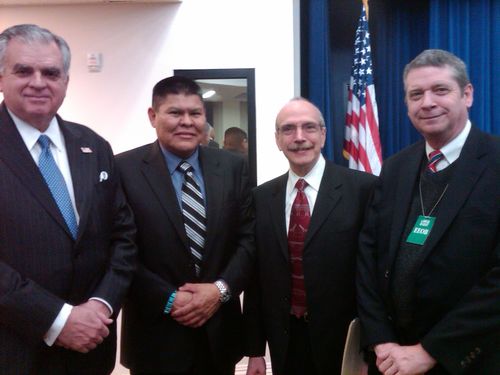
With Paulson Chaco, Henry Perahia, and Sam SwanEach of them has written on whitehouse.gov about the changes they worked so hard to achieve, and I encourage you to read about their terrific projects. The challenge will be figuring out where to jump in.
Now, as much as we need good partners to get the biggest bang for our buck, without the Obama Administration's ARRA investments, there wouldn't have been any bang at all.
The budget the President proposed this week will ensure that federal investments in transportation continue in a predictable way for the next six years. The certainty offered by a long-term bill is precisely what America's transportation leaders--like the Champions of Change I met yesterday--need to plan confidently for tomorrow's infrastructure and begin putting our friends and neighbors back to work today.
Ray LaHood is the US Secretary of Transportation.
WATCH LIVE: White House LGBT Conference on Health
Posted by on February 15, 2012 at 4:35 PM ESTTomorrow, advocates, community organizers, doctors and medical students, elected officials, and interested members of the public will join Obama Administration officials in Philadelphia for an important conversation on the health needs of lesbian, gay, bisexual, and transgender (LGBT) people.
The White House LGBT Conference on Health is hosted by the White House Office of Public Engagement in partnership with the U.S. Department of Health & Human Services and Mazzoni Center. This event is the first in a series of White House LGBT Conferences that will be held across the country to empower grassroots leaders, community organizers, advocates, and interested citizens by connecting them with Federal government information, resources, and opportunities.
The conference will begin with a morning plenary featuring remarks by Secretary of Health & Human Services (HHS) Kathleen Sebelius, Director of the Office of Personnel Management (OPM) John Berry, Philadelphia Mayor Michael Nutter and Obama administration officials.
Watch the entire morning session (from 9:00 to 11:45 AM EST) live.
Gautam Raghavan is the Associate Director of the Office of Public Engagement
Learn more about Additional IssuesRebuilding a Network, Redefining a Community
Posted by on February 15, 2012 at 1:30 PM EST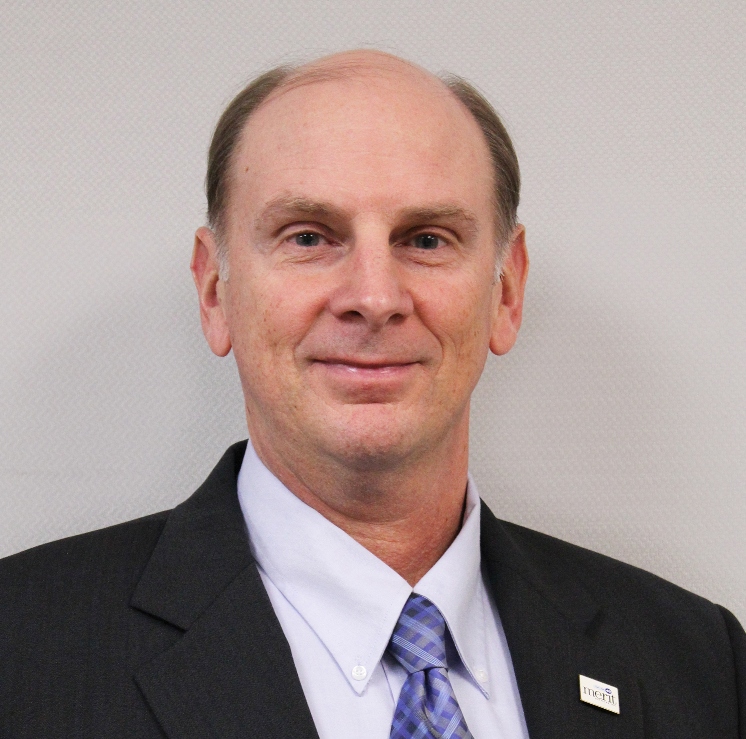
Leaders are often bestowed awards to honor the efforts and success of the organizations they lead. Today, I accept the recognition of Champion of Change for all of the dedicated staff at Merit Network who have been hard at work for the past two years to ensure that Michigan will have the necessary cyber infrastructure to thrive in the 21st century.
When I joined Merit as President and CEO in 2006, I joined an organization with a great lineage as the longest-running Research and Education Network in America. From our humble beginnings in 1966 as a vehicle to exchange research data between Michigan’s major universities, to our pioneering role implementing and managing the NSFNET in the late 1980s, the precursor to the modern Internet you and I know today, Merit has made significant contributions to Internet networking in America. And over time, Merit Network has grown into a membership organization, serving the advanced networking needs of community anchor institutions (higher education, schools, libraries, health care, public safety and government) across Michigan.
Early in my tenure at Merit, it became clear there were many Merit Member’s in rural and remote regions of the state that were underserved with regard to Internet resources. In serving these Members, Merit took on a challenge that did not exist in other more populated, metropolitan regions of the state. This was largely due to a lack of backhaul infrastructure in these areas. The fact that so many of our Member organizations and community anchors throughout the state faced challenges obtaining adequate service, helped Merit formulate a vision for a brighter future for Michigan.
Recovery Reaches Rural Coverage Areas
Posted by on February 15, 2012 at 1:30 PM EST
Affordable broadband access. What seems like an absolute to many Americans is in fact something that countless communities around the country struggle to obtain. In an era when high-speed data connectivity is essential, it is unimaginable that entire localities are without access to that lifeline or lack competitive, affordable options.
When the Broadband Incentives Program (BIP) was created under the American Reinvestment and Recovery Act of 2009, nTelos Wireless took the opportunity to apply for funding to upgrade portions of our network to 3G Evolution Data Optimized (EVDO) Rev A service. nTelos Wireless already provided high-speed mobile broadband in the majority of its service area. However, there are portions of our footprint that have not been upgraded from traditional 1X or 2G data speeds to 3G service. Those areas are in rural markets that are not economically feasible to upgrade to 3G service. 2G service, while functional, limits the customer to basic Internet browsing both on handsets and data cards used in laptop computers. File transfers and the audio/video streaming experience for these customers is poor and often impossible. With EVDO Rev A service, the speeds allow a full suite of Internet options previously reserved for wireline platforms. EVDO Rev A supports peak data rates of up to 3.1 Mbps in the forward link and 1.8 Mbps in the reverse link bringing mobile broadband to the subscriber’s phone or laptop. In addition, the portability of the service is an enormous advantage when compared to traditional wireline products.
Regional Transit Authority Transportation Investments Generate Economic Growth
Posted by on February 15, 2012 at 1:30 PM EST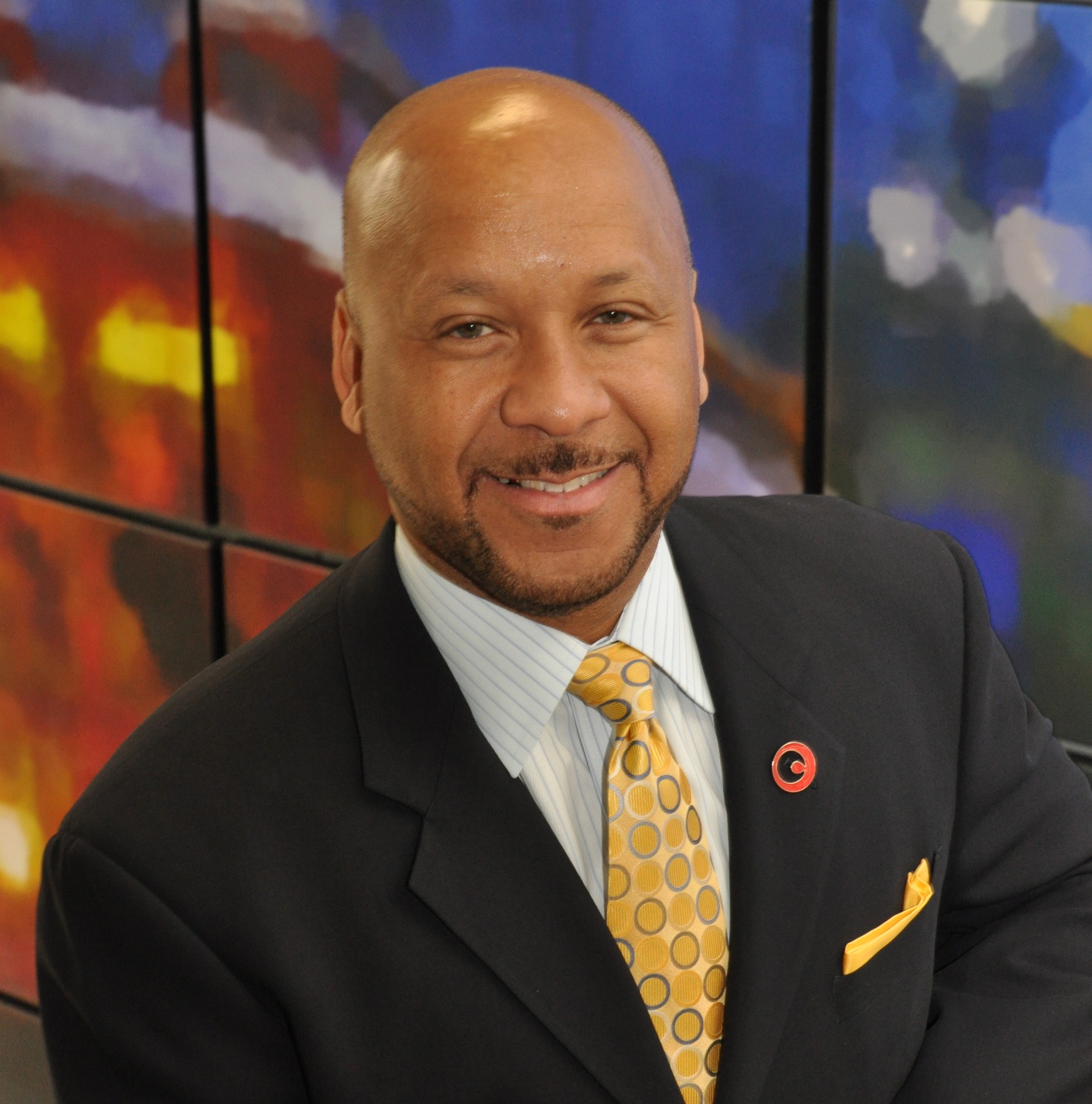
The City of New Orleans was devastated by Hurricane Katrina. To assist the City in its recovery efforts, I quickly realized that Transportation would have to play a pivotal role: 1) We would have to restore transportation to the community; and 2) Use transportation as an economic catalyst. The economic catalyst would be the creation of a new streetcar line along Loyola Avenue. Loyola Avenue would serve as a connector to the existing streetcar lines serving the historic French Quarter, the Central Business District and in the future the Union Passenger Terminal. The terminal would become the City’s intermodal transfer point connecting Rail, Bus and Taxi services. The $45 million dollar streetcar investment has attracted new investment along Loyola Avenue. This 1.6 mile project is leveraging transportation investments to help grow a new strong, livable neighborhood called South Market District.
The Domain Companies' $185M South Market District mixed-use development is to be sited on Loyola Avenue in direct response to the construction of the streetcar lines: "What we felt made this site ideal was the streetcar expansion," observed Domain Companies Co-principal Matt Schwartz in a 2010 interview, "The most exciting development opportunities are really converging on this area." The South Market District will consist of 500 new apartments and 125,000 square feet of retail and restaurants.
The streetcar project is turning block after block of bleak, asphalt-savanna surface parking into a livable community. Bring in transit and builders of higher-density residential and retail will follow. In total, recently completed and proposed downtown development projects (2005 to 2015) announced as of September, 2010 will add an estimated 2,314 new housing units, 2,381 new hotel rooms, and more than 390,000 sf of retail space to the downtown area, at an estimated total private investment figure of $2.7 billion. More than $1.3 billion of the investment is or will be located within three blocks of the Loyola Avenue streetcar corridor. At least $185M of Loyola Avenue investment is directly attributable to streetcar expansion.
- &lsaquo previous
- …
- 162
- 163
- 164
- 165
- 166
- 167
- 168
- 169
- 170
- …
- next &rsaquo
Twitter