

Latest News
Champions of Change: Reducing Drug Use and Building a Healthier America
Posted by on August 18, 2011 at 12:08 PM ESTEd. Note: Champions of Change is a weekly initiative to highlight Americans who are making an impact in their communities and helping our country rise to meet the many challenges of the 21st century.
Champions of Change isn’t just an initiative to highlight innovative achievements and stellar performers, it’s a chance to recognize that, across the country, the dedication and commitment of a single individual or organization can affect huge positive change. Recently, I had the pleasure of meeting with a handful of these dedicated individuals and celebrating the progress they are making to reduce the devastating effects of drug use and make American communities healthier and stronger.
Today’s news is often dominated by talk of the economy and jobs. And now, more than ever, it’s important to recognize that drug use harms every sector of this country. From keeping individual families together, creating a healthy and strong workforce, reducing the economic strain on the criminal justice system, and fostering a safe environment in local communities, tackling America’s substance abuse issues is vital for winning the future – and that’s exactly what this group of Champions of Change is doing.
Learn more about Additional IssuesBuilding Substance Abuse Prevention Programs
Posted by on August 18, 2011 at 9:38 AM ESTEd. Note: Champions of Change is a weekly initiative to highlight Americans who are making an impact in their communities and helping our country rise to meet the many challenges of the 21st century.
On August 5, 2011, I joined ten representatives from nine other agencies who were honored by the White House as Champions of Change for work to reduce drug use and its consequences, and for empowering and inspiring members of our communities. The individuals and programs represented the four-pronged approach the Administration is taking to address substance abuse in our nation: prevention, treatment, recovery and interdiction.
As a 30-year veteran in the substance abuse prevention field, I was thrilled to see drug abuse prevention listed as the first chapter in the 2011 National Drug Control Strategy, issued by the Office of National Drug Control Policy in July. The five Principles articulated in the Strategy encompass strategies that can be practiced by drug prevention coalitions and agencies across the Nation and which are based on modern research and best practices.
Learn more about , Health CareReducing Stigmas During Recovery from Drug Problems
Posted by on August 16, 2011 at 3:00 PM ESTEd. Note: Champions of Change is a weekly initiative to highlight Americans who are making an impact in their communities and helping our country rise to meet the many challenges of the 21st century.
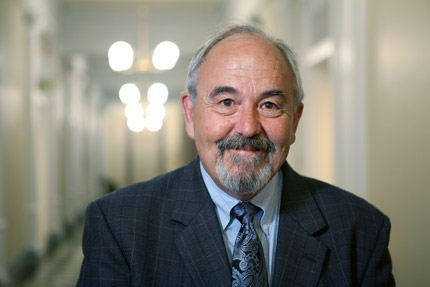
Almost every family in America is touched by an often fatal malady – one that is sometimes denied, often ignored or covered up, and one that is completely treatable. People with alcohol or drug problems are found in every stratum of society and in every town and city. They are often misunderstood and often blamed for their disease, but when they pick up their mat and walk away it is many times with a new appreciation of life, a new more spiritually centered and service oriented attitude that makes them good neighbors, good employees and good friends. Recovery from alcohol and other drug problems happens every day. There may be up to 20 million Americans who have recovered from this seemingly hopeless condition of mind and body.
In El Paso, Texas people in the community of people in recovery have banded together to address issues such as stigma and discrimination for people in recovery and to provide peer-to-peer services. These services, which are delivered and developed by peers, include recovery coaching, a recovery community center and a peer run residential recovery center, called Casa Vida de Salud. Casa Vida has served over 1,500 homeless people with co-occurring mental health conditions as well as alcohol or other drug problems since 2005.
The Recovery Alliance has served over 15,000 people since the community banded together in 1998, and its community events are sometimes the proof that people need concerning having a rich and rewarding life after alcohol and drugs. The Alliance has over 1,000 members from the recovery community along with family members and community allies. Alliance workers provided over 20,000 units of service in 2010 and logged over 5,700 volunteer hours. The Alliance is supported by the US Department of Health and Human Services, the Texas Department of State Health Services, the City of El Paso, the Veteran’s Administration, the US Department of Housing and Urban Development and by the recovery community.
Uplifting Neighborhoods and Inspiring Young Change-makers
Posted by on August 16, 2011 at 12:09 PM ESTEd. Note: Champions of Change is a weekly initiative to highlight Americans who are making an impact in their communities and helping our country rise to meet the many challenges of the 21st century.
I was honored to be invited to the White House on August 5, as a White House Champion of Change. This followed inclusion of Safe & Sound in the Office of National Drug Control Policy 2011 Strategy.
ONDCP’s Director Gil Kerlikowske said about Safe & Sound: "This program is a unique, effective, and shining example of how community efforts can reduce drug use and its consequences. Safe & Sound is an example of a local community taking action and addressing this issue head on.”
Safe & Sound is a partnership of law enforcement, prosecutors, youth-serving organizations, elected and civic leaders, businesses, city services, and clergy aimed at reducing drug use and crime and rebuilding neighborhoods. The project organizes residents and youth and connects them with community resources to identify and report criminal activity and prevent youth gang affiliation, crime, and substance abuse. Safe and Sound utilizes 3 interdependent strategies of positive youth development at after-school “Safe Places”, neighborhood organizing through its Community Partners staff, and law enforcement. It is a unique, collaborative approach to fighting crime, violence, illegal drug and alcohol sales, drug houses, open air drug markets, prostitution, and blighted properties.
Safe & Sound empowers youth and adults to work together, creating a better, safer community for all. After-school Safe Places for youth operate during the hours when youth are most apt to commit, or become victims of, crime. Engaging more than 20,000 young people every year, the Safe Places involve them in youth-led crime reduction and neighborhood improvement projects, drug and alcohol prevention activities, and gang resistance and violence prevention efforts. Young people learn the importance of avoiding drugs, gangs, and guns. And, they learn the leadership skills to plan and execute projects to change their neighborhoods such as building parks, securing funds for street safety enhancements, and holding neighborhood crime analysis meetings. Programs offered include structured activities to help youth develop personal and social skills through interactive forms of learning.
Rural Tour Day Two: Economic Forum in Peosta, Iowa
Posted by on August 16, 2011 at 9:14 AM EST
After a full day spent talking and listening to Americans at town halls in Cannon Falls, Minnesota and Decorah, Iowa yesterday, this morning the President's economic bus tour pulls into Peosta, Iowa for the White House Rural Economic Forum at Northeast Iowa Community College. President Obama and members of his Cabinet will meet with private sector leaders, farmers and small business owners to discuss ideas to grow the economy, accelerate hiring and spur innovation in small towns across the country.
The focus of the forum is how we can create good jobs that put more Americans back to work, and President Obama will announce new job initiatives for rural America that will do just that. The initiatives will include recommendations from the White House Rural Council that include helping small businesses in rural areas access capital, expanding rural job search and training services and increasing rural access to health care workers and technology.
Watch President Obama's opening remarks at 12:50 p.m. EDT and closing remarks at 3:30 p.m. EDT on WhiteHouse.gov/live to learn more about the President's plan to create jobs in small cities and towns across America.
Jobs, Healthcare, and Education Resources for the African American Community
Posted by on August 12, 2011 at 6:29 PM ESTPresident Obama is deeply committed to securing the future prosperity of the African American community, whether through investing in underserved communities or closing education achievement gaps. In accordance with the Administration's vision, winning the future for African Americans means addressing the community's specific needs with the right resources. To bring economic relief and equal opportunity, the following list contains resources and websites we'd like to highlight--resources that promote job creation, increase access to higher education, and help out in healthcare coverage.
Spurring Jobs and Small Businesses: In these difficult economic times, reducing unemployment and a balanced approach to deficit reduction is at the top of our list. A key role to turning the economy around is investing in small businesses in underserved, low-income areas:
- Federal grants for businesses are available from the Minority Business Development Agency and the Small Business Administration
- The U.S. Treasury's Community Development Financial Institutions Fund has a program in which community banks give loans to small business owners in underserved communities
- In addition, the U.S. Treasury provides general investment in small businesses through the Small Business Lending Fund.
Learn more about Economy, Innovations, Startup America, Education, Health Care, Urban Policy, Working FamiliesThe Sensible, Affordable Option of Solar Hot Water Heating
Posted by on August 12, 2011 at 12:58 PM ESTEd. Note: Champions of Change is a weekly initiative to highlight Americans who are making an impact in their communities and helping our country rise to meet the many challenges of the 21st century.
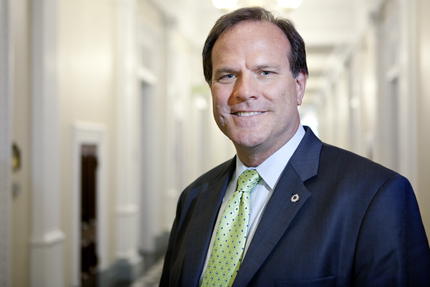
Since I was a young boy, I was always interested in how things worked, right down the tiniest detail. I would disassemble and reassemble everything from watches, to televisions, to motors. While doing so, I was always thinking about why something was constructed or done in one way, versus another. It was with this same analytical curiosity that compelled me to question why solar water heating, so popular in buildings around the world, lost its popular, widely adopted use, and instead became seldom-used and not worth pursuing as a product in business.
When I first started my career in the renewable energy industry, I was taken by the simplicity and cost effectiveness of solar water heating. A single solar panel on the roof of a home provides reliable hot water for a home at a cost that is very competitive with electric and gas. Even today the rest of the world uses solar energy to heat water. Realizing this, I have always held the idea that traditional utilities that deliver electricity, water, gas, or other services on a monthly basis could provide yet another service - solar water heating.
In the utility business a solar system installed in a home is called “distributed generation.” But wait doesn’t “generation” beget electricity? Unfortunately, that is where solar water heating is disadvantaged; it is neither electricity, nor conservation, nor generation supply. Hence, solar water heating tends to be ignored by utilities and businesses despite that fact that it is four to seven times more cost effective than PV (photovoltaic), and takes up equally as less roof space. In most States that have renewable goals (RPS) solar water heating is not an eligible technology, for no good reason at all. When you talk to regulators or policy people that claim it is an oversight. As a taxpayer and ratepayer I want my dollars spent wisely, and so should you!
Learn more about Energy and EnvironmentCreate a New Gulf Cluster for More, Better Jobs
Posted by on August 10, 2011 at 4:01 PM ESTEd. Note: Champions of Change is a weekly initiative to highlight Americans who are making an impact in their communities and helping our country rise to meet the many challenges of the 21st century.
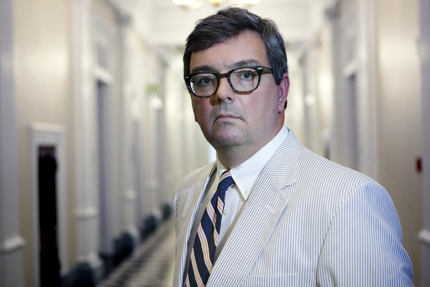
Navy Secretary Ray Mabus was dead-on during a White House event for Gulf Coast Recovery Champions of Change when he observed that the Gulf of Mexico is more than a regional resource for people who live from Florida to Texas. Rather, he reminded, the Gulf is an American treasure. As such, it should become a national focus for investment and recovery.
When the Secretary met with countless Gulf residents following the oil disaster of 2010, he asked them to help to restore the Gulf. But he also people to do more -- to help make the Gulf a better place.
At the Secretary's request, the Center for a Better South last year developed some big ideas for Gulf that went beyond restoration and recovery. Over the course of three months last summer, more than two dozen people worked with the Center to generate a report chock-full of pragmatic ideas that proposed new investments in education, the environment and infrastructure to help create jobs for the future and a better quality of life for Gulf residents. We're honored that some of the work we did helped the Administration craft its recovery plan.
Learn more about Economy, Energy and Environment
- &lsaquo previous
- …
- 206
- 207
- 208
- 209
- 210
- 211
- 212
- 213
- 214
- …
- next &rsaquo
Twitter