

Latest News
From "Senioritis" to Sustainable Solutions
Posted by on August 8, 2011 at 1:10 PM ESTNikhil Arora and Alejandro Velez sat in their Business Ethics class at UC Berkeley on a beautiful California spring day. They paid sporadic attention in class, satisfied with their job offers in the investment banking and consulting fields and suffering from “Senioritis.” That day, however, a random fact brought up in class caught their attention. Gourmet mushrooms could potentially be grown on 100 percent recycled coffee grounds. Complete strangers, in a class of almost 100 students, the two were put in touch by their professor after separately reaching out to him for more information, both intrigued by the waste-to-wages and waste-to-food model. Filled with curiosity, they got together to work. A fraternity kitchen soon became a mini-science experiment with hopes of exploring the unknown world of gourmet mushrooms and recycled coffee grounds.
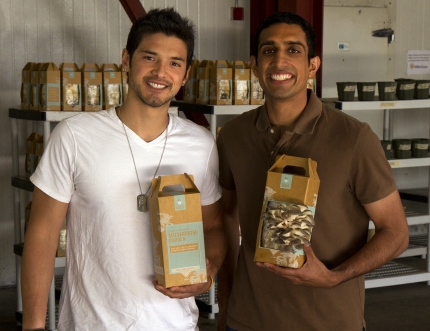
Nikhil Arora and Alejandro Velez, founders of Back to the Roots, have grown their sustainable food business without any venture capital or equity funding.
Their first nine experiments became contaminated within a few days, but the tenth batch produced gorgeous oyster mushrooms. These less-than-gourmet mushroom connoisseurs needed to see how their mushrooms measured up to the rest of them. Surely, the head chef at the best restaurant in town, Chez Panisse, would be a worthy critic. The chef began to sauté their mushrooms and placed a large spoonful in his mouth. His face instantly lit up as he said “whoa, these are delicious!” It was then that they both realized they were on to something.
A few weeks later, they received a small grant of $5000 from their Chancellor. They decided to take a leap of faith and turned down their investment banking and consulting job offers to become full-time urban mushroom farmers. Thus, in the spring of 2009, Back to the Roots was born. After six months of experimenting, they sold their first 3.14 pounds of mushroom to the Berkeley Whole Foods in October of 2009. Their production quickly grew to 500 pounds a week and spread to the entire Northern California region. Customers fell in love with the idea of growing sustainable gourmet mushrooms, inspiring Nikhil and Alejandro to launch the Grow-Your-Own Mushroom Garden. With this new initiative, anyone could sustainably grow their own gourmet mushrooms in as little as ten days…right out of a little brown box, and all on recycled coffee grounds.
Learn more about Economy, Energy and EnvironmentMaking the Political Process More Open and Inclusive
Posted by on August 4, 2011 at 2:12 PM ESTEd. Note: Champions of Change is a weekly initiative to highlight Americans who are making an impact in their communities and helping our country rise to meet the many challenges of the 21st century.
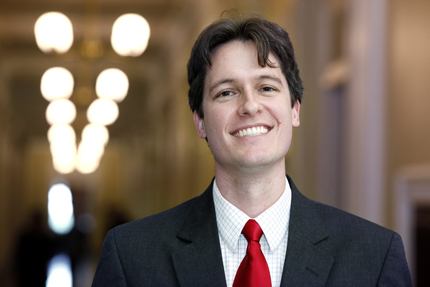
The Virginia General Assembly goes into session once each year, for 45–60 days. In a whirlwind of activity, the 140 legislators file thousands of bills, which wind their way towards becoming law in a process that can be confusing to legislators, and is downright baffling to citizens. The proceedings are covered by a dwindling press corps, the once-robust crowd of reporters having been reduced to just a few who reliably show up each day. The legislature has a website where the state’s eight million citizens can try to keep up with the goings-on, but the decade-old site often leaves people scratching their heads. Legislators’ voting records are nowhere to be found, no video of the proceedings is available, and the search engine works badly. It can be dispiriting for folks trying to find out what their legislators are doing.
As both a programmer and a follower of Virginia politics, I knew that there was a better way. I spent nights and weekends throughout the summer and fall of 2006 creating the sort of website that I wanted. The result, five years later, is Richmond Sunlight, a non-profit, non-partisan website that has changed how many people interact with and learn about their legislature.
Visitors are put at ease by a friendly, accessible color scheme and layout, by designer John Athayde. People can comment publicly on any bill, and robust discussions about the merits of legislation frequently follow, with legislators stopping by to answer questions or defend their proposals. Groups can create public portfolios of legislation that they’re following, with their own commentary and analysis about that legislation. Every legislator’s voting record is available to be browsed through, or downloaded as a spreadsheet for analysis. Video of the entire session is provided, indexed by bill and legislator, allowing anybody looking at a bill to instantly watch an automatically assembled highlight reel of every moment of floor discussion about it. A robust application programming interface (API) allows software and website developers to incorporate legislative data into their own applications. All of these features and more add up to a website that’s visited by over a hundred thousand Virginians each year.
Learn more about Innovations, TechnologyTaking Part in Democracy Through Open Source Software
Posted by on August 4, 2011 at 7:08 AM ESTEd. Note: Champions of Change is a weekly initiative to highlight Americans who are making an impact in their communities and helping our country rise to meet the many challenges of the 21st century.


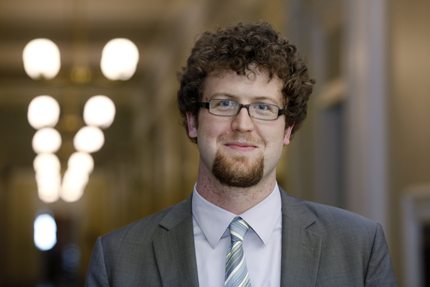
Two years ago we sat in a coffee shop combing through data the newly launched Data.gov site. There were just over 3 weeks before the submission deadline in the Apps for America 2 competition and we were intently looking for a data set that we believed we could build something around. Our criteria were perhaps a bit ambitious - high frequency of release, extensive, and, if exposed properly, impactful. When we stumbled upon the Federal Register data set it was clear we had what we were looking for. And it was clear we had a lot of work to do. One thing we never envisioned on that day was that our project would end up residing at a dot gov (.gov) domain and that we would have the honor of being named 'Champions of Change'.
Over the 3 weeks following our discovery of the Federal Register we spent our evenings and weekends working to understand and contextualize the data (we're not lawyers!) and to re-envision how regulatory data could be presented. What we quickly realized in that first month was that the information contained in the Federal Register was "important" - covering everything from what you are allowed to carry onboard your next flight, to how your next bottle of sunscreen is labeled, to the stickers on the window of your next new car; these regulations affect the way we work and play. We believe they need and deserve input from every citizen. Like we mentioned sometimes we're a bit ambitious...
Learn more about Innovations, TechnologyHow Open Government Technology Transforms the Way We Travel
Posted by on August 3, 2011 at 4:16 PM ESTEd. Note: Champions of Change is a weekly initiative to highlight Americans who are making an impact in their communities and helping our country rise to meet the many challenges of the 21st century.
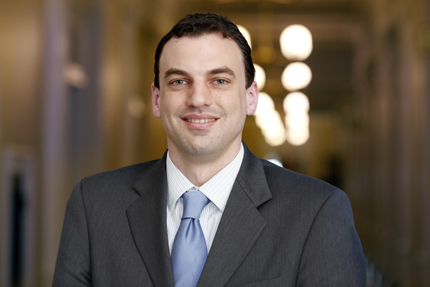
Five years ago, few people knew what "open transportation data" meant. If you wanted answers to seemingly basic questions about the trips you take every day -- whether or not the train you ride to work is running on time, for instance, or what route to school is the safest for bicycling -- you were typically on your own. Information provided by local governments and agencies was spotty at best, and often came attached with restrictive licenses or hefty usage fees. There were no established standards for exchanging data like transit schedules and bus stop locations. In short, it was not an environment conducive to innovation.
It was within that context that I set forth on what at the time was an unusual and ambitious project: creating an interactive online utility for planning multimodal trips (i.e. walking, bicycling, mass transit, or a combination thereof) in my hometown of Atlanta. I had recently sold my car -- a daring move in a sprawling Sunbelt city like ours -- and I was frustrated by the lack of information for people who wanted to travel by modes other than the private automobile. Planning trips on transit meant making sense of a bewildering array of printed schedules, all published in different formats by Atlanta's numerous transit providers. Determining the best routes for biking -- now one of my primary means of transportation -- was largely a matter of trial and error. I knew there had to be a better way.
Learn more about Innovations, TechnologyRural Veterans and the Tyranny of Distance
Posted by on August 3, 2011 at 7:00 AM ESTAt the Department of Veterans Affairs, Secretary Shinseki often talks about the tyranny of distance – the distance that often separates Veterans from care at their nearest VA medical facilities. For about 3.3 million Vets, or 41 percent of the total enrolled in VA’s health care system, distance is more than a challenge. Distance can mean rural Veterans don’t have access to the care and services they’ve earned.
Secretary Shinseki made it clear – this summer, he wanted to hear from Veterans in the hardest to reach places. “I know from previous experience that sitting in Washington with a 2,000-mile screwdriver trying to fine tune things at the local level never works,” he said. So, we hit the road to learn firsthand.
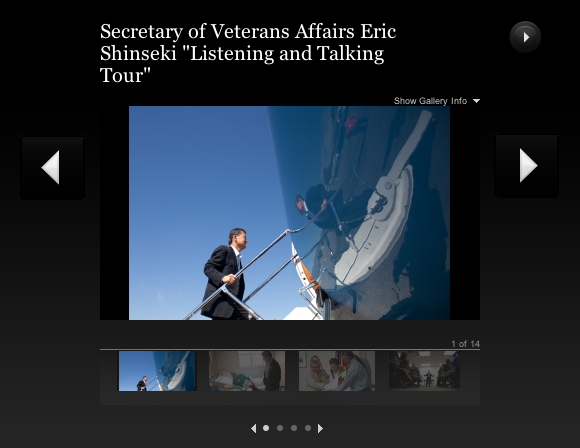
From the plains of North Dakota and Montana to the isolated island of Guam, Veterans from rural areas talked with Secretary Shinseki about what’s working and what the department can do better. To many Veterans, it was clear VA has shifted its approach to be more accessible. But we also quickly learned that standard definitions like “urban, rural, and highly rural” may not be exact enough. Often, “remote, extreme rural, and inaccessible” is more accurate.
The “inaccessible” category would definitely include Kwigillingok, Alaska, or Kwig, located in the far reaches of Central Yup’ik near the Bering Sea. On Memorial Day, Secretary Shinseki visited Kwig to meet and honor living members of the Alaska Territorial Guard, who served bravely during World War II. No roads lead to Kwig, so the trip wasn’t easy. We hopped on a flight in Anchorage, and connected in the small town of Bethel – about 1,000 miles roundtrip. When we finally landed on the dirt landing strip in Kwig, villagers on all-terrain vehicles appeared from all over to give us rides to the village center.
Increasing Access to Data with Public-Private Partnerships
Posted by on August 2, 2011 at 4:05 PM ESTEd. Note: Champions of Change is a weekly initiative to highlight Americans who are making an impact in their communities and helping our country rise to meet the many challenges of the 21st century.
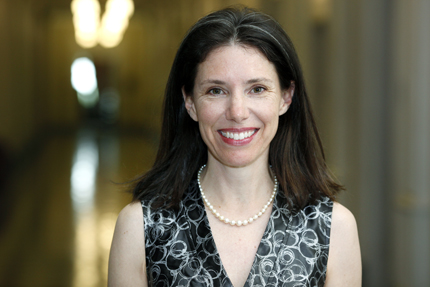
Being named a Champion of Change opens the door to partner with non-profit entities that are publicly visibility. Why? Because while there is genuine interest in making successful businesses from open data, funding the research and development may very well be optimal from grants rather than angels or venture money.
There are a few reasons for this rational. First, access to data is a constant threat to developers working with open data. Governments have a long standing working relationships with nonprofits and they are far more comfortable providing them with data rather than for-profit companies. Second, the public awareness around open data dovetails well within the charters of non-profits. Third, and perhaps most interesting, are the connections being studied between cities with open data apps to make life better and elections of officials promoting their development and use.
Learn more about Innovations, TechnologyHarnessing Open Government Data to a Wellness Intiative
Posted by on August 2, 2011 at 10:53 AM ESTEd. Note: Champions of Change is a weekly initiative to highlight Americans who are making an impact in their communities and helping our country rise to meet the many challenges of the 21st century.
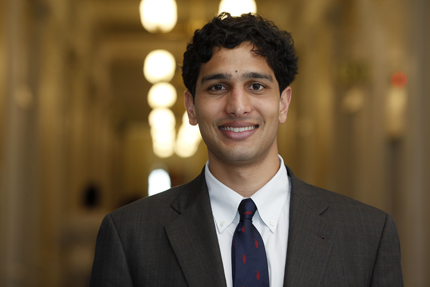

Sportaneous, like many of the other Champions of Change recipients, is both a private company and one which is highly reliant on open government data for its social mission. Sportaneous makes it easy for busy people to get physically active by harnessing location-based technology to facilitate “pick-up” sports games and group fitness activities. Through the Sportaneous mobile app and website, a person can quickly view all group sports games and activities that have been proposed at nearby public facilities. It was only through data sets made publicly available by New York City Mayor Michael Bloomberg’s Office, for example, that we were able to compile the database of parks and public sports facilities intrinsic to our web platform and iPhone app. This productive use of open data sets is part of the reason we were recognized by the White House as “Champions of Change”, an auspicious honor that we found both humbling and massively exciting.
This was especially so on the day of the award ceremony. The day began with a presentation by Aneesh Chopra, the White House CTO, and Vivek Kundra, the White House CIO. Eric Ries, author of The Lean Startup, also spoke briefly, his advice proving especially pertinent to Sportaneous as we stand in our current phase of growth. The theme of creative uses of open data prevalent throughout the speakers’ presentations struck close to home, inspiring ideas that later manifested themselves as additions to our web platform and mobile app.
Learn more about , Innovations, TechnologyOpen Government to Solve Problems: Meet Champions of the Open Innovation Movement
Posted by on August 2, 2011 at 9:01 AM ESTEd. Note: Champions of Change is a weekly initiative to highlight Americans who are making an impact in their communities and helping our country rise to meet the many challenges of the 21st century.
Leigh Budlong is an accidental technologist. After years of experience struggling to make sense of the myriad of zoning rules associated with commercial real estate, often with real implications for entrepreneurs looking to start a new business, she decided to solve the problem by launching a new service. Her award-winning ZonabilitySF app is fueled by open government data, a valuable (public) resource at the center of a movement directed by the President on his first full day in office and replicated by dozens of Governors, Mayors, and even foreign leaders to make it more accessible.
Waldo Jaquith used his free time to facilitate a more open government. Despite long hours at his day job, Waldo found the time to launch Richmond Sunlight, a volunteer-run site that keeps track of the Virginia legislature, including manually uploading hundreds of hours of CSPAN-inspired video of floor speeches, tagging relevant information on bills and committee votes, and inviting the public to comment on any particular legislation. He solicits feedback, introduces new products and services, and encourages others to participate. In short, he embodies the spirit that drives the Internet economy – “rough consensus, running code.”
- &lsaquo previous
- …
- 208
- 209
- 210
- 211
- 212
- 213
- 214
- 215
- 216
- …
- next &rsaquo
Twitter