

Latest News
Energy Information Helps Save Money and the Planet
Posted by on July 26, 2011 at 10:27 AM ESTWhile the U.S. is known around the world for innovative companies like Google and Facebook, there is a new vanguard of American companies creating and exporting clean energy technologies,” said Jim Kapsis. His company, OPower, an information-enabled energy efficiency company, is one of them. Opower is transforming the relationship between consumers and how they use energy in their homes. According to Kapsis, Opower is on track to save households more than $100 million next year and enough energy to take the equivalent of more than 100,000 households off the grid.
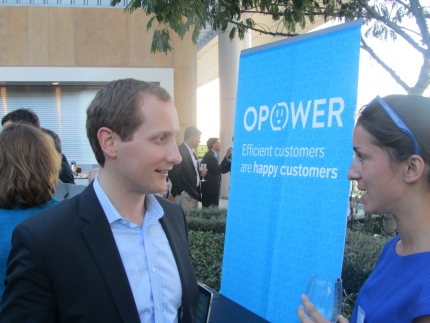
OPower provides 10 million U.S. households with home energy information and has clients in 25 states. (by OPower)
Founded in 2007 by two college buddies, the company started out with a simple idea: utility bills are too difficult to understand. The friends, co-founders, Dan Yates and Alex Laskey, bet that if people had better information about their energy usage, they would use less of it, save money, and improve the environment. “It was an innovative business idea, but given the complexity of the energy market, they weren’t sure at first that it was going to work,” said Kapsis. By working with utility companies to deliver better information to their customers, OPower not only helps people understand how they are consuming energy, but how they are doing relative to other similar homes in their neighborhood. By coupling this context with personalized energy saving advice, Opower is giving households the tools to make more informed choices about their energy use.
Learn more about Economy, Energy and EnvironmentThe Arts as Champions of Change in Our Schools
Posted by on July 25, 2011 at 6:26 PM ESTEd. Note: Champions of Change is a weekly initiative to highlight Americans who are making an impact in their communities and helping our country rise to meet the many challenges of the 21st century.
I am honored to be a White House Champion of Change – I am both humbled and inspired by my fellow Arts Education Champions, who are all working with passion and persistence to improve the lives of children everyday across our country. I applaud President Obama for taking a leadership role in acknowledging the power of the arts to transform communities, to improve education and to drive our economy. I truly appreciated the opportunity to participate in a lively exchange of ideas with members of the President’s Committee on the Arts and the Humanities and The Creative Coalition, and staff from the US Department of Education, the Arts Education Partnership, and Americans for the Arts during our recent round-table discussion.
My work at CAPE – Chicago Arts Partnerships in Education – is rooted in the belief that the arts can play a leading role in transforming education, particularly for students who have been left behind by traditional schools. In fulfilling our organization’s mission to increase student success through arts driven education, we have inspired change in different ways:
Learn more about EducationComing Together to Rebuild
Posted by on July 22, 2011 at 3:03 PM ESTEd. Note: Champions of Change is a weekly initiative to highlight Americans who are making an impact in their communities and helping our country rise to meet the many challenges of the 21st century.

Glen and I had a wonderful time in Washington DC on July 6th. Everyone was courteous and made us feel comfortable and at ease. We were also thrilled that we got to meet President Obama and talk with him. Secretary Vilsack also impressed us with his knowledge of agricultural rules. All in all it was exciting to know that the Department of Agriculture wanted our input. We felt honored to be invited to the White House.
We have always said that hard work pays off. We have been a family-run business for over thirty years, with four generations at our greenhouse: Elma (first owners), Glen (Elma’s son), Benjamin (Glen’s son), and Carson (Ben’s five year old son). It started with our mother and father, Earl and Elma Young, growing and selling vegetables. Then we began to sell flowers. The first time we ever bought hanging baskets to sell, we bought eight fuchsias. We thought we had bought too many hangers and were going to get stuck with them. Now, after thirty years, we sell four hundred fuchsia hangers and over twenty thousand other hangers. Our greenhouses cover a total of two acres.
In the fall of 2009, a tornado came and tore through our greenhouses, leaving only four standing. The four left standing had to be torn down because the tornado shifted the bars and they were not safe. We were all on vacation the day the tornado came through. When we came back, we took a deep breath and knew we had to rebuild, and that we had to rebuild before the ground froze, because metal poles had to be put into the ground for the frames.
Learn more about RuralReducing Our Individual Carbon Footprints
Posted by on July 22, 2011 at 11:54 AM ESTEd. Note: Champions of Change is a weekly initiative to highlight Americans who are making an impact in their communities and helping our country rise to meet the many challenges of the 21st century.
 After witnessing some very innovative renewable energy projects in my travels around the world, I thought: why can't I implement these principles in our family business? We have always had a personal commitment to lower our energy consumption, and that commitment set us on a path that brought me to Washington D.C. for the Rural Champions of Change forum.
My wife Tara and I achieved our goal by effectively putting our vision into action. Our contractor Dixon Power and I came up with a plan to take the energy needs of our horse boarding and event facility towards a self-supporting operation via sustainable and renewable energy. We soon realized that the hurdles we faced would require help from the Federal government, State government, the local county, and our personal banking institution.
We are proud of the outcome, particularly being the first at this endeavor. The obstacles that we encountered in our project were outweighed against the threats posed by climate change, dependency on foreign oil, and the need to do the right thing for the community that we live in.
While we did this for our personal energy consumption, now we understand that if one person starts to make a change, it can lead the entire community benefiting. After visiting with the other Champions of Change nominees, I have a new found clarity coupled with a deeper understanding of the challenges that we all face in our personal quest to lower our overall energy consumption. My wife and I can actually now begin to imagine what we can do as a nation, being that just two individuals from a small rural community can take the lead by reducing our individual carbon footprints on our personal and professional energy consumption.
Learn more about RuralWhat The Consumer Financial Protection Bureau Means for Latinos
Posted by on July 22, 2011 at 11:06 AM ESTThe Consumer Financial Protection Bureau (CFPB) officially opened for business this week.
At last week’s White House Hispanic Policy Conference, we had several fascinating conversations with Latino leaders about what the CFPB means for Latino families in particular.
For the first time, all Americans will have an agency with the primary mission to look out for consumers in the financial marketplace. The CFPB, created by last year’s Dodd-Frank Wall Street Reform and Consumer Protection Act, will be a cop on the beat to enforce the laws on credit cards, mortgages, student loans, payday loans, and other kinds of financial products and services.
Bringing Practical Biomass Energy to Rural Communities
Posted by on July 22, 2011 at 9:28 AM ESTEd. Note: Champions of Change is a weekly initiative to highlight Americans who are making an impact in their communities and helping our country rise to meet the many challenges of the 21st century.
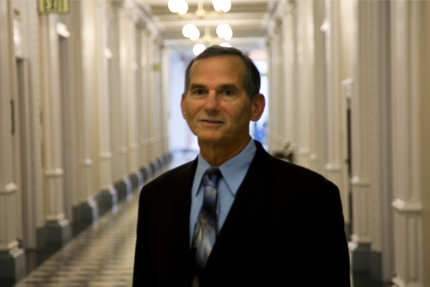
The second generation of bioenergy crops has the potential to produce more energy on poorer soils and with fewer inputs than any crops we use for energy now. But turning this potential into practical, profitable crops may only come when farmers have had a chance to work with them.
Selecting the most promising crops from research conducted at the University of Illinois and drawing on the experience of the farmers we visited in Germany and Austria, we found that the economics and logistics of biomass production and its use on our farm and in our community looked very promising. The holdup is a “chicken or egg” situation. No farmer wants to plant a new crop without a market, and new markets won’t develop without a supply.
In Europe we also learned how even small amounts of biomass can be effectively used to replace oil, coal, and gas to heat homes, farm buildings, schools, and businesses. As supplies of biomass increase, power plants and even cellulosic ethanol plants can be considered; however, using locally produced biomass will, in most instances, prove to be beneficial to producers and end users alike, thus strengthening the community.
Billions of dollars (both private and public) are being spent to learn how to convert biomass to liquid fuels. Yet, unless we provide the incentive to establish biomass crops, we won’t have them when we need them. It would be akin to spending billions to research and build a new fighter jet and then realizing that we have no fuel to fly it.
Learn more about Energy and Environment, RuralEmpowering Farm Women to be Better Business Partners
Posted by on July 21, 2011 at 6:27 PM ESTEd. Note: Champions of Change is a weekly initiative to highlight Americans who are making an impact in their communities and helping our country rise to meet the many challenges of the 21st century.
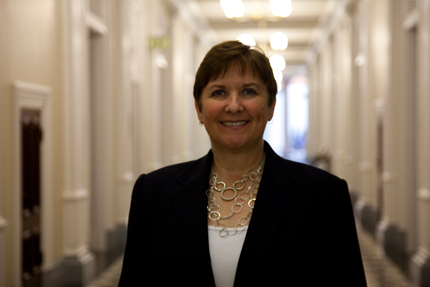
Truly an inspiring event on July 6, 2011, starting with a tour of the East Wing of the White House and then on to the White House Champions of Change roundtable. Wonderful and talented people working in rural areas around the country, and then another high point: President Obama entered the room. Not only was this the first time in my life that I was in the same room with a sitting President, but I also was able to shake hands and make eye contact with the person holding the most powerful office on earth. It is an honor to be recognized by this level of my government.
What brought me to the Rural Champions of Change roundtable event is a program that I created called Annie's Project—Education for Farm Women. The mission of Annie’s Project is to empower farm women to be better business partners through networks and by managing and organizing critical information. I started this program with 10 women in February 2008 at a local community college, Kaskaskia College in Centralia, IL. The program’s funding came from USDA’s Risk Management Agency, which provides grants to assist underserved audiences.
Long story short, and eight years later, over 8,000 women have benefited from attending an educational program based on the life of my mother, Annette Kohlhagen Fleck. Her friends called her Annie. Annie was married to a farmer for 50 years and she truly loved living and working on the farm. A small town girl in northern Illinois, she lived her dreams and raised her family of four children on a dairy and poultry farm. My life experience of growing up on the farm observing all that she contributed, and then my work with University of Illinois Extension for 30 years, gave me a perspective of what farm women need in the way of education, support and networking.
Removing Barriers to Successful Agriculture in Indian Country
Posted by on July 21, 2011 at 4:57 PM ESTEd. Note: Champions of Change is a weekly initiative to highlight Americans who are making an impact in their communities and helping our country rise to meet the many challenges of the 21st century.
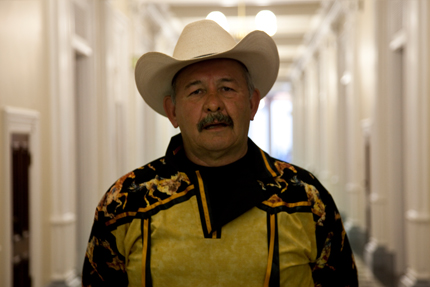
Being a part of the White House “Champions of Change” is both an honor and humbling experience. It was an honor to be in the presence of the President and humbling as there are thousands out there who have accomplished more for their communities than me.
I began work for the Intertribal Agriculture Council (IAC) 20 years ago as a Natural Resource Director which entailed the identification and solutions to regulatory barriers presented by both the Department of Agriculture and Department of Interior. In 1998, I was promoted to Director of Programs and assigned the responsibility of the day to day supervision of the 11 employees. The individual who played the leadership role in bringing about the formation of the IAC had to resign for medical reasons in 2001 and the Board of Directors selected me to fulfill the role of Executive Director.
The IAC Board of Directors is comprised of individual Board Members who represent one of the 12 regions of Indian Country, and it is the Board of Directors that set the priorities for the overall direction of the organization as well as assign tasks to the Executive Director. For this reason, I believe that each of our Directors should play a role in the recognition of the Intertribal Agricultural Council.
IAC was founded in 1987 by order of Congress to pursue and promote the conservation, development and use of Indian Country agricultural resources for the betterment of Native American people. Land-based agricultural resources are vital to the economic and social welfare of many Native American and Alaskan Tribes. The harmonies of man, soil, water, air, vegetation and wildlife that collectively make-up the American Indian agriculture community, influence our emotional and spiritual well-being. Prior to 1987, American Indian agriculture was basically unheard of outside reservation boundaries.
Learn more about Rural
- &lsaquo previous
- …
- 212
- 213
- 214
- 215
- 216
- 217
- 218
- 219
- 220
- …
- next &rsaquo
Twitter