

Latest News
Removing Barriers to Successful Agriculture in Indian Country
Posted by on July 21, 2011 at 4:57 PM ESTEd. Note: Champions of Change is a weekly initiative to highlight Americans who are making an impact in their communities and helping our country rise to meet the many challenges of the 21st century.
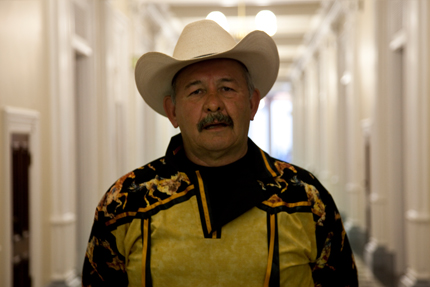
Being a part of the White House “Champions of Change” is both an honor and humbling experience. It was an honor to be in the presence of the President and humbling as there are thousands out there who have accomplished more for their communities than me.
I began work for the Intertribal Agriculture Council (IAC) 20 years ago as a Natural Resource Director which entailed the identification and solutions to regulatory barriers presented by both the Department of Agriculture and Department of Interior. In 1998, I was promoted to Director of Programs and assigned the responsibility of the day to day supervision of the 11 employees. The individual who played the leadership role in bringing about the formation of the IAC had to resign for medical reasons in 2001 and the Board of Directors selected me to fulfill the role of Executive Director.
The IAC Board of Directors is comprised of individual Board Members who represent one of the 12 regions of Indian Country, and it is the Board of Directors that set the priorities for the overall direction of the organization as well as assign tasks to the Executive Director. For this reason, I believe that each of our Directors should play a role in the recognition of the Intertribal Agricultural Council.
IAC was founded in 1987 by order of Congress to pursue and promote the conservation, development and use of Indian Country agricultural resources for the betterment of Native American people. Land-based agricultural resources are vital to the economic and social welfare of many Native American and Alaskan Tribes. The harmonies of man, soil, water, air, vegetation and wildlife that collectively make-up the American Indian agriculture community, influence our emotional and spiritual well-being. Prior to 1987, American Indian agriculture was basically unheard of outside reservation boundaries.
Learn more about RuralSupporting Regionally Grown Food
Posted by on July 21, 2011 at 3:12 PM ESTEd. Note: Champions of Change is a weekly initiative to highlight Americans who are making an impact in their communities and helping our country rise to meet the many challenges of the 21st century.

At the Rural Champions of Change roundtable, I had a chance to tell President Obama about FoodHub – a dynamic online marketplace that helps regional food buyers and sellers find each other, connect and conduct business. When I likened it to a matchmaking service, President Obama laughed and called FoodHub “a great idea.” Certainly in the context of rural development, he’s right.
Consider the following scenario: Susan Barker, the school food service director at Beaverton Public Schools, wants to bring more locally produced food into the school lunchroom. Knowing that berries are plentiful in the Northwest, she’d like to buy blueberries from a local farm. Before FoodHub she’d have been at a loss, not knowing where to begin.
But because FoodHub exists, Barker walks to her computer, pulls up the FoodHub website and types in the word “blueberry.” Up pops a list of the twenty blueberry producers registered in FoodHub. Because Barker is serving 22,000 meals a day, she narrows her results to only those large enough to meet her volume needs. Now she has two choices. She can peruse the profiles of producers whose products are available through regional mainline distributors or she can select a producer with capacity for direct sales and delivery.
Learn more about RuralA Bright Future for Farming and Ranching
Posted by on July 21, 2011 at 8:04 AM ESTEd. Note: Champions of Change is a weekly initiative to highlight Americans who are making an impact in their communities and helping our country rise to meet the many challenges of the 21st century.

Farming and ranching has a bright future, provided that we maintain competition in the marketplace for our products grown in rural America. Access to broadband internet with as fast of speed available in New York City, should also be accessible on mainstreet of our small towns. Entrepreneurs and business people could “tele-commute” from our rural communitites with their counterparts throughout the world. Healthcare would also break down barriers through “tele-medicine” with broadband hot-spots in these small towns.
We are fortunate to have a very “producer-driven” United States Department of Agriculture (USDA). This was confirmed during our roundtable discussion with Secretary Tom Vilsack. The Secretary has a “hands-on” mentality to manage the various programs and agencies under the umbrella of the USDA. I was impressed with the Secretary’s personal approach to answering our questions and responding to feedback on how we appreciate the Department and on possible improvements. Places and people affected is the mission of the USDA in working with the Domestic Policy council in order to ensure that support for our rural communities is accomplished.
Competition for our livestock industry is extremely important to maintain producer confidence. USDA has been working on finalizing rules through GIPSA that ensure the rights of independent livestock producers are protected. In South Dakota nearly all of our feeder cattle are sold through a local livestock auction market. When I sell my cattle at an auction market my neighbors and order-buyers from around the Country have the chance to pay the top-dollar for my cattle. I applaud the USDA for working towards strengthening this marketing aspect of our farm and ranch operations.
Learn more about RuralReaching Out to Rural Communities
Posted by on July 21, 2011 at 6:00 AM ESTEd. Note: Champions of Change is a weekly initiative to highlight Americans who are making an impact in their communities and helping our country rise to meet the many challenges of the 21st century.
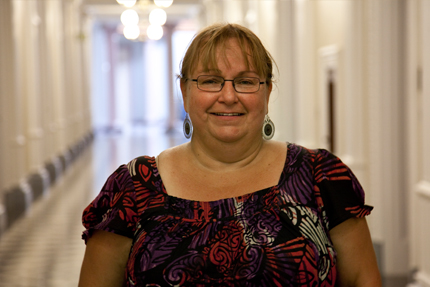
This past Wednesday, July 6, 2011, I was honored as a Champion of Change, allowing me to join with other rural community representatives, Secretary of Agriculture, and White House officials.
There were representatives from farms, tribal communities, community colleges, small businesses, and even a bio fuel producer. We had a round table discussion of what each had done in their community and policy recommendations for improvements in rural communities. These recommendations included simplifying grants, expanding available credit, and to expanding educational opportunities in rural communities.
As a Town Manager of a small rural town I know the difficulties faced in our small communities. Our communities’ infrastructures are at their life expectancy and we are faced with the cost of replacement. I was nominated because of the challenging and innovative work I did with the USDA in refinancing an old debt and getting more grant than loan monies for my communities’ Wastewater Improvement Project. I have also worked with the CDBG, EDA, Otted, and other local and state grants for wastewater, water, roads, and sidewalk improvements. There is much more to be done.
Learn more about RuralRestoring Our Connection to the Land
Posted by on July 20, 2011 at 6:42 PM ESTEd. Note: Champions of Change is a weekly initiative to highlight Americans who are making an impact in their communities and helping our country rise to meet the many challenges of the 21st century.
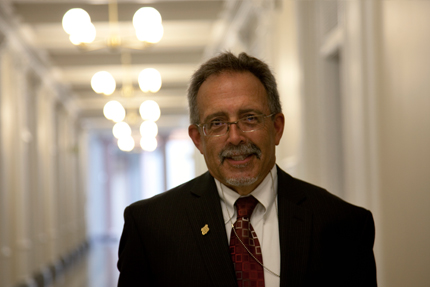
For every American there can be no greater reward for ones's work then to be asked to come to the White House to share your thoughts. To be included with outstanding representatives from across the country as "Champions of Change" on behalf of rural Americans was truly an honor and a extraordinary example of our system of government at its finest, as well as exemplifying the sincere interest by the Administration to hear from "real people" outside the proverbial "Beltway."
As I looked around the room at the farmers and ranchers who literally had to leave their chores for the day to be in DC, I thought how fortunate we are to still be able to honor the way of life that helped make this country what it is today, and importantly how we can learn from them how to instill those characteristics in future generations of rural Americans.
My work for the last 30 plus years has been of a different, but closely related nature. Connecting Americans and our visitors to the land through tourism and outdoor recreation has been my passion. First as an international tour guide leading camping tours across the country, then serving as President of the American Hiking Society and Co-executive Director of the Continental Divide Trail Alliance with my wife, Paula and then founder of Choose Outdoors, a national nonprofit that seeks to connect all Americans to the land through Outdoor Recreation.
Learn more about RuralRegional Food Systems Create Jobs
Posted by on July 20, 2011 at 5:01 PM ESTEd. Note: Champions of Change is a weekly initiative to highlight Americans who are making an impact in their communities and helping our country rise to meet the many challenges of the 21st century.
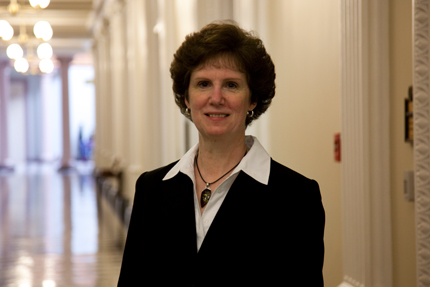
I am honored by the White House Champions of Change award. It was a real thrill to sit at the table with the White House Rural Council and eighteen ambitious leaders from across the United States and see the incredible creativity that each one has lent to improving conditions in America. I was especially excited that President Obama joined our meeting and met us individually to get acquainted with each of our efforts.
I shared with President Obama, Secretary Vilsack and the Rural Council some of the significant opportunities our business model represents for promoting economic development, job creation and wealth building in rural communities.
Our Food Enterprise Center is creating amazing opportunities for food entrepreneurs, social investors and space for innovative food businesses to start up and expand with the infrastructure to process, market and distribute locally grown food.
Learn more about RuralTribal Members in Rural America
Posted by on July 20, 2011 at 12:41 PM ESTEd. Note: Champions of Change is a weekly initiative to highlight Americans who are making an impact in their communities and helping our country rise to meet the many challenges of the 21st century.

I recently was invited to the Champions of Change event for rural America. It was great to meet with President Obama and Secretary Vilsack and hear how much they cared about some of the unique issues facing rural America. The President took the time and was gracious enough to introduce himself to everyone at the meeting. All and all, not my typical Wednesday afternoon.
I run a company called Ho-Chunk, Inc. located on an Indian reservation in Winnebago, Nebraska. The company is owned by the Winnebago Tribe of Nebraska and our mission to create job opportunities for our tribal members and to help our tribe become economically self-sufficient. After 15 years of efforts we have companies involved in retail, government contracting, distribution, construction, housing and various internet companies. We do work in three other foreign countries. We started with 1 employee and now have 1400. Our revenues have grown from zero to close to $200 million a year, all in a rural Nebraska town of 1500 people.
In 1991, the tribe had an unemployment rate of approximately 60 percent. Now we have more jobs than working age people in our community. We are proud of our accomplishments economically, but social and educational development are just as important to our tribe. In 2000, Ho-Chunk, Inc. started a non-profit corporation called the Ho-Chunk Community Development Corporation. The non-profit's mission was to help make our community a better place and to provide supplemental capital to build the infrastructure in our community to help it grow. To date, our non-profit has raised over $23 million for our community.
Learn more about RuralSharing Experiences as African-American Farmers
Posted by on July 20, 2011 at 10:13 AM ESTEd. Note: Champions of Change is a weekly initiative to highlight Americans who are making an impact in their communities and helping our country rise to meet the many challenges of the 21st century.
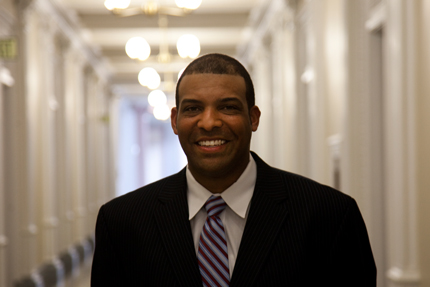
On July 6, 2011, I was recognized as a “Champion of Change" by the Obama Administration. This allowed me the opportunity to have a roundtable discussion with rural leaders from around the country and government officials to discuss the progress happening in rural America.
It was quite an experience to be on my combine harvesting wheat on Tuesday and sitting around a table in the White House with President Obama on Wednesday. I must say, this was an experience for an ol' country boy!
As I sat listening to President Obama, I remembered how as a child I would listen to my grandfather and father talk about their experiences as African-American farmers. Their triumphs and pitfalls inspired me to return to the family farm when I completed my education in Agricultural Economics at Virginia Tech. Now I am able to share my experiences with the next generation through my participation with the National Black Growers Council (NBGC) by advocating to increase the efficiency, sustainability and productivity of black row crop farmers.
Philip Johnson Haynie, III serves on USDA's Plant Variety Protection Act Board and on the Agricultural Advisory Council for Virginia's first congressional district. P.J. is also a member of the National Black Growers Council, a coalition of African American commodity growers who advocate for the 21st century policy needs of Black growers and the future of Black growers.
Learn more about Rural
- &lsaquo previous
- …
- 213
- 214
- 215
- 216
- 217
- 218
- 219
- 220
- 221
- …
- next &rsaquo
Twitter