
Energy and Environment Latest News
West Wing Week: "The Mysterious Case of Mysterious Case 55"
Posted by on October 28, 2010 at 11:00 PM ESTWelcome to the West Wing Week, your guide to everything that's happening at 1600 Pennsylvania Ave. Walk step by step with the President as he visits American Cord and Webbing, a thriving small business in Woodsocket, Rhode Island, calls into radio shows across the country, joins the Vice President in the East Room to mark Domestic Violence Awareness Month, goes on the Daily Show, congratulates American rescue workers who used their expertise to help free 33 Chilean Miners, and much more...
For more information on the events in this edition of West Wing Week, check out the links below:
October 25, 2010
October 27, 2010
Arun Chaudhary is the official White House videographer.
Your Questions on Climate Change and Foster Youth
Posted by on October 27, 2010 at 3:36 PM ESTRecently, President Obama participated in a live town hall with young people from across the country sponsored by MTV, BET, and CMT -- taking questions from the audience and Twitter on a variety of topics.
While the President answered as many questions as he could during the event, there were many questions he didn’t have a chance to answer. Below Deputy Assistant to the President for Energy and Climate Change Heather Zichal and Director of the Domestic Policy Council Melody Barnes tackle two of these questions on climate change and foster care respectively.
Be sure to check out other questions and answers here and here.
Real Update on Real Property
Posted by on October 27, 2010 at 3:04 PM ESTAs I’ve written about before, as part of the President’s Accountable Government Initiative, we are taking aggressive steps to save taxpayer dollars while making government work better, harder and more efficiently for the American people.
That’s why on June 10, 2010, President Obama issued a Presidential Memorandum titled “Disposing of Unneeded Federal Real Estate” directing agencies to accelerate efforts to remove excess and surplus property for a savings of $8 billion by the end of FY 2012. And as part of the President’s FY 2012 budget process, we are working closely with Federal agencies to achieve that goal.
Federal agencies have detailed plans to cut excess property costs and implement cost cutting measures. To date, Federal agencies have identified $1.7 billion of the $3 billion in non-defense savings opportunities that the President has required us to achieve by the end of FY 2012. And we are off to a good start in converting these opportunities to bottom line savings for taxpayers. For instance, we are selling buildings such as one office building in Omaha, Nebraska for $1.3 million, one in Springfield, Massachusetts for $2.5 million, and one in Bethesda, Maryland for $12.4 million.
The Department of Defense is also on track to achieve the $5 billion in real property cost savings through the Base Realignment and Closure (BRAC) process in the same time period.
While there is still work to be done, we are pleased with the progress made thus far and we are working with the agencies to identify further opportunities for cost reductions.
As the country’s largest property owner and energy user, it is critical that we remain vigilant about our operating costs. By selling buildings, reducing maintenance costs, cutting energy costs, consolidating and re-aligning existing space and reducing leases, we are saving taxpayer dollars and making government work better for everyone.
Answering Your Questions on Energy and Afghanistan
Posted by on October 26, 2010 at 9:58 AM ESTRecently, President Obama participated in a live town hall with young people from across the country sponsored by MTV, BET, and CMT -- taking questions from the audience and Twitter on a variety of topics.
On Friday we brought you the first installment of video answers to questions that the President didn’t have a chance to get to during the town hall event. Below are two more, this time from Heather Zichal, Deputy Assistant to the President for Energy and Climate Change, and another answer from Ben Rhodes, Deputy National Security Advisor. Be sure to check back throughout the week for more questions and answers!
What measures are you taking toward an integrated relationship with military leadership for policy decisions in Afghanistan?
What will you do to encourage alternative energy and clean technology?
DOT, EPA Propose Nation's First-Ever Emissions, Fuel-Efficiency Standards for Trucks and Buses
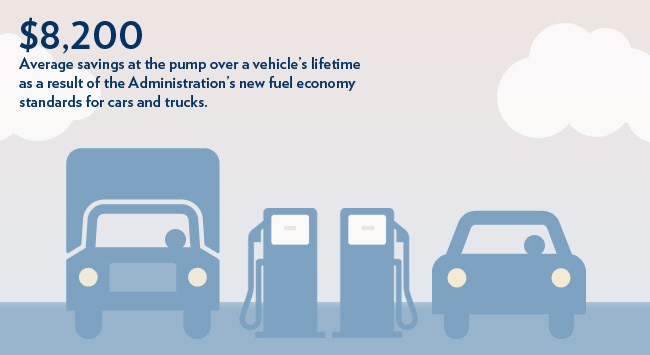
Posted by on October 25, 2010 at 1:22 PM ESTToday, EPA Administrator Lisa Jackson and I proposed the first national standards for greenhouse gas emissions and fuel efficiency for medium and heavy-duty trucks, vans, and buses.
This is a historic first step to address categories of vehicles previously excluded from America's corporate average fuel economy guidelines. Currently, the vehicles we propose covering account for 20% of the transportation sector's carbon emissions. So reducing those emissions and improving fuel efficiency for these vehicles is certainly a win for the environment.
But the new standards are also a win for energy independence and the economy. We're talking about saving 500 million barrels of oil and cutting emissions by nearly 250 million metric tons over the life of model year 2014 to 2018 vehicles covered by our proposals.
Learn more about Energy and EnvironmentBoosting Advanced Biofuel Production and Creating Jobs
Posted by on October 22, 2010 at 10:43 AM ESTOur country needs a strong, vibrant rural economy. Advanced biofuel production will help create it. Not only will biofuel production from non-food sources create new jobs and new streams of farm income, it will improve environmental quality and reduce our dependence on fossil fuel imported from foreign countries.
Speaking to the members of the National Press Club here in Washington yesterday morning, I explained that the heart of President Obama’s vision for rural America combines new technologies and new markets with better use of our natural resources-more home grown biofuels and renewable energy.
Learn more about Energy and Environment, Rural
- &lsaquo previous
- …
- 151
- 152
- 153
- 154
- 155
- 156
- 157
- 158
- 159
- …
- next &rsaquo
Related Videos
-
 May 09, 2014 8:21 AM
Inside the White House: Solar Panels
-
 September 01, 2016 8:25 PM
President Obama Delivers a Statement to the Press
White House Blogs
- The White House Blog
- Middle Class Task Force
- Council of Economic Advisers
- Council on Environmental Quality
- Council on Women and Girls
- Office of Intergovernmental Affairs
- Office of Management and Budget
- Office of Public Engagement
- Office of Science & Tech Policy
- Office of Urban Affairs
- Open Government
- Faith and Neighborhood Partnerships
- Social Innovation and Civic Participation
- US Trade Representative
- Office National Drug Control Policy