Energy and Environment Latest News
What Climate Change Means for Regions Across America
Posted by on May 6, 2014 at 10:30 AM EDTToday, the Obama Administration unveiled the Third U.S. National Climate Assessment (NCA)—the most comprehensive, authoritative scientific report ever generated about climate changes that are happening now in the United States and further changes that we can expect to see throughout this century. The report—a key deliverable of President Obama’s Climate Action Plan—confirms that climate change is affecting Americans in every region of the United States and key sectors of the national economy.
This NCA embodies the concept of “actionable science” called for in the President’s Climate Action Plan. It communicates the impacts of climate change according to geographic region of the United States, and by economic and societal sector—including agriculture, energy, and health. These tailored findings help translate scientific insights into practical, useable knowledge that can help decision-makers and citizens anticipate and prepare for specific climate-change impacts.
For instance, the report finds that, on the whole, summers are longer and hotter, with longer periods of extended heat. Wildfires start earlier in the spring and continue later into the fall. Rain comes down in heavier downpours. People are experiencing changes in the length and severity of seasonal allergies. And climate disruptions to water resources and agriculture have been increasing.
Learn more about Energy and EnvironmentSupreme Court Ruling on Air Pollution Is a Big Win for Public Health
Posted by on April 29, 2014 at 5:42 PM EDTAfter today’s news from the Supreme Court, over 240 million Americans can breathe easier. In their decision, the Court upheld a vitally important public health rule issued by the Environmental Protection Agency (EPA) in 2011. EPA’s Cross-State Air Pollution Rule, which implements the “good neighbor provision” of the Clean Air Act, requires power plants to cut pollution that is causing smog and soot problems in downwind states. Those states are home to roughly three-quarters of all Americans.
EPA previously estimated that the rule will prevent up to 34,000 premature deaths, 15,000 nonfatal heart attacks, 19,000 cases of acute bronchitis, 400,000 cases of aggravated asthma, and 1.8 million sick days a year – achieving up to $280 billion in annual health benefits.
These substantial health benefits will be achieved at modest costs using readily available pollution controls already adopted by many power plants. While leveling the playing field, the rule also gives power companies the flexibility to choose the most cost-effective option for cutting air pollution and protecting downwind communities.
The Cross-State Air Pollution Rule is one of President Obama’s major clean air and public health accomplishments. Other major actions include:
- First-ever national limits on mercury and other toxic pollution from power plants
- New car and gasoline standards to cut vehicle pollution
- Long-overdue limits on toxic air pollution from industrial boilers and incinerators
- Rules to cut smog-forming pollutants from oil and gas wells
- Tighter air quality standards for particulate pollution (or soot), reflecting new science about dangerous health impacts
Learn more about Energy and EnvironmentNew Report: Advancing America's Fuel Economy Standards
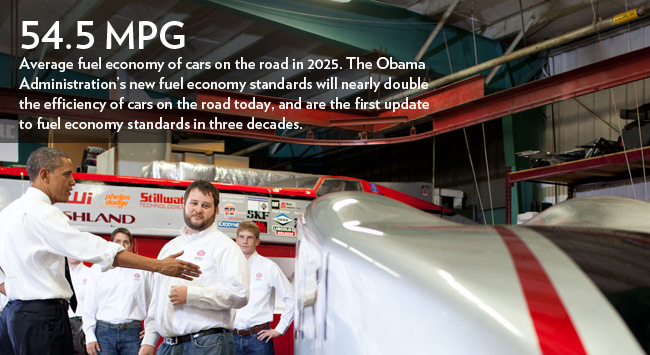
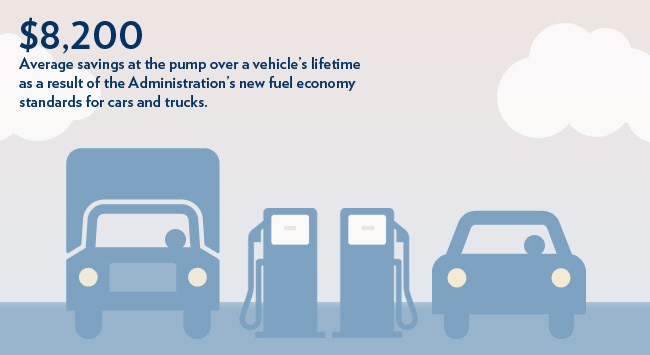
Posted by on April 25, 2014 at 6:40 PM EDTAs part of the President's Climate Action Plan, this Administration has taken historic steps to reduce greenhouse gas emissions. Our National Program for fuel efficiency standards has set increasingly stringent targets for greenhouse emission reductions for cars and light trucks. The program is expected to save consumers more than $1.7 trillion at the pump and reduce 6 billion metric tons of carbon pollution over the lifetimes of new vehicles – more carbon dioxide than the United States emitted in all of 2012.
Learn more about Energy and EnvironmentPresident Obama Visits Mudslide Recovery Efforts in Washington State
Posted by on April 23, 2014 at 10:35 AM EDT
President Barack Obama and Washington Gov. Jay Inslee view the mudslide damage from Marine One, in Oso, Wash., April 22, 2014.(Official White House Photo by Pete Souza) (Official White House Photo by Pete Souza)
Yesterday, President Obama visited Oso, Washington to tour damage from last month’s mudslide there. President Obama also met with families who lost loved ones, and spoke with some of the first responders who have been working around the clock to help the community recover.
Disaster response began immediately after the mudslide, President Obama said, including a search and rescue team deployed to locate and recover victims followed by an emergency declaration to provide necessary resources for first responders and a major disaster declaration to help residents and business owners rebuild.
“Today, that work continues,” President Obama said.
There are still families who are searching for loved ones. There are families who have lost everything, and it’s going to be a difficult road ahead for them. And that’s why I wanted to come here -- just to let you know that the country is thinking about all of you and have been throughout this tragedy.
We’re not going anywhere. We’ll be here as long as it takes.
Learn more about Energy and EnvironmentTools You Can Use: Earth Day Edition
Posted by on April 22, 2014 at 1:30 PM EDT
Today is Earth Day, an important time to reflect on the importance of protecting the future health of our planet in the face of climate change.
But this challenge is bigger than one day of action, and we all have to play a role in forging a healthier, greener and better world for our children-- not just on Earth Day, but every day.
Here are some great tools to help you do your part throughout the year by saving energy and increasing energy efficiency at home and on the road.
How energy efficient is your home?
- Your home's Home Energy Yardstick score on a scale of 1 to 10
- Insights into how much of your home's energy use is related to heating and cooling versus other everyday uses like appliances, lighting, and hot water
- Links to guidance from ENERGY STAR on how to increase your home's score, improve comfort, and lower utility bills
- An estimate of your home's annual carbon emissions
Learn more about Energy and EnvironmentOn Earth Day, a Commitment to Climate Action
Posted by on April 22, 2014 at 10:30 AM EDT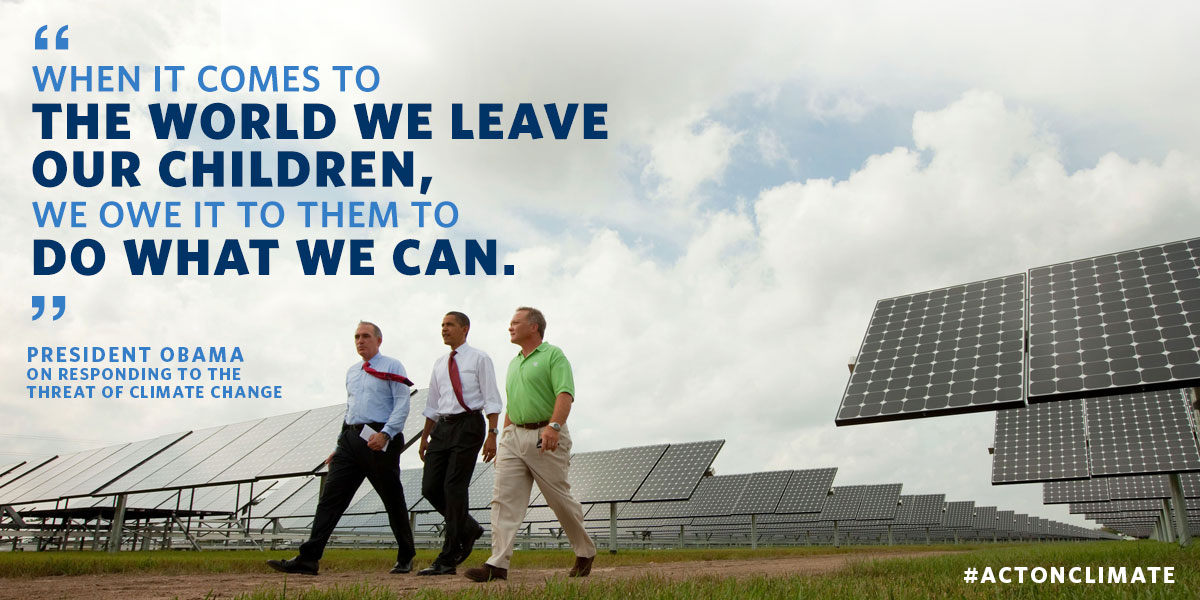
Forty-five years ago, an oil well being drilled off the coast of Santa Barbara, California blew out. At the time, it was the worst oil spill in U.S. history. Forty-five years ago, too, the Cuyahoga River in Cleveland, Ohio, caught fire—again. Cities from New York to Philadelphia to Los Angeles were regularly blanketed in harmful smog.
One year later, inspired by the bipartisan efforts of Democratic Senator Gaylord Nelson and Republican Congressman Pete McCloskey, 20 million Americans took part in the first Earth Day demonstrations. Across the country, people gathered in the streets, in parks, and on college campuses to call for air, water, and wildlife protections. The strength of Americans’ convictions led to the creation of the Environmental Protection Agency and the passage of the Clean Air Act, the Clean Water Act, and the Endangered Species Act. As a result, our air is safer to breathe, our water is safer to drink, and more of our natural resources are protected for future generations.
Learn more about Energy and Environment
- &lsaquo previous
- …
- 36
- 37
- 38
- 39
- 40
- 41
- 42
- 43
- 44
- …
- next &rsaquo
Related Videos
-
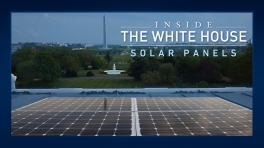 May 09, 2014 9:21 AM
Inside the White House: Solar Panels
-
 September 01, 2016 9:25 PM
President Obama Delivers a Statement to the Press
White House Blogs
- The White House Blog
- Middle Class Task Force
- Council of Economic Advisers
- Council on Environmental Quality
- Council on Women and Girls
- Office of Intergovernmental Affairs
- Office of Management and Budget
- Office of Public Engagement
- Office of Science & Tech Policy
- Office of Urban Affairs
- Open Government
- Faith and Neighborhood Partnerships
- Social Innovation and Civic Participation
- US Trade Representative
- Office National Drug Control Policy