Energy and Environment Latest News
USDA’s Climate Hubs: Providing Targeted Solutions to Modern Challenges
Posted by on February 5, 2014 at 1:51 PM EDTEd. note: This is cross-posted from the U.S. Department of Agriculture blog. See the original post here.
America’s farmers, ranchers and forest landowners face a complex and ever-changing threat in the form of a changing and shifting climate. The past three years alone have brought some of the most severe and devastating floods, droughts and fires our nation has experienced in recent history.
While no individual event can be linked to climate change, extreme weather conditions are increasingly impacting our farmers, ranchers and forest owners, to the detriment of their bottom lines, our food supply, and the future security of our farm economy.
We need a strategy that strengthens agriculture’s response to the impacts of a changing and shifting climate. Our farmers and ranchers need new and better tools to respond and prepare for the challenges of drought, heat stress, excessive moisture, longer growing seasons and changes in pest pressure.
Learn more about Energy and EnvironmentPutting the Spotlight on Federal Collaboration
Posted by on February 4, 2014 at 2:28 PM EDTEvery day in my job I am inspired by the innovative solutions being brought forth by Federal employees. All over the country, Federal agencies are collaborating to help achieve the goals set by the President’s Executive Order on Federal Leadership in Environmental, Energy and Economic Performance. We knew their work could be replicated across the Nation, but we needed a platform to highlight their results and spread the word.
That’s why we launched the GreenGov Spotlight Communities initiative last year. CEQ asked agencies to tell us where they were working collectively to leverage regional resources toward a common goal, and we chose six projects to focus on. After a year of tracking progress and compiling results, I am excited to share with you the accomplishments of these projects. From cutting costs to reducing carbon emissions, these local efforts show how Federal agencies can lead by example in the areas of energy and sustainability:
- The Federal Bike to Work Month Challenge increased bicycle commuting by Federal employees through a month long contest to see which agency could recruit the most riders and bike the most miles. The project included 2,100 riders making 20,000 trips and riding nearly 240,000 miles. This is equivalent to saving roughly 240,000 pounds of CO2 emissions.
- Relevant Federal and local agencies collaborated on creating a National Capital Region Climate Risks Preparation and Adaptation Plan focused on past flooding events at the Internal Revenue Service (IRS) building to evaluate risks and vulnerabilities on agency operations. Participants held an all-day session to consider sea level rise and extreme weather impacts projected for the long-term, and are moving forward with establishing priorities for creating a climate preparation and adaptation plan for the IRS building and surrounding areas that is expected to be adaptable to many federal building in the National Capital Region.
- The Comparison of Non-Traditional Water Treatment Cooling Towers project analyzed several non-chemical cooling tower treatment systems and found that the GSA Federal Center in Denver could reduce building operation costs through decreased water and chemical costs and improved chiller energy efficiency. In fiscal year 2012, the project helped save 318,135 gallons of water and more than $1,700 in costs.
- The Car Sharing pilot saw the Peace Corps researching potential opportunities with multiple agencies for vehicle sharing partnerships. The pilot study found that convenience, flexibility, time efficiency, cost, and reliability were key factors that influenced staff willingness to utilize car sharing services. GSA’s new car sharing pilot program will build on lessons learned and challenges identified for future research.
- Seattle Federal Executive Board’s Business Case for Sustainability compiled sustainability business case stories from the Seattle Federal agency community to encourage shared sustainability practices across the Federal Government. The stories allowed the SFEB to monetize savings and efficiencies; develop processes, communication strategy, resources and tools for other FEBs to replicate; and publicize efforts contributing to a larger community impact.
- The Federal Aggregated Solar Procurement Pilot involved multiple Federal agencies working together to demonstrate that combined procurement offers economies of scale, resulting in lower electricity bills for individual sites and increased renewable energy production. Solar site surveys were conducted at the potential properties and once the project is completed, it has the potential to serve as a model for how Federal entities nationwide can jointly procure renewable energy for their sites.
Jon Powers is the Federal Environmental Executive at the Council on Environmental Quality.
Learn more about Energy and EnvironmentWhite House Releases Implementation Plan for the National Strategy for the Arctic Region
Posted by on January 30, 2014 at 2:09 PM EDTToday the White House released the Implementation Plan for the National Strategy for the Arctic Region. The Administration solicited input from Alaska Natives, the State of Alaska, Congress, academia, industry and others to develop an Implementation Plan that sets forth the guidelines for Federal Departments and Agencies to execute the National Strategy for the Arctic Region. The Implementation Plan complements and builds upon existing initiatives by Federal, State, local, and tribal authorities, the private sector, and international partners, and also focuses efforts where opportunities exist and action is most needed. It is designed to meet the reality of a changing Arctic environment and uphold our interests in safety and security, protect the environment, and work with international partners to pursue our global objective of combating the effects of climate change as described in the President’s Climate Action Plan.
While the Implementation Plan is designed to guide the activities of Federal Departments and Agencies, successful implementation will depend upon active engagement and coordination with Alaska Natives and the State of Alaska. The Implementation Plan will be reviewed on an annual basis to ensure that progress continues to be made in positioning the United States to best prepare and respond to changes, challenges, and opportunities in the Arctic region. Progress on implementation actions by Federal Departments and Agencies will be provided through an annual report to the President.
Patrick Ventrell is Director of Communications for the National Security Advisor and Assistant Press Secretary, National Security Council Staff.
Learn more about Energy and EnvironmentPromoting Green Goods Trade to Address Climate Change
Posted by on January 24, 2014 at 4:02 PM EDTLast June, President Obama unveiled his Climate Action Plan to combat climate change through domestic and international action. In his Georgetown speech announcing the plan, the President directed his Administration to “launch negotiations toward global free trade in environmental goods and services, including clean energy technology, to help more countries skip past the dirty phase of development and join a global low-carbon economy.” This week, the United States and like-minded trading partners took an important step in pushing forward this initiative, which will support green jobs here at home and level the playing field for our exporters abroad.
Today the United States announced plans for a new initiative with 13 other partner countries – find the list here – to eliminate tariffs on environmental goods in the World Trade Organization (WTO). The countries participating in today’s announcement account for 86 percent of global trade in environmental goods, such as such as solar water heaters, wind turbines, and catalytic converters.
Eliminating tariffs on renewable and clean energy technologies can make them cheaper and more accessible for everyone. Tariffs add unnecessary costs to the technologies needed to fight pollution and protect the environment, such as water filtration and renewable energy technologies. Total global trade in environmental goods totals nearly $955 billion annually, and some countries currently apply tariffs as high as 35 percent.
Learn more about Energy and EnvironmentA Renewed Commitment to Unleashing Open Data about the Earth
Posted by on January 22, 2014 at 3:08 PM EDTData about the Earth have long been vital to our Nation’s progress. Thomas Jefferson looked to Lewis and Clark to collect and bring back weather, water, and other data from their expeditions, and used those data to guide the development of frontier settlements and spur economic growth.
That tradition continues today on a global scale, as the United States and other nations collect and share high quality data about the Earth that can help save lives and grow the economy. Data about weather systems, crops, and ecosystems, for example, help growers plan for planting and harvesting, help speed relief to disaster victims, and provide accurate information to decision makers and resource managers in every region of the country.
Many nations around the world invest in the collection of data about the Earth, using a diverse array of sophisticated scientific instruments, and storing data that are collected in many different formats. Cooperation among partner nations is critically important to ensuring that scientists, researchers, decision makers, and innovators can extract the best value from these large and diverse datasets—wherever they may originate.
The United States works to achieve this goal by collaborating closely with international partners as part of the Group on Earth Observations, or GEO.
Last week, at a series of meetings in Geneva, the United States marked its founding role in establishing GEO a decade ago—which today comprises 90 members and 77 participating organizations—and celebrated an important milestone as GEO’s charter was renewed for another 10 years.
Learn more about Energy and Environment, TechnologyInvesting in Solutions: Leaders in Finance and Climate
Posted by on January 17, 2014 at 4:18 PM EDTEditor's Note: This blog introduces readers to Alka Banerjee, Managing Director at S&P Dow Jones Indices.
This week, I participated in an event at the White House on Women Leaders in Climate Finance and Investment that highlighted the pioneering role women leaders in the finance sector are playing to mainstream climate change into finance and investment decisions. Women around the world are often the first to feel the effects of climate and at the same time can offer unique perspectives and solutions.
I was privileged to be part of a conversation on “making climate finance work for growth,” where we discussed that a consistent global policy framework on climate change could make implementation of scalable solutions practical and possible. At S&P Dow Jones Indices, we are working to advance these solutions by creating equity indices -- tools for investment products like exchange traded funds -- which respond to consumer demand for products that help address climate change. We have created specialized indices, such as the global clean energy index, and variations of mainstream indices, such as the S&P U.S. Carbon Efficient index and the S&P/IFCI Emerging Markets Carbon Efficient index that weight companies by their carbon emissions, with higher weights going to lower emitting companies. These indices help investors choose whether to invest in companies with high carbon pollution. Over time, we have seen investor perceptions change from excluding large polluting companies from their portfolios for environmental reasons, to doing so to manage risk, to understanding that companies with progressive environmental standards are poised for more sustainable, long-term growth. We are also seeing some investors seek to completely avoid fossil fuel investment in their portfolios.
The event also included Administration officials such as Presidential advisor John Podesta, Chair of the Council on Environmental Quality Nancy Sutley, Domestic Policy Council Director for Energy and Climate Change Dan Utech, Ambassador-at-Large for Global Women’s Issues Cathy Russell, and President and CEO of the Overseas Private Investment Corporation Elizabeth Littlefield, who described efforts under the President’s Climate Action Plan to make U.S. cities and states more resilient, support good clean energy and clean technology jobs, and help developing countries adapt to climate change and access renewable energy. U.S. Senator Jeanne Shaheen (NH) discussed her energy efficiency legislation, which supports investment in clean energy technologies that help to reduce carbon pollution.
The discussions revealed some key challenges and unique initiatives associated with mainstreaming climate change into finance. For example, Lindene Patton, Chief Climate Product Officer of Zurich Insurance Group, discussed the insurance industry’s role in managing climate risks and a commitment by Zurich to provide climate-smart insurance products and invest up to $1 billion in “green bonds,” which would help address climate change. Nancy Pfund, Founder and Managing Partner of DBL Investors, stated that while many private investments in green energy make good business sense and several have delivered good returns to their investors, the challenge is to attract positive attention from all sectors to the benefits of these options.
The event brought to focus the real desire to make a positive social and environmental impact through investment decisions and showed that women are playing an increasingly crucial role to make this happen.
Alka Banerjee is Managing Director at S&P Dow Jones Indices
- &lsaquo previous
- …
- 40
- 41
- 42
- 43
- 44
- 45
- 46
- 47
- 48
- …
- next &rsaquo
Related Videos
-
 May 09, 2014 9:21 AM
Inside the White House: Solar Panels
-
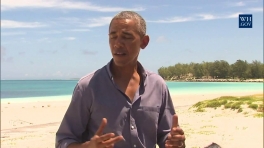 September 01, 2016 9:25 PM
President Obama Delivers a Statement to the Press
White House Blogs
- The White House Blog
- Middle Class Task Force
- Council of Economic Advisers
- Council on Environmental Quality
- Council on Women and Girls
- Office of Intergovernmental Affairs
- Office of Management and Budget
- Office of Public Engagement
- Office of Science & Tech Policy
- Office of Urban Affairs
- Open Government
- Faith and Neighborhood Partnerships
- Social Innovation and Civic Participation
- US Trade Representative
- Office National Drug Control Policy