Energy and Environment Latest News
New Steps to Strengthen the Nation’s Energy Infrastructure
Posted by on January 9, 2014 at 4:40 PM EDTToday, President Obama signed a memorandum establishing the federal government’s first Quadrennial Energy Review (QER) process, fulfilling an important commitment from his Climate Action Plan and ensuring that federal energy policies continue to meet the nation’s economic, environmental, and security goals. Over the next four years, the QER will provide a comprehensive review of these policies in the context of a changing energy landscape.
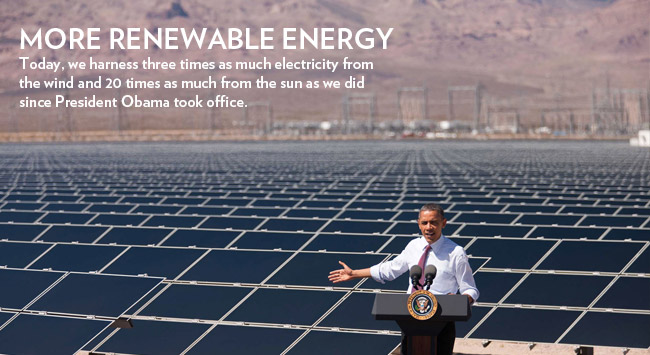
The ways that this country produces and uses energy are changing in ways that few people could have predicted a decade ago. As an Administration we've pursued an all-of-the-above energy strategy, and, as a result, we are now more energy secure than at any time in recent history, and we have cut our carbon pollution in the process. We have more than doubled our production of electricity from wind and solar since the President took office, and we have set a goal to double it again by 2020.
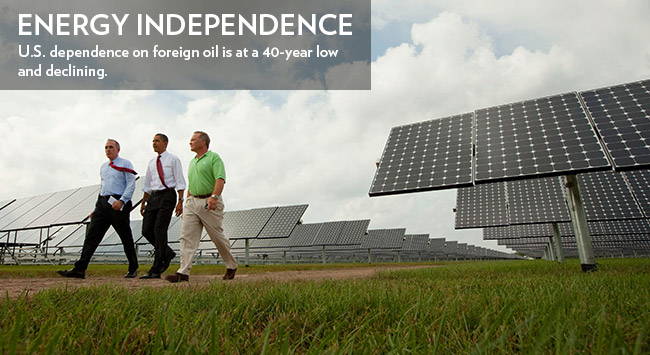
We are also producing more of our own conventional fuels. The United States is now the number one natural gas producer in the world, and, for the first time in decades, the United States is now producing more oil at home than it imports from abroad. These are important steps to reduce America’s dependence on foreign oil and responsibly leverage our nation’s home-grown energy resources.
Learn more about Energy and EnvironmentWe the Geeks: “Polar Vortex” and Extreme Weather
Posted by on January 8, 2014 at 5:37 PM EDTWatch today's "We the Geeks" at 2:00 p.m. ET right here, or on the White House Google+ page.
Here at the White House, while we’re beginning to thaw from this week’s bone-chilling deep freeze, our discussions about the science of weather extremes are heating up.
We know that no single weather episode proves or disproves climate change. Climate refers to the patterns observed in the weather over time and space – in terms of averages, variations, and probabilities. But we also know that this week’s cold spell is of a type there’s reason to believe may become more frequent in a world that’s getting warmer, on average, because of greenhouse-gas pollution.
Join us this Friday, January 10th at 2:00 p.m. ET for We the Geeks: "Polar Vortex" and Extreme Weather, for a conversation with leading meteorologists, climate scientists, and weather experts about why temperatures dipped to such frigid lows this week, how weather experts turn raw data into useful forecasts, and what we know about extreme weather events in the context of a changing climate.
Learn more about Energy and EnvironmentThe Clean Energy Economy in Three Charts
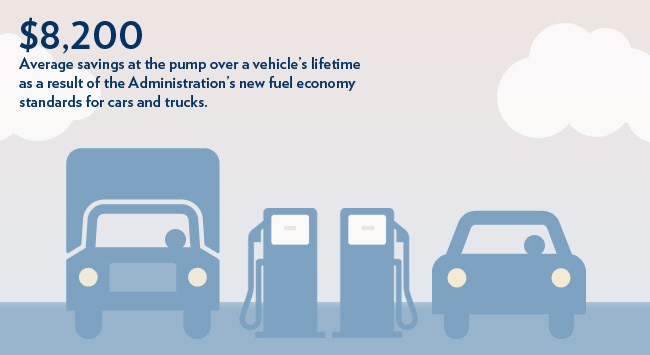
Posted by on January 6, 2014 at 6:10 PM EDTOver the last five years, American inventors and investors have delivered significant progress in developing and deploying key clean energy technologies, supported by Administration policies. Electricity production from solar and wind has doubled. Our cars and trucks go further on a gallon of gasoline, saving families money at the pump. And in 2012, U.S. carbon pollution fell to its lowest level in nearly 20 years. The simple fact is that key clean energy technology costs are continuing to come down, and these technologies are producing more American energy than ever before.
Wind Energy
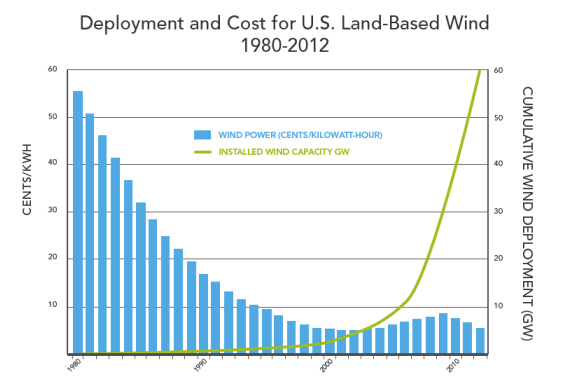
In 2012, wind was America’s largest source of new electricity generation capacity, accounting for 43 percent of all new installations. Altogether the United States has deployed about 60 gigawatts of wind power — enough to power 15 million homes. This growth in wind deployment has spurred more U.S. manufacturing. A recent DOE wind market report estimates 72 percent of the wind turbine equipment installed in the United States last year was made by domestic manufacturers, nearly tripling from 25 percent in 2006-2007. And according to the American Wind Energy Association, by 2012 there were well over 80,000 workers employed in wind-related jobs in the U.S.
Supported by Administration investments, generation of electricity from wind and solar has more than doubled, and the costs of solar and wind technologies have come down significantly.
 Learn more about Economy, Energy and Environment
Task Force on Climate Preparedness and Resilience Hosts Inaugural Meeting
Posted by on December 16, 2013 at 6:00 PM EDT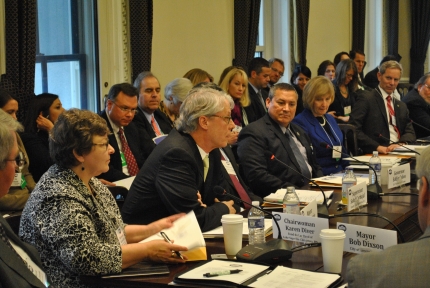
Des Moines Mayor Frank Cownie shares his climate resilience priorities in roundtable discussion with the with members of the President’s State, Local, and Tribal Leaders Task Force on Climate Preparedness and Resilience. (Photo by Office of Intergovernmental Affairs)
Last week, members of the State, Local and Tribal Leaders Task Force on Climate Preparedness and Resilience participated in their inaugural meeting at the White House. President Obama created this Task Force in his Climate Action Plan to advise the Administration on how the Federal government can support communities across the country that are dealing with the impacts of climate change. In 2012 alone, the costs of weather disasters exceeded $110 billion in the United States – including the terrible destruction caused by Hurricane Sandy. Climate change is increasing the frequency and intensity of these kinds of events – as well as the costs and public health impacts associated with them.
From Alabama to Guam, from Los Angeles to Philadelphia, state, local, and tribal leaders are on the front lines of dealing with extreme weather, sea level rise, and other impacts of climate change. This diverse group of elected officials brought their expertise and experience in building community resilience to our first meeting. Task Force members discussed ways to improve coordination to protect critical infrastructure, public resources, and emphasize pre-disaster preparedness. They also shared ideas about the types of information and tools that would be most useful in confronting the impacts of climate change.
Learn more about Energy and EnvironmentTask Force on Climate Preparedness and Resilience Hosts Inaugural Meeting
Posted by on December 16, 2013 at 3:08 PM EDT
Secretary of Transportation Anthony Foxx, White House Director of Intergovernmental Affairs David Agnew, Council on Environmental Quality Chair Nancy Sutley, Secretary Shaun Donovan, and FEMA Associate Administrator David Miller participate in roundtable discussion with members of the State, Local, and Tribal Leaders Task Force on Climate Preparedness and Resilience. (White House IGA/CEQ)
Last week, members of the State, Local and Tribal Leaders Task Force on Climate Preparedness and Resilience participated in their inaugural meeting at the White House. President Obama created this Task Force in his Climate Action Plan to advise the Administration on how the Federal government can support communities across the country that are dealing with the impacts of climate change. In 2012 alone, the costs of weather disasters exceeded $110 billion in the United States – including the terrible destruction caused by Hurricane Sandy. Climate change is increasing the frequency and intensity of these kinds of events – as well as the costs and public health impacts associated with them.
From Alabama to Guam, from Los Angeles to Philadelphia, state, local, and tribal leaders are on the front lines of dealing with extreme weather, sea level rise, and other impacts of climate change. This diverse group of elected officials brought their expertise and experience in building community resilience to our first meeting. Task Force members discussed ways to improve coordination to protect critical infrastructure, public resources, and emphasize pre-disaster preparedness. They also shared ideas about the types of information and tools that would be most useful in confronting the impacts of climate change.
Learn more about Energy and EnvironmentPartnering to End Commodity-Driven Tropical Deforestation
Posted by on December 12, 2013 at 5:40 PM EDTLast week, I joined Senior Advisor to the President, Valerie Jarrett, to lead a meeting with CEOs and top executives from global consumer companies, including Unilever, Nestle, Walmart, Coca-Cola and others. We gathered to discuss strategies for how we can work together to improve the environmental sustainability of supply chains for top companies. Nancy Sutley, Gayle Smith, USAID Administrator Raj Shah, Drew O’Brien, State Department Representative for Global Partnerships, and I joined the discussion on these companies’ notable efforts to reduce their impacts on global deforestation and reduce their contribution to climate change, while continuing to preserve their bottom line and their status as global market-makers.
These companies recognize that we can make our planet safer and cleaner while still growing the economy and creating good jobs. In the last 3 ½ years, as we have promoted energy efficiency, improved the fuel economy of our cars and trucks, and incentivized renewable energy, the U.S. private sector has created 7.8 million jobs. A climate-resilient, low-carbon, clean energy economy can be an engine of growth for decades to come. As we continue to support growth and prosperity around the world, we must remain good global stewards and ensure that we’re leaving a cleaner and healthier planet for our children. We discussed with the CEOs how we are advancing that goal through an innovative public-private partnership included in President Obama’s Climate Action Plan – the Tropical Forest Alliance 2020.
Learn more about Energy and Environment
- &lsaquo previous
- …
- 42
- 43
- 44
- 45
- 46
- 47
- 48
- 49
- 50
- …
- next &rsaquo
Related Videos
-
 May 09, 2014 9:21 AM
Inside the White House: Solar Panels
-
 September 01, 2016 9:25 PM
President Obama Delivers a Statement to the Press
White House Blogs
- The White House Blog
- Middle Class Task Force
- Council of Economic Advisers
- Council on Environmental Quality
- Council on Women and Girls
- Office of Intergovernmental Affairs
- Office of Management and Budget
- Office of Public Engagement
- Office of Science & Tech Policy
- Office of Urban Affairs
- Open Government
- Faith and Neighborhood Partnerships
- Social Innovation and Civic Participation
- US Trade Representative
- Office National Drug Control Policy