Energy and Environment Latest News
A Farm Bill Will Grow Our Economy While Protecting the Environment
Posted by on December 12, 2013 at 4:15 PM EDTThe White House Rural Council recently released a report on the economic importance of passing a comprehensive Food, Farm, and Jobs Bill. The report outlined the importance of the Farm Bill to our nation and the many ways that the legislation affects and benefits Americans every day.
One of those ways is by supporting the ongoing conservation of America’s natural resources.
Conservation is the foundation of a productive agriculture sector and a strong rural economy. By protecting our soil, water and wildlife habitat, farmers and ranchers are helping to ensure that our working lands are wild areas are productive for years to come. They’re also supporting outdoor recreation for millions of American sportsmen. From hunting and fishing, to camping and hiking, these outdoor activities add more than $640 billion to our economy every year.
Improving Energy Efficiency and Creating Jobs Through Weatherization
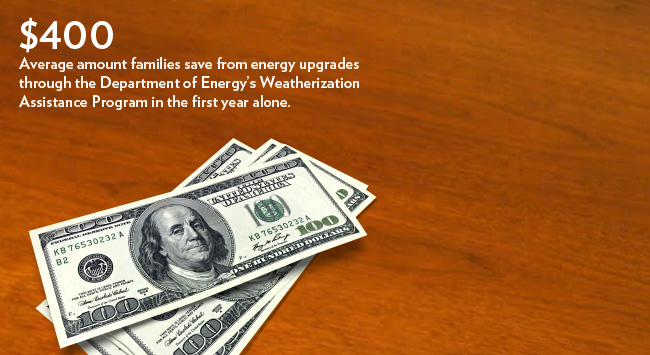
Posted by on December 9, 2013 at 1:00 PM EDTSince 2009, the Energy Department’s Weatherization Assistance Program has helped improve the energy efficiency, comfort and health of hundreds of thousands of homes across the nation. With the support of Recovery Act funding as well as annual appropriations – matched by over $200 million each year from utilities, private investors and state and local government – this program has also helped train and employ thousands of weatherization professionals.
As a result of this work, these low-income households are now saving $250-$500 a year on their energy bills. More broadly, since 2009, the Department’s Weatherization Assistance Program, its Building Technologies Office, and our partners at the Department of Housing and Urban Development have provided energy efficiency improvements to over 1.6 million homes. These cumulative upgrades will save nearly $16.4 billion in energy costs over the life of these measures and avoid more than 85 million tons of carbon emissions – equivalent to taking 17.7 million cars off the road – according to estimates from the Energy Department’s Oak Ridge National Laboratory.
Today, I’m attending an event hosted by the White House, in collaboration with the National Association of State Community Services Programs (NASCSP), to highlight how the weatherization industry is creating skilled jobs and technology innovation and helping to reach the President’s goal of doubling U.S. energy productivity by 2030. State, local and business leaders from across the country will join me and my colleagues in the federal government to discuss how weatherization has made a positive impact in the lives of American families while supporting American businesses.
You can watch the event live from 2 PM to 4 PM EST today at www.whitehouse.gov/live and read more on the Energy Department’s Weatherization Assistance Program on Energy.gov.
David Danielson is the Assistant Secretary for Energy Efficiency and Renewable Energy
Learn more about Energy and EnvironmentLeading By Example With Renewable Energy and Energy Management
Posted by on December 5, 2013 at 5:04 PM EDTPresident Obama has challenged the Federal Government to lead by example to reduce energy use, pollution and waste in their operations, and save taxpayer dollars as a result. Here at the White House Council on Environmental Quality, we work with the Federal family to help them achieve these goals, and we have seen Federal agencies demonstrate enormous leadership and measurable success as they take this challenge head on.
Following the President’s direction, Federal agencies have reduced their greenhouse gas emissions by 15 percent since 2008, and are on track to reach existing renewable energy goals. To build on these efforts, President Obama today issued a Presidential Memorandum on Federal Leadership on Energy Management that directs agencies to go even further. The Memorandum establishes a new target for Federal agencies to consume 20 percent of their electricity from renewable sources such as solar and wind by 2020 – that’s more than double the current goal of 7.5 percent. The President first outlined this new goal in his June Climate Action Plan to curb carbon pollution and protect communities from extreme weather and other climate impacts. Meeting this renewable energy target will reduce pollution in our communities, promote American energy independence, and support homegrown energy produced by American workers. It also supports the President’s goal to double renewable energy in this nation by 2020.
To improve agencies’ ability to manage energy consumption and reduce costs, the Memorandum directs them to use Green Button, a tool developed by industry in response to a White House call-to-action that provides utility customers with easy and secure access to their energy usage information in a consumer-friendly format. Agencies have already reduced energy use per square foot in Federal buildings by more than 9 percent since FY 2008. Green Button will help them identify areas where they can further update their building-performance and energy-management practices to save taxpayer dollars. Agencies will also use the U.S. Environmental Protection Agency’s Energy Star Portfolio Manager to ensure Federal facilities are measuring their energy and water metering data and better managing energy use.
I look forward to working with agencies as they continue to lead by example in their operations. Meeting the President’s goals will help us responsibly manage taxpayer resources, save energy, and promote healthy American communities.
Jon Powers is the Federal Environmental Executive at the Council on Environmental Quality.
Learn more about Energy and EnvironmentExpanded “Green Button” Will Reach Federal Agencies and More American Energy Consumers
Posted by on December 5, 2013 at 11:31 AM EDTToday, President Obama issued a memorandum directing Federal agencies to redouble efforts to use renewable energy and manage their energy usage more efficiently and effectively. In addition to setting an ambitious new target for Federal agencies to increase their consumption of renewable energy to 20% of their total amount of electric energy use by 2020, the memorandum instructs agencies to incorporate the “Green Button” data standard into their energy management practices.
The Green Button Initiative is an industry-led response to a White House call-to-action to provide utility customers with easy and secure access to their own energy usage information in a consumer-friendly and computer-friendly format. Today, 48 utilities and electricity suppliers serving more than 59 million homes and businesses have committed to enable their customers with “Green Button” access to help them save energy and shrink their bills. Of these, over 42 million household and business customers (reaching well over 100 million Americans) already have access to their Green Button energy data.
Following the President’s direction, the Federal Government is committing to use the Green Button data standard—an industry-developed consensus-driven method for accessing and transmitting energy-consumption information—within its own operations and facilities, making it easier for building managers to use innovative analytical tools, apps, and services related to energy usage, and helping Federal agencies to better manage their own energy consumption and reduce greenhouse gas emissions.
Specifically, GSA, DOE and EPA will create and initiate a pilot to use Green Button at Federal facilities. Based on the outcomes of this pilot, these agencies will issue guidance for other facilities to follow suit by, where feasible, incorporating Green Button into reporting, data analytics and automation, and processes in consultation with their local utilities. The end goal will be to enter data into EPA’s Energy Star Portfolio Manager for benchmarking and reduce energy costs and usage across the Federal Government.
Dozens of electric utilities have already embraced the Green Button data standard, making it easier for customers to securely download and transmit their own energy-usage data. Building on the President’s memorandum issued today, we’re excited by recent decisions by utilities to adopt or further expand their support for Green Button.
Learn more about Energy and Environment, , TechnologyOutlining U.S. Climate Progress On the World Stage
Posted by on November 20, 2013 at 11:29 AM EDTThis week, I am in Warsaw, Poland at the United Nations climate negotiations (COP 19) spreading the word about the President’s Climate Action Plan to our international partners.
Since the President launched his plan in June of this year, U.S. government agencies have been working to put the plan into action and make progress toward securing a healthy planet for future generations. The plan seeks to cut carbon pollution in the U.S., prepare American communities for potential climate change impacts and help lead international efforts to find a global solution to climate change.
On Monday, I spoke on a panel about the progress we are achieving through the Climate Action Plan. I was joined by EPA Deputy Administrator Bob Perciasepe, Deputy Assistant Secretary Jonathan Pershing from the Department of Energy, and Global Climate Change Coordinator Kit Batten from USAID, as well as by Secretary of State John Kerry through a video message. Together, we outlined the important actions underway, including carbon pollution standards for power plants under the Clean Air Act, significant investments in clean energy technology and energy efficiency, and global partnerships to reduce deforestation and advance low emission development.
Taken together, these actions will help us to achieve our international commitment to reduce U.S. greenhouse gas emissions in the range of 17 percent below 2005 levels by 2020 and will position the U.S. as a leader in the new global low-carbon economy.
Even in the context of ambitious actions to mitigate the causes of climate change, we know we must act to prepare communities for the unavoidable impacts of climate change, which we are already seeing in bigger and more frequent storms, droughts, floods, and other severe weather events. On November 1st, the President signed an Executive Order directing Federal agencies to take necessary steps to help communities to better prepare for the impacts of climate change. In particular, the Order directed Federal agencies to: remove barriers to and incentivize climate-resilient investments; improve natural resource sustainability by making common sense improvements to land- and water-related policies, programs, and regulations; and provide information, data, and tools for climate change preparedness through a climate data platform to inform decisions by state, local, and private-sector leaders.
At the same time, the President created the Task Force on Climate Preparedness and Resilience – a team of state, local, and tribal leaders from across the United States who will use their first-hand experience in preparedness and resilience to advise federal action.
Even with the President’s actions to reduce carbon pollution and prepare our communities for impacts we are currently experiencing, one thing is certain – we can’t do this alone. Everyone – private companies, federal governments, non-profits, think tanks, developed and developing country citizens – must come together and take their part in a global solution to climate change.
Nancy Sutley is Chair of the White House Council on Environmental Quality
Learn more about Energy and Environment, Foreign PolicyWeekly Address: Taking Control of America’s Energy Future
Posted by on November 16, 2013 at 7:00 AM EDTIn his weekly address, President Obama discusses progress in American energy and highlights that we are now producing more oil at home than we buy from other countries for the first time in nearly two decades. We reached this milestone in part not only because we’re producing more energy, but because we’re wasting less energy, and as a result, we are also reducing our carbon emissions while growing the economy.
Transcript | Download mp4 | Download mp3
Learn more about Energy and Environment
- &lsaquo previous
- …
- 43
- 44
- 45
- 46
- 47
- 48
- 49
- 50
- 51
- …
- next &rsaquo
Related Videos
-
 May 09, 2014 9:21 AM
Inside the White House: Solar Panels
-
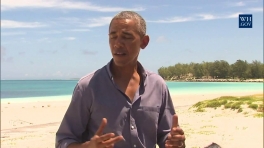 September 01, 2016 9:25 PM
President Obama Delivers a Statement to the Press
White House Blogs
- The White House Blog
- Middle Class Task Force
- Council of Economic Advisers
- Council on Environmental Quality
- Council on Women and Girls
- Office of Intergovernmental Affairs
- Office of Management and Budget
- Office of Public Engagement
- Office of Science & Tech Policy
- Office of Urban Affairs
- Open Government
- Faith and Neighborhood Partnerships
- Social Innovation and Civic Participation
- US Trade Representative
- Office National Drug Control Policy