

Energy and Environment Latest News
Carbon, Conservation, and Community – Protecting Military Readiness and Natural Resources While Promoting Economic Development in Rural Communities
Posted by on November 5, 2013 at 10:18 AM EDT
Joe Knott is being honored as a Veteran Advancing Clean Energy and Climate Security Champion of Change.
I grew up in Cincinnati, OH, as the oldest of five children. At seventeen I made the choice to serve my country, joining the Ohio National Guard and shipping off to basic training after graduating from high school early. During my 33 years in uniform I came to realize the full meaning of service to one’s country and learned to always be thankful and “give back” for the privilege of living in the greatest country in the world. Early in my military career I volunteered for multiple deployments to Central America, living in the mountains of Honduras while building roads and schools for those less fortunate. After returning to the U.S., I became an officer and full-time soldier, and for the next three decades had the privilege to work with uniformed and civilian professionals at all levels within the Army’s environmental and sustainability organizations.
Serving as the National Guard Bureau’s Sustainability and Energy program manager, I was responsible for sustainability education and renewable energy initiatives for all 54 States and Territories. As a senior officer, I led efforts to decrease the Army’s fossil fuel use and greatly increase renewable energy use, including the Army National Guard’s first Solar Power Purchase Agreement. While stationed at the Pentagon, I served as the program manager for the Army Compatible Use Buffer program, the Army’s premier land conservation and partnership program. Under my leadership the program conserved more than 70,000 acres of U.S. land for permanent protection of habitat and green space. After over three decades of military service, it is especially rewarding, both personally and professionally, to receive recognition from my Commander in Chief as a Champion of Change.
Shortly after my retirement from service, I joined the Compatible Lands Foundation, a non-profit land trust specializing in innovative conservation partnerships with the Department of Defense. I am currently leading a first-of-its-kind partnership between federal agencies, non-governmental organizations, academia, green investors, and industry to create the Readiness and Environmental Protection Integration program’s first forest carbon project. We are working with federal partners from the Army and National Guard Bureau along with USDA’s Natural Resources Conservation Service and the US Forest Service. Other partners include Mississippi State University and Northern Arizona University as well as the National Wild Turkey Federation.
We all realize that so much more can be accomplished together rather than individually; what matters is education, passion, and collaboration. Through this unique partnership we are developing a carbon sequestration project to protect national security, preserve natural resources and endangered species, and support local economies and rural jobs – all while sequestering more than 68,000 tons of greenhouse gases. Revenues from carbon offset sales will help finance additional climate resilience and cooperative conservation initiatives in Mississippi for the next ninety-nine years. This carbon sequestration project will also provide a template for replicating climate change mitigation initiatives across the United States, creating opportunities to sequester hundreds of thousands of tons of additional carbon each year.
During my “retirement” I am pursuing my Ph.D. at Arizona State University’s Global Institute of Sustainability with the goal of becoming a college professor. I seek to educate the next generation about climate change, the importance of renewable energy to national security, and the importance of preserving what we are all blessed to have received.
Lieutenant Colonel Joe Knott (Ret.) is the Director of Military Partnerships for the Compatible Lands Foundation, a non-profit organization specializing in innovative conservation partnerships with the Department of Defense.
Learn more about Energy and EnvironmentSaving our Future by Changing the Way We Think About Energy
Posted by on November 5, 2013 at 10:16 AM EDT
Drew Sloan is being honored as a Veteran Advancing Clean Energy and Climate Security Champion of Change.
It is a true and humbling honor to be named a Veteran Advancing Clean Energy & Climate Security Champion of Change, because the way the world engages with its energy sources in the years to come will define the life of each and every one of this planet’s inhabitants.
My experiences as an Army officer offered a clear view of the interconnections between energy – be it possession, pursuit, or production – and conflict. That view was not shaped by my time in Iraq, where some have argued American involvement was based largely on attempting to secure and safeguard energy resources. Instead, my views were shaped by the physical darkness in Afghanistan – the kind of pitch-black darkness found only in a night sky with no TVs or blinking alarm clocks to distract. In Afghanistan I lived in a region with no lights to let students study at night and no reliable power to keep shops open past sunset. It was a land locked in conflict, without energy, but filled with people deeply desiring a better life.
There is no doubt that energy access makes our lives better. It allows businesses to stay open past dark and children to study after dinner. Energy powers the modern world and modern life. People aspire to the opportunities energy provides, and rightly so – it is perhaps the greatest of all enablers and everyone deserves access.
As such, our challenge is not to restrict access to energy, but to enable it in a responsible manner. In the developing world this means focusing on sourcing energy in the cleanest ways possible, because the pursuit and production of energy is not without costs. CO2 emissions from the burning of fossil fuels have already caused extensive damage to the world’s ecosystems. This damage is the direct result of 75 percent of the world’s population obtaining energy from fossil fuels. These negative effects on our climate will only escalate if the remaining 25 percent currently living without seek access to energy in the same way. This challenge to empower the developing world to source its burgeoning energy needs through clean sources is crucially important.
Although the developing world is important, developed nations must lead the way. It is no secret that those of us in the developed world use a lot of energy – and we also waste much of that energy. This lifestyle must change. To enable that change, my software company Opower works with utilities to give customers better insight into their energy usage – insight that leads to smarter, more productive energy decisions without sacrificing quality of life. Currently communicated to more than eighteen million homes worldwide, Opower’s efforts encouraging people to make better, more efficient energy choices has saved over three terawatt hours (TWh) of energy – roughly the equivalent of the combined power needs of both Salt Lake City and St. Louis for a year – all through the empowerment of the collective to make wiser energy choices.
The parts we all play in managing our energy use in the years to come will determine the future we will share together. It is a simple truth, but a powerful challenge.
Drew Sloan is a former U.S. Army officer and currently works as a Sales Executive for the energy efficiency software company Opower and is also a Fellow with the Truman National Security Project.
Learn more about Energy and EnvironmentEnergy Independence, Military Readiness, and Economic Growth: Clean Energy Leads to National Security
Posted by on November 5, 2013 at 10:14 AM EDT
Dave Belote is being honored as a Veteran Advancing Clean Energy and Climate Security Champion of Change.
I’ve been blessed with two exciting and fulfilling careers: first as a fighter pilot, Battlefield Airman, and base commander; and now as a clean energy developer and advocate. While the two may seem unrelated, each has served the same goal – to ensure a long and prosperous future for the country I love. My lifelong commitment to national security has taught me that keeping our country safe will require more than military readiness. I’m convinced that energy independence and economic growth are equally important to our nation’s long-term prosperity. Renewable energy is at the nexus of the three.
When I moved to Nevada in 2008 to become the installation commander for Nellis Air Force Base, Creech Air Force Base, and the Nevada Test and Training Range, I knew almost nothing about clean energy development. After taking command, I learned quickly. I inherited the then-largest solar photovoltaic array on the continent, a 14-megawatt system that produced more than 25 percent of Nellis’s electricity and saved roughly $83,000 per month in energy costs during my tenure. I was also asked to help site a 110-megawatt solar tower near Tonopah, NV – not an easy task, as we had to protect sophisticated test range capabilities in the vicinity. With the help of Massachusetts Institute of Technology’s Lincoln Laboratory and its cutting-edge analysis, we found a win-win site for both the military and the solar company, allowing the project to move forward.
The Tonopah project was not unique in its siting challenges. Siting projects near Department of Defense (DoD) facilities requires consideration of impacts on radar systems, training procedures, and test facilities. Our Nevada solution became a model and led me back to the Pentagon as a civilian, where I created the DoD Siting Clearinghouse to review energy projects nationwide and promote mission-compatible development on and around military facilities. From industry we learned how renewable energy can drive a local economy by creating construction jobs, providing income for rural landowners, and increasing county tax revenues. Working with scientists and engineers, we determined how close to various military facilities we could place turbines and solar systems. We actively engaged developers and found innovative, cooperative solutions. To date the Clearinghouse has approved more than 96 percent of the requests it has received, honoring landowner rights and entrepreneurial drive while protecting the DoD’s mission.
My path has taken me to the private sector, where I am developing the types of projects I would have appreciated as a base commander – total energy surety solutions combining on-site generation, storage, and smart grid software. Apex Clean Energy has empowered me to design wind and solar energy projects specifically for military customers. At the same time, I am able to tackle larger issues by working with advocacy groups like the American Council on Renewable Energy, the Association of Defense Communities, Environmental Entrepreneurs, and the Truman Project on National Security.
The future of clean energy in our country is bright, but there is much more we can do. We need to amend the current tax structure to level the financial playing field, and I believe a refundable tax credit will bring us one step closer to cheaper capital through Master Limited Partnerships. I applaud the President’s goal of 10 gigawatts of renewable energy on public lands, but I believe we need a comprehensive review of military missions on federal lands and the outer continental shelf in order to achieve it. I firmly believe we can find the proper balance of military readiness and energy independence, and that the renewable energy facilities we build will provide jobs and revenues to support local services, creating true national security for our country.
Dave Belote, Vice President for Federal Business at Apex Clean Energy, works to create mission-compatible renewable energy solutions for military installations, public lands, and the outer continental shelf.
Learn more about Energy and EnvironmentA Better Way
Posted by on November 5, 2013 at 10:12 AM EDT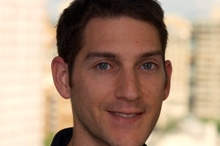
Avi Jacobson is being honored as a Veteran Advancing Clean Energy and Climate Security Champion of Change.
My career in clean energy began with silence.
The most disruptive sound on our Special Operations Task Force’s compound in Iraq was not the occasional mortar attack. It was not the controlled detonation of bombs, shells, and assorted unexploded items that were found on the old battleground that was our home. It was not the firing range or the fighter jets on full afterburner overhead.
The most disruptive sound on our secure compound was deafening silence: the sudden quiet of our diesel generator being overloaded and shutting down during the hottest part of the desert summer day. Critical communications systems were running on emergency backup batteries or not running at all. The lack of energy planning directly impacted our ability to operate.
Even when the generators ran smoothly, the reliance on diesel fuel detracted from our combat readiness. Maintaining a steady fuel supply depended on expensive airlifts and dangerous truck convoys. The dollar costs of sustaining such a complicated supply chain are high. The cost in lives of those wounded or killed on resupply missions is painful to contemplate. The burden of having to dedicate so much of our fighting force to convoy security is maddening.
Beyond power considerations, burning trash in open pits for most of the war not only subjected our troops to harmful toxins but also produced thick smoke, reducing runway visibility. This was yet another way resource management choices directly impacted the battlefield. Another was the large number of troops evacuated due to back and knee injuries from carrying heavy loads, often including batteries.
There had to be a better way and I wanted to find it.
For the military in Afghanistan and Iraq, an unconventional battlefield with no clear battlefront undermined the assumptions underlying our energy planning, as did the unexpected need to maintain and operate temporary forward operating bases for extended periods of time. And here at home, increased competition for resources as globalization lifts billions out of poverty, aging energy infrastructure, and the increasing risks of climate change are all forcing us to face the costs of our current energy system.
Through the Office of the Assistant Secretary of Defense for Operational Energy, the military is making great strides in improving energy management in deployed locations. Similarly, stateside military bases are diversifying their power sources and integrating more local renewable energy to ensure resiliency in the face of disaster.
At the Washington State Housing Finance Commission, I am working diligently to solve these society-wide problems of resource management. We have grown the Commission’s Sustainable Energy Program into a clearinghouse of information that benefits everyone from the earliest-stage Cleantech Open competitors to sophisticated Energy Services Companies. Our bond financing tools were recognized at the 2013 Better Buildings Summit as a model of public-private partnerships.
The Commission’s focus is on developing and facilitating financing models that enable clean energy technology deployment. We realize that sustainable energy requires a sustainable business model and access to capital. With a focus on the market’s demands, the Commission is driving scalable solutions for a clean energy economy.
Successes belong to your troops; failures are your own. This axiom of leadership was repeated throughout my training as an officer in the United States Air Force. It is especially poignant as I am being honored as a Veteran Advancing Clean Energy and Climate Security Champion of Change. The accomplishments for which I am being recognized – whether supporting Special Operations Forces in Iraq or facilitating the financing and deployment of clean energy projects here at home – have truly been team efforts.
Avi Jacobson is the Senior Sustainable Energy Coordinator at the Washington State Housing Finance Commission.
Learn more about Energy and EnvironmentGreatest Generation Grandparents Inspired My Passion for Energy Efficiency
Posted by on November 5, 2013 at 10:09 AM EDT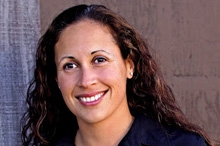
Andrea Marr is being honored as a Veteran Advancing Clean Energy and Climate Security Champion of Change.
My grandparents were green before green was trendy. They had a solar hot water heater on the roof of their home and a garden where they grew most of their vegetables. My grandfather built a sunroom attached to the house, and during winters in Colorado they had only to crack the door of the sun room and warm air heated by the sun would flow into the living room. They lived in a suburb very much on the grid, but embraced self-sufficiency as much as they could. The modifications they made to their home and the way they lived saved them money, utilized less energy, and improved their quality of life.
I grew up instilled with this notion of conservation, but I have more in common with my grandparents than that. They both served in the Navy during World War II – my grandmother as a yeoman, my grandfather as a pilot. Like them, I wanted to serve my country; eventually I too joined the Navy.
I loved the military and completed five years of service before retiring, confident there was another way I could contribute to our great nation and have an impact: by promoting clean energy.
We stand at an incredible moment for clean energy. Solar is on the verge of grid parity – by 2017, the cost of solar in the U.S. will be truly competitive. Wind energy has the capacity to power over 15 million homes and that number is rapidly increasing. But we also have a huge opportunity to reduce the amount that we consume, opting for smart technologies and common sense approaches to energy reduction. As a nation, we have the chance to emulate my grandparents by using less energy and saving money while improving our lives.
In the last year my work has focused largely on educational facilities, from middle schools to universities. I’ve discovered auditoriums with the lights and air conditioning left on for the entire summer following graduation. I’ve found classrooms where kids are getting less fresh air than recommended and places where the A/C is left on high but doesn’t work properly and never actually cools a room.
There is nothing political about energy efficiency. There is nothing overwhelmingly complex or risky about implementing measures that improve our homes and offices and create safer, more productive environments. Nationally we spend $32 billion dollars heating hot water in our homes; the installation of solar hot water heating alone could reduce the average household’s energy expenditure by half. It’s estimated that commercial office buildings waste 30% of all the energy they consume. That equates to energy we can avoid buying on the world oil market, savings in our pockets, and better environments in which to live.
It’s not about being green for green’s sake. It’s about the future we want to create and the opportunity to exercise American leadership to make us self-sufficient in the best sense of word – in a way my Greatest Generation grandparents would respect.
Andrea Marr is a professional engineer and energy efficiency expert in California. She is also a member of the Truman National Security Project’s Defense Council.
Learn more about Energy and EnvironmentPresident Obama’s State, Local, and Tribal Leaders Task Force on Climate Preparedness
Posted by on November 1, 2013 at 5:42 PM EDTToday, we are excited to announce the members of President Obama’s State, Local, and Tribal Leaders Task Force on Climate Preparedness and Resilience.
The anniversary of Hurricane Sandy reminds us how important it is for all levels of government to work together to protect communities and families. A year ago this week, communities were shattered, families were torn apart, homes and businesses were damaged or destroyed, and lives were upended. But brick by brick, block by block, these communities are rebuilding to be more prepared and resilient. They will come back stronger and the Federal government will continue to stand right by their side as we continue to recover and rebuild.
In the wake of this disaster, we have learned some valuable lessons about how to prepare our communities and be more resilient to these types of extreme weather events, which are growing more frequent and severe with climate change. Instead of recreating old vulnerabilities during the rebuilding process, we implemented a stronger, uniform flood risk rebuilding standard, and provided resources for more climate-resilient roads and infrastructure, and projects that protect drinking water and buffer communities from flooding. Much of what we have learned was compiled into the Hurricane Sandy Rebuilding Task Force report released earlier this year.
In another important step, today we announced the members of a new Task Force on Climate Preparedness and Resilience to advise the Administration on how the Federal government can respond to the needs of communities nationwide that are dealing with the impacts of climate change. The President first announced the establishment of this short-term Task Force on June 25, 2013, as part of his Climate Action Plan.
The Task Force members include bipartisan governors, mayors and tribal leaders from across the country who will use their first-hand experiences in building climate preparedness and resilience in their communities to inform their recommendations for the Administration.
The Task Force will present their recommendations to the President within a year to guide and shape Federal policy. An Executive Order signed by the President today also directs Federal agencies ranging from the Department of Housing and Urban Development to the Department of Transportation to examine their programs across the board and find ways to make it easier for cities and towns to build smarter and stronger.
As co-chairs of the Task Force, we look forward to working with the Task Force members, and other local, state, and tribal leaders, to combat the impacts of climate change.
-
State Officials:
- Governor Neil Abercrombie (HI)
- Governor Jerry Brown (CA)
- Governor Eddie Calvo (GU)
- Governor Jay Inslee (WA)
- Governor Jack Markell (DE)
- Governor Martin O’Malley (MD)
- Governor Pat Quinn (IL)
- Governor Peter Shumlin (VT)
-
Local Officials:
- Mayor Ralph Becker (Salt Lake City, UT)
- Mayor James Brainard (Carmel, IN)
- Commissioner Paula Brooks (Franklin County, OH)
- Supervisor Salud Carbajal (Santa Barbara County, CA)
- Mayor Frank Cownie (Des Moines, IA)
- Mayor Bob Dixson (Greensburg, KS)
- Mayor Eric Garcetti (Los Angeles, CA)
- Mayor George Heartwell (Grand Rapids, MI)
- Mayor Kristin Jacobs (Broward County, FL)
- Mayor Kevin Johnson (Sacramento, CA)
- Mayor Michael Nutter (Philadelphia, PA)
- Mayor Annise Parker (Houston, TX)
- Mayor Patsy Parker (Perdido Beach, AL)
- Mayor Madeline Rogero (Knoxville, TN)
- Mayor Karen Weitkunat (Fort Collins, CO)
- Mayor Dawn Zimmer (Hoboken, NJ)
-
Tribal Officials:
- Karen Diver, Chairwoman, Fond du Lac Band of Lake Superior Chippewa (MN)
- Reggie Joule, Mayor, Northwest Arctic Borough (AK)
To learn more about President Obama’s State, Local, and Tribal Leaders Task Force on Climate Preparedness and Resilience, click here.
David Agnew is Director of the White House Office of Intergovernmental Affairs
Nancy Sutley is Chair of the Council on Environmental Quality
Learn more about Energy and Environment-
State Officials:
- &lsaquo previous
- …
- 46
- 47
- 48
- 49
- 50
- 51
- 52
- 53
- 54
- …
- next &rsaquo
Related Videos
-
 May 09, 2014 9:21 AM
Inside the White House: Solar Panels
-
 September 01, 2016 9:25 PM
President Obama Delivers a Statement to the Press
White House Blogs
- The White House Blog
- Middle Class Task Force
- Council of Economic Advisers
- Council on Environmental Quality
- Council on Women and Girls
- Office of Intergovernmental Affairs
- Office of Management and Budget
- Office of Public Engagement
- Office of Science & Tech Policy
- Office of Urban Affairs
- Open Government
- Faith and Neighborhood Partnerships
- Social Innovation and Civic Participation
- US Trade Representative
- Office National Drug Control Policy