Energy and Environment Latest News
Myths and Facts: Cutting Carbon Pollution
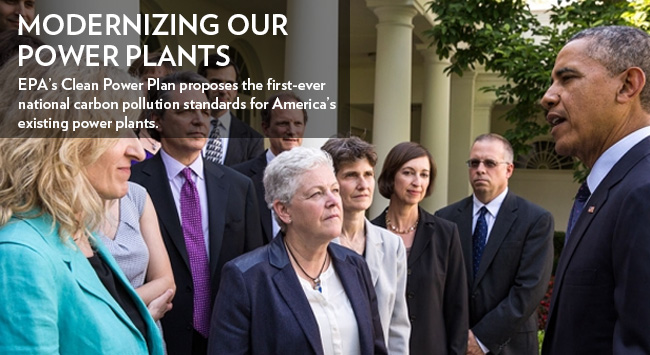
Posted by on June 2, 2014 at 11:48 AM EDTToday, as part of the President’s plan to cut carbon pollution, the Environmental Protection Agency (EPA) unveiled the first-ever national limits on carbon pollution from existing power plants, the single-largest source of carbon pollution in the United States. The steady, responsible steps EPA is taking today will help prevent up to 6,500 premature deaths and spare American children as many as 150,000 asthma attacks a year. It will also eliminate waste, save Americans money on their electric bills, and spark innovation and job creation.
But just because this common-sense proposal will have huge benefits for hard-working Americans across the country, that doesn’t mean some people won’t spread misinformation and launch false attacks.
Throughout our history, when America has taken steps to cut pollution and protect public health, opponents have made dire predictions about destroying jobs and harming the economy – and throughout our history they’ve been wrong. This time will be no different. So let’s look at some of the myths they will try to spread and the facts that dispel them.
Myth: Carbon pollution standards will destroy jobs and hurt the economy.
Fact: Americans know we can cut pollution and protect the health of our kids while creating jobs.
Over the years, this has been the polluters’ favorite myth. When we passed the Clean Air Act to combat smog, they said new pollution standards would decimate the auto industry. In 1990, when we took steps to stop acid rain, they claimed the lights would go out and businesses around the country would suffer.
The facts tell a different story.
EPA has been protecting air quality for more than 40 years, and in that time we've cut pollution by 70 percent while the economy has more than tripled.
Learn more about Energy and EnvironmentBy the Numbers: The EPA's Proposed New Carbon Pollution Standards for Power Plants
Posted by on June 2, 2014 at 9:00 AM EDTToday, as part of the President’s Climate Action Plan, the EPA proposed new carbon pollution standards for power plants. These standards represent a commonsense proposal that will have huge benefits for all Americans. In fact, for every dollar of investment spurred by this proposal, there is roughly seven dollars’ worth of health benefits in return.
Here are some numbers that help explain today’s announcement:
- Nearly 40 is the number of percentage points of total carbon pollution that comes from power plants. The President’s Climate Action Plan has focused on modernizing our buildings, factories, cars, and trucks – but altogether, they make up a little over half of all the carbon pollution. It makes sense, then, that our next logical step would be to modernize the power sector, putting in place the first-ever carbon pollution standards for power plants.
- More than 300 is the number of groups EPA engaged with across the country – including 11 public listening sessions that hosted more than 3,000 people – in order to develop its proposal. And the outreach continues. After the proposed rule is published, there will be a 120-day public comment period to make sure the final standards reflect all the best ideas and input from everyone includes states, utilities, labor, health advocates, environmental groups and industry.
- 30 is the number of percentage points of total carbon pollution that will be cut from our power sector by 2030 – relative to 2005 levels. That is like erasing the annual carbon pollution from two-thirds of all cars and trucks in America. And if you add up what we will avoid between 2020 and 2030 under the proposal, it’s more than the carbon pollution from every power plant in America in 2012 – times two.
Learn more about Energy and EnvironmentWeekly Address: Reducing Carbon Pollution in Our Power Plants
Posted by on May 31, 2014 at 6:00 AM EDTIn this week’s address, President Obama discussed new actions by the Environmental Protection Agency to cut dangerous carbon pollution, a plan that builds on the efforts already taken by many states, cities and companies. These new commonsense guidelines to reduce carbon pollution from power plants were created with feedback from businesses, and state and local governments, and they would build a clean energy economy while reducing carbon pollution.
The President discussed this new plan from the Children’s National Medical Center in Washington, D.C., where he visited children whose asthma is aggravated by air pollution. As a parent, the President said he is dedicated to make sure our planet is cleaner and safer for future generations.
Transcript | mp4 | mp3
Learn more about Energy and EnvironmentMake Sure You're Ready This Hurricane Season:
Posted by on May 30, 2014 at 5:33 PM EDT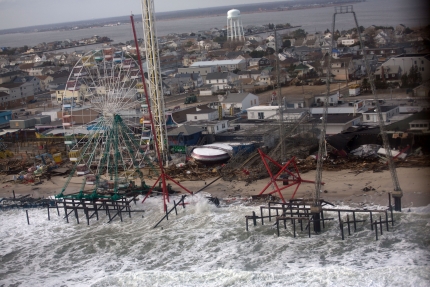
The view from aerial tour of Hurricane Sandy damage of New Jersey's barrier beaches, Nov. 18, 2012. (Official White House Photo by Sonya N. Hebert)
The 2014 hurricane season begins this Sunday, and communities across the country are making sure they're ready.
Today, the President headed over to the Federal Emergency Management Agency's National Response Coordination Center, where he received an update on efforts to prepare communities for extreme weather events and other climate change impacts.
In brief remarks ahead of his hurricane preparedness briefing, the President noted that, while states still have the primary role in preparing for responding to disasters, the federal government would continue to ensure they have the resources they need. But, as he also said:
...it’s also every citizen’s responsibility to make sure that we are prepared for emergencies when they come -- and not just hurricanes but every emergency.
Looking for ways to make sure you're prepared? Ready.gov has a whole suite of instructions and resources for before, during, and after a storm. We've pulled a couple out here.
Learn more about Energy and EnvironmentAdministration Prepares for Hurricane Season, Impacts of Climate Change
Posted by on May 30, 2014 at 4:54 PM EDTWith hurricane season beginning on Sunday, the Administration has been hard at work making sure we’re as prepared as possible. Today, the President convened a meeting with members of his response team to receive an update on these efforts, as well as a briefing on the outlook on the 2014 hurricane season. Federal, State, and local agencies are working together on mobile applications and other innovations that will better inform and involve the public in preparedness and response activities.
As a result of our changing climate, more and more communities across the United States can expect to feel impacts like increasingly frequent and severe storms or extended drought and wildfire seasons. In fact, the third National Climate Assessment that the Administration released earlier this month confirms that climate change is already affecting every region of the United States as well as key sectors of our economy. Local decision-makers in communities most vulnerable to the impacts of climate change know this, as they’re on the front lines of dealing with climate change. And through the President’s State, Local, and Tribal Leaders Task Force on Climate Preparedness and Resilience, we’re working with a group of those decision-makers – all of them proven leaders in helping their communities adapt to the impacts of climate change - to figure out how the Federal Government can best support their efforts. The Task Force will provide its recommendations to the President in the fall, and in the meantime President Obama is doing everything he can to support the work of those leaders and build a safer and more resilient Nation.
One of the ways we can do this is by investing in the resilience of our natural resources. This week, the United States Department of Agriculture announced the Regional Conservation Partnership Program (RCPP), a program that will rely on partnerships with regional organizations, non-profits, and the private sector to drive conservation and restoration efforts in the regions where they are needed most. With the government serving as a catalyst, we can spur more private investment in rural America to increase local resilience to drought and flooding, increase water supply, and mitigate the impacts of climate change.
As we work to improve the resilience of our precious natural resources, we also need to build smarter and stronger, so that our infrastructure can withstand the next storm, and the next. In the Hurricane Sandy-affected region, state and local stakeholders are working with the Federal Government to do just that. Sandy recovery efforts can serve as a model for future investments in building climate resilience in communities all over the country. For example, today the Federal Transit Administration is awarding approximately $167 million to the Port Authority of New York & New Jersey and $67 million to New Jersey Transit from their Emergency Relief Program to help both agencies continue rebuilding and replacing transportation equipment and facilities damaged or destroyed by Hurricane Sandy. By strengthening rail systems, ferry terminals, and local infrastructure, the region can be prepared for a future with intensified storms and other extreme weather events. And the Department of Housing and Urban Development today announced a third round of grant funding, totaling more than $2.5 billion, to help four states and New York City continue recovering from Hurricane Sandy.
The President stands with the communities all over the U.S. as they prepare for hurricane season, and for the impacts of climate change that are affecting us now, and will continue to affect us in the future.
Mike Boots is Acting Chair of the White House Council on Environmental Quality.
Learn more about Energy and EnvironmentA New Strategy to Drive Down the "Soft Costs" of Solar
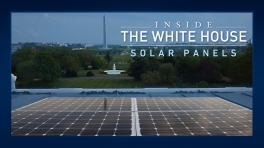
Posted by on May 30, 2014 at 2:11 PM EDTEarlier this month, President Obama announced that more than 300 organizations in the public and private sector have made commitments to advance the deployment of solar power and invest in energy efficiency. At the same time, recognizing that solar power is an increasingly important building block toward a clean energy future, the White House offered a behind the scenes look at its own rooftop solar panels, which are generating clean renewable energy from the sun, helping to lower the energy bill of our nation’s most historic home while also serving as a symbol that American solar energy technology is ready for millions of other homeowners across the country today.
Over the course of the Obama Administration, we have increased U.S. solar electricity generation by ten-fold and, in the last year alone added more than 23,600 new jobs in solar.

- &lsaquo previous
- …
- 32
- 33
- 34
- 35
- 36
- 37
- 38
- 39
- 40
- …
- next &rsaquo
Related Videos
-
 May 09, 2014 9:21 AM
Inside the White House: Solar Panels
-
 September 01, 2016 9:25 PM
President Obama Delivers a Statement to the Press
White House Blogs
- The White House Blog
- Middle Class Task Force
- Council of Economic Advisers
- Council on Environmental Quality
- Council on Women and Girls
- Office of Intergovernmental Affairs
- Office of Management and Budget
- Office of Public Engagement
- Office of Science & Tech Policy
- Office of Urban Affairs
- Open Government
- Faith and Neighborhood Partnerships
- Social Innovation and Civic Participation
- US Trade Representative
- Office National Drug Control Policy