Energy and Environment Latest News
Day 3: The President Attends the G-7 Summit
Posted by on June 5, 2014 at 5:12 PM EDT
President Barack Obama talks with other G7 Summit leaders before the start of their plenary session on the global economy, in Brussels, Belgium. June 5, 2014. (Official White House Photo by Pete Souza)
On the third day of President Obama's four-day European tour, he attended the 2014 G-7 Summit in Brussels, Belgium. The summit brought together like-minded, advanced industrial economies to discuss a number of key issues, including energy security, climate change, the global economy, development, and the situation in Ukraine.
What They're Saying Around the Country: Support for Commonsense, Responsible Steps to Curb Carbon Pollution
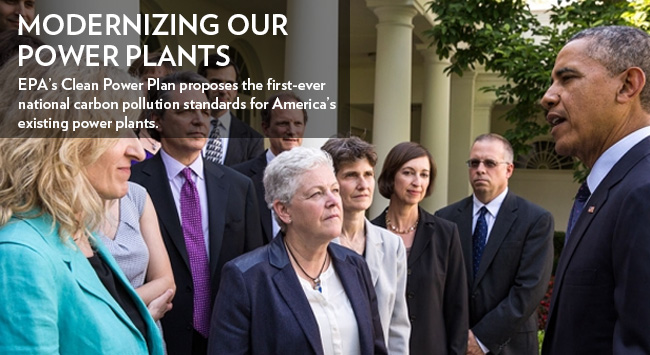
Posted by on June 4, 2014 at 3:25 PM EDTOn Monday, as part of the President’s Climate Action Plan, the EPA proposed the first-ever carbon pollution guidelines for power plants. We already regulate pollution like sulfur, arsenic, mercury, and lead, but we let power plants release as much carbon pollution as they want.
The EPA’s proposal will prevent as many as 150,000 asthma attacks in kids each year while helping combat the impacts of global warming, which are already being felt in communities across the country. It provides states the flexibility to meet the standards using the energy sources that work best for them.
These commonsense, responsible steps to curb carbon pollution are already being hailed by editorial boards across the country. Here’s a sample of what they’re saying:
Maryland — Baltimore Sun: "Carbon rules can work: Obama administration unveils a climate change plan already proven effective by Maryland and other states with cap-and-trade policies"
Make no mistake, this is not anti-business. A lot of folks in the utility industry will be pleased to see the regulations move forward, chiefly because it will finally bring some consistency to the market and create new opportunities for renewable power. Meanwhile, burning less coal will also mean reducing harmful and potentially cancer-causing byproducts like mercury and sulfuric acid that are a threat to human health and the environment as well.
Learn more about Energy and EnvironmentReddit "Ask Me Anything" with EPA Administrator Gina McCarthy
Posted by on June 4, 2014 at 10:25 AM EDTGina McCarthy, Administrator for the Environmental Protection Agency, took to Reddit yesterday to answer questions about the EPA's proposed rules to cut carbon pollution in our power plants.
During the "Ask Me Anything," Administrator McCarthy answered questions on a range of topics -- including President Obama's plan to fight climate change, what people can do in their own communities, and her thoughts on Marvin Gaye.
You can see all of the responses on Reddit, or check out the questions and responses below.
 Learn more about Energy and Environment
Power Africa: Beyond the Grid
Posted by on June 3, 2014 at 5:11 PM EDTCongratulations to the 27 private-sector partners of “Beyond the Grid” – a new Power Africa initiative to unlock investment and growth specifically for off-grid and small-scale energy solutions – announced today by Secretary Moniz at the U.S.-Africa Energy Ministerial in Addis Ababa, Ethiopia.
President Obama launched Power Africa nearly one year ago to double access to electricity in sub-Saharan Africa – electricity needed for students to succeed, businesses to thrive, and African economies to grow. The challenge is greatest beyond the electric grid serving dense urban populations. More than 240 million people live without electricity in rural and peri-urban communities across the six Power Africa focus countries. Too many do not even show up on government plans to expand the grid over the next decade.
But, bolstered by the falling cost of renewable energy generation; rapid advances in energy storage, smart meter, and mobile payment technologies; and innovative business models, new distributed energy companies are now delivering clean, reliable energy in Africa at a competitive price point. While the market is still young, it holds great promise to follow the mobile phone in leapfrogging centralized infrastructure across Africa.
Beyond the Grid will double down on Power Africa’s support for this potentially game-changing sector, building on more than 25 small-scale energy projects already in the Power Africa pipeline. Beyond the Grid’s 27 founding partners – including impact investors, venture philanthropists, clean-energy enterprises, and practitioners – have committed to invest over $1 billion over the next five years to seed and scale distributed energy solutions for millions of African homes, businesses, schools, and other public facilities.
Learn more about Energy and EnvironmentRaw Video: President Obama Talks with Young Asthma Patients
Posted by on June 2, 2014 at 7:21 PM EDTLast week, instead of recording his weekly address at the White House as usual, President Obama taped it at the Children’s National Medical Center in Washington, D.C.
In his address, the President discussed the EPA's new actions to cut carbon pollution — and at the medical center, he visited children whose asthma is aggravated by air pollution.
Take a look at what the President and the kids had to say — and pass this on:
If you agree that we need to fight climate change and its effects on our communities, add your name to stay involved with the President's Climate Action Plan.
Learn more about , Energy and EnvironmentTaking Action to Reduce Carbon Pollution at the State, Local, and Tribal Level
Posted by on June 2, 2014 at 5:35 PM EDTThis morning, the Obama administration put forward the first-ever plan to reduce carbon pollution from power plants. Cutting carbon emissions will help prevent up to 6,500 premature deaths and 150,000 asthma attacks among children. It will also reduce electricity bills by approximately 8 percent by increasing energy efficiency and reducing demand in the electricity system, while creating tens of thousands of jobs across the country. We have set limits for arsenic, mercury, and lead pollution, but we let power plants emit as much carbon pollution as they want – until today.
For decades, state, city, county, and tribal leaders have led the way in reducing pollution, making our communities healthier and cleaner. This carbon pollution standard proposal puts tools in the hands of each state – there’s no one-size-fits-all approach here. Governors will have flexibility to meet the proposed standards using the energy sources that work best for each state.
And let’s remember that the idea of setting higher standards to cut carbon pollution isn’t new. 47 states have utilities that run demand-side energy efficiency programs, 38 have renewable portfolio standards or goals, and 10 have market-based greenhouse gas emissions programs. More than 1,000 mayors have signed a climate protection agreement. And county and tribal leaders are on the front lines dealing with climate impacts every day.
As co-chairs of the President’s bipartisan State, Local, and Tribal Leaders Task Force on Climate Preparedness and Resilience, we have had the chance to travel to regions throughout the country. The community leaders we’ve met with are not consumed by Washington ideological debates; they want to discuss how they are dealing with the floods, fires, droughts, and super storms that are putting the health and well-being of their communities at stake. And in addition to dealing with the existing impacts of climate change, these elected leaders are taking bold action to reduce the carbon pollution that is causing climate change.
Learn more about Energy and Environment

- &lsaquo previous
- …
- 31
- 32
- 33
- 34
- 35
- 36
- 37
- 38
- 39
- …
- next &rsaquo
Related Videos
-
 May 09, 2014 9:21 AM
Inside the White House: Solar Panels
-
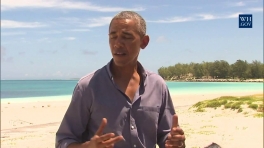 September 01, 2016 9:25 PM
President Obama Delivers a Statement to the Press
White House Blogs
- The White House Blog
- Middle Class Task Force
- Council of Economic Advisers
- Council on Environmental Quality
- Council on Women and Girls
- Office of Intergovernmental Affairs
- Office of Management and Budget
- Office of Public Engagement
- Office of Science & Tech Policy
- Office of Urban Affairs
- Open Government
- Faith and Neighborhood Partnerships
- Social Innovation and Civic Participation
- US Trade Representative
- Office National Drug Control Policy